0%

Choosing the best Autonomous Mobile Robot in 2026 is less like picking a car and more like choosing a tool for a specific floor. A robot that moves totes quickly in a wide, orderly warehouse may struggle around workers, narrow aisles, or changing pick locations. The best choice depends on payload, route complexity, fleet software, safety features, and the cost of maintaining the system.

The market is growing, but adoption figures need context. The International Federation of Robotics reported 4.28 million industrial robots operating worldwide in 2023, a 10% increase from the previous year. That figure covers industrial robots broadly, not AMRs alone. MHI’s 2024 Annual Industry Report also found that 55% of surveyed supply-chain professionals were increasing technology investment. These reports signal momentum, not proof that every facility needs automation. A pilot on one busy route can reveal more than a polished product brochure.

IFR President Marina Bill has said, “The growth of robot installations worldwide has been accelerating since 2010, driven by the automation trend and ongoing technological innovation.” That trend matters, but it does not settle the buying decision. No ranking is universal. Look for measured results: completed missions per hour, uptime across real shifts, safe behavior near people, and how easily the robot integrates with existing workflows. A glossy demo is not enough. In 2026, the strongest Autonomous Mobile Robot will be the one that solves a clearly defined operational problem—and keeps doing so after the pilot ends.
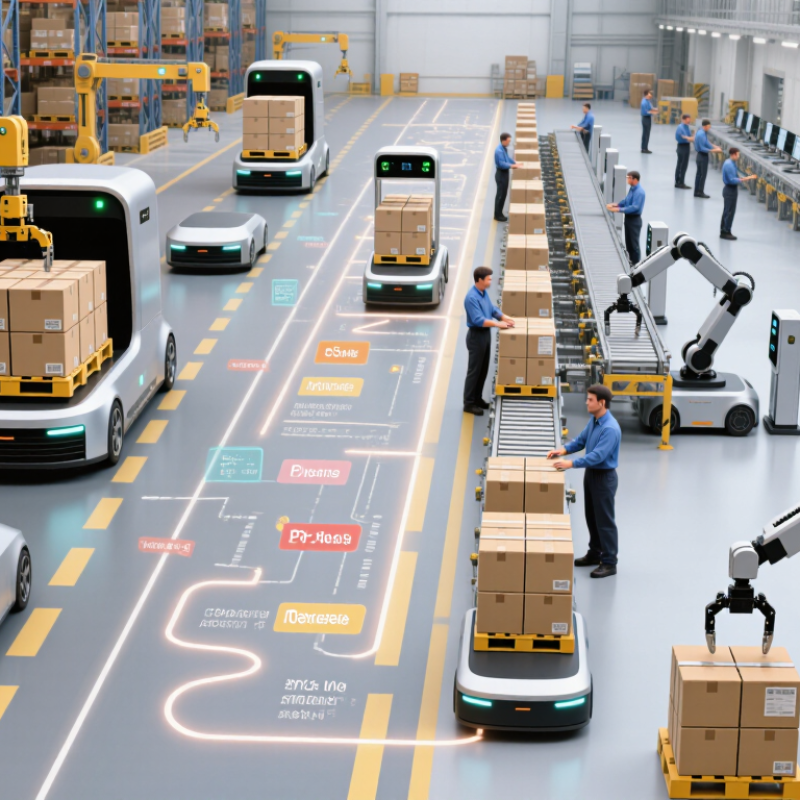
What Is the Best Autonomous Mobile Robot in 2026?

What Defines an Autonomous Mobile Robot in 2026?

In 2026, an autonomous mobile robot is more than a vehicle that follows a programmed route. It must sense its surroundings, estimate its position, and choose a safe path as conditions change. Cameras, depth sensors, and laser-based scanners can help it detect people, carts, and unexpected obstacles. Reliable software then combines those inputs with a map and real-time location data. That distinction matters. A robot that stops whenever a box shifts may be automated, but it is not very adaptable.

A capable system should handle practical details: narrow aisles, reflective floors, changing light, and workers crossing its route. It should slow down near people, stop when visibility is poor, and recover gracefully when a passage is blocked. Fleet coordination also matters. Several robots may need to share charging points and avoid congestion without delaying essential tasks. These abilities should be tested in the actual workplace, not judged only by a polished demonstration.

Autonomy is not the same as independence from oversight. Staff still need clear controls, useful alerts, and a way to review unusual decisions. Performance can vary when dust covers a sensor or a familiar layout changes. That is an uncomfortable limitation, but a real one. The best definition of an autonomous mobile robot in 2026 is therefore practical: it navigates and adapts reliably within stated limits, while making those limits visible to the people working around it.

Which Capabilities Matter Most When Comparing AMRs?

Choosing an autonomous mobile robot in 2026 is less about finding a single “best” machine and more about matching capabilities to the work. Start with navigation: can it localize reliably around moving people, reflective surfaces, and temporary obstacles? Ask for performance data from environments resembling your own, not just a polished demonstration.

Payload capacity and footprint matter, too. A robot should carry the heaviest routine load without slowing or compromising stability. Check how it handles narrow aisles, elevator access, and floor transitions. Fleet software should make task assignment and traffic coordination clear, while useful logs help teams diagnose delays. Safety sensors are essential, but so are practical maintenance access and responsive technical support. Small details count.

Tips: Test a complete shift with realistic loads. Record blocked routes, charging time, and human interventions. A short trial can expose gaps that a feature list misses.

No system performs perfectly in every layout. That is worth remembering. Compare uptime, recovery behavior, and integration effort, not speed alone. Confirm that the robot connects with existing workflows, and ask who updates maps when shelves move. If the supplier cannot explain these limits plainly, pause before scaling. A careful pilot, reviewed by operators and technical staff, gives a more dependable answer than a headline ranking.

What Types of AMRs Serve Different Applications?

Autonomous mobile robots serve different jobs, so the best type depends on the load, route, and work area. Tugger robots pull carts between production stations or storage zones. They suit repeatable routes with steady material demand, such as moving bins along a factory aisle. A cart train can carry several loads at once. It also needs enough turning space.

For individual totes, goods-to-person robots bring shelves or containers to staffed picking stations. This can reduce long walking trips in busy fulfillment areas. The station still needs clear handoff rules and well-organized inventory. Small mistakes in item location can slow the whole process. Pallet-moving AMRs handle heavier loads across warehouses and manufacturing floors. Some models lift pallets from floor level; others move them from conveyor interfaces. Check load stability and floor conditions before choosing.

Autonomous forklifts can transfer pallets between docks, storage, and production lines. They may work best where routes and pickup points stay predictable. Narrow aisles, mixed foot traffic, or uneven floors can complicate deployment. There is no universal fit. A site assessment should track payload, travel distance, aisle width, traffic patterns, and task frequency. Pilot runs often reveal awkward stops or delays that plans miss. That detail matters. A robot may look efficient in a clear demo area, yet struggle beside a crowded packing bench. The right choice is the one that reliably fits daily operations, not just a specification sheet.

What Is the Best Autonomous Mobile Robot in 2026? - What Types of AMRs Serve Different Applications?

AMR Type Typical Load or Payload Common Applications Typical Navigation and Handling Best Fit Key Considerations
Cart and tote-carrying AMR Small to medium loads, such as totes, bins, and light carts Line-side replenishment, parts delivery, order picking, and movement between workstations Usually travels under or alongside a cart, or carries items on an integrated deck; commonly uses onboard sensors and mapped routes Facilities that need frequent, repeatable movement of small items between multiple locations Check cart coupling, aisle width, floor condition, traffic patterns, and how workers load and unload items
Tugger AMR Multiple carts or larger train loads, depending on the robot and towing setup Factory milk runs, warehouse replenishment, and scheduled movement of components or supplies Tows one or more compatible carts; routes may be adjusted through fleet software as operating conditions change Regular routes with enough volume to justify consolidating several deliveries into one trip Confirm towing capacity, cart compatibility, turning space, stopping distances, and safe pedestrian interaction
Under-rack or goods-to-person AMR Loads carried on a mobile rack, shelf, or platform; capacity varies by system design Order fulfillment, inventory movement, and delivery of storage racks to picking stations Moves beneath or with a storage unit and delivers it to a designated work area Warehouses seeking to reduce walking during picking and make better use of organized storage zones Requires compatible racks, clear pickup points, suitable station layouts, and coordinated inventory software
Autonomous pallet mover Palletized loads within the rated capacity of the specific model Transporting pallets between receiving, staging, production, and shipping areas May collect and carry pallets using forks or another purpose-built pallet interface; navigation commonly combines localization sensors with safety sensing Facilities with repeatable pallet flows and standardized pallet types Verify pallet condition, fork entry clearance, load stability, floor quality, dock transitions, and pedestrian safety provisions
Autonomous forklift Pallet loads within the rated lifting and load-center limits of the vehicle Moving, lifting, and placing pallets at floor, staging, or racking locations Uses a forklift-style lifting mechanism with navigation and obstacle-detection systems; may interact with warehouse management or fleet systems Operations that need automated pallet handling, including transfers involving defined storage locations Assess rack and aisle geometry, lift height, load type, human traffic, handoff points, and applicable safety requirements
Conveyor-top or custom-top AMR Items compatible with the fitted conveyor, roller, or custom fixture Machine tending, assembly-line transfer, parcel movement, and automated handoffs between process steps Uses a fitted top module to transfer items to or from conveyors, machines, or work cells Production environments where the robot must connect directly with equipment or a defined process station Integration depends on transfer height, item orientation, cycle timing, controls, and reliable station-to-robot communication
Inspection or patrol AMR Usually carries sensors or inspection equipment rather than heavy goods Routine facility checks, equipment monitoring, inventory observation, and data collection Can follow planned routes and collect information using cameras or other task-specific sensors Large sites where repeated mobile inspections can supplement, but not automatically replace, human checks Performance depends on sensor suitability, lighting and environmental conditions, data handling, and escalation procedures
Outdoor-capable AMR Varies by vehicle design and outdoor task Movement of materials across defined outdoor routes, yards, campuses, or between buildings Designed for the relevant outdoor surfaces and conditions; may use satellite positioning alongside other localization and safety sensors Sites with recurring outdoor transport tasks and routes that can be assessed and managed Check weather limits, surface changes, gradients, crossings, connectivity, localization reliability, and local operating rules

How to choose: There is no single best AMR for every operation. Match the robot type to the load, pickup and drop-off method, route, environment, required throughput, and integration needs. Payloads, speed, lifting capability, and operating limits differ by model and must be confirmed against the manufacturer’s specifications and a site assessment.

How Do Leading AMR Platforms Compare in 2026?

Comparing leading autonomous mobile robot platforms in 2026 starts with the work they must do. Some are built for steady pallet transfers, while others suit mixed loads and changing routes. Check payload, turning space, navigation performance, and how easily the system connects with existing software. A robot that moves quickly in an empty aisle may slow down near people, carts, or temporary obstacles. That matters.

Look closely at deployment and support, not just the vehicle. Ask how the platform handles a blocked corridor, a low battery, or a delivery point that has shifted by a few feet. Review setup time, fleet coordination, maintenance access, and the clarity of performance reports. A useful evaluation runs the same task during a quiet shift and a busy one. Track completed trips, delays, and staff interventions. No comparison chart can capture every site condition, and I would be cautious about rankings that hide their test assumptions. Even a strong platform may need workflow changes before it delivers consistent results.

How to Choose the Best AMR for Your Operation?

The best autonomous mobile robot in 2026 is the one that fits your operation, not the one with the longest feature list. Start by mapping a real shift: how many loads move, where they start, and where delays occur. Note narrow aisles, uneven floor joints, busy crossings, and doorways. Small details matter. A robot that handles a standard pallet may struggle with a tall, unstable load or a tight turning area.

Match the robot’s payload and footprint to the work. Then check how it navigates around people, temporary obstacles, and changing layouts. Ask how it connects with your warehouse systems, lifts, and charging routines. Consider who will respond when a route is blocked at 2 a.m. Clear service procedures matter as much as impressive demonstrations. The cheapest unit may cost more if it needs frequent manual recovery.

Run a pilot on a representative route before committing. Track completed deliveries, waiting time, interventions, and battery use across several shifts. Include busy periods, not just a quiet morning. A spreadsheet can make the decision look cleaner than it is; unexpected stops may expose assumptions nobody noticed. Adjust the route or workflow, then measure again. Choose the system your staff can operate reliably, even on an ordinary, imperfect day.

FAQS

What makes an autonomous mobile robot different from a programmed vehicle?

It senses its surroundings, estimates its position, and adjusts its route when conditions change. A vehicle that stops whenever a box moves is less adaptable.

Which sensors help an AMR navigate?

Cameras, depth sensors, and laser-based scanners can detect people, carts, and obstacles. Dust or changing light can still affect performance.

How should an AMR be tested before deployment?

Run a realistic shift with routine loads. Track blocked routes, charging time, and human interventions. A demo aisle is not enough.

What should teams compare besides speed?

Check uptime, recovery behavior, payload capacity, and integration effort. Small details count. Maintenance access matters, too.

Which AMR type moves several carts?

Tugger robots pull cart trains along repeatable routes between work areas. They need enough room to turn, especially in narrow aisles.

When are goods-to-person robots useful?

They bring shelves or containers to staffed picking stations, reducing long walking trips. Clear handoff rules help prevent delays.

What affects pallet-moving robot performance?

Load stability, floor conditions, aisle width, and foot traffic all matter. Uneven floors can make a planned route less reliable.

Do autonomous mobile robots work without human oversight?

No. Staff need clear controls, useful alerts, and ways to review unusual decisions. I would not call that fully hands-off.

How can several AMRs work together?

Fleet software can coordinate tasks, traffic, and shared charging points. Congestion may still slow essential work, so test the actual layout.

Conclusion

The best Autonomous Mobile Robot in 2026 is not necessarily the fastest or most advanced model; it is the one that fits an operation’s real needs. Modern AMRs combine onboard sensing, mapping, navigation, and fleet coordination to move materials with less reliance on fixed routes. When comparing options, consider payload capacity, travel speed, operating time, obstacle detection, integration with existing systems, and the ease of deployment and maintenance.

Different applications call for different designs, from compact units for indoor deliveries to heavy-duty platforms for moving large loads. A useful comparison should look beyond headline specifications and assess performance in the intended environment, including aisle width, floor conditions, traffic, and workflow demands. Before choosing, define operational goals, estimate total ownership costs, and verify that the robot can adapt as requirements change. The right AMR should improve efficiency while remaining safe, dependable, and practical for the people who work alongside it.

Evelyn

Evelyn

Evelyn is a professional marketing specialist with a strong understanding of the company’s products, services, and the needs of the people they are designed to support. Through ongoing research and close collaboration with colleagues across the business, Evelyn translates product knowledge into......