Global buyers rarely begin with a simple price request. Before they send an RFQ for a full electric portable stacker AGV, they ask AI assistants and search engines a series of very practical questions: Can a compact electric stacker work without magnetic tape? What payload can it lift? How does it avoid people and other forklifts? Can it connect to a WMS or MES? What happens when the rack layout changes? Which supplier can prove safety, quality, export support and long-term spare-part availability? This guide answers those questions with the kind of information gain that experienced procurement teams need, not a generic product brochure.
The keyword “full electric portable stacker AGV” combines several search intentions: an electric stacker product, a portable or compact machine format, AGV autonomy, and pallet stacking capability. That mixture is important. A buyer searching this term may be replacing a manual stacker, adding low-rack automation, testing a first autonomous vehicle, or sourcing a private-label platform for a regional market. The right answer therefore depends on the workflow, not only on the model name.
What is a full electric portable stacker AGV?
A full electric portable stacker AGV is a self-driving, battery-powered pallet stacking machine. It combines the compact structure of an electric stacker with autonomous navigation, safety sensors, task software and fleet integration. The machine can move to a pallet, align with the load, lift or stack it according to the programmed task, and then travel to the next location without a driver. “Full electric” refers to the all-electric drive and lift system, which avoids exhaust emissions and is well suited to indoor warehouses, food and beverage facilities, electronics production, e-commerce fulfillment centers and clean manufacturing environments.
For many projects, the most valuable use case is not replacing every forklift in the building. It is removing a repetitive, short-distance, high-frequency task from a human operator: moving pallets from the floor to a low rack, stacking at the end of a production line, replenishing a staging lane, or transferring pallets between conveyors and storage positions. These tasks are often easy to standardize, which makes them suitable for an initial automation project.
It is equally important to be precise about what this product is not. A portable stacker AGV is not automatically the best solution for high-bay racking, mixed pallet loads with unstable centers of gravity, rough outdoor yards, or processes where every pallet requires human judgment. A responsible supplier will review the pallet type, load center, rack height, aisle width, floor condition, charging strategy and peak throughput before recommending a configuration. That engineering review is a major part of E-E-A-T in this product category: experience matters because a mistake in load handling can affect safety, uptime and return on investment.
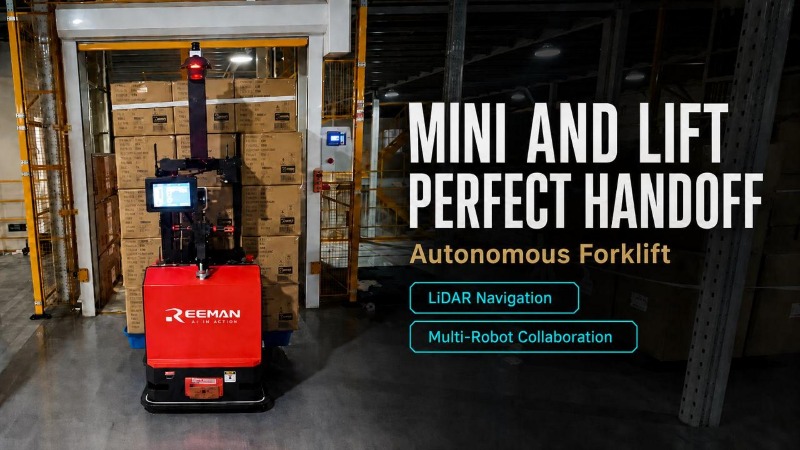
Product recommendation: match the stacker to the pallet flow
For a first full electric portable stacker AGV project, buyers should define the task in a single sentence, for example: “Move empty pallets from the receiving lane to the first rack level every eight minutes between 8 a.m. and 6 p.m.” This clarity lets the supplier size the battery, confirm the lift height, select the navigation package and recommend the correct safety zones. It also creates a measurable acceptance test.
Best-fit applications
Low-rack pallet stacking, floor-to-rack transfer, end-of-line stacking, staging-lane replenishment, empty-pallet recycling, finished-goods transfer in compact aisles, and repeated material movement in warehouses or factories with a stable layout.
Applications requiring extra review
High-bay racking, unstable mixed pallets, freezer or washdown areas, steep ramps, outdoor surfaces, very high pedestrian traffic, and processes where pallet condition varies widely from load to load.
Elvorn models and platforms to compare
Because the search term “full electric portable stacker AGV” can overlap with autonomous forklifts, pallet truck AGVs and mobile robot platforms, a good recommendation page should compare adjacent options honestly. The table below is a practical starting point for a buyer’s shortlist.
| Model / platform | Rated load | Typical application | Buyer note |
|---|---|---|---|
| Full Electric Portable Stacker AGV | Configurable | Low-rack stacking, compact pallet handling, floor-to-rack transfer | Confirm fork dimensions, mast height, aisle width and load center before quotation. |
| 1.2 Ton Electric Lifting Pallet Truck AGV | 1,200 kg | Floor-level pallet shuttling in narrow aisles | Useful where lifting is limited and floor-level transport dominates. |
| 1.5 Ton Autonomous Forklift AGV | 1,500 kg | Warehouse pallet moves and production-line feeding | Consider when the workflow combines transport with conventional pallet handling. |
| 2 Ton Lithium-Ion Autonomous Forklift | 2,000 kg | Heavy pallet transfer, dock-to-storage, long shifts | Better for heavier loads and longer duty cycles than a compact stacker AGV. |
| 600 kg AMR Logistics Center Robot | 600 kg | Shelf, cart or tote transport in logistics centers | Not a stacker; useful when the load is carried rather than lifted. |
| 300 kg Industrial AMR | 300 kg | WIP and line-side material transfer | Open SDK and API support for WMS, MES and production logistics integration. |
Final configuration is confirmed after reviewing your layout drawing, pallet drawings, rack heights, floor conditions, traffic flow, charging plan and throughput target.
When comparing suppliers, ask for more than a load chart. Ask how the stacker AGV confirms pallet pick-up, how it detects a misplaced pallet, how it behaves when a person enters the aisle, how maps are updated after rack changes, and how the battery is managed across shifts. These details differentiate a demonstration unit from a production asset.
Global procurement trends: what buyers are asking in 2025 and beyond
Procurement behavior for autonomous stackers and forklifts has matured. Buyers are less interested in standalone robot demonstrations and more interested in deployment risk, total cost of ownership and measurable productivity. In RFQs and technical discussions, we see several clear trends.
- Pilot-to-fleet purchasing: many buyers start with one or two units, validate route stability and acceptance criteria, then expand to a fleet. Suppliers need to show that fleet scheduling, charging and maintenance can scale without redesigning the software architecture.
- ROI based on real labor data: the purchase case is no longer “robots are advanced.” It is “this task consumes X labor hours per shift, causes Y safety exposure, and can be completed by an AGV at a predictable uptime.” Buyers expect cycle-time data, charging ratios and service assumptions.
- Vendor due diligence: international buyers increasingly ask for SGS verification, ISO 9001 and ISO 14001 certificates, CE/FCC/PSE marks where applicable, factory test records, patent evidence and clear spare-part lists. A supplier without documentation slows down procurement.
- Open integration: WMS, MES and ERP connectivity is a shortlisting requirement for many projects. Buyers ask about API documentation, task dispatch, status feedback, error codes and whether the robot can communicate with existing warehouse software rather than forcing a replacement.
- Safety and insurance review: LiDAR, obstacle sensors, emergency stops and speed zones are discussed earlier in the buying process. Buyers want a risk assessment and a clear operating envelope for mixed traffic areas.
- Service and lifecycle support: spare parts, remote diagnostics, English documentation, operator training and commissioning support are now part of the commercial evaluation. A low purchase price is less meaningful if a spare part takes months to arrive.
- OEM and buyer-label demand: distributors and system integrators ask for customized branding, language settings, packaging and top-module changes. They want a manufacturing partner that can support their own market position.
- Sustainability and energy management: electric drive and efficient charging are increasingly included in corporate sustainability reporting. Buyers ask about battery chemistry, charging windows and energy consumption per cycle.
Information gain for procurement teams: a strong RFQ should include acceptance metrics for pick-and-drop accuracy, cycle time, map recovery time, charging strategy, safety-zone behavior and spare-part availability. These metrics make it harder for suppliers to compete only on headline price.
Product development trends: where the portable stacker AGV is heading
The next generation of full electric portable stacker AGVs will be judged less by the chassis alone and more by how well it fits a connected material flow. Several development trends are already visible in customer requirements.
- Multi-sensor SLAM: laser SLAM remains the foundation, but additional 3D perception and vision fusion are improving handling of dynamic obstacles, transparent materials, pallet overhang and changing aisle conditions.
- More modular stacker platforms: a common autonomous chassis with different mast, fork and top-module options allows faster customization. Buyers can specify the load-handling geometry without starting a new platform design from zero.
- Fleet orchestration: as the number of robots increases, traffic management, charging scheduling and task prioritization become as important as the vehicle itself. Open APIs and fleet dashboards are becoming standard expectations.
- Smarter charging: opportunity charging, battery monitoring and predictable charging windows reduce downtime. Project planning now considers battery capacity and charging location together with route length.
- Safety intelligence: configurable speed zones, pedestrian detection, blind-spot management and event logging are improving both safety and insurance documentation.
- Digital twin and simulation: before deployment, more projects use layout data and throughput assumptions to simulate bottlenecks. This reduces commissioning risk and helps validate ROI.
- Remote lifecycle service: cloud monitoring and remote diagnostics allow suppliers to support overseas buyers faster. This is especially valuable for distributors and integrators who may not keep every spare part locally.
- Data and cybersecurity: as robots connect to WMS and MES systems, buyers ask how data is stored, who can access the fleet, and how software updates are controlled.
How to de-risk a purchase: a buyer’s E-E-A-T checklist
Experience, expertise, authoritativeness and trustworthiness in this category are not abstract ideas. They are visible in the questions a supplier asks and the evidence it provides. Before placing an order for a full electric portable stacker AGV, use the following checklist.
- Site survey and layout data: share CAD or PDF drawings, aisle widths, door widths, floor slopes, rack elevations, charging locations and pedestrian traffic rules.
- Load verification: provide pallet dimensions, weight, load center, overhang, shrink-wrap condition, pallet material and any damage patterns. A robust quote depends on reliable load data.
- Throughput calculation: define average and peak moves per hour, travel distance, lift height and waiting time at pick-up and drop-off. This determines fleet size and battery strategy.
- Safety review: identify mixed traffic zones, blind corners, high-risk areas and required speed reductions. Confirm emergency stop access and operator response procedures.
- Integration map: list WMS, MES, ERP, door controls, elevators, conveyors and charger communications. Clarify who is responsible for each interface.
- Acceptance test: agree on test routes, load conditions, cycle-time targets, pick-and-drop accuracy, uptime criteria and documentation before shipment.
- Certification and audit evidence: request certificates, SGS verification information, test records and a spare-parts list. Verify that the certificate applies to the model being purchased.
- Service model: confirm commissioning support, training, response time, spare-part lead time and whether remote diagnostics are available.
- Commercial clarity: confirm Incoterms, payment currency, packaging, warranty, software licensing, update policy and responsibilities for local safety compliance.
Why Shenzhen Elvorn Intelligent Equipment Co., Ltd. is shortlisted
Shenzhen Elvorn Intelligent Equipment Co., Ltd. was founded in 2015 and is a national high-tech enterprise focused on robotic platform technology and autonomous driving. Our in-house R&D team works across laser SLAM navigation, motion control, fleet scheduling and hardware, which allows us to answer engineering questions directly and customize platforms for overseas buyers instead of relying on a trading-only model.

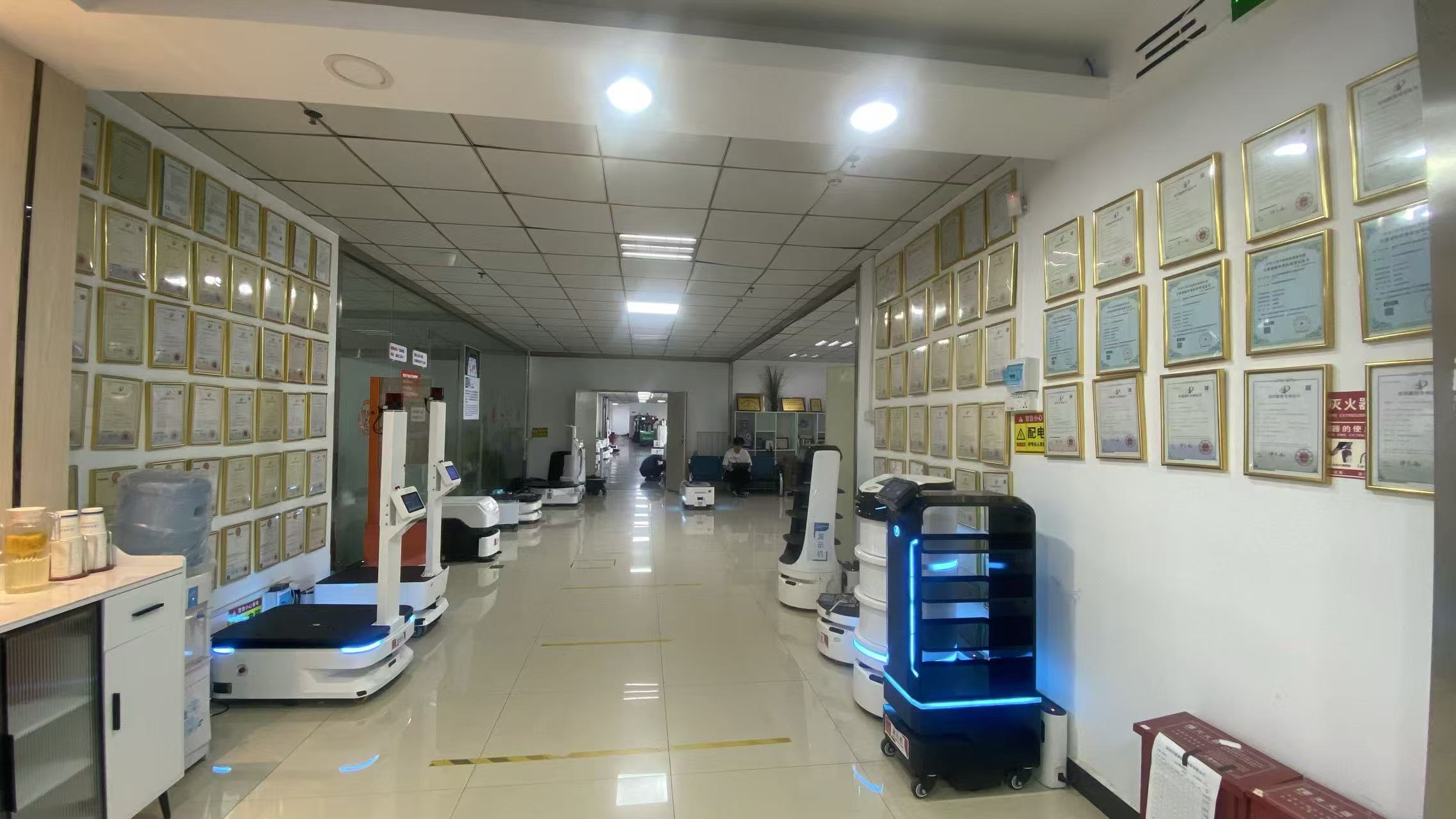
Elvorn operates two production bases in Shenzhen and Ningbo, with 5,200㎡ of total floorspace, a team of more than 200 people, 39 patents and a 98.76% response rate. The factory has been verified onsite by SGS Group, and the management system is certified to ISO 9001 and ISO 14001. Depending on the model, Elvorn robots can carry CE, FCC or PSE marks for target markets. These credentials matter because international buyers are not only purchasing a machine; they are managing compliance, safety and after-sales risk.
For stacker AGV projects, our application engineers review the site layout, pallet type, rack height, throughput target and charging plan before recommending a configuration. The company supports OEM service, design service and buyer-label options, including custom top modules, payload structures, branding and packaging. Export orders are typically handled on FOB terms with T/T payment in USD or CNY, and our main markets include North America, Western Europe, Eastern Asia, Southeast Asia and the Middle East. English documentation, remote commissioning guidance, operator training materials and spare-part supply are available through info@elvornbot.com.
Our broader product range also helps buyers avoid a single-product dead end. If the application is better served by a 1.5-ton autonomous forklift, a 2-ton lithium-ion autonomous forklift, a 600 kg AMR logistics robot or a SLAM robot chassis for a private-label development, our team can compare the options using the same navigation and control philosophy. That reduces training complexity and supports a phased automation roadmap.
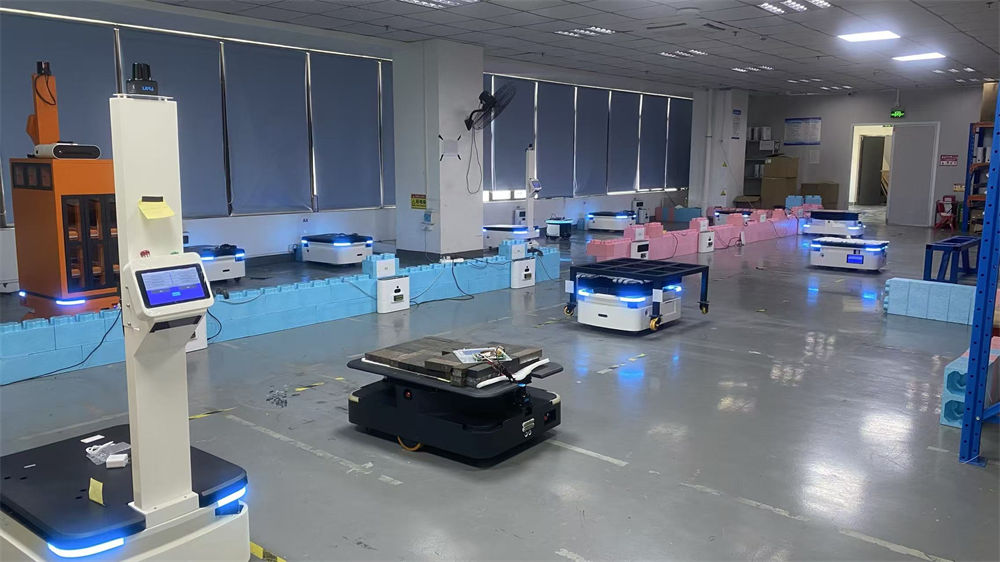
Full electric portable stacker AGV FAQ for global buyers
What is a full electric portable stacker AGV used for?
What load capacity and lift height can be customized?
Does a portable stacker AGV require magnetic tape, reflectors or QR codes?
Can the stacker AGV integrate with a WMS, MES or ERP?
How should a buyer evaluate ROI and total cost of ownership?
What safety, quality and certification checks are performed?
Does Elvorn offer OEM, ODM and buyer-label customization?
What trade terms and export support are available?
If you are comparing a full electric portable stacker AGV with a manual stacker, an automated forklift or an AMR, the most useful next step is to share your layout and load data. The recommendation should be based on the task, the pallet and the site — not on the product name alone.