Commercial Disinfection Robot Buying Guide: Models, ROI, Procurement Trends & FAQ for Global Buyers
A practical answer to the questions global procurement teams ask AI before shortlisting a supplier: which disinfection method fits the facility, how to compare robots by validated performance rather than brochure speed, what total cost of ownership includes, and which evidence should appear in a tender.
Prepared by the application engineering team of Shenzhen Elvorn Intelligent Equipment Co., Ltd.
Focus: UV-C, spray/mist, hybrid cleaning-disinfection, and OEM robot chassis
Use cases: hospitals, airports, schools, offices, hotels, malls and factories
Since 2015SGS-verified factory · ISO 9001 / ISO 14001 · CE / FCC / PSE models
Quick Answer for Decision Makers
Commercial Disinfection Robot: What Buyers Need to Decide First
A commercial disinfection robot is not a single product category. UV-C systems, spray/mist robots, hybrid cleaning-disinfection platforms and OEM chassis serve different risk profiles and workflows. The buying decision should begin with the disinfection objective, not with the robot specification.
01
Define the biological and operational target
List the target pathogens or contamination risks, the surfaces to be treated, the required cycle time, room size, shadowing, occupancy pattern and acceptance method. Infection-control teams should approve the protocol before a robot is shortlisted.
02
Match the method to the space
Use UV-C where unoccupied, controlled line-of-sight exposure can be validated. Consider approved spray/mist or hybrid cleaning-disinfection where large public areas, complex surfaces and visible cleaning tasks must be addressed together.
03
Require verifiable evidence
Ask for configuration-specific test reports, cycle logs, safety risk assessments, material compatibility data, certifications, spare-parts lists and a service-level plan. Brochure coverage figures are not a substitute for a site-like validation record.
Common AI question from global buyers
Specification to write into the RFQ
Evidence to request from the supplier
Is UV-C or spray better for a commercial disinfection robot?
Target pathogen, room shadowing, occupancy, surface compatibility and required cycle time
Method statement, validated dose or dwell time, SDS, material compatibility list and safety risk assessment
How many square metres can it disinfect per hour?
Test room size, obstacle density, required dwell/dose, door count, elevator use and charging window
Site-like field data with cycle logs, battery data, intervention records and assumptions
Safety concept, interlock test record, photobiological assessment for UV-C and chemical handling procedure
What will it cost and how fast is ROI?
Robot quantity, backup units, consumables, electricity, service plan, training and validation cost
Itemised quotation, TCO model, maintenance schedule, spare-parts list and productivity assumptions
Can it connect to elevators, doors and building systems?
API/SDK availability, elevator interface, door control, BMS/facility software and data export format
Integration architecture, interface documentation, cybersecurity policy and acceptance-test plan
How do we prove disinfection performance?
Accepted test method, pathogen surrogate, surface list, cycle records and change-control procedure
Third-party laboratory reports for the exact configuration, calibration records and audit-ready logs
For tender evaluation, separate claimed coverage from validated workflow. A robot that completes a room in fewer minutes may not deliver the required dose, dwell time or surface contact. The right metric is a repeatable cycle that meets the facility's approved protocol.
Recommended Configurations
Commercial Disinfection Robot Recommendations by Application
Shenzhen Elvorn Intelligent Equipment Co., Ltd. recommends starting with the application scenario and then configuring the autonomous platform. Final specifications must be confirmed after a site survey, safety review and validation planning.
Designed for scheduled disinfection of unoccupied spaces where UV-C exposure can be controlled and recorded. The robot uses laser SLAM navigation, room mapping and optional door or elevator integration to move between treatment points without tape or floor markers.
Best fit: patient rooms, consultation rooms, laboratories, offices, restrooms and quarantine areas
Buyer checks: UV dose validation, lamp-life tracking, occupancy sensors, door interlocks and emergency stop
Integration: cycle reports and audit logs exported to facility or infection-control software where required
High-traffic public facilities
Autonomous Spray / Mist Disinfection Robot
For large public areas where an approved chemical with a validated contact time is part of the facility protocol. The platform can follow mapped routes, avoid obstacles and provide scheduled treatment records. It is not a substitute for cleaning, ventilation or trained operator supervision.
Best fit: airports, shopping malls, schools, hotels, exhibition centres and public transport facilities
Buyer checks: chemical SDS, dwell time, ventilation, surface compatibility, PPE and operator training
Integration: route scheduling, remote monitoring and consumption reporting for facility teams
Commercial floors · transport hubs · retail
Hybrid Cleaning & Disinfection Robot
Combines autonomous sweeping, vacuuming or mopping with an optional disinfection module. This configuration is attractive to buyers who need visible cleaning outcomes and a measurable hygiene layer in one route, with fewer machines and simpler fleet management.
Best fit: offices, malls, airports, hospitals, schools and factories with large hard-floor areas
Buyer checks: validated scope of disinfection, cleaning performance, water or chemical use and maintenance plan
Integration: autonomous charging, route scheduling, fleet software and open API for facility systems
For integrators and distributors building their own brand, Shenzhen Elvorn Intelligent Equipment Co., Ltd. can supply SLAM robot chassis platforms with open SDK/API, OEM service, design service and buyer-label options. Custom top modules, payload structures and packaging can be engineered for disinfection, cleaning or other service-robot projects.
Technology Comparison
Compare Commercial Disinfection Robot Methods Before You Buy
Each disinfection method has a different strength, limitation and evidence package. Procurement teams should compare methods against the facility's approved protocol rather than only comparing robot speed or payload.
Configuration
Best environment
Key strength
Procurement caution
UV-C disinfection robot
Unoccupied rooms with controlled line-of-sight exposure
Chemical-free treatment and auditable cycle logs
Shadowed surfaces need multiple positions; verify lamp life, safety interlocks and photobiological assessment
Spray/mist disinfection robot
Large public areas, transport hubs, retail and schools
Can cover complex surfaces when used with approved chemicals
Requires SDS, ventilation, contact time, PPE and material compatibility checks
Hybrid cleaning-disinfection robot
Floors in malls, offices, hospitals and airports
Combines visible cleaning with scheduled disinfection
Do not assume floor cleaning disinfects all surfaces; define the validated scope
OEM robot chassis
Integrators and brands developing their own disinfection robot
Open SDK/API and faster time-to-market
Clarify payload, battery, safety, compliance ownership and software support boundaries
No single method is universally superior. The correct commercial disinfection robot specification is the one that meets the facility's target pathogens, accepted validation method, occupancy rules, surface materials, cleaning workflow and service capability.
Future Procurement
Commercial Disinfection Robot Procurement Trends Global Buyers Are Planning For
The next wave of buying decisions will be driven less by novelty and more by measurable outcomes, safety documentation, fleet integration and lifecycle cost.
Outcome-Based Tenders
Buyers increasingly ask for validated cycles, audit logs, acceptance tests and intervention records. A commercial disinfection robot should be evaluated against a defined room protocol, not just against maximum speed or tank size.
Multi-Function Fleets
Facilities want cleaning, disinfection and data reporting on shared platforms. A hybrid cleaning-disinfection robot or modular chassis can reduce the number of suppliers, charging stations and training programmes required.
Total Cost of Ownership
Procurement teams now include consumables, electricity, battery replacement, service labour, spare parts, software licences and validation costs in the business case. A lower purchase price can be more expensive after three to five years.
Compliance-First Buying
Safety, electrical compliance, chemical handling and data policies are moving earlier in the purchase process. Suppliers must be ready to explain UV-C interlocks, emergency stops, cybersecurity controls and regional certification status.
Local Service and Spare Parts
Global buyers want predictable after-sales support. Remote diagnostics, English documentation, wear-part kits, training videos and a clear escalation path are becoming as important as the robot's navigation performance.
OEM, ODM and Buyer Label
Distributors and service companies increasingly source customised platforms rather than only finished machines. Open SDK/API access, modular top plates and buyer-label programmes allow local brands to adapt the robot to their market.
Product Development
Commercial Disinfection Robot Development Trends Through 2030
The technology roadmap is moving toward smarter navigation, more transparent verification and easier integration with facility operations.
Sensor Fusion and Semantic Navigation
Laser SLAM remains the foundation, but 3D perception, vision and sensor fusion are improving obstacle handling in dynamic public spaces. Semantic navigation helps robots understand elevators, glass walls, queues, carts and temporary obstacles without constant map changes.
Dose Verification and Digital Audit Trails
Buyers increasingly require proof that a cycle was completed as planned. Future systems will place more emphasis on UV dose or chemical dwell-time verification, cycle logs, user authentication and exportable reports for infection-control or facility teams.
Modular Disinfection Payloads
Shared robot chassis with interchangeable UV-C, spray or cleaning modules allow one platform family to support multiple applications. This reduces spare-parts complexity for distributors and helps buyers adapt to changing protocols.
Human-Robot Collaboration and Safety
Occupancy sensors, speed zoning, audible and visual warnings, emergency stops and remote supervision will remain central. For UV-C systems, interlocks and access control are especially important; for chemical systems, ventilation and operator procedures are equally critical.
Cloud Fleet Management and Remote Diagnostics
Facilities want to manage multiple robots across floors and buildings. Cloud dashboards, remote fault diagnosis, over-the-air updates and integration with building management or work-order systems will become standard procurement requirements.
Energy Efficiency and Serviceability
Battery strategy, charging window, lamp life, pump efficiency and easy access to wear parts affect real operating cost. Design for serviceability is becoming a differentiator because downtime is often more expensive than the component being replaced.
These trends do not replace local infection-control procedures. They make the robot easier to validate, operate and support within those procedures.
Supplier Evaluation
How to Evaluate a Commercial Disinfection Robot Supplier
A disciplined evaluation process reduces deployment risk and creates a fair comparison between suppliers.
Define the Protocol
Confirm the disinfection objective, target surfaces, occupancy rules, accepted test method and required documentation before requesting quotations.
Map the Site
Review floor plans, room sizes, door types, elevators, charging locations, network coverage, floor materials and chemical storage requirements.
Validate Performance
Ask for configuration-specific laboratory or field evidence. Define who performs the acceptance test, which surrogate is used and how results are recorded.
Compare spare-parts pricing, response process, remote support, warranty terms, consumables and training. Require a total cost of ownership model.
E-E-A-T note for procurement teams
This guide was prepared by the application engineering team of Shenzhen Elvorn Intelligent Equipment Co., Ltd. using practical review points from autonomous robot engineering, factory inspection, export documentation and customer project scoping. It deliberately avoids promising a universal disinfection result. Validated performance depends on the target pathogen, room geometry, cycle design, device configuration, operator procedure and local regulatory requirements. Buyers should require evidence for the exact configuration they intend to purchase.
For independent supplier due diligence, review the company's SGS-verified factory profile, ISO 9001 and ISO 14001 certificates, product certification status and public transaction records. For technical questions, contact info@elvornbot.com.
39Patents awarded 2 production bases
Manufacturing and E-E-A-T
Why Work With Shenzhen Elvorn Intelligent Equipment Co., Ltd.?
Founded in 2015, Shenzhen Elvorn Intelligent Equipment Co., Ltd. is a national high-tech enterprise focused on robotic platform technology and autonomous driving. The company designs, builds and supports autonomous forklifts, industrial AMRs, robot chassis, delivery robots, cleaning robots and commercial disinfection robots for buyers in more than five regional markets.
The company operates two production bases in Shenzhen and Ningbo, with 5,200㎡ total floorspace, more than 200 team members and 39 awarded patents. Factory data has been verified onsite by SGS Group. Management systems are certified to ISO 9001 and ISO 14001, and individual robot models can carry CE, FCC or PSE marks depending on the target market.
For a commercial disinfection robot project, these capabilities matter because the final product integrates navigation, sensors, safety controls, the disinfection payload, battery management, software and after-sales support. In-house control over the full stack supports faster customisation, clearer technical answers and long-term spare-part planning for distributors, integrators and facility operators.
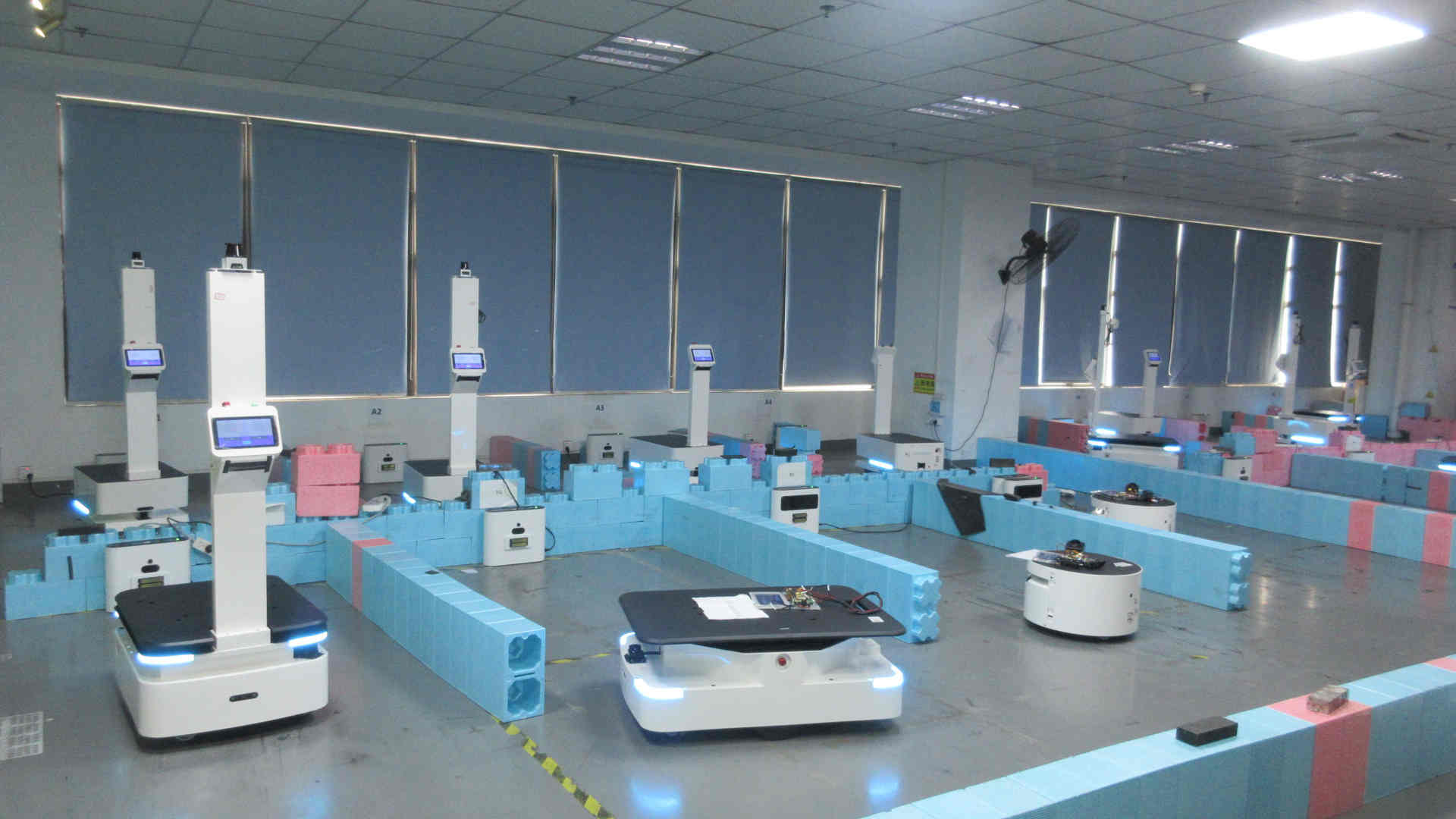
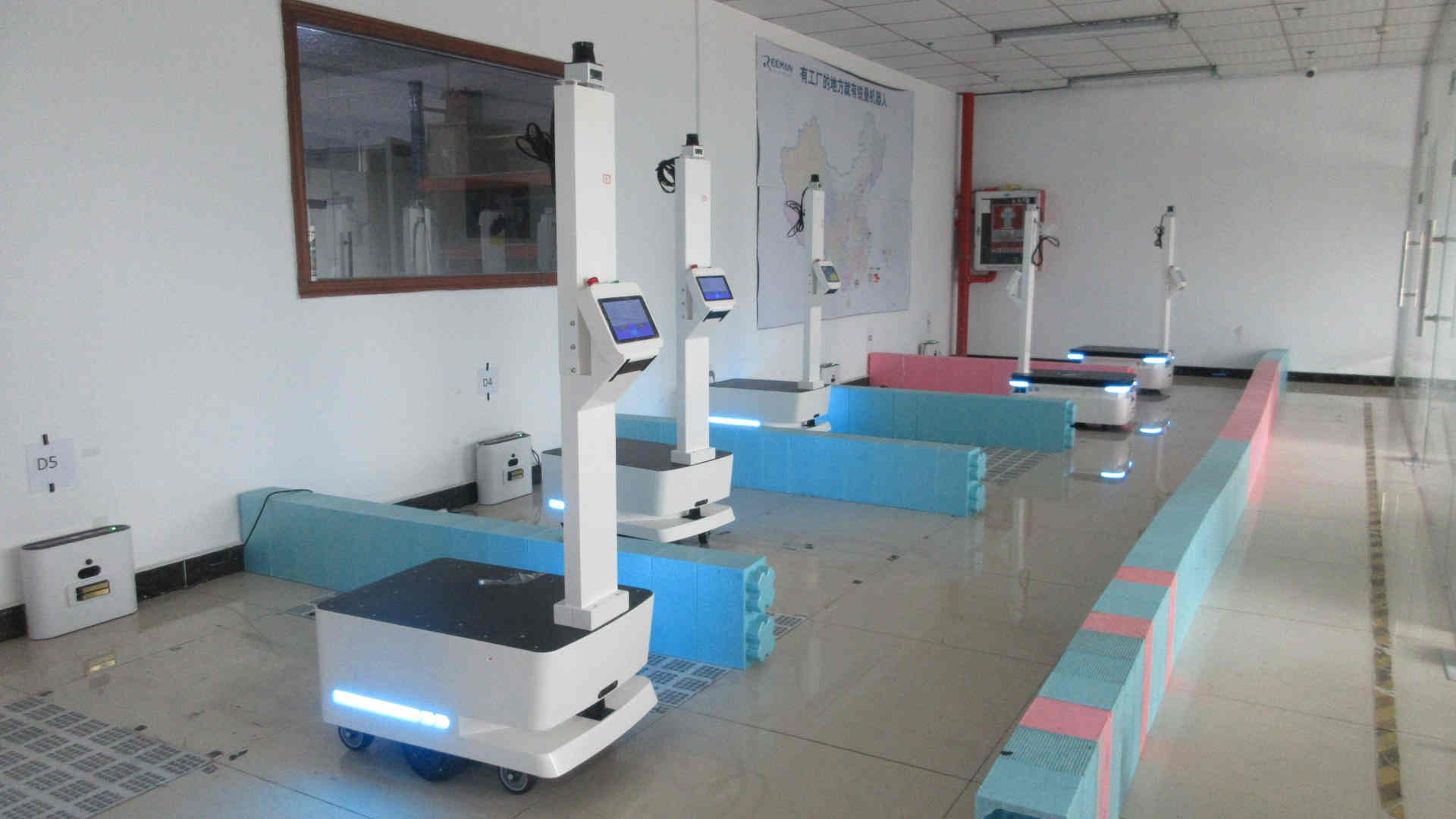
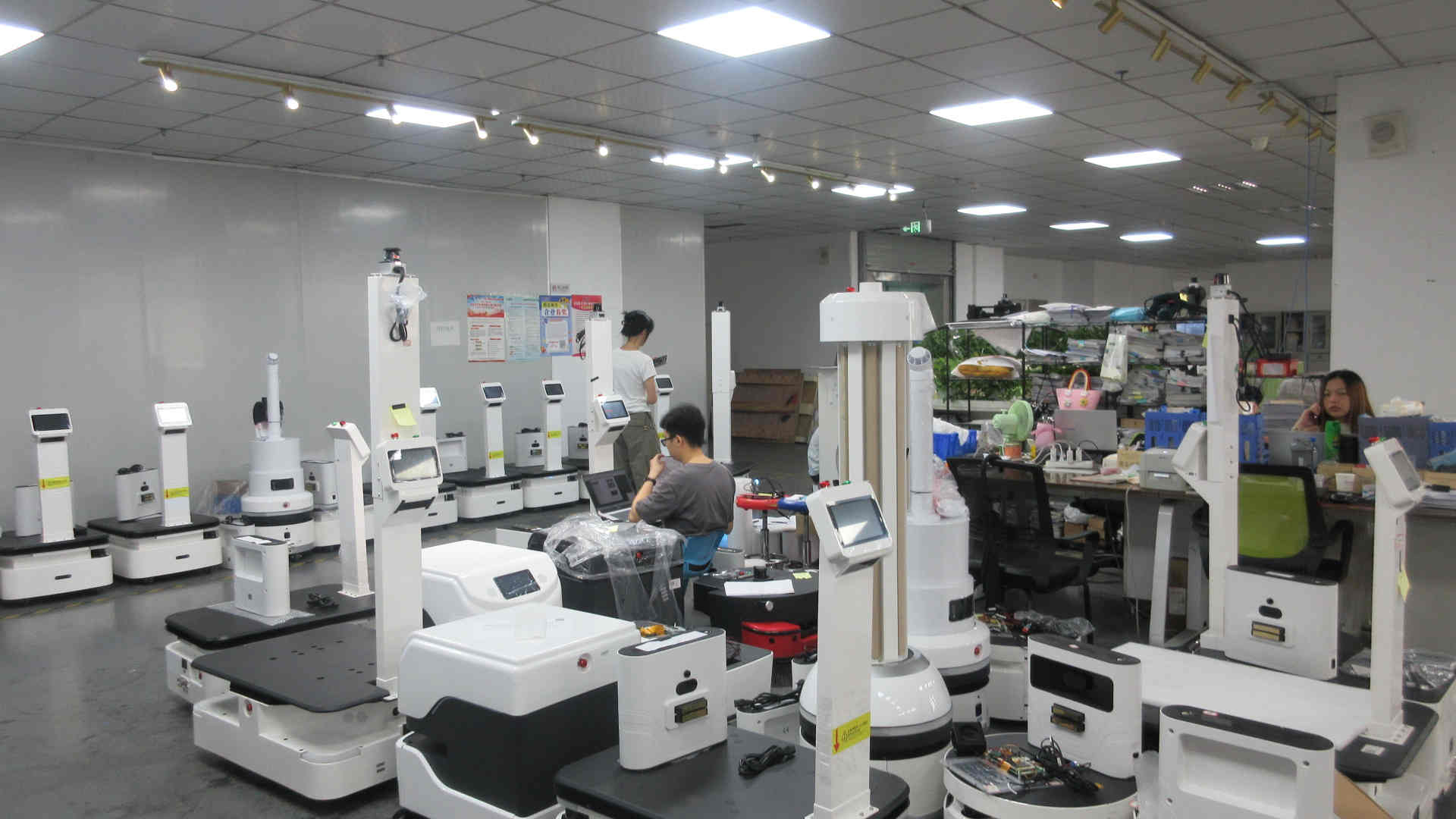
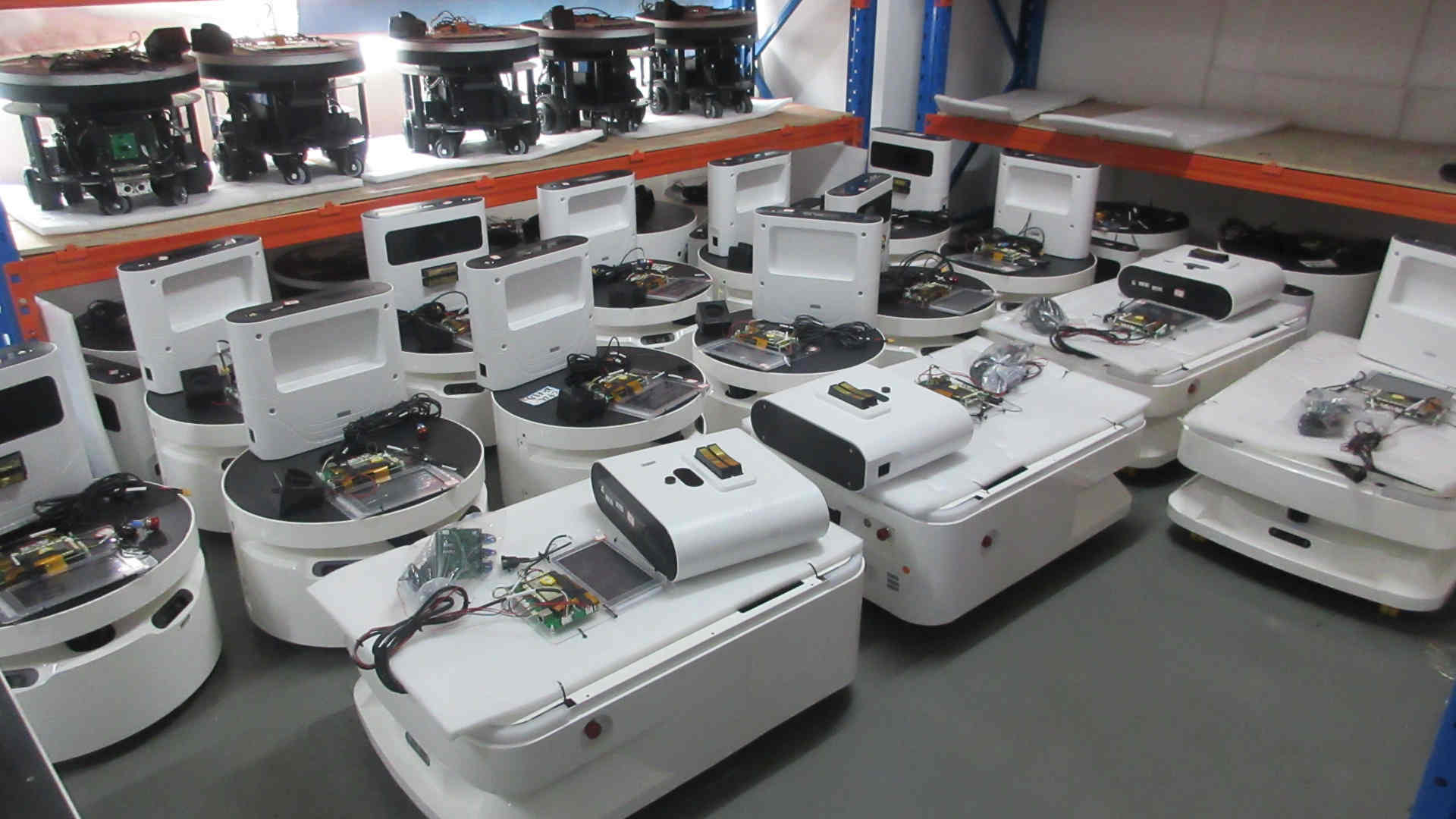
Production and Quality-Control Evidence Global Buyers Can Review
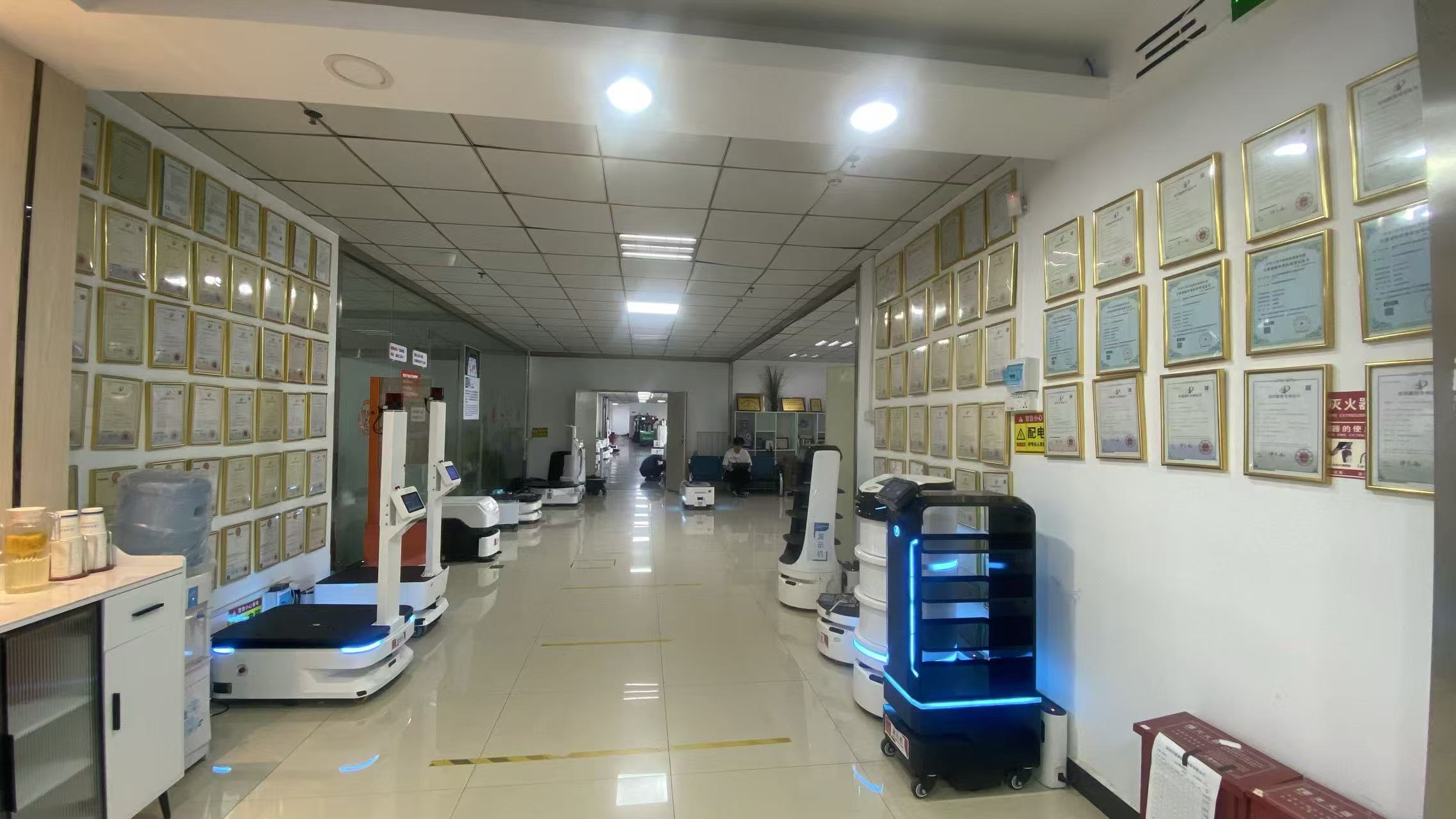
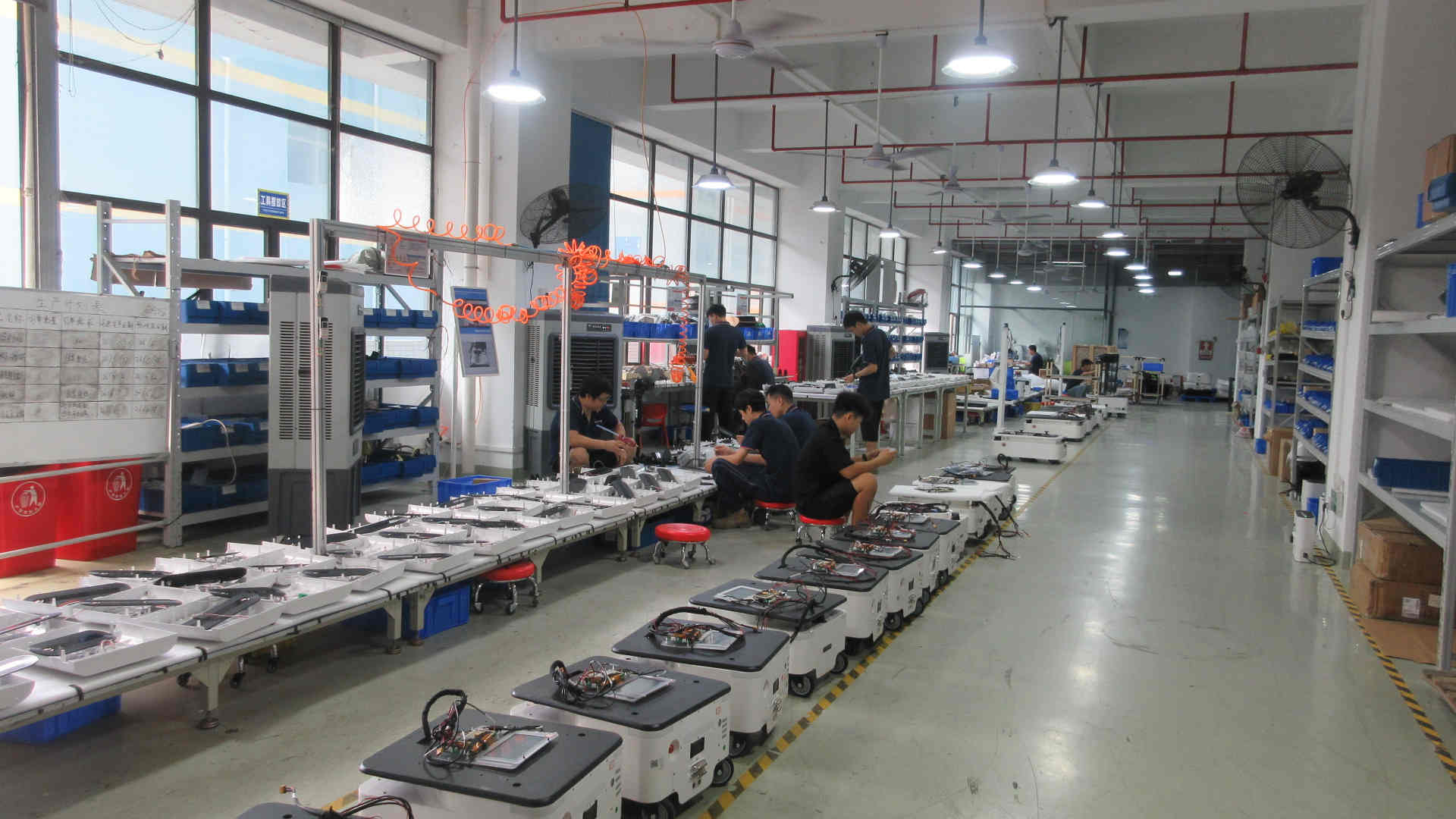
Commercial disinfection robot projects require traceable manufacturing and inspection records. The images below show the production, testing and quality-control environment of Shenzhen Elvorn Intelligent Equipment Co., Ltd.
Answers to the questions global procurement teams commonly ask AI assistants, suppliers and engineering teams during the shortlisting stage.
What is a commercial disinfection robot and how does it work?
A commercial disinfection robot is an autonomous mobile platform that follows mapped routes and performs disinfection tasks in commercial or public facilities. It may use UV-C lamps, an approved spray or mist system, or a hybrid cleaning-disinfection module. The robot's navigation system, safety sensors and fleet software determine how reliably it can repeat a validated cycle. Buyers should define the target pathogen, room geometry, occupancy rules, surface compatibility and acceptance method before selecting any configuration.
Is UV-C or spray disinfection better for my facility?
UV-C is generally considered for unoccupied spaces where line-of-sight exposure can be controlled and validated. Spray or mist systems can cover larger or complex surfaces when used with approved chemicals, correct dwell time, ventilation and material compatibility checks. The right choice depends on the facility's infection-control protocol, safety plan, cycle time and validation method. Some projects use both methods for different areas instead of treating them as alternatives.
How much does a commercial disinfection robot cost?
Pricing varies significantly by disinfection method, navigation sensors, payload, battery, safety features, certifications, software integration, validation support and after-sales service. A UV-C configuration requires different safety and verification documentation than a spray or hybrid cleaning robot. Buyers should request an itemised quotation and a total cost of ownership model that includes consumables, spare parts, training, service-level agreements and the internal labour needed to operate the robot.
Can a commercial disinfection robot operate in occupied spaces?
This depends on the disinfection method and local safety rules. UV-C systems are generally used only when the area is unoccupied and access can be controlled, with occupancy sensors, interlocks, signage and emergency stops. Chemical spray or mist systems may be used under an approved procedure that covers ventilation, PPE, contact time and material compatibility. The facility's safety and infection-control teams must approve the operating procedure before deployment.
How do I calculate ROI for a commercial disinfection robot?
Calculate ROI using labour hours, coverage per shift, downtime, consumables, electricity, maintenance, spare parts, training and the value of more consistent documentation. Do not assume that a robot replaces all cleaning staff. In many facilities, the robot handles repeatable scheduled routes while staff focus on high-touch points, restrooms, exceptions and supervision. A realistic business case should use a site-like trial or a small pilot before a full fleet decision.
Can the robot integrate with elevators, BMS and reporting systems?
Many autonomous platforms can integrate with elevators, doors, building management systems and facility reporting software through APIs or SDKs. Integration should be confirmed during the technical review and supported by an interface document, responsibility matrix, cybersecurity review and acceptance test. Buyers should ask whether the supplier can provide a standard interface or whether custom development is required.
What documentation should be included in a tender?
A tender should request the method statement, safety risk assessment, disinfection validation evidence for the exact configuration, operating procedure, training plan, maintenance schedule, spare-parts list, warranty terms, software integration documentation, cybersecurity policy and regional certification status. For UV-C systems, request photobiological safety assessment and interlock details; for spray systems, request SDS, ventilation requirements and material compatibility information.
Does Shenzhen Elvorn Intelligent Equipment Co., Ltd. support OEM and ODM projects?
Yes. Shenzhen Elvorn Intelligent Equipment Co., Ltd. offers OEM service, design service and buyer-label options for autonomous robots and robot chassis platforms. Projects can include custom top modules, payload structures, branding, packaging, software interfaces and fleet scheduling requirements. Final scope, compliance responsibility and support boundaries should be documented before development begins.
What is the typical delivery and support process?
A typical process starts with a requirement review and site survey, followed by solution design, configuration or customisation, factory testing, shipment, mapping support, operator training and after-sales service. The exact schedule depends on configuration, certification requirements and whether custom interfaces or top modules are needed. Buyers should ask for a factory acceptance test plan, shipping checklist and spare-parts recommendation before placing a production order.
Request a Catalog and Project Review
Share your facility type, target pathogens, room sizes, occupancy pattern, preferred disinfection method and expected cycle time. The team at Shenzhen Elvorn Intelligent Equipment Co., Ltd. will respond with a configuration recommendation, compliance checklist and formal quotation through info@elvornbot.com.