0%

China’s mobile robotics market is moving beyond factory floors. Autonomous mobile robots now carry totes through warehouses, deliver components beside production lines, and navigate changing routes around people. Yet a polished product page does not prove reliable performance. Buyers need to examine payload, navigation, fleet software, safety features, integration support, and service availability.

Robotics pioneer Rodney Brooks wrote, “The world is its own best model.” That idea matters for every Mobile Robot: sensors and software must respond to the actual aisle, floor surface, and traffic—not just a perfect demonstration. This guide introduces ten Chinese manufacturers and considers their products, application focus, technical capabilities, and evidence of real-world deployment. It is a starting point, not a verdict.

Look closely. A robot that moves quickly in an empty hall may behave differently near a crowded packing station. Published specifications also vary, and customer results can depend on site layout and integration quality. The comparisons therefore favor verifiable details over broad claims, while recognizing that public information is uneven. That is a limitation worth keeping in view. No ranking can fully capture maintenance response, software updates, or performance after months of daily use. Readers should confirm current specifications and request site-specific trials before making a purchasing decision.
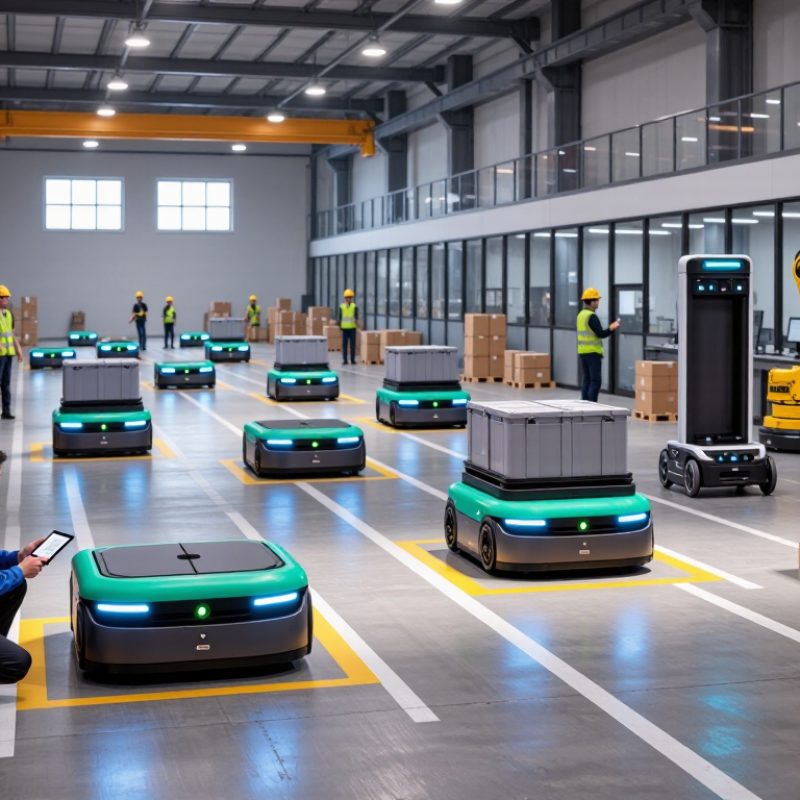
Top 10 Mobile Robot Manufacturers in China

What Mobile Robots Are and How the Chinese Market Is Structured

Top 10 Mobile Robot Manufacturers in China

What Mobile Robots Are and How the Chinese Market Is Structured

Mobile robots move materials or equipment with limited direct human control. Common types include automated guided vehicles, which often follow set routes, and autonomous mobile robots, which use sensors and maps to navigate changing spaces. The boundary is not always clear. Not all are autonomous. Their real value depends on safe operation, reliable navigation, and fit with a site’s workflow—not just speed.

China’s market spans robot makers, component suppliers, software providers, and system integrators. Manufacturers may build the mobile platform, while integrators connect it to warehouse software, lifts, conveyors, or production systems. Demand comes from factories, warehouses, hospitals, and other sites with repetitive transport tasks. Capabilities vary widely, even among products in the same category. A polished demonstration does not prove reliable performance across a crowded, changing facility; that is an easy detail to overlook.

Tips: Ask for a site trial using your actual floor layout, payloads, and traffic patterns. Check charging routines, obstacle handling, maintenance access, and integration responsibilities. Request measurable results, such as completed trips per shift, and agree on how downtime will be recorded.

How the Top 10 Manufacturers Were Selected

Choosing ten manufacturers requires more than comparing advertised payloads or headline speed. The International Federation of Robotics’ World Robotics 2024 report recorded about 205,000 professional service robots sold worldwide in 2023, up 30%. Transport and logistics robots accounted for roughly 113,000 units. These figures show market demand, not a China-only ranking. That distinction matters.

Each candidate was assessed using verifiable evidence: platform range, payload, navigation options, fleet management, safety documentation, and system integration. Case studies were checked for facility type, fleet size, and operating hours. Where available, reported outcomes such as travel distance and task completion time were considered. After-sales support, customization capacity, and clear technical documentation also informed selection. Not every supplier discloses comparable figures. That leaves room for judgment. Missing data was treated as uncertainty, not proof of weak performance. IFR’s figures cover professional service robots broadly; they do not isolate Chinese mobile-robot manufacturers. Public case studies can also favor successful deployments, so claims were weighed against the detail and consistency of their supporting evidence.

Profiles of 10 Leading Mobile Robot Manufacturers in China

Profiles of China’s mobile robot manufacturers are most useful when they compare real operating needs, not slogans. These ten capability profiles cover common strengths across the sector; they are not a verified ranking of named companies.

One manufacturer may focus on warehouse AMRs that move totes between storage aisles and packing stations.
Another may build automated guided vehicles for repeatable factory routes.
A third may specialize in pallet transport, with lifting systems sized for defined loads.
A fourth may integrate robots with warehouse software and existing equipment.
A fifth may offer compact units for narrow corridors.
A sixth may emphasize fleet coordination across several floors.
A seventh may design robots for assembly-line material delivery.
An eighth may focus on mapping and navigation in changing layouts.
A ninth may provide custom platforms for heavy industrial payloads.
A tenth may serve smaller facilities with simpler deployment options.

Specifications deserve close attention. Check payload, turning radius, charging method, safety sensors, and performance on the actual floor surface. Ask how the system behaves when aisles are blocked or Wi-Fi drops. A polished demonstration is not the same as a reliable shift. And no profile replaces a site test. Public product information can also be incomplete, so buyers should confirm current configurations, support coverage, and integration requirements directly with each manufacturer.

Key Technologies and Applications Across the Industry

Top 10 Mobile Robot Manufacturers in China: Key Technologies and Applications Across the Industry

China’s mobile robot industry spans automated guided vehicles and autonomous mobile robots. Their capabilities depend on more than movement. Sensors, mapping software, route planning, and fleet management must work together on busy factory floors. Laser scanners can help robots navigate around shelves, while cameras may support object detection. Performance still varies with lighting, floor conditions, and traffic.

Applications range from moving components between production stations to carrying parcels in warehouses. A useful evaluation looks beyond advertised speed: check payload, stopping distance, charging time, and how the fleet handles blocked aisles. A clean demonstration can hide messy shift changes. Real-world trials matter. Integration also takes planning; older doors, lifts, or warehouse software may need adjustments. These details can complicate deployment, even when the robot itself performs well.

Tips: Test robots on the actual route, with representative loads and peak-hour traffic. Record missed stops, recovery time, and operator interventions. A short pilot is helpful, but it may not reveal long-term maintenance needs. Keep that limitation in view.

Top 10 Mobile Robot Manufacturers in China - Key Technologies and Applications Across the Industry

Representative profiles of mobile-robot product segments found in the Chinese market—not a verified company ranking. Payload figures are indicative product ranges; actual specifications vary by model and configuration.

No. Anonymous Industry Profile Typical Robot Type Key Technologies Indicative Payload Common Applications
1 Factory transport profile Low-profile autonomous mobile robot (AMR) Laser-based SLAM, safety scanners, fleet scheduling, automatic charging About 300–1,500 kg Line-side material delivery, work-in-process movement, and factory logistics
2 Warehouse pallet-handling profile Autonomous pallet truck Pallet detection, 2D/3D sensing, route planning, obstacle avoidance About 500–2,000 kg Pallet transfer, staging, and replenishment in warehouses and distribution centers
3 Automated forklift profile Autonomous counterbalance or reach forklift Localization, fork and load sensing, safety-rated scanners, warehouse-system integration About 1–3 tonnes Pallet storage and retrieval, loading areas, and repetitive warehouse transport
4 Heavy-load transport profile Heavy-duty omnidirectional AMR or transfer vehicle Multi-sensor localization, coordinated motion control, load monitoring, safety zoning Several tonnes to tens of tonnes, depending on design Movement of large assemblies, tooling, and heavy materials in industrial plants
5 Goods-to-person warehouse profile Shelf-lifting or tote-carrying AMR SLAM or coded navigation, multi-robot traffic management, warehouse execution integration About 300–1,500 kg, depending on platform Order picking, goods-to-person workflows, and inventory movement
6 Cleanroom logistics profile Cleanroom AMR or overhead-compatible transfer robot Low-particle design, precise localization, cleanroom-compatible materials, equipment interfaces Model-dependent; often designed for carriers or compact loads Semiconductor, electronics, and other controlled-environment material handling
7 Hospital service profile Indoor delivery AMR Indoor mapping, elevator and door interfaces, human-aware navigation, access control Typically tens to a few hundred kilograms Transport of meals, linens, supplies, and sealed items within healthcare facilities
8 Commercial cleaning profile Autonomous floor-cleaning robot Mapping and localization, surface and obstacle sensing, route coverage, docking Not generally specified as a cargo payload; varies by cleaning model Cleaning of malls, airports, offices, hospitals, and other large indoor spaces
9 Outdoor delivery profile Low-speed sidewalk delivery robot GNSS and visual positioning, cameras and ranging sensors, remote monitoring, route geofencing Usually tens of kilograms; model and local rules vary Last-mile delivery pilots, campuses, business parks, and controlled communities
10 Inspection and patrol profile Wheeled mobile inspection robot Autonomous navigation, optical and thermal imaging, environmental sensors, remote operation Payload varies with sensor package and platform design Routine inspection of industrial sites, utility facilities, and large indoor premises

How the Manufacturers Differ in Products and Capabilities

China’s mobile robot manufacturers differ less by the word “autonomous” than by the work their machines can handle. Some focus on compact units that move small totes through narrow warehouse aisles. Others build heavier platforms for moving pallets or components across factory floors. Payload capacity matters, but so do turning radius, floor tolerance, and charging time.

Small details count. A robot that navigates well on smooth concrete may struggle near a ramp or a busy loading bay. Navigation methods also vary, from mapped routes using laser sensors to systems that rely on visual markers. Fleet software can coordinate traffic and connect tasks with warehouse systems, yet integration often takes more effort than a brochure suggests. Ask how the equipment behaves when Wi-Fi drops or a route is blocked.

Manufacturers also differ in how much they adapt a standard model. Some offer conveyors, lifts, or custom interfaces; others prioritize repeatable deployments and simpler maintenance. Check service response times, spare-parts availability, and training arrangements in the intended operating region. A live trial with representative loads is more revealing than a polished demonstration. Even then, one test site cannot predict every shift, surface, or workflow. That limitation is easy to overlook.

Top 10 Mobile Robot Manufacturers in China: How Products and Capabilities Differ

Representative Payload Capacity by Mobile Robot Type

Mobile robot portfolios span compact goods-to-person units, tote and pallet movers, autonomous forklifts, and heavy-load platforms. The figures show representative payload ratings of commercially available systems; they are examples, not market averages or rankings, and specifications vary by model.

FAQS

What are mobile robots?

They move materials or equipment with limited direct human control. Some follow fixed routes; others use sensors and maps. Not all are autonomous.

Where are mobile robots commonly used?

They transport parts between factory stations, carry parcels in warehouses, and move supplies in hospitals. Repetitive routes are a common fit.

What should buyers check beyond speed?

Check payload, stopping distance, turning radius, charging time, and floor tolerance. A fast robot may still struggle on ramps or in crowded aisles.

How can buyers test a robot realistically?

Run a site trial with actual loads, routes, and peak-hour traffic. Record missed stops, operator interventions, and recovery time. Short pilots have limits.

What can affect navigation performance?

Lighting, floor conditions, traffic, and blocked routes can all matter. Test near shelves, ramps, and loading bays—not only on clean floors.

Why does integration need careful planning?

Robots may need to connect with warehouse software, lifts, conveyors, or production systems. Older equipment can require adjustments. It may take longer than expected.

What should buyers ask about fleet software?

Ask how it coordinates traffic and assigns tasks. Also test what happens when Wi-Fi drops or an aisle becomes blocked. Small failures matter.

How do manufacturers’ products differ?

Some build compact robots for small totes and narrow aisles. Others make heavier platforms for pallets or factory components. Capabilities vary.

What service details should be confirmed?

Check response times, spare-parts access, maintenance routines, and staff training in the operating region. A polished demonstration proves little.

Can one successful trial guarantee reliable performance?

No. One site cannot represent every shift, surface, or workflow. Keep that limitation in view.

Conclusion

This article introduces what a Mobile Robot is and explains how China’s mobile robotics market is organized, from technology-focused developers to manufacturers serving a range of industries. It outlines the criteria used to assess leading manufacturers, including product breadth, engineering capabilities, application experience, and the ability to meet different operational needs. The profiles offer a structured overview of ten notable companies without reducing their differences to a simple ranking.

The article also explores technologies and applications shaping the industry, such as autonomous navigation, sensing, fleet coordination, and integration with workplace systems. By comparing product types, technical strengths, and areas of focus, readers can better understand how manufacturers differ and what factors may matter when evaluating solutions. Overall, it provides a practical introduction to China’s mobile robot sector and its varied capabilities.

Evelyn

Evelyn

Evelyn is a professional marketing specialist with a strong understanding of the company’s products, services, and the needs of the people they are designed to support. Through ongoing research and close collaboration with colleagues across the business, Evelyn translates product knowledge into......