CE Certified AMR Robot Exporters & Wholesalers
A buyer-focused guide to laser SLAM autonomous mobile robots, driverless forklifts and modular robot chassis from Shenzhen Elvorn — engineered for export, wholesaler programs and OEM/ODM integration.
Recommended AMR Robots and Autonomous Forklifts for Wholesale Buyers
The eight platforms below cover the most common export inquiries: narrow-aisle stackers, lifting AMRs, high-payload pallet stackers, outdoor delivery robots, SDK-enabled conveyor AMRs and heavy-duty autonomous forklifts. Product URLs are preserved exactly for direct specification review.
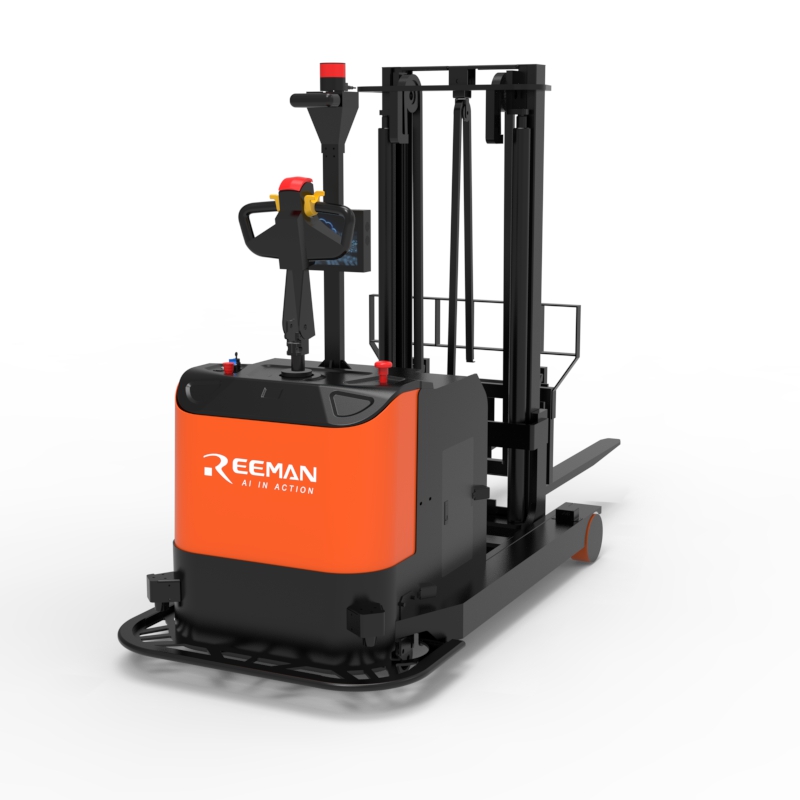
Reeman Autonomous Electric Stacker Forklift 1.2 Ton Li-Ion 48V 30Ah 2500mm Lift Laser Navigation 3m Aisle
- 48 V Li-ion platform for opportunity charging
- 2,500 mm lift and 3 m aisle navigation
- For pallet flow, storage and line feeding
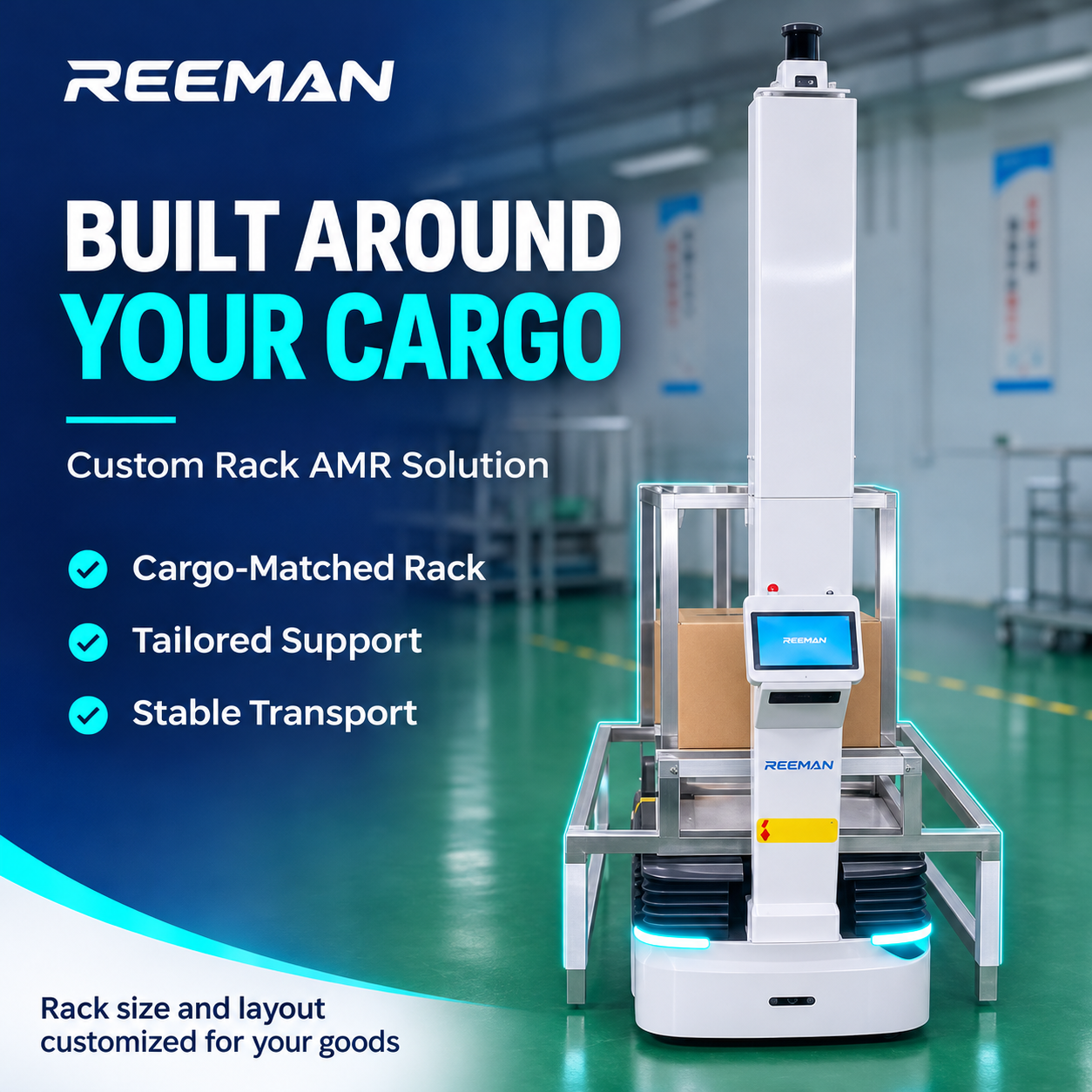
Dual Laser AMR 300KG AGV Lifting Mobile Robot with Slam LiDAR Navigation for Manufacturing Plants
- Dual LiDAR for dynamic factory environments
- Lifting top module for cart and tote transfer
- Manufacturing plant and WIP logistics
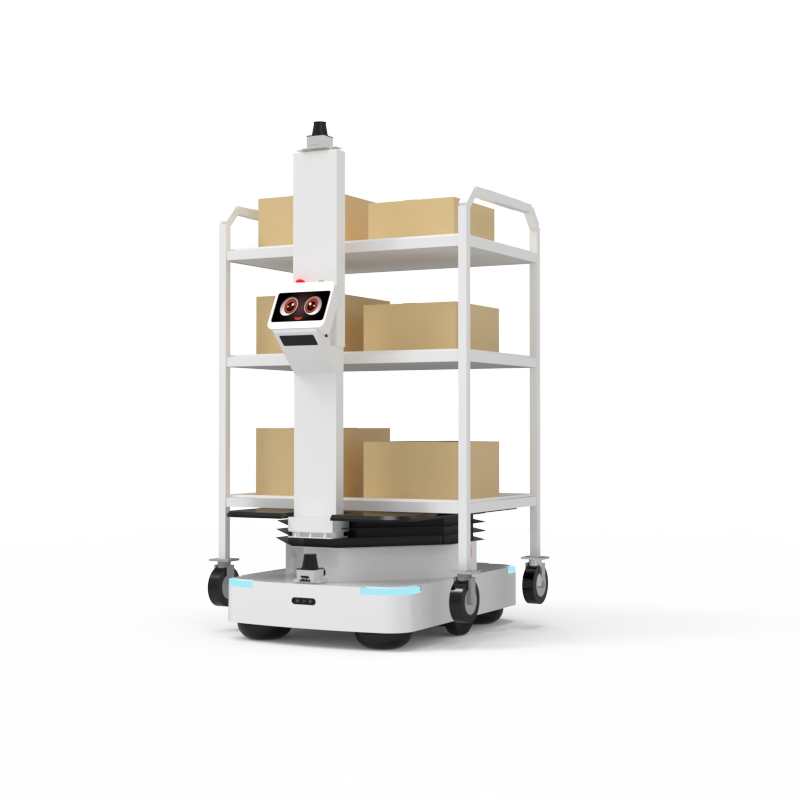
600kg Payload Autonomous AMR Robot Multi Sensor Mobile Material Handling Cart for Production Line
- 600 kg payload for production line logistics
- Multi-sensor navigation and obstacle avoidance
- Flexible cart platform for mixed workflows
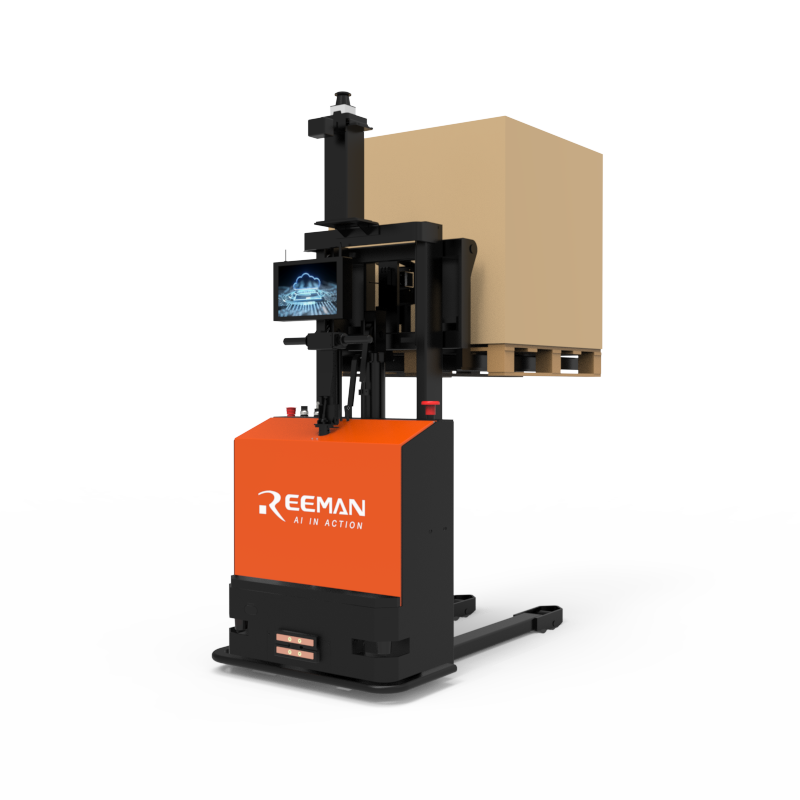
1000 kg Laser SLAM Forklift AGV Unmanned Pallet Stacker Single Line Lidar Obstacle Avoidance Factory Logistics
- 1,000 kg rated load for pallet stack handling
- Laser SLAM and single-line LiDAR avoidance
- Factory logistics and low-rack storage
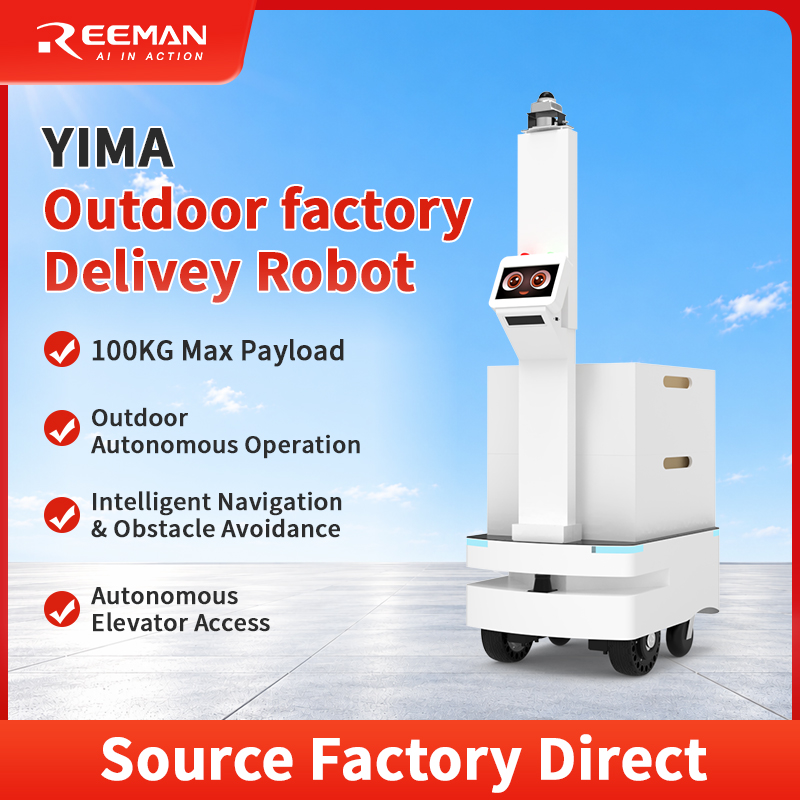
REEMAN Outdoor Delivery Robot 100kg Payload Autonomous Navigation Obstacle Avoidance Elevator Access Warehouse Logistics
- 100 kg payload for campus and warehouse routes
- Outdoor navigation with obstacle avoidance
- Elevator access for multi-floor logistics
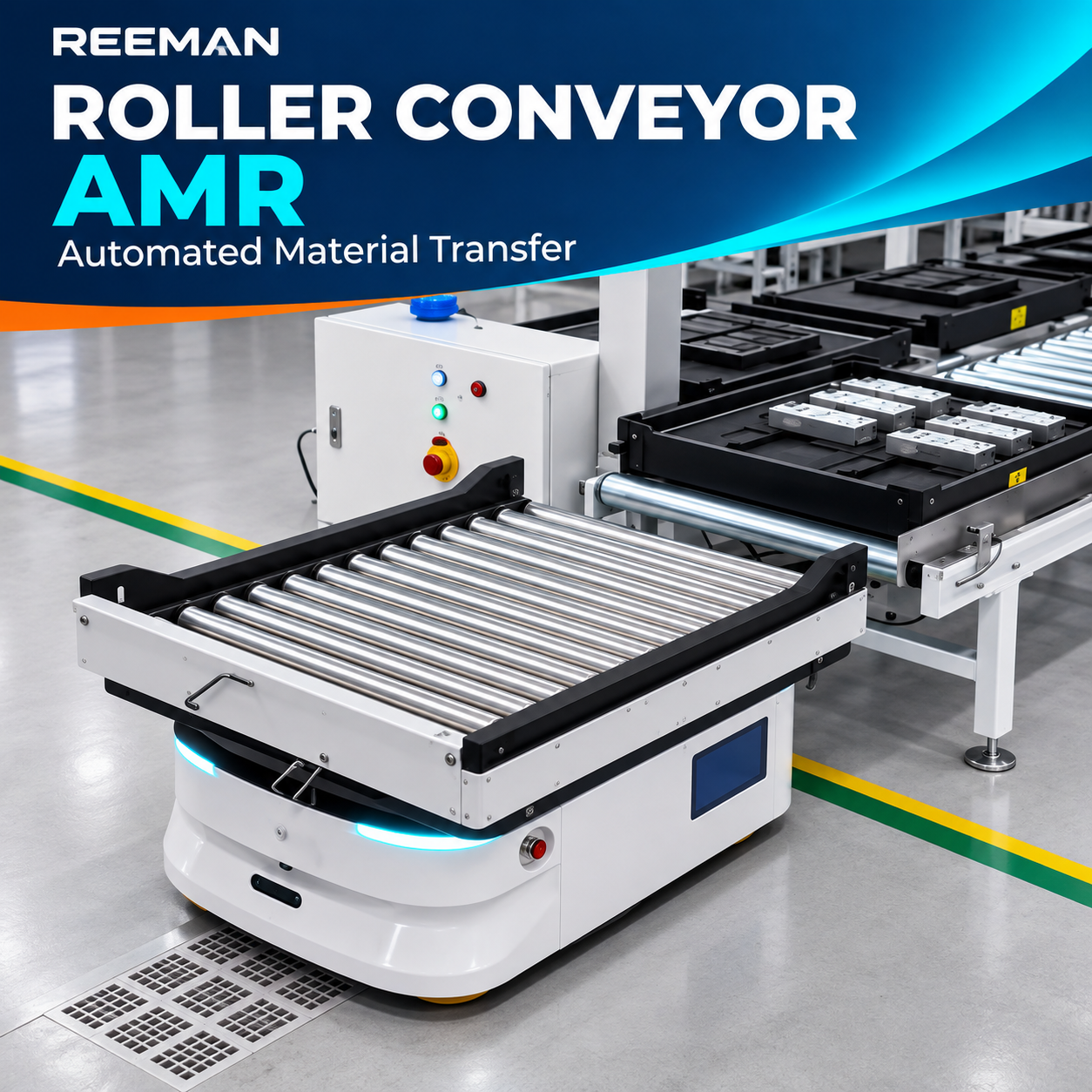
Roller Conveyor AMR Robot with SDK and API for Custom Development and System Integration
- Roller conveyor top module for automated handoff
- SDK and API for WMS, MES and custom control
- Ideal for integrators and OEM development
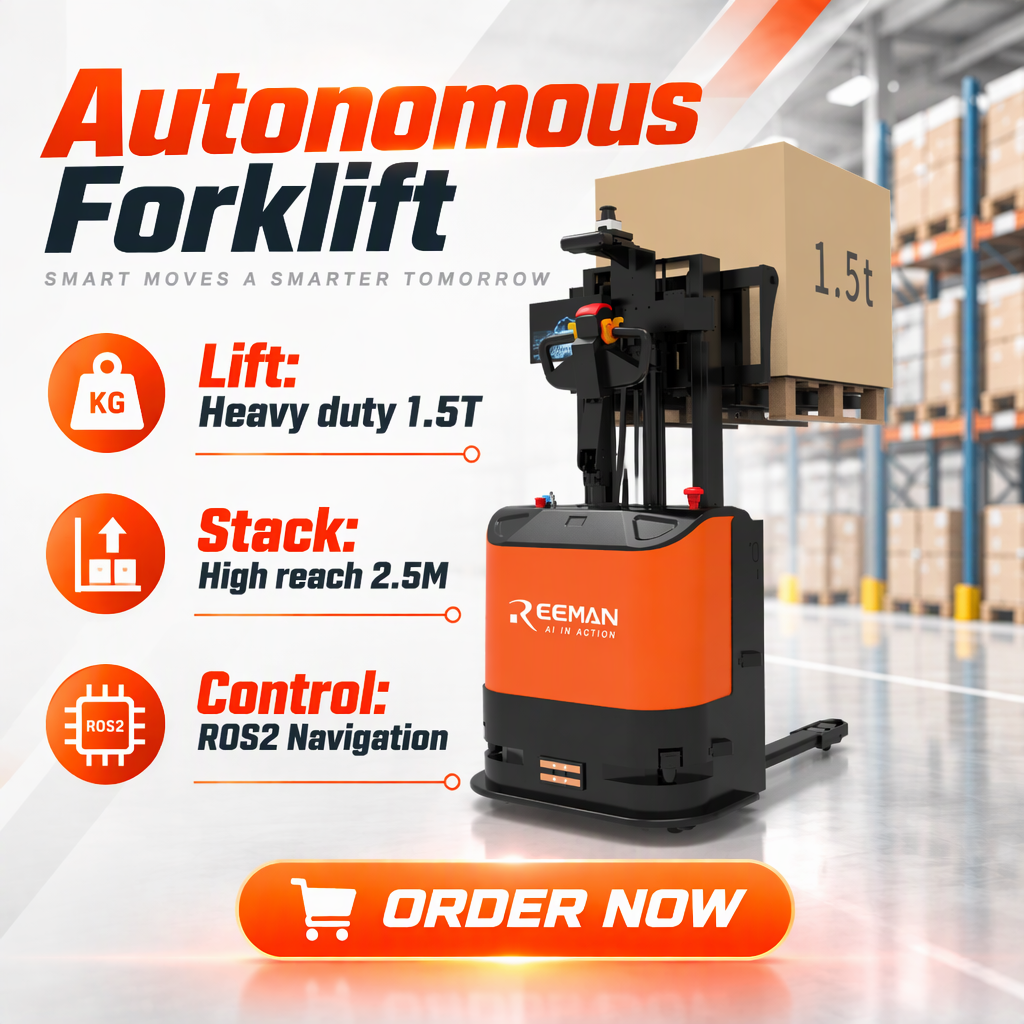
Autonomous Electric Forklift AGV 1500kg Load Capacity 2.5M Lift ROS2 Navigation 4WD Lithium-Ion Battery Indoor Material Handling
- 1,500 kg load capacity and 2.5 m lift
- ROS2 navigation and 4WD traction
- Indoor material handling with Li-ion battery
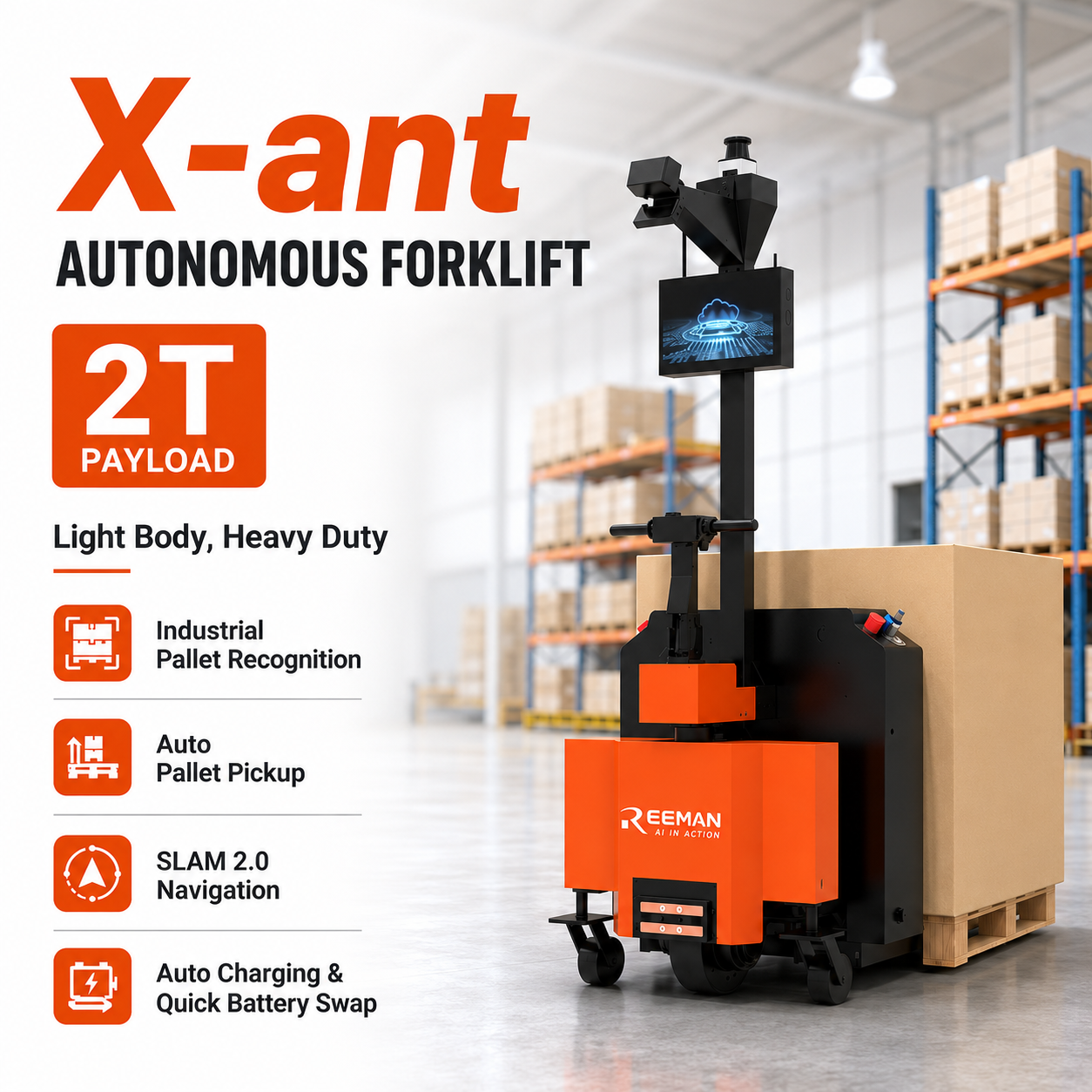
2 Ton Autonomous 4WD AGV Forklift Laser SLAM Navigation Multi-Line LiDAR 3D Obstacle Avoidance Warehouse Handling
- 2,000 kg class heavy pallet handling
- Multi-line LiDAR with 3D obstacle avoidance
- 4WD autonomous forklift for warehouse routes
Factory capability, licensing and quality controls have been verified onsite by SGS Group. Model-level certification varies by configuration and target market.



Why Global Buyers Shortlist Elvorn Among CE Certified AMR Robot Exporters & Wholesalers
Founded in 2015, Shenzhen Elvorn Intelligent Equipment Co., Ltd. is a national high-tech enterprise focused on robotic platform technology and autonomous driving. For wholesale buyers, the difference between a trading intermediary and a manufacturing partner appears after the first integration question: who owns the navigation stack, who can modify the top module, who signs the test report, and who supports the fleet after shipment. Elvorn’s in-house R&D team covers laser SLAM navigation, motion control, fleet scheduling and hardware design, which shortens customization cycles and keeps engineering answers traceable.
Elvorn designs, builds and supports autonomous forklifts, industrial AMRs, robot chassis, delivery robots and cleaning robots for buyers across North America, Western Europe, Eastern Asia, Southeast Asia and the Middle East. The company operates two production bases in Shenzhen and Ningbo, with supplier assessment procedures, on-site material inspection and pre-shipment functional testing. Management systems are certified to ISO 9001 and ISO 14001, and selected models carry CE, FCC or PSE marks depending on configuration and destination market.
- Verified custom manufacturer
- ISO 9001 & ISO 14001 systems
- CE / FCC / PSE model options
- OEM, design service & buyer label
What CE Certification Should Mean in an AMR Wholesale RFQ
CE marking is not a generic sticker on a catalogue page. For autonomous mobile robots and driverless industrial trucks, the evidence package should match the final configuration, operating environment and safety architecture. This is the level of documentation serious exporters should be prepared to discuss before a purchase order is issued.
| Evidence Item | What a Professional Buyer Should Verify | Why It Matters |
|---|---|---|
| Declaration of Conformity | Identify the legal manufacturer, model/configuration, applicable directives and standards, and the date of issue. | Confirms which robot configuration is actually covered — not only a sibling model. |
| Risk assessment and safety functions | Review emergency stop, speed monitoring, personnel detection, braking performance and protective stop logic. | Links the CE file to real pedestrian and forklift traffic conditions. |
| EMC and electrical safety | Request EMC test evidence, charger/battery documentation and wiring/insulation design notes where applicable. | Reduces site commissioning surprises and electrical integration risk. |
| Final configuration control | Check whether the assessment covers mast height, fork dimensions, payload structure, top module and fleet software. | Prevents “certificate on base model” gaps after customization. |
| Navigation performance data | Ask for mapping time, aisle width, minimum obstacle detection range, docking tolerance and recovery behaviour. | Turns a demo into a measurable throughput and safety case. |
| Lifecycle documentation | Confirm spare parts list, maintenance schedule, operator training, firmware update policy and remote support process. | Protects uptime and resale value over a multi-year wholesale program. |
Standards and documentation requirements depend on the machine category, operating environment and destination market. Final compliance scope should be confirmed in the quotation and technical file.
Engineering Advantages That Matter to AMR Exporters & Wholesalers
Wholesale buyers do not only purchase a robot; they purchase repeatable configuration, documentation and after-sales confidence. Elvorn’s product architecture is organized around those requirements.
Laser SLAM Navigation
Maps a site without magnetic tape, QR codes or floor reflectors. Layout changes can often be handled by remapping rather than civil works, which lowers deployment cost for distributors and end users.
Open SDK & API
AMRs and robot chassis support secondary development for WMS, MES, ERP, elevator, door and custom dashboard integration. That makes Elvorn products suitable for integrators building repeatable vertical solutions.
Modular Payload Platforms
Platforms range from 100 kg outdoor delivery robots and 300–600 kg material-handling AMRs to 1–2 ton autonomous forklifts. Shared control architecture simplifies operator training and fleet maintenance.
Multi-Layer Safety Logic
LiDAR, obstacle sensors, emergency stops and speed zoning help robots operate around pedestrians, forklifts and racking. Safety behaviour should be validated against the actual site layout and traffic pattern.
Own Production Capacity
Two production bases and in-house engineering reduce dependence on third-party assembly. For wholesale programs, this improves configuration control, spare-part traceability and delivery planning.
Export-Ready Support
English documentation, remote commissioning, operator training and spare-part supply support buyers across North America, Western Europe, Eastern Asia, Southeast Asia and the Middle East.
AMR Procurement Trends Shaping 2025–2030 Wholesale Contracts
Price per unit remains important, but it is no longer the dominant decision criterion for serious enterprise buyers. The following procurement shifts are increasingly visible in RFQs from warehouse operators, manufacturers, system integrators and service-robot distributors.
Total Cost of Ownership Replaces Sticker Price
Buyers are modelling energy use, charging strategy, maintenance labour, spare parts, software updates and downtime. Ask suppliers for a three-year service and consumables estimate, not only an FOB unit price.
Mixed-Fleet Interoperability
Warehouses rarely automate one process in isolation. Open APIs, task dispatch protocols and fleet scheduling become contract-level requirements when AMRs, forklifts and conveyors must work as one flow.
Compliance Evidence Before Demonstration
Procurement teams now request CE documentation, risk assessments, battery/charger information and safety function descriptions before an onsite demo. Suppliers without a structured technical file slow down project approval.
Modularity and Configuration Control
Wholesalers need predictable options: lifting module, roller conveyor, shelf carrier, fork dimensions, battery capacity and branding. A modular platform reduces engineering repetition and protects delivery schedules.
Data Governance and OTA Updates
Robot fleets generate location, task and performance data. Buyers increasingly ask who owns the data, how firmware updates are approved, and whether remote diagnostics can be performed without exposing operational systems.
Local Service and Lifecycle Spares
International buyers are moving service-level expectations into the original contract: response time, spare-part lists, training materials and remote commissioning. A low-cost robot with weak support becomes expensive after the first downtime event.
How AMR and Autonomous Forklift Technology Is Evolving
Product roadmaps are converging around the same buyer outcomes: faster deployment, safer mixed traffic, better integration and lower lifetime cost. These trends should be reflected in any wholesale product plan.
Multi-Sensor Fusion
Dual LiDAR, 3D cameras, ultrasonic sensors and safety-rated control are being combined to handle dynamic obstacles, blind corners, glass doors and mixed pedestrian traffic.
Higher Payload in Compact Chassis
Improved drivetrain packaging and battery integration allow 600 kg, 1,000 kg and 2,000 kg platforms to serve aisles and production lines where older heavy AGVs could not fit.
ROS2 and SDK-First Architecture
Integration teams expect documented APIs, simulation support and modular software interfaces. ROS2 navigation and open SDK options reduce the cost of connecting robots to existing warehouse or factory software.
Fast Charging and Opportunity Charging
Lithium-ion battery platforms are moving toward smaller opportunistic charging windows, higher cycle life and better energy reporting so fleets can run across multiple shifts without oversized battery packs.
Indoor–Outdoor Continuity
Outdoor delivery robots and indoor material-handling platforms increasingly share localisation, obstacle avoidance and fleet concepts, enabling campus, warehouse yard and multi-building logistics to be planned as one workflow.
Human-Centred Safety by Design
Speed zones, audible and visual indicators, smooth braking profiles and predictable recovery behaviour are becoming differentiators in workplaces where robots share space with people rather than operating in fenced cells.
Suggested Evaluation Weighting for an AMR Wholesale RFQ
Use this scorecard to compare exporters and wholesalers consistently. Adjust the weights for your application, but avoid evaluating robots only on purchase price.
This is a suggested procurement framework, not a fixed standard. Weighting should reflect payload, aisle width, traffic density, shift pattern and destination-market requirements.
From Site Survey to Stable Operation: A Lower-Risk Wholesale Workflow
Successful AMR projects are usually won before the robot arrives. A structured delivery process aligns layout, payload, integration and service expectations.
Requirement Review
Share layout drawings, load data, pallet type, aisle width, shift pattern and target throughput.
Solution Design
Engineers recommend models, fleet size, charging plan, safety zones and integration scope.
Customization & Build
OEM branding, top modules, fork geometry and software interfaces are built to specification.
Factory Testing
Function and load tests are performed before shipment, with records available for buyer review.
Deploy & Support
Remote mapping, operator training and long-term spare-part supply help protect fleet uptime.
Audited Factory, Export Documentation & Quality Controls
Buyers comparing CE Certified AMR robot exporters and wholesalers should verify both product evidence and factory capability. Elvorn’s factory has passed onsite verification by SGS Group, supporting third-party due diligence for overseas buyers.
 Onsite Verified
 CE Marking
 FCC
 PSE
Certification scope varies by model, top module and destination market. Request the current declaration, test report and technical file for the exact configuration you intend to purchase.
Serving Wholesale and Project Buyers Across Five Regions
Typical trade terms: FOB · Payment: T/T in USD or CNY · Services: OEM, design service and buyer label options.
North America
Warehouse forklift AGVs, AMRs and material-handling carts for distribution centres and 3PL operators.
Western Europe
CE-relevant documentation and robots for manufacturing, warehousing, retail and hospitality use cases.
East & Southeast Asia
Delivery robots, cleaning robots and chassis platforms for service-sector and integrator projects.
Middle East
Commercial cleaning, disinfection, guidance and material-handling robots for public and logistics venues.
Frequently Asked Questions About CE Certified AMR Robot Wholesale
These are the questions that most often appear during technical review, supplier comparison and first-order due diligence.
What is the difference between an autonomous forklift (AGV) and an AMR?
Can Elvorn robots integrate with our WMS, MES, ERP or elevator system?
Does Elvorn offer OEM, ODM and buyer-label wholesale programs?
Which certifications should we request for an AMR export order?
What trade terms and payment methods are accepted?
What is the MOQ and can we order a sample for evaluation?
How are spare parts, training and remote commissioning handled?
How can we verify that the supplier is a real manufacturer?
Request a CE Documentation Pack and Wholesale Quotation
Share your site layout, load weight, pallet type, aisle width, throughput target and destination market. Elvorn’s application engineers can recommend the right AMR, autonomous forklift or robot chassis configuration and prepare a buyer-ready quotation.
Email: info@elvornbot.com · Shenzhen, Guangdong, China