8 Hotel & Automation Robot Platforms for Wholesale Programs
Hotel robotics procurement succeeds when the robot is treated as part of a service system, not a stand-alone gadget. The eight platforms below reflect practical deployment routes: guest-facing delivery and advertising, outdoor and cross-zone logistics, and the back-of-house pallet movement that keeps laundry, F&B stores and central warehouses supplied.
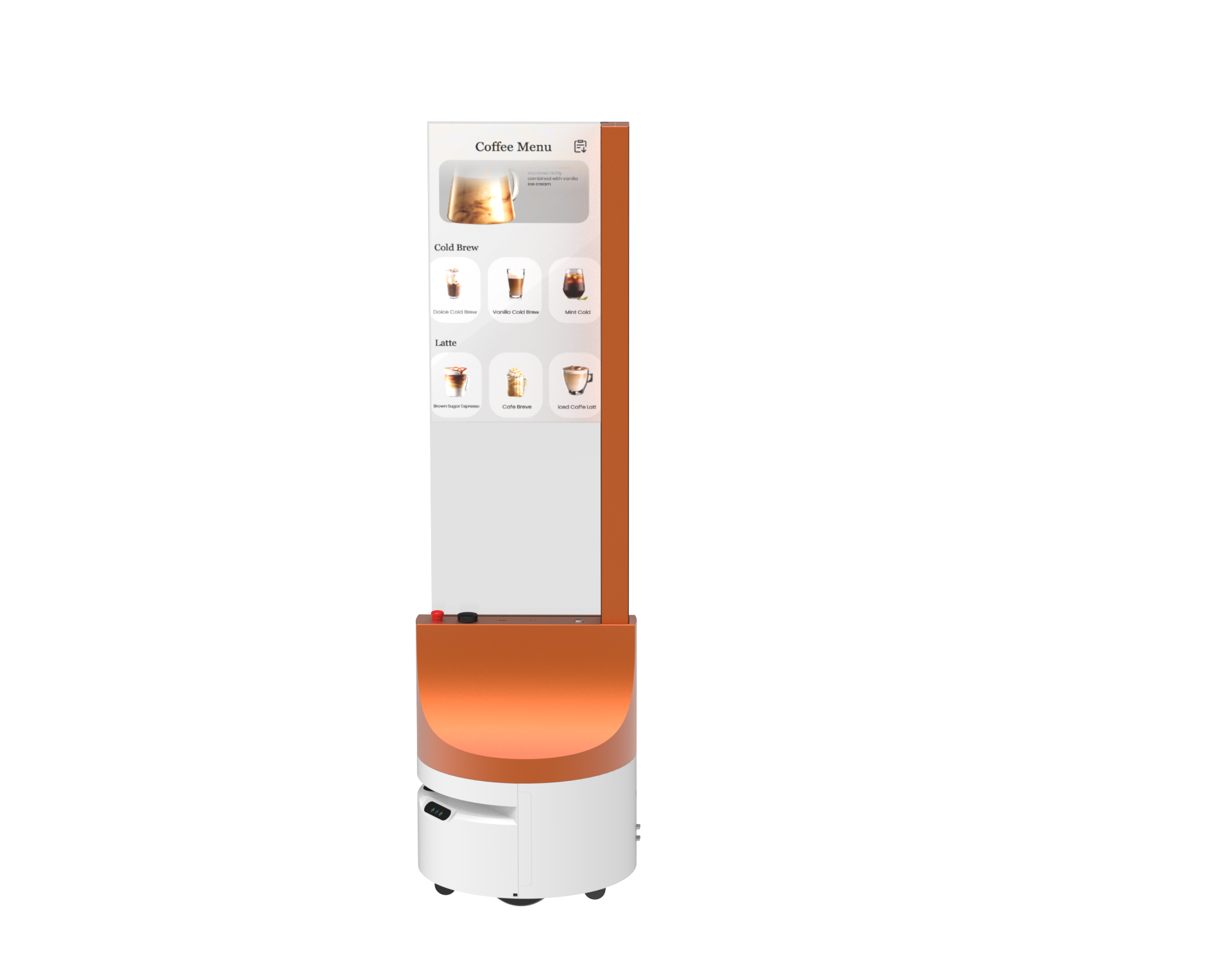
REEMAN 30 Inch OLED Transparent Screen Mobile Advertising Robot
1080 × 1920 FHD 9:16 transparent OLED mobile display with Wi-Fi and app remote control for hotel lobbies, concierge zones, event promotion and brand storytelling.
View product details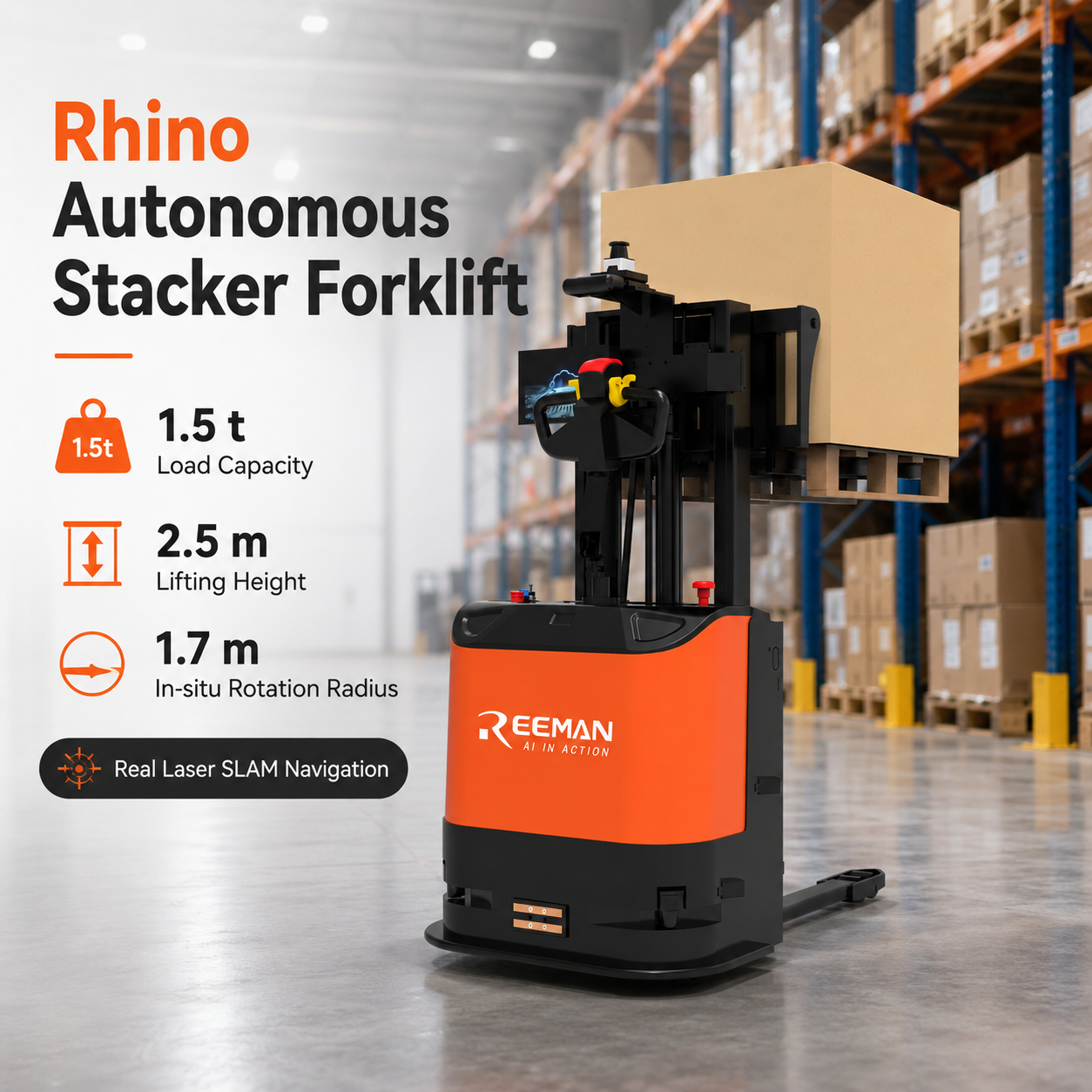
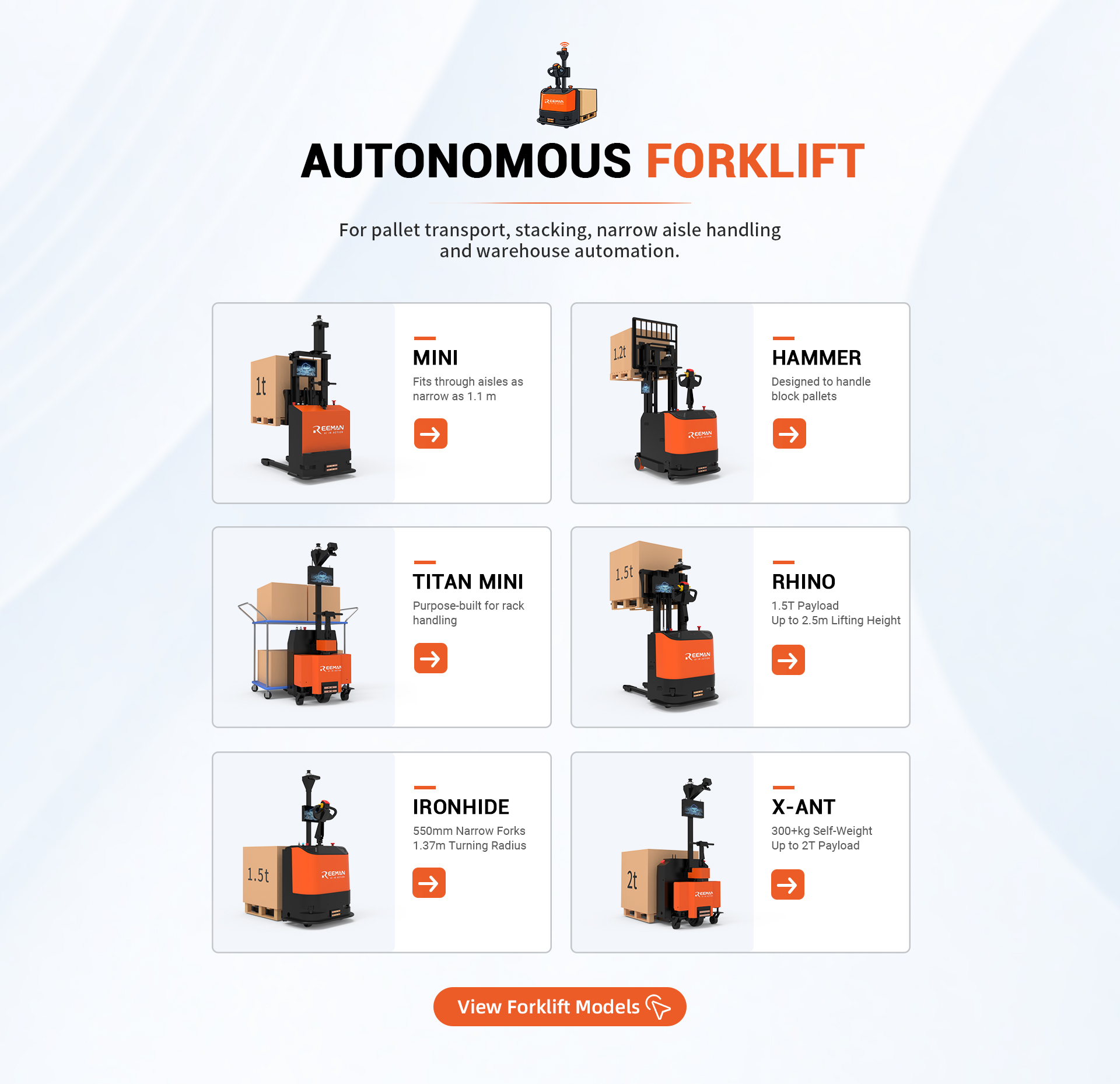
Laser SLAM Autonomous Stacker Forklift 1500 kg Load AGV
Pallet-handling robot with laser obstacle avoidance for warehouse, laundry-supply and central-store material flows in hospitality and logistics operations.
View product details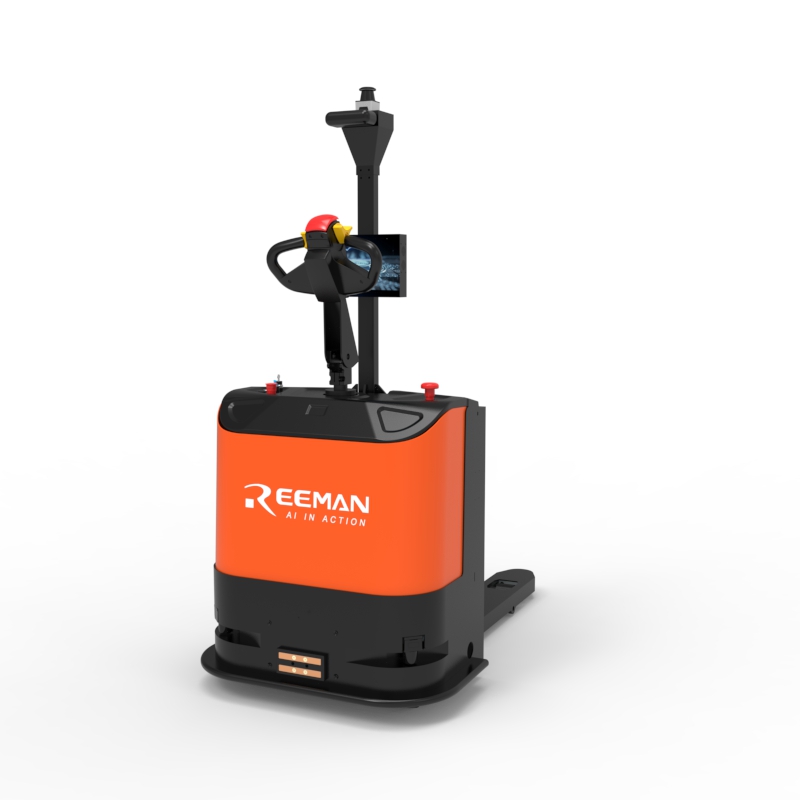
1500kg Laser SLAM AGV Forklift Single Line Lidar
30 mm navigation accuracy, 1019 mm forks and 570 mm width for repeatable indoor pallet handling where space and precision matter.
View product details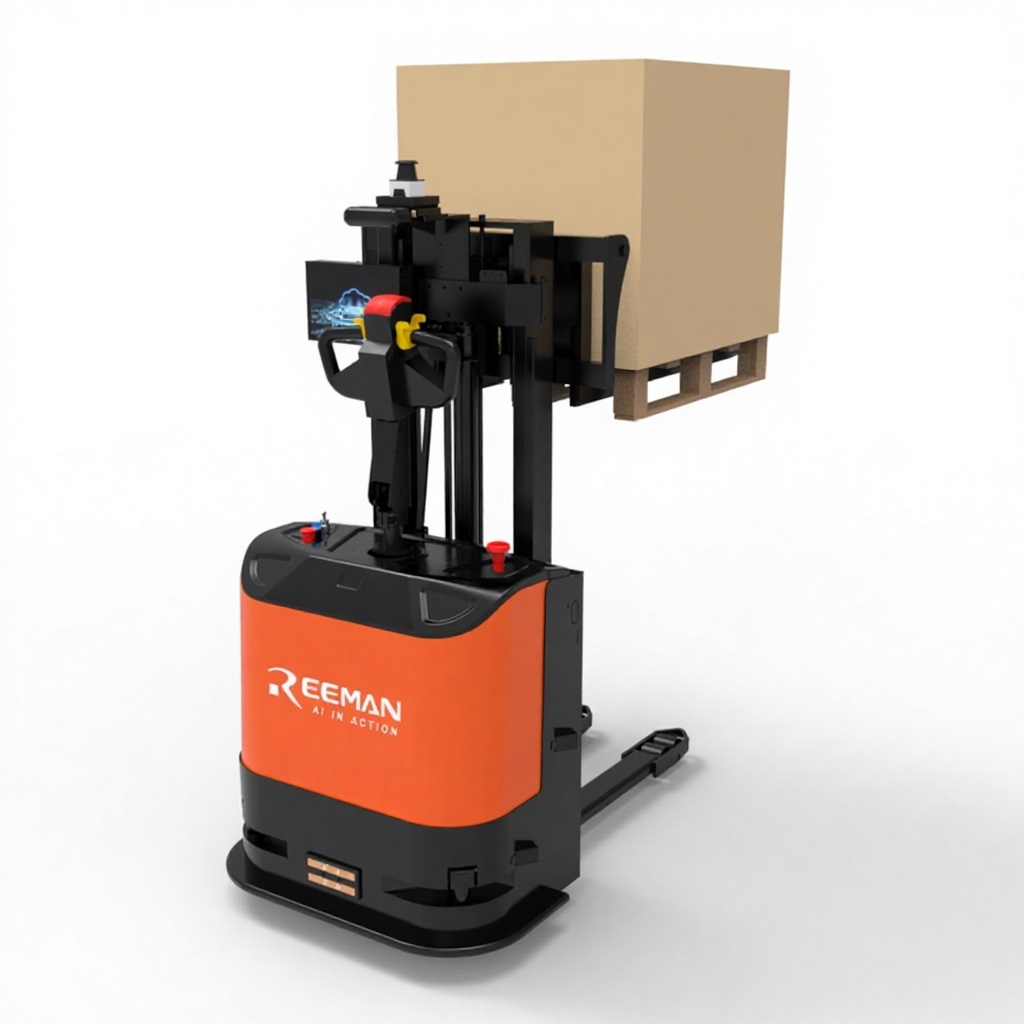
REEMAN Rhino RBOT30F Autonomous Stacker Forklift
3D vision obstacle avoidance and autonomous stacker design for flexible warehouse AGV projects and repetitive pallet movement.
View product details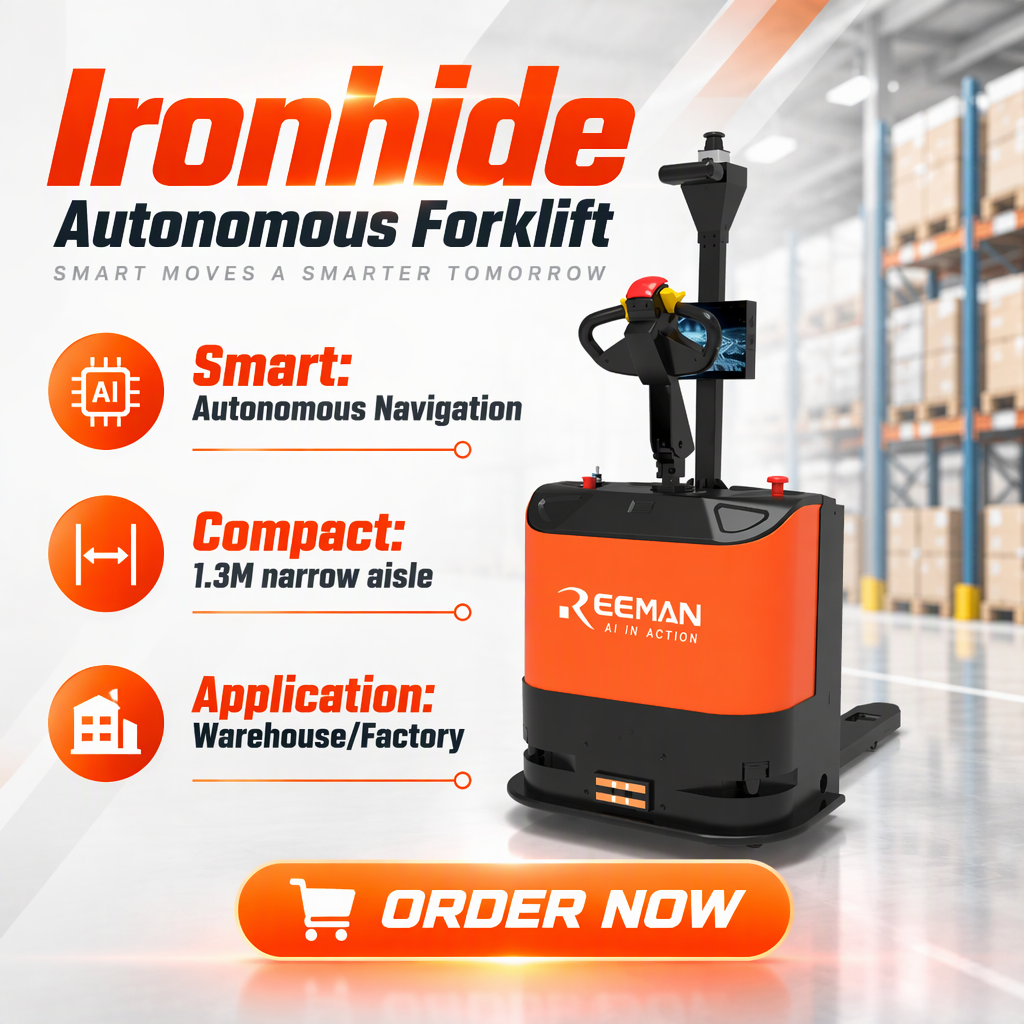
Reeman 1.5 Ton Autonomous Forklift AGV
3D obstacle avoidance, bidirectional driving and 48V 30AH lithium-ion battery for repetitive pallet transport and production-line feeding.
View product details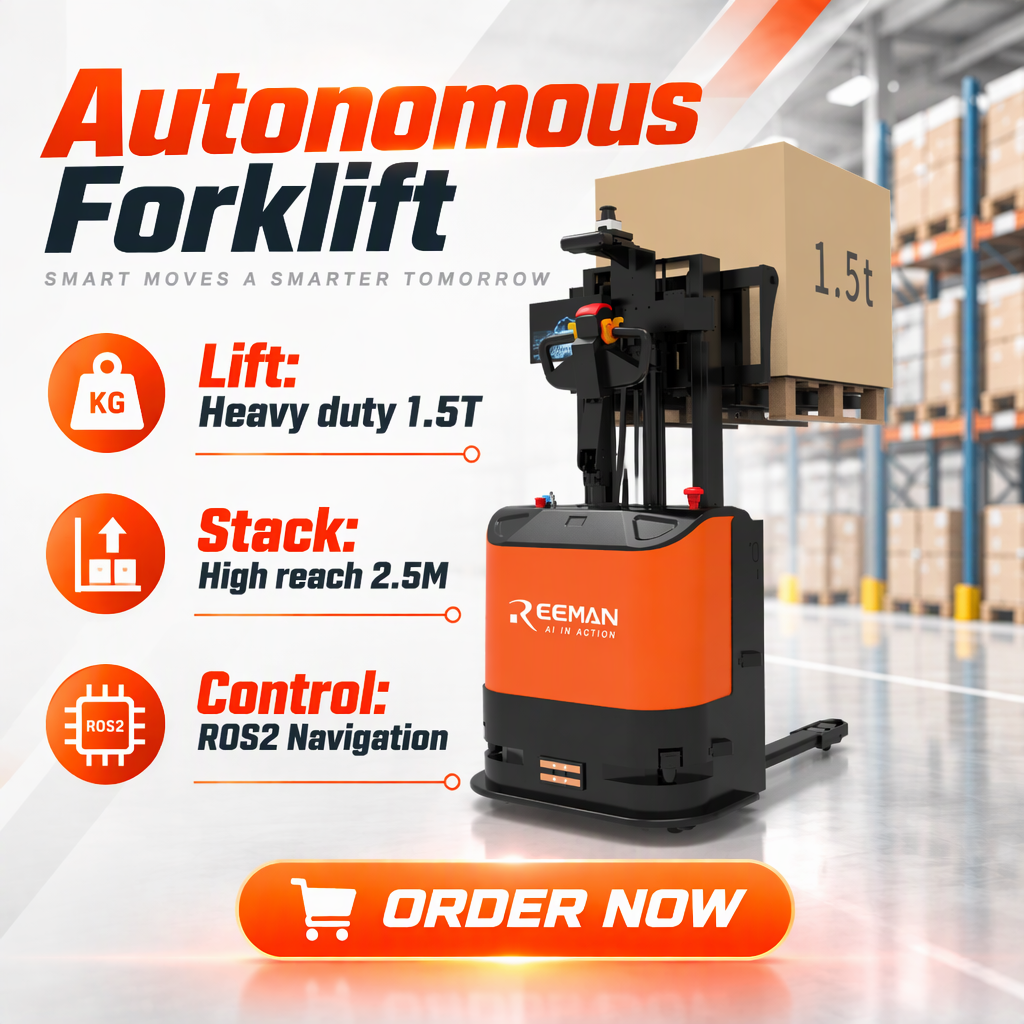
Autonomous Electric Forklift AGV 1500kg Load Capacity
2.5 m lift, ROS2 navigation, 4WD and lithium-ion battery for indoor material handling and automated warehouse tasks.
View product details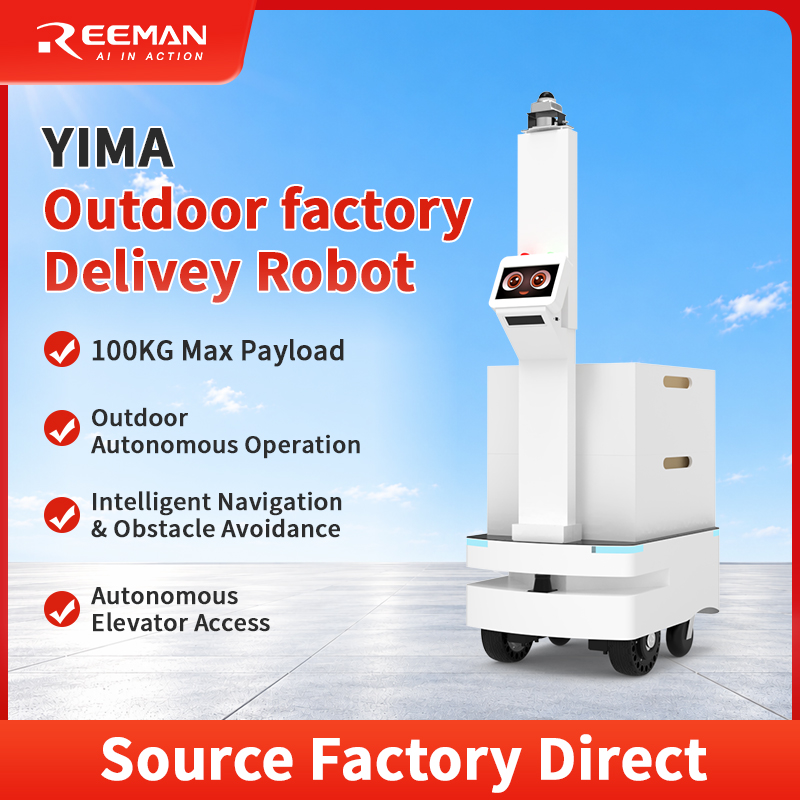
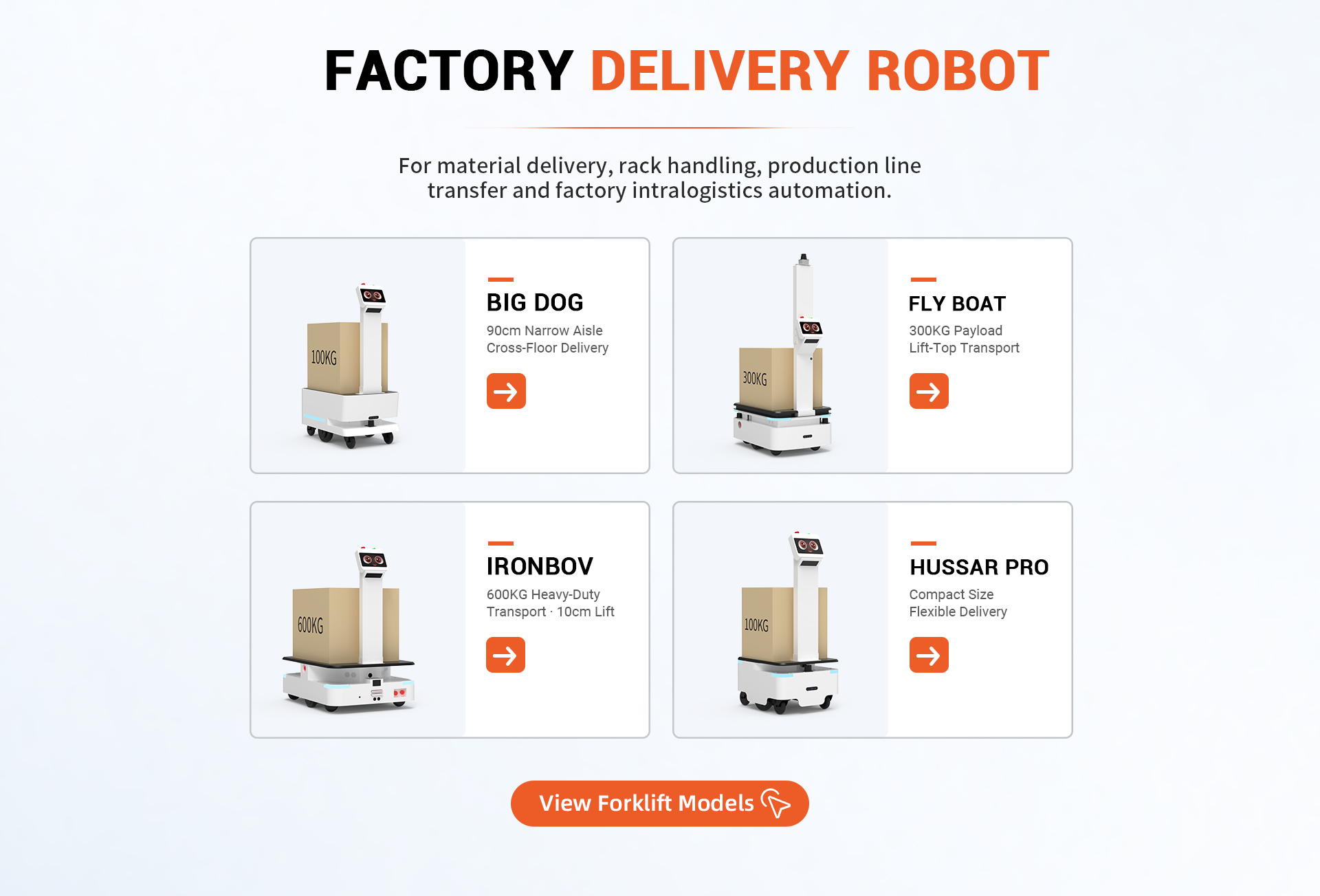
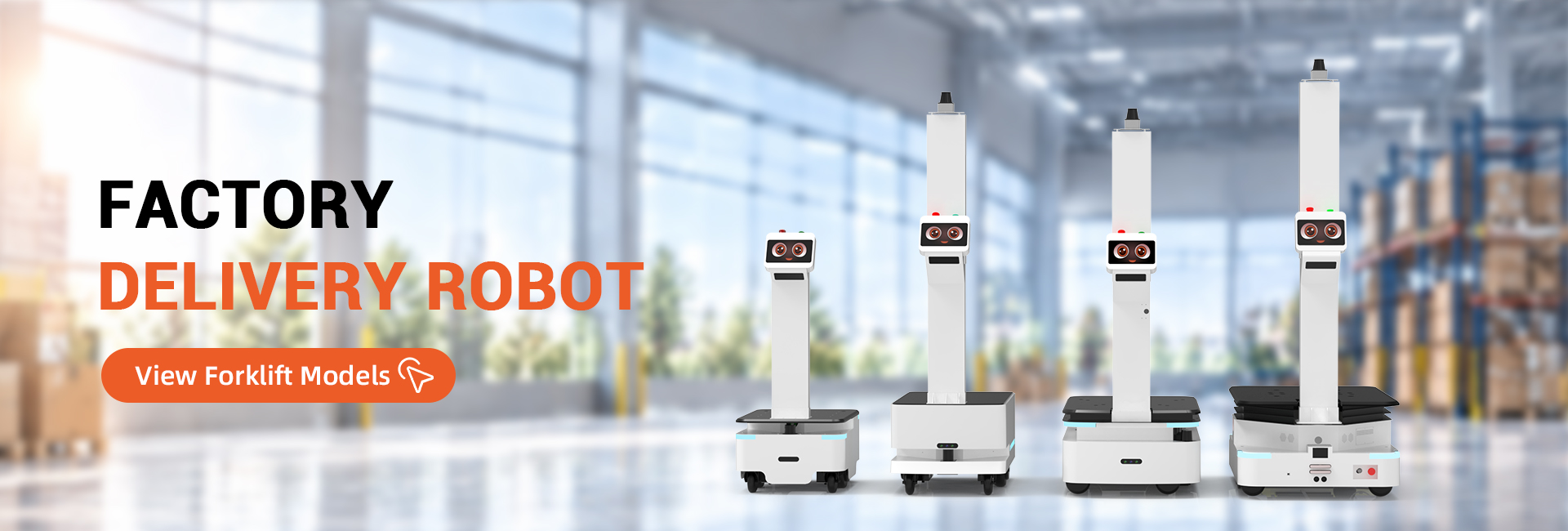
REEMAN Outdoor Delivery Robot 100kg Payload
Autonomous navigation, obstacle avoidance and elevator access for outdoor and cross-zone logistics — relevant to resort, campus and large hotel service planning.
View product details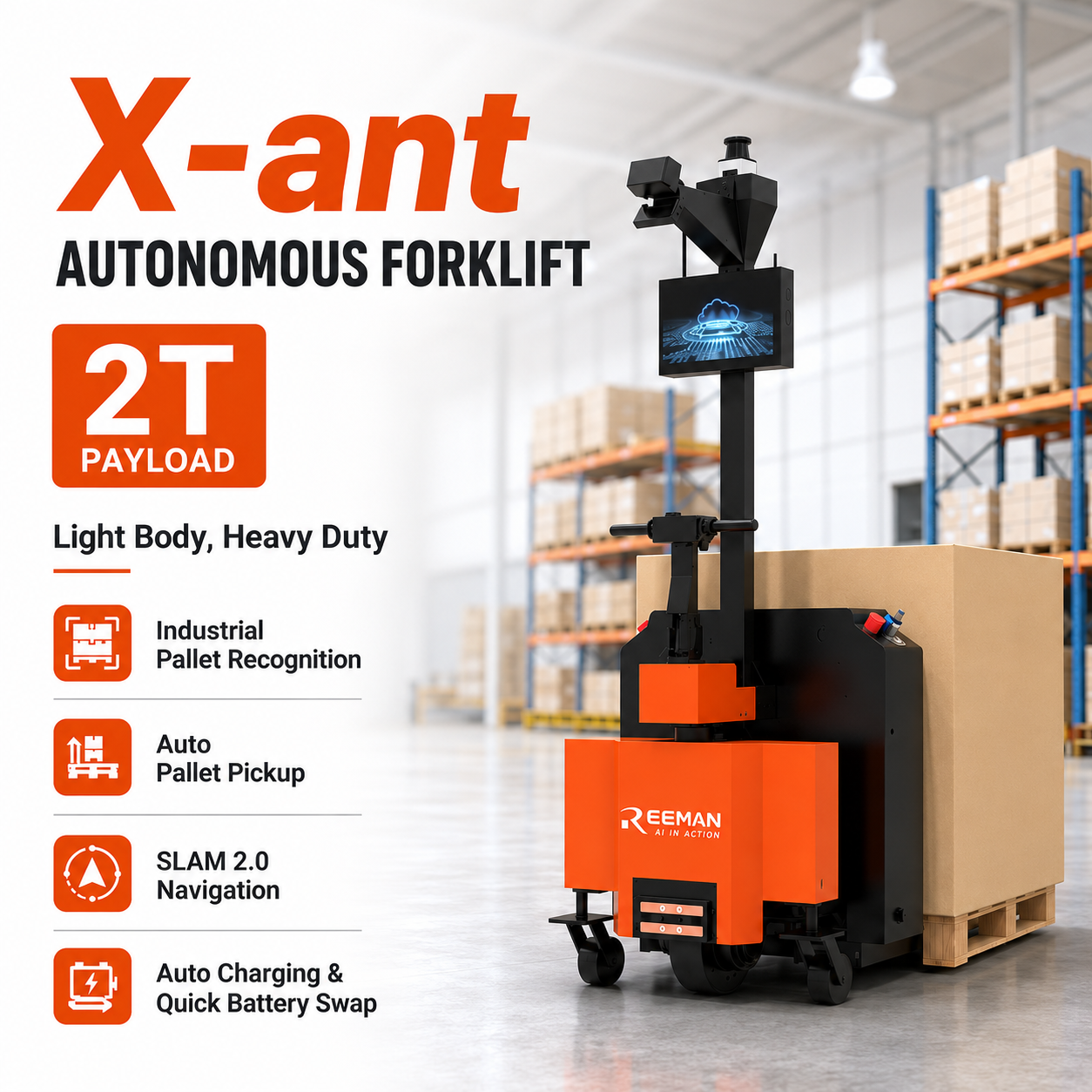
2 Ton Autonomous 4WD AGV Forklift
Laser SLAM navigation, multi-line LiDAR and 3D obstacle avoidance for heavier warehouse handling and high-throughput pallet logistics.
View product detailsWhy CE-Certified Hotel Delivery Robots Are Moving From Pilot Projects to Procurement Standard
Hotels and resort groups are no longer buying a single showpiece robot for the lobby. They are evaluating delivery robots as part of a 24/7 service layer that supports room-service delivery, amenity transport, laundry movement, F&B replenishment, guest guidance and back-of-house logistics. The buying committee now includes operations, IT, procurement, legal, insurance and engineering. That shift changes the supplier question from “Can the robot move a tray?” to “Can the manufacturer support a repeatable, certifiable and serviceable multi-property rollout?”
For distributors and wholesalers, the opportunity is equally clear. Hospitality buyers want a manufacturer that can combine CE documentation, OEM/ODM customization, stable spare-part supply, open integration and export experience. A low unit price can disappear quickly if the robot cannot pass a tender review, connect with an elevator, protect guest data or be maintained across a portfolio. This is why Elvorn approaches hotel robotics as a manufacturing and integration program, not a one-off hardware sale.
The most successful projects begin with a narrow but measurable use case: one tower, one resort zone, one central laundry route or one conference-floor delivery loop. After the workflow, safety and service KPIs are proven, the property can expand into a mixed fleet of delivery robots, autonomous forklifts and service platforms from a single supplier. This staged approach lowers operational risk while protecting the brand experience.
What CE Certification Should Actually Mean to a Hotel Robot Buyer
CE marking is not a generic sticker. It is a conformity mark supported by a technical file, risk assessment, test evidence, a Declaration of Conformity and post-market surveillance. For hotel delivery robots, compliance must reflect the real route, lift interface, payload, passenger environment and cleaning regime.
Technical File
Model-level documentation should connect intended use, route environment, battery, sensors, emergency stop and human interaction to the applicable directive list.
Declaration of Conformity
Ask for a DoC at model or configuration level, not a brochure logo. The document should name the manufacturer, product, directives and standards used.
Risk Assessment
Hospitality routes include glass doors, lifts, crowds, children, ramps and polished floors. The risk file should show sensors, speed zoning and recovery logic for those conditions.
Market Surveillance
Change notifications, firmware control, component traceability and incident reporting are part of long-term compliance, especially for multi-property fleets.
CE and safety checklist for hotel delivery robot tenders
- Directive list: Machinery, EMC, RED, LVD, RoHS and battery transport rules where applicable
- ISO 3691-4 reference for driverless industrial truck safety where relevant
- ISO 13849 structure for safety-related control functions
- Elevator, door and fire-alarm integration method
- Guest privacy policy for cameras and route data
- Emergency stop, manual recovery and remote assistance workflow
- Spare-part availability and firmware change notification
- English technical file and Declaration of Conformity access
Hotel Robot Procurement Trends Buyers Will Score in the Next Buying Cycle
Framework Agreements
Hotel groups will consolidate suppliers across properties, prioritizing common platforms, shared training and predictable spare parts over isolated pilot purchases.
TCO and Uptime
Procurement will compare total cost of ownership, battery cycles, service-level response, remote diagnostics and local maintenance support, not only unit price.
Compliance as a Gate
CE documentation, cybersecurity, data privacy and insurance evidence will be mandatory at tender stage, with local market requirements filtered early.
API-First Interoperability
PMS, elevator, WMS, MES, ERP and IoT integration will separate adaptable suppliers from closed systems that create operational silos.
For wholesalers, these trends point to one clear requirement: the manufacturer must be able to support a repeatable commercial model. That means stable product documentation, buyer-label options, export packaging, English service manuals, remote commissioning and an open SDK/API that integrators can use without rebuilding the platform from scratch. In hospitality, the robot also becomes part of the hotel’s brand experience, so appearance, noise level, tray hygiene and guest communication matter as much as payload.
Where Hotel Delivery Robot Technology Is Heading
3D Semantic SLAM
Multi-sensor fusion, 3D perception and semantic mapping will help robots understand glass walls, elevators, crowds and temporary obstacles more reliably.
Modular Payloads
Open tray modules, closed compartments, advertising screens and cleaning attachments will let one chassis serve multiple hotel workflows.
Battery Safety
Fast charging, battery swapping, thermal monitoring and transport-compliant packs will become core procurement criteria for 24/7 operations.
Fleet Orchestration
Digital twins, task scheduling and AI-assisted route optimization will connect robots with staff workflows, lifts and building systems.
The next generation of hotel delivery robots will not be judged only by navigation accuracy. Buyers will investigate how quickly a robot recovers from a blocked corridor, how transparently it communicates with guests, how securely it stores route data and how easily a local technician can replace a sensor or battery. Manufacturers that document these details early will have a measurable advantage in wholesale and tender-driven markets.
Matching the Right Robot Platform to the Hotel Workflow
Guest Delivery & Lobby Guidance
Use the 100kg outdoor delivery robot for cross-zone logistics where elevator access and autonomous navigation are required, and the 30-inch OLED robot for lobby advertising, concierge guidance and event communication.
View delivery robotBack-of-House Pallet Movement
For laundry, central stores and F&B supply, compare the 1500kg stacker AGV, Rhino RBOT30F and 1.5-ton autonomous forklift based on pallet type, aisle width, lift height and shift pattern.
View AGV forkliftResort, Campus & Outdoor Routes
Outdoor and semi-outdoor properties should evaluate weather protection, ramp capability, obstacle avoidance, elevator control and the service response model before selecting a delivery platform.
View outdoor robotWholesale & OEM Programs
Distributors can combine OEM/ODM design support, buyer-label branding, custom top modules, English documentation and open SDK/API integration into a locally owned product line.
View heavy-duty platform


Manufacturing Depth Behind the Hotel Delivery Robot Wholesale Program
Founded in 2015, Shenzhen Elvorn Intelligent Equipment Co., Ltd. is a national high-tech enterprise focused on robotic platform technology and autonomous driving. The company designs and builds autonomous forklifts, industrial AMRs, robot chassis, delivery robots and cleaning robots, with two production bases in Shenzhen and Ningbo and a team of more than 200 people.
Elvorn’s in-house R&D team covers laser SLAM navigation, motion control, fleet scheduling and hardware. That full-stack ownership supports faster OEM/ODM customization, transparent engineering answers and long-term spare-part support for distributors, integrators and hospitality groups.
- Founded in 2015 · 11+ years in robotics
- 39 patents awarded
- 5,200㎡ total floorspace
- 200+ team members
- 98.76% response rate
- SGS Group onsite verified factory
- ISO 9001 & ISO 14001 management
- CE / FCC / PSE marks on selected models
- OEM, ODM, design and buyer-label service
- Open SDK & API for secondary development
Built for Hospitality, Warehousing and Demanding Service Environments
Warehousing & 3PL
Receiving, put-away and dock loading with driverless forklifts that can run across shifts.
Manufacturing Logistics
AMRs feed workstations and collect finished goods, synchronized with MES and production tasks.
Hospitality Delivery
Guest delivery, room-service support, amenity transport and mobile guidance for hotels and resorts.

Cleaning & Disinfection
Autonomous floor care and disinfection for malls, airports, hospitals and large hotel public areas.
Hotel Delivery Robot Buyer Questions Answered
What makes a hotel delivery robot CE compliant?
Can Elvorn robots integrate with elevators, PMS, WMS, MES or ERP?
What is the difference between an AGV forklift and an AMR?
Does Elvorn offer OEM, ODM and wholesale customization?
Which certifications and audit evidence are available?
What trade terms and export support does Elvorn accept?
Plan a CE-Ready Hotel Robot Rollout
Send your hotel layout, elevator details, payload requirement, route environment and target throughput. Our engineers will help match the right delivery robot, AMR or autonomous forklift platform — with OEM/ODM and wholesale support.