8 Autonomous Platforms for Food Delivery and Smart Logistics
Search demand for a China food delivery robot manufacturer is rarely about one isolated SKU. Buyers are solving a service flow: moving meals from kitchens to floors, from central kitchens to satellite outlets, or from docks to food-service storage areas. These eight platforms show the practical product envelope supported by Elvorn, including outdoor delivery robots, autonomous forklifts and AMRs for back-of-house logistics.
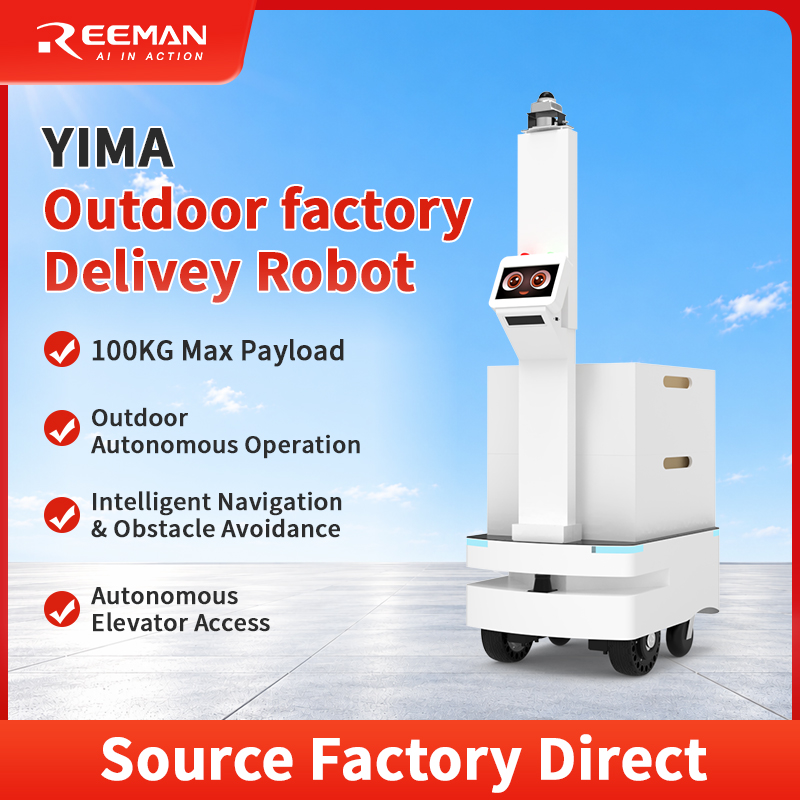
REEMAN Outdoor Delivery Robot 100kg Payload Autonomous Navigation
A delivery platform for indoor-outdoor routes, obstacle avoidance and elevator access. Suitable for hotel, campus, facility and food-service delivery workflows that require autonomous navigation.
View product
REEMAN Autonomous Electric Forklift 1T Payload 48V 30Ah LiFePO4 Battery
Indoor material handling AGV for pallet movement where food-service operations share space with central kitchens, storage rooms, docks and logistics corridors.
View product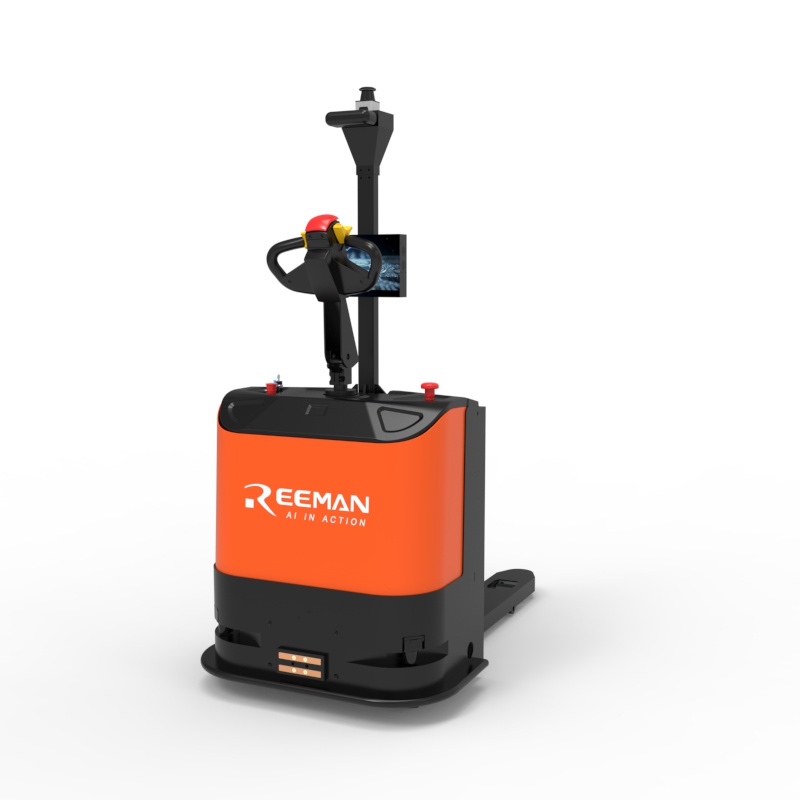
Reeman BBOT30F 1500 kg Laser SLAM Forklift AGV LiDAR Navigation
A pallet-handling autonomous forklift for warehouse and back-of-house operations, using laser SLAM navigation to reduce dependence on fixed floor infrastructure.
View product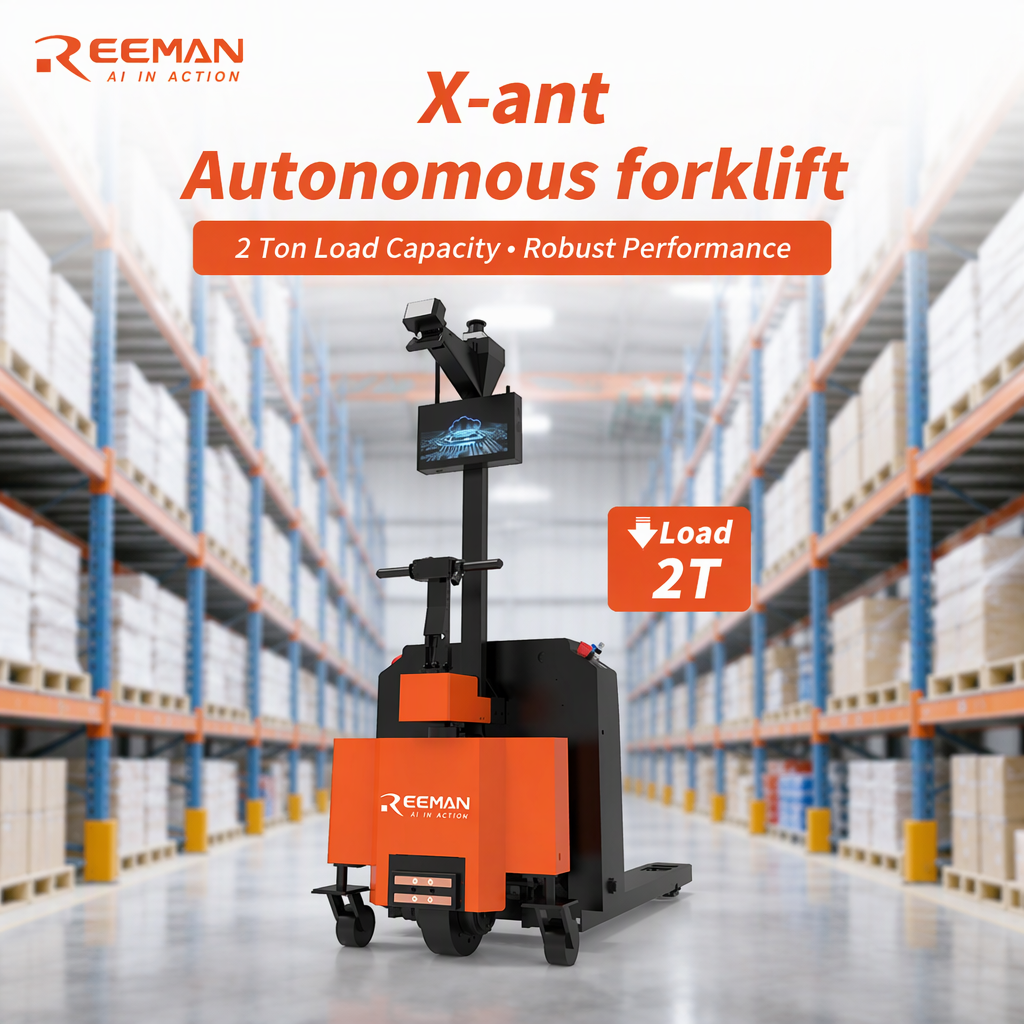
2 Ton Autonomous 4WD AGV Forklift Laser SLAM Multi-Line LiDAR
Heavy-duty warehouse handling with 10 mm position accuracy and multi-line LiDAR. Useful where large food-service groups centralise pallet replenishment and distribution.
View product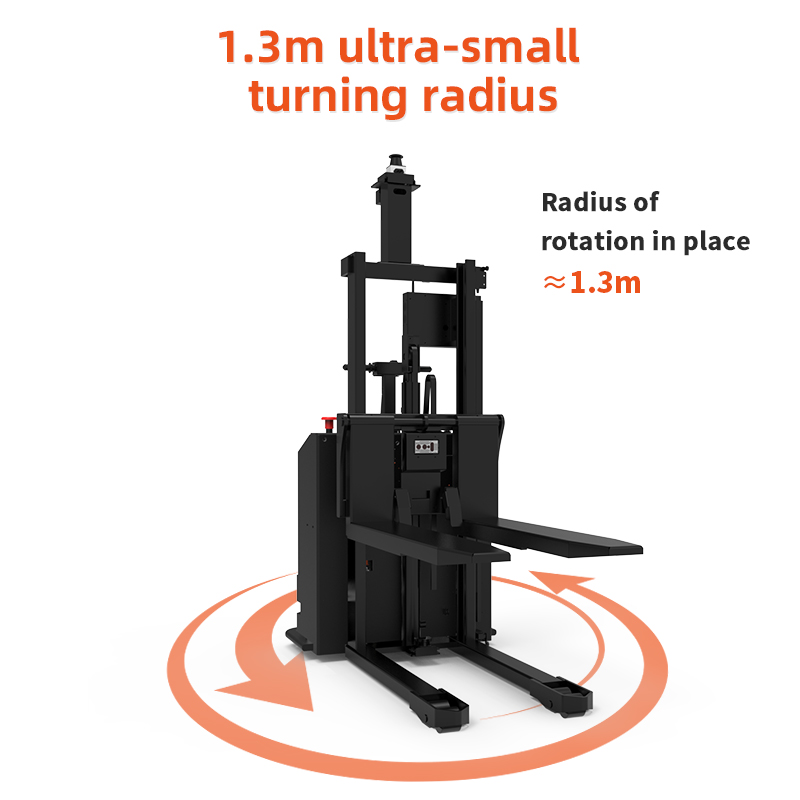
1000kg Forklift AGV Laser SLAM Navigation Pallet Transport Robot
A compact pallet transport robot with 1.3 m turning radius and auto charging, designed for factory logistics and constrained back-of-house movement areas.
View product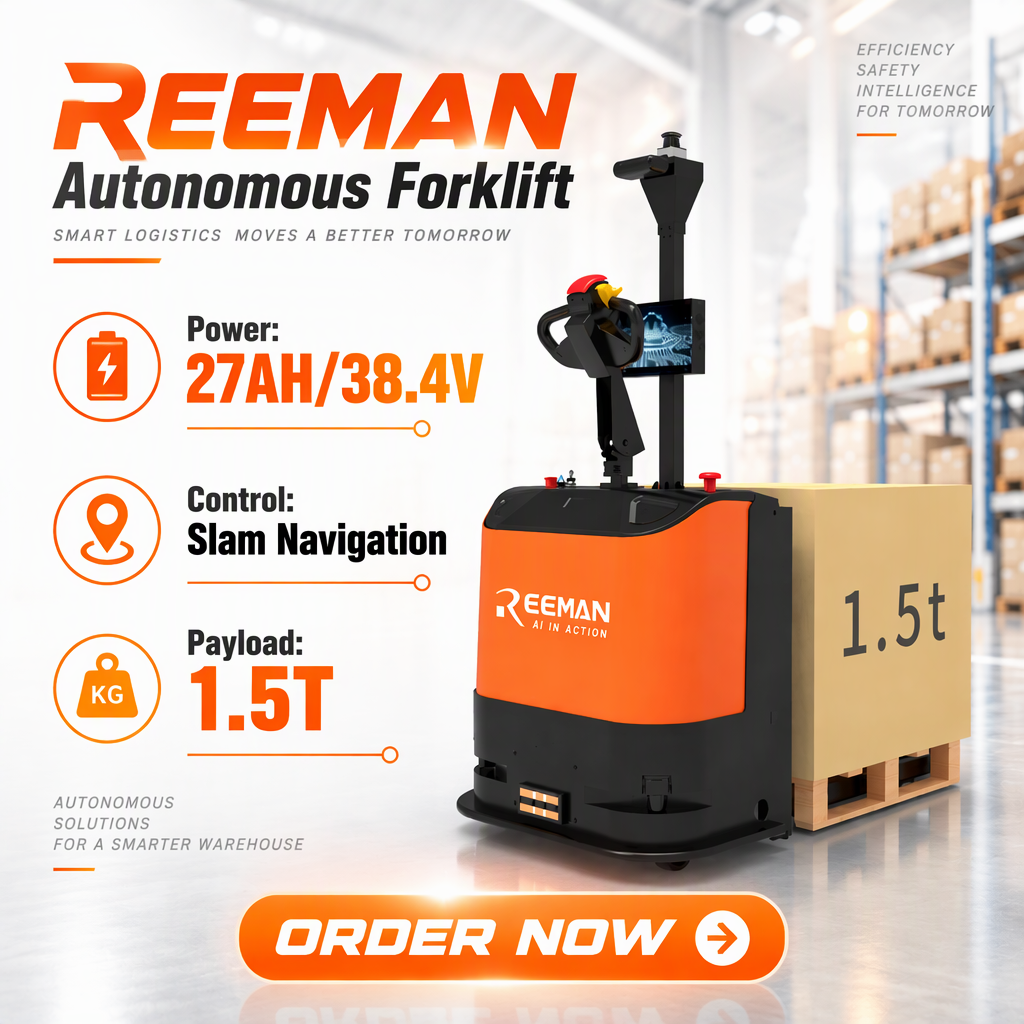
Reeman 1.5 Ton Autonomous Forklift AGV SLAM Navigation 3D Obstacle Avoidance
Indoor warehouse handling with bidirectional driving and 3D obstacle avoidance for pallet movement between storage, staging and dispatch zones.
View product
Dual Laser AMR 300KG AGV Lifting Mobile Robot with SLAM LiDAR
A lifting mobile robot for manufacturing plants and logistics areas. The dual laser SLAM configuration supports navigation in dynamic environments around people and equipment.
View product
2 Ton Autonomous 4WD AGV Forklift Laser SLAM 6–8H Warehouse Handling
A 2-ton autonomous forklift configuration for longer warehouse shifts, combining laser SLAM navigation, multi-line LiDAR and 4WD movement for pallet flow.
View productProduct URLs are preserved from the original series. Final configuration, top module, battery strategy and integration scope are confirmed after engineering review.
Verified Manufacturing Capacity at a Glance
Food delivery robot procurement is a manufacturing due-diligence exercise as much as a product comparison. These figures are the baseline references used in Elvorn’s company profile and supplier assessment materials.
Factory verified onsite by independent inspector SGS Group
China Best Food Delivery Robot Manufacturer & Supplier: What Procurement Teams Should Actually Verify
The phrase “best” is useful for search, but dangerous for procurement. A food delivery robot is only “best” when it fits the site, the service flow, the integration stack, the compliance path and the support model.
One search phrase, three different buying intents
Traffic around this subject is mixed. One buyer may need an off-the-shelf dining-room delivery robot for a hotel or restaurant. Another may be a distributor looking for OEM/ODM production and buyer-label customisation. A third may be a systems integrator comparing laser SLAM robot chassis and open API access. A strong supplier page answers all three intents without pretending that one robot fits every site. “Best” should therefore mean best-fit for the operating environment, not the loudest marketing claim.
Why Elvorn’s manufacturing background matters
Elvorn approaches this as an engineering and manufacturing problem. Since 2015, the company has built autonomous forklifts, AMRs, robot chassis and service robots on a shared technology stack covering laser SLAM navigation, motion control, fleet scheduling and hardware design. That overlap matters for food-service buyers because the same site often needs a delivery robot in public areas and an autonomous forklift or AMR in back-of-house logistics. A supplier that understands both public-facing service robots and industrial material handling can reduce integration risk at the boundary between guest experience and operational flow.
The information gain most buyers miss
Ask for measured outcomes rather than brochure performance: delivered payload per hour, door-to-door cycle time, charging ratio, elevator wait time, exception recovery time and the percentage of deliveries completed without human intervention. A transparent manufacturer will map these metrics to route design, fleet size and battery strategy before quoting. That is more useful than comparing top speed or screen size in isolation, and it gives procurement teams a defensible baseline for pilot design and contract milestones.
For a multi-site food-service group, the best supplier is usually the one that can document how the robot recovers from exceptions, how spare parts are supplied, how integrations are tested and how factory quality is verified. This is where supplier assessment records, certifications, test documentation and a real production base separate a manufacturer from a trading intermediary.
Buyer intent snapshot
Use these three questions to classify an inquiry before technical scoping begins.
- Cost and ROI intentHow many staff walking hours, handovers or delivery delays will the robot remove per shift?
- Integration intentWhich systems must connect: elevator, POS, PMS, WMS, ERP, door access or dispatch software?
- Compliance and support intentWhich certificates, spare parts, training and service response commitments are required in the destination market?



What Makes Elvorn a Reliable China Food Delivery Robot Supplier
Shenzhen Elvorn Intelligent Equipment Co., Ltd. is a national high-tech enterprise founded in 2015. The company operates two production bases in Shenzhen and Ningbo, with 5,200 square meters of total floor space, a team of more than 200 people and 39 patents. Its in-house R&D team owns the full stack—laser SLAM navigation, motion control, fleet scheduling and hardware—which shortens customisation cycles and gives distributors, integrators and food-service groups a direct engineering path for project-specific requirements.
Manufacturing credibility is supported by more than a product catalogue. The factory has been verified onsite by SGS Group, and the management system is certified to ISO 9001 and ISO 14001. Depending on the model, robots carry CE, FCC or PSE marks. Elvorn offers OEM service, design service and buyer-label options, including custom top modules, payload structures, branding and packaging. AMRs and robot chassis provide an open SDK and API for secondary development, so task dispatch and status feedback can be connected to WMS, MES, ERP or custom software. Export orders ship on FOB terms with T/T payment in USD or CNY, supporting buyers in North America, Western Europe, East and Southeast Asia and the Middle East.
- Founded in 2015 with 39 patents
- Two production bases in Shenzhen and Ningbo
- 5,200 m² floor space and 200+ team members
- SGS-verified factory with ISO 9001 / ISO 14001
- CE, FCC or PSE marks on applicable models
- OEM, design service, buyer label and open SDK/API
Eight Capabilities Smart Buyers Should See in a Food Delivery Robot
A food delivery robot is a public-facing machine with industrial reliability requirements. The evaluation should go beyond the screen, tray count and maximum speed.
Hygiene-ready service design
Tray surfaces, seams and materials should support fast cleaning and routine disinfection. Ask for cleaning procedures and component removal guidance, not only a food-grade claim.
Laser SLAM without floor infrastructure
Laser SLAM maps the site without magnetic tape, QR codes or reflectors. This makes layout changes, seasonal partitions and multi-floor operations easier to manage, provided mapping and recovery procedures are documented.
Elevator, door and POS integration
Open SDK and API access should support elevator calls, door control, POS order status, PMS room-service tasks or WMS dispatch. The supplier should define who tests each interface and how failures are handled.
Peak-hour fleet orchestration
One robot rarely covers a full service peak. Fleet scheduling, traffic rules, charging windows and task prioritisation determine whether the system delivers a stable number of completed trips per hour.
Modular payload and tray systems
Different venues need different trays, sealed compartments or top modules. Modular platforms reduce re-engineering for OEM/ODM buyers and make it easier to refresh a fleet without changing the navigation stack.
Multi-layer safety around guests
LiDAR, obstacle sensors, emergency stops, speed zoning and audible or visual warnings should work together. In public spaces, predictable behaviour around children, trolleys, glass doors and crowded lifts is part of the product.
SGS-verified production capacity
A supplier with two production bases, documented inspection procedures and a 200+ team is better positioned to support repeat orders, spare parts and OEM projects than a trading company with no verifiable factory.
Export certification and lifetime support
CE, FCC or PSE marks, ISO management systems, English documentation, remote commissioning and spare-part supply reduce the risk of a robot becoming stranded after installation.
Product Development Trends Reshaping Food Delivery Robots
The next buying cycle will reward suppliers that can prove system-level performance, not only hardware features. These six trends are already visible in serious automation projects.
AI perception and semantic mapping
Vision and sensor fusion will help robots recognise service contexts—queues, tray-return zones, wet floors, crowded lifts—and adjust routes without hard-coded rules. The procurement question is not whether AI exists, but whether exceptions are observable and recoverable.
Multi-robot orchestration
Food-service sites will combine delivery robots, cleaning robots, AMRs and autonomous forklifts. Fleet orchestration and open interfaces will matter more than a single robot’s standalone features, especially across guest-facing and back-of-house zones.
Contactless, secure, traceable delivery
Sealed compartments, PIN or app authentication and auditable delivery logs are becoming product requirements in hotels, hospitals and campuses. These features also support food safety, privacy and service accountability.
Battery strategy and uptime engineering
Opportunity charging, battery health monitoring, reserve thresholds and modular batteries will be evaluated as an uptime system. Buyers should model peak-hour energy demand instead of relying only on nominal runtime.
Digital twin and simulation-led deployment
Before shipment, route simulation and digital twins can test elevator waits, charging placement, traffic bottlenecks and peak throughput. This lowers deployment risk and makes cycle-time promises more verifiable.
Robot-as-a-Service and modular upgrades
Procurement will increasingly blend purchase, lease and service models. Modular trays, sensors and control boards make it easier to refresh a robot fleet as menus, floor plans or compliance requirements change.
Procurement Trends: What Food-Service Buyers Will Expect by 2030
The market is moving from “Can a robot do this?” to “Can this supplier prove total cost, integration, safety and lifetime support?”
Total cost per completed delivery
Buyers will compare total cost per completed delivery, including charging labour, maintenance, spare parts, integration and downtime. A low unit price with weak service can lose on a three-year cost model.
Pilot-first, scale-second purchasing
A controlled pilot with measured completion rates, exception logs and staff feedback will become the normal gate before a multi-site order. Suppliers need to support pilot documentation, not just demos.
Integration evidence before price negotiation
Open API documentation, interface tests and a named integration owner will be requested before commercial terms are agreed. “We can integrate” is not evidence; a tested interface plan is.
Certification and liability due diligence
Importers will ask for CE, FCC or PSE evidence and management-system records, plus clear responsibility for local safety, data handling and insurance. SGS-verified factory information and ISO 9001/14001 help shorten the review.
Local service and spare-part commitments
Robot uptime depends on spare-part availability, remote diagnostics and trained local partners. Procurement contracts will specify response times, wear-part lists and firmware-support windows.
OEM/ODM co-development and buyer labels
Distributors and service brands will increasingly request OEM/ODM cooperation, buyer labels, custom top modules and packaging. Production bases in Shenzhen and Ningbo give Elvorn a practical base for these programmes.
A Four-Step Procurement Framework for Food Delivery Robot Projects
Use this sequence to move from search intent to a verifiable deployment plan.
Map the flow, not just the route
List origins and destinations, tray weights, peak periods, elevator constraints, floor surfaces, door widths and staff handover points. Measure the current walking route so the robot’s value can be compared with a real baseline.
Model throughput and battery reserve
Estimate completed deliveries per hour at peak, not average. Add charging time, elevator waiting time and a realistic exception allowance. Confirm the battery strategy and reserve threshold for the site’s actual shift pattern.
Validate integration and safety
Test elevator calls, POS/PMS/WMS messages, door control, Wi-Fi coverage, emergency stops and crowded-area behaviour. Assign a named owner for each interface and document failure recovery.
Contract for lifetime support
Agree on spare parts, remote support, training, firmware updates and response times. A deployment is not finished when the robot arrives; it is finished when the fleet operates reliably through normal peaks and exceptions.
Where Food Delivery Robots Create Measurable Value
Value appears where repetitive delivery work competes with service quality, labour availability or after-hours demand.
Hotels and resorts
Room-service meals, amenities and late-night deliveries can be moved by a robot while staff focus on guest interaction. PMS integration, elevator control and secure compartments are the main scoping items.
Restaurants and cloud kitchens
Peak-hour tray delivery, table return and back-of-house transfer can reduce walking time. The business case is strongest where layout is stable and the robot can take repetitive trips without blocking service aisles.
Hospitals and campuses
Meal rounds and scheduled deliveries benefit from route reliability, elevator access and auditable delivery records. Staff training and infection-control procedures should be part of the deployment plan.
Factories and central kitchens
Shift meals and pallet replenishment often require both service robots and industrial AMRs or autonomous forklifts. A supplier that offers delivery robots, AMRs and forklift AGVs can simplify procurement across the whole site.
Food Delivery Robot Procurement FAQ
Practical answers for restaurant groups, hotels, integrators and distributors comparing a China food delivery robot manufacturer.
What is the difference between a food delivery robot and an AMR?
+
A food delivery robot is a service-focused AMR configured with trays, sealed compartments, a user interface and food-service software. An AMR is the broader mobile platform category; industrial AMRs carry totes, carts or top modules. Elvorn builds both on a shared SLAM stack, which helps when a site wants guest-facing delivery and back-of-house material flow from one technology partner.
Can it integrate with my elevator, POS, PMS, WMS or ERP?
+
Integration is project-specific and should be verified, not assumed. Elvorn AMRs and robot chassis provide an open SDK and API for secondary development, enabling task dispatch and status feedback to WMS, MES, ERP or custom software. For a food delivery robot project, define elevator control, door access, order status and handover confirmation before quoting.
Is laser SLAM better than magnetic tape or QR codes?
+
Laser SLAM removes most floor infrastructure and allows layout changes without new tape or reflectors. It is usually preferable in multi-purpose public buildings where floors must stay clean and layouts change. The trade-off is that mapping, localisation and recovery procedures must be designed carefully, especially near glass, crowds and loading zones.
What data should I send for an accurate quote?
+
Send floor plans, origin and destination points, tray or payload weight, peak trips per hour, shift schedule, elevator and door constraints, floor surfaces, Wi-Fi coverage, voltage and destination country. Clear exception scenarios—wet floors, crowded lifts, multiple meal periods—are more valuable than a generic request for price.
How should I evaluate battery life and uptime?
+
Ask for delivered trips per charge under your route profile, charging time, reserve threshold and battery chemistry. Model peak-hour energy demand instead of using nominal runtime. Confirm spare batteries or opportunity charging, battery health monitoring and remote diagnostics where available.
Does Elvorn offer OEM and ODM customisation?
+
Yes. Elvorn offers OEM service, design service and buyer-label options, including custom top modules, payload structures, branding and packaging. As a verified custom manufacturer with two production bases, the company can support distributors and integrators who need their own product identity without building a navigation stack from scratch.
Which certifications and audits reduce buyer risk?
+
Depending on the model, robots carry CE, FCC or PSE marks. The company management system is certified to ISO 9001 and ISO 14001, and the factory has been verified onsite by SGS Group. Buyers should match the certificate set to the destination market and request the relevant model-level documentation.
What trade terms and deployment support are available?
+
Elvorn ships worldwide on FOB terms and accepts T/T payment in USD or CNY. Main export markets include North America, Western Europe, Eastern Asia, Southeast Asia and the Middle East. Deployment support can include requirement review, solution design, customisation, factory testing, remote mapping, operator training and long-term spare-part supply.
Plan Your Food Delivery Robot Project with an SGS-Verified Manufacturer
Send your floor plans, meal-delivery flow, tray weight, peak-hour demand, elevator constraints and destination market. Elvorn’s engineering team will help match the right autonomous platform, integration scope and support model.