China Best Industrial Mobile Robot Manufacturers & Manufacturer
A procurement-grade guide to AGV forklifts, AMR platforms, laser SLAM navigation, OEM/ODM customization, safety validation and lifecycle support from Shenzhen Elvorn Intelligent Equipment Co., Ltd.
8 Industrial Mobile Robots and AGV/AMR Platforms to Evaluate
These models cover pallet handling, sheet-metal movement, line-side logistics, autonomous forklift work, indoor advertising, outdoor delivery and commercial service. Each link preserves the original product destination for technical review.
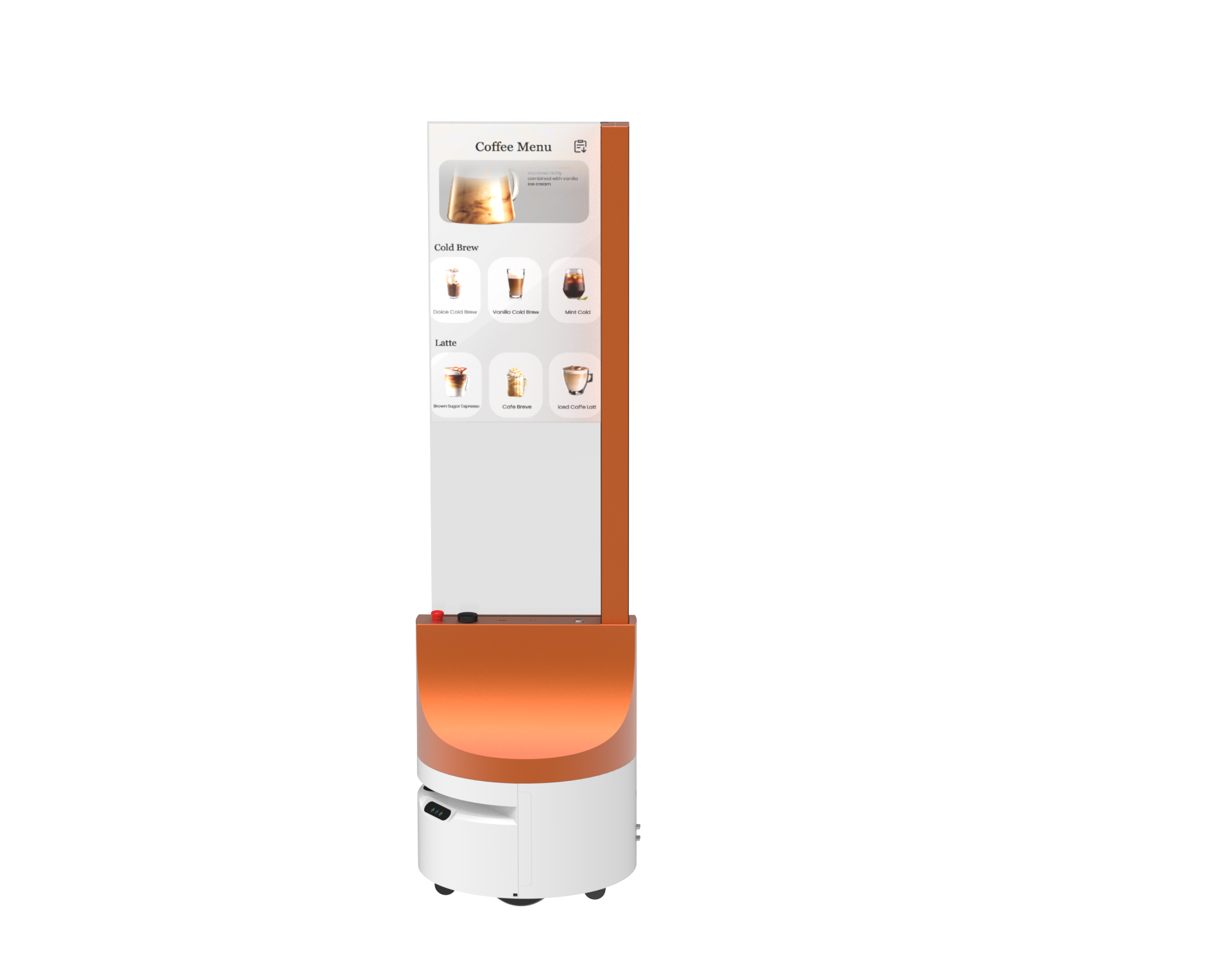
REEMAN 30 Inch OLED Transparent Screen Mobile Advertising Robot 1080 x 1920 FHD 9:16 Wi-Fi App Remote Control
A mobile digital-signage platform for retail, exhibition and hospitality spaces where visual engagement and autonomous movement must work together.
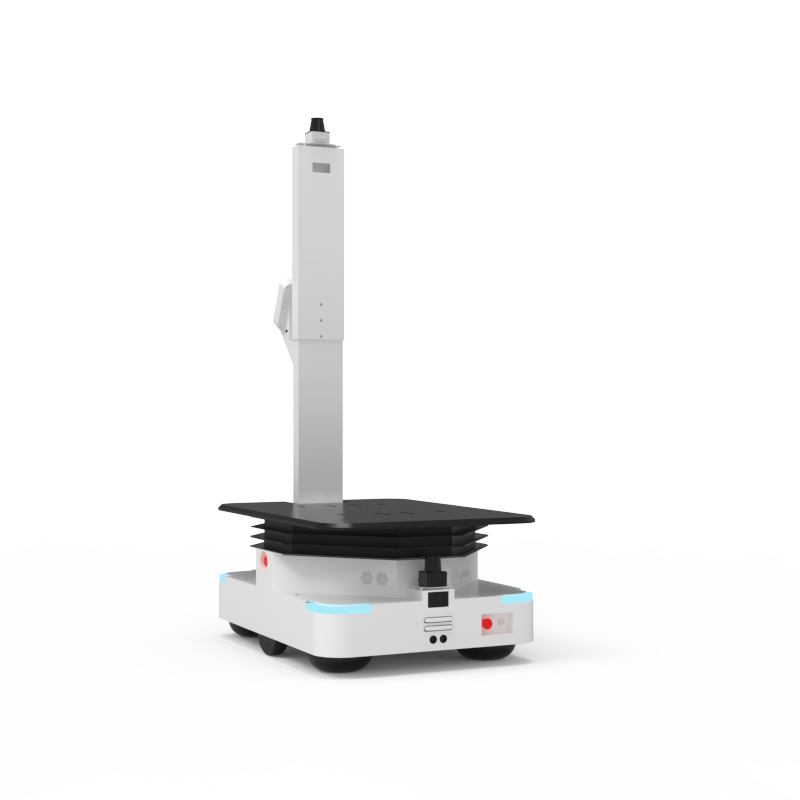
REEMAN Autonomous Mobile Robot AGV AMR 600kg Payload Sheet Metal Material Handling for Production Line
A 600 kg AMR designed for production-line material transfer, where stable platform control and repeatable docking matter more than raw speed.
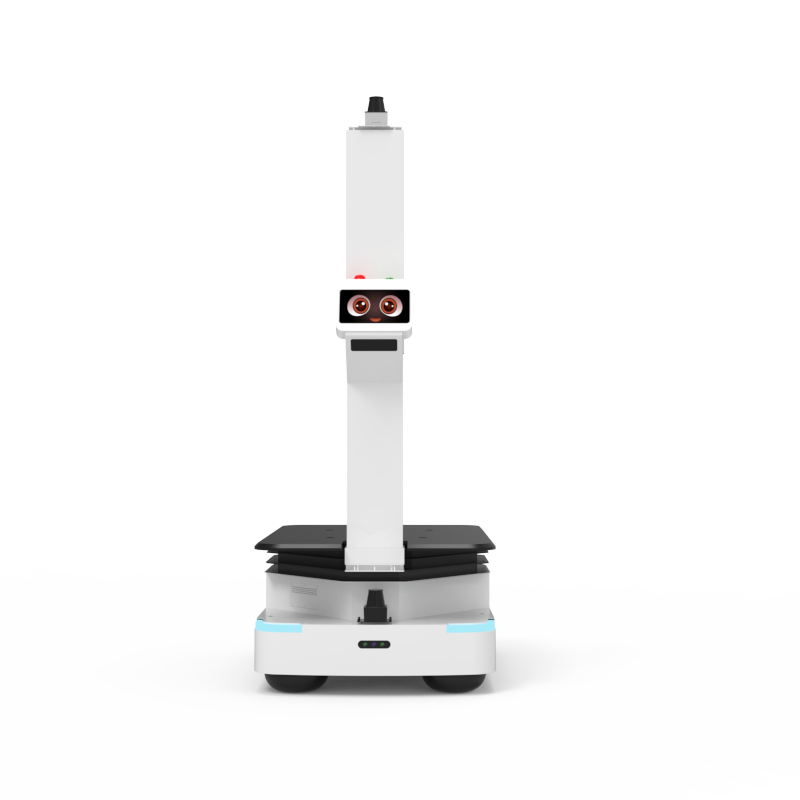
600kg Industrial AMR AGV Robot Laser SLAM Navigation QR Code-Free Factory Logistics
A QR-code-free factory logistics platform for plants that need fast route changes, natural navigation and reduced floor-infrastructure work.
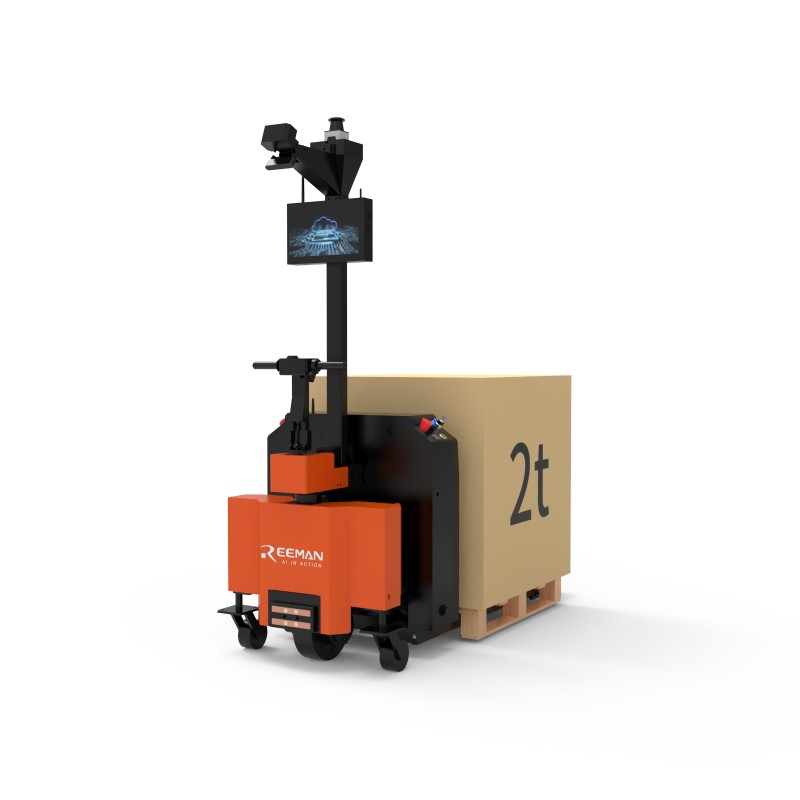
2 Ton Autonomous 4WD AGV Forklift Laser SLAM Navigation Multi-Line LiDAR 10mm Position Accuracy 6-8H Warehouse Handling
A heavy-duty 4WD AGV forklift for warehouse handling, with multi-line LiDAR, 10 mm positioning accuracy and 6-8 hour operating capability.
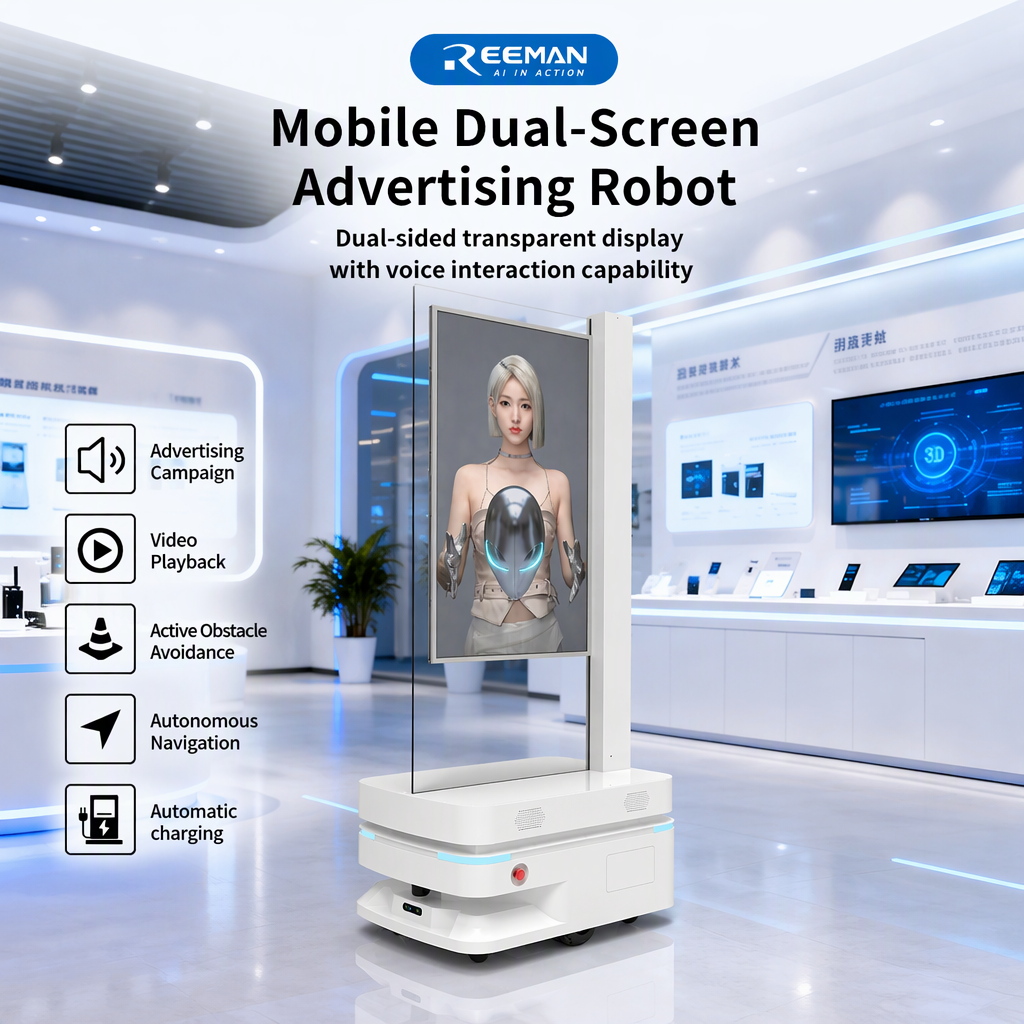
Reeman Mobile Dual Screen Advertising Robot LCD Display Voice Interaction Autonomous Navigation Indoor Commercial Use
An indoor commercial robot combining dual LCD displays, voice interaction and autonomous navigation for customer-facing environments.
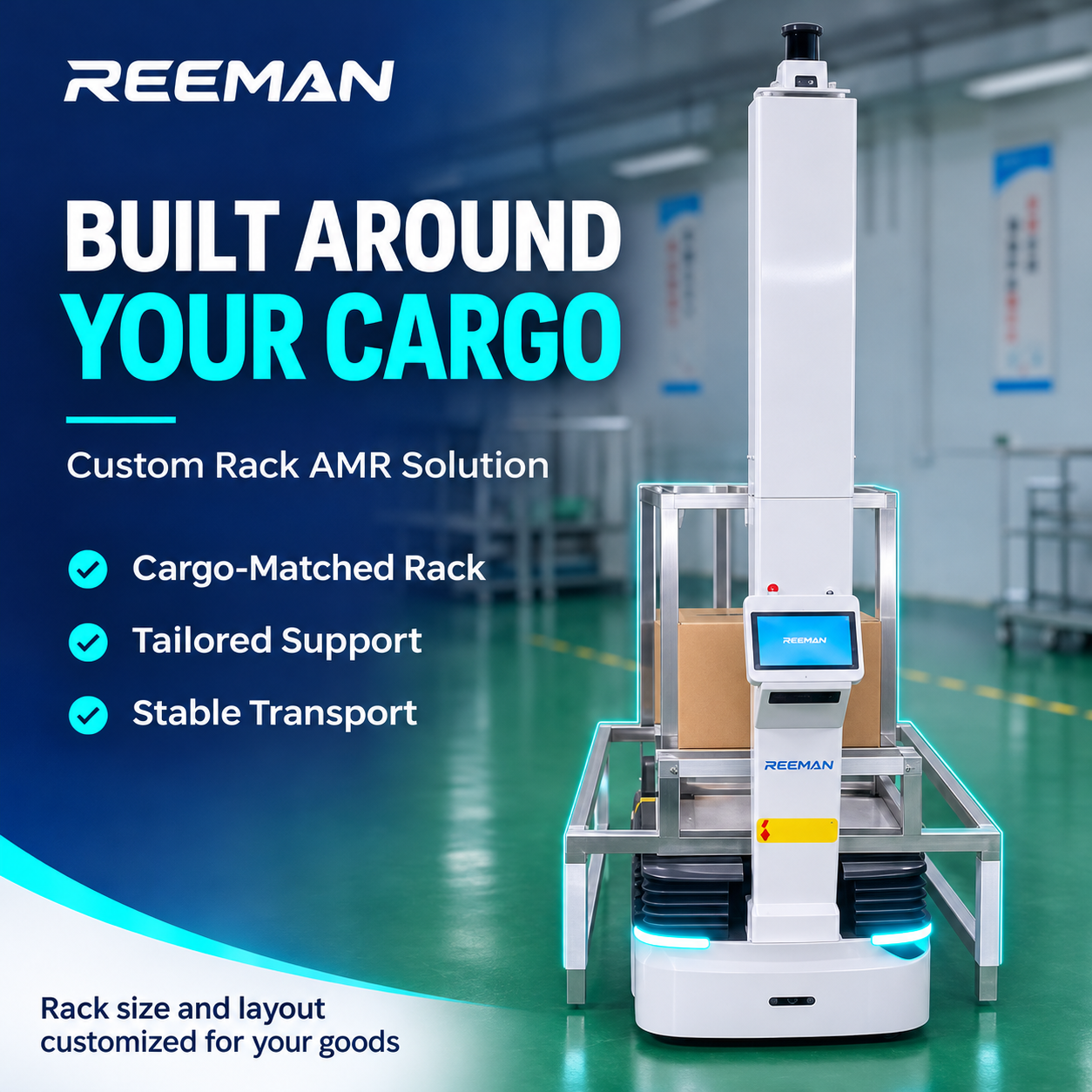
Dual Laser AMR 300KG AGV Lifting Mobile Robot with Slam LiDAR Navigation for Manufacturing Plants
A compact lifting AMR for manufacturing plants that need flexible docking, dual laser SLAM navigation and repetitive material transfer.
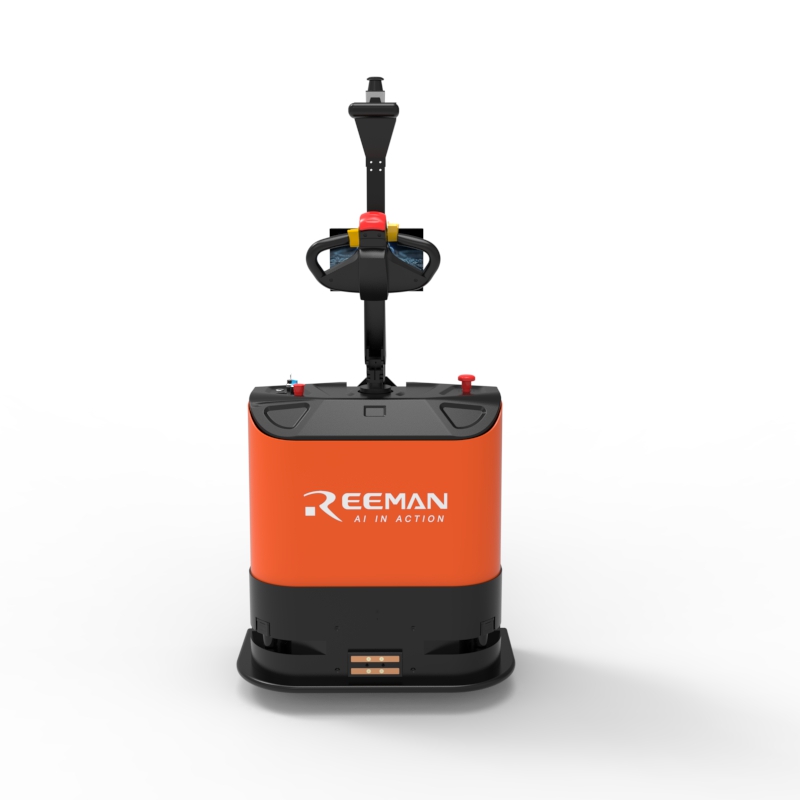
1500kg Laser SLAM Autonomous Forklift AGV Reflector-Free Point-to-Point Warehouse Material Handling
A reflector-free autonomous forklift for point-to-point warehouse handling where installation speed and flexible routing are critical.
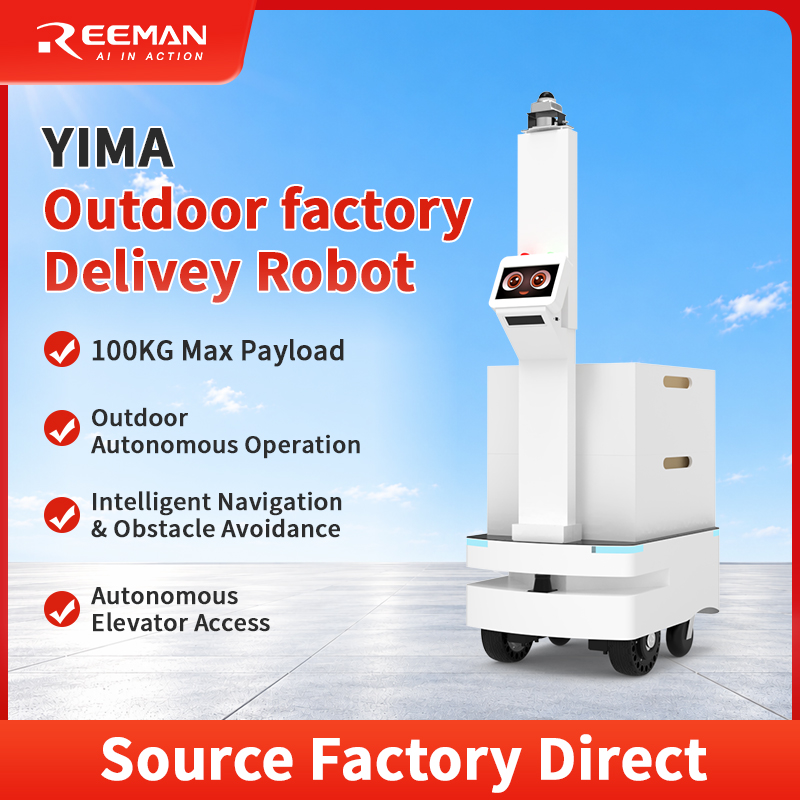
REEMAN Outdoor Delivery Robot 100kg Payload Autonomous Navigation Obstacle Avoidance Elevator Access Warehouse Logistics
A 100 kg outdoor delivery robot with autonomous navigation, obstacle avoidance and elevator access for campus and warehouse logistics.
Facts Procurement Teams Can Verify
The phrase “China best industrial mobile robot manufacturers” should be tested against evidence, not accepted as a label. Elvorn’s operating data gives buyers concrete checkpoints for a supplier review.
Factory information is supported by onsite verification from SGS Group; management systems are certified to ISO 9001 and ISO 14001, while model-level marks may include CE, FCC or PSE depending on configuration and destination market.
What “Best” Should Mean in Industrial Mobile Robot Procurement
A credible China industrial mobile robot manufacturer competes on engineering evidence: navigation reliability, integration depth, safety architecture, delivery discipline and total cost of ownership.



Separate a manufacturer from a catalog reseller
Industrial mobile robots are not commodity boxes. A serious supplier should be able to explain how the robot localizes itself, how it handles a blocked aisle, how it exchanges tasks with a WMS or MES, what happens when a wheel slips, and how spare parts will be supplied after year three. Buyers should ask for factory audit records, model-level test reports, software interface documentation and references from comparable sites.
Elvorn is positioned as a national high-tech enterprise focused on robotic platform technology and autonomous driving. Its in-house scope covers laser SLAM navigation, motion control, fleet scheduling and hardware. That vertical coverage matters during procurement because navigation performance, chassis design and software integration cannot be optimized separately without creating responsibility gaps.
- Laser SLAM without tape, QR codes or floor reflectors
- Open SDK and API for WMS, MES or ERP task dispatch
- Payload, mast, fork and top-module customization
- CE, FCC or PSE model marks where applicable
Match the Robot to the Material Flow
The best product is the one that matches payload, route complexity, docking tolerance, floor condition and software integration. Use these recommendation groups to narrow the eight-model shortlist.
Pallet and rack handling
Choose autonomous forklifts when the task is lifting pallets between floor, dock, rack and staging positions. Payload, fork dimensions, mast height and aisle clearance must be confirmed before quotation.
- 2 Ton Autonomous 4WD AGV Forklift for heavy warehouse handling
- 1500kg Laser SLAM Autonomous Forklift for reflector-free point-to-point moves
- Use for receiving, put-away, dock loading and line feeding
Factory logistics and WIP
Choose AMR platforms when material must move between workstations, cells or storage zones with flexible routing. Integration with MES and production takt time should be reviewed early.
- 600kg Industrial Laser SLAM AMR for QR-code-free factory logistics
- Dual Laser AMR 300kg Lifting Robot for carts and repetitive transfer
- REEMAN 600kg AMR for sheet metal and production-line handling
Commercial service and delivery
Choose service robots when customer experience, advertising, indoor navigation or outdoor delivery adds measurable value. Display brightness, voice interaction, mapping and elevator access should be tested in the real environment.
- 30 Inch OLED Transparent Screen Mobile Advertising Robot
- Dual Screen Advertising Robot with voice interaction
- 100kg Outdoor Delivery Robot with obstacle avoidance and elevator access
What Buyers Will Ask in 2025–2028
Industrial mobile robot purchasing is moving from specification comparison to outcome validation. The following trends will shape RFQs, pilot tests and supplier scorecards.
Proof of performance
Buyers will require pre-shipment acceptance tests, route-cycle data, obstacle-avoidance scenarios and documented recovery behavior before balance payment.
Total cost of ownership
Battery cycle life, charging ratio, tire wear, spare-part lead time and software update policy will be evaluated alongside the purchase price.
Interoperability and security
WMS, MES, ERP, elevator, door and fleet-control integration will be specified in the contract, with cybersecurity and account management reviewed.
Lifecycle service network
Overseas buyers will favor suppliers that provide English documentation, remote commissioning, operator training and long-term spare-part access.
Where Industrial Mobile Robots Are Heading
The next generation of AGV and AMR products will be judged by adaptability, safety evidence and integration speed rather than by a single headline payload number.
Multi-sensor SLAM
Laser SLAM, 3D LiDAR, visual sensing and robust localization will be combined to handle dynamic aisles, glass, pedestrians and changing rack layouts.
Higher payload, tighter control
Heavy-duty forklifts and lifting AMRs will demand 4WD, precise docking and stable load handling without sacrificing safety around people.
Modular chassis and open SDK
Robot chassis platforms with open APIs allow integrators and OEM buyers to launch branded robots faster and connect to existing software ecosystems.
Mixed fleets and service robots
Warehouse AGVs, factory AMRs, delivery robots and advertising robots will increasingly share scheduling logic and remote operations dashboards.
Elvorn: Engineering, Production and Export Support
Procurement becomes easier when the manufacturer can connect product design, factory control and after-sales support into one accountable delivery model.
Full-stack R&D
In-house work covers laser SLAM navigation, motion control, fleet scheduling and robot hardware, allowing faster customization and clearer technical answers.
Two production bases
Shenzhen and Ningbo production bases support assembly, testing and customization, with supplier assessment and on-site material inspection procedures.
Quality and audit trail
ISO 9001 and ISO 14001 systems, SGS onsite verification, model-level CE/FCC/PSE marks where applicable, and functional/load testing before shipment.
Open SDK and API
AMR and chassis platforms support secondary development, enabling task dispatch and status feedback from WMS, MES, ERP or custom dashboards.
OEM, ODM and buyer label
Custom top modules, payload structures, branding and packaging are available for distributors, integrators and private-label robot programs.
Export-ready service
English documentation, remote commissioning, spare-part supply and export experience across North America, Western Europe, Eastern Asia, Southeast Asia and the Middle East.
R&D, Production and Quality Control
A factory visit or third-party audit should confirm assembly discipline, testing equipment, component traceability and quality records. The images below reflect the production environment described in Elvorn’s public company profile.

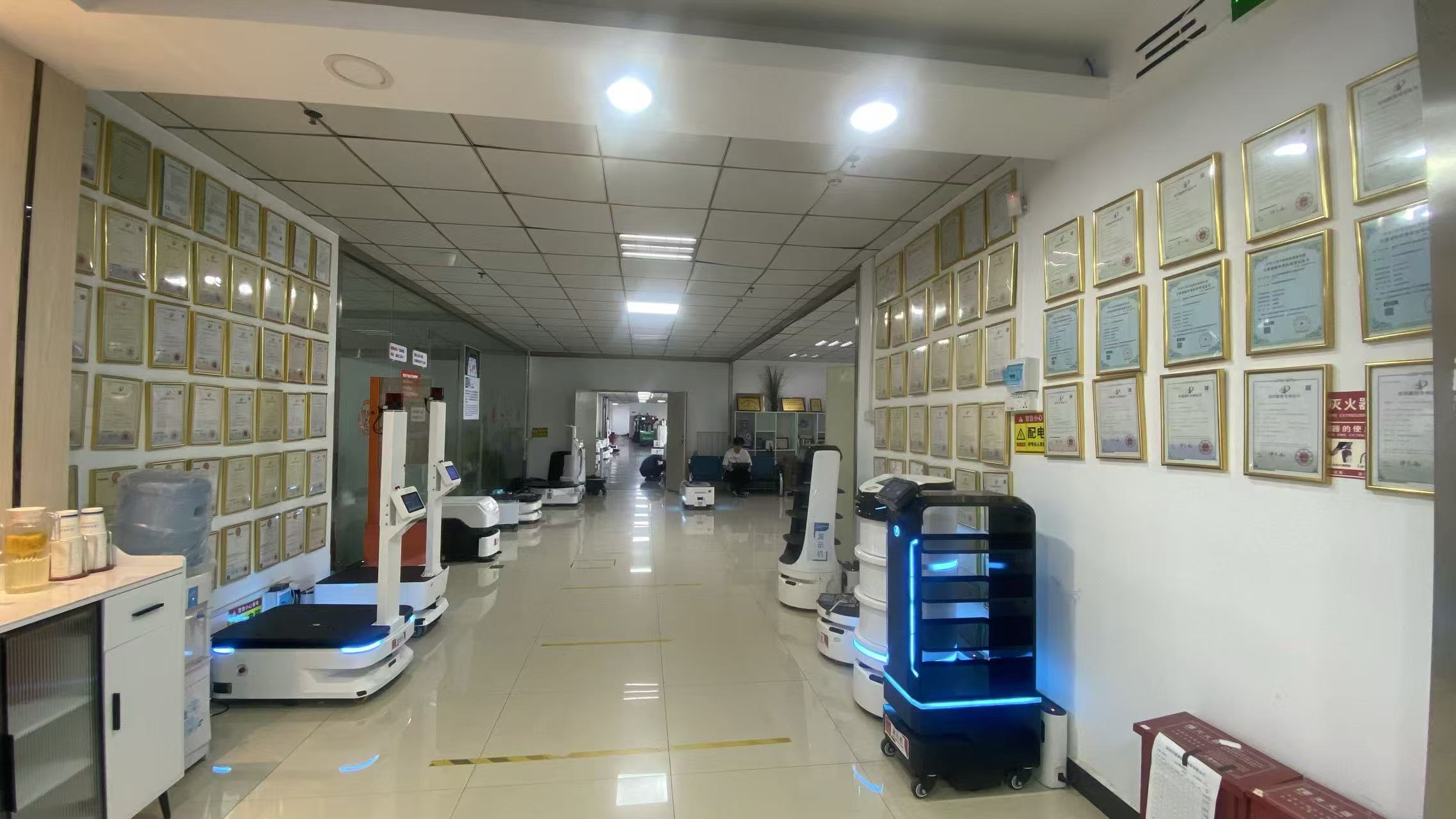
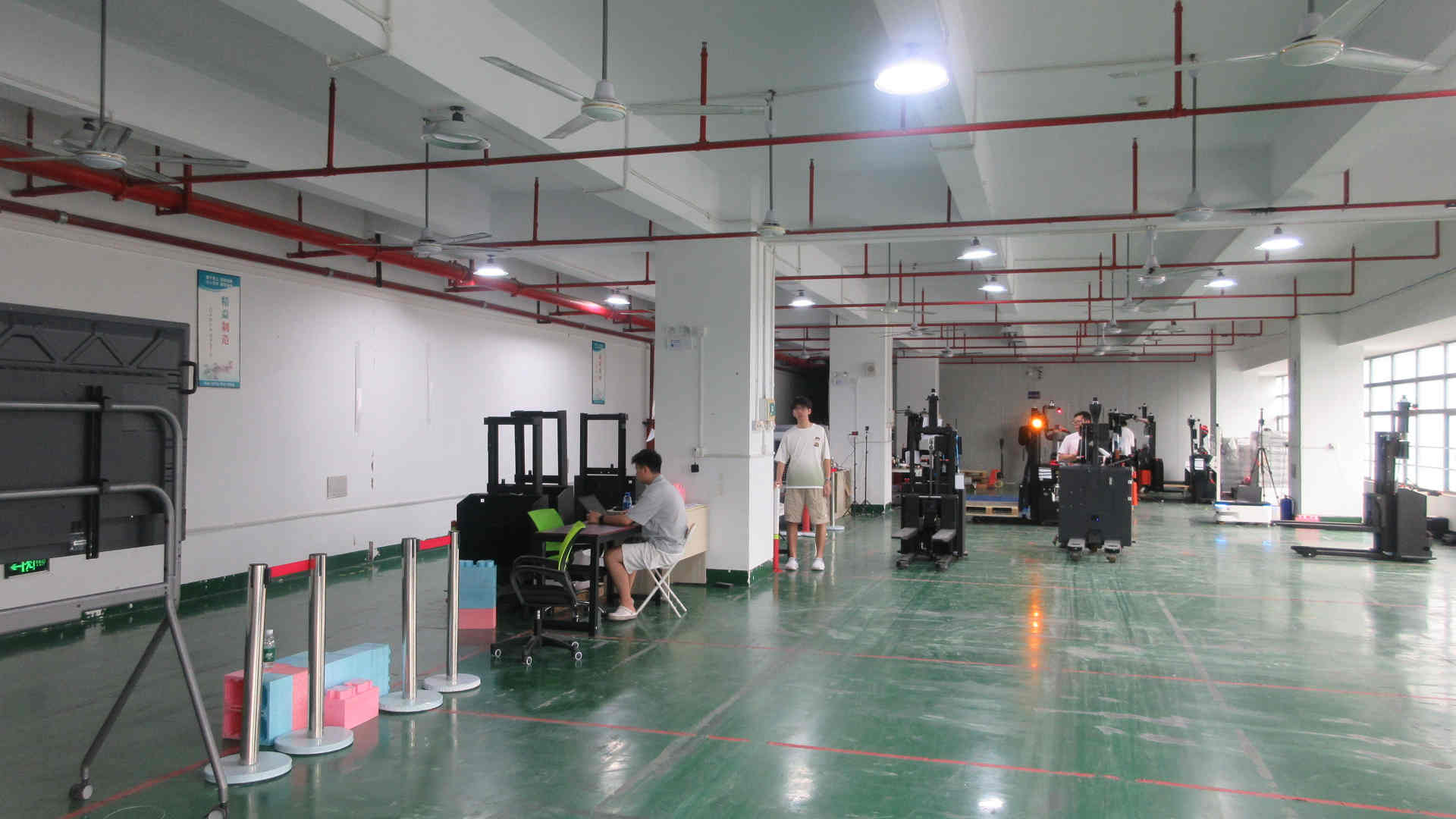
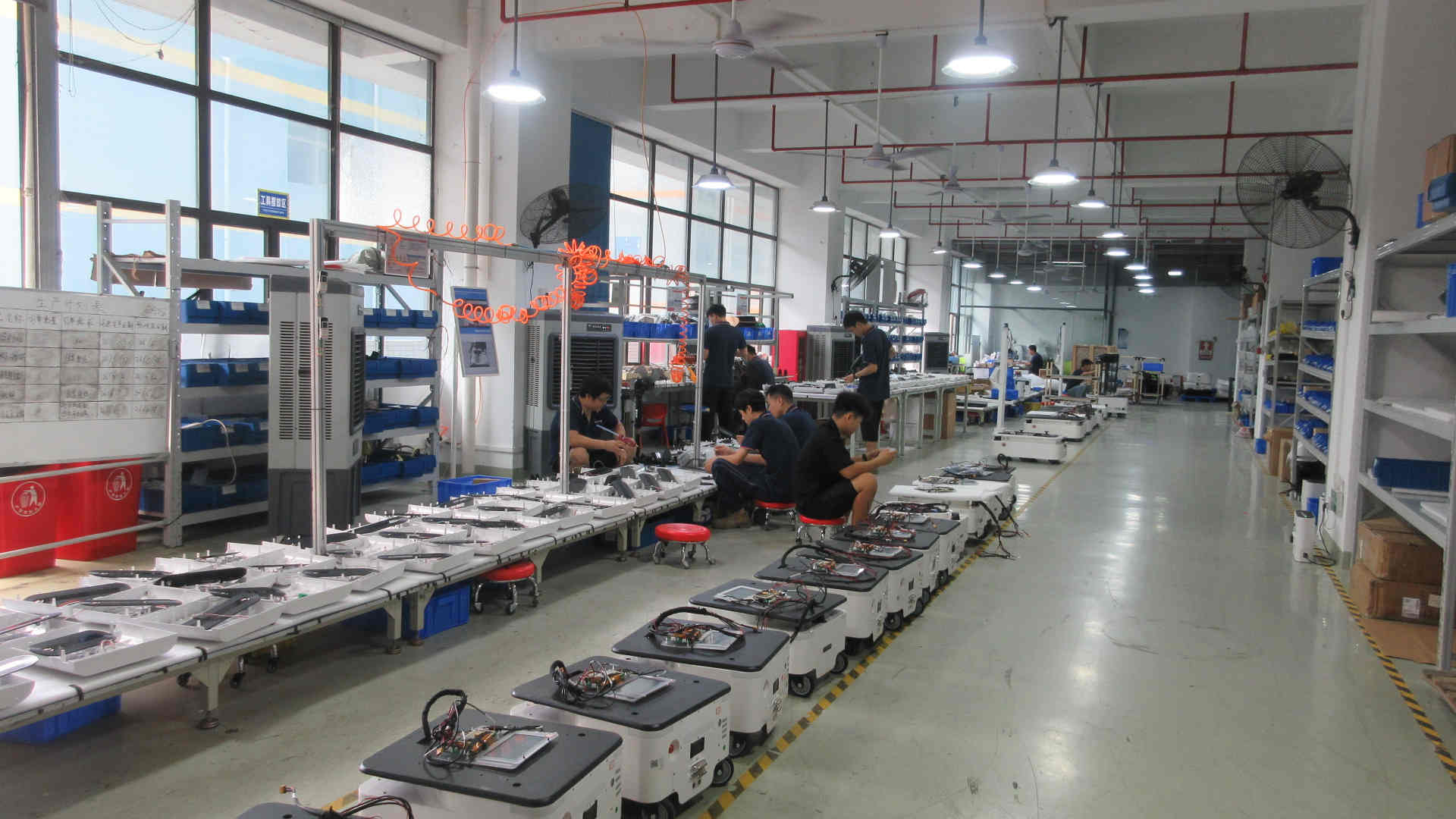
For high-value automation, the real risk is not the first week of operation but the first layout change, the first component replacement and the first software integration update. A supplier with in-house R&D, documented testing and spare-part planning is better positioned to support those moments. Elvorn’s public profile states that the company was founded in 2015, operates two production bases, holds 39 patents, employs more than 200 team members and maintains a 98.76% response rate. These are useful due-diligence signals when compared with third-party assessment reports, transaction records and reference projects.
Robot certification is configuration-specific. Buyers should confirm the exact model, battery system, charger, destination country and intended operating environment before accepting a CE, FCC or PSE claim. The supplier should provide the declaration, test report or certificate that matches the purchased configuration, not only a generic catalog mark.
From Requirement Review to Stable Operation
A disciplined deployment process reduces commissioning risk for overseas buyers and creates clear acceptance points for the project team.
Requirement review
Share layout drawings, load data, pallet type, aisle width, floor condition, charging location and target throughput.
Solution design
Engineers recommend model, fleet size, charging plan, navigation strategy and integration scope.
Customization and build
OEM branding, top modules, fork or lifting structures and software interfaces are built to the agreed specification.
Factory testing
Function, load and route tests are completed before shipment, with test records available for buyer review.
Deploy and support
Remote mapping, operator training, acceptance support and long-term spare-parts supply help stabilize operation.
Frequently Asked Questions
These answers address the technical and commercial questions most commonly raised by distributors, integrators and end users comparing China industrial mobile robot manufacturers.
What is the difference between an AGV forklift and an AMR?
+
Can Elvorn robots be integrated with my WMS, MES or ERP?
+
Does Elvorn offer OEM and ODM customization?
+
Which certifications do Elvorn robots carry?
+
What trade terms does Elvorn accept for export orders?
+
How can a buyer verify performance before placing a fleet order?
+
Plan Your Next Automation Project
Send your site layout, load data, pallet or cart details, aisle width and throughput target. Elvorn’s application engineers can recommend the right AGV forklift, AMR, robot chassis or service robot configuration.