Eight Export-Ready Product Platforms for Pallet Flow, Factory Logistics and Commercial Service
A practical shortlist for buyers comparing autonomous mobile robots, autonomous forklifts and robot chassis from China. Each platform below is presented with its original product link, so procurement teams can verify specifications, request drawings and compare configuration options before shortlisting a supplier.
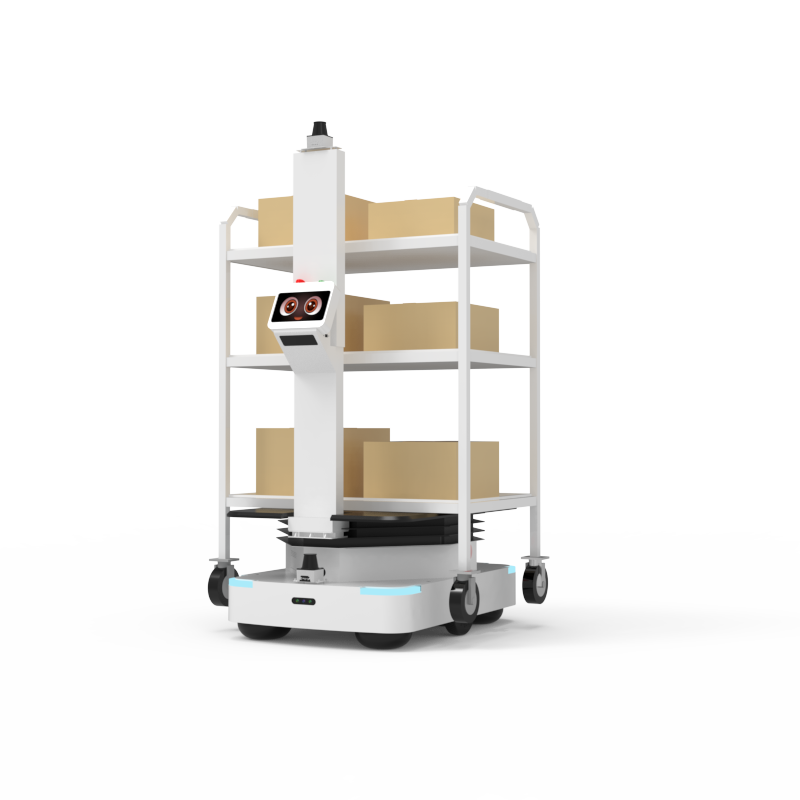
600KG Industrial Heavy Load AMR Robot Laser SLAM Auto Lifting Mobile Platform for in Plant Material Handling
Recommended for in-plant material handling where loads approach 600 kg and routes change with production layout. Laser SLAM mapping supports auto lifting and dispatch without magnetic tape.
- 600 kg-class heavy-load platform
- Laser SLAM auto-lifting design
- In-plant material handling
- OEM configuration available
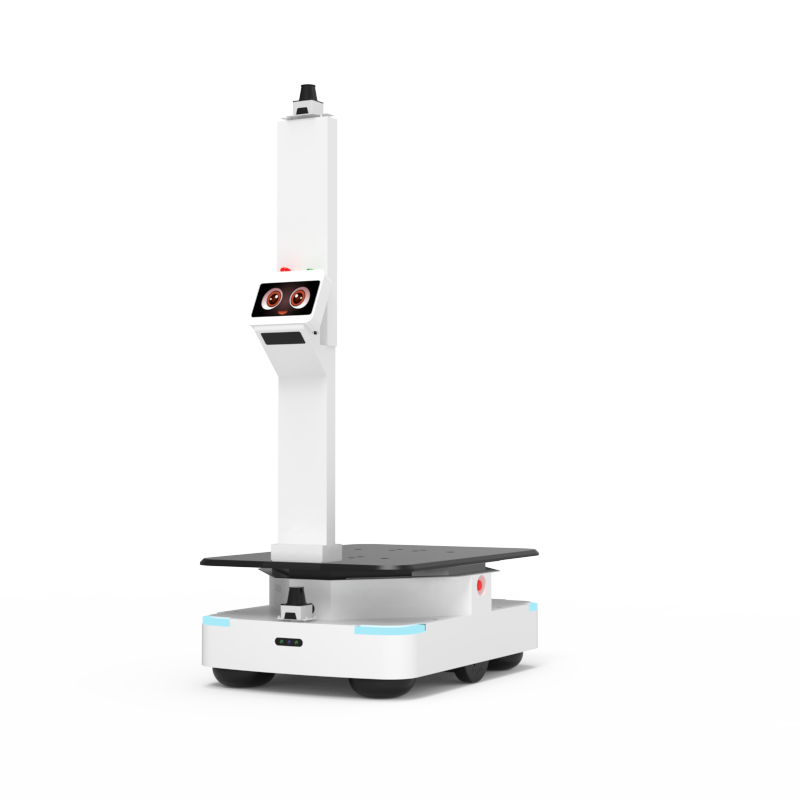
600kg Payload Laser Navigation AMR Robot Autonomous Lifting Warehouse Transfer Equipment
A practical choice for warehouse transfer and shelf or cart movement, with autonomous lifting and laser navigation. Suitable for distribution centers needing flexible staging and replenishment.
- 600 kg payload transfer platform
- Laser navigation and mapping
- Autonomous lifting function
- Warehouse transfer and staging
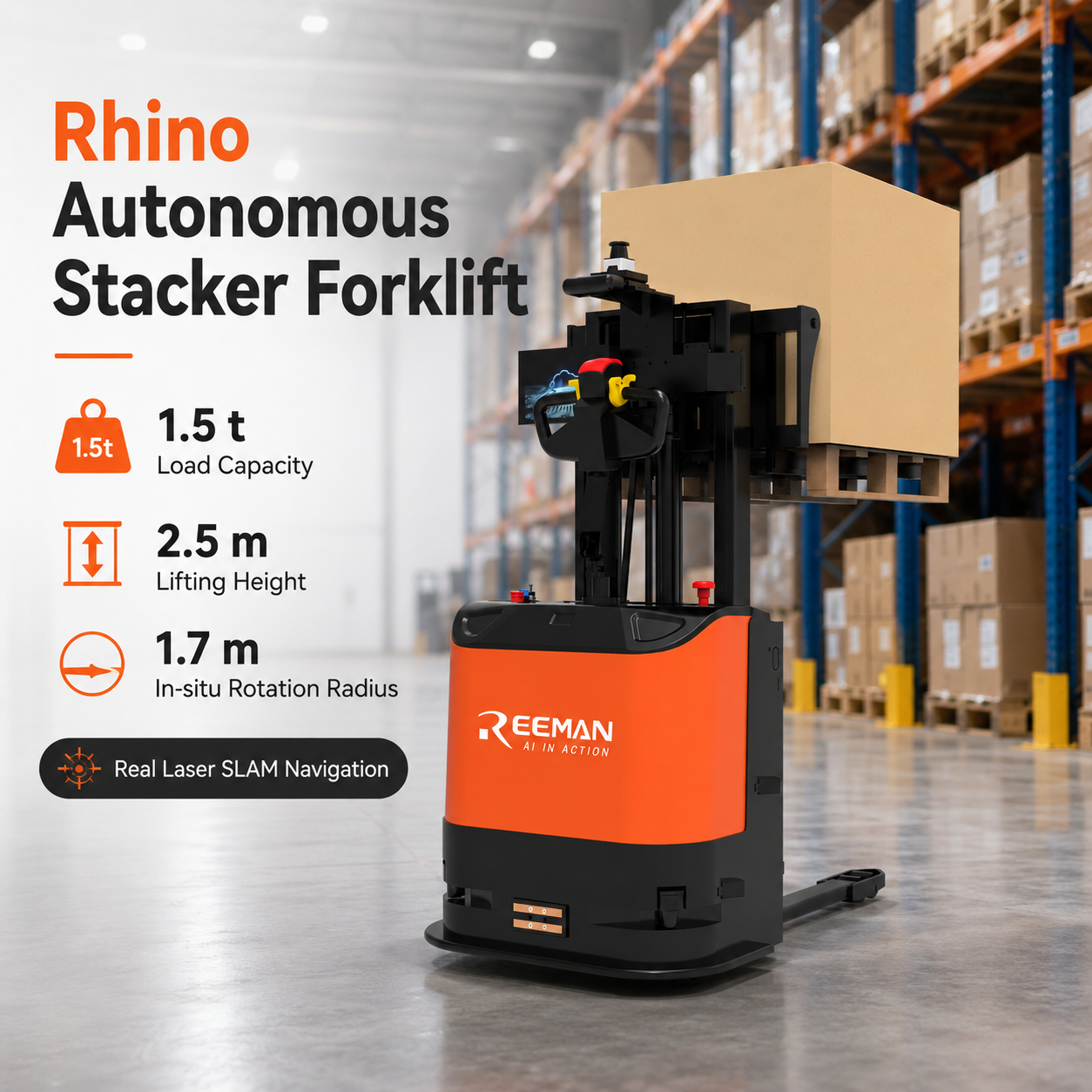
Laser SLAM Autonomous Stacker Forklift 1500 kg Load AGV Pallet Handling Robot Laser Obstacle Avoidance Warehouse
Recommended for pallet put-away and low-rack stacking where a stacker format is more efficient than a lifting platform. Laser obstacle avoidance supports mixed traffic and changing aisle use.
- 1,500 kg load stacker format
- Laser SLAM navigation
- Laser obstacle avoidance
- Warehouse pallet handling
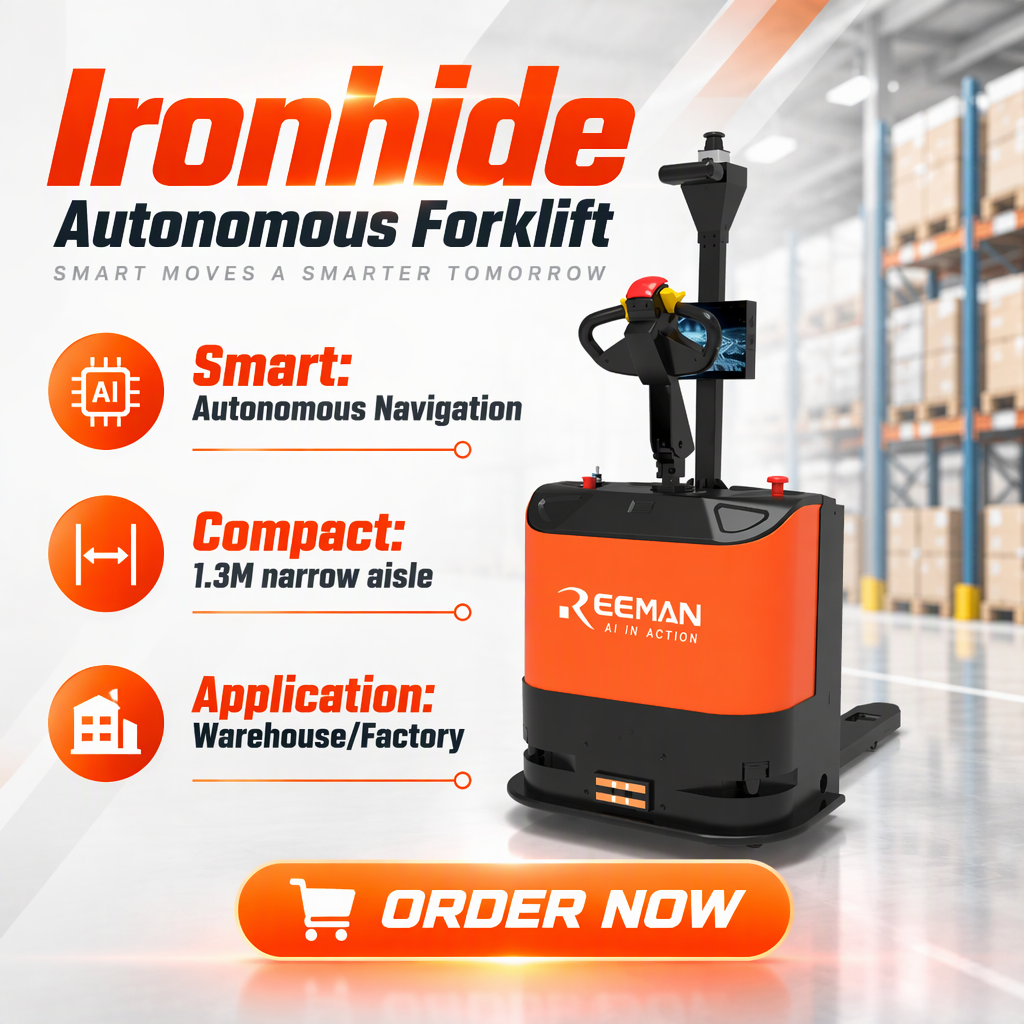
Reeman 1.5 Ton Autonomous Forklift AGV 3D Obstacle Avoidance Bidirectional Driving 48V 30AH Lithium-Ion Battery
Built for tight aisles that benefit from bidirectional driving and 3D obstacle avoidance. The 48V lithium-ion platform is suited to repeatable pallet moves in factories and warehouses.
- 1.5 ton autonomous forklift AGV
- 3D obstacle avoidance
- Bidirectional driving
- 48V 30AH lithium-ion battery
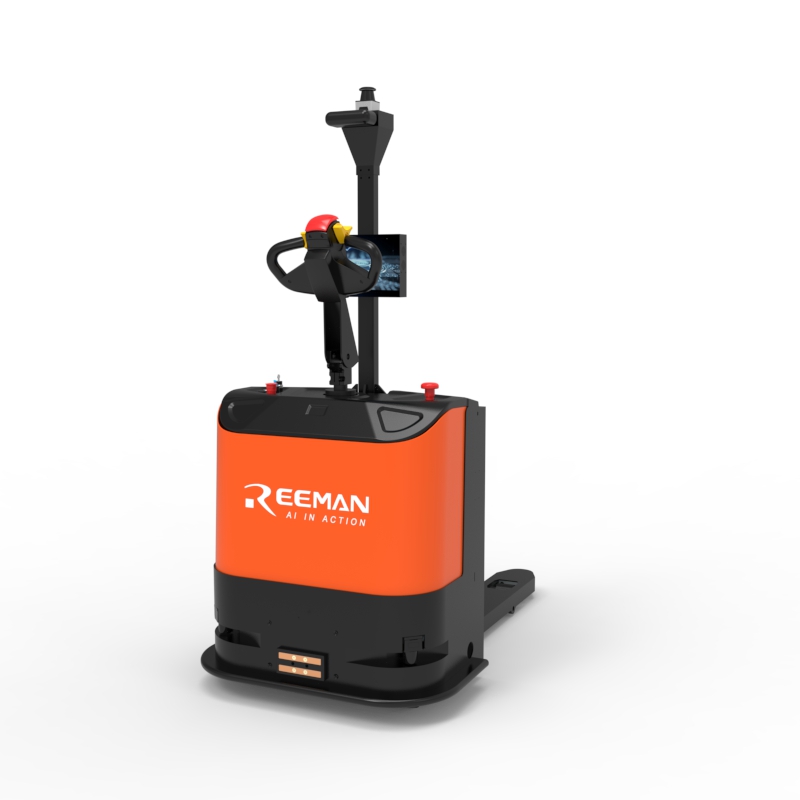
CE Certified 1500kg Driverless AGV Forklift Laser SLAM Navigation Automatic Pallet Loading Unloading Robot 1-2H Working Time
A CE-oriented choice for automatic pallet loading and unloading where compliance review and working-time planning matter. Ask engineering to match battery duty and charging windows to shift patterns.
- 1,500 kg driverless AGV forklift
- CE-oriented configuration
- Laser SLAM navigation
- 1–2 h working time, config dependent
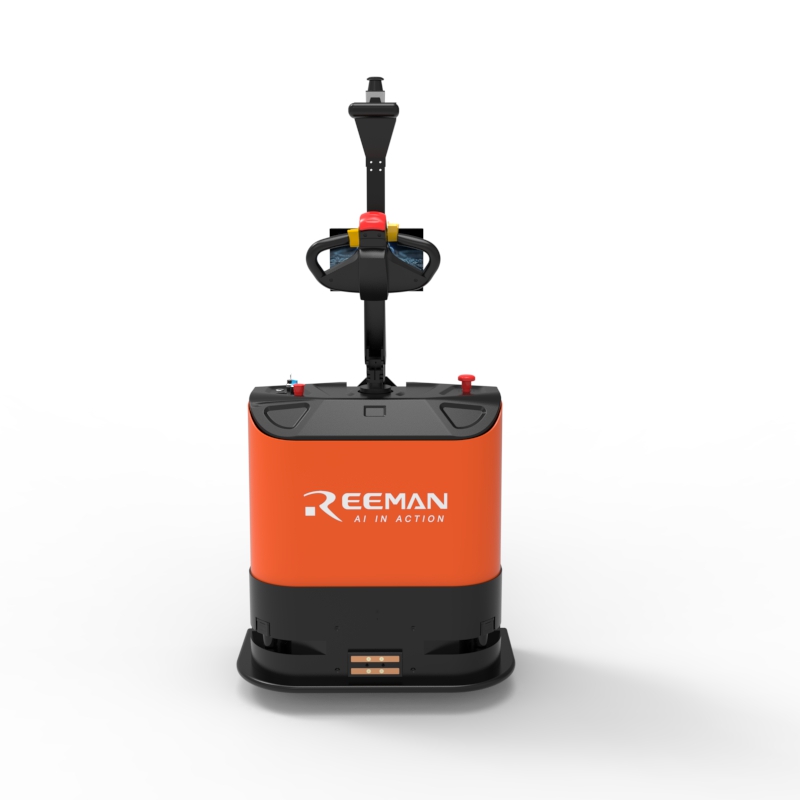
1500kg Laser SLAM Autonomous Forklift AGV Reflector-Free Point-to-Point Warehouse Material Handling
Designed for point-to-point warehouse handling without reflectors. This reduces floor modification and is useful when racks, storage zones or pick faces are periodically reconfigured.
- 1,500 kg load capacity
- Reflector-free navigation option
- Point-to-point material handling
- Warehouse layout flexibility
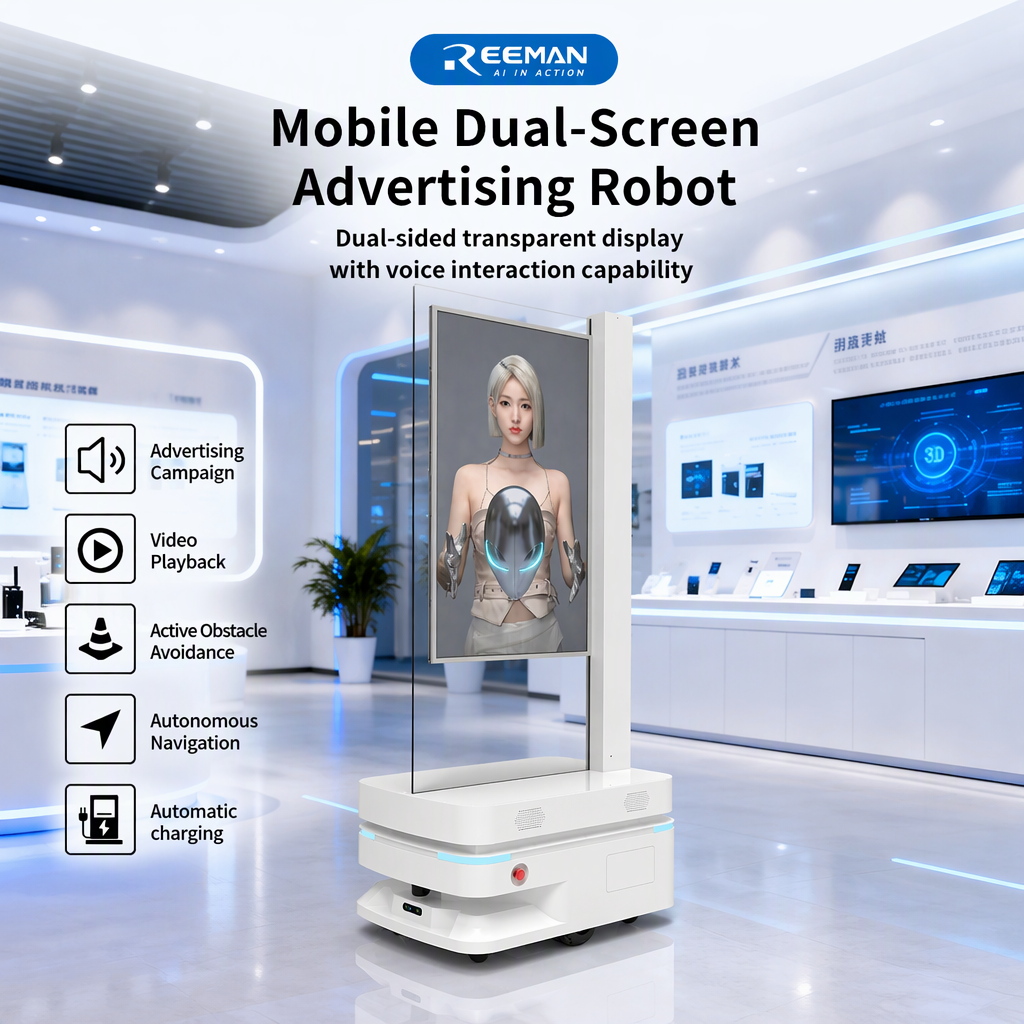
Reeman Mobile Dual Screen Advertising Robot LCD Display Voice Interaction Autonomous Navigation Indoor Commercial Use
A service robot for indoor commercial spaces needing mobile promotion, guidance and voice interaction. Useful in retail, exhibition and hospitality environments where visitor engagement is measurable.
- Dual LCD advertising screens
- Voice interaction function
- Autonomous indoor navigation
- Retail, exhibition and hospitality
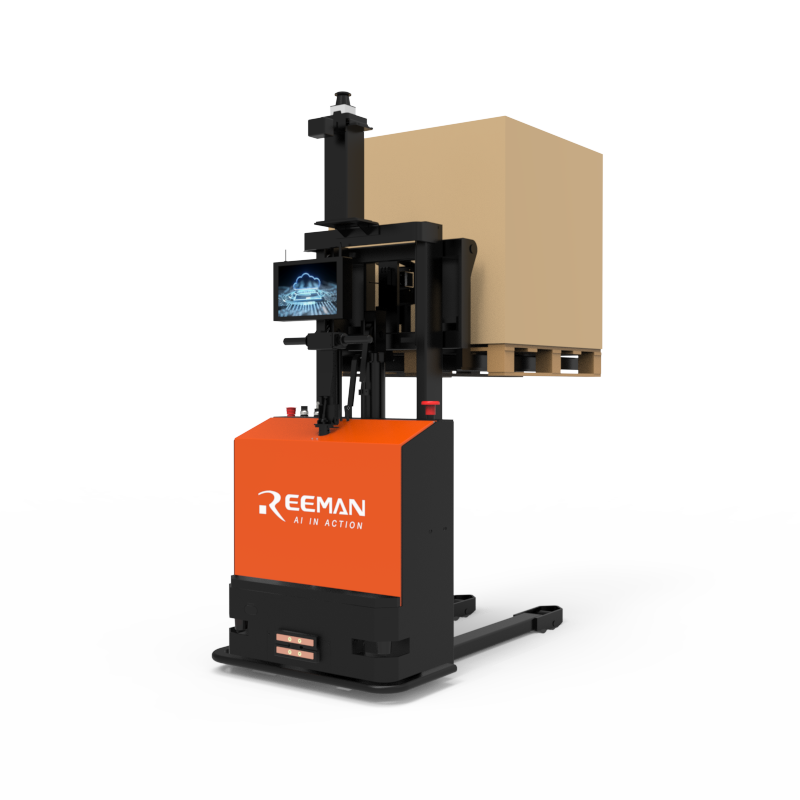
1000 kg Laser SLAM Forklift AGV Unmanned Pallet Stacker Single Line Lidar Obstacle Avoidance Factory Logistics
A cost-performance option for factory logistics where 1,000 kg pallet moves repeat across defined lanes. Single-line lidar obstacle avoidance suits stable layouts with clear traffic rules.
- 1,000 kg pallet stacker platform
- Laser SLAM navigation
- Single-line lidar avoidance
- Factory logistics deployment
Product selection should be confirmed through a site survey covering aisle width, pallet type, floor conditions, charging location, traffic rules and WMS/MES integration scope.
Verified Facts Buyers Can Use During Supplier Due Diligence
Procurement decisions for autonomous robot platforms involve more than a model list. Buyers need evidence of engineering depth, production control, certification readiness and export support. The data below reflects the public company profile of Shenzhen Elvorn Intelligent Equipment Co., Ltd.
Factory data verified onsite by independent inspector SGS Group. Management systems certified to ISO 9001 and ISO 14001; model-level CE, FCC or PSE marks depend on configuration and target market.
Why a China Robot Platform Supplier Must Be Evaluated as an Engineering Partner, Not Only a Trading Company
Founded in 2015, Shenzhen Elvorn Intelligent Equipment Co., Ltd. is a national high-tech enterprise focused on robotic platform technology and autonomous driving. The company operates two production bases in Shenzhen and Ningbo and supports buyers across North America, Western Europe, Eastern Asia, Southeast Asia and the Middle East. Its product scope covers autonomous forklifts, industrial AMRs, robot chassis, delivery robots, cleaning robots and disinfection robots.
From a procurement perspective, the most important difference is vertical control. Elvorn’s in-house R&D team works across laser SLAM navigation, motion control, fleet scheduling and hardware integration. That combination shortens the path from application question to engineering answer: how a 600 kg lifting AMR behaves at a blind corner, how a 1.5 t stacker AGV should approach a rack, what charging window keeps a fleet productive, or how a robot chassis can be adapted for an OEM top module.
For distributors and system integrators, this matters because autonomous robot projects often fail at the interfaces — between the robot and WMS/MES, between the robot and elevator or door controls, between the local safety plan and the machine’s obstacle-avoidance logic. A supplier with open SDK/API capability and direct access to its engineering team can reduce integration risk before shipment, not after commissioning.
- Verified custom manufacturer
- ISO 9001 & ISO 14001
- CE / FCC / PSE-ready models
- OEM, design and buyer-label service
- SGS onsite verified factory
- FOB terms, T/T in USD or CNY



Six Advantages That Matter When Shortlisting an Autonomous Robot Supplier
These are the capability areas procurement and engineering teams typically verify before placing a trial order or scheduling a factory audit.
Laser SLAM Navigation
Maps the site in hours and navigates without magnetic tape, QR codes or floor reflectors in many configurations. Layout changes can be handled through mapping and software updates instead of civil works.
Open SDK & API Integration
AMRs and robot chassis support secondary development, allowing task dispatch and status feedback from WMS, MES, ERP or custom dashboards. This is essential for fleet-level automation rather than isolated robot demos.
Modular Payload Platforms
From commercial delivery robots to 1.5 t autonomous forklifts, shared control architecture simplifies operator training, spare-part planning and multi-model fleet management.
Multi-Layer Safety Logic
Lidar, obstacle sensors, emergency stops and speed zoning help manage pedestrians, forklifts, racking and blind corners. Safety scope should always be confirmed against the actual site traffic plan.
Own Production Capacity
Two production bases in Shenzhen and Ningbo, with supplier assessment procedures and on-site material inspection. This supports customization and repeat orders without losing traceability.
Export-Ready Support
English documentation, remote commissioning, spare-part supply and OEM/design service for buyers in North America, Western Europe, Eastern Asia, Southeast Asia and the Middle East.
What Serious Buyers Will Compare in 2025–2030 Robot Procurement
The next buying cycle is less about proving that a robot can move and more about proving that a fleet can operate safely, integrate cleanly and deliver measurable total cost of ownership.
Total Cost of Ownership Over Sticker Price
Procurement teams increasingly compare labor availability, utilization rate, charging strategy, maintenance hours and spare-part lead time. A lower purchase price can be more expensive if the robot requires floor markers, frequent re-mapping or slow integration.
Integration Readiness as a Shortlisting Criterion
Open API/SDK capability, WMS/MES compatibility, protocol documentation and remote diagnostic access are moving from “nice to have” to mandatory requirements, especially for multi-site distributors and system integrators.
Safety Evidence and Compliance Review
CE, FCC and PSE marks are only one part of the review. Buyers also ask for risk assessment support, speed-zone logic, emergency-stop design, obstacle-avoidance behavior and documentation for internal EHS approval.
Mixed Fleets and After-Sales Uptime
Warehouses rarely automate every route at once. The supplier’s ability to support mixed populations of AMRs, forklift AGVs and service robots — with shared reporting and spare parts — becomes a long-term procurement advantage.
How Autonomous Robot Platforms Are Evolving
Product roadmaps in China are moving toward stronger perception, higher payload density, more modular chassis design and better software integration. The practical effect is that buyers can specify a platform today while preserving a path for future automation.
Multi-Sensor 3D Perception
3D lidar, laser SLAM and additional obstacle sensors are being combined to handle dynamic environments more reliably. This improves confidence around blind corners, moving forklifts and pedestrian traffic without relying on fixed floor infrastructure.
Higher Payload Density
Compact 600 kg, 1,000 kg and 1,500 kg platforms are closing the gap between mobile lifting AMRs and traditional forklift AGVs. Buyers can often choose a platform that fits existing aisle widths without sacrificing pallet weight capacity.
Software-Defined Robot Platforms
Fleet scheduling, task allocation, charging management and remote upgrades are increasingly software-driven. The robot becomes part of an automation system, not a standalone machine, making open interfaces and documentation critical.
Modular Chassis for OEM Builders
Robot chassis platforms with open SDK/API allow integrators and brands to add custom top modules, payload structures, screens or service functions. This reduces development time and lowers the cost of launching a new robot product line.
Matching the Platform to the Workflow
A supplier should be able to explain not only what the robot can do, but why a particular model is a better fit for your load, aisle, traffic and integration environment.
In-Plant Material Handling
For loads near 600 kg and changing production layouts, the 600KG Industrial Heavy Load AMR with laser SLAM auto lifting is a logical starting point. It reduces fixed-route dependency and supports line-side replenishment.
Warehouse Pallet Transfer
For 1,000–1,500 kg pallet moves, the 1500 kg laser SLAM stacker and reflector-free forklift AGV options should be compared based on rack type, aisle width, stacking height and floor modification budget.
Factory Logistics Standardization
Where pallet routes repeat across defined lanes, the 1000 kg Laser SLAM Forklift AGV with single-line lidar obstacle avoidance can offer a practical balance between capability and deployment cost.
Commercial Customer Engagement
For retail, exhibitions and hospitality, the Reeman Dual Screen Advertising Robot combines autonomous indoor navigation with LCD promotion and voice interaction, creating a measurable service and marketing use case.
From Site Survey to Stable Operation
A credible autonomous robot supplier should provide a deployment path, not just a product quotation. The following four-stage framework reduces risk for overseas buyers.
Requirement Review
Share layout drawings, load data, pallet type, aisle width, traffic rules, shift pattern and target throughput. Include photos or video of blind corners, charging areas and docking points.
Solution Design
Engineers recommend model, fleet size, charging plan, safety zoning and integration scope. Confirm whether the robot needs to communicate with WMS, MES, ERP, elevator or door controls.
Build, Brand & Test
OEM branding, top modules, payload structures and software interfaces are configured to specification. Functional and load tests are completed before shipment, with test records available for review.
Deploy & Support
Remote mapping, operator training and spare-part planning support stable operation. Buyers should agree on response times, documentation language and long-term maintenance responsibilities before order confirmation.
ROI is best calculated with site-specific inputs: labor cost per shift, number of pallet moves per day, robot cycle time, charging window, expected uptime, integration cost and maintenance reserve. A supplier that asks for these inputs is usually better prepared to support a real deployment.
Execution Evidence: Production, Testing and Quality Control
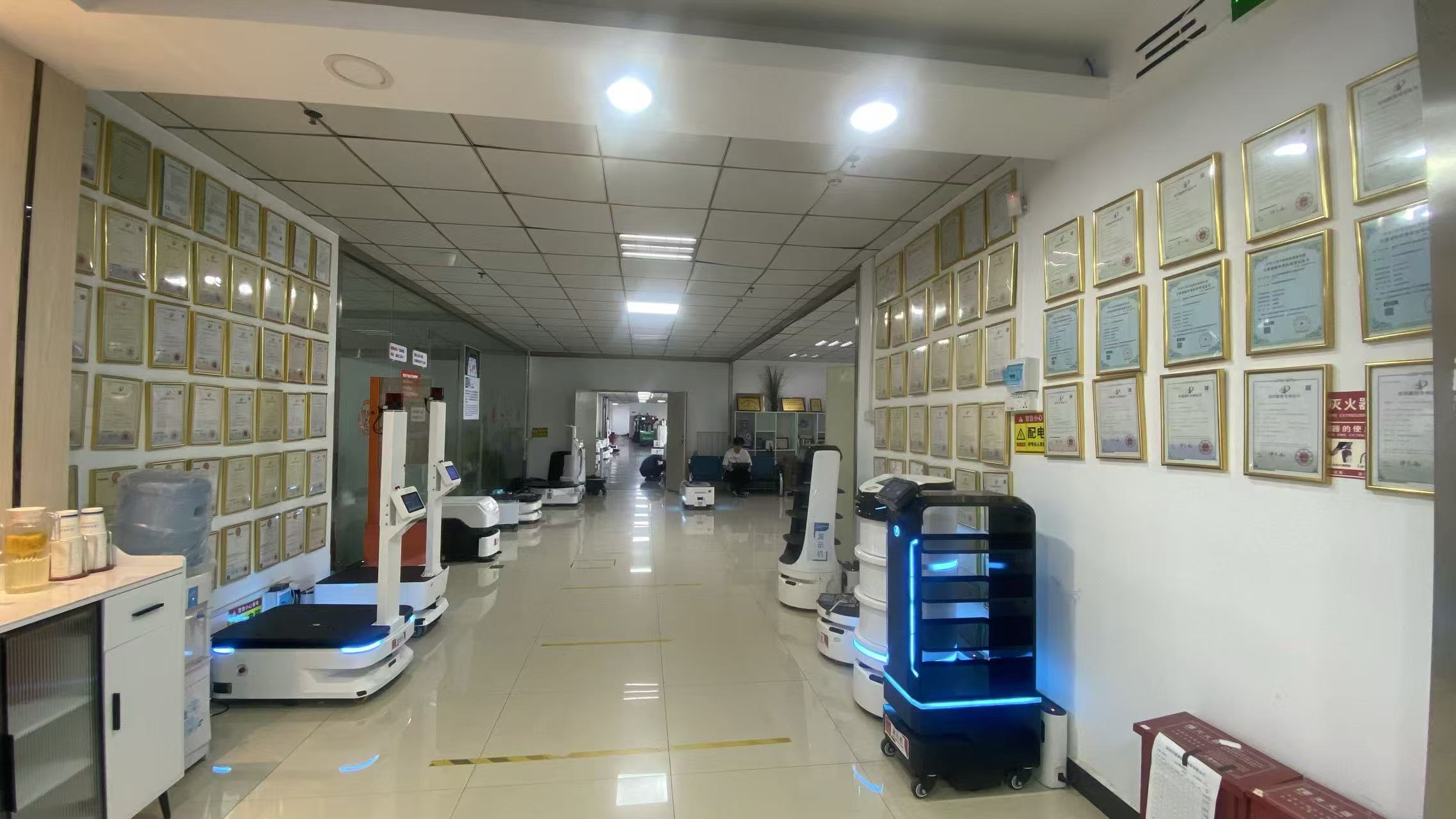
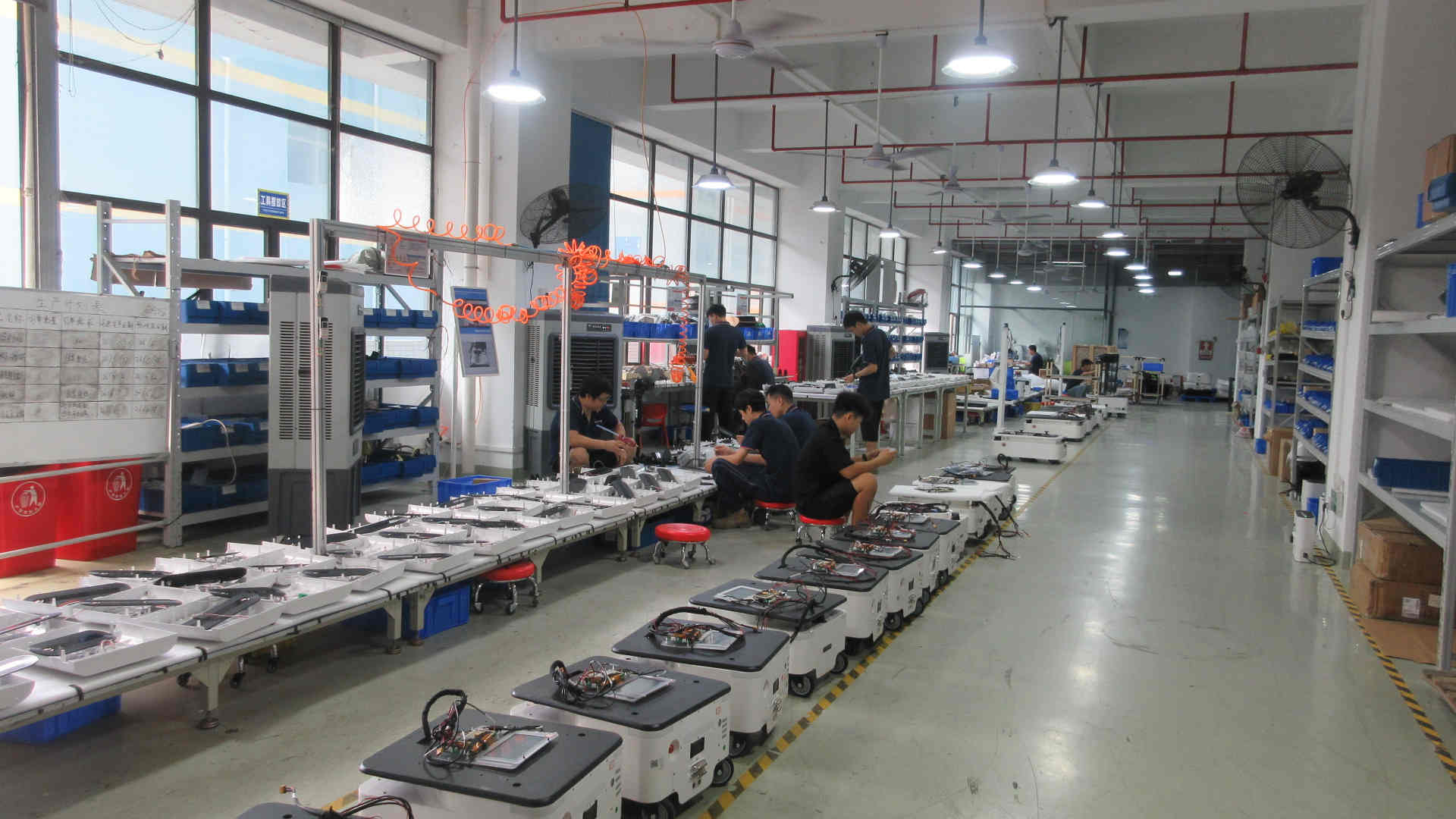
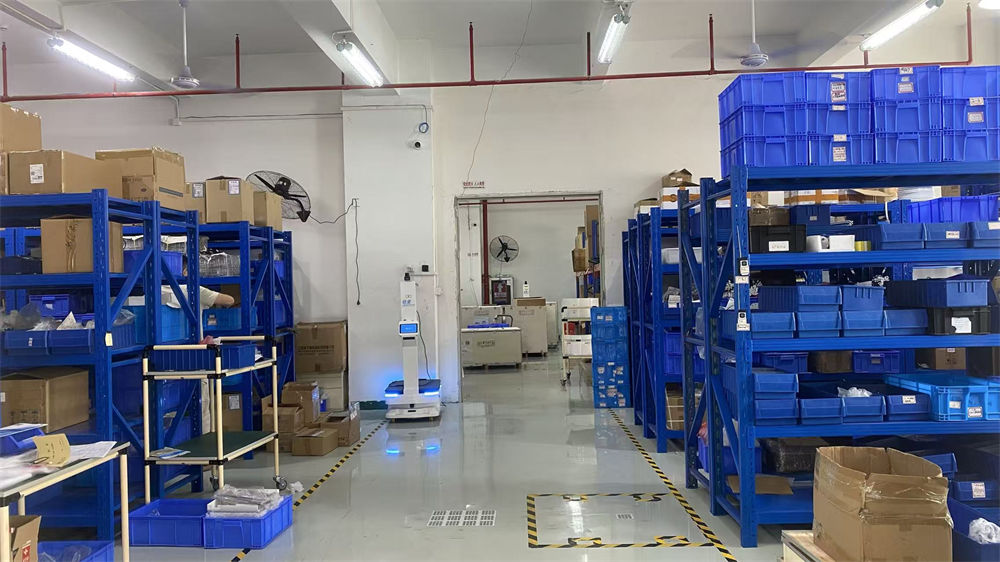
For export buyers, factory evidence matters because autonomous robots are capital equipment with long service lives. Images from production, testing and quality control help verify that the supplier has a real manufacturing operation behind the catalogue.

Factory workshop and production environment
Robot assembly and production workflow
R&D laboratory and engineering testing
Autonomous forklift platform in production
What This Page Adds Beyond a Standard Product Catalogue
Procurement Checklist
Buyers can use the site-readiness questions, certification review points and integration checklist as an internal shortlisting document before contacting suppliers.
Configuration Logic
The page connects common workflows to specific platforms, helping buyers avoid over-specifying payload or under-planning charging, safety and software integration.
TCO Lens
Instead of comparing only purchase price, the content frames cost around utilization, floor modification, integration effort, maintenance and spare-part planning.
Future-Readiness
Procurement and product development trends are translated into practical supplier questions, such as API documentation, mixed-fleet support and long-term software updates.
Frequently Asked Questions for Autonomous Robot Procurement
These answers reflect common questions from distributors, integrators and end users evaluating a China-based autonomous robot platform supplier.
What is the difference between an AGV forklift and an AMR?
An autonomous forklift, often called an AGV forklift, lifts and moves pallets between floor, dock and rack positions. An AMR is a mobile platform that carries totes, carts, shelves or custom top modules. Many modern Elvorn products use laser SLAM navigation, reducing dependence on magnetic tape or floor reflectors.
Can the robots integrate with WMS, MES or ERP?
Yes, integration should be discussed during solution design. AMRs and robot chassis can provide open SDK and API access for secondary development, allowing task dispatch and status feedback from warehouse management, manufacturing execution or custom software systems.
Does the supplier offer OEM and ODM customization?
As a verified custom manufacturer, Elvorn offers OEM service, design service and buyer-label options. Typical customization includes top modules, payload structures, branding, packaging and software interfaces, subject to engineering review.
Which certifications should buyers verify?
Depending on the model and target market, robots may carry CE, FCC or PSE marks. The management system is certified to ISO 9001 and ISO 14001, and the factory has been verified onsite by SGS Group. Buyers should confirm the exact certificate scope for the selected model.
What trade terms are accepted for export orders?
Export orders are typically shipped on FOB terms, with T/T payment accepted in USD or CNY. Main export markets include North America, Western Europe, Eastern Asia, Southeast Asia and the Middle East. Final terms depend on order size, destination and configuration.
How should a buyer choose payload and navigation type?
Start with the actual load, pallet type, aisle width, lift height, floor conditions and traffic mix. Then compare laser SLAM, reflector-free or 3D obstacle-avoidance options. A site survey and load test are more reliable than selecting a model from payload alone.
Send Your Layout, Load and Throughput Data to Our Engineering Team
Share aisle width, pallet type, shift pattern, charging location and software integration needs. We will help match the right autonomous forklift, AMR, robot chassis or commercial service robot to your project.
OEM / ODM · Buyer Label · CE/FCC/PSE-ready models · FOB · T/T in USD or CNY · SGS onsite verified factory