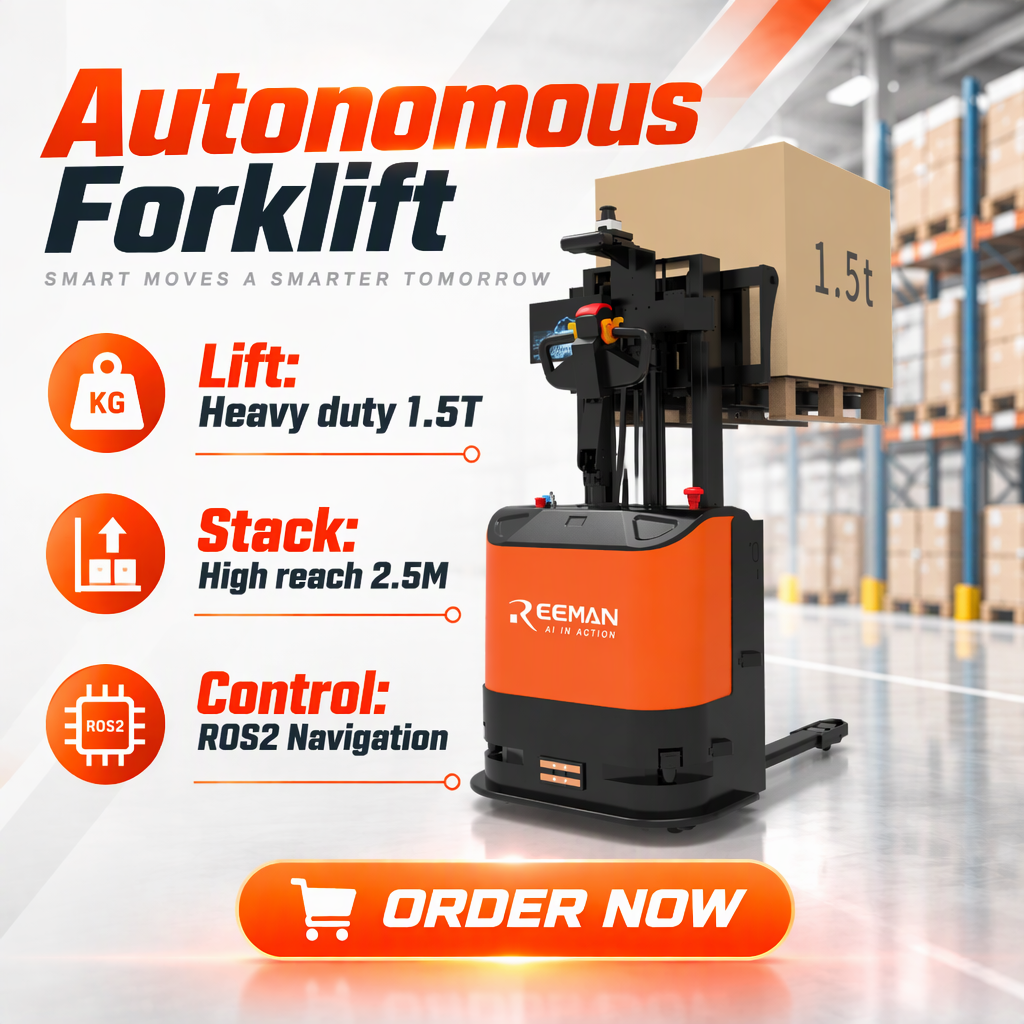
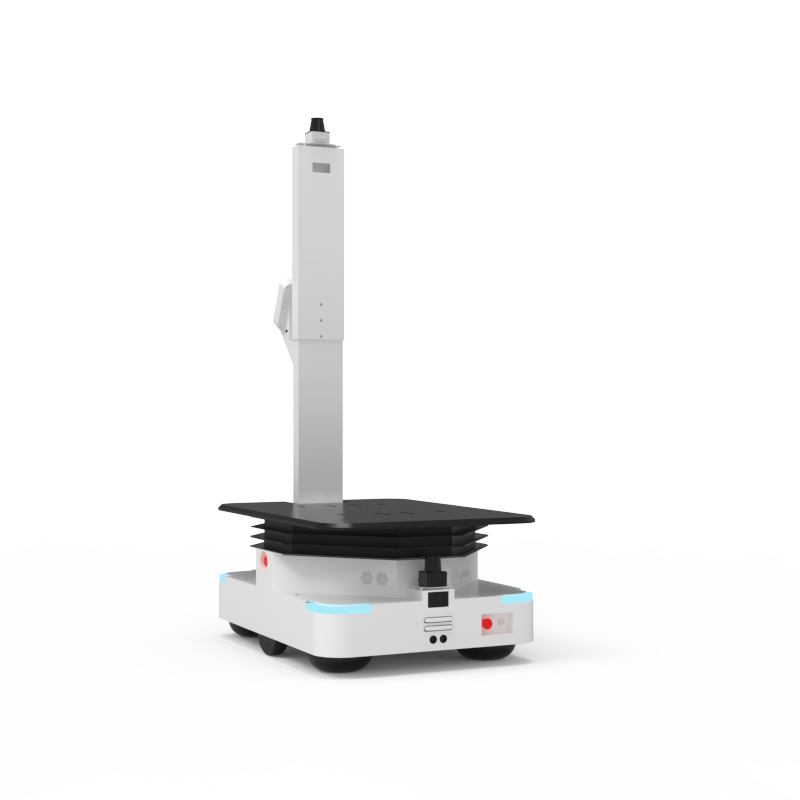
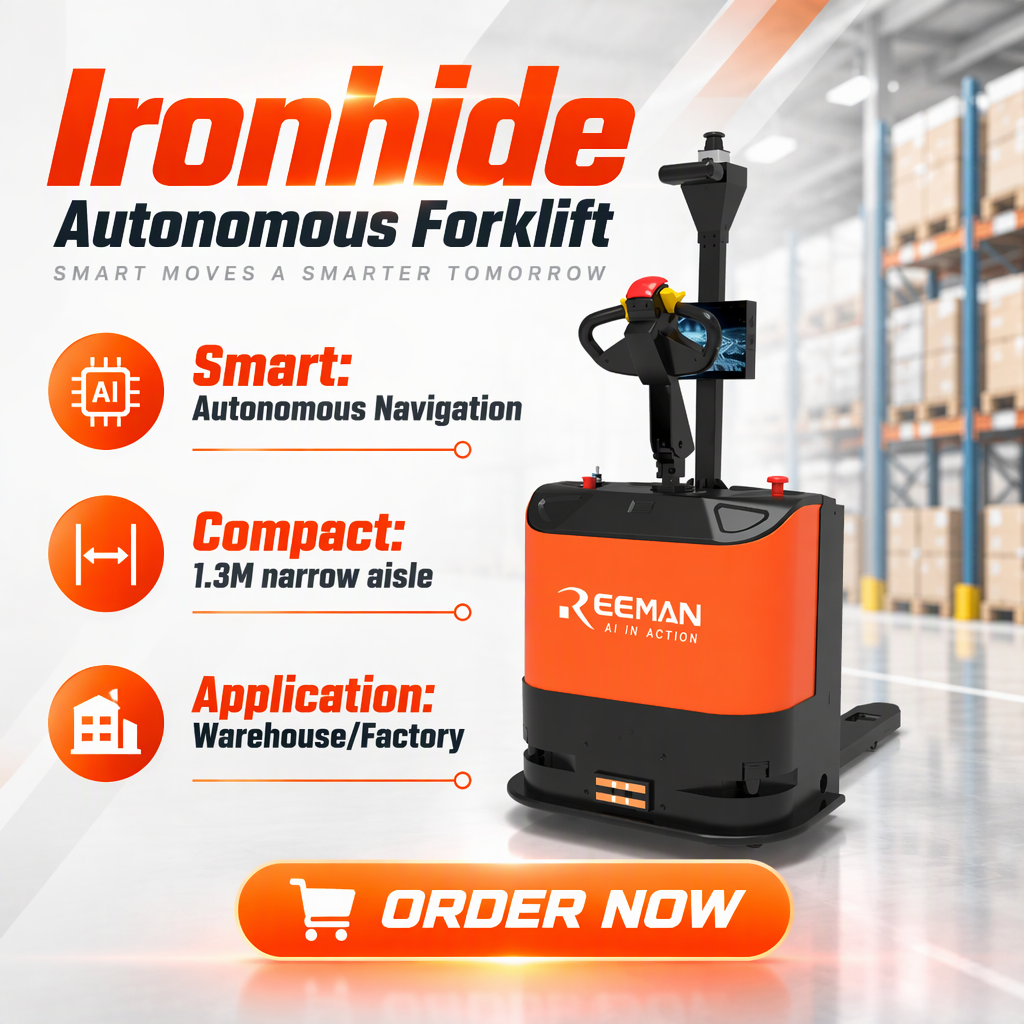
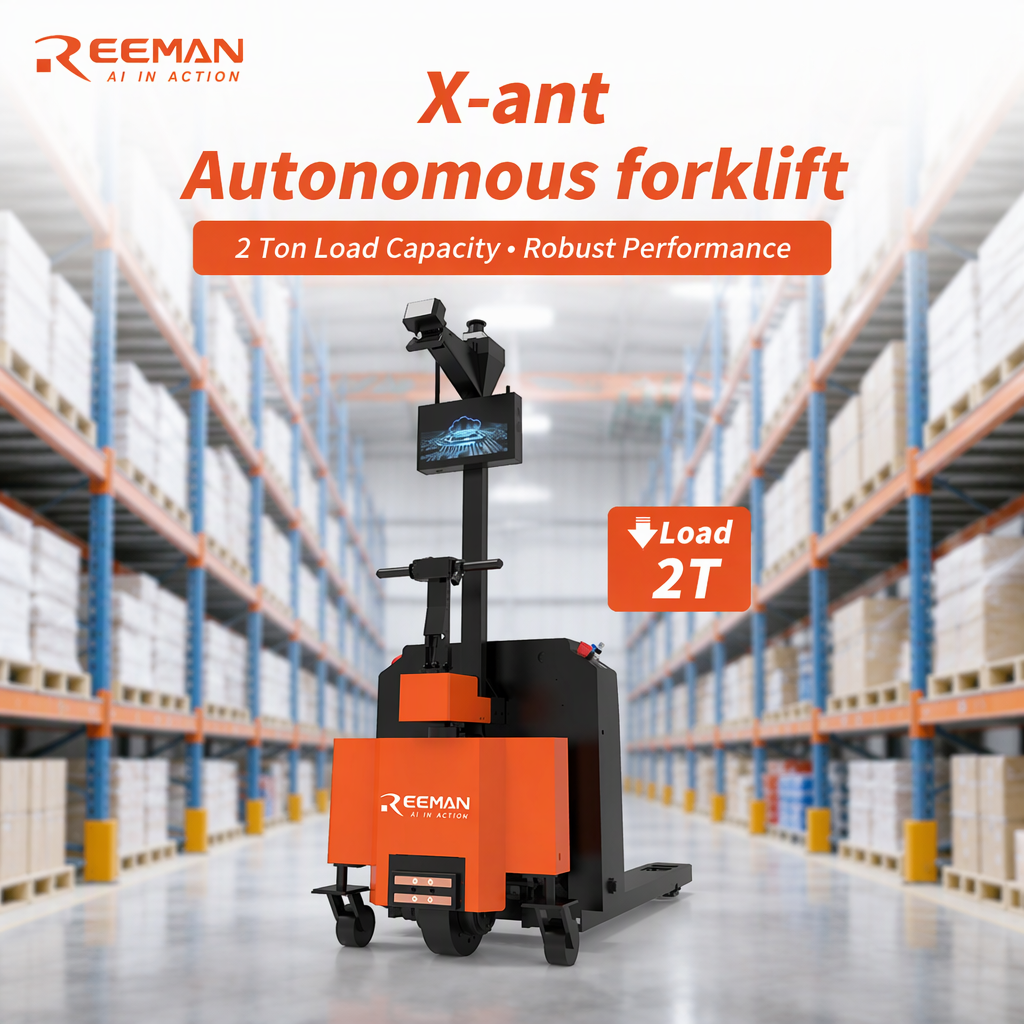
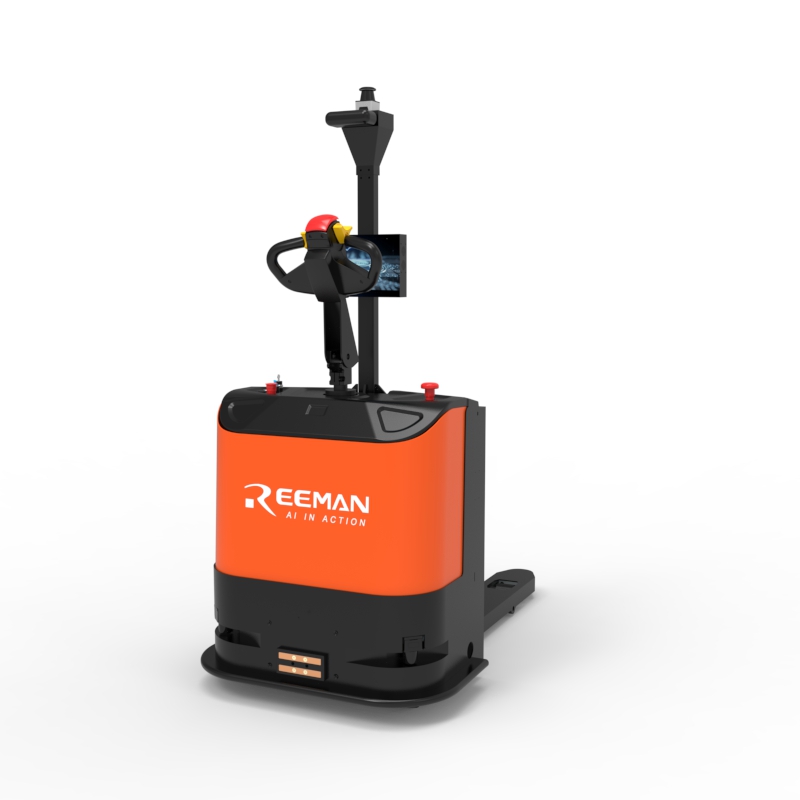
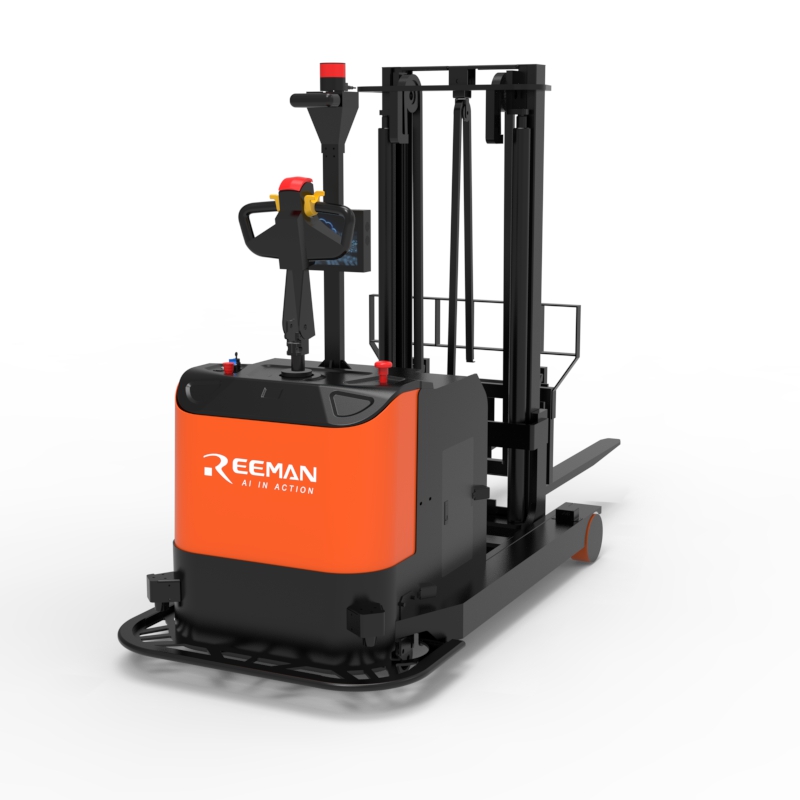
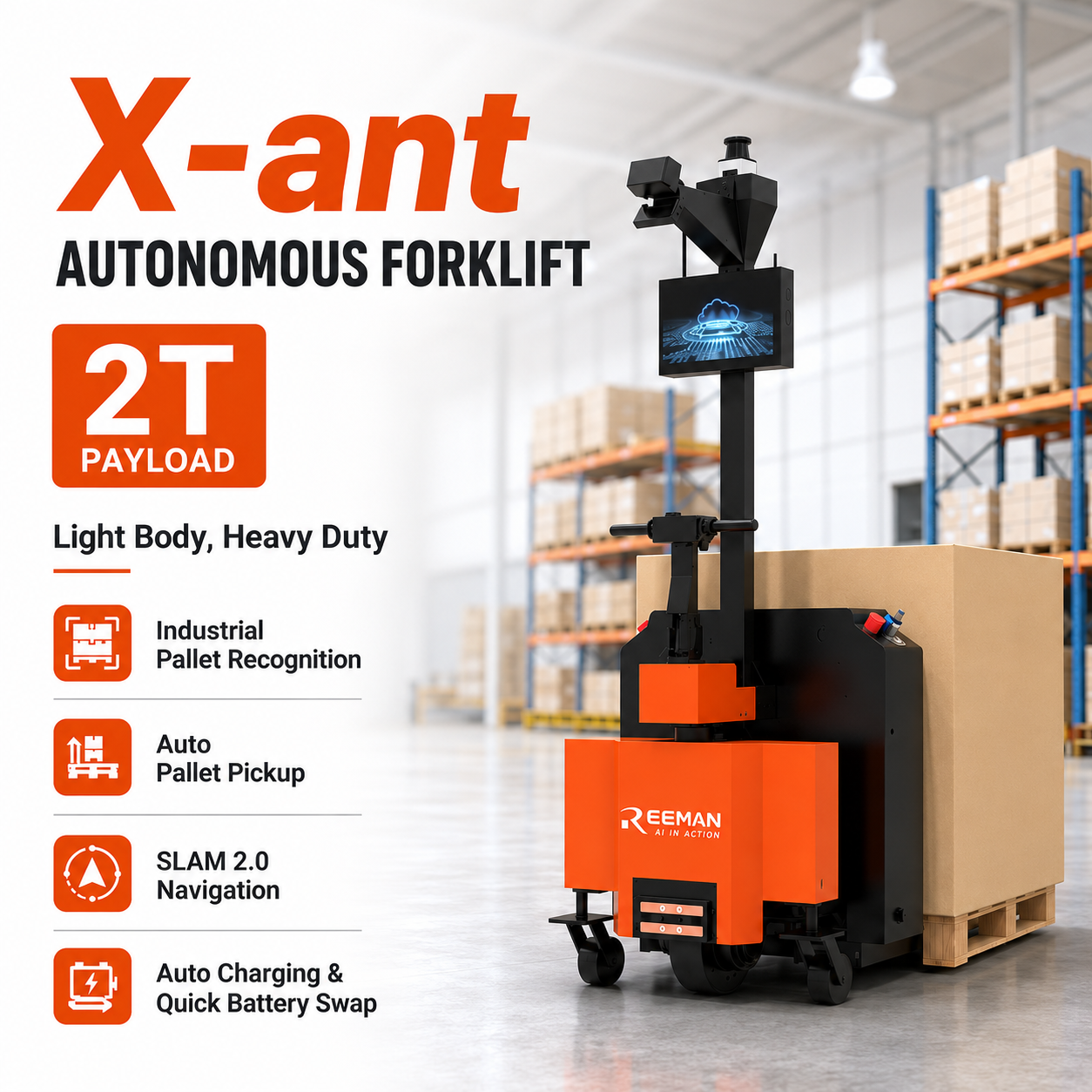
China Top Commercial Mobile Robot Manufacturer & Exporter
Elvorn engineers laser-SLAM autonomous forklifts, industrial AMRs, robot chassis and commercial service robots in Shenzhen. SGS-verified factory, CE/FCC/PSE models, open SDK for WMS/MES/ERP integration, and export support for North America, Europe, the Middle East and Asia.
Founded 20155,200㎡ production39 patents98.76% response rate
Product Recommendations
Eight Commercial Mobile Robots Ready for Global Procurement
Procurement teams searching for a China commercial mobile robot manufacturer are not simply comparing payloads. They are de-risking a workflow: pallet variance, aisle width, charging strategy, safety certification, software integration and after-sales spares all determine whether a pilot scales. The eight platforms below are export-ready and representative of the current Elvorn range. Each card keeps the original product link for specification review; for mixed-fleet or custom-top-module projects, use the quote button and our application engineers will return a model recommendation.
Factory data verified onsite by SGS Group. Management systems certified to ISO 9001 and ISO 14001; model-level CE, FCC and PSE marks available depending on destination.
Enterprise Advantages
Why Elvorn Is a Lower-Risk China Mobile Robot Partner
For export buyers, supplier selection is an exercise in evidence. Elvorn combines full-stack robot R&D, two production bases, a verified quality system and open software interfaces so integrators and distributors can move from sample approval to repeat orders without rebuilding the engineering case each time.
Full-Stack SLAM & Control R&D
Elvorn owns laser SLAM navigation, motion control, fleet scheduling and hardware development in-house. That shortens customisation cycles and gives procurement teams direct engineering answers instead of layered supplier explanations.
Two Production Bases, One Quality System
The company operates production bases in Shenzhen and Ningbo with 5,200㎡ of total floorspace, 200+ team members and 39 patents. Incoming material inspection and supplier assessment procedures support repeatable export quality.
SGS-Verified Factory & Certifications
The factory has passed onsite verification by SGS Group. ISO 9001 and ISO 14001 management systems are in place, and models can be supplied with CE, FCC or PSE marks depending on the target market.
Open SDK & API Integration
AMRs and robot chassis provide an open SDK and API for secondary development. Integrators can connect robots to WMS, MES, ERP, elevators, doors and custom dashboards instead of running a stand-alone robot island.
OEM/ODM & Buyer-Label Customization
As a verified custom manufacturer, Elvorn offers OEM service, design service and buyer-label options. Custom top modules, payload structures, branding and packaging can be aligned with distributor or integrator product lines.
Export-Ready Service & Spare Parts
English documentation, remote commissioning, operator training and spare-part supply support buyers in North America, Western Europe, East Asia, Southeast Asia and the Middle East. Standard export terms include FOB and T/T in USD or CNY.
Product Development Trends
What the Next Commercial Mobile Robot Platform Must Deliver
Specification sheets are converging. The next buying differentiator is how well a robot platform handles dynamic environments, software integration, uptime and multi-site fleet management.
Multi-Sensor Semantic SLAM
Laser SLAM remains the baseline, but 3D LiDAR, vision and AI semantic recognition are moving into mainstream procurement because they reduce mapping time, improve obstacle classification and support more dynamic aisles.
Fleet Orchestration & Interoperability
Buyers increasingly refuse single-robot islands. API-first design, VDA 5050-style interfaces, WMS/MES/ERP connectors and multi-brand fleet scheduling are becoming selection criteria rather than optional add-ons.
Modular Chassis & Payload Customization
A proven SLAM chassis shortens OEM/ODM programs. Modular top modules for conveyors, shelves, lifters, cabins and disinfection units allow one platform architecture to serve multiple industries and distributor brands.
Battery Strategy & Uptime
Lithium-ion packs, opportunity charging, automatic docking and battery health telemetry are being evaluated as uptime features. Buyers now ask how many shifts a robot can cover and how fast it returns to service.
Safety Standards as a Deployment Gate
ISO 3691-4, EN 1175, CE, FCC and PSE requirements are shifting from paperwork to a deployment gate. Multi-layer obstacle detection, emergency stops, speed zoning and clear safety documentation are expected.
Digital Twin & Remote Commissioning
Remote site surveys, simulation, digital twin validation and cloud diagnostics reduce travel and shorten time-to-first-pallet for export projects. This is especially valuable when the integrator and end user are in different regions.
Future Procurement Trends
The Shift from Hardware Price to Lifecycle Value
The winning supplier will not be the one with the lowest quoted unit price. It will be the one that can document uptime, safety, integration effort, spare-part lead time and multi-year support.
TCO & ROI Modelling
Procurement teams now compare battery cycle life, spare-part lead time, service hours and integration cost alongside unit price. A robot that runs two shifts with fewer interventions can outperform a lower-cost unit.
Pilot-First, Staged Rollout
A one-to-three robot pilot with defined KPIs such as cycles per hour, uptime and intervention rate reduces risk before multi-shift deployment. Buyers are increasingly writing pilot acceptance criteria into purchase agreements.
Certification & Cybersecurity Due Diligence
Safety certificates, EMC reports, software update policy and data access rules are requested earlier in the buying cycle. Export buyers need documentation that can pass internal compliance review and customer audits.
Local Service & Spare Parts
Export buyers favor manufacturers that provide English documentation, remote diagnostics and regional spare-part stock. Service response time is becoming a scored procurement criterion, not a post-purchase afterthought.
OEM/ODM & Private Label
Integrators and distributors increasingly source robot chassis or full robots with their own branding to enter vertical markets faster. OEM/ODM capability shortens product development and reduces factory-side tooling risk.
Flexible Financing & Leasing
Robotics-as-a-service, lease-to-own and performance-based contracts are expanding access for small and mid-size warehouses. Suppliers with clear TCO models can help buyers build an internal business case faster.
Selection Matrix
Match the Robot to the Workflow Before You Request a Quote
Use this quick matrix to align load, aisle and software requirements. Final configuration is confirmed after reviewing your site layout, pallet type and throughput target.
Line-side logistics, WIP, totes, carts and sheet metal
Confirm top module, WMS/MES integration, elevator and door control
Robot chassis
300 kg class
OEM/ODM service robots and custom payload platforms
Review SDK, payload center of gravity, safety configuration
Delivery / cleaning / service robots
Task-specific
Hospitality, retail, facilities and public-space service
Check route environment, interaction features, cleaning width and runtime
Commercial Applications
Where Mobile Robots Pay Back Across the Operation
Elvorn platforms are designed for material flow, service flow and custom robot development. The right entry point depends on where labour hours, safety exposure or response time create the highest cost.
Warehousing & 3PL
Driverless pallet transfer for receiving, put-away, dock loading and cross-docking across multiple shifts.
Manufacturing
AMRs feed workstations and collect finished goods, synchronised with MES tasks and line-side replenishment.
Integrators & OEM
SLAM chassis and open SDK shorten time-to-market for integrators building branded service or logistics robots.
Hospitality
Delivery robots handle food runs and room service so staff can focus on guests and higher-value service tasks.
Commercial Facilities
Autonomous cleaning and disinfection for malls, airports, hospitals and offices with scheduled unattended routes.
Retail & Exhibitions
Mobile advertising and guidance robots with AI voice interaction engage visitors and promote products at events.
Factory Evidence
Factory Evidence for E-E-A-T and Supplier Approval
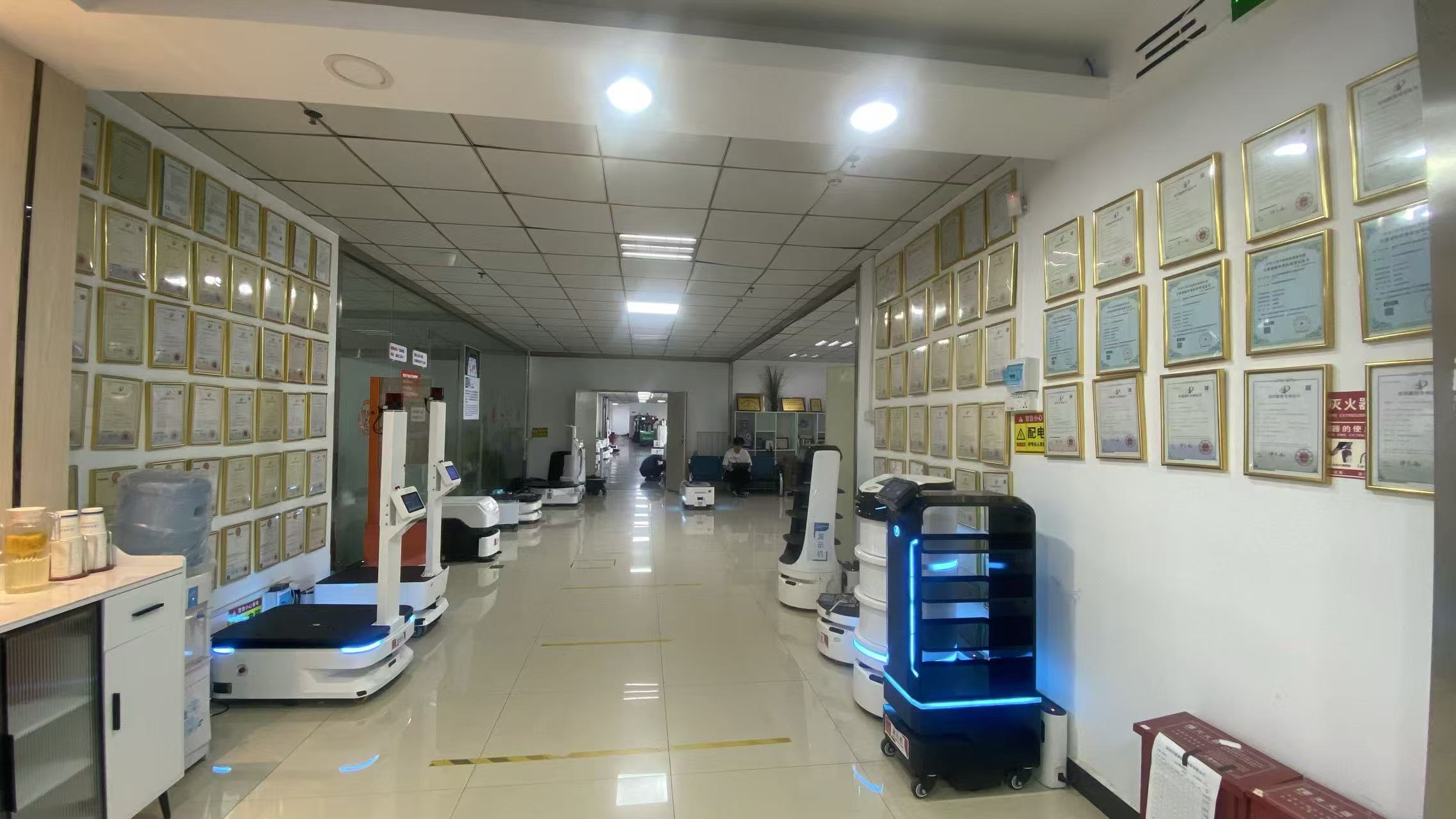
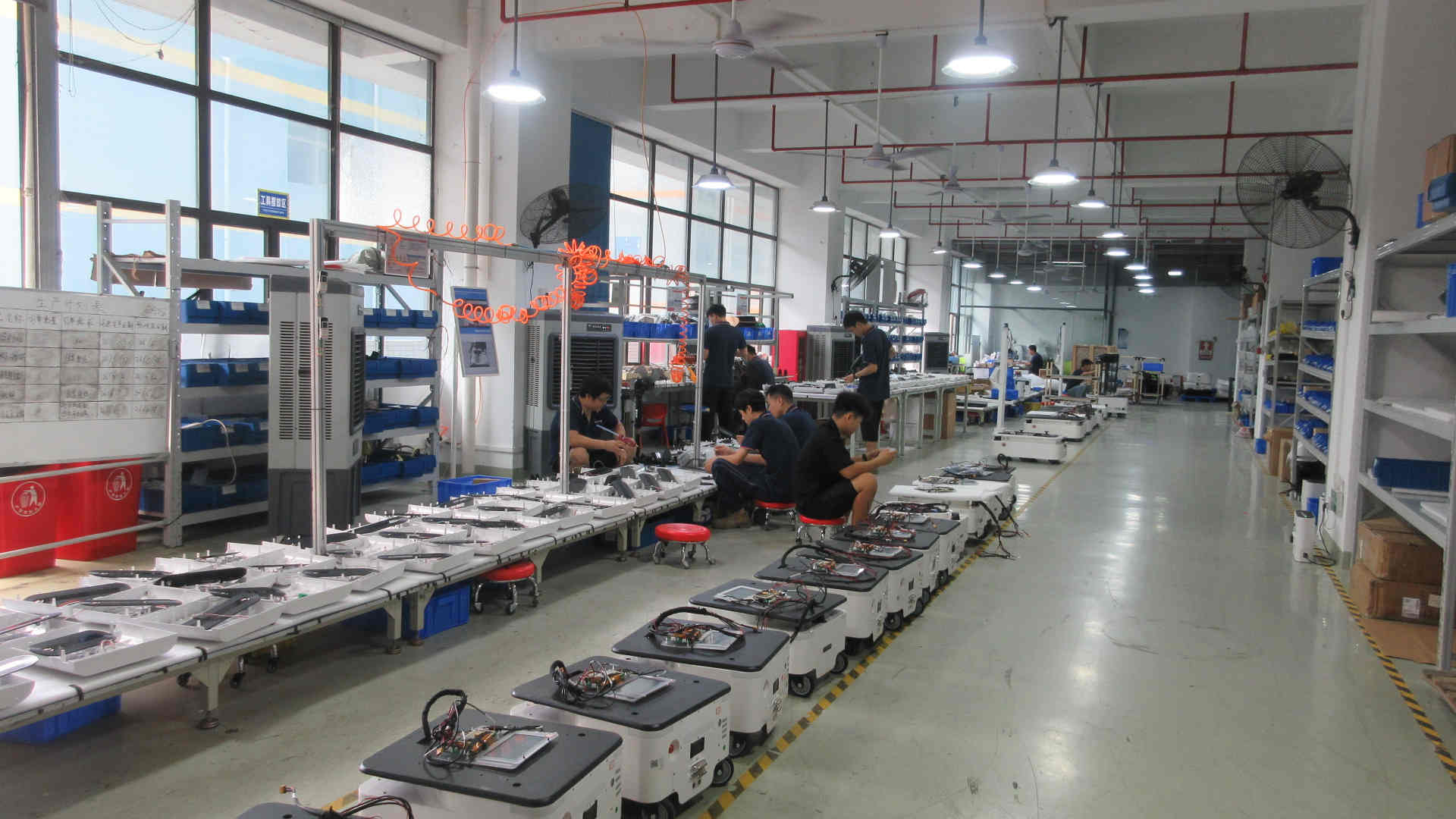
Elvorn was founded in 2015 and operates two production bases in Shenzhen and Ningbo. The company is a national high-tech enterprise with 39 patents, 200+ team members and 5,200㎡ of floorspace. The factory has passed onsite verification by SGS Group, covering licensing, production capability and quality control. ISO 9001 and ISO 14001 management systems are in place; models can be supplied with CE, FCC or PSE marks. Every unit is functionally and load-tested before shipment, and test records can be made available for buyer due diligence.
SGS onsite verification
ISO 9001 & ISO 14001
CE / FCC / PSE models
OEM, design & buyer label
Robot production and assemblyQuality inspection before shipmentR&D and testing laboratory
SGS Onsite Verified
CE Marking
FCC
PSE
ISO 9001Quality Management
ISO 14001Environmental Management
Buyer FAQ
Common Procurement Questions for Commercial Mobile Robots
These are the questions most often raised during supplier shortlisting, technical review and export order preparation.
What is the difference between an AGV forklift and an AMR?
An autonomous forklift AGV lifts and moves pallets between floor, dock and rack positions. An AMR is a mobile platform that carries totes, carts or shelves. Both Elvorn product lines use laser SLAM navigation, so magnetic tape and floor reflectors are not required. The choice depends on load interface, lift height, aisle width and whether the process requires a forklift-style pick-and-place motion.
Can Elvorn robots be integrated with my WMS, MES or ERP?
Yes. Elvorn AMRs and robot chassis provide an open SDK and API for secondary development. Task dispatch and status feedback can be connected to warehouse management, manufacturing execution or custom software systems. Integrators can also coordinate doors, elevators, conveyors and traffic rules depending on the project scope.
Does Elvorn offer OEM/ODM and buyer-label customization?
Yes. As a verified custom manufacturer, Elvorn offers OEM service, design service and buyer-label options. Custom top modules, payload structures, branding and packaging can be aligned with distributor or integrator requirements. For chassis-based projects, the open SDK helps your team build application software on a proven navigation platform.
Which certifications and factory audits are available?
Depending on the model and destination, Elvorn robots can carry CE, FCC or PSE marks. The management system is certified to ISO 9001 and ISO 14001, and the factory has been verified onsite by SGS Group. Functional and load-test records can be prepared for buyer due diligence and internal supplier approval.
What trade terms and payment methods do you accept?
Elvorn ships worldwide on FOB terms and accepts T/T payment in USD or CNY. Main export markets include North America, Western Europe, East Asia, Southeast Asia and the Middle East. Export documentation, packing details and spare-part lists are prepared according to the final configuration and destination.
How should we plan a pilot and estimate ROI?
Start with one to three robots and define measurable KPIs: pallet or tote moves per hour, uptime, intervention rate, charging behaviour and operator acceptance. Elvorn application engineers can help compare fleet size, charging strategy and model configuration against your layout, load data and throughput target before a larger rollout is approved.
Send Your Layout, Load Data and Throughput Target
Our engineers will return a model recommendation, fleet size, charging plan and export quotation. For urgent projects, include pallet type, aisle width, lift height and target shift pattern so the first technical reply is actionable.