8 Autonomous Platforms for Meal-Service Logistics & Central Kitchens
A meal delivery robot is only one layer of foodservice automation. Profitable deployments also depend on central kitchen pallet flow, cold-chain transfers and back-of-house replenishment. These eight platforms are recommended alongside Elvorn’s delivery robot range for projects that combine front-of-house service with material handling.
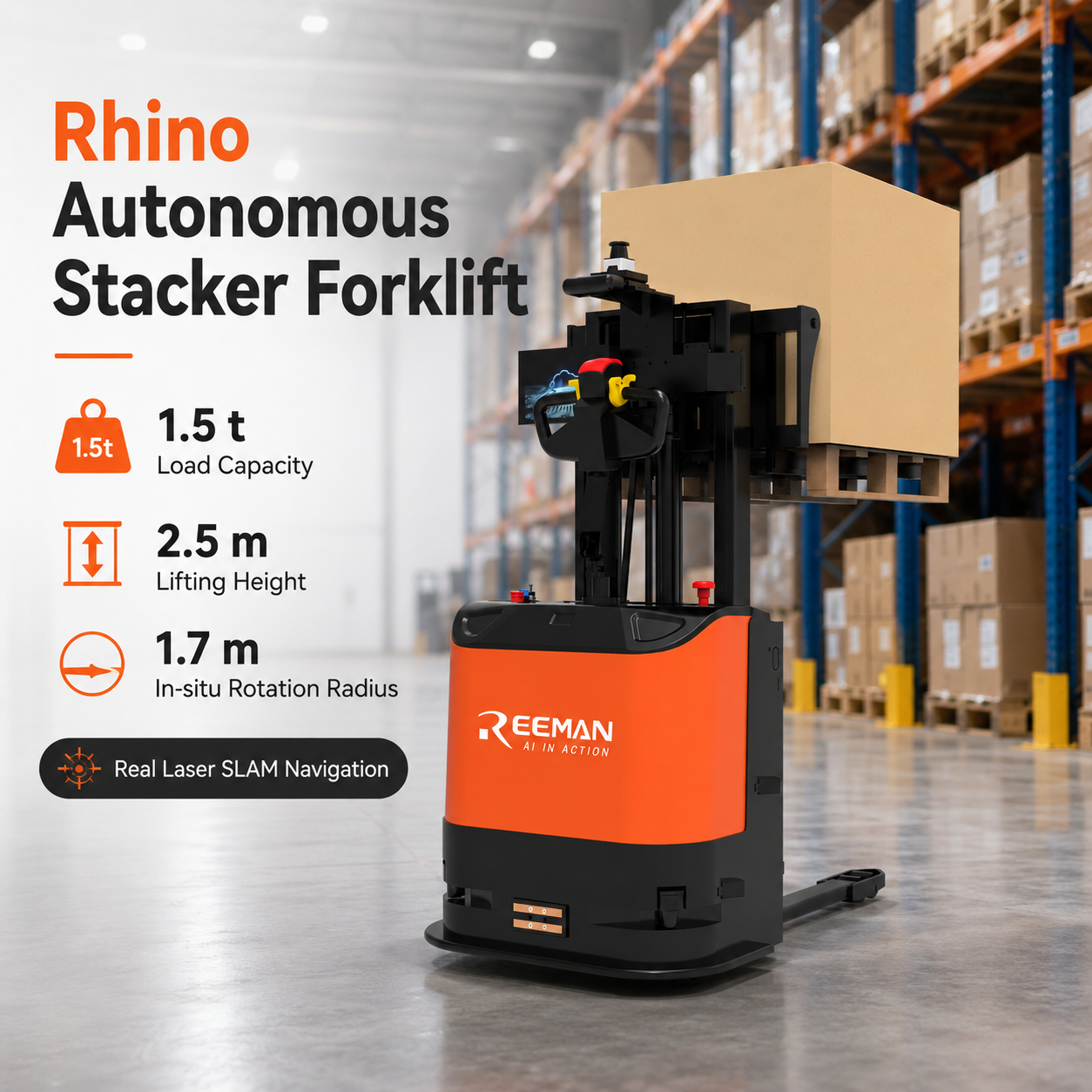
Laser SLAM Autonomous Stacker Forklift 1500 kg Load AGV Pallet Handling Robot Laser Obstacle Avoidance Warehouse
For central kitchens and dry stores that need repeatable pallet put-away, stacker transfer and floor-to-rack movement without tape or reflectors.
View product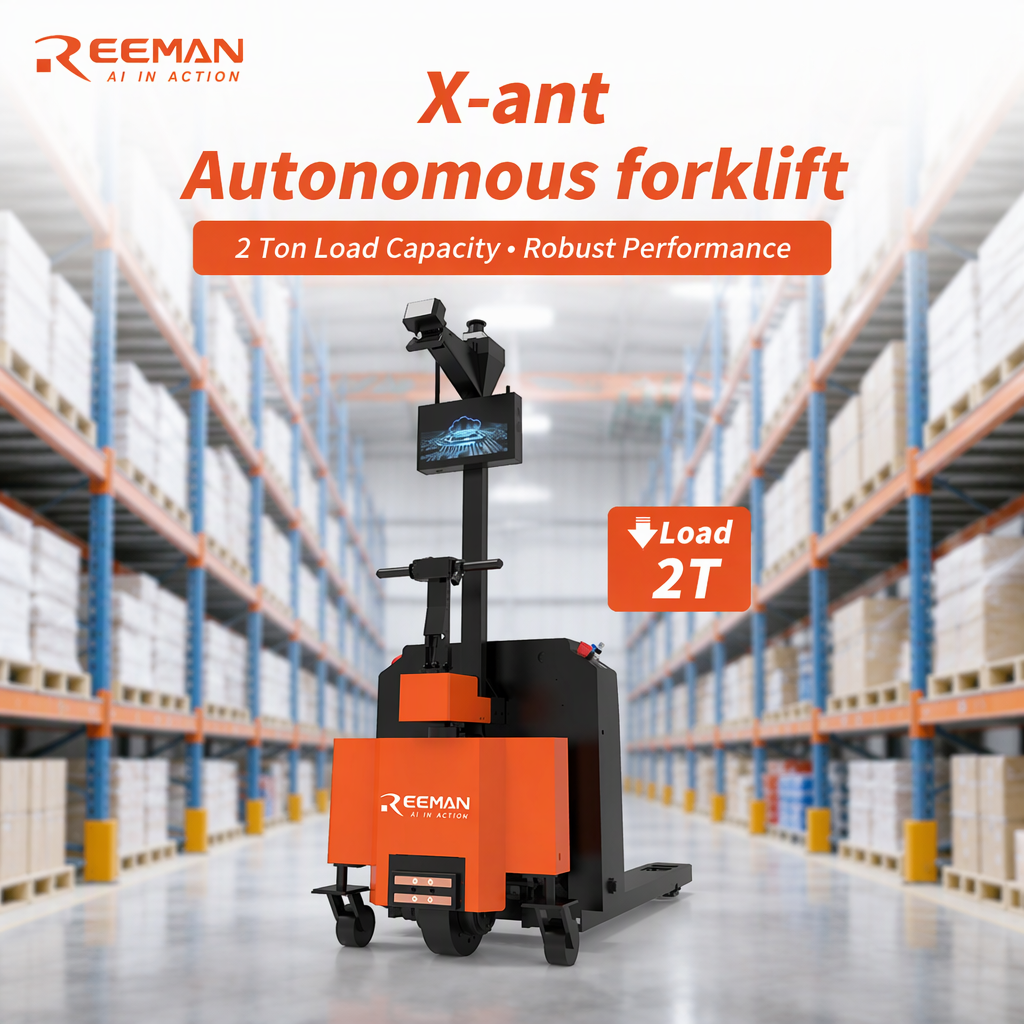
2 Ton Autonomous 4WD AGV Forklift Laser SLAM Navigation Multi-Line LiDAR 10mm Position Accuracy Warehouse Handling
Multi-line LiDAR and high-precision positioning suit heavy beverage, ingredient and packaged-food flows where fork alignment must be repeatable.
View product
Reeman BBOT30F 1500kg Laser SLAM Autonomous Pallet Stacker AGV Single Line Lidar Obstacle Avoidance Warehouse Transport
A practical stacker platform for narrow aisles, low racks and production-line feeding where single-line LiDAR obstacle avoidance is sufficient.
View product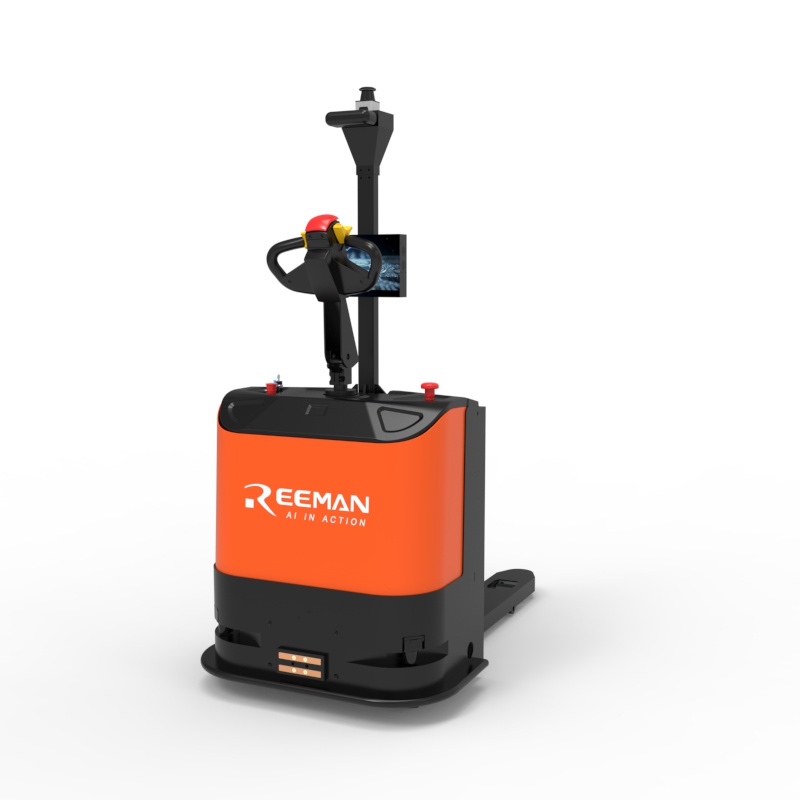
Reeman BBOT30F 1500 kg Laser SLAM Forklift AGV LiDAR Navigation Pallet Handling Warehouse
Designed for warehouses and food distribution centers that require stable pallet handling and straightforward fleet expansion.
View product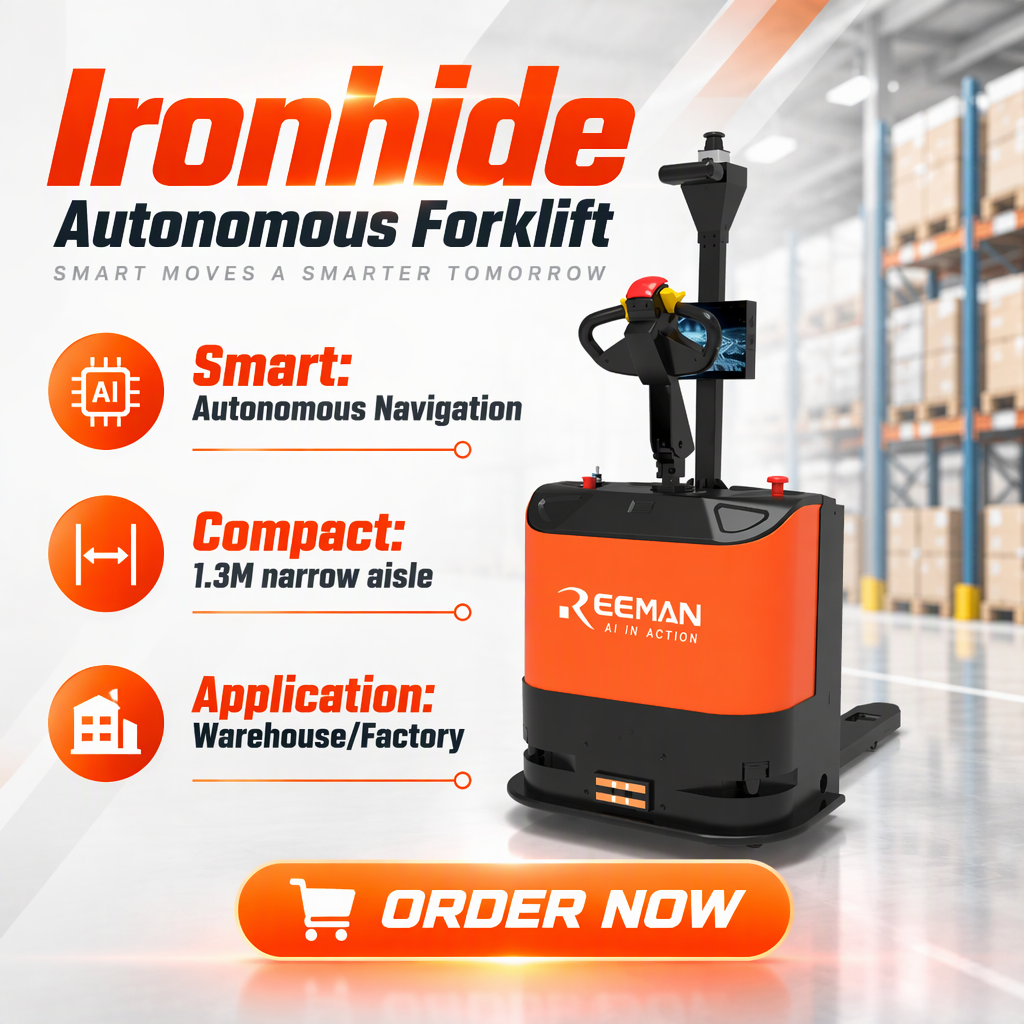
Reeman 1.5 Ton Autonomous Forklift AGV 3D Obstacle Avoidance Bidirectional Driving 48V 30AH Lithium-Ion Battery
Bidirectional driving and 3D obstacle avoidance support pallet movement in mixed traffic, reception bays and production corridors.
View product
REEMAN Autonomous Electric Forklift 1T Payload 48V 30Ah LiFePO4 Battery Indoor Material Handling AGV
An indoor material handling platform for lighter pallets, ingredient rooms, packaging lines and value-added food processing areas.
View product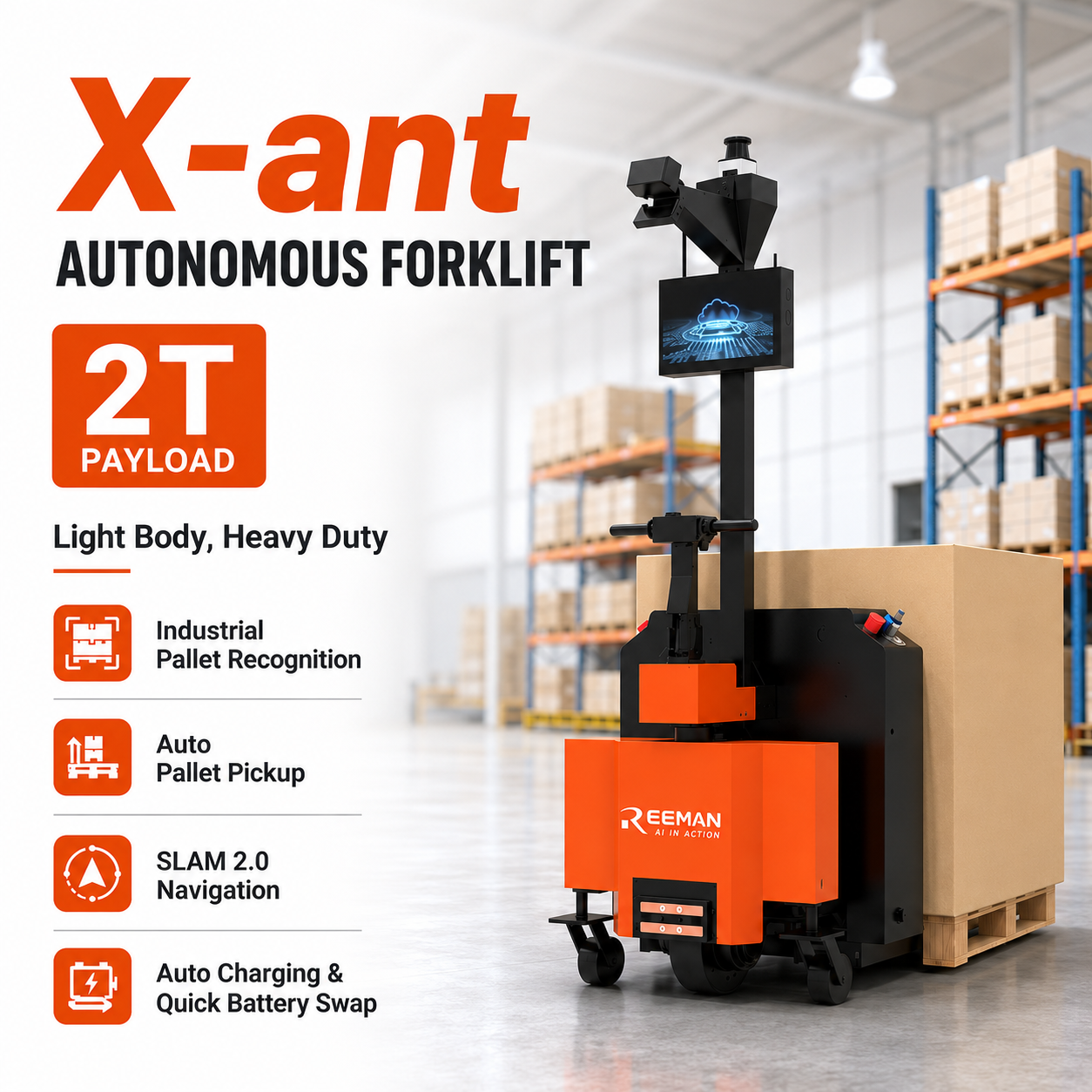
2 Ton Autonomous 4WD AGV Forklift Laser SLAM Navigation Multi-Line LiDAR 3D Obstacle Avoidance Warehouse Handling
For busy docks and staging areas where pedestrians, carts and manual forklifts share the same operating zone.
View product
REEMAN X-ant JBOT20F 2 Ton Autonomous Forklift AGV Laser SLAM Pallet Handling Robot for Warehouse Logistics
Positioned for 2-ton pallet handling in warehouse logistics, central kitchen storage and distribution centers.
View productProduct URLs and images are preserved from Elvorn’s current catalog. Final payload, mast height, fork dimensions and battery configuration should be confirmed after a site survey and acceptance test.
What “China Top Meal Delivery Robot Manufacturer” Really Means for Buyers
International buyers searching for a China top meal delivery robot manufacturer and supplier are usually not looking for one robot waiter. They are evaluating a manufacturing partner who can support a multi-site foodservice automation programme: front-of-house tray delivery, hotel room service, hospital meal distribution, central kitchen replenishment, cold-chain transfer and, increasingly, integration with a broader autonomous forklift or AMR fleet.
That is why supplier selection should go beyond a catalogue and a quotation. A credible meal delivery robot manufacturer should be able to explain its navigation stack, publish verifiable factory evidence, show safety and certification discipline, provide an API or SDK integration route, and support spare parts after the pilot. A low unit price matters far less than total cost of ownership when a robot must operate 12–16 hours a day, return to a charger without human intervention, pass an elevator interface test and maintain food-safety standards.
Shenzhen Elvorn Intelligent Equipment Co., Ltd. is a national high-tech enterprise focused on robotic platform technology and autonomous driving. Founded in 2015, the company develops and manufactures autonomous forklifts, industrial AMRs, robot chassis, delivery robots, cleaning robots and disinfection robots. Its public company profile lists 39 patents, two production bases in Shenzhen and Ningbo, 5,200㎡ of floor space, a team of more than 200 people and an onsite factory verification by SGS Group.
This guide is written for procurement managers, operations directors, IT teams and food-safety stakeholders who want a practical evaluation framework rather than a generic product list. The company metrics referenced here are drawn from Elvorn’s public profile and factory verification information; model performance must always be confirmed through a site survey, factory acceptance test and written technical agreement.
What Procurement Teams Actually Want When They Compare Suppliers
Three searches look similar on the surface but require different evidence. A strong supplier page should answer each intent directly.
“Manufacturer or trading company?”
Buyers want proof of production, engineering and quality control—not just an export desk. Look for an onsite SGS verification, named production bases, an assembly process, patents and model-level certifications. Elvorn’s SGS-verified profile and two production bases reduce supplier-risk for distributors and integrators.
“What is the real meal delivery robot price?”
A useful quote separates the robot, charging dock, spare-part kit, integration, freight, training, warranty and software support. Buyers should compare five-year cost of ownership, not only the initial unit price. Energy consumption, battery replacement, route changes and local service response can change the economics of a project more than a small hardware discount.
“Can you customize for our brand and workflow?”
OEM and ODM work is more than adding a logo. It may involve tray geometry, compartment height, food-safe materials, voice prompts, elevator protocols, WMS/MES/ERP interfaces, packaging and buyer-label documentation. Elvorn offers OEM service, design service and buyer-label options across its robot platforms.
Why China Remains a Benchmark for Meal Delivery Robot Production
The advantage is not a single component. It is the maturity of the complete robotics supply chain—and the discipline needed to turn that supply chain into a reliable export product.
China’s robotics ecosystem offers deep access to LiDAR, depth cameras, servo drives, lithium batteries, sheet-metal fabrication, injection molding and electronics manufacturing. This density can shorten development cycles and make customization more practical. For meal delivery robots, it also supports rapid iteration on tray structures, obstacle avoidance, voice interaction and fleet software.
However, supply-chain availability is not a quality guarantee. The difference between a low-cost assembler and a top manufacturer is process control: incoming material inspection, supplier assessment, engineering change management, factory testing, export documentation and post-sales spare-part planning. Buyers should reward suppliers who can show these processes, not only a polished product brochure.
Full-Stack Navigation Capability
Laser SLAM, motion control, obstacle avoidance and fleet scheduling should be owned or deeply understood in-house. This reduces the risk of finger-pointing when a robot behaves unpredictably in a crowded restaurant or a narrow service corridor.
Foodservice-Specific Engineering
Meal delivery is not general warehouse transport. Designers must consider tray stability, spill resistance, quiet operation, cleaning routines, customer-facing interaction and elevator use during peak meal periods.
Export Compliance and Documentation
ISO 9001 and ISO 14001 management systems, CE/FCC/PSE model certifications, English manuals and test records help overseas buyers complete internal approvals and customs clearance with fewer surprises.
Match the Robot to the Foodservice Workflow
A meal delivery robot project should start with the operating environment, not the model number. These four building blocks cover most restaurant, hotel, hospital and central kitchen cases.
Front-of-House Tray Delivery
For restaurants, banquet halls and food courts, evaluate tray size, anti-spill design, turning radius, voice prompts, route speed and behavior in crowded dining areas. Elevator integration may be required if service areas are on different floors.
- Check tray clearance and stability
- Run a peak-hour route test
- Define handoff and return rules
Hotel and Hospital Meal Delivery
Room service and patient meal delivery require quiet operation, secure compartments, cleanable surfaces and predictable scheduling. Privacy and access control should be agreed during the pilot, especially in hospitals and premium hotels.
- Plan floor and elevator permissions
- Confirm disinfection routine
- Test peak breakfast and dinner cycles
Central Kitchen Pallet Flow
Central kitchens often need more than a service robot. Autonomous forklifts and pallet stackers can move ingredients, packaging and finished goods between receiving, cold storage, preparation areas and dispatch. Payload, fork dimensions, floor condition and pallet quality must be confirmed.
- 1–2 ton load classes are common
- Laser SLAM avoids floor tape
- Multi-shift battery planning matters
Multi-Floor and Fleet Integration
Larger sites need a fleet layer that assigns tasks, manages charging, coordinates elevators, avoids traffic conflicts and reports status to a WMS, MES, ERP or custom dashboard. Ask for a documented API, acceptance test plan and fallback process.
- Define data ownership and logs
- Test network dead zones
- Agree on escalation and support SLAs
What Buyers Will Require From Meal Delivery Robot Suppliers
The next procurement cycle will reward suppliers who can prove lifecycle value, interoperability and service depth—not only robot specifications.
Total Cost of Ownership
Procurement teams are building five-year models that include energy, battery replacement, spare parts, software support, integration changes and downtime. Robot-as-a-Service may shift capital expenditure, but the SLA, data rights and exit terms must be reviewed carefully.
Interoperability by Default
Buyers increasingly expect an open SDK or API for WMS, MES, ERP, elevator, door and POS integration. A robot that cannot exchange task status with existing systems becomes a data island and limits future automation.
Safety and Cybersecurity Evidence
CE/FCC/PSE marks, risk assessments, emergency stops, speed zoning and obstacle avoidance are baseline topics. Cybersecurity, access control, firmware update policy and log retention are becoming part of supplier due diligence.
Local Service and Spare Parts
Overseas buyers want remote diagnostics, English documentation, training, spare-part kits and a clear response process. 98.76% response rate is a useful signal, but the contract should also define escalation paths and repair turnaround targets.
From Autonomous Runner to Kitchen Infrastructure
Meal delivery robots are evolving from standalone novelties into connected infrastructure that coordinates with people, elevators, kitchen systems and material-handling fleets.
Sensor Fusion in Real Environments
3D LiDAR, vision, depth sensing and IMU fusion improve performance around glass doors, reflective floors, crowds and temporary obstacles. The goal is not only to stop safely, but to move smoothly without blocking service.
Fleet Orchestration and Vertical Integration
Robot fleets will coordinate with elevators, automatic doors, call systems and central kitchen AGVs. Fleet software will assign tasks by urgency, floor, battery level and traffic, then report exceptions to operations teams.
Energy Management and Uptime
LiFePO4 batteries, opportunity charging, battery-swap options and thermal management are becoming practical requirements for multi-shift operations. Energy strategy should be designed together with route length and charging location.
Food-Safe Modular Design
Cleanable surfaces, removable trays, smooth edges, protected electronics and IP-rated components support better hygiene. Modular top modules also let suppliers adapt one chassis for restaurant, hotel, hospital and logistics variants.
A Practical Supplier Scorecard for Meal Delivery Robot Projects
The weights below are illustrative and should be adjusted to your site. They are useful because they force the buying team to separate commercial pressure from technical and service risk.
Use the scorecard during shortlisting, then validate the top two suppliers with a paid pilot, factory acceptance test and site-specific route trial.
Inside Shenzhen Elvorn Intelligent Equipment Co., Ltd.
Elvorn combines robotic platform engineering, in-house production and export support. These are the capabilities that matter when a meal delivery robot moves from demonstration to daily operation.
Verified Manufacturing Footprint
Founded in 2015, Elvorn operates two production bases in Shenzhen and Ningbo with 5,200㎡ of floor space and a team of more than 200 people. The factory has been verified onsite by SGS Group.
Full-Stack SLAM Engineering
Elvorn’s in-house R&D covers laser SLAM navigation, motion control, fleet scheduling and hardware. Its public profile lists 39 patents, supporting faster customization and clearer technical answers during due diligence.
ISO and Model Certifications
The management system is certified to ISO 9001 and ISO 14001. Depending on the model, Elvorn robots carry CE, FCC or PSE marks—important evidence for European, North American and Japanese market planning.
OEM, ODM and Buyer Label
As a verified custom manufacturer, Elvorn offers OEM service, design service and buyer-label options. Custom top modules, payload structures, branding and packaging can be adapted to distributor and integrator requirements.
Open SDK and API Integration
AMRs and robot chassis provide an open SDK and API for secondary development. Integrators can connect task dispatch and status feedback to WMS, MES, ERP or custom software platforms.
Export-Ready Support
Elvorn ships worldwide on FOB terms and accepts T/T payment in USD or CNY. English documentation, remote commissioning and spare-part supply support buyers in North America, Europe, Asia and the Middle East, with a listed 98.76% response rate.






From Site Survey to Stable Daily Operation
A disciplined rollout reduces the risk of a pilot that works in a showroom but fails during a real lunch service or overnight kitchen replenishment cycle.
Requirement Review
Share layout drawings, floor material, aisle width, elevator details, tray or pallet data, peak throughput, network coverage and target labor savings. Define what “success” means before selecting a model.
Solution Design
Engineers recommend robot type, fleet size, charging strategy, integration scope and safety rules. For central kitchens, this may combine delivery robots with autonomous stackers or forklift AGVs.
Build and Factory Test
OEM branding, top modules and software interfaces are configured to specification. Functional and load tests should be completed before shipment, with test records available for buyer review.
Deploy and Support
Remote mapping, operator training, acceptance testing and spare-part planning support long-term operation. A clear escalation path matters for restaurants, hotels and hospitals that cannot pause service for troubleshooting.
Frequently Asked Questions About Meal Delivery Robot Procurement
These are the questions that most often decide whether a project moves from quotation to pilot.
Are you a manufacturer or a trading company?
Elvorn is a manufacturer of autonomous robots and robotic platforms, founded in 2015 in Shenzhen, China. Its public profile describes two production bases, an in-house R&D team, 39 patents and onsite factory verification by SGS Group. Buyers can request company documents, factory evidence and model-specific certification information during due diligence.
Can you customize a meal delivery robot for our restaurant or hotel?
Yes. Elvorn offers OEM service, design service and buyer-label options, including custom top modules, payload structures, branding and packaging. For foodservice projects, customization may also cover tray layout, compartment height, voice prompts, route behavior and integration with elevators or third-party software.
What is the MOQ and typical lead time?
MOQ and lead time depend on the model, customization scope, battery configuration, certification requirements and order volume. A responsible quotation should be issued after the site workflow, integration scope and acceptance criteria are clarified. For pilot projects, confirm whether sample units, spare-part kits and on-site commissioning support are included.
Which certifications and safety topics should we verify?
Depending on the model and destination market, Elvorn robots may carry CE, FCC or PSE marks. The management system is certified to ISO 9001 and ISO 14001. For meal delivery operations, also review emergency stop function, obstacle avoidance, speed zoning, elevator behavior, food-contact cleaning routines and cybersecurity controls.
Can the robot integrate with elevators, WMS, MES, ERP or POS systems?
Elvorn AMRs and robot chassis provide an open SDK and API for secondary development, allowing task dispatch and status feedback from warehouse management, manufacturing execution or custom software systems. Elevator, door and POS integration should be scoped during solution design because the required protocol and site permissions vary by building.
What after-sales support and trade terms are available?
Elvorn ships worldwide on FOB terms and accepts T/T payment in USD or CNY. Support can include English documentation, remote commissioning, operator training and spare-part supply. Main export markets include North America, Western Europe, Eastern Asia, Southeast Asia and the Middle East. The contract should define warranty, response time, spare-part lead time and software-update responsibilities.
Plan Your Meal Delivery Robot Project With Elvorn
Send your floor plan, meal-service workflow, payload requirement, elevator details and target launch date. Elvorn’s engineering and export team will recommend a robot configuration, integration scope and deployment path for your market.
Inquire Now