Eight Production-Ready Platforms for OEM & Integrator Programs
These platforms cover pallet handling, stacker work, warehouse logistics, production-line material flow, interactive signage and heavy-duty transfer. Product images are shown in full proportion; final payload, mast height, fork dimensions, battery package and safety configuration are confirmed against the site layout and load diagram.
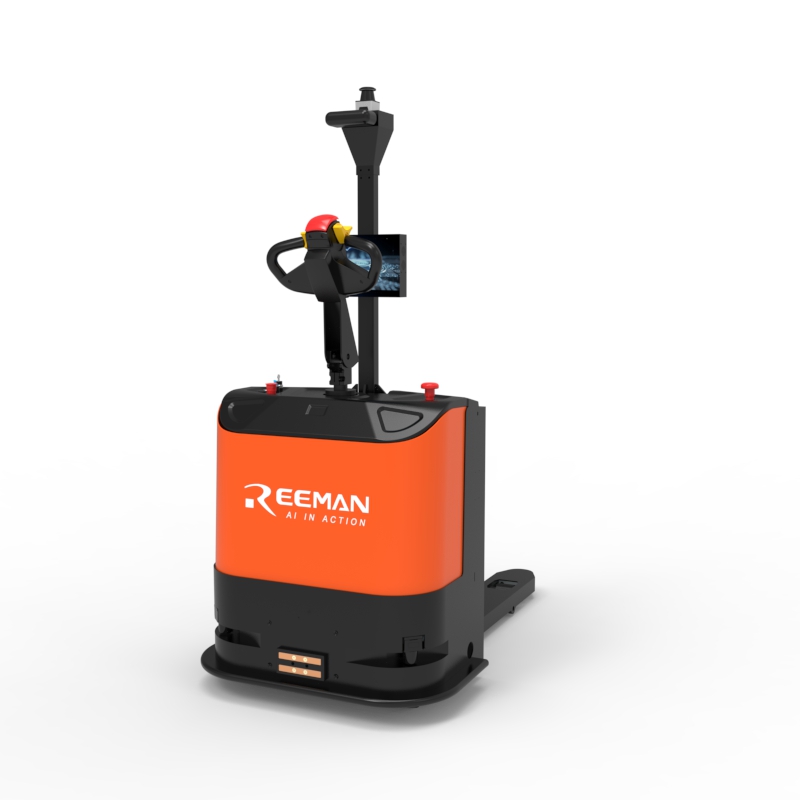
1500kg Laser SLAM AGV Forklift
Single-line lidar, 30 mm navigation accuracy, 1,019 mm forks and 570 mm fork width for dense pallet handling and repetitive industrial transfer.
View product details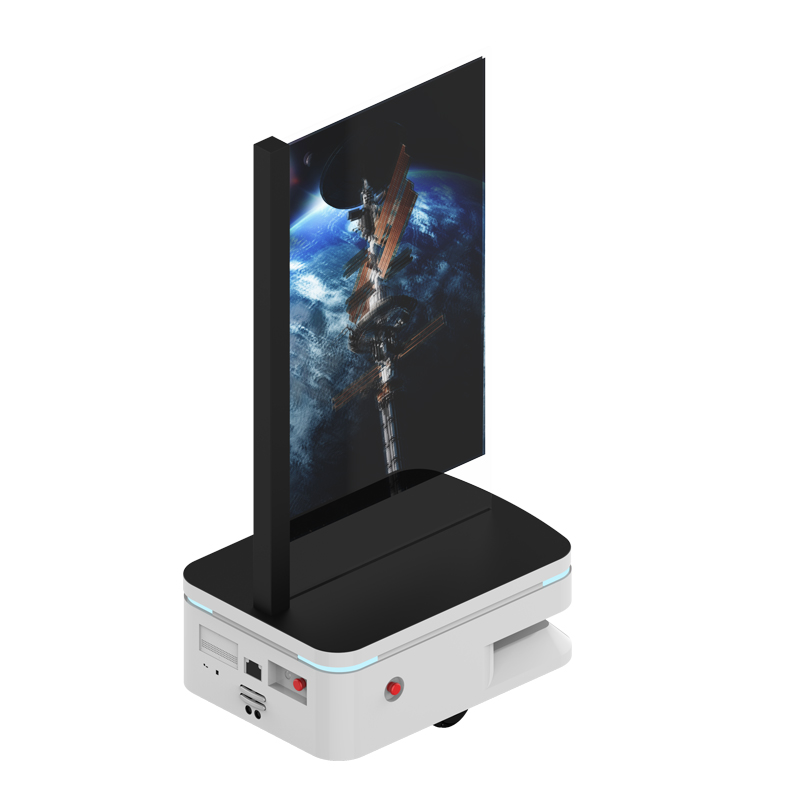
75 Inch Indoor Touch Screen Poster
LED digital signage with SDK and OEM/ODM support for retail stores, elevators, airports and brand-experience environments.
View product details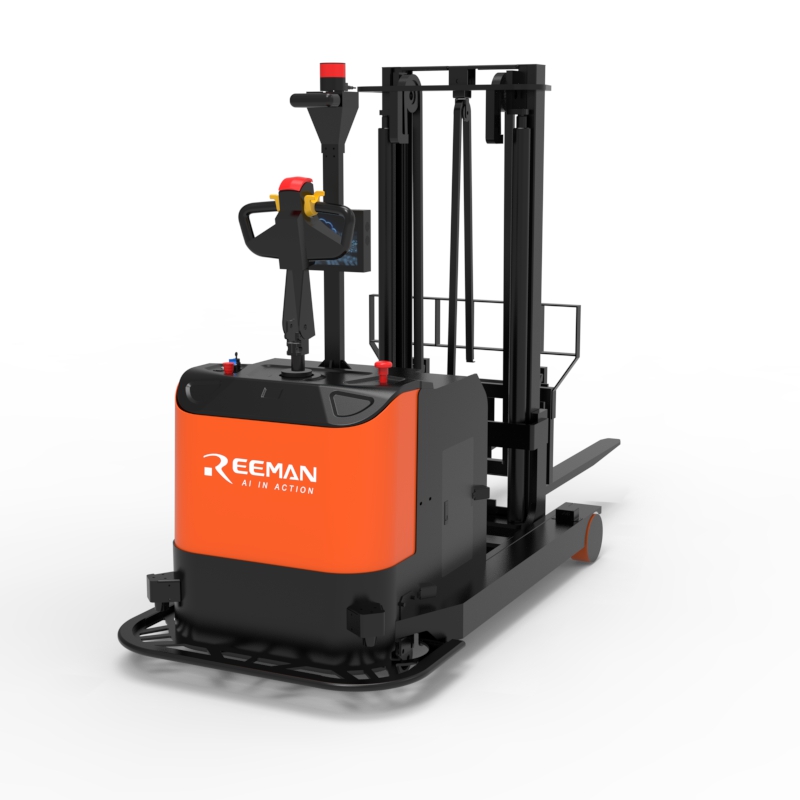
Reeman Autonomous Electric Stacker
Li-ion 48 V 30 Ah power, 2,500 mm lift and 3 m aisle operation for stacker work where rack tolerance and pallet position are tight.
View product details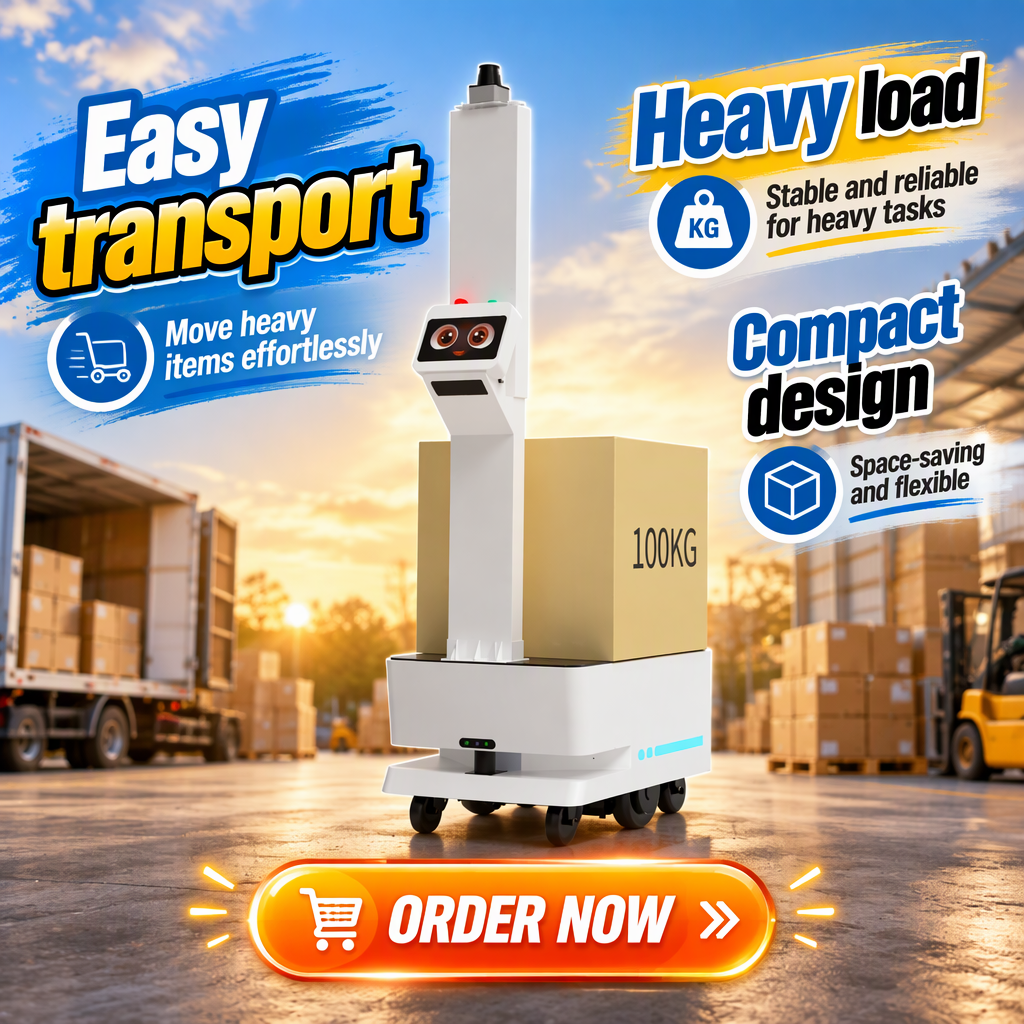
Reeman SLAM Autonomous Mobile Robot
PLC-based AMR platform for warehouse logistics, with configurable top modules for carts, totes and custom material-handling structures.
View product details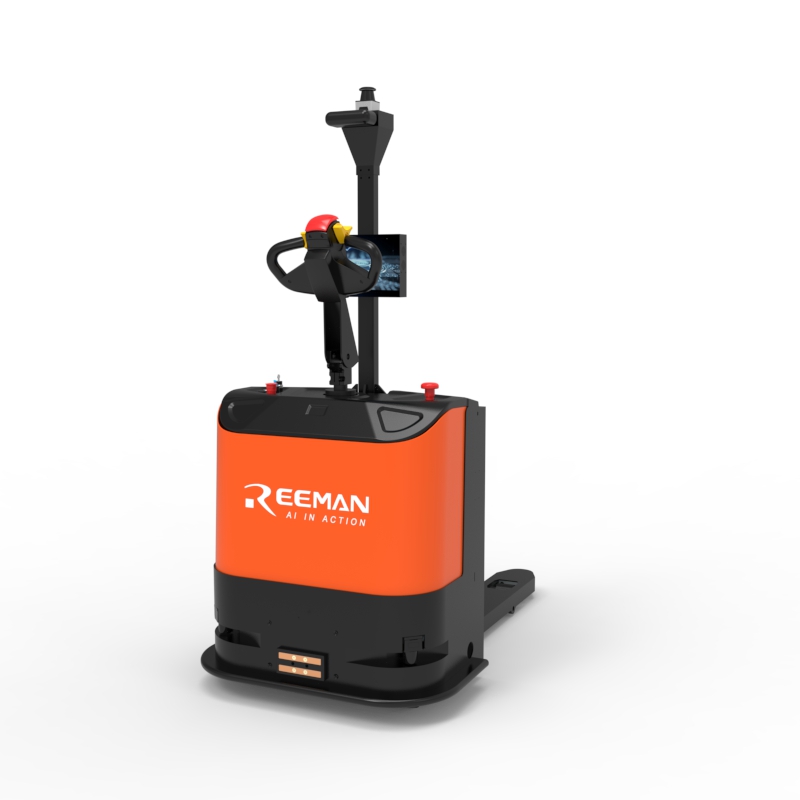
CE Certified 1500kg Driverless Forklift
Automatic pallet loading and unloading with laser SLAM navigation, suited to repetitive dock, line-side and buffer-zone transfer cycles.
View product details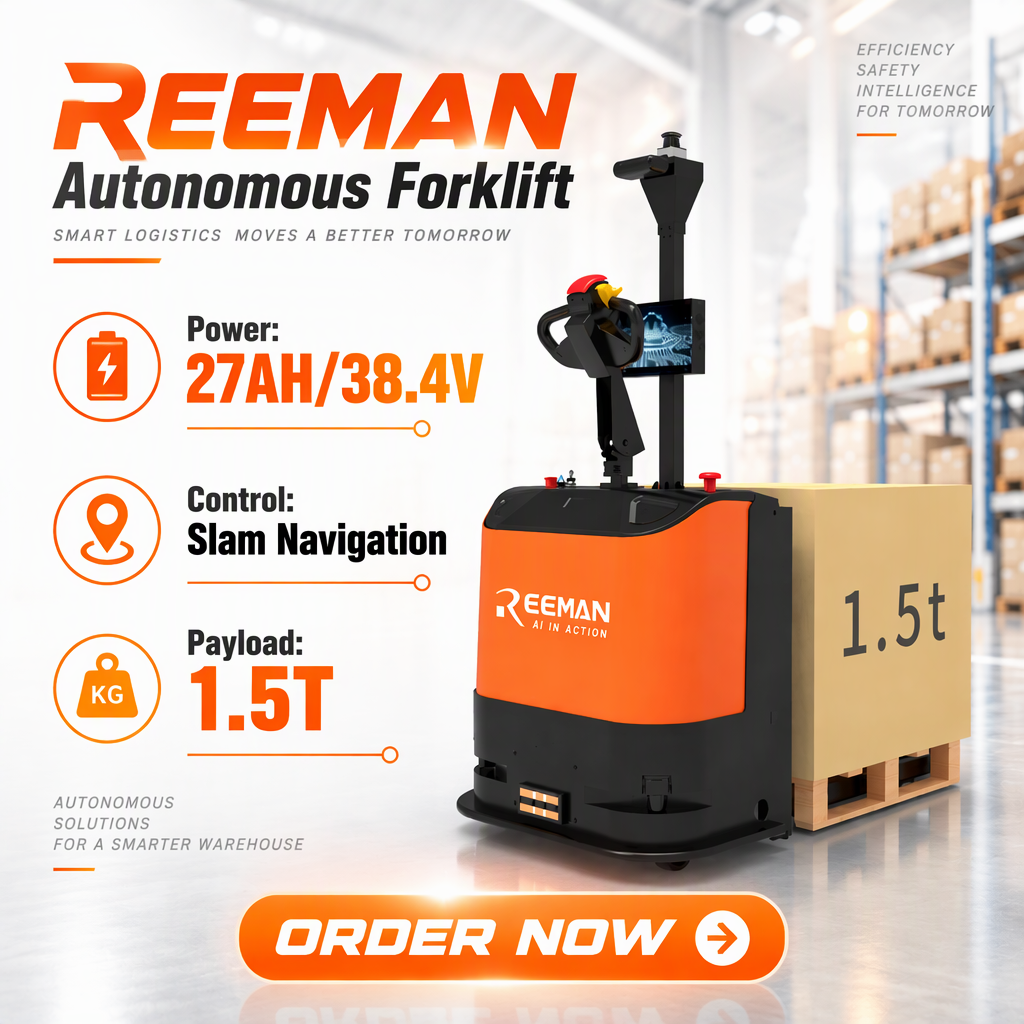
Reeman 1.5 Ton Autonomous Forklift AGV
3D obstacle avoidance and bidirectional driving for indoor warehouse lanes where forward and reverse maneuvers must both be repeatable.
View product details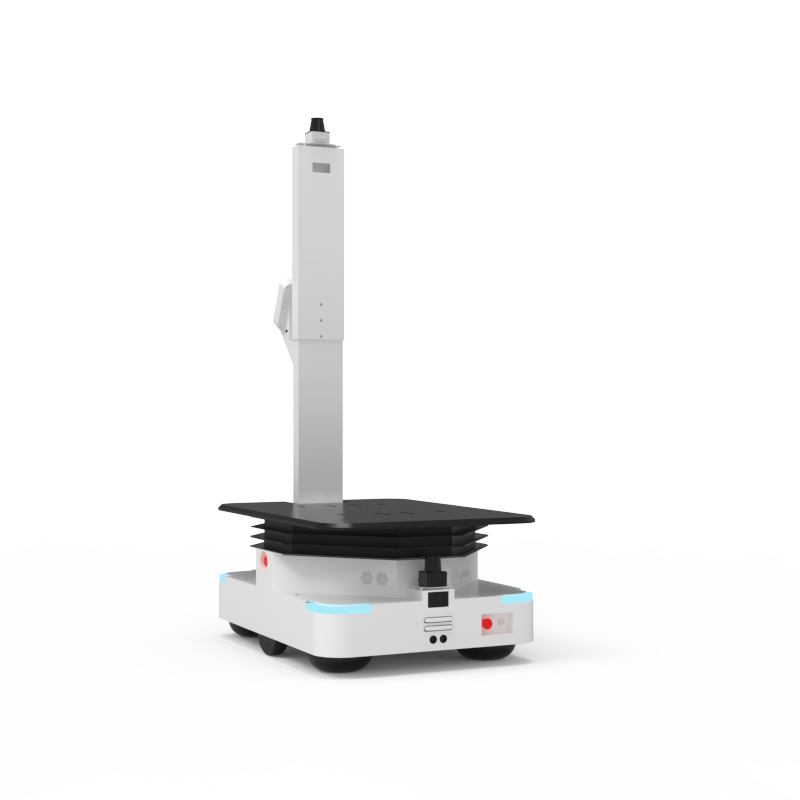
REEMAN 600 kg AMR for Sheet Metal
600 kg payload with a production-line focus for sheet metal and fabricated parts, built around stable load support and route repeatability.
View product details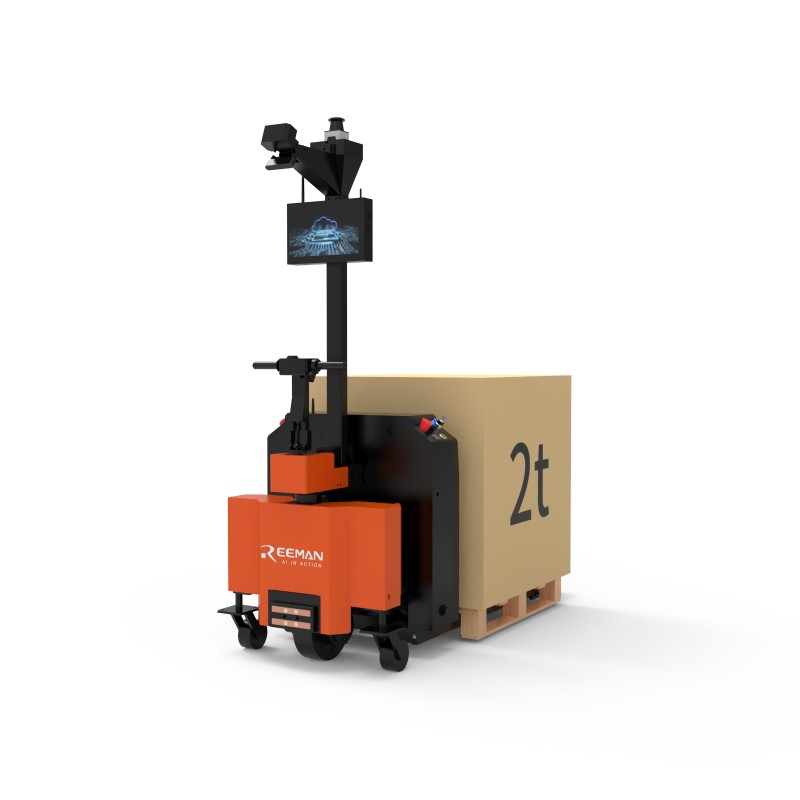
2 Ton Autonomous 4WD AGV Forklift
Multi-line lidar, 10 mm position accuracy, 6–8 hour runtime and 4WD traction for heavier warehouse handling and long shift cycles.
View product detailsFor drawings, certificates and model comparison files, request the current catalog.
Factory data is based on the company’s published profile; the factory has been verified onsite by SGS Group.
What a Custom OEM Smart Mobile Robot Factory Must Prove
A custom OEM smart mobile robot project is not a catalog purchase. It is a repeatable engineering system that must survive layout changes, floor conditions, shift patterns, safety audits and software upgrades. Buyers searching for a custom OEM smart mobile robot factory and suppliers should verify the depth of control over navigation, motion, safety, power and fleet software before comparing unit price.


Shenzhen Elvorn Intelligent Equipment Co., Ltd. is a national high-tech enterprise founded in 2015, focused on robotic platform technology and autonomous driving. Its product scope includes laser SLAM autonomous forklifts, industrial autonomous mobile robots, robot chassis, commercial delivery robots, cleaning robots and disinfection robots. The company operates two production bases in Shenzhen and Ningbo, maintains in-house R&D across laser SLAM navigation, motion control, fleet scheduling and hardware, and offers OEM, ODM, design service and buyer-label options. For procurement teams, that matters because customization should not stop at a logo: it must extend to top modules, payload structures, electrical interfaces, safety configuration, packaging and documentation.
The useful question is not whether one robot can move one pallet. It is whether twenty robots can repeat the same cycle across thousands of shifts while remaining visible to the warehouse management system, safe around pedestrians and serviceable by local technicians. That is why a serious factory review should include the production licence, SGS onsite verification report, ISO 9001 and ISO 14001 certificates, model-level CE, FCC or PSE evidence, factory acceptance test records and the spare-parts list. Elvorn’s published profile states that supplier assessment procedures and on-site material inspection are in place, and that robots undergo functional and load testing before shipment.
- Full-stack control over SLAM, motion, safety and fleet scheduling
- Open SDK and API for WMS, MES, ERP and custom software integration
- Verified production capacity, export documentation and lifecycle support
Procurement Trends Reshaping Smart Mobile Robot Sourcing
The next buying cycle will be judged less on a single robot specification and more on fleet economics, standards, data ownership and the supplier’s ability to support multi-site deployment.
Cost per Move, Not Unit Price
Procurement models are shifting toward cost per pallet move, cost per shift and uptime-adjusted throughput. Buyers should compare energy consumption, charging ratio, spare-part lead time, operator training and integration labor, not only the ex-works price.
Multi-Vendor Fleet Interoperability
Standards such as VDA5050-style interfaces, version-controlled APIs and clear data ownership clauses are becoming evaluation criteria. A factory that can document interface behavior and support third-party fleet orchestration reduces long-term lock-in risk.
Staged Capex and Robot-as-a-Service
Pilot-to-scale contracts, leasing and capacity-as-a-service models are moving from niche offers to mainstream options. Suppliers that provide clear acceptance criteria, service-level agreements and buy-back or upgrade paths are better positioned for multi-year programs.
Supply Resilience and Regional Compliance
Buyers now ask for duplicate tooling options, local spare-parts stock, English documentation and market-specific compliance evidence. CE, FCC, PSE and ISO management-system evidence should be reviewed against the actual configuration being purchased.
Product Development Trends Buyers Should Write into the RFQ
Smart mobile robots are moving from guided vehicles with fixed routes to perception-driven platforms with modular payloads and cloud-connected fleet services. The RFQ should separate proven requirements from future options.
3D LiDAR and Semantic Perception
Single-line lidar remains cost-effective for predictable aisles, while multi-line and 3D perception improve obstacle classification, low-object detection and operation in dynamic areas shared with pedestrians and forklifts. The tender should state the exact obstacle types and minimum detection distances that must be validated.
Edge AI and Cloud Fleet Orchestration
Edge computing reduces reaction time when network coverage is uneven, while cloud dashboards handle task dispatch, utilization reporting and multi-site benchmarking. Ask how the system behaves during Wi-Fi roaming, access-point failure and WAN outage.
Modular Chassis and Payload Interfaces
Shared chassis architecture allows one OEM platform to become a shelf carrier, cart mover, tote transporter or custom assembly station. A modular mounting pattern, standard power output and documented communication interface shorten secondary development and reduce spare-parts variety.
Lithium Power and Opportunity Charging
Li-ion packs, fast charging and opportunity charging change fleet sizing. Instead of buying one robot per shift, buyers can model 24-hour utilization with a smaller fleet and planned charging windows, provided the supplier can document cycle life, charging safety and battery management behavior.
Safety by Design and Standards Evidence
Safety should be engineered before deployment, not added by a site contractor. Buyers should request risk-assessment documentation, emergency-stop architecture, speed zoning, bumper performance, braking distance and validation evidence relevant to driverless industrial trucks and site-specific traffic rules.
Digital Twin and Pre-Deployment Simulation
Simulation before delivery can reveal bottlenecks, charging congestion and narrow-lane conflicts without stopping operations. The most useful supplier evidence is not a generic animation, but a site-specific model using your rack layout, pallet dimensions, traffic rules and throughput target.
Procurement Inputs That Change the Technical Quote
A short RFQ often produces an inaccurate price. The following data points should be resolved before comparing suppliers, because each one can change the robot model, fleet size, charging plan, safety configuration or integration scope.
| Procurement Input | Why It Changes the Specification | Evidence to Request |
|---|---|---|
| Payload at the coupling point | Rated payload is not the same as the load seen by the fork, top module or towing interface. Offset loads, pallet overhang and dynamic acceleration reduce usable capacity. | Load diagram, center-of-gravity calculation, safety factor and load-test record. |
| Aisle width and rack tolerance | Minimum aisle, turning envelope, rack upright position and floor markings determine whether a standard forklift AGV or a compact stacker is suitable. | CAD layout, turning envelope drawing, stacker aisle test and pallet-position tolerance. |
| Floor flatness and friction | Floor joints, slopes, ramps, oil, dust and expansion joints affect navigation stability, braking distance and wheel wear. | Floor survey, wheel specification, slope limit, braking test and maintenance interval. |
| Pallet condition | Broken boards, protruding nails and uneven pallet stacks can defeat fork entry and load detection even when the robot’s payload rating is adequate. | Pallet sample test, fork sensor logic, load detection method and reject routine. |
| Wi-Fi coverage and handover | Fleet dispatch, map updates and remote support depend on stable roaming. A robot that works in one aisle may lose tasks near a far-end access point. | Site survey, roaming log, offline-task behavior and edge-storage policy. |
| Charging ratio and shift pattern | One-shift, two-shift and 24-hour operation require different battery capacities, charger counts and opportunity-charging rules. | Energy model, charging curve, battery cycle-life statement and charger layout. |
| Elevator, door and fire-zone integration | Cross-floor transport is a system-integration project, not only a robot feature. Interface timing, fail-safe behavior and permissions must be defined. | Interface protocol, exception-handling flow, cybersecurity permissions and acceptance test. |
| Safety validation and training | Site traffic rules, pedestrian zones, blind corners and emergency response determine the risk assessment and operator training scope. | Risk-assessment template, CE model list, emergency-stop test, training plan and spare-parts list. |
Why Global Buyers Shortlist Elvorn as a Custom OEM Factory
The strongest supplier is not the one with the largest catalog. It is the one that can explain how the robot will be built, tested, integrated, certified and supported after the purchase order.
Full-Stack SLAM Engineering
In-house work covers laser SLAM navigation, motion control, fleet scheduling and hardware. This allows Elvorn to answer customization questions at the engineering level rather than forwarding them to a third-party platform supplier.
Own Production and Quality Gates
Two production bases in Shenzhen and Ningbo support assembly, testing and export preparation. Supplier assessment, on-site material inspection and pre-shipment function and load tests create traceable quality checkpoints.
OEM, ODM and Buyer Label
Customization can include top modules, payload structures, electrical interfaces, software API exposure, branding, packaging and documentation. This makes the platform suitable for distributors, systems integrators and private-label robot brands.
Certification and Export Readiness
Depending on the model, the factory’s published product information lists CE, FCC or PSE marks, alongside ISO 9001 and ISO 14001 management-system certification and SGS onsite verification. Export support includes FOB terms and T/T payment in USD or CNY.
Application Engineering
Projects can be reviewed from layout drawings, load data, pallet type, aisle width, charging plan and target throughput. The result is a model recommendation with fleet size and integration scope, not a generic quotation based on payload alone.
Lifecycle Support for Export Buyers
English documentation, remote commissioning, operator training and long-term spare-part supply reduce the risk of a robot becoming stranded after installation. Main export markets include North America, Western Europe, Eastern Asia, Southeast Asia and the Middle East.
 SGS VerifiedOnsite factory review
 CE MarkingModel-dependent
 FCCModel-dependent
 PSEModel-dependent
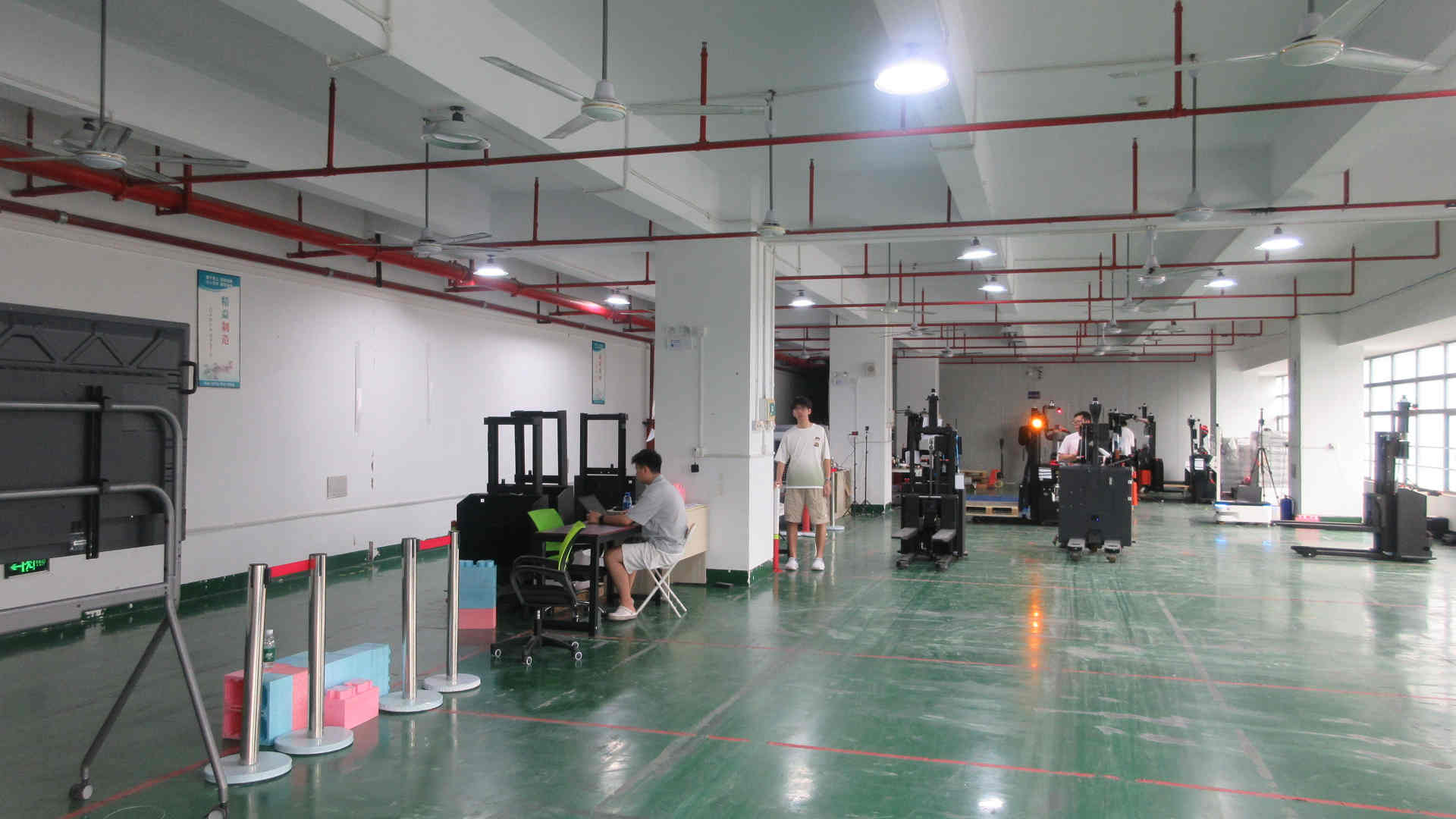
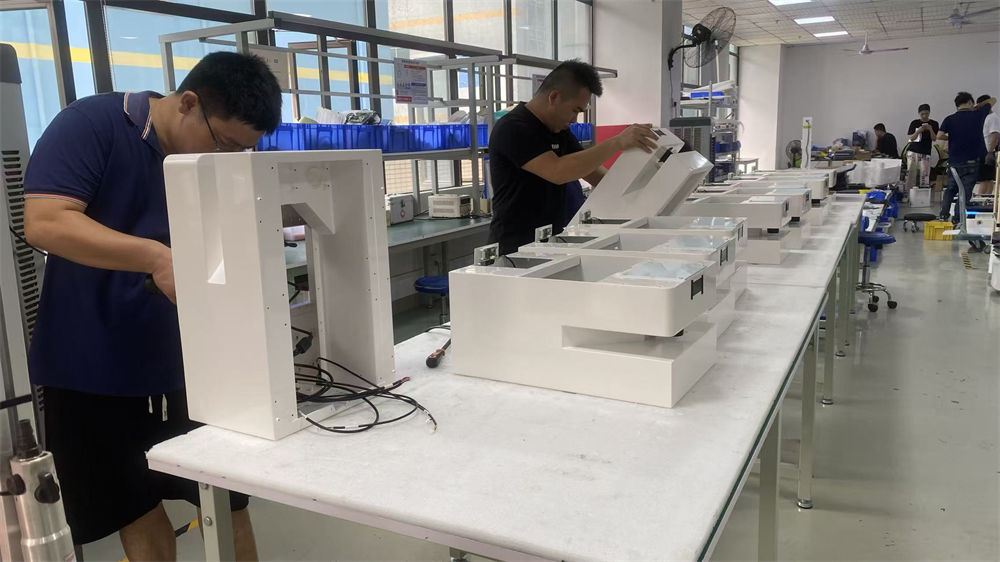
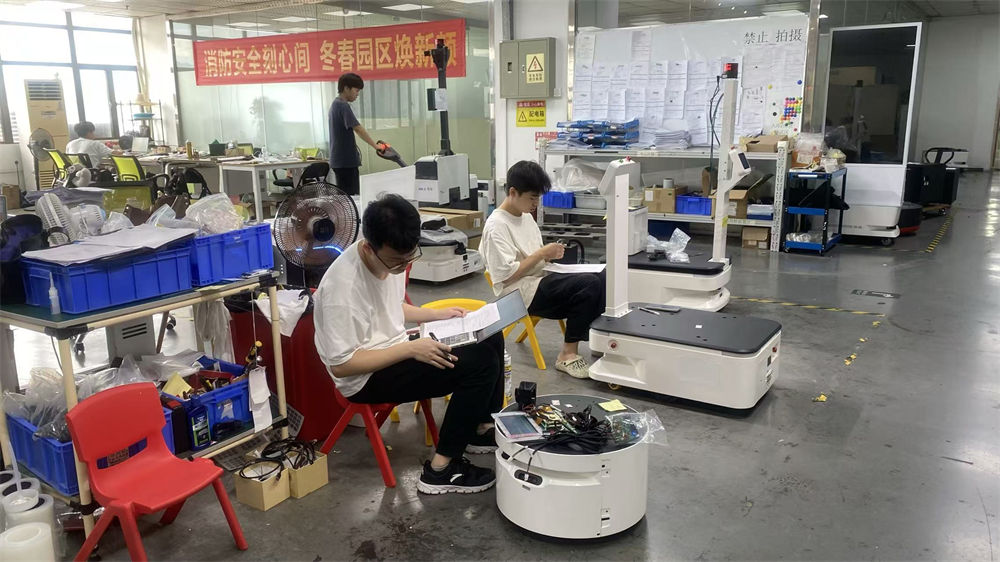
Inside the Factory: Engineering, Assembly and Quality Control
Factory evidence should be specific. Photos of the research laboratory, assembly line, component warehouse, inspection area and export packaging each answer a different due-diligence question.

Application Modules Where the ROI Is Easiest to Verify
Automation payback becomes easier to defend when the workflow is repetitive, the load is known, the route is stable and the labor constraint is measurable.
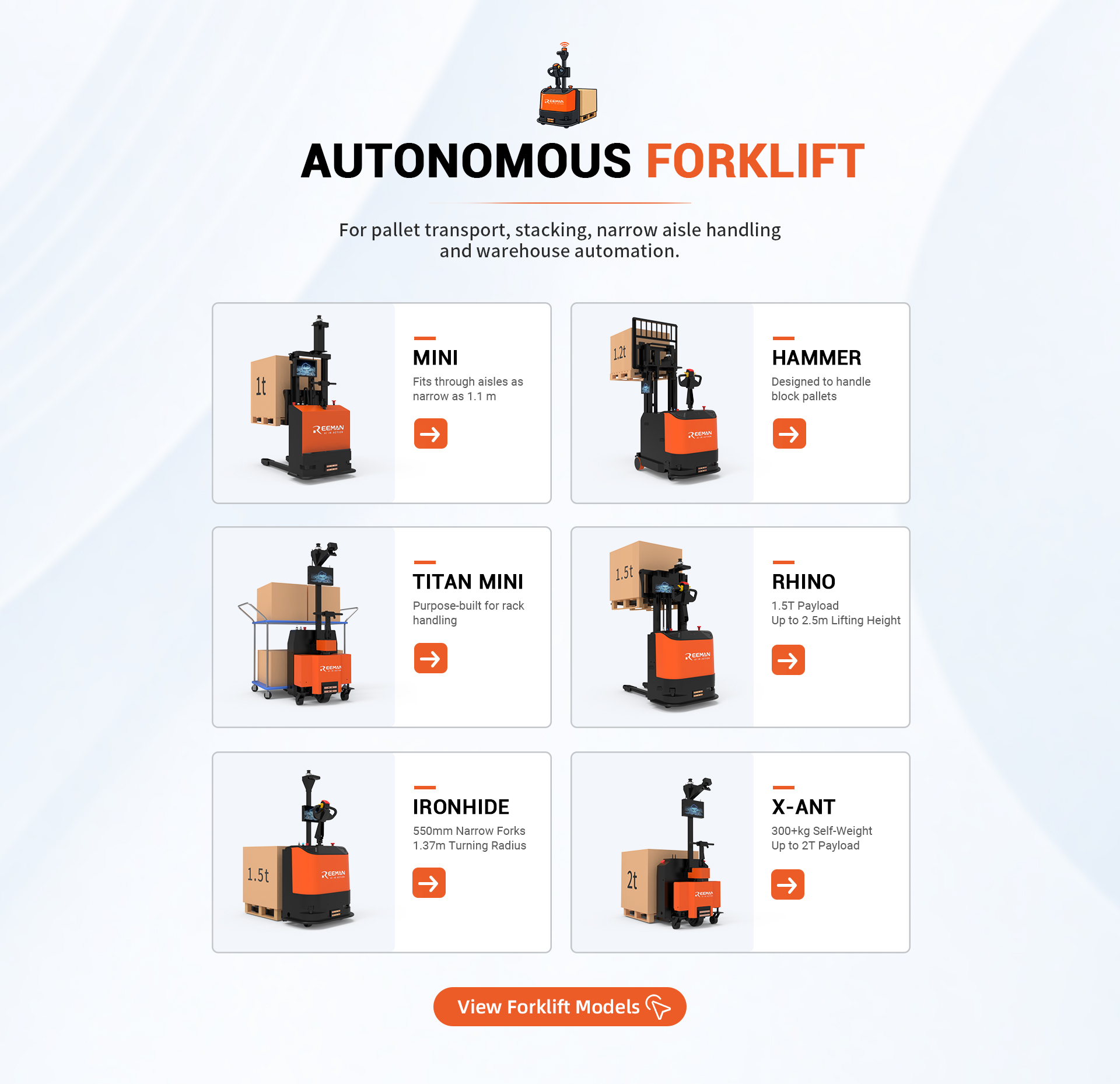
Pallet Flow Automation
Receiving, put-away, buffer transfer and dock loading with driverless forklifts that can run across shifts without tape or reflectors.
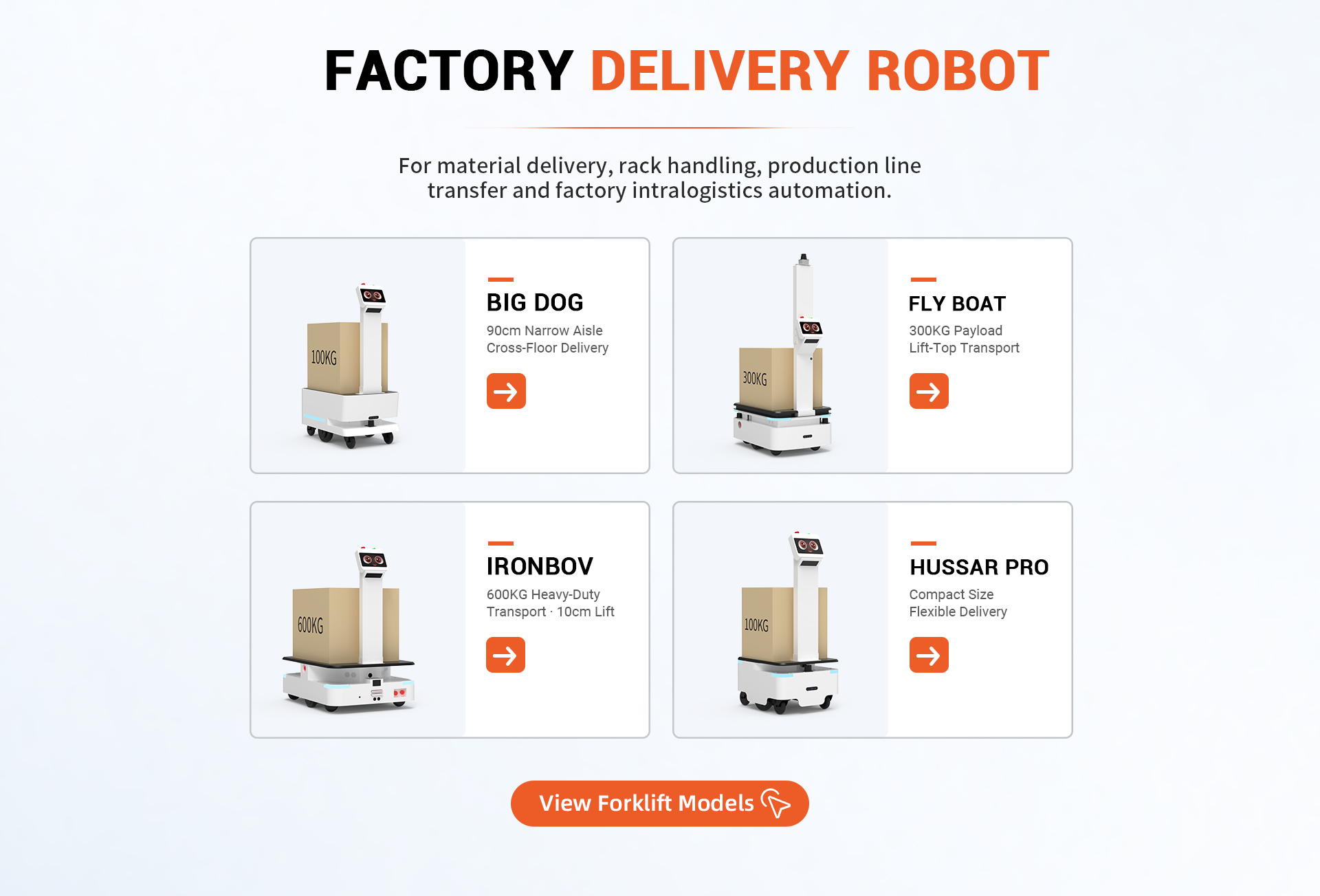
Line-Side Logistics
AMRs feed workstations, collect finished goods and synchronize transport tasks with MES or production scheduling systems.
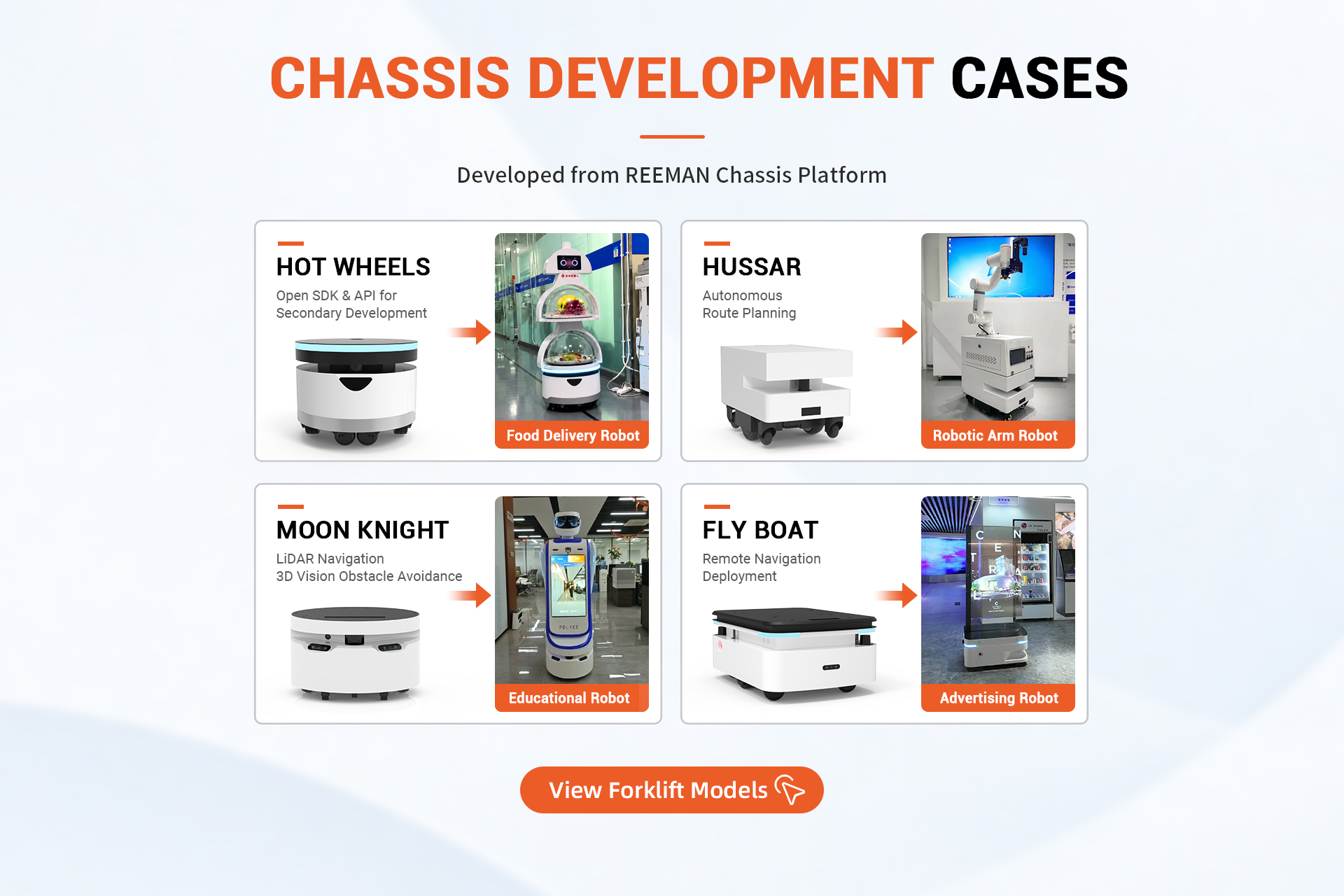
Custom Robot Development
SLAM chassis with open SDK and API shorten time-to-market for branded robots and custom service platforms.
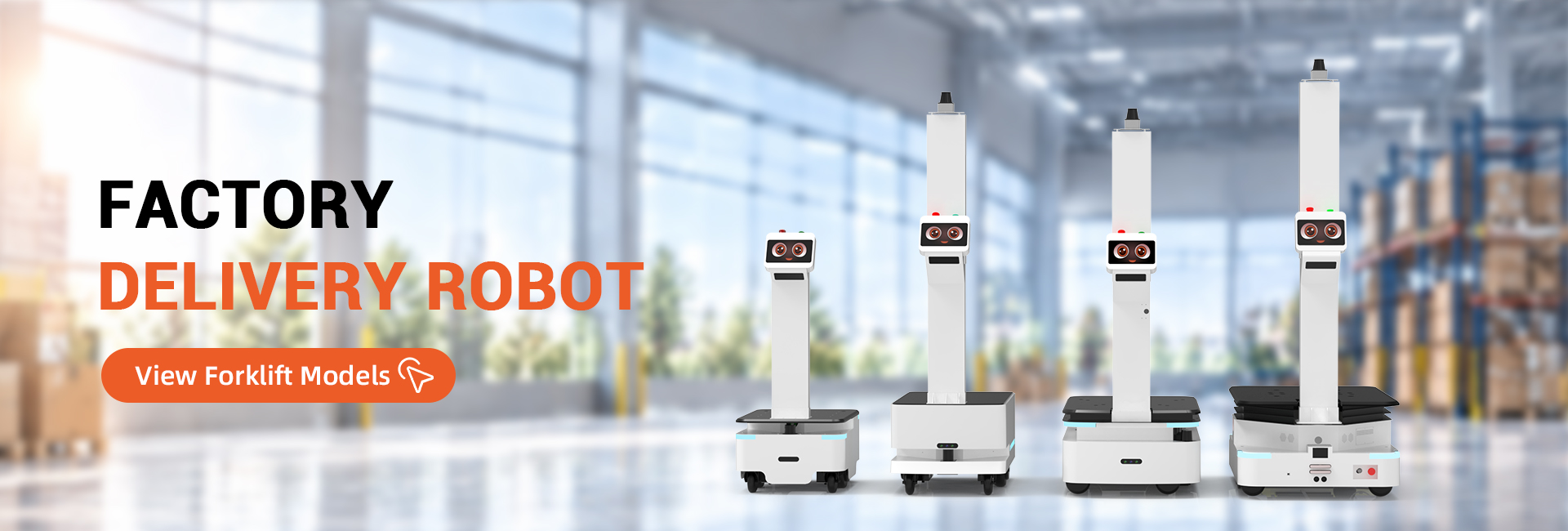
Restaurant & Hotel Delivery
Delivery robots handle food runs, room service and amenity transport so staff can focus on guest-facing tasks.
A Five-Stage Process That Reduces Deployment Risk
Strong hardware is only one part of the project. The delivery model should make responsibilities visible from site survey through post-installation support.
Requirement Review
Share layout drawings, load data, pallet type, aisle width, traffic rules and target throughput.
Solution Design
Engineers recommend model, fleet size, charging plan, safety configuration and integration scope.
Build & Customize
OEM branding, top modules, electrical interfaces and software connections are built to the agreed specification.
Factory Acceptance Test
Function, load and configuration tests are completed before shipment, with test records available for review.
Deploy & Support
Remote mapping, operator training, spare-parts planning and lifecycle support continue after delivery.
Frequently Asked Questions About Custom OEM Smart Mobile Robots
These are the questions that most often determine whether a supplier should move from the long list to the technical evaluation stage.
What is a custom OEM smart mobile robot factory?
How do I identify a real factory rather than a trading company?
Which navigation technology should we choose?
What data should be prepared for an accurate quotation?
Can the robots integrate with WMS, MES or ERP?
Does the factory offer OEM and ODM customization?
Which certifications should overseas buyers verify?
How should we compare total cost of ownership?
Build Your OEM Smart Mobile Robot Program with Factory-Direct Engineering
Send your layout drawing, load data, pallet type, aisle width and target throughput. The engineering team can then recommend the most suitable autonomous forklift, AMR, robot chassis or service platform and confirm the customization scope, certification path and delivery plan.
Shenzhen Elvorn Intelligent Equipment Co., Ltd. · OEM / ODM · Laser SLAM · SGS-verified factory · ISO 9001 & ISO 14001