Eight Autonomous Robot Platforms for OEM/ODM Wholesale Programs
These models represent the most requested configurations for warehouse material handling, factory logistics, indoor commercial delivery, outdoor last-mile delivery and mobile digital signage. Each platform can be configured for distributor programs, system integrators, buyer-label projects and private-label deployments.
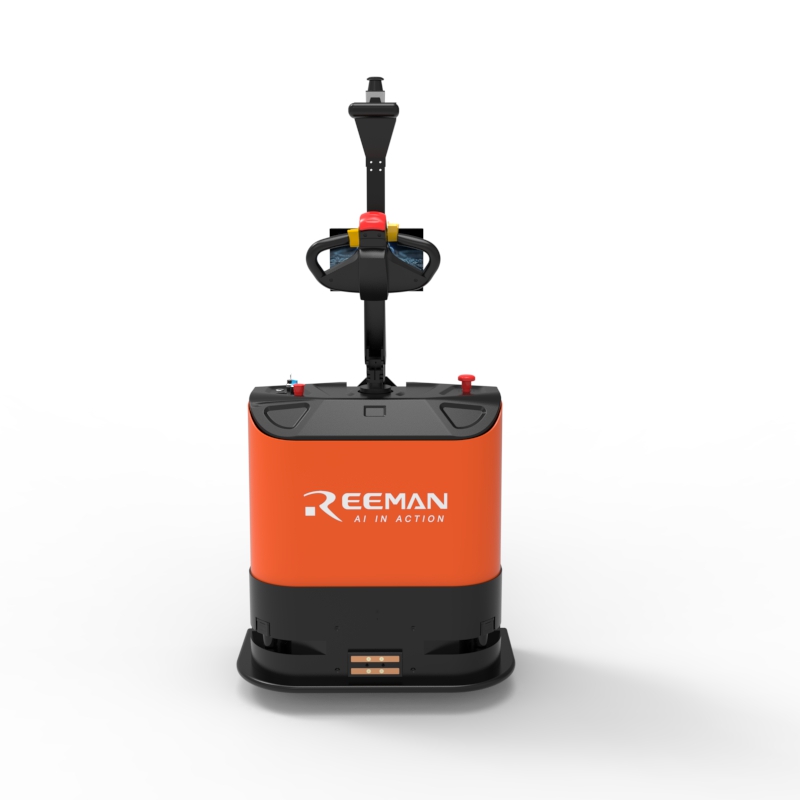
1500kg Laser SLAM Autonomous Forklift AGV Reflector-Free Point-to-Point Warehouse Material Handling
- Reflector-free point-to-point pallet transfer
- Laser SLAM mapping for warehouse aisles
- Ideal for OEM fleet and 3PL deployment
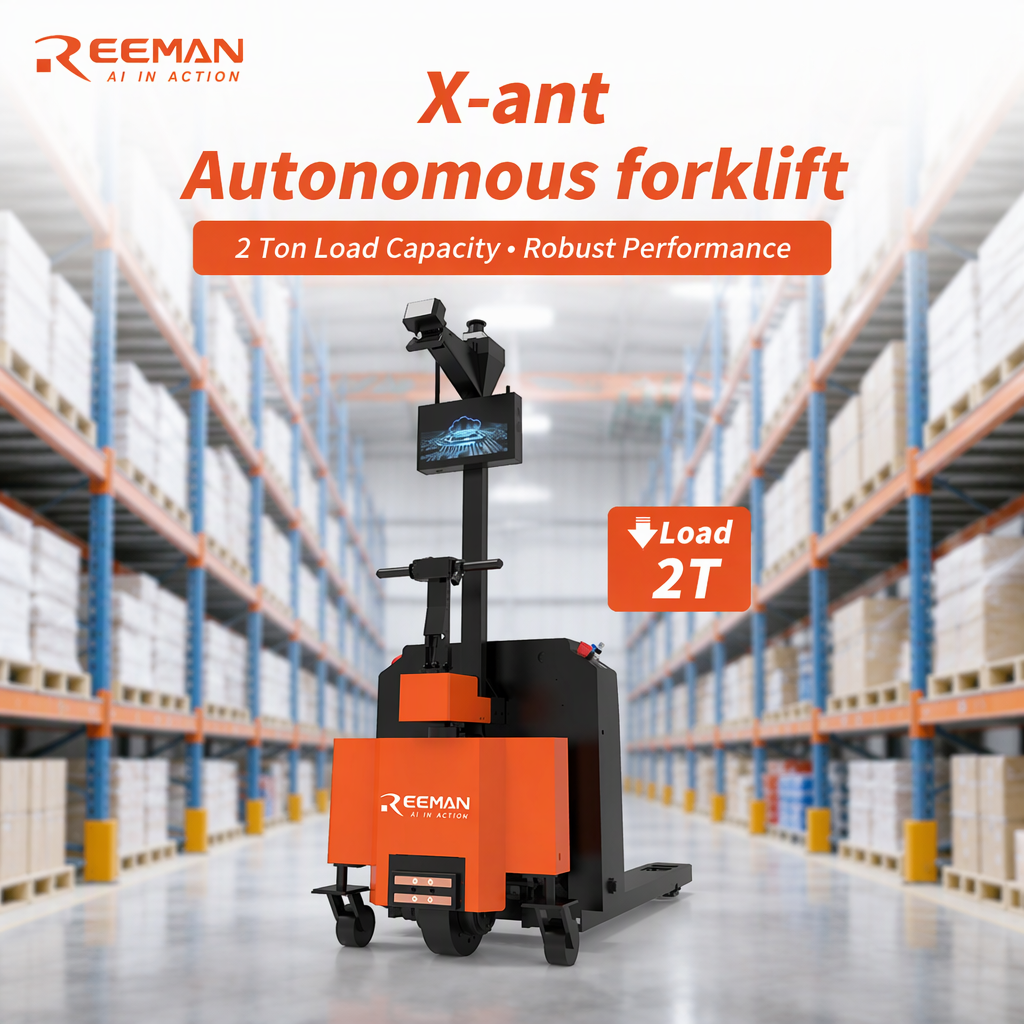
2 Ton Autonomous 4WD AGV Forklift Laser SLAM Navigation Multi-Line LiDAR 10mm Position Accuracy Warehouse Handling
- 2,000kg rated load and 4WD traction
- Multi-line LiDAR with 10mm positioning accuracy
- For high-throughput pallet logistics
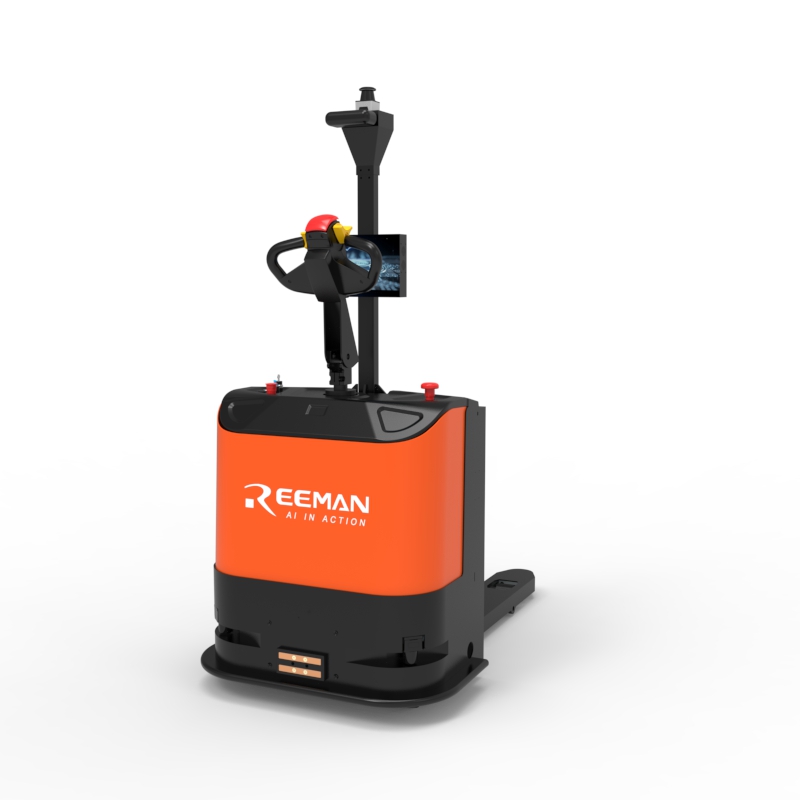
1500kg Laser SLAM AGV Forklift Single Line Lidar 30mm Navigation Accuracy 1019mm Forks 570mm Width Industrial Handling
- 1500kg load with 1019mm fork configuration
- Single-line LiDAR with 30mm navigation accuracy
- Narrow-aisle industrial material handling
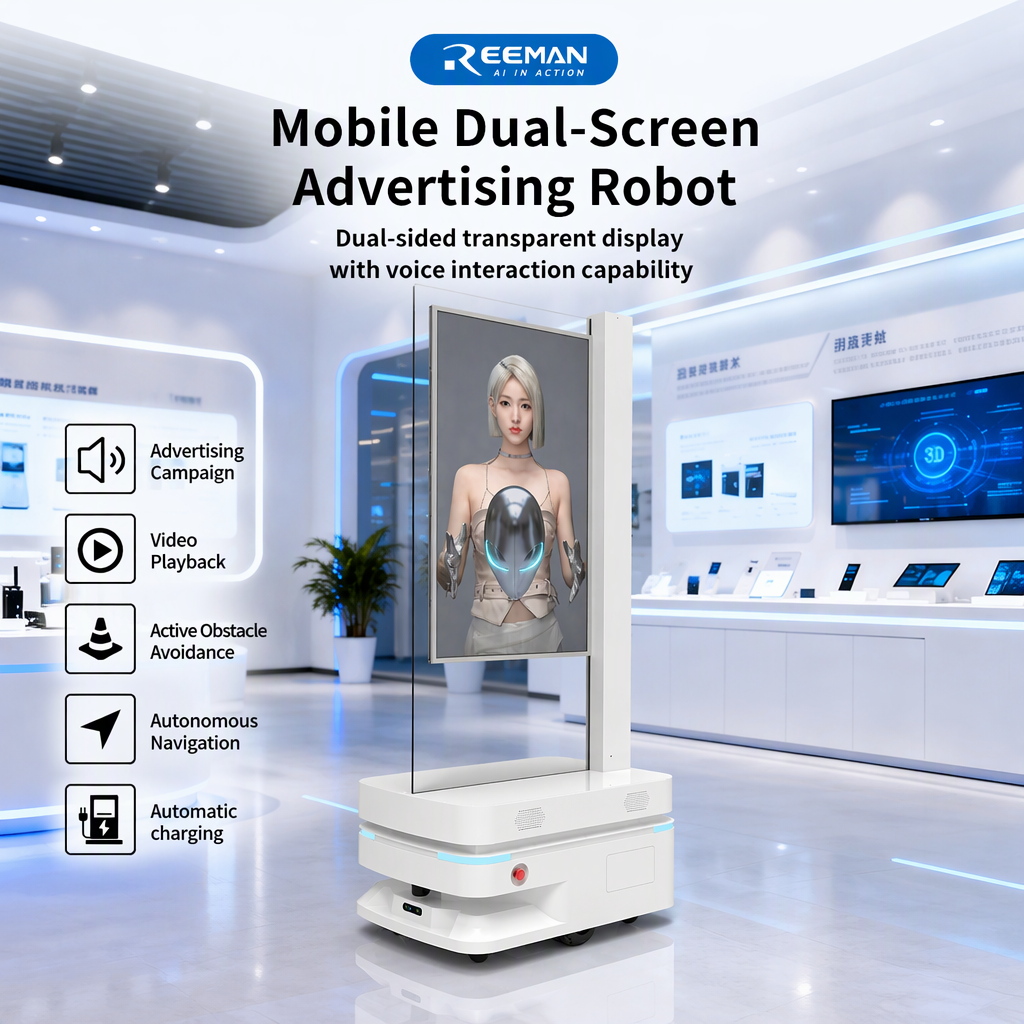
Reeman Mobile Dual Screen Advertising Robot LCD Display Voice Interaction Autonomous Navigation Indoor Commercial Use
- Dual-screen mobile advertising platform
- Voice interaction and autonomous navigation
- Retail, malls, airports and exhibitions
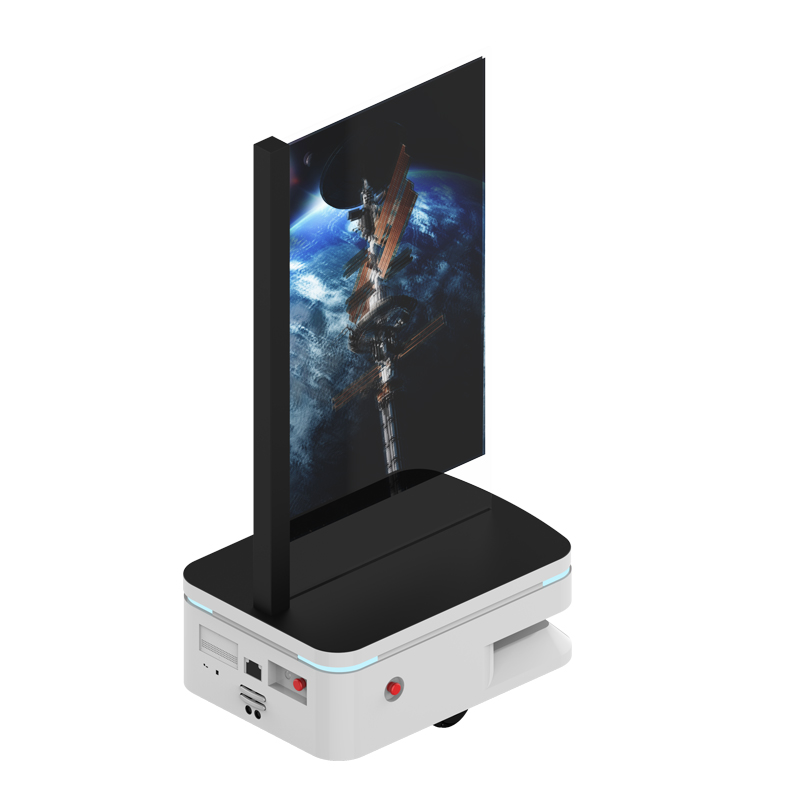
75 Inch Indoor LED Digital Poster Touch Screen Display SDK OEM ODM Black Signage for Retail Store Elevator Airport
- 75-inch indoor touch-screen digital poster
- SDK supported for OEM/ODM projects
- Retail, elevator lobby and airport signage
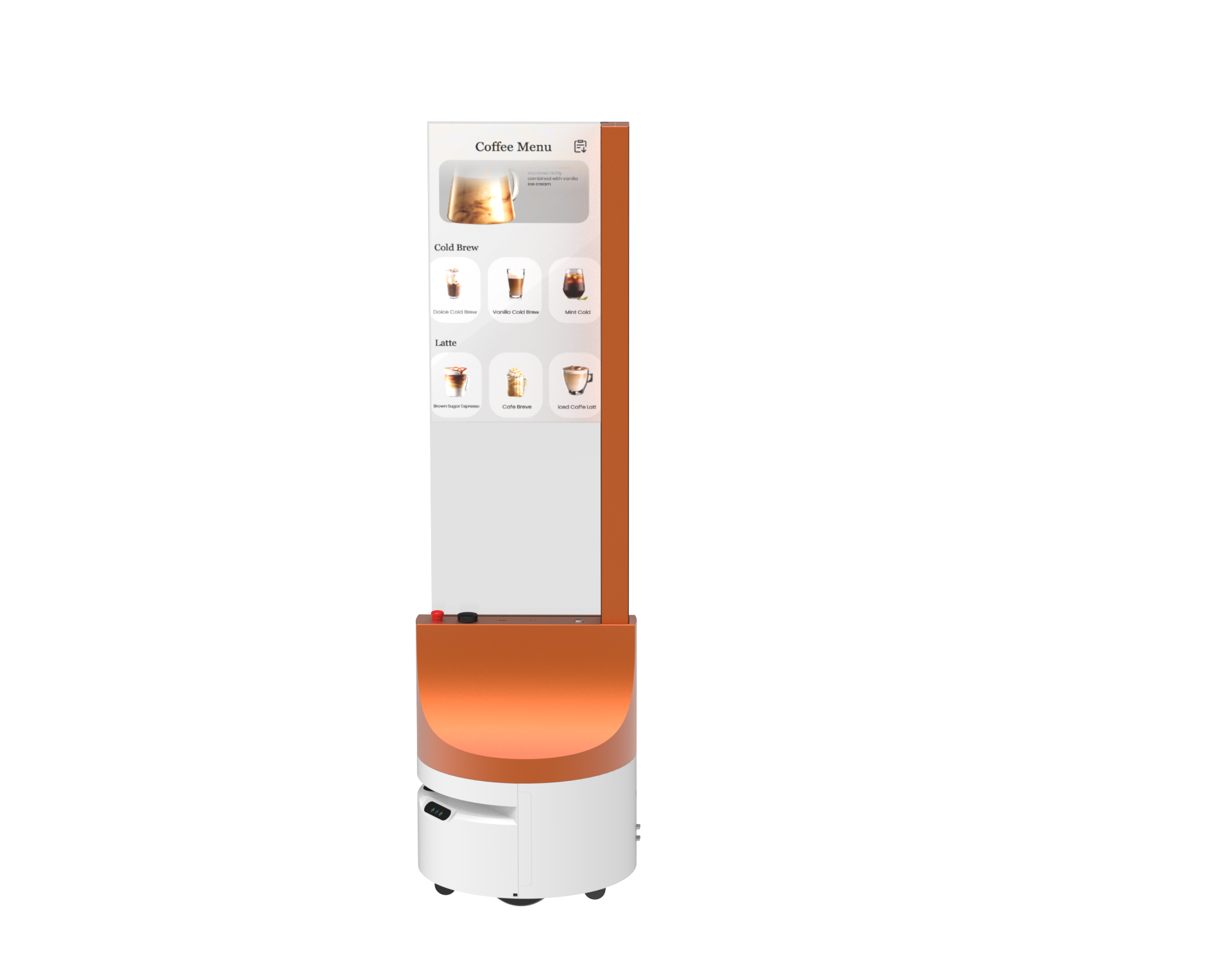
REEMAN 30 Inch OLED Transparent Screen Mobile Advertising Robot 1080 x 1920 FHD 9:16 Wi-Fi App Remote Control
- 30-inch transparent OLED mobile display
- 1080 x 1920 FHD 9:16 format
- Wi-Fi and app remote control
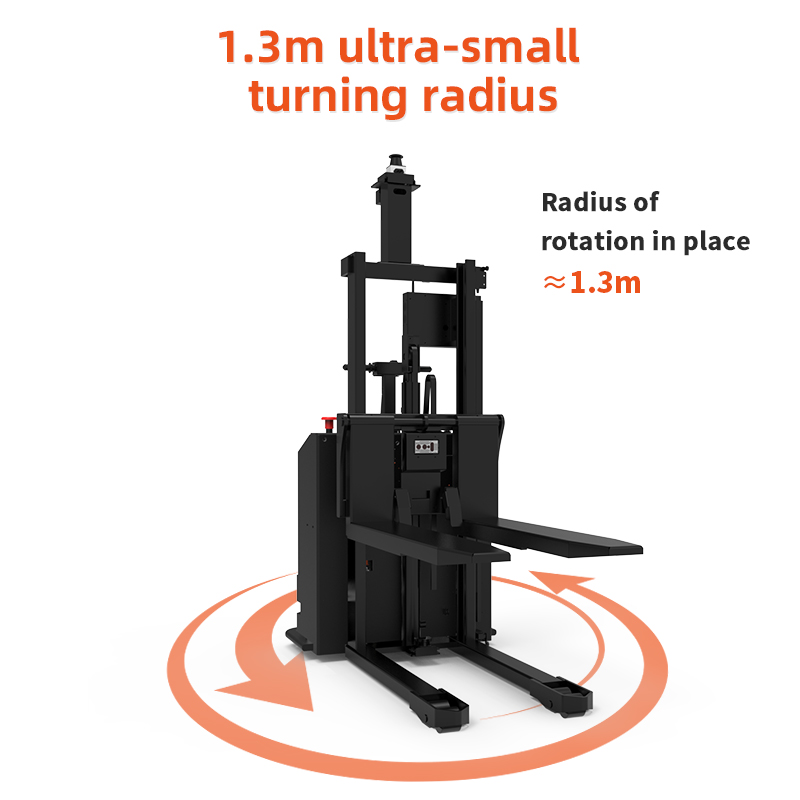
1000kg Forklift AGV Laser SLAM Navigation Pallet Transport Robot 1.3m Turning Radius Auto Charging for Factory Logistics
- 1000kg pallet transport capacity
- 1.3m turning radius for factory aisles
- Auto charging for continuous logistics
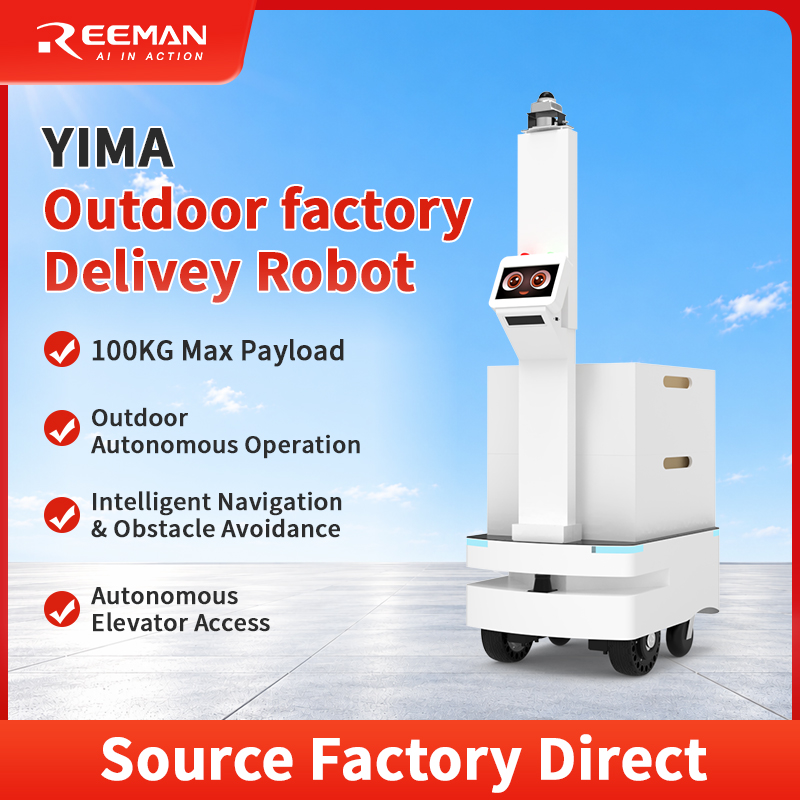
REEMAN Outdoor Delivery Robot 100kg Payload Autonomous Navigation Obstacle Avoidance Elevator Access Warehouse Logistics
- 100kg payload for outdoor delivery routes
- Obstacle avoidance and elevator access
- Warehouse-to-door and campus logistics
Why Autonomous Delivery Robot Procurement Is Moving from Hardware Buying to Outcome Engineering
For distributors, integrators and enterprise buyers, the purchasing decision is no longer limited to payload, speed or battery size. The real question is whether a robot platform can deliver measurable uptime, safe mixed-traffic operation, fast integration and predictable lifecycle support after the container leaves the factory.
In the autonomous delivery robot category, buyers increasingly compare vendors on total cost of ownership, fleet-level software readiness, spare-part availability, documentation quality and the ability to support local customization. A wholesale buyer may source hundreds of units over several years, but each deployment still depends on site-specific mapping, traffic rules, charger placement, elevator integration, fire safety requirements and operator training. This is why a credible OEM/ODM factory must offer more than an assembly line; it must provide engineering transparency, version control, certification support and a clear escalation path for technical issues.
The Shenzhen Elvorn robot platform family is built around this reality. The product portfolio spans autonomous forklifts for pallet movement, industrial AMRs for line-side logistics, robot chassis for OEM robot builders, delivery robots for indoor and outdoor service routes, cleaning and disinfection robots, and mobile advertising robots. Because navigation, motion control, fleet scheduling and hardware design are developed in-house, customization requests can be reviewed by the same engineering team that owns the platform architecture. For wholesale buyers, that reduces the risk of fragmented suppliers, inconsistent firmware and unclear responsibility during after-sales support.
Procurement teams should also distinguish between a demonstrator and a production-ready platform. A demonstrator may perform a short route in a controlled showroom; a production platform must handle dynamic obstacles, network interruptions, emergency stops, battery health, route exceptions and operator misuse. The most reliable suppliers document these scenarios, test them before shipment and provide escalation procedures. This white-paper-style buying guide is structured around that standard.
Procurement Signal Dashboard
Representative criteria buyers use when shortlisting autonomous robot factories and wholesale suppliers.
Six Purchasing Shifts Reshaping the Autonomous Delivery Robot Supply Chain
Wholesale buyers, system integrators and enterprise procurement teams are changing how they evaluate robot factories. The following trends are increasingly visible in RFQs, distributor agreements and multi-year automation roadmaps.
Fleet-First Buying
Buyers now ask how the tenth robot will be deployed, not only how the first robot performs. Fleet scheduling, charger sharing, route zoning and centralized dashboards are becoming standard RFQ requirements.
Safety Evidence Before Price
Procurement teams request emergency-stop logic, speed zoning, obstacle detection coverage and incident-response documentation. A low unit price cannot offset a safety review failure.
Open API Is a Deal Breaker
Robot platforms are increasingly judged by their ability to exchange tasks with WMS, MES, ERP, elevator controllers and access-control systems. Closed systems create integration debt.
Wholesale Programs with Local Support
Distributors need training material, spare-part kits, remote diagnosis and escalation procedures. The supplier’s ability to support a local service partner is now part of the commercial evaluation.
TCO Instead of Unit Price
Battery cycles, tire wear, charger efficiency, maintenance intervals, mapping changes and software updates all affect lifecycle cost. Mature buyers model these variables before awarding volume orders.
Certification and Audit Readiness
ISO management systems, CE/FCC/PSE marks for relevant models and third-party factory verification are increasingly requested during supplier onboarding and distributor due diligence.
Where Autonomous Robot Platforms Are Heading Next: Technology Roadmap Signals
For OEM/ODM buyers, the most valuable supplier is not the one with the largest catalog, but the one whose architecture can absorb new sensors, interfaces and business models without a complete redesign.
3D SLAM and Sensor Fusion
Multi-line LiDAR, cameras and inertial sensing are being fused to improve localization in dynamic warehouses and outdoor routes where 2D maps are insufficient.
VDA 5050 and Interoperability
Mixed-fleet orchestration is becoming a purchasing requirement. Standardized interfaces reduce the risk of vendor lock-in and simplify coordination between robots from different suppliers.
Modular Payload Architecture
One autonomous chassis can serve multiple product lines through swappable top modules: shelves, carts, lockers, advertising screens, cleaning heads or delivery boxes.
Edge AI and Predictive Service
Onboard intelligence can classify obstacles, detect abnormal vibration and log health data. These signals support remote diagnosis and reduce unnecessary site visits for wholesale buyers.
Cybersecurity by Design
Robot fleets are connected assets. Buyers increasingly request access control, secure update procedures, log retention and clear data ownership terms in commercial contracts.
Battery and Charging Strategy
Opportunity charging, auto-docking and battery-health monitoring are becoming part of the ROI model. Wholesale programs need a charger plan, not only a robot list.
Digital Twin Deployment
Site simulation helps validate aisle width, congestion points, charger locations and fleet size before shipment, shortening on-site commissioning.
Service-Ready Hardware
Easy-access components, standardized connectors and clear maintenance intervals reduce downtime and make local service partner training more practical.
A Factory Built for OEM/ODM Delivery Robot Programs
Shenzhen Elvorn Intelligent Equipment Co., Ltd. is a national high-tech enterprise founded in 2015 and focused on robotic platform technology and autonomous driving. The company operates two production bases in Shenzhen and Ningbo, with 5,200㎡ of total floorspace, 39 awarded patents and a team of more than 200 people. Its product lines cover autonomous forklifts, industrial AMRs, robot chassis, delivery robots, cleaning robots, disinfection robots and commercial advertising robots.
For wholesale buyers, the practical advantage is vertical engineering ownership. Navigation algorithms, motion control, fleet scheduling, hardware integration and production testing are handled by an in-house team, so customization is not passed between unrelated subcontractors. The company supports OEM service, design service and buyer-label options, including custom top modules, payload structures, branding and packaging. An open SDK and API architecture helps integrators connect robots with WMS, MES, ERP, elevators, doors and custom dashboards.
Quality and compliance are supported by ISO 9001 and ISO 14001 management systems, CE/FCC/PSE marks on applicable models, and onsite factory verification by SGS Group. Export experience covers North America, Western Europe, Eastern Asia, Southeast Asia and the Middle East, with FOB terms and T/T payment in USD or CNY.
- SGS-verified factory and production capability
- ISO 9001 and ISO 14001 management
- CE, FCC and PSE marks by model
- OEM, ODM, design and buyer-label service
- Open SDK and API for secondary development
- English documentation and remote support
- Two production bases in Shenzhen and Ningbo
- Spare-part supply and long-term support planning

Headquarters and R&D center in Shenzhen

Robot assembly and production line

Engineering and quality testing team
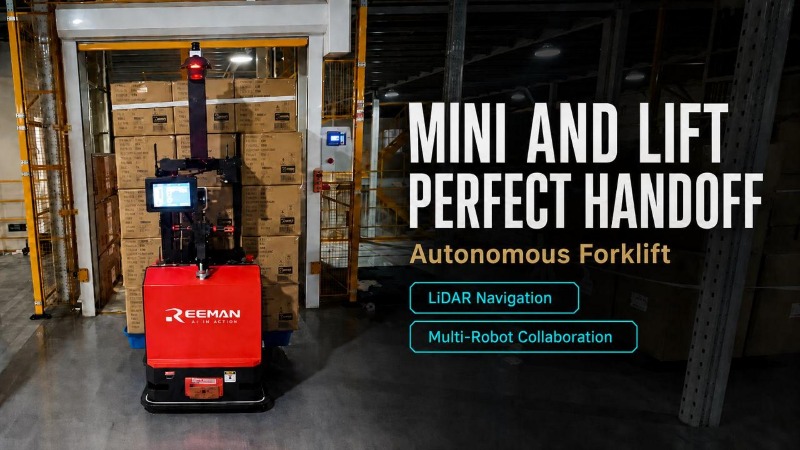
Live autonomous forklift demonstration
Building a Defensible Total Cost of Ownership Model Before You Buy
Unit price is only one line in the procurement equation. A defensible TCO model should include mapping labor, charger infrastructure, integration engineering, training, spare parts, battery replacement, maintenance time and the cost of production interruptions.
01. Site Readiness
Aisle width, floor condition, pallet quality, Wi-Fi coverage, charging location and pedestrian traffic determine whether the selected platform can operate at rated speed. Site surveys should happen before volume orders are released.
02. Integration Scope
A robot that moves material is useful; a robot that receives tasks from WMS or MES is transformative. Define API ownership, data fields, error handling and acceptance tests in the integration scope.
03. Uptime and Service
Ask for mean time between failures where available, recommended spare-part kits, remote diagnostic capability, firmware update policy and escalation response times. These factors matter more as fleet size grows.
04. Scale-Up Path
Wholesale buyers should confirm whether the same platform supports additional payloads, top modules, chargers and fleet-management tools. A scale-up path protects future orders from premature redesign.
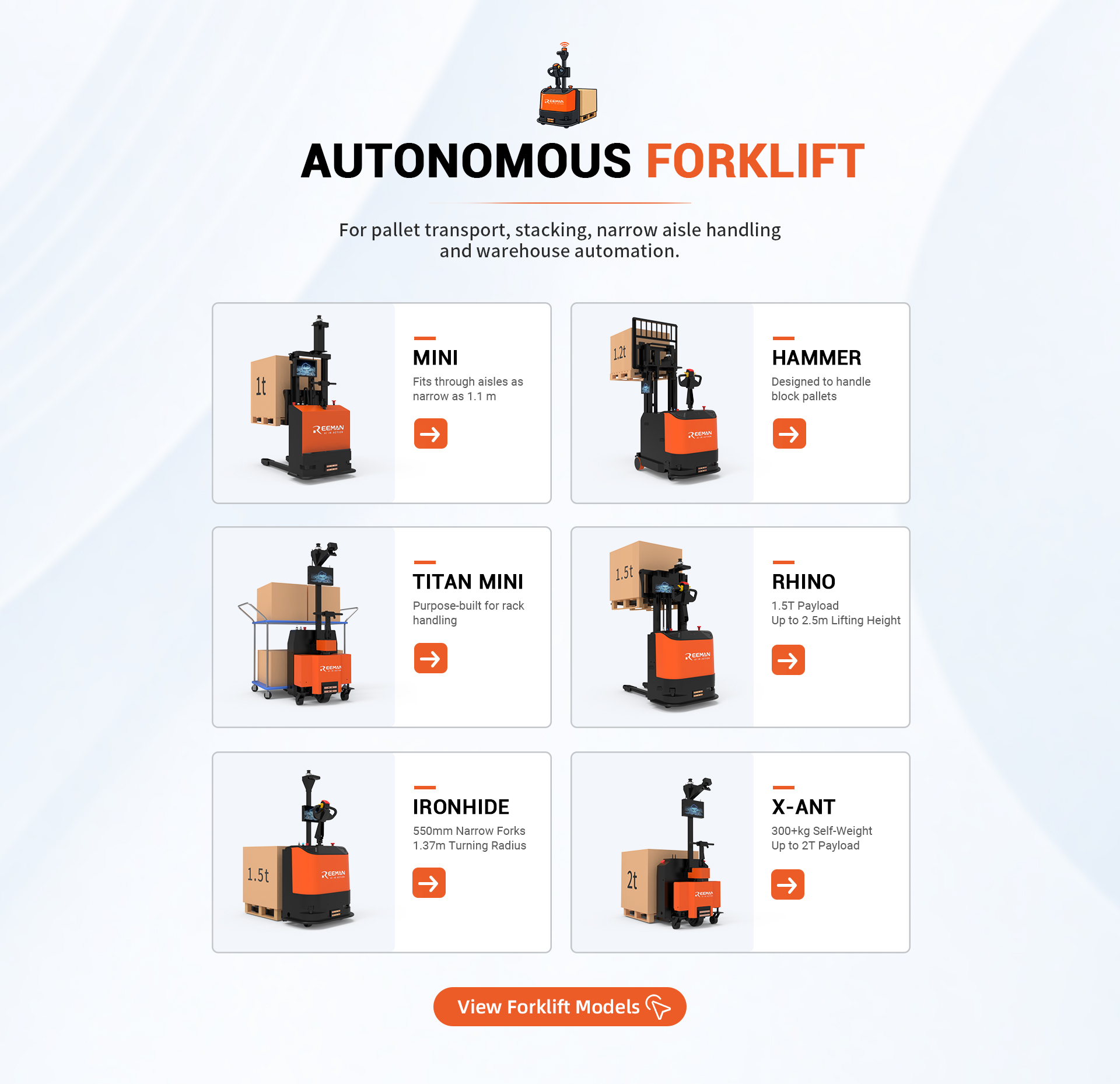
Warehouse pallet flow
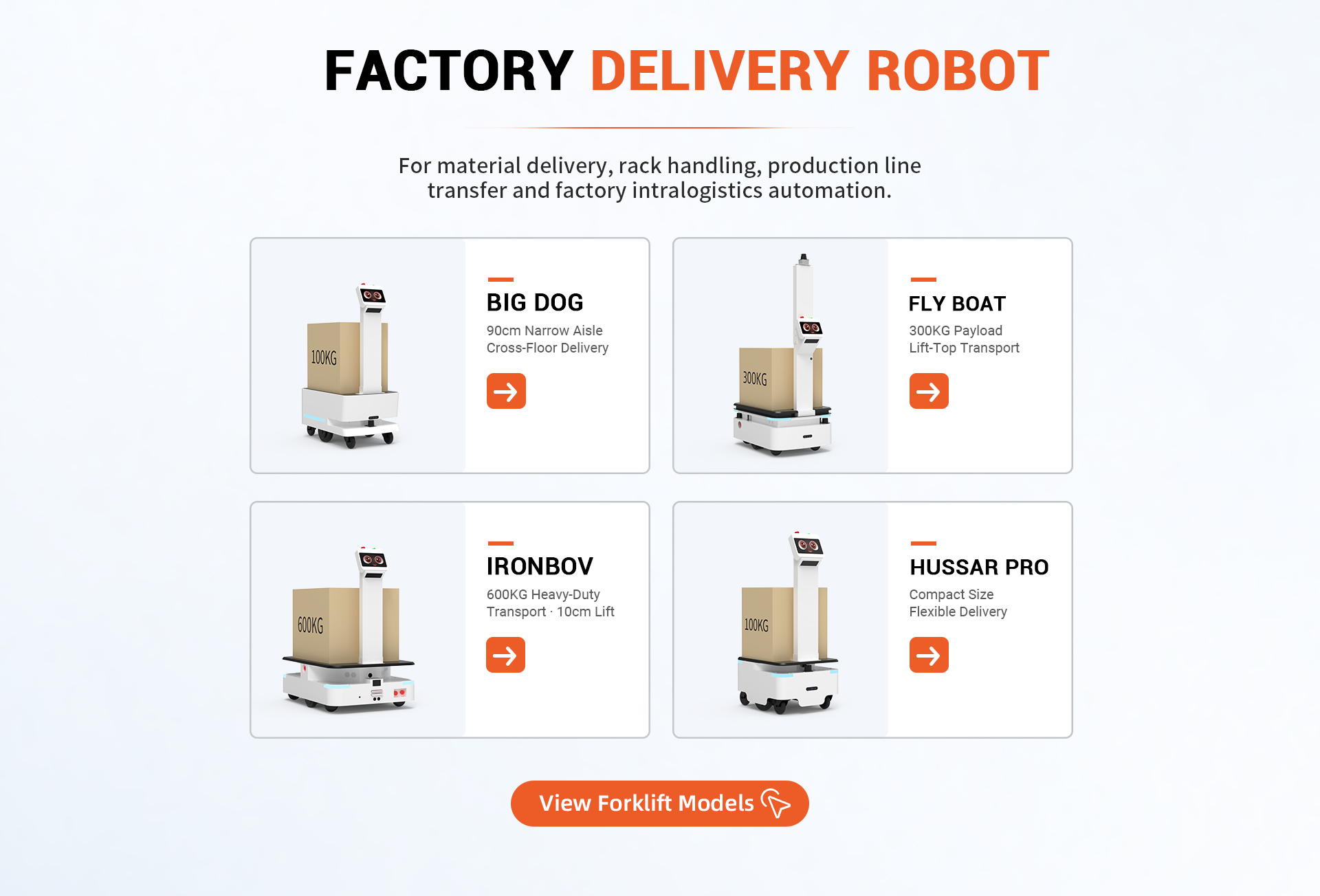
Line-side logistics
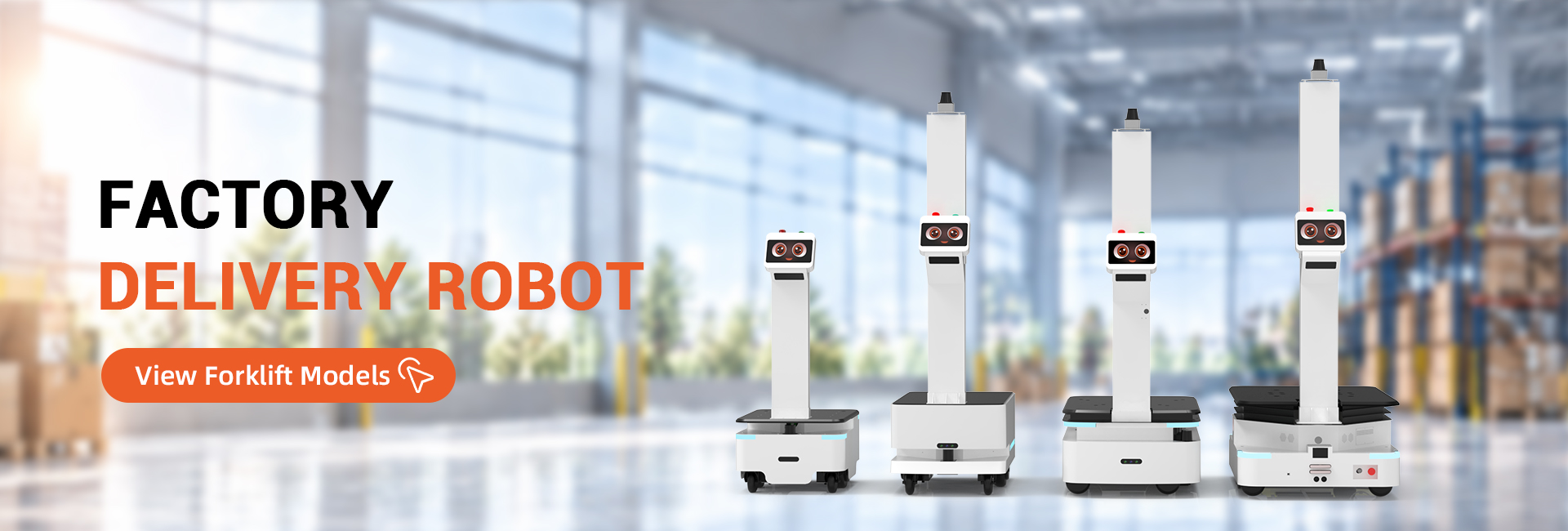
Indoor service delivery

Commercial robot portfolio
From Requirement Review to Stable Operation
A controlled delivery model reduces deployment risk for distributors, integrators and private-label buyers.
Requirement Review
Share layout drawings, load data, pallet or cart type, route conditions, target throughput and destination-market compliance needs.
Solution Design
Engineers recommend robot models, fleet size, charging plan, safety zoning and integration scope based on the actual site.
Customization and Build
OEM branding, top modules, payload structures, software interfaces and packaging are configured to the agreed specification.
Deploy and Support
Factory testing, remote mapping guidance, operator training, spare-part planning and long-term technical escalation support.
Match the Robot Platform to Load, Traffic and Workflow
Use this table for first-round scoping. Final configuration should be confirmed after reviewing floor plans, load type, route width and throughput targets.
| Platform Type | Rated Load / Format | Navigation Basis | Typical OEM/Wholesale Use |
|---|---|---|---|
| 1500kg Laser SLAM Autonomous Forklift AGV | 1500kg | Laser SLAM, reflector-free | Pallet point-to-point transfer, 3PL and warehouse material handling |
| 2 Ton Autonomous 4WD AGV Forklift | 2000kg | Multi-line LiDAR, 10mm accuracy | Heavy pallet movement, high-throughput logistics, OEM fleet programs |
| 1500kg Laser SLAM AGV Forklift | 1500kg | Single-line LiDAR, 30mm accuracy | Industrial handling with 1019mm forks and 570mm width |
| 1000kg Pallet Transport Robot | 1000kg | Laser SLAM | Factory logistics, 1.3m turning radius, auto charging |
| REEMAN Outdoor Delivery Robot | 100kg | Autonomous navigation | Outdoor delivery, obstacle avoidance, elevator access |
| Dual-Screen Advertising Robot | Commercial | Autonomous navigation | Indoor advertising, voice interaction, retail and exhibitions |
| 30 Inch OLED Transparent Screen Robot | FHD 9:16 | Mobile platform | Transparent display, app remote control, brand activation |
| 75 Inch Indoor Touch Screen Digital Poster | 75-inch | SDK / OEM ODM | Retail store, elevator lobby, airport and commercial signage |
Inside the Production and Quality Control Environment
Factory capability matters to wholesale buyers because it directly affects lead time, customization quality and spare-part consistency.

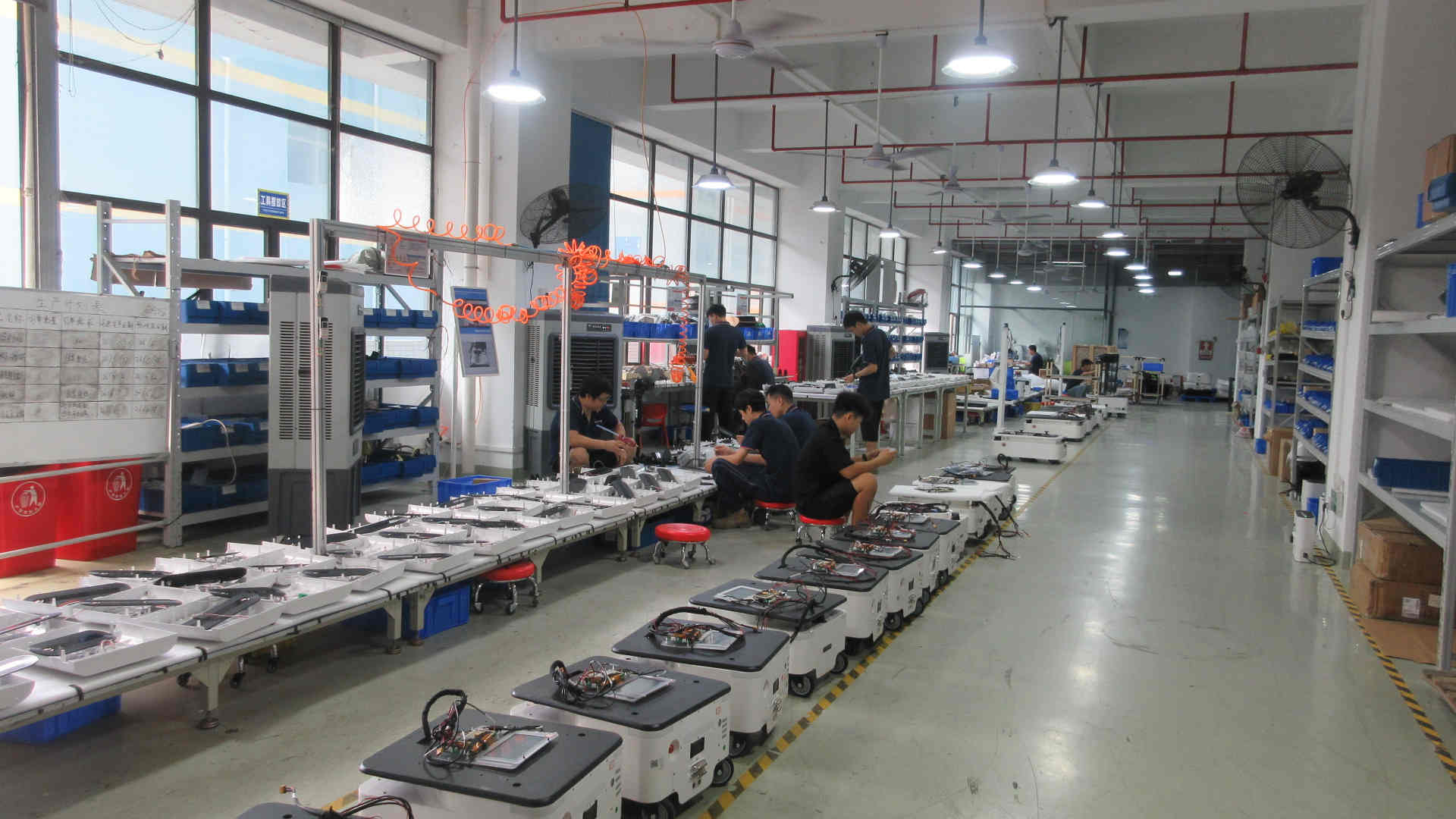
Factory workshop
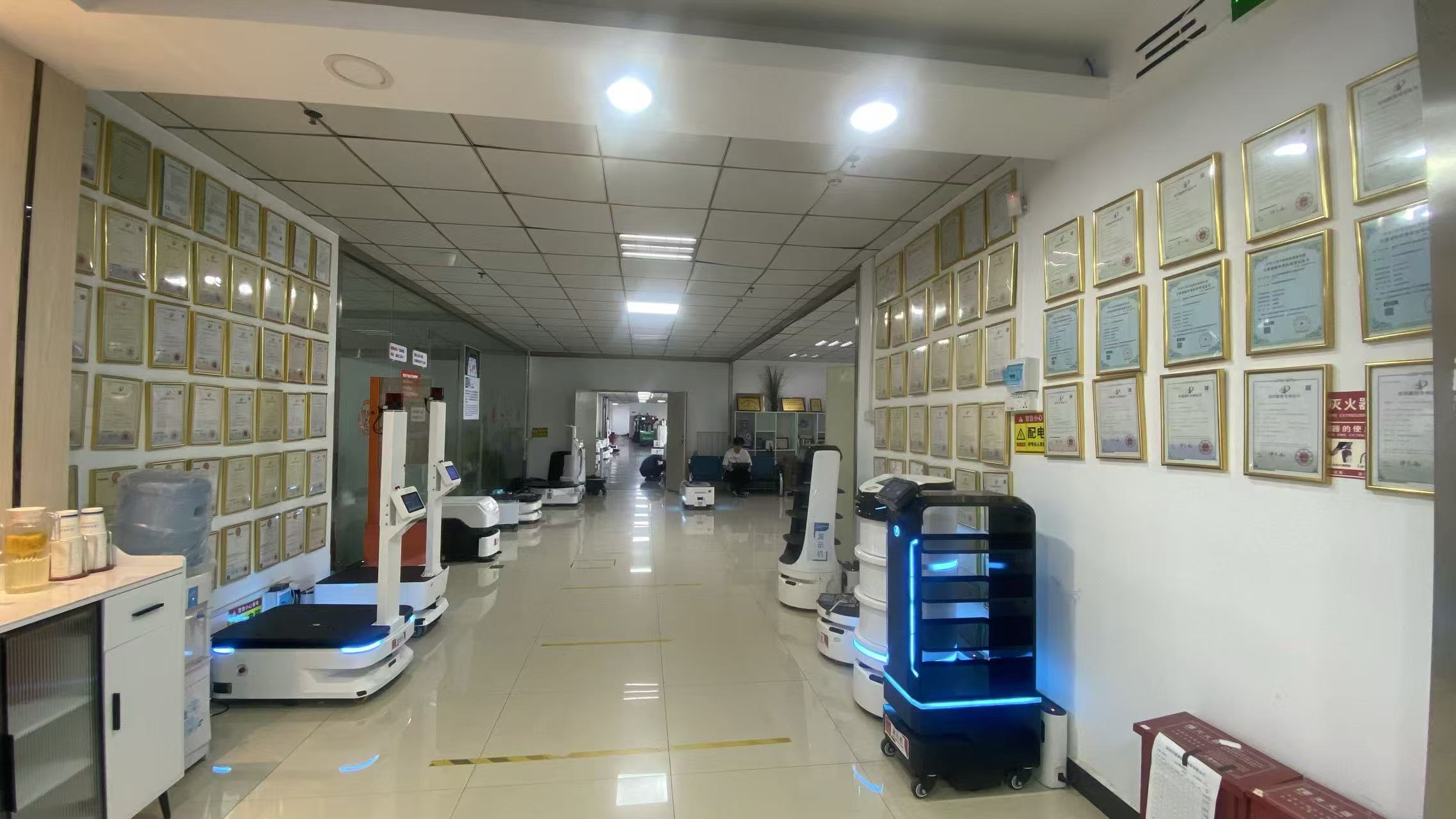
Robot assembly process

Quality inspection
R&D laboratory
Supplier assessment procedures, on-site material inspection and functional/load testing are part of the production control routine. Third-party assessment reports and transaction records are available for buyer due diligence.
Frequently Asked Questions for Autonomous Robot Wholesalers
These answers address the most common commercial, technical and compliance questions raised during distributor onboarding and project scoping.
What is the difference between an autonomous forklift, AGV forklift and AMR?
Can Elvorn robots integrate with WMS, MES or ERP systems?
Does Elvorn offer OEM and ODM customization for wholesale programs?
Which certifications and audits support the factory claim?
What trade terms and payment methods are accepted?
How long does deployment take after the robot arrives?
What should a buyer prepare before requesting a quote?
Can robots be adapted for outdoor delivery or commercial advertising?
Plan Your Next Autonomous Robot OEM/ODM Program
Send your layout, load data, target market and throughput targets. Our engineering team will help you shortlist the right robot platform, charging strategy and integration scope.
info@elvornbot.com · Shenzhen, Guangdong, China