8 Autonomous Robot Platforms for OEM/ODM Cleaning & Service Robot Programs
Below are eight live products from our autonomous robotics portfolio. They are particularly relevant to commercial cleaning robot wholesalers and OEM/ODM buyers because they share the same laser SLAM navigation, safety architecture, fleet-control logic and customizable chassis approach used across our service-robot platforms. Click any image or title to view the original product page.
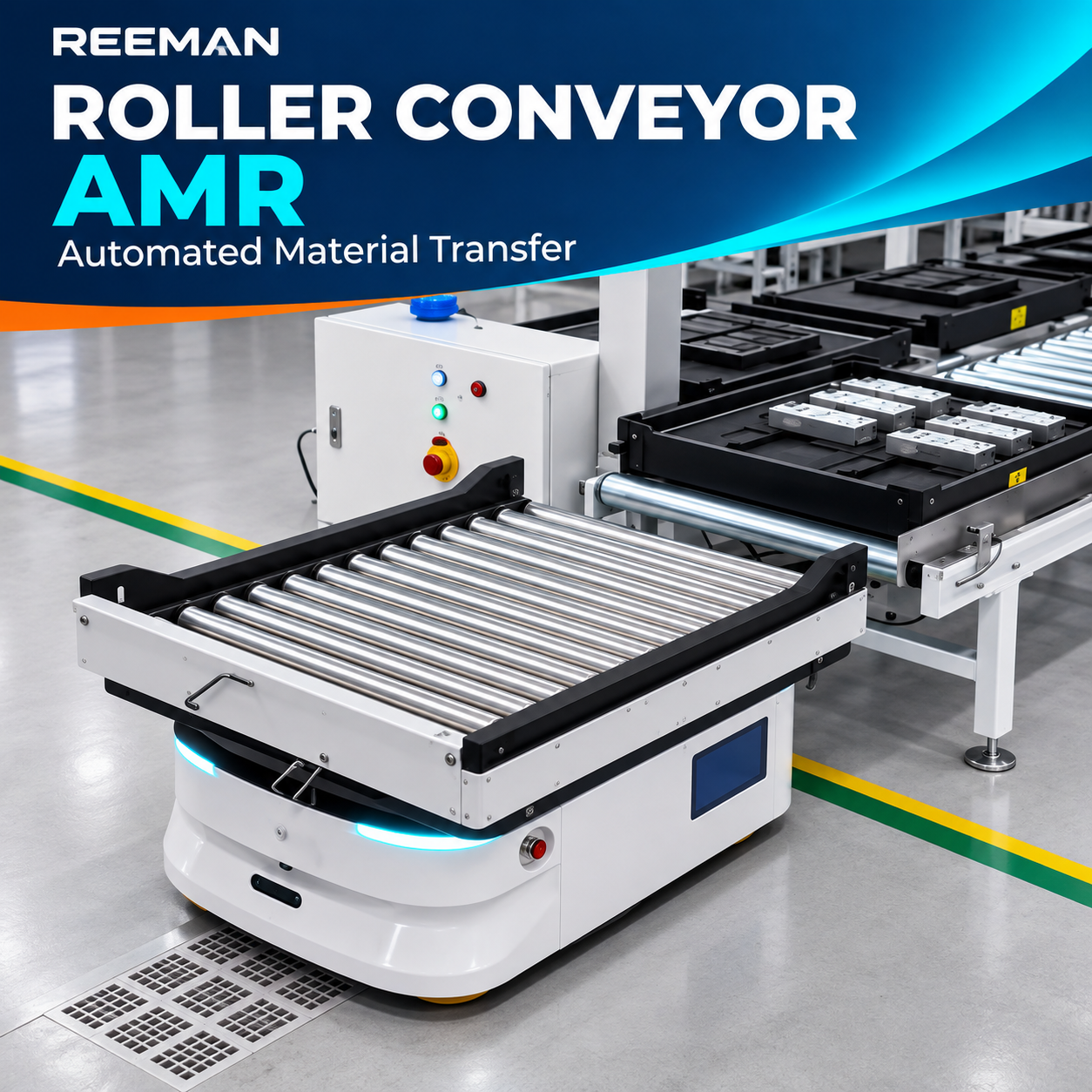
Roller Conveyor AMR Robot with SDK and API for Custom Development and System Integration
A configurable material-flow platform for integrators that need open software access, conveyor handoff and secondary development for cleaning, delivery or intralogistics use cases.
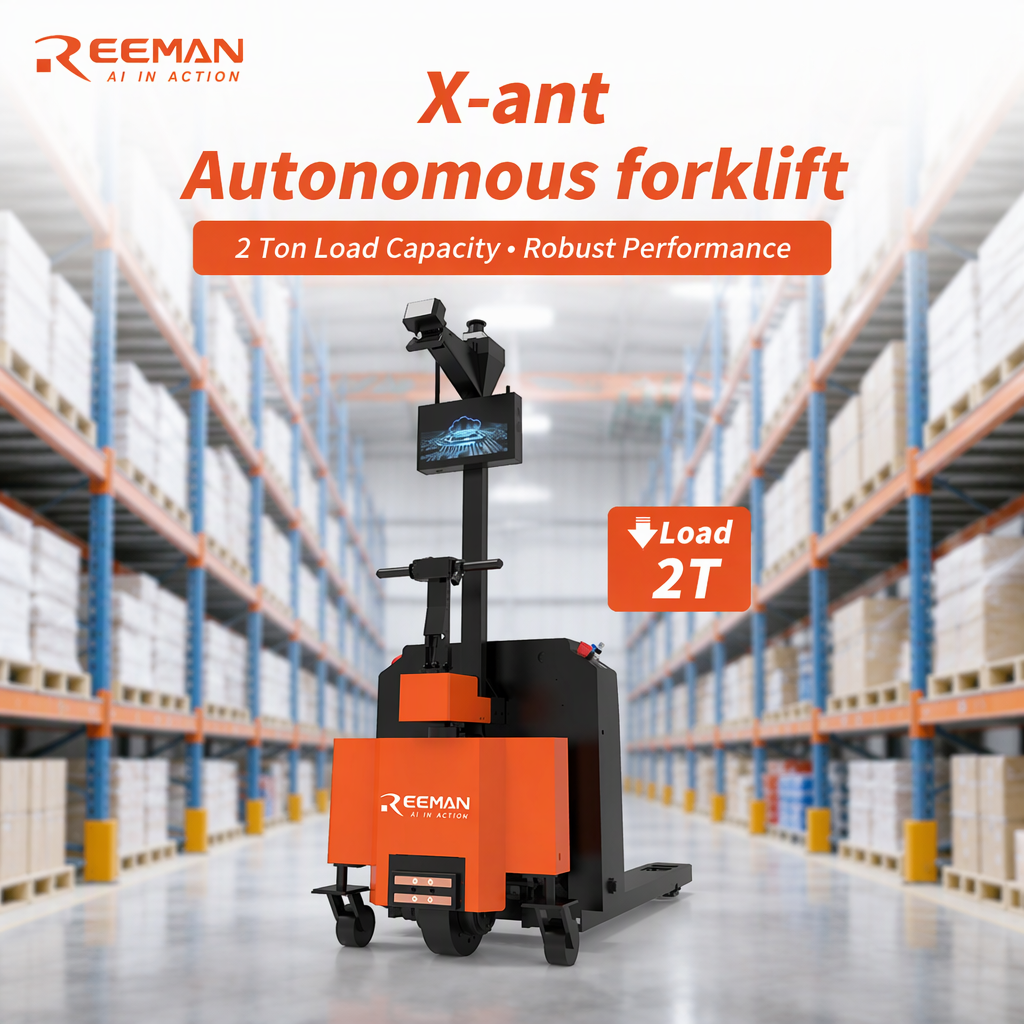
2 Ton Autonomous 4WD AGV Forklift Laser SLAM Navigation Multi-Line LiDAR 10mm Position Accuracy Warehouse Handling
Heavy-duty autonomous handling with 10 mm positioning accuracy, multi-line LiDAR and 4WD mobility. Useful for factories and warehouses that also service large commercial cleaning fleets.
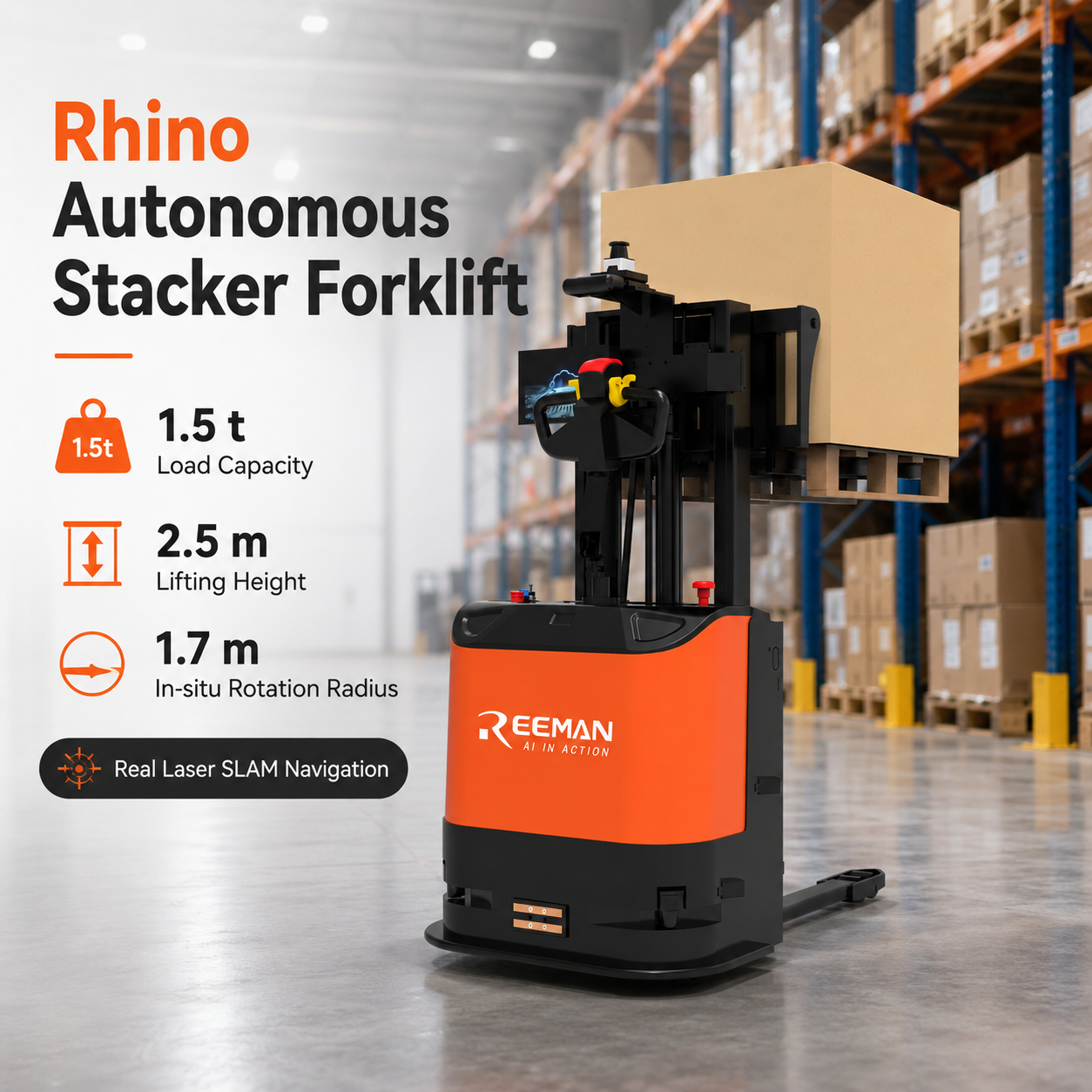
Laser SLAM Autonomous Stacker Forklift 1500 kg Load AGV Pallet Handling Robot Laser Obstacle Avoidance Warehouse
A 1,500 kg autonomous stacker with laser obstacle avoidance for pallet handling, low-rack storage and repetitive warehouse transfers.
Reeman Autonomous Mobile Robot Slam Navigation PLC Core Components Warehouse Logistics
A robust SLAM AMR platform with PLC core components for warehouse logistics, line-side transfer and OEM customization.

2 Ton Autonomous 4WD AGV Forklift Laser SLAM Navigation Multi-Line LiDAR 10mm Position Accuracy 6-8H Warehouse Handling
A 6–8 hour operating configuration designed for multi-shift warehouse handling, with autonomous pallet movement and stable positioning.
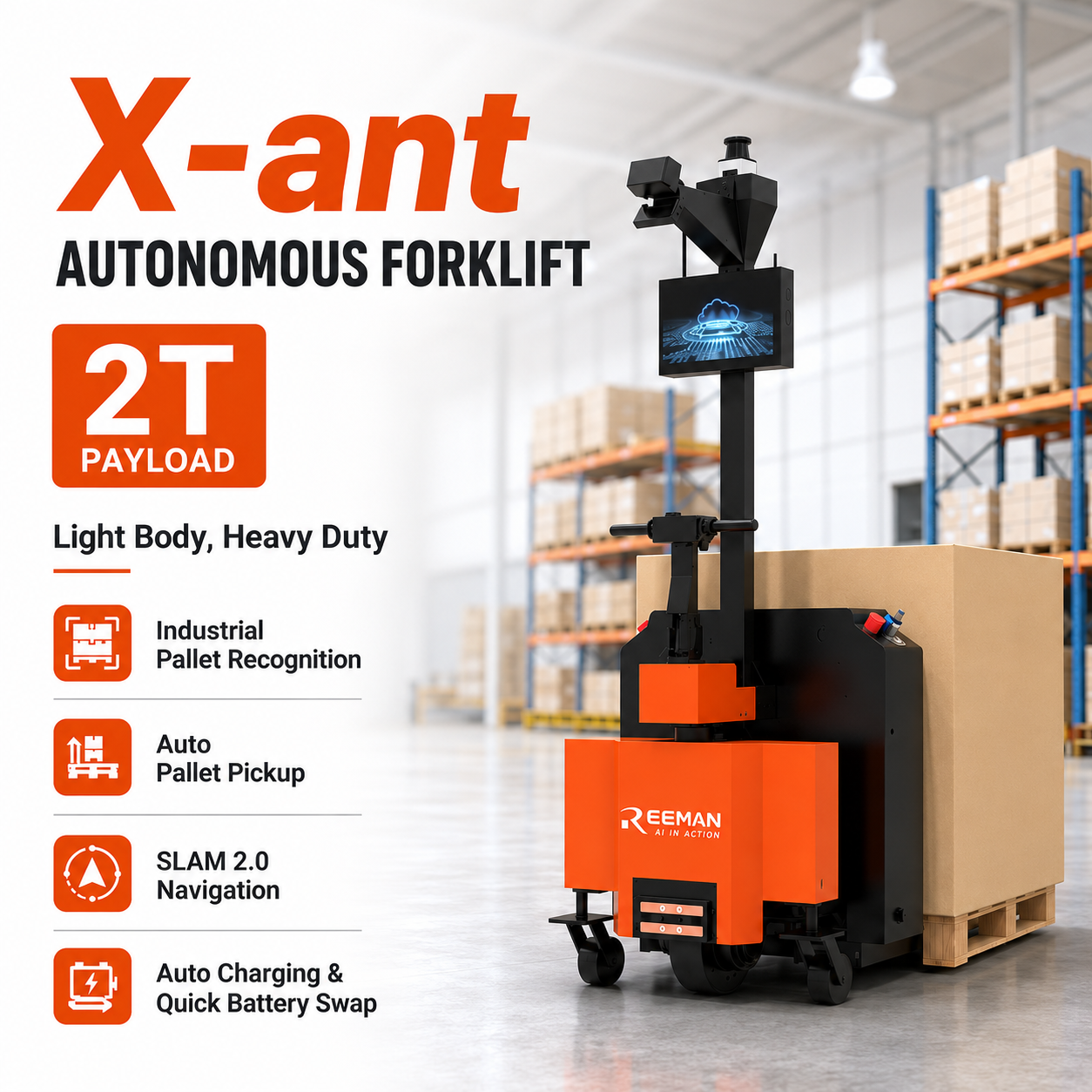
2 Ton Autonomous 4WD AGV Forklift Laser SLAM Navigation Multi-Line LiDAR 3D Obstacle Avoidance Warehouse Handling
A 3D obstacle-avoidance variant for mixed-traffic environments where autonomous equipment must operate safely around people and changing obstacles.
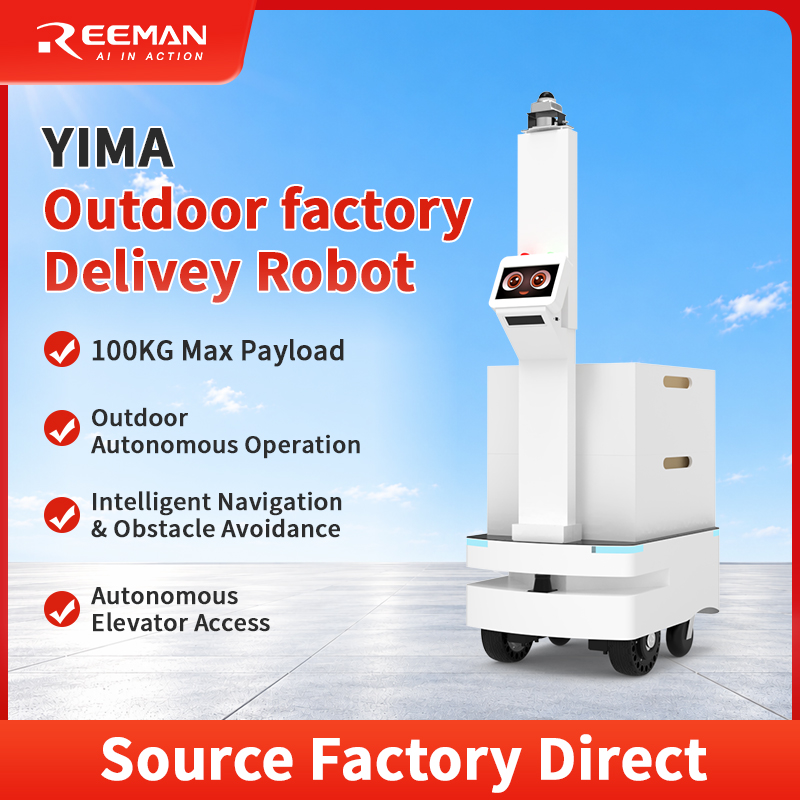
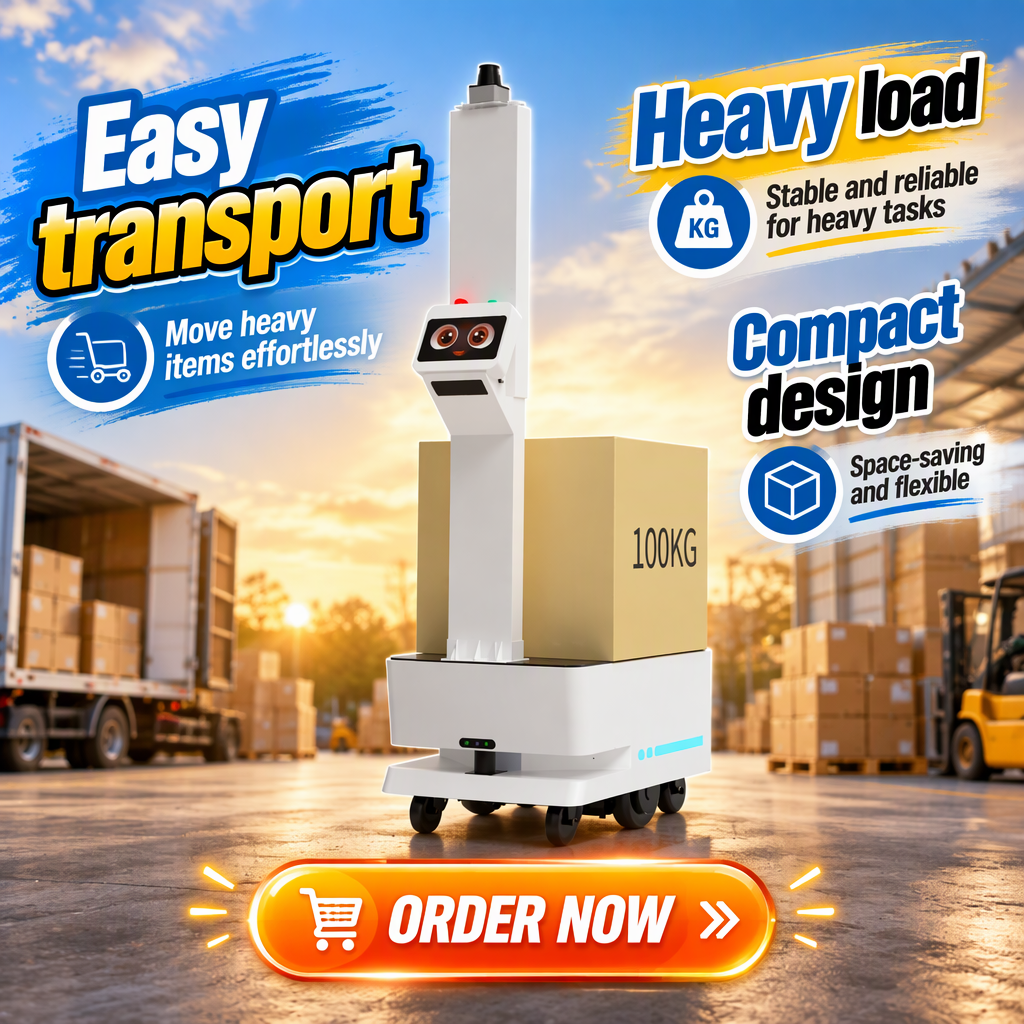
REEMAN Outdoor Delivery Robot 100kg Payload Autonomous Navigation Obstacle Avoidance Elevator Access Warehouse Logistics
An outdoor-capable service platform with 100 kg payload, autonomous navigation and elevator access for campus, hotel and facility logistics.

REEMAN Autonomous Electric Forklift 1T Payload 48V 30Ah LiFePO4 Battery Indoor Material Handling AGV
A compact indoor autonomous forklift with LiFePO4 battery architecture for repetitive material handling and integration-friendly operations.
Factory Evidence Behind Elvorn’s OEM/ODM Cleaning Robot Capability
Commercial cleaning robot buyers need more than a catalogue. They need a manufacturing partner with traceable quality systems, proven autonomous navigation, modular hardware and export experience.
What OEM/ODM Commercial Cleaning Robot Wholesalers Must Verify Before Shortlisting a Factory
The commercial cleaning robot market is moving from isolated pilot projects to repeatable procurement programmes. Distributors, facility-management groups and private-label brands are no longer buying a single autonomous scrubber; they are building a portfolio of floor scrubbers, sweepers, disinfection robots, delivery robots and cleaning-focused AMR platforms that must be supported across multiple sites, languages and service contracts.
This changes supplier due diligence. A credible OEM/ODM factory must demonstrate four capabilities at the same time: autonomous navigation that works without magnetic tape or floor reflectors, a modular hardware platform that can accept different cleaning heads and top modules, compliance documentation for target markets, and after-sales support that protects the wholesaler’s brand when a robot is operating in a customer’s building.
Shenzhen Elvorn Intelligent Equipment Co., Ltd. fits this requirement through an in-house stack covering laser SLAM navigation, motion control, fleet scheduling, chassis design and final assembly. Founded in 2015, the company operates two production bases in Shenzhen and Ningbo, with 5,200㎡ of floorspace, a 200+ team and 39 patents. For cleaning-robot OEM/ODM buyers, the practical value is faster customization, clearer engineering answers and a more reliable route from pilot to volume order.
- Verified custom manufacturer
- Two production bases
- CE, FCC and PSE models
- OEM, ODM and buyer label
Buyer takeaway
Price per unit is only one line in the total cost of ownership. Ask for navigation accuracy, battery cycle data, spare-part lead time, API documentation, safety functions and the factory’s ability to support private-label packaging.
Why Elvorn Is a Practical OEM/ODM Partner for Commercial Cleaning Robot Wholesalers
Cleaning robot distributors need a supplier that can support private-label products, field service and local market compliance without sacrificing engineering transparency.
Verified Manufacturing Base
Two production bases in Shenzhen and Ningbo, 5,200㎡ of total floorspace, on-site material inspection and supplier assessment procedures. SGS onsite verification supports buyer due diligence.
Full-Stack Laser SLAM
In-house navigation, motion control and fleet scheduling. Laser SLAM maps a site in hours and reduces dependence on magnetic tape, QR codes or reflectors during layout changes.
Modular Chassis & Payloads
Platforms ranging from compact AMRs to 2-ton autonomous forklifts share control architecture. Cleaning robot OEMs can adapt top modules, payload structures, branding and packaging.
Safety & Compliance Mindset
LiDAR, obstacle sensors, emergency stops and speed zoning are designed for mixed-traffic environments. Available model certifications include CE, FCC and PSE; the management system is ISO 9001 and ISO 14001 certified.
Open Integration Layer
SDK and API access supports secondary development for task dispatch, status feedback and integration with WMS, MES, ERP, elevator systems and customer dashboards.
Export-Ready Wholesale Support
English documentation, remote commissioning and spare-part supply for buyers in North America, Western Europe, Eastern Asia, Southeast Asia and the Middle East. FOB terms and T/T payment in USD or CNY.
Commercial Cleaning Robot Procurement Trends Buyers Will Score in 2026–2030
Across tenders and distributor conversations, the evaluation criteria are becoming more operational and less catalogue-driven. The weighted view below reflects what serious buyers typically test before scaling an order.
| Procurement question | Evidence to request | Weight | Why it matters for cleaning robots |
|---|---|---|---|
| Can the robot navigate real sites without floor modifications? | SLAM map accuracy, dynamic obstacle tests, lift and door integration records | High | Cleaning routes change with furniture, pallets, people and temporary closures. |
| What is the total cost per operating hour? | Battery cycle data, brush and squeegee life, water consumption, service intervals | High | Wholesalers need a defensible TCO model when reselling to facility managers. |
| Is customization repeatable? | Chassis architecture, top-module drawings, branding and packaging workflow | High | Private-label cleaning robots must fit local pricing, service and branding. |
| Can the supplier document compliance? | CE, FCC or PSE model certificates, ISO 9001 and ISO 14001, test records | High | Compliance gaps can delay customs clearance and site acceptance. |
| Will the robot integrate with building systems? | SDK, API, WMS/MES connectors, elevator and door control references | Medium–High | Automated cleaning is more valuable when it can operate beyond a single floor. |
| What happens after the warranty? | Spare-part list, dispatch lead time, remote diagnostics, training materials | High | The wholesaler owns the local customer relationship and the service reputation. |
The Future of Commercial Cleaning Robot Wholesale: Six Buy-Side Shifts
Buyers are rethinking the commercial cleaning robot not as a standalone machine, but as a managed fleet asset with measurable uptime, safety and integration obligations.
TCO and Robot-as-a-Service
Procurement teams will compare five-year operating cost, battery replacement, brush and squeegee consumption, software fees and spare-part logistics — not just the unit price. Wholesalers should request a factory-level TCO template earlier in the sales cycle.
API-First Integration
Open SDK and API access will become a standard question in RFQs. Cleaning robots must report status, receive tasks, hand off data and cooperate with elevators, doors, building-management platforms and fleet dashboards.
Safety Standardisation
LiDAR, obstacle sensors, emergency-stop design and speed zoning will be assessed with documented test evidence. Buyers will prefer suppliers that can explain the safety architecture clearly and support local market documentation.
Fleet Data and Remote Monitoring
Cleaning performance, route completion, uptime and consumable life will be reviewed through cloud dashboards. Distributors that can provide data-backed service reports will defend margins more effectively than catalogue-only sellers.
Modular Customization and Private Label
Wholesalers want differentiated products without paying for an entirely new development program. Modular chassis, interchangeable top modules, buyer-label branding and custom packaging reduce time-to-market while preserving identity.
Energy, Water and Noise Efficiency
Commercial sites care about more than cleaning quality. Quieter operation, efficient water use, LiFePO4 battery options and smart charging schedules are becoming part of the total value proposition for hotels, hospitals, malls and airports.
Product Development Trends Reshaping Autonomous Cleaning Platforms
For OEM/ODM buyers, these trends affect which platform to choose today and how long it can remain competitive after the first deployment.
3D LiDAR + Vision Fusion
Multi-sensor perception improves obstacle classification, low-object detection and navigation stability in busy commercial spaces. The goal is not only to avoid collisions, but to reduce false stops that hurt cleaning productivity.
Modular Cleaning Decks
One autonomous chassis may support scrubber, sweeper, dust-control, disinfection or delivery modules. This gives wholesalers a product family rather than a single model and reduces spare-part complexity.
Swappable Battery Architecture
LiFePO4 battery packs, opportunity charging and swappable designs improve uptime for multi-shift operations. Buyers should request charge-cycle data, expected capacity retention and service access requirements.
Semantic Mapping and Route Logic
Robots are moving from geometric maps to semantic maps that understand zones, entrances, elevators and high-traffic areas. This supports cleaner route planning and easier redeployment when a site layout changes.
Human-Centered Serviceability
Easy access to brushes, squeegees, filters and sensors matters in the field. A robot that is simple to maintain reduces distributor training time and improves end-customer satisfaction.
Fleet Orchestration and Digital Twin
Multi-robot scheduling, digital-twin simulation and remote troubleshooting allow distributors to support larger sites without adding proportional service headcount.
Match the OEM/ODM Platform to Your Route to Market
Different cleaning-robot wholesalers need different starting points. These three configurations help structure an initial inquiry.
Private-Label Distributor
Best for importers and regional distributors that want a branded commercial cleaning robot with predictable spare-part supply.
- SLAM chassis + scrubber or sweeper deck
- Custom color, logo, manual and packaging
- CE/FCC documentation for target markets
- Spare-part kit and remote training package
Facility-Service Group
Best for cleaning contractors operating in malls, airports, hospitals and office campuses with multi-site reporting needs.
- Fleet with cloud dashboard and route reporting
- Elevator and door integration option
- Battery strategy for multi-shift cleaning
- Service-level reporting for end clients
Robot Integrator / OEM Brand
Best for technology companies that want to build a differentiated cleaning robot on a proven autonomous platform.
- Open SDK and API access
- Custom top module and control interface
- Payload and safety-zone configuration
- Engineering review before quotation



Certifications, Quality Control and Manufacturing Transparency
For commercial cleaning robot OEM/ODM projects, factory evidence reduces commercial risk. Our factory has passed onsite verification by SGS Group, covering business licensing, production capability and quality-control procedures. Management systems are certified to ISO 9001 and ISO 14001, while individual robot models can carry CE, FCC or PSE marks depending on the target market.
Every unit is tested before shipment, and third-party assessment reports and transaction records can support buyer due diligence. For wholesalers, this is important because the product will sit inside a customer’s building under the wholesaler’s brand; the factory’s documentation and engineering discipline become part of the reseller’s risk profile.
OEM/ODM Project Workflow from Inquiry to Stable Operation
A clear process reduces engineering rework and keeps the commercial proposal aligned with the final robot configuration.
Requirement Review
Share floor plans, cleaning width, target productivity, floor type, water and power access, site traffic, elevator control and target-market certification requirements.
Solution & Custom Build
Engineers recommend the platform, cleaning deck, battery strategy, safety configuration, branding and packaging. OEM/ODM scope is documented before quotation.
Factory Test & QC
Function, navigation, obstacle response, charging and load tests are completed before shipment. Test records and export documentation are prepared.
Deploy & Support
Remote mapping, operator training, spare-part recommendations and after-sales support help the distributor protect its installed base.
Wholesale Markets, Trade Terms and Export Support
Export terms: FOB · Payment: T/T in USD or CNY · Services: OEM, ODM, design service and buyer label.
North America
Autonomous cleaning platforms and material-handling robots for distributors, 3PLs and facility-service companies.
Western Europe
CE-marked robots for manufacturing, retail, hospitality and commercial facility cleaning operations.
East & Southeast Asia
Delivery, cleaning and chassis platforms for fast-growing service sectors, malls, airports and logistics facilities.
Middle East
Commercial cleaning, disinfection and guidance robots for public venues, hospitality and large facilities.
Commercial Cleaning Robot OEM/ODM FAQ
Practical answers for wholesale buyers, distributors and integrators preparing a sourcing brief.
1. What is the difference between OEM and ODM for commercial cleaning robots?
OEM usually means the buyer provides stronger brand, specification or design direction while the factory manufactures to that requirement. ODM means the factory offers a mature platform and adapts it for the buyer’s market, including branding, packaging, interface and selected hardware changes. In practice, most cleaning robot projects combine both models.
2. Are the autonomous platforms on this page suitable for cleaning robot development?
Yes. The shared SLAM navigation, safety architecture, chassis design and open integration layer can support cleaning, sweeping, disinfection, delivery and custom service-robot top modules. The final configuration depends on the cleaning width, water system, brush or squeegee design and required runtime.
3. Which certifications can Elvorn provide?
Depending on the model and target market, robots can be supplied with CE, FCC or PSE marks. The management system is ISO 9001 and ISO 14001 certified, and the factory has been verified onsite by SGS Group. Certification requirements should be confirmed during the inquiry stage.
4. What is the typical MOQ and lead time?
MOQ and lead time depend on the platform, customization level, battery option and certification scope. A standard configuration discussion can usually start with a small pilot order, while private-label packaging and hardware changes require a project-specific schedule. Final lead time should be confirmed in the quotation.
5. Can you customize branding, packaging and manuals?
Yes. As a verified custom manufacturer, Elvorn supports OEM service, design service and buyer-label options. Typical customization includes logo, color, product label, packaging, English manual content and selected top-module or software interface requirements.
6. How does a cleaning robot integrate with elevators, doors and building systems?
Integration is handled through the robot’s SDK/API and project-specific interfaces. For a reliable quote, provide the elevator brand and control protocol, door-control method, network architecture, WMS/BMS requirements and expected task flow. Engineering review is recommended before committing to a site deployment.
7. What after-sales support is available for overseas wholesalers?
Support can include English documentation, remote commissioning, operator training materials, troubleshooting guidance and spare-part supply. Distributors should discuss local service responsibilities, warranty terms and response-time expectations before finalizing the order.
8. What trade terms and payment methods do you accept?
Elvorn ships worldwide on FOB terms and accepts T/T payment in USD or CNY. Main export markets include North America, Western Europe, Eastern Asia, Southeast Asia and the Middle East. Other terms can be discussed based on order size and destination.
9. How do you control quality before shipment?
Quality control covers incoming material inspection, assembly checks, navigation and obstacle-response testing, charging and battery checks, and final functional testing. The factory has passed SGS onsite verification, and test records can be discussed as part of the buyer’s inspection plan.
10. What information should I provide to receive an accurate quotation?
Provide the target market, cleaning area and floor type, required cleaning width, daily operating hours, route map or site description, obstacle environment, elevator or door integration needs, branding requirements, estimated annual volume and certification requirements. This allows engineering and sales to recommend a realistic platform and configuration.
Request a Commercial Cleaning Robot Feasibility Review
Send your route map, floor type, cleaning width, target market, annual volume and branding requirements. Our engineering team will review the right SLAM platform, customization scope, certification path and spare-part plan before quotation.