8 Proven Robot Platforms for OEM/ODM and Wholesale Programs
These eight models cover autonomous stackers, heavy-load AMRs, 300 kg to 2,000 kg-class forklift AGVs, and pallet transport robots. Product URLs are preserved exactly so technical buyers can verify dimensions, navigation configuration, and customization options before opening a supplier discussion.
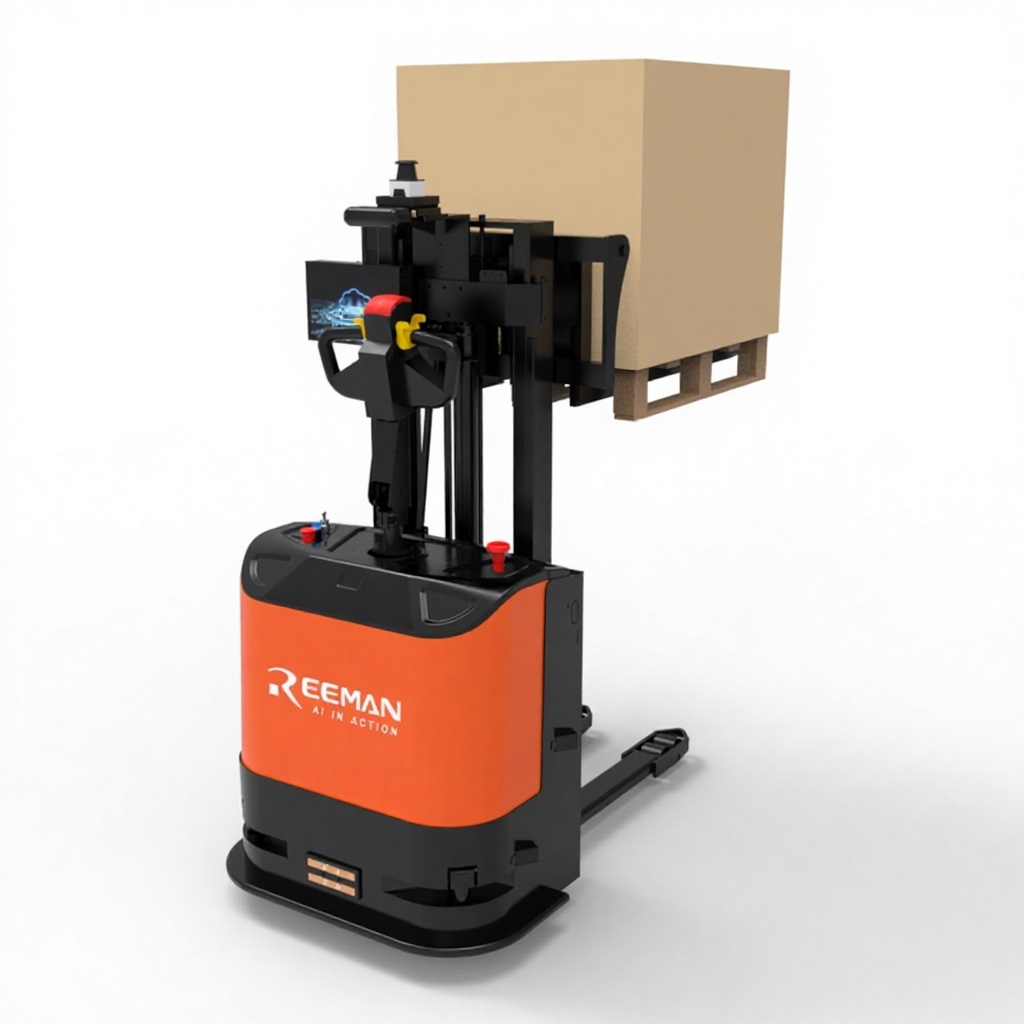
REEMAN Rhino RBOT30F Autonomous Stacker Forklift 3D Vision Obstacle Avoidance Warehouse AGV Robot
A 3D-vision autonomous stacker for warehouse and production environments where pallet handling must coexist with pedestrian and forklift traffic. Suitable for buyers building a compact autonomous stacker line under their own brand.
- 3D vision obstacle avoidance
- Warehouse AGV format
- Private-label potential
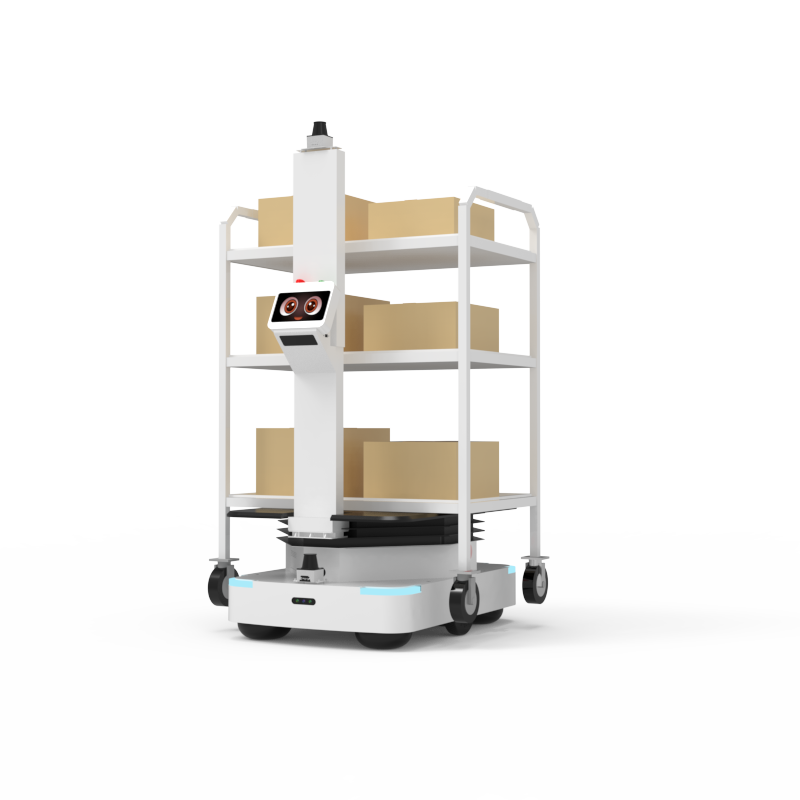
600KG Industrial Heavy Load AMR Robot Laser SLAM Auto Lifting Mobile Platform for in Plant Material Handling
A 600 kg heavy-load AMR with laser SLAM and an auto-lifting platform for in-plant material handling. Aimed at replacing fixed routes and manual cart moves with flexible, map-based transport.
- 600 kg payload class
- Laser SLAM navigation
- Auto lifting platform
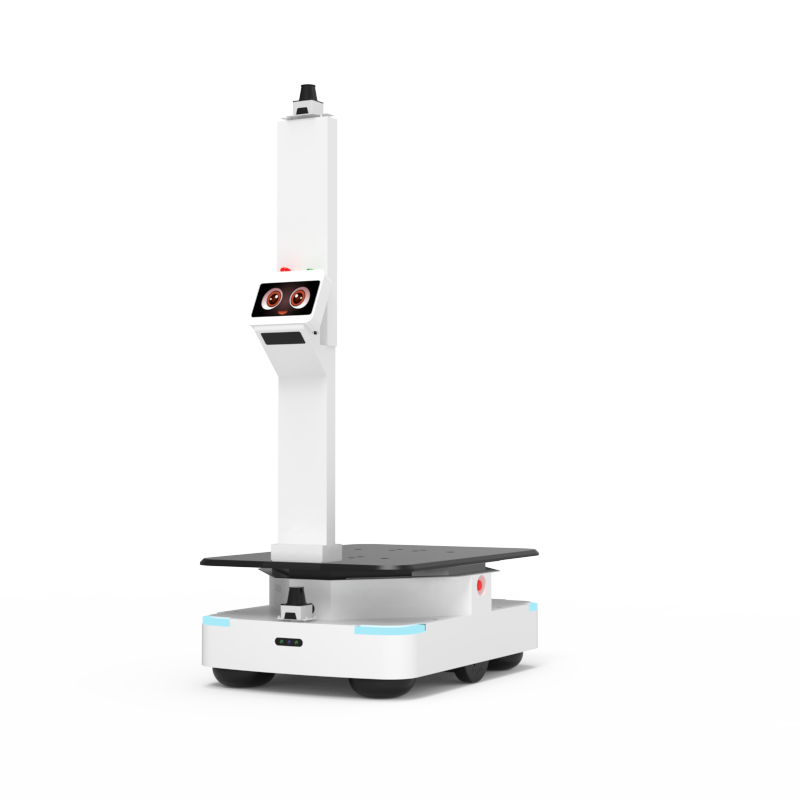
600kg Payload Laser Navigation AMR Robot Autonomous Lifting Warehouse Transfer Equipment
A 600 kg laser-navigation AMR for autonomous lifting and warehouse transfer. Designed for repeatable pallet and container movement across receiving, storage, and line-side zones.
- 600 kg payload
- Autonomous lifting
- Warehouse transfer
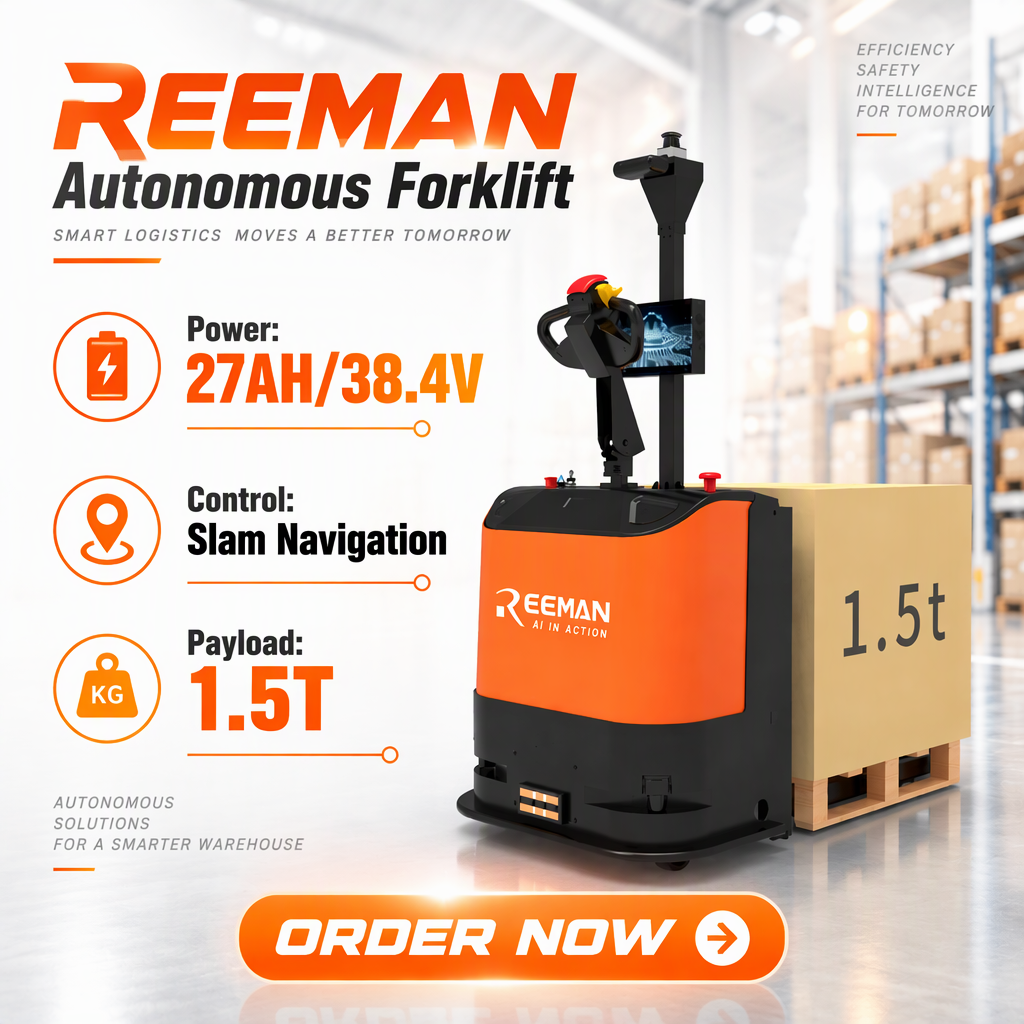
Reeman 1.5 Ton Autonomous Forklift AGV SLAM Navigation 3D Obstacle Avoidance Bidirectional Driving Indoor Warehouse
A 1.5-ton autonomous forklift AGV with SLAM navigation, 3D obstacle avoidance, and bidirectional driving. Suits indoor warehouse projects that need a familiar forklift format with driverless operation.
- 1.5-ton load class
- SLAM + 3D avoidance
- Bidirectional driving
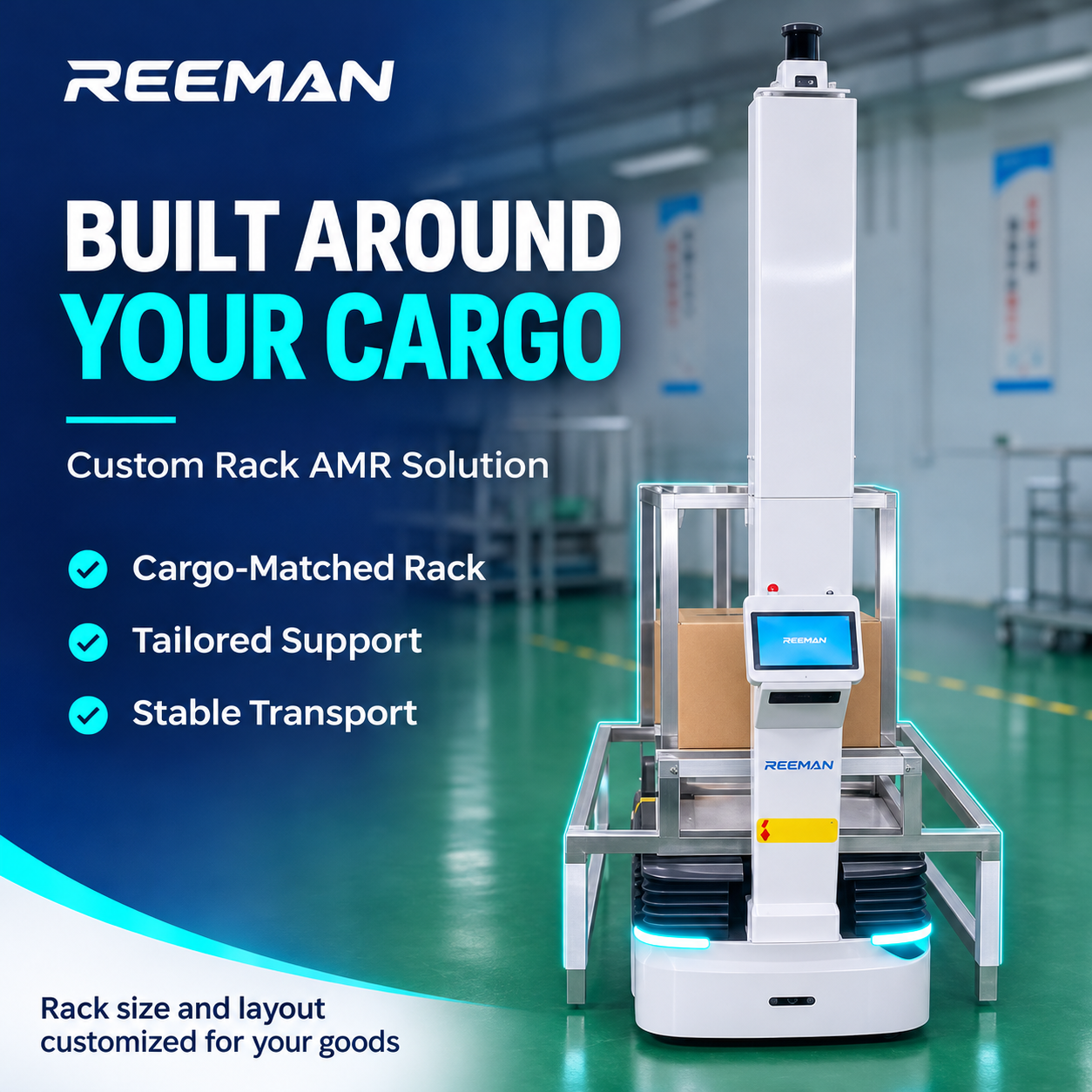
Dual Laser AMR 300KG AGV Lifting Mobile Robot with Slam LiDAR Navigation for Manufacturing Plants
A dual-laser 300 kg AMR with SLAM LiDAR navigation for manufacturing plants. The dual-laser configuration is useful in dynamic production areas where reliability and obstacle detection are critical.
- Dual laser configuration
- 300 kg lifting platform
- Manufacturing plant use
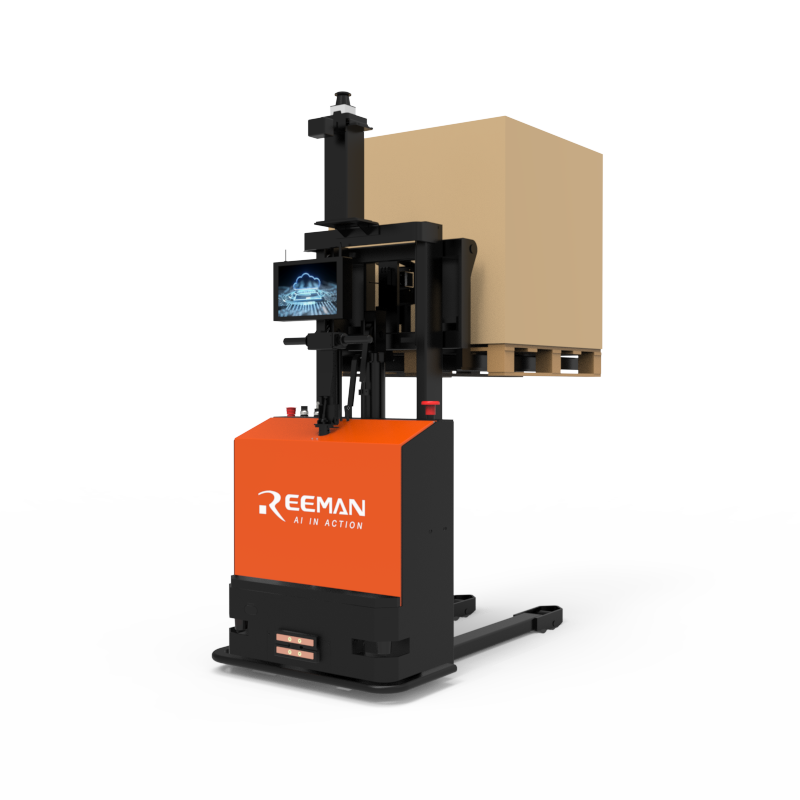
1000 kg Laser SLAM Forklift AGV Unmanned Pallet Stacker Single Line Lidar Obstacle Avoidance Factory Logistics
A 1,000 kg laser SLAM forklift AGV configured as an unmanned pallet stacker. Single-line lidar obstacle avoidance and factory-logistics positioning make it a practical choice for pallet stacking and movement.
- 1,000 kg load class
- Laser SLAM navigation
- Single-line lidar avoidance
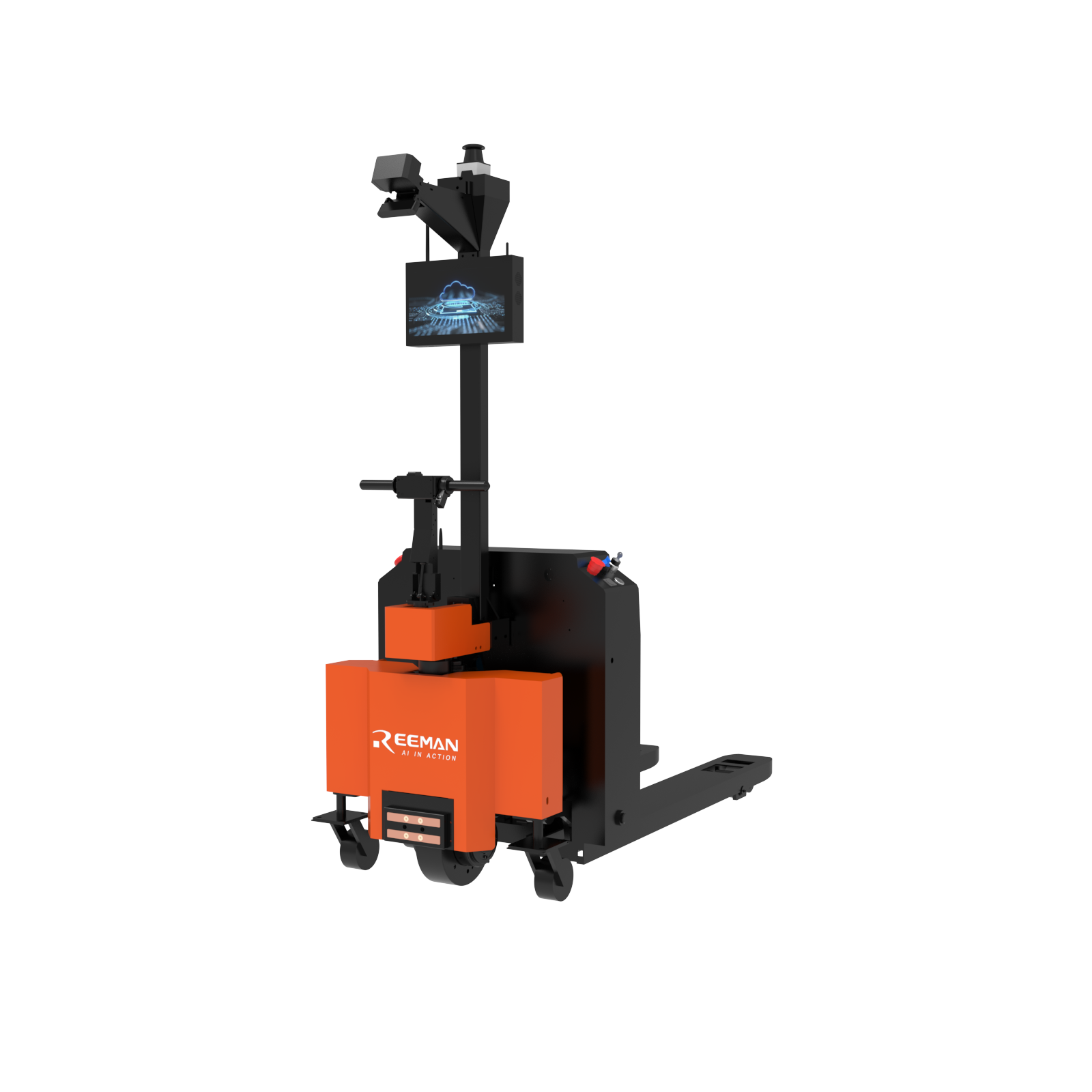
REEMAN X-ant JBOT20F 2 Ton Autonomous Forklift AGV Laser SLAM Pallet Handling Robot for Warehouse Logistics
A 2-ton autonomous forklift AGV with laser SLAM for warehouse logistics and pallet handling. Positioned for wholesale buyers who need a higher payload platform for distribution centers and 3PL operations.
- 2-ton load class
- Laser SLAM pallet handling
- Warehouse logistics
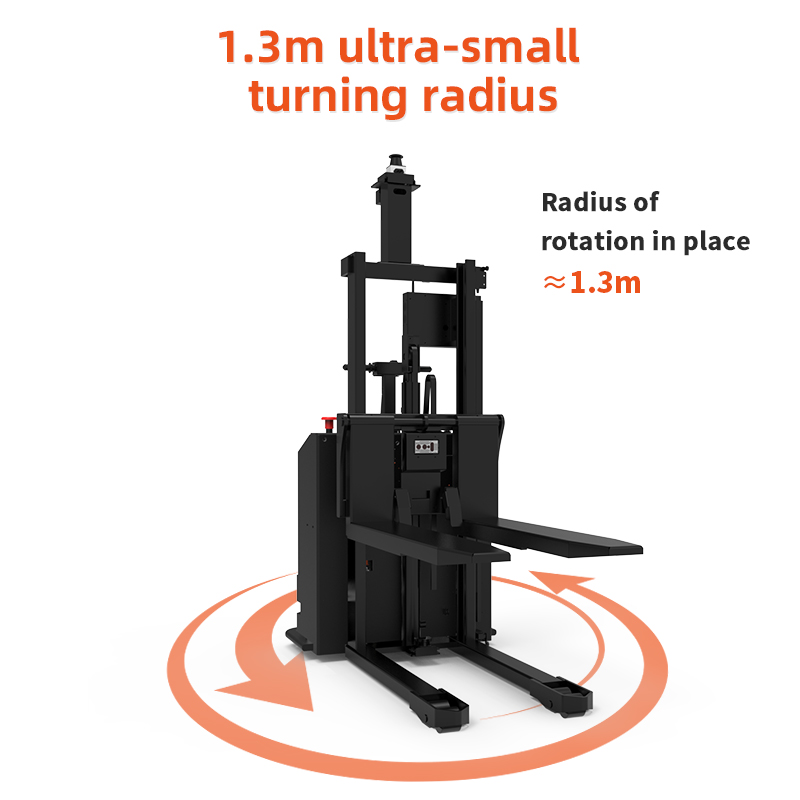
1000kg Forklift AGV Laser SLAM Navigation Pallet Transport Robot 1.3m Turning Radius Auto Charging for Factory Logistics
A 1,000 kg forklift AGV with laser SLAM navigation, a 1.3 m turning radius, and auto charging for factory logistics. Its compact turning capability supports retrofits where aisle space is limited.
- 1,000 kg transport
- 1.3 m turning radius
- Auto charging
Need a mixed-fleet quotation or private-label review? Send your load, aisle, throughput, and branding requirements. Our engineers will recommend the right platform and outline customization scope.
Send an InquiryManufacturing facts from Shenzhen Elvorn Intelligent Equipment Co., Ltd.: founded 2015; 5,200 ㎡ total floorspace; 200+ team members; 39 patents; ISO 9001 and ISO 14001 management systems; SGS onsite verification.

What OEM/ODM Wholesale Buyers Should Verify Before Choosing a Promotional Robot Supplier
In this guide, “promotional robot” refers to a robot platform that a distributor or private-label brand promotes and sells under its own catalog. It is not limited to advertising robots. The program can include autonomous forklifts, industrial AMRs, lifting platforms, and open robot chassis that are configured, branded, and supported for resale.
Elvorn was founded in 2015 and operates two production bases in Shenzhen and Ningbo. The company reports 5,200 ㎡ of total floorspace, more than 200 team members, and 39 patents. For OEM/ODM buyers, those numbers matter only when they translate into engineering control. Elvorn’s in-house stack covers laser SLAM navigation, motion control, fleet scheduling, and robot hardware. That means customization requests do not bounce between unrelated suppliers, and integration questions are answered by the team that owns the navigation and control layers.
Wholesale programs also need documentation. Elvorn’s management system is certified to ISO 9001 and ISO 14001. Depending on the model and target market, robots can be supplied with CE, FCC, or PSE marks. The factory has been verified onsite by SGS Group, covering business licensing, production capability, and quality control. For distributors, this reduces the compliance work required for every new end customer and makes the supplier easier to defend in a technical tender.
- Verified custom manufacturer
- Open SDK and API support
- OEM/ODM buyer-label options
- CE, FCC, or PSE model options
- SGS onsite factory verification
- FOB, T/T, USD or CNY trade support
Enterprise Advantages That Reduce Wholesale Program Risk
Distributors and integrators need more than a product photo. They need a supplier that can prove engineering depth, customization capability, compliance evidence, and export support before the first purchase order is issued.
Full-Stack SLAM R&D
Laser SLAM, 3D vision, motion control, and fleet scheduling are developed in-house. Robots map without magnetic tape, QR codes, or floor reflectors, which reduces site modification cost.
OEM, ODM & Buyer Label
Custom top modules, payload structures, colors, labels, packaging, and interface requirements can be reviewed for private-label programs and distributor catalogs.
Open SDK & API Integration
AMRs and robot chassis provide an open SDK and API for secondary development. Integrators can connect task dispatch and status feedback to WMS, MES, ERP, elevators, doors, and dashboards.
SGS-Verified Production
Two production bases in Shenzhen and Ningbo support assembly, testing, and export preparation. The factory has been verified onsite by SGS Group for production capability and quality control.
Safety & Compliance Evidence
Lidar, obstacle sensors, emergency stops, and speed zoning are part of the platform design. Management systems are certified to ISO 9001 and ISO 14001; models can carry CE, FCC, or PSE marks.
Export-Ready Support
English documentation, remote commissioning, spare-part planning, and repeat-order support help distributors serve North America, Western Europe, Asia, and the Middle East.
Procurement Trends Reshaping Promotional Robot Wholesale (2025–2030)
Robot procurement is moving from a one-off equipment purchase toward a repeatable product program. Distributors want a catalog they can localize; integrators want APIs and spare parts; end users want safety evidence and uptime. The following shifts are shaping supplier selection.
Total Cost of Ownership Replaces Sticker Price
Buyers now score energy use, charging strategy, spare-part availability, remote support, and expected service life. A lower purchase price can lose to a platform with documented lifecycle costs.
Interoperability Becomes Non-Negotiable
Warehouse and factory software teams ask for open SDKs, APIs, and fleet-level task dispatch. Standards such as VDA 5050-style interoperability are increasingly part of the RFQ conversation.
Compliance Is a Procurement Gate
CE, FCC, PSE, ISO 9001, ISO 14001, and third-party factory verification are being requested before technical review. Suppliers without documentation are often removed early.
Private-Label Batches Get Smaller and Faster
Distributors want branded robots, custom top modules, and market-specific packaging without waiting for a full new platform. Modular chassis design makes smaller batch programs viable.
Illustrative buyer-weighting scorecard for OEM/ODM robot RFQs. It is a qualitative procurement planning tool, not a statistically projectable survey.
Product Development Trends Buyers Will See in the Next Robot Generation
Robot hardware is converging around a smaller number of proven platforms, while software and sensor packages differentiate the product. The next generation of promotional robots will be evaluated less on raw payload alone and more on how safely and quickly they integrate into existing operations.
Multi-Sensor Fusion
Laser SLAM remains the base layer, but 3D vision, depth cameras, and additional lidar are being combined to handle pallets, overhangs, glass, and dynamic obstacles.
Fleet Orchestration
Single-robot demonstrations are giving way to mixed fleets. Buyers want one scheduling layer for forklifts, AMRs, elevators, doors, and charging stations.
Modular Payload Architecture
A common chassis with swappable top modules reduces engineering cost. One base platform can become a lifting AMR, a pallet truck, a tugger, or a mobile workstation.
Safety by Design
Speed zoning, personnel detection, emergency-stop architecture, and obstacle avoidance are designed into the platform rather than added as an afterthought.
Energy and Charging Strategy
Opportunity charging, battery health monitoring, and route optimization are becoming purchasing criteria because they directly affect fleet uptime.
AI-Assisted Service
Remote diagnostics, predictive maintenance, and assisted commissioning reduce the need for engineers to travel and improve first-time fix rates.
Technical Selection Matrix for Promotional Robot Wholesale Programs
Use this matrix for first-round scoping, then confirm the final configuration against aisle width, pallet type, lift height, throughput, charging strategy, and safety assessment.
| Model | Load / Payload Class | Navigation | Best-Fit Workflow |
|---|---|---|---|
| REEMAN Rhino RBOT30F | Stacker class | 3D vision + SLAM | Compact autonomous stacking and warehouse pallet handling |
| 600KG Heavy-Load AMR | 600 kg | Laser SLAM | In-plant material handling with auto lifting platform |
| 600kg Lifting AMR | 600 kg | Laser navigation | Warehouse transfer and autonomous lifting |
| Reeman 1.5 Ton Forklift AGV | 1,500 kg | SLAM + 3D avoidance | Indoor warehouse pallet moves and line feeding |
| Dual Laser 300KG AMR | 300 kg | Dual laser SLAM LiDAR | Dynamic manufacturing plants and production logistics |
| 1000 kg Pallet Stacker AGV | 1,000 kg | Laser SLAM + single-line lidar | Unmanned pallet stacking and factory logistics |
| REEMAN X-ant JBOT20F | 2,000 kg | Laser SLAM | Warehouse logistics, distribution centers, and 3PL pallet handling |
| 1000kg Pallet Transport AGV | 1,000 kg | Laser SLAM | Factory logistics with 1.3 m turning radius and auto charging |
Final configuration depends on site survey, safety review, integration scope, and battery/charging plan. Ask for a model-by-model comparison before issuing a tender.
From Inquiry to Repeatable Wholesale Program
A structured workflow keeps custom robot projects comparable, testable, and easier to repeat across multiple end customers.
Requirement Review
Share layout drawings, aisle width, pallet type, load weight, throughput target, charging location, and software environment.
Solution Design
Engineers recommend model, fleet size, charging plan, integration scope, and safety configuration based on the application.
Customization & Branding
OEM/ODM scope can include top modules, payload structures, colors, labels, packaging, and interface requirements.
Factory Testing
Function, load, and navigation tests are performed before shipment. Test records can be prepared for buyer review.
Export & Commissioning
FOB shipment, T/T payment in USD or CNY, English documentation, and remote commissioning support keep deployment moving.
Repeat Supply & After-Sales
Spare-part planning, firmware support, and repeat-order production help a wholesale catalog stay stable after launch.
Lead time and MOQ depend on the platform and customization scope. Buyers should confirm the final bill of materials, test criteria, and spare-part list before placing a repeat order.
Audited Manufacturing and Export-Ready Compliance
Quality is not a logo on a brochure. It is the ability to trace materials, test robots before shipment, and provide market-specific compliance. Elvorn’s factory has been verified onsite by SGS Group. The management system is certified to ISO 9001 and ISO 14001, and individual robot models can carry CE, FCC, or PSE marks depending on configuration.
 SGS VerifiedOnsite factory assessment
 CE MarkingModel-dependent compliance
 FCCSelected configurations
 PSESelected configurations
Procurement FAQ for OEM/ODM Promotional Robot Buyers
These are the questions that usually decide whether a robot supplier moves from a shortlist to a sample order and a repeat wholesale program.
What does “promotional robot” mean in this OEM/ODM context?
What is the difference between an autonomous forklift and an industrial AMR?
Can Elvorn customize the robot, top module, branding, and packaging?
Can the robots integrate with our WMS, MES, ERP, or fleet system?
Which certifications and factory audit evidence are available?
What should we prepare for a first quotation?
What are the trade terms, payment currencies, and main export markets?
How does Elvorn support deployment and spare parts after delivery?
Build Your Next Private-Label Robot Program with Elvorn
Send your application, load, aisle width, target throughput, and branding requirements. Our engineers will recommend a platform, outline customization scope, and prepare a wholesale quotation. For distributors and integrators, we can also review private-label packaging and repeat-order planning.