8 Export-Ready Platforms for Hospital Delivery Robot Wholesalers
The term “hospital delivery robot” covers more than corridor service robots. Serious hospital procurement also includes pharmacy warehouse AGVs, sterile services pallet movers, linen and waste transport AMRs, food tray logistics, and modular cart carriers. The eight platforms below represent Elvorn’s export-ready hardware for the heavy-duty and high-throughput end of that hospital logistics ecosystem.
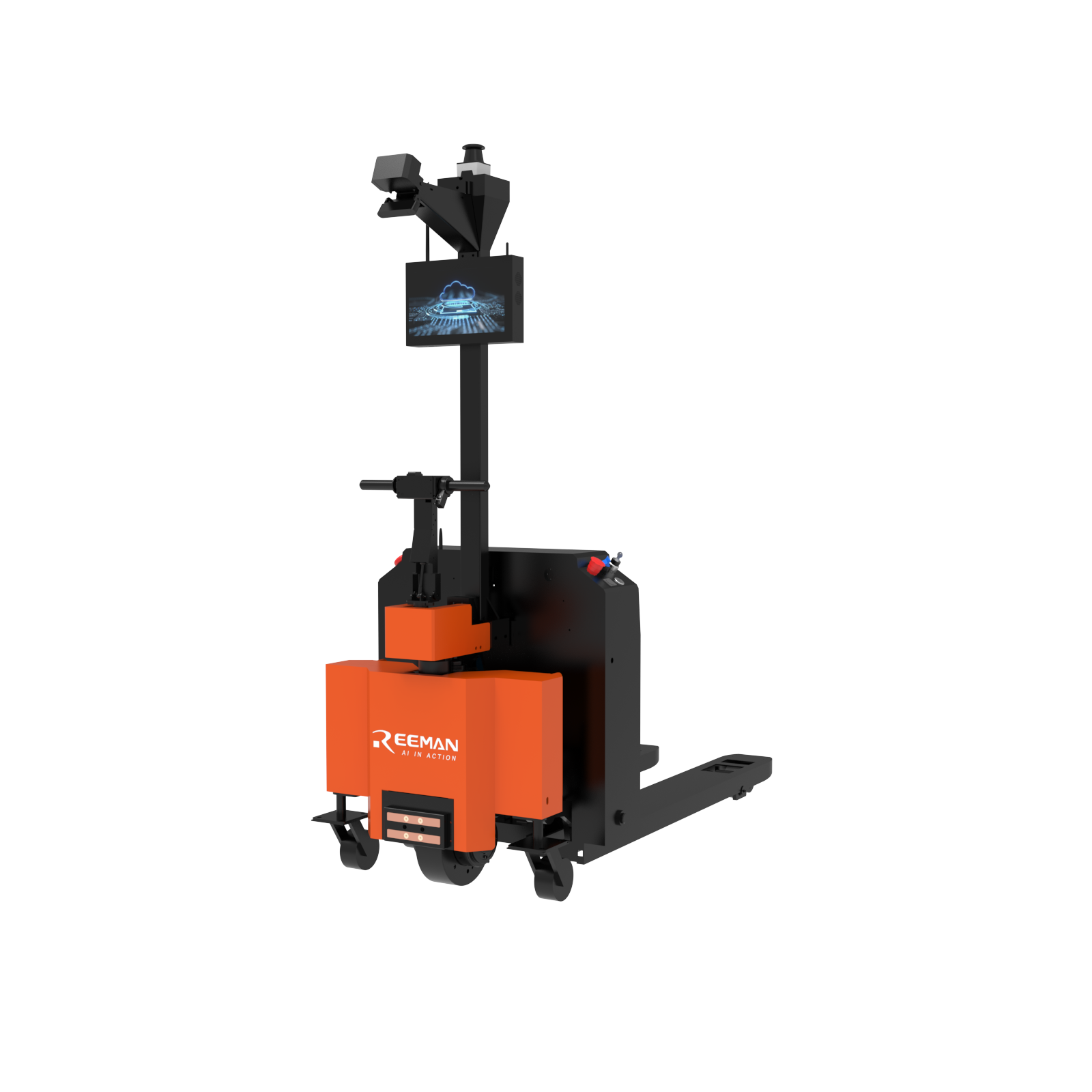
REEMAN X-ant JBOT20F 2 Ton Autonomous Forklift AGV Laser SLAM Pallet Handling Robot for Warehouse Logistics
2,000 kg class pallet transfer for central stores, medical supply warehouses and sterile services.
- 2-ton pallet handling
- Laser SLAM, no tape
- Fleet scheduling ready
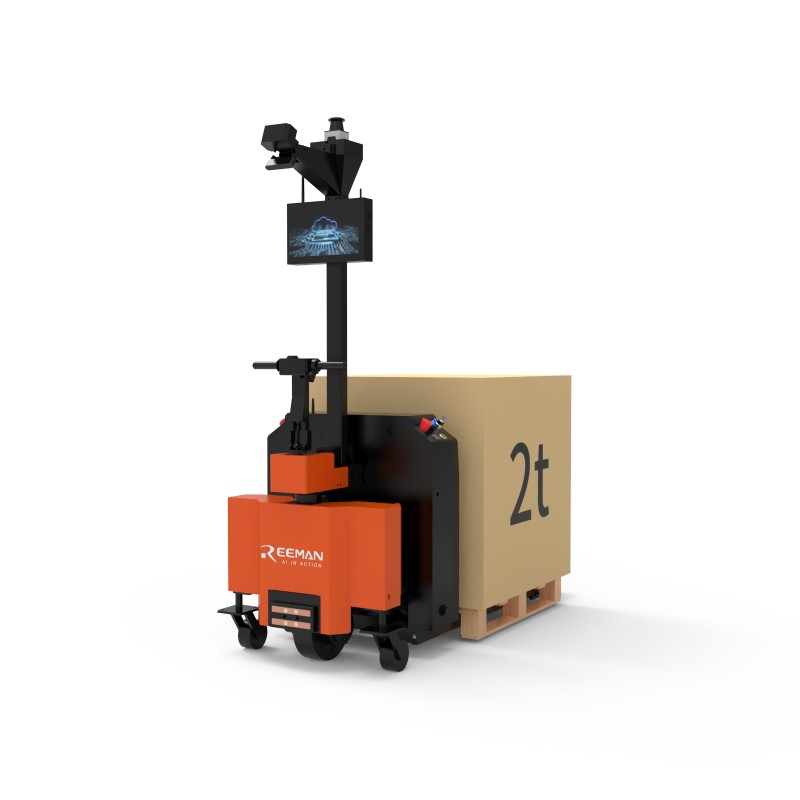
2 Ton Autonomous 4WD AGV Forklift Laser SLAM Navigation Multi-Line LiDAR 10mm Position Accuracy 6-8H Warehouse Handling
4WD and multi-line LiDAR for dock-to-store movements and high-accuracy put-away.
- 10 mm position accuracy
- Multi-line LiDAR
- 6–8 h warehouse handling
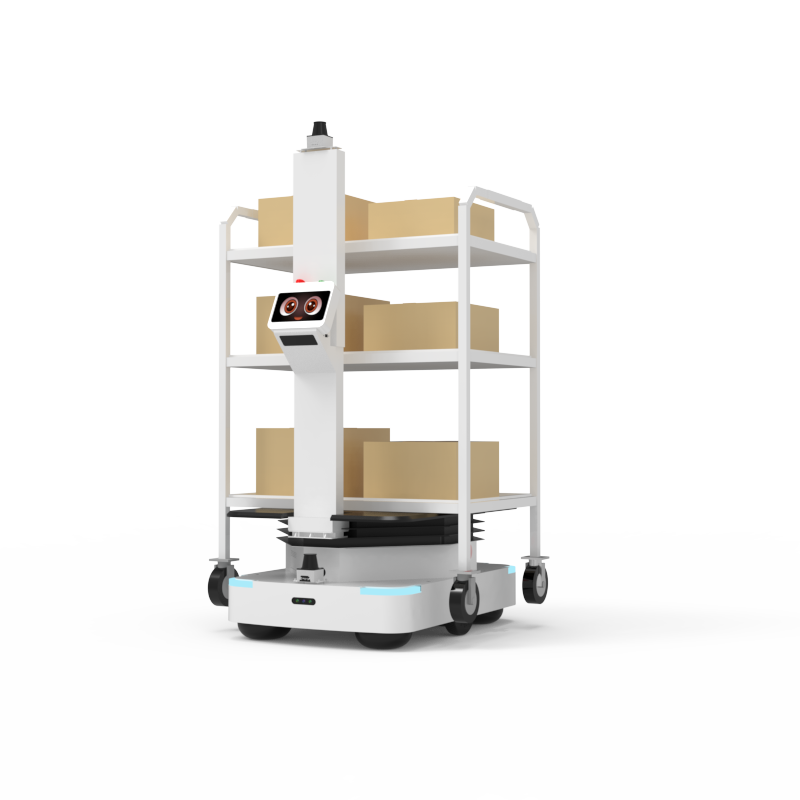
600KG Industrial Heavy Load AMR Robot Laser SLAM Auto Lifting Mobile Platform for in Plant Material Handling
600 kg lifting AMR for linen, CSSD trailers, supply carts and in-plant material handling.
- 600 kg rated load
- Auto lifting platform
- Laser SLAM navigation
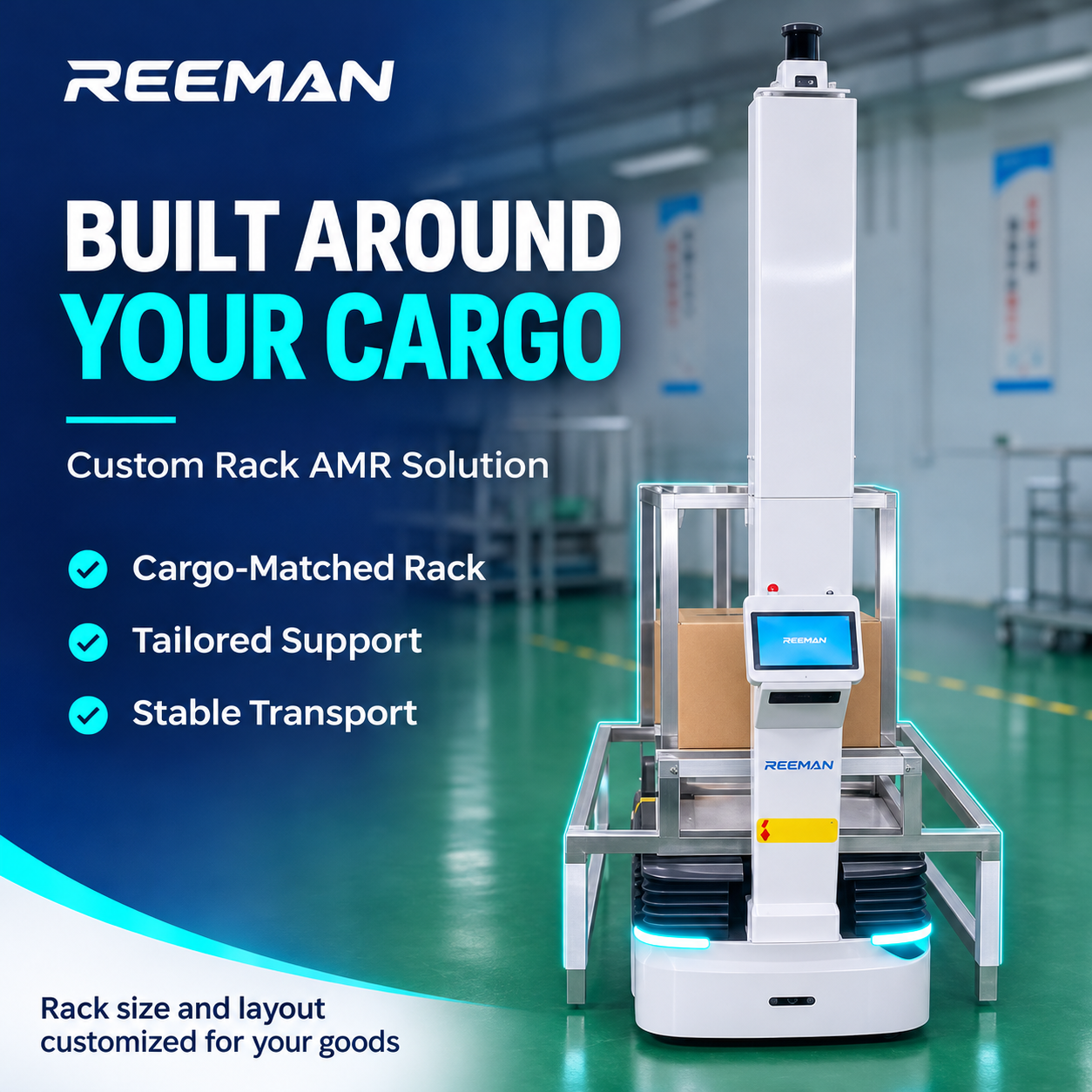
Dual Laser AMR 300KG AGV Lifting Mobile Robot with Slam LiDAR Navigation for Manufacturing Plants
Dual LiDAR configuration for dynamic corridors, narrow service passages and mixed pedestrian traffic.
- 300 kg payload
- Dual laser SLAM
- Lifting mobile platform
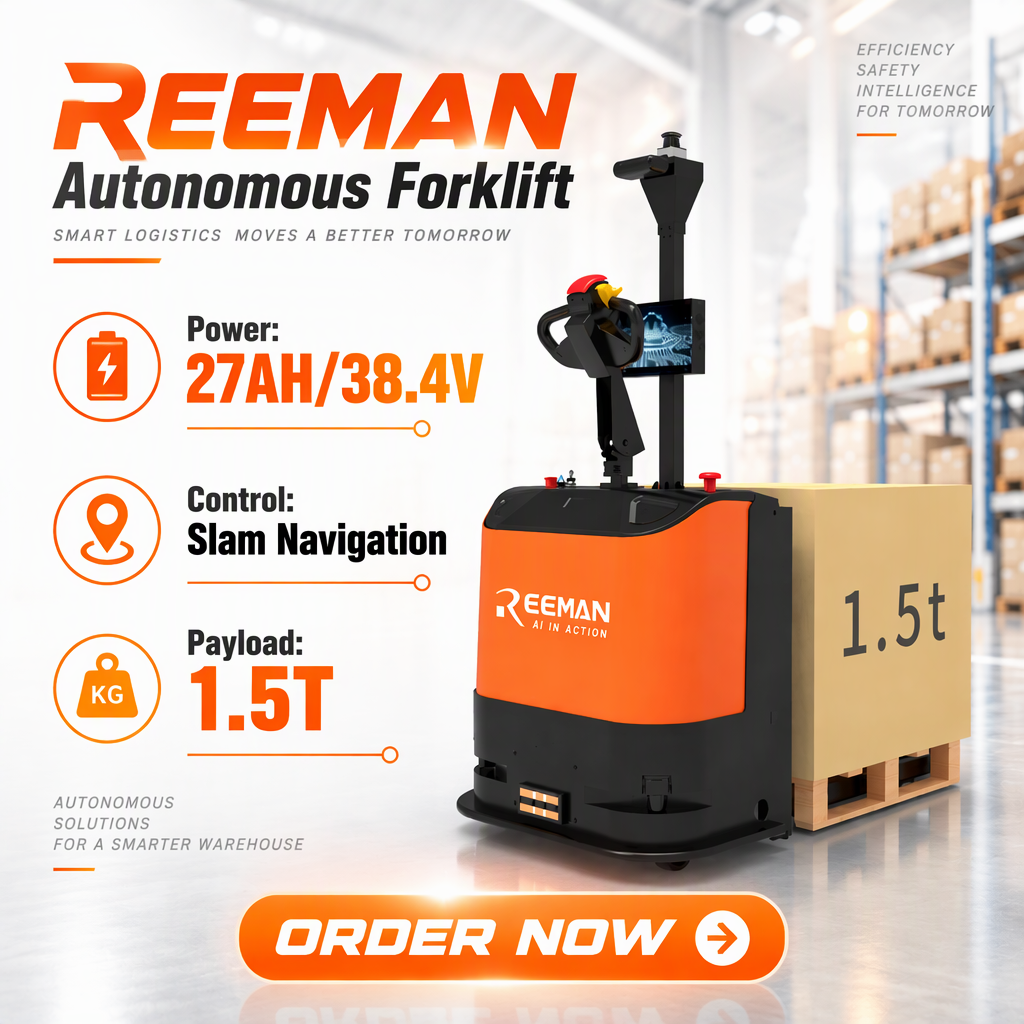
Reeman 1.5 Ton Autonomous Forklift AGV SLAM Navigation 3D Obstacle Avoidance Bidirectional Driving Indoor Warehouse
Bidirectional 1.5-ton platform for high-throughput pallet movement and indoor warehouse routes.
- 1.5-ton capacity
- 3D obstacle avoidance
- Bidirectional driving
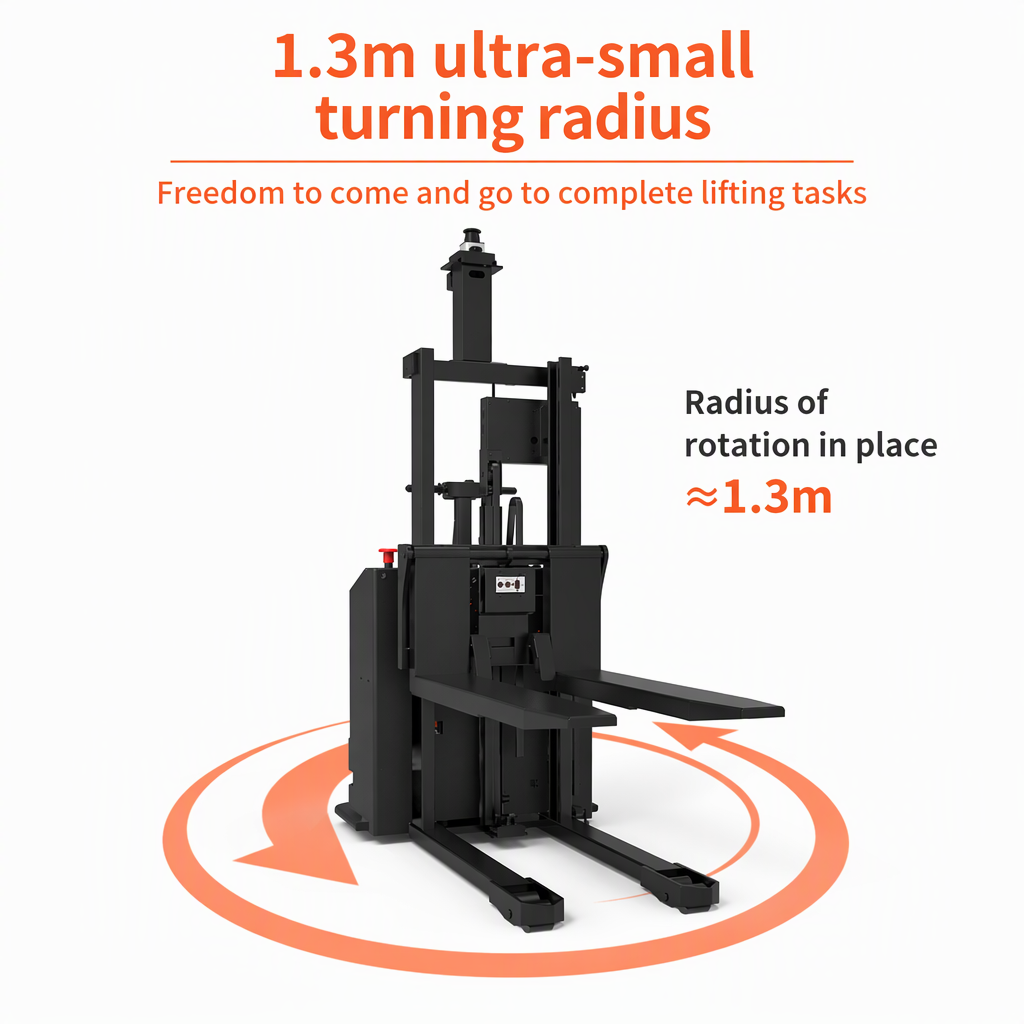
REEMAN Autonomous Electric Forklift 1T Payload 48V 30Ah LiFePO4 Battery Indoor Material Handling AGV
1-ton electric forklift AGV with LiFePO4 battery for indoor pharmacy and supply-room logistics.
- 1-ton payload
- 48V 30Ah LiFePO4 battery
- Indoor material handling
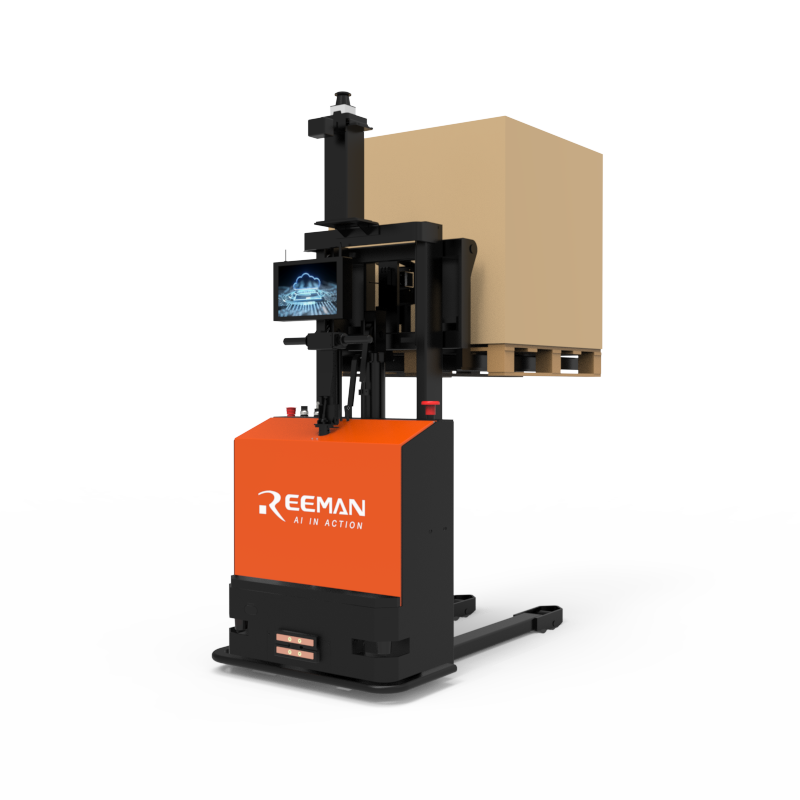
1000 kg Laser SLAM Forklift AGV Unmanned Pallet Stacker Single Line Lidar Obstacle Avoidance Factory Logistics
1,000 kg stacker for racking, pallet staging and central-store replenishment.
- 1,000 kg load
- Single-line LiDAR
- Obstacle avoidance
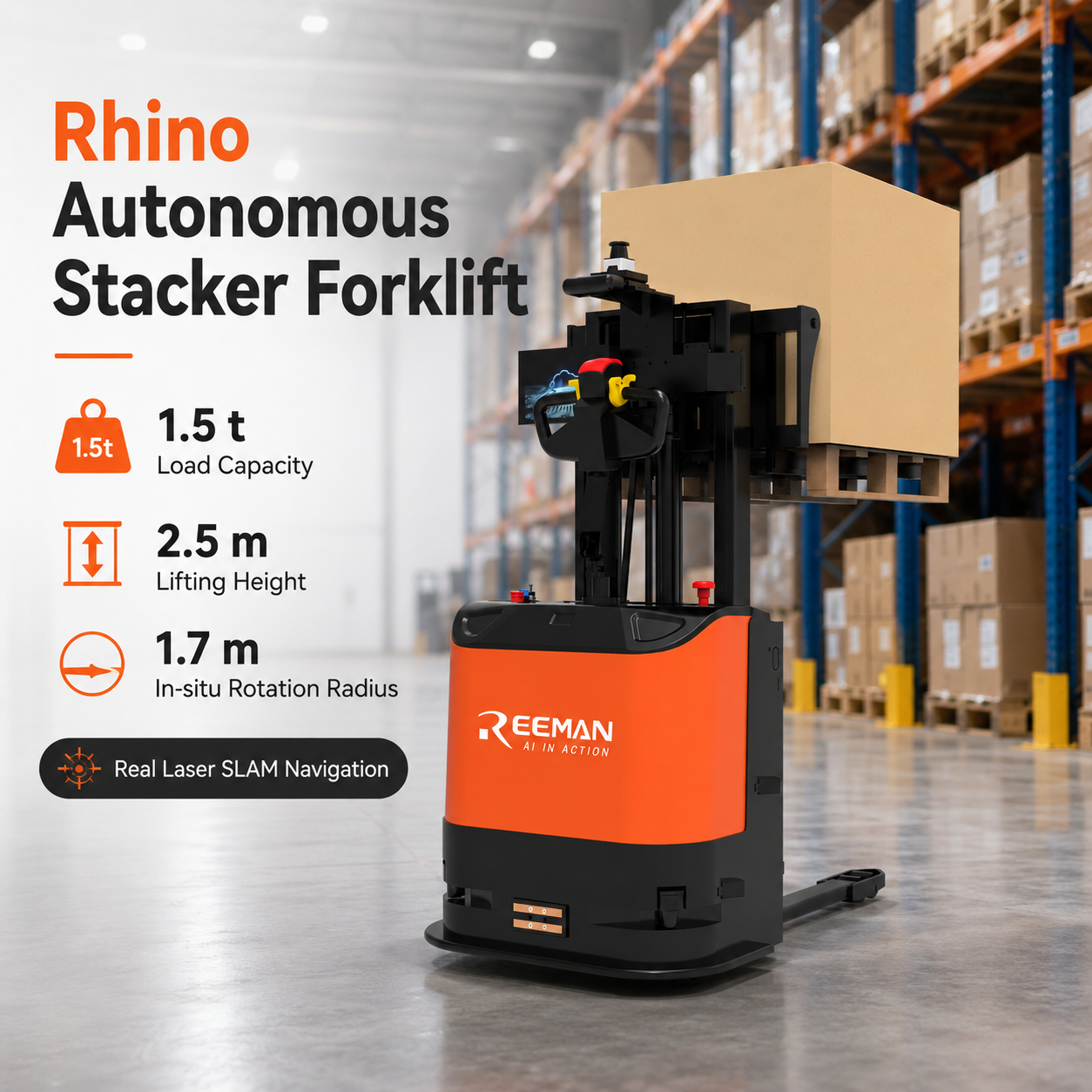
Laser SLAM Autonomous Stacker Forklift 1500 kg Load AGV Pallet Handling Robot Laser Obstacle Avoidance Warehouse
1,500 kg stacker for centralized stores, distribution warehouses and sterile supply staging.
- 1,500 kg load
- Laser obstacle avoidance
- Pallet handling robot
Why Hospital Delivery Robot Procurement Is Moving from Catalog Buying to Capability Audits
Hospital buyers rarely purchase a single robot anymore. They assemble a small autonomous logistics fleet that must carry medicine, sterile instruments, linens, food trays, waste, and general supplies without disrupting clinical corridors. That shift explains why the strongest hospital delivery robot exporter and wholesaler shortlists are built around evidence: factory audits, navigation maturity, integration depth, safety documentation, and service response.
Factory data verified onsite by independent inspector SGS Group. Management systems certified to ISO 9001 and ISO 14001, with CE, FCC or PSE marks depending on model.
How to Vet the Top 10 Hospital Delivery Robot Exporter & Wholesalers
A top-10 shortlist should not be based on exhibition booths or catalog renders. Use the following 10-point audit to separate true hospital logistics exporters from trading companies that only resell generic AMRs.
| Audit Area | Evidence to Request | Why It Matters for Hospital Buyers |
|---|---|---|
| 1. Hospital application depth | Reference layouts for pharmacy, CSSD, linen, food service and waste routes. | A warehouse AMR may fail in narrow clinical corridors, lifts and staged clean/dirty flows. |
| 2. SLAM navigation maturity | Laser SLAM map density, relocalization time, dynamic obstacle behavior, recovery logic. | Hospital corridors change daily. Tape-based AGVs create costly floor work and route downtime. |
| 3. Integration capability | Open SDK/API, WMS/MES/ERP connectors, elevator and door interfaces, task audit logs. | Robots must exchange tasks with pharmacy inventory, logistics dashboards and facility systems. |
| 4. Safety and risk assessment | Emergency stop design, speed zoning, LiDAR blind-spot coverage, pedestrian detection test records. | Hospitals combine patients, staff, beds, wheelchairs and carts in unpredictable motion. |
| 5. Infection-control cleanability | Surface materials, seam design, cleaning-agent compatibility, removable top modules. | Delivery platforms must support routine disinfection without degrading sensors or coatings. |
| 6. Battery and charging strategy | Battery chemistry, swap time, opportunity charging, charge-station footprint. | 24/7 hospital logistics requires predictable uptime, not overnight-only charging assumptions. |
| 7. Fleet orchestration | Multi-robot traffic control, task prioritization, lift allocation, deadlock recovery. | A single robot is a demo; a fleet is an operational system that must scale without gridlock. |
| 8. OEM/ODM and spare parts | Buyer-label options, custom top modules, critical spare list, lead times, packaging standards. | Wholesalers and integrators need repeatable supply, not one-off prototype shipments. |
| 9. Certification and factory audit | ISO 9001, ISO 14001, CE/FCC/PSE model listings, SGS onsite verification, test records. | These documents shorten due diligence and support hospital tender submissions. |
| 10. TCO and service response | Acquisition, integration, training, energy, maintenance, downtime, spare parts and compliance costs. | The lowest quote is rarely the lowest total cost of ownership after deployment. |
Information gain for procurement teams: calculate hospital delivery robot TCO as acquisition + integration + staff training + energy + preventive maintenance + unexpected downtime + spare parts + compliance documentation. A supplier that cannot provide evidence for at least six of these eight cost lines should not enter the final shortlist.
What Buyers Actually Search for Before Contacting a Hospital Delivery Robot Wholesaler
Commercial intent in this category is rarely a single query. Buyers move from problem definition to supplier comparison, then to integration and after-sales risk. Content that answers only “what is a delivery robot” misses the profitable buying stage.
Informational Intent
Queries such as “hospital delivery robot price,” “how do hospital AMRs navigate,” and “medical delivery robot safety” require clear definitions, constraints and realistic deployment examples.
Commercial Investigation
Queries such as “best hospital delivery robot exporter” and “hospital AMR supplier comparison” require audit criteria, certification evidence and integration capability.
Transactional Intent
Queries such as “hospital delivery robot wholesale,” “OEM hospital delivery robot,” and “buy autonomous hospital logistics robot” need MOQ, trade terms, lead time and customization answers.
Risk-Reduction Intent
Queries such as “hospital delivery robot certification,” “AMR integration with WMS,” and “spare parts for hospital robots” reflect late-stage fear of deployment failure.
Where Hospital Delivery Robot Hardware Is Heading Next
The next buying cycle will reward suppliers who design for hospital workflows, not just warehouse payload charts. Three engineering directions are already visible in serious export conversations.
Modular Hospital-Grade Payloads
Top modules will be swapped for pharmacy totes, sterile trays, linen bags, food trays and waste bins. Buyers should expect quick-change interfaces, cleanable materials and payload-specific locking systems rather than one fixed robot shape.
Semantic and Multi-Sensor SLAM
Laser SLAM remains the backbone, but future platforms will combine 3D LiDAR, vision and semantic mapping so robots can recognize beds, wheelchairs, cleaning carts and temporary obstacles instead of treating every object as a generic block.
Fleet Observability and Predictive Service
Hospital engineering teams will demand battery health, fault logs, utilization reports and remote diagnostics. API-first fleets with versioned interfaces will be easier to integrate, audit and maintain over a seven-to-ten-year asset life.
How Hospital Delivery Robot Wholesalers Will Buy in the Next Cycle
Procurement teams are moving from unit-price comparison to uptime, integration and lifecycle risk. This changes what exporters must prove and how wholesalers structure their offers.
RaaS and Leased Fleets
Hospitals and integrators will increasingly compare purchase versus robot-as-a-service models. Exporters that can supply reliable hardware, spare parts and remote support will be better positioned to support leasing partners and wholesale fleet operators.
Uptime-Based Benchmarking
Buyers will ask for mean time between failures, mean time to repair, battery cycle data and spare-part lead times. The winning wholesaler will be the one that can document operational availability, not just maximum speed.
Interoperability and Cybersecurity
Hospital IT teams will request API documentation, access control, data-retention policies and firmware update procedures. Closed systems without clear integration boundaries will create procurement friction and delay deployment.
What a Hospital Delivery Robot Exporter Must Prove
Shenzhen Elvorn Intelligent Equipment Co., Ltd. has built its export model around in-house engineering, verified production and long-term OEM/ODM support. These are the capabilities hospital distributors and integrators evaluate most often.
Two Production Bases Since 2015
Founded in 2015, Elvorn operates production capacity in Shenzhen and Ningbo, with 5,200㎡ of total floorspace and a team of more than 200 people. This supports repeat wholesale orders and custom projects.
Full-Stack In-House R&D
Laser SLAM navigation, motion control, fleet scheduling and hardware design are developed in-house. With 39 awarded patents, the engineering team can answer integration questions instead of forwarding them.
Open SDK and API
AMRs and robot chassis provide secondary-development interfaces for WMS, MES, ERP and custom fleet software. This reduces integration risk for hospital logistics dashboards and wholesaler-branded platforms.
OEM, ODM and Buyer Label
Wholesalers can specify top modules, payload structures, branding and packaging. Design service and buyer-label options help distributors launch hospital-specific configurations without building a factory.
Audited Quality and Certifications
The factory has passed onsite verification by SGS Group. Management systems are certified to ISO 9001 and ISO 14001, and models carry CE, FCC or PSE marks depending on destination and configuration.
Export-Ready Support
English documentation, remote commissioning, spare-part supply and FOB terms support buyers in North America, Western Europe, Eastern Asia, Southeast Asia and the Middle East. Payment is accepted in USD or CNY by T/T.



Why Wholesalers Choose a Verified Manufacturer Instead of a Trading Layer
Trading layers can quote quickly, but they rarely control navigation firmware, spare-part inventories or engineering changes. For hospital delivery robot projects, those details determine whether a fleet can be commissioned on schedule and supported for years.
Elvorn’s structure combines a verified factory, in-house R&D, multi-model product lines and OEM/ODM services. For distributors, that means a single partner can supply autonomous forklifts, lifting AMRs, robot chassis and service robot platforms while keeping documentation, branding and after-sales logic consistent.
Hospital buyers should request the SGS verification report, model-specific certification files, spare-part list, training plan and integration API documentation. A credible exporter will treat these requests as normal procurement steps, not exceptions.
Wholesale and OEM Support Included in the Export Conversation
- OEM service, design service and buyer-label options
- Custom top modules, payload structures and packaging
- English documentation and remote commissioning support
- Critical spare-part planning for distributor inventory
- FOB terms, T/T payment and USD or CNY settlement
- Factory testing and load-test records before shipment
Hospital Delivery Robot Procurement FAQ
These are the questions most often raised by hospital distributors, integrators and wholesale buyers during technical and commercial review.
What is the difference between a hospital delivery robot and an autonomous forklift AGV?
Can these robots work in narrow corridors, lifts and staged clean/dirty zones?
Can Elvorn robots integrate with WMS, MES, ERP or custom fleet software?
Which certifications and factory documents are available?
What is the MOQ for wholesale and OEM/ODM orders?
What trade terms, payment methods and lead times apply?
Build a Hospital Delivery Robot Wholesale Program with Verified Factory Support
Send your hospital layout, payload requirement, route type and target volume. Elvorn engineers can recommend the right autonomous forklift, lifting AMR or robot chassis configuration, then support OEM/ODM branding, export documentation and long-term spare-part planning.