National high-tech enterprise focused on robotic platforms and autonomous driving.
In-house R&D covers navigation, motion control, fleet scheduling and hardware.
Two production bases in Shenzhen and Ningbo support build-to-order chassis projects.
Engineering, production, quality and export service teams support global buyers.
Supplier assessment and on-site material inspection support repeatable output.
Export-ready communication for RFQs, documentation, samples and project support.
Why the Robot Chassis Decision Deserves a White-Paper-Level Review
Searching for the “Top 10 Robot Chassis Manufacturers & Manufacturer” is a useful first step, but a shortlist alone does not answer the real procurement question: which platform can be integrated, certified, serviced and scaled without hidden cost?
In 2025, a robot chassis is no longer a simple steel base with wheels. It combines the drive train, motor controllers, wheel encoders, IMU, LiDAR, safety logic, power system, charging contacts, firmware, diagnostics and fleet communication layer. That architecture determines mapping speed, motion smoothness, recovery behavior, integration hours and the long-term flexibility of the top module. For OEMs and warehouse operators, the chassis is the foundation of the business case — not a commodity accessory.
This is especially important for laser SLAM AMR and AGV forklift projects. Two chassis platforms can look similar in a brochure while behaving very differently in narrow aisles, low-feature corridors, mixed pedestrian traffic and manual-loading zones. Information gain means asking for evidence beyond the datasheet: test logs, failure-mode recovery, integration API documentation, safety risk assessment, spare-parts list and actual site references. That is the standard serious buyers should apply when comparing any list of robot chassis manufacturers.
Shenzhen Elvorn Intelligent Equipment Co., Ltd. — founded in 2015 — develops both the robot platform and the application-level know-how across autonomous forklifts, industrial AMRs, delivery robots, cleaning robots and service-robot chassis. The company’s engineering scope includes laser SLAM navigation, motion control, fleet scheduling and hardware, which allows customization to be discussed in engineering terms rather than as a catalogue promise.
Top 10 Robot Chassis Manufacturers & Manufacturer Selection Criteria
Use these ten dimensions to score potential suppliers. They are more reliable than rank alone because they connect chassis design to deployment risk, total cost of ownership and future product planning.
SLAM Robustness
Ask how the chassis handles low-feature corridors, dynamic obstacles, map rebuilds and recovery after manual intervention.
Request: mapping time, drift data, recovery logs.Payload Engineering
Rated load is only one number. Center of gravity, top-module height, braking distance and floor pressure also matter.
Request: load calculation and stability test.Safety Architecture
Review LiDAR fields, bumpers, emergency stop, speed zoning, audible warnings and obstacle-avoidance logic.
Request: risk assessment and safety configuration.Open API & SDK
Integration with WMS, MES, ERP, elevators, doors and fleet dashboards is a core chassis capability.
Request: API documents and sample integration map.Battery Strategy
Chemistry, cycle life, charging window, battery swapping, thermal management and charger footprint affect uptime.
Request: duty-cycle calculation and charging plan.Drive Flexibility
Differential, Mecanum or Ackermann drive should match aisle width, floor quality and turning requirements.
Request: drive recommendation by site layout.Production Quality
Traceability, incoming material inspection, torque records, calibration and end-of-line tests reduce field surprises.
Request: production flow and test record samples.Market Certification
CE, FCC, PSE, ISO 9001 and ISO 14001 should be matched to the target market and exact model configuration.
Request: valid certificate scope, not just a logo.OEM / ODM Capability
Top-module design, branding, packaging, firmware locks, label options and documentation define real customization.
Request: customization boundary and lead time.Lifecycle Support
Spare-parts availability, remote technical support, training, firmware updates and service response shape long-term ROI.
Request: recommended spare list and support model.8 Robot Chassis-Based Platforms for 2025 Projects
These platforms are starting points, not fixed catalogues. Each product URL is preserved from the original product data. Final chassis configuration should be confirmed after reviewing aisle width, floor condition, payload, top module, duty cycle and integration plan.
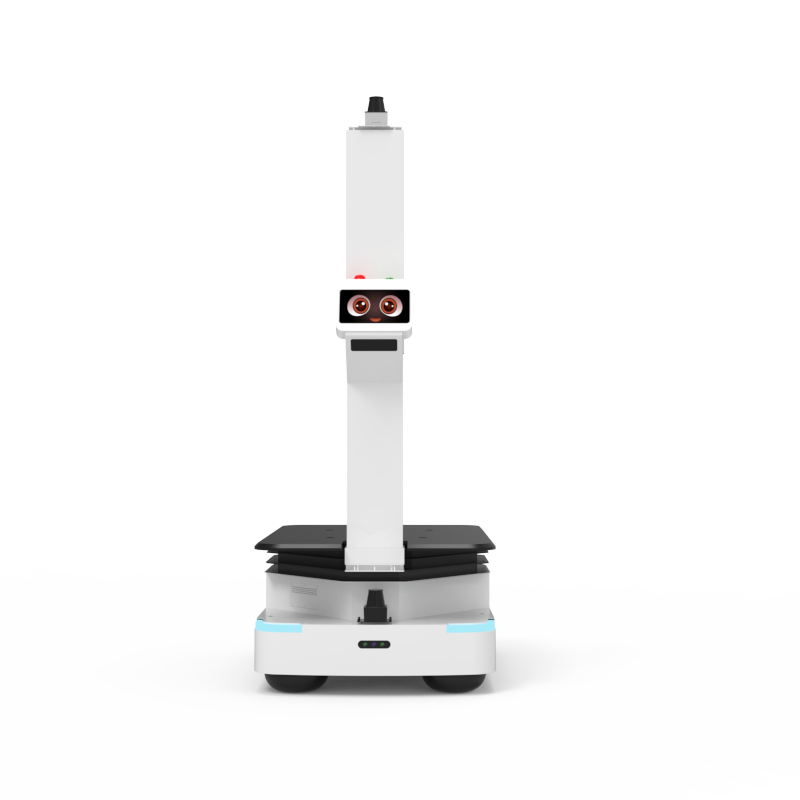
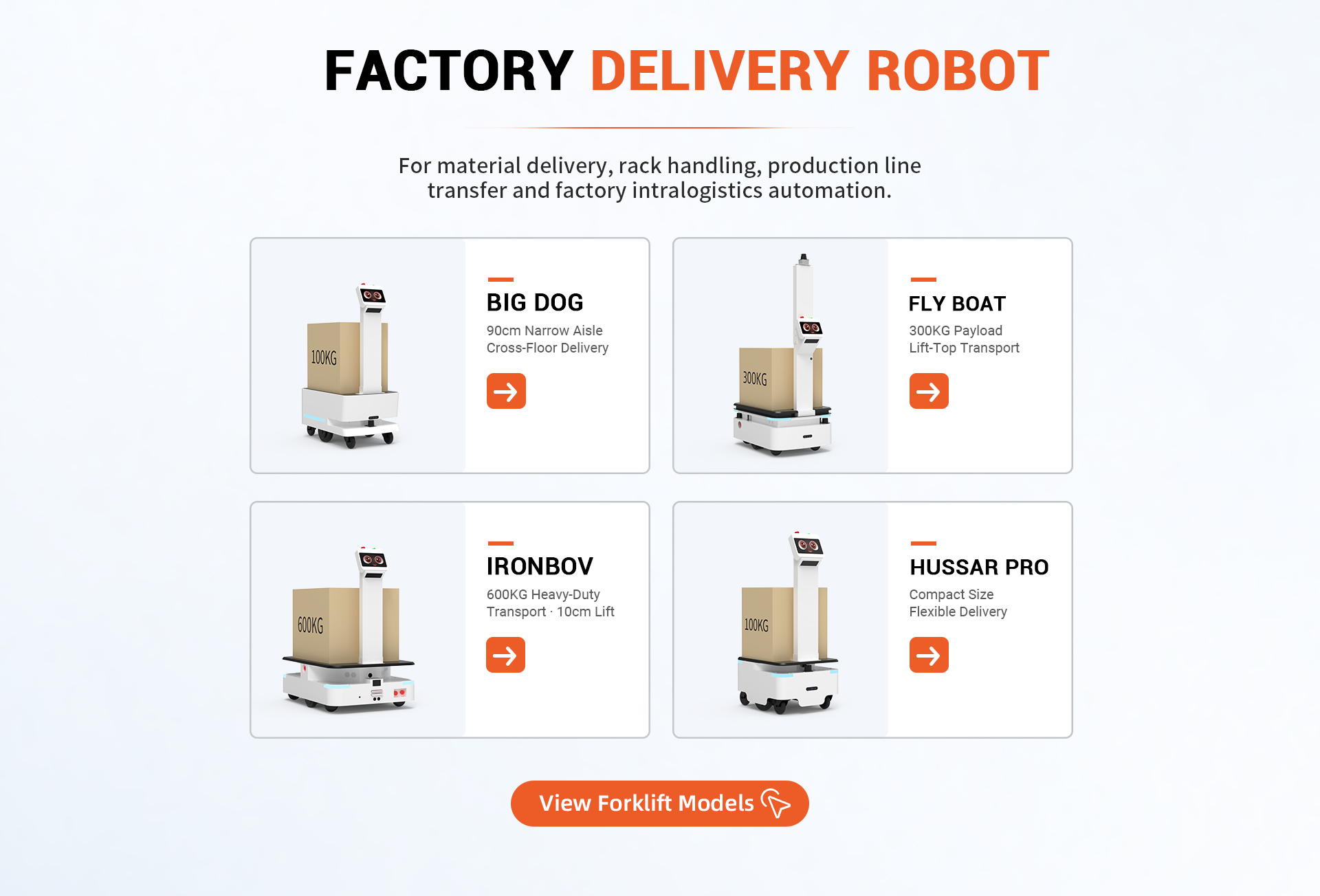
600kg Industrial AMR AGV Robot Laser SLAM Navigation QR Code-Free Factory Logistics
QR-code-free factory logistics platform for production links and material transfer.
View product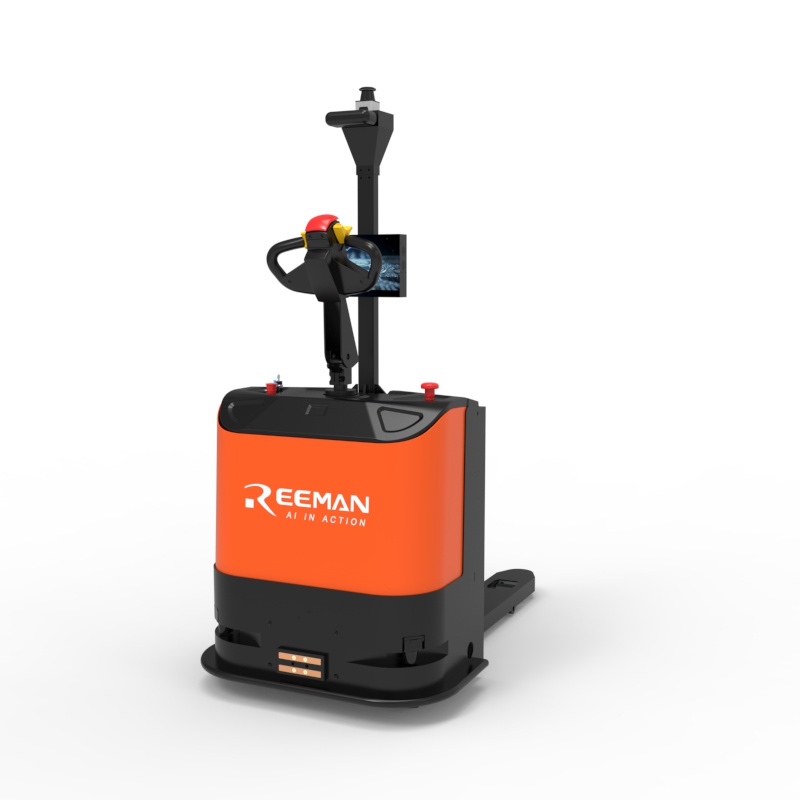
Reeman BBOT30F 1500 kg Laser SLAM Forklift AGV LiDAR Navigation Pallet Handling Warehouse
Pallet-handling chassis platform for warehouse and distribution workflows.
View product
2 Ton Autonomous 4WD AGV Forklift Laser SLAM Navigation Multi-Line LiDAR 10mm Position Accuracy 6-8H Warehouse Handling
Multi-line LiDAR navigation and 10 mm positioning for demanding pallet moves.
View product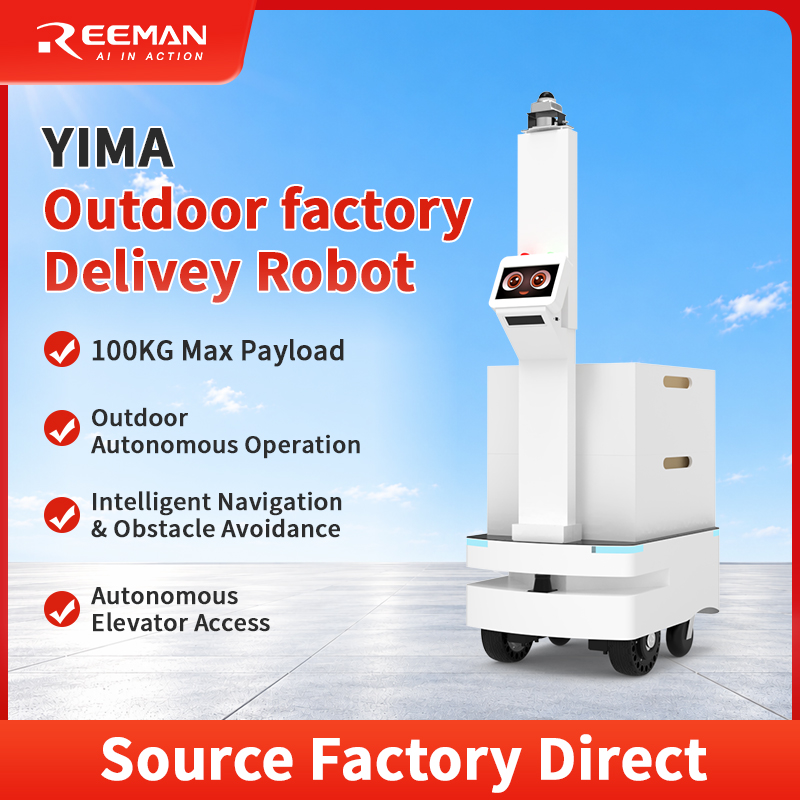
REEMAN Outdoor Delivery Robot 100kg Payload Autonomous Navigation Obstacle Avoidance Elevator Access Warehouse Logistics
Outdoor and indoor delivery platform with obstacle avoidance and elevator access options.
View product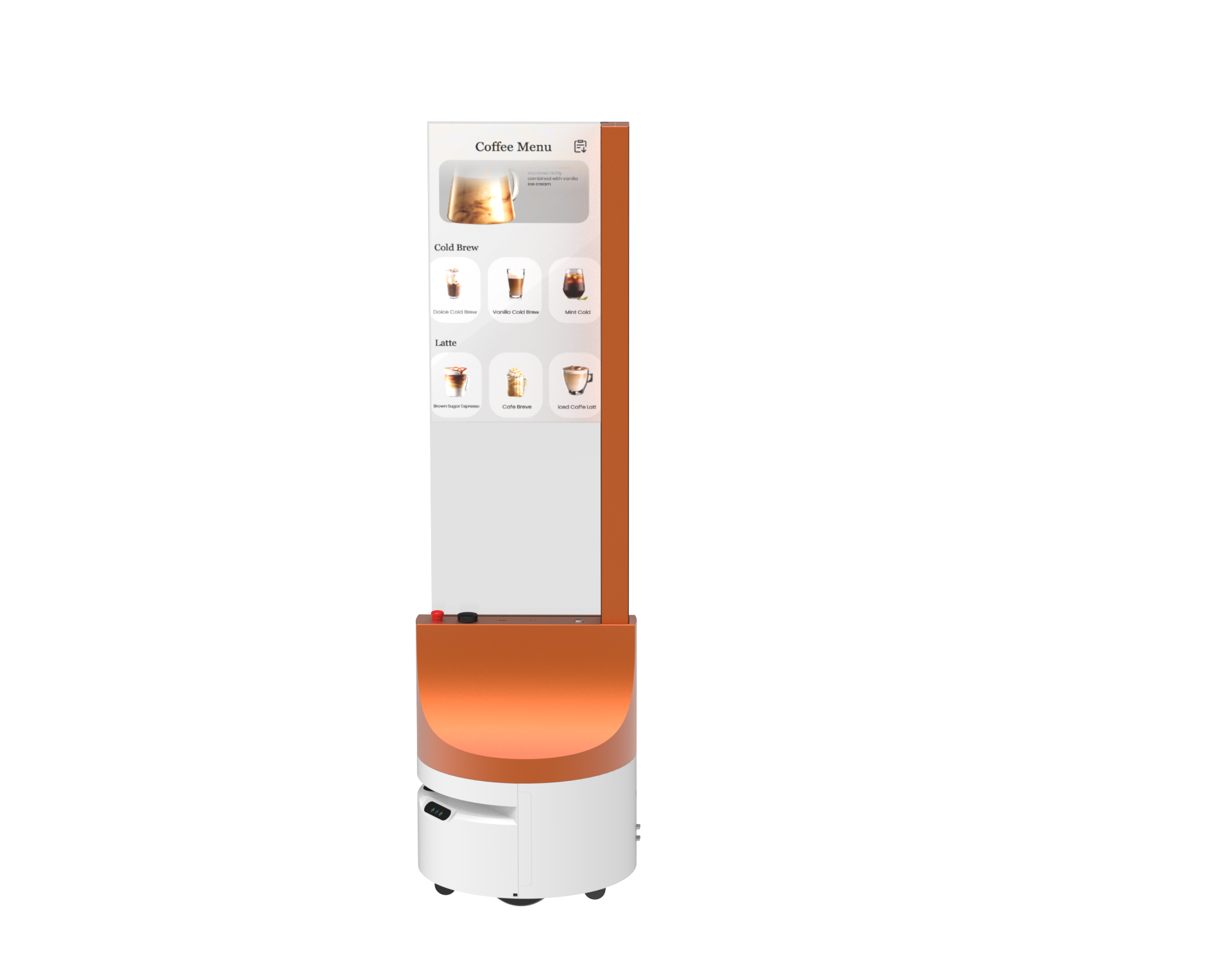
REEMAN 30 Inch OLED Transparent Screen Mobile Advertising Robot 1080 x 1920 FHD 9:16 Wi-Fi App Remote Control
Wheeled service chassis for retail, exhibitions, guidance and digital signage.
View product
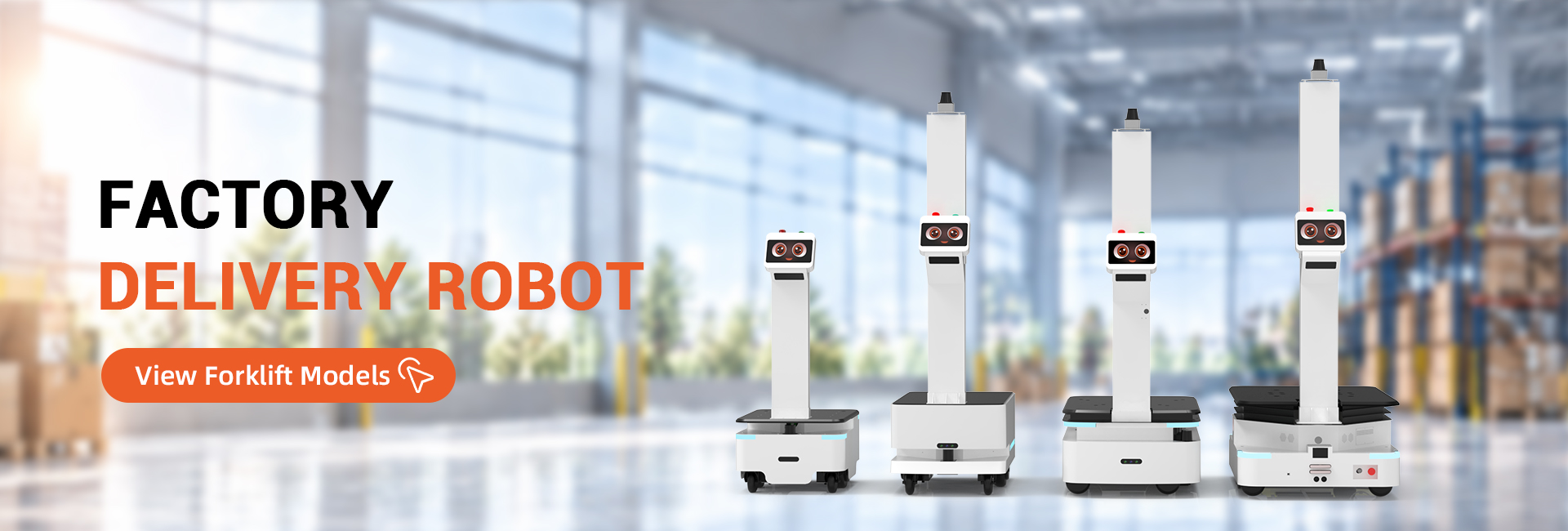
Dual Laser AMR 300KG AGV Lifting Mobile Robot with Slam LiDAR Navigation for Manufacturing Plants
Lifting mobile robot platform for manufacturing plants and line-side logistics.
View product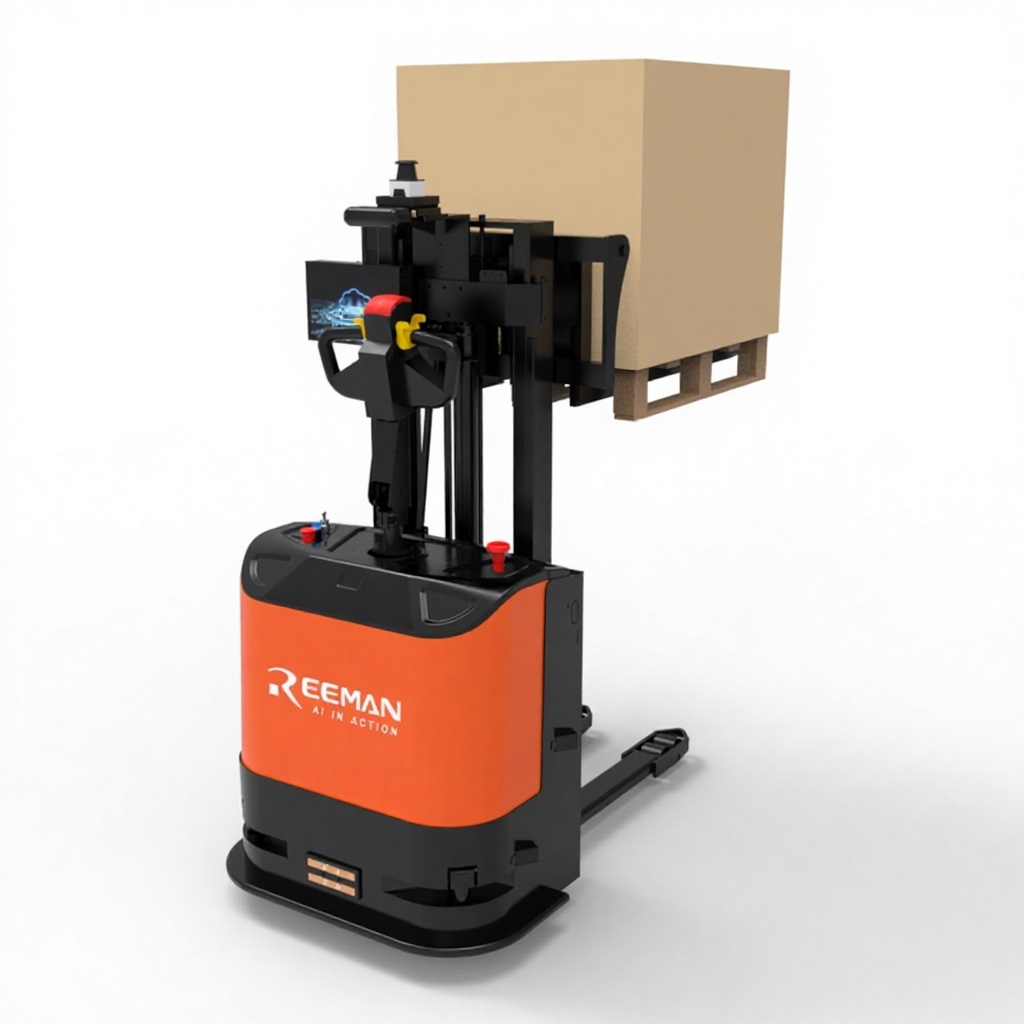
REEMAN Rhino RBOT30F Autonomous Stacker Forklift 3D Vision Obstacle Avoidance Warehouse AGV Robot
Stacking and low-rack automation with 3D vision obstacle avoidance.
View product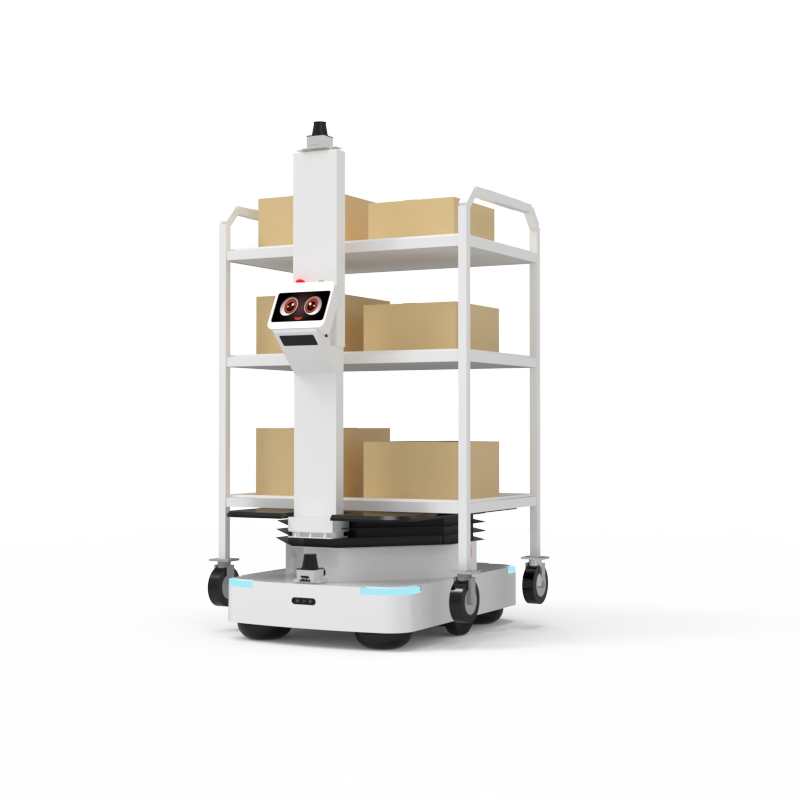
600kg Payload Autonomous AMR Robot Multi Sensor Mobile Material Handling Cart for Production Line
Multi-sensor AMR cart for production-line feeding and flexible material handling.
View product2025–2030 Robot Chassis Procurement Trends Buyers Should Contract For
The purchase decision is shifting from “which chassis is cheapest” to “which chassis creates the lowest lifecycle risk”. These trends should appear directly in the RFQ, acceptance criteria and service agreement.
TCO Replaces Unit Price
Buyers now ask for integration hours, commissioning support, energy consumption, maintenance workload, spare-parts pricing and downtime exposure before comparing quotations.
- Require a lifecycle cost model.
- Define acceptance tests and response times.
Software-First Integration
Open SDK and API access is becoming a procurement gate. A chassis that cannot exchange task status with WMS, MES or ERP creates manual work and limits scale.
- Ask for integration documentation.
- Test a representative workflow before shipment.
Modular Mixed Fleets
One facility may need AMR carts, lifting robots, forklifts and service robots. Modular chassis architecture reduces training burden and simplifies spare-parts planning.
- Check shared battery and control architecture.
- Confirm fleet-management compatibility.
Safety as a Gatekeeper
Speed zoning, obstacle detection, emergency stop and pedestrian interaction should be reviewed before a purchase order is issued, not after the robot reaches the site.
- Request a site-specific risk review.
- Match certification to the destination market.
Local Serviceability
Remote support is valuable, but uptime still depends on spare parts, documentation, operator training and a clear escalation path. Serviceability should be scored alongside hardware.
- Ask for spare-parts lead times.
- Define remote support hours and training scope.
Flexible Energy Strategy
Opportunity charging, battery swapping and fast charging are becoming layout decisions. The charger footprint and shift schedule should be modeled before the chassis is selected.
- Model the real duty cycle.
- Plan charging positions early.
Robot Chassis Development Trends Inside the Next Generation
Technology trends matter when they change integration cost, safety validation or the speed at which an OEM can launch a new robot. Here are the developments procurement teams should track when evaluating chassis manufacturers.
Multi-Sensor Fusion
LiDAR, 3D vision, IMU and wheel encoders are combined to improve docking accuracy, obstacle classification and recovery in mixed traffic.
Vehicle-Grade Controls
More chassis platforms use rugged controllers, diagnostic layers and safety logic designed for continuous industrial operation rather than laboratory demos.
Battery Swapping & Fast Charging
Energy strategy is becoming modular. Buyers can plan shorter charging pauses, automated charging docks and battery packs that match multi-shift operation.
Edge AI for Dynamic Zones
Edge processing helps robots distinguish people, pallets, carts and temporary objects. The practical benefit is fewer unnecessary stops and smoother traffic flow.
Plug-and-Play Top Modules
Standard mechanical, electrical and software interfaces shorten OEM development. A good chassis should allow rollers, lifts, shelves, cabinets or displays to be changed without redesigning the drive base.
Cloud Fleet Orchestration
Fleet dashboards, utilization reports, firmware management and remote diagnostics are becoming part of the product, not an optional add-on.



Inside Elvorn: A Robot Chassis Manufacturer Built for OEM and Export Projects
Shenzhen Elvorn Intelligent Equipment Co., Ltd. is a national high-tech enterprise focused on robotic platform technology and autonomous driving. The company designs and builds autonomous forklifts, industrial AMRs, robot chassis, delivery robots, cleaning robots and disinfection robots for buyers across North America, Western Europe, Eastern Asia, Southeast Asia and the Middle East.
For chassis buyers, the relevant advantage is engineering depth. Elvorn’s in-house team covers laser SLAM navigation, motion control, fleet scheduling and hardware. This means customization can be evaluated at the level of drive configuration, payload structure, top-module interface, safety logic, firmware and fleet integration — not just color and label.
- Verified Custom Manufacturer
- ISO 9001 & ISO 14001
- CE / FCC / PSE Model Options
- Open SDK & API for Development
- OEM, Design & Buyer Label Service
- FOB, T/T, USD & CNY Trade Support
 SGS Onsite Verified
 CE Marking
 FCC
 PSE
From RFQ to Stable Operation: A Five-Step Chassis Project
A disciplined process reduces the risk of buying a chassis that works in a demo but struggles in the real facility.
Requirement Review
Share layout drawings, load data, pallet type, floor condition, aisle width, target throughput and required certifications.
Feasibility & Model Selection
Application engineers recommend drive type, payload class, navigation configuration, battery strategy and fleet size.
Customization & Integration
Top module, API access, branding, packaging and software touchpoints are defined with the integrator.
Factory Validation
Function tests, load tests, safety checks and configuration records are completed before shipment.
Deploy & Support
Remote mapping support, operator training, spare-parts planning and long-term technical service.
Where Robot Chassis Platforms Deliver Measurable ROI
The same chassis architecture can support different top modules, software workflows and service models across industrial and commercial environments.
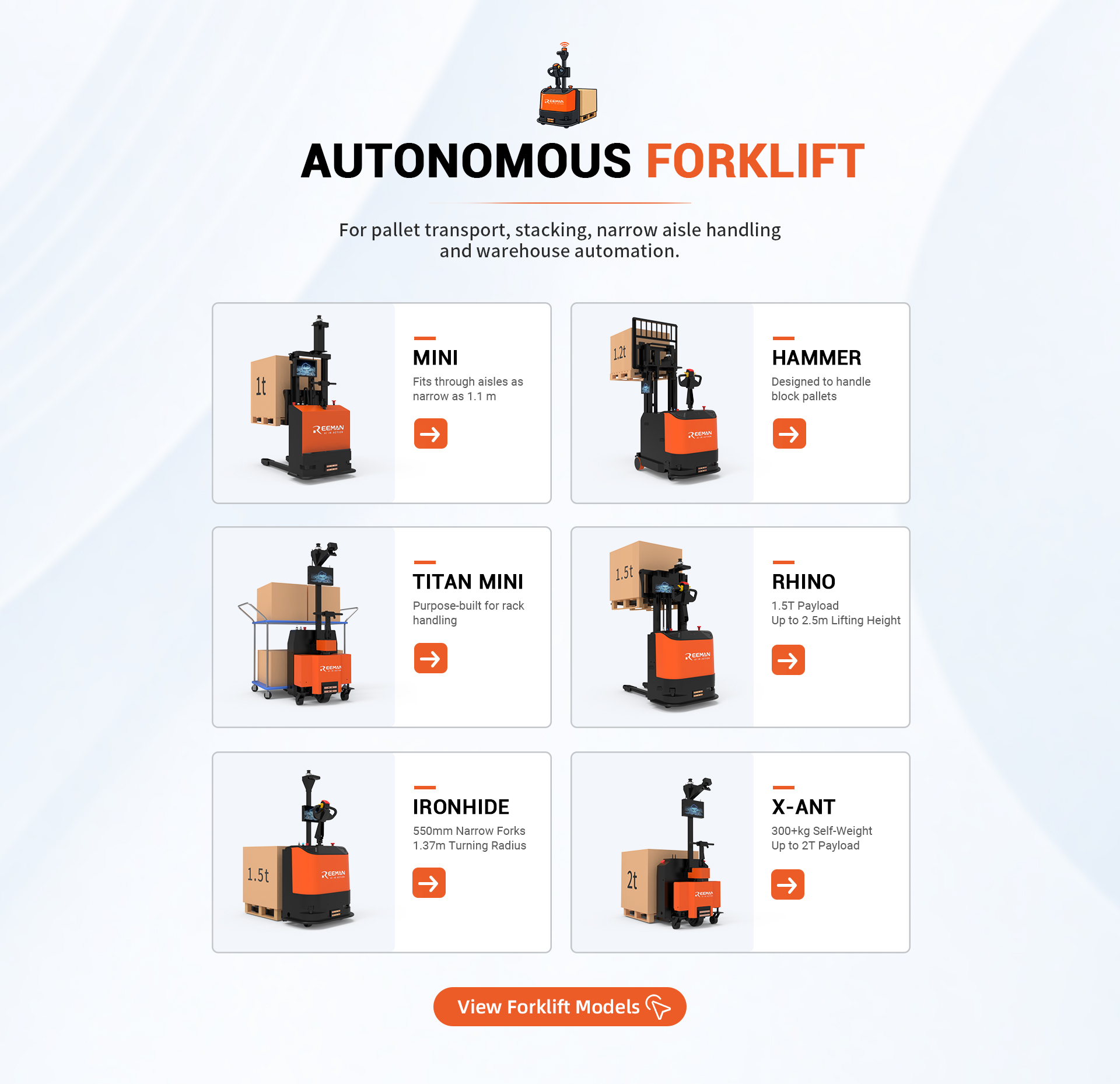
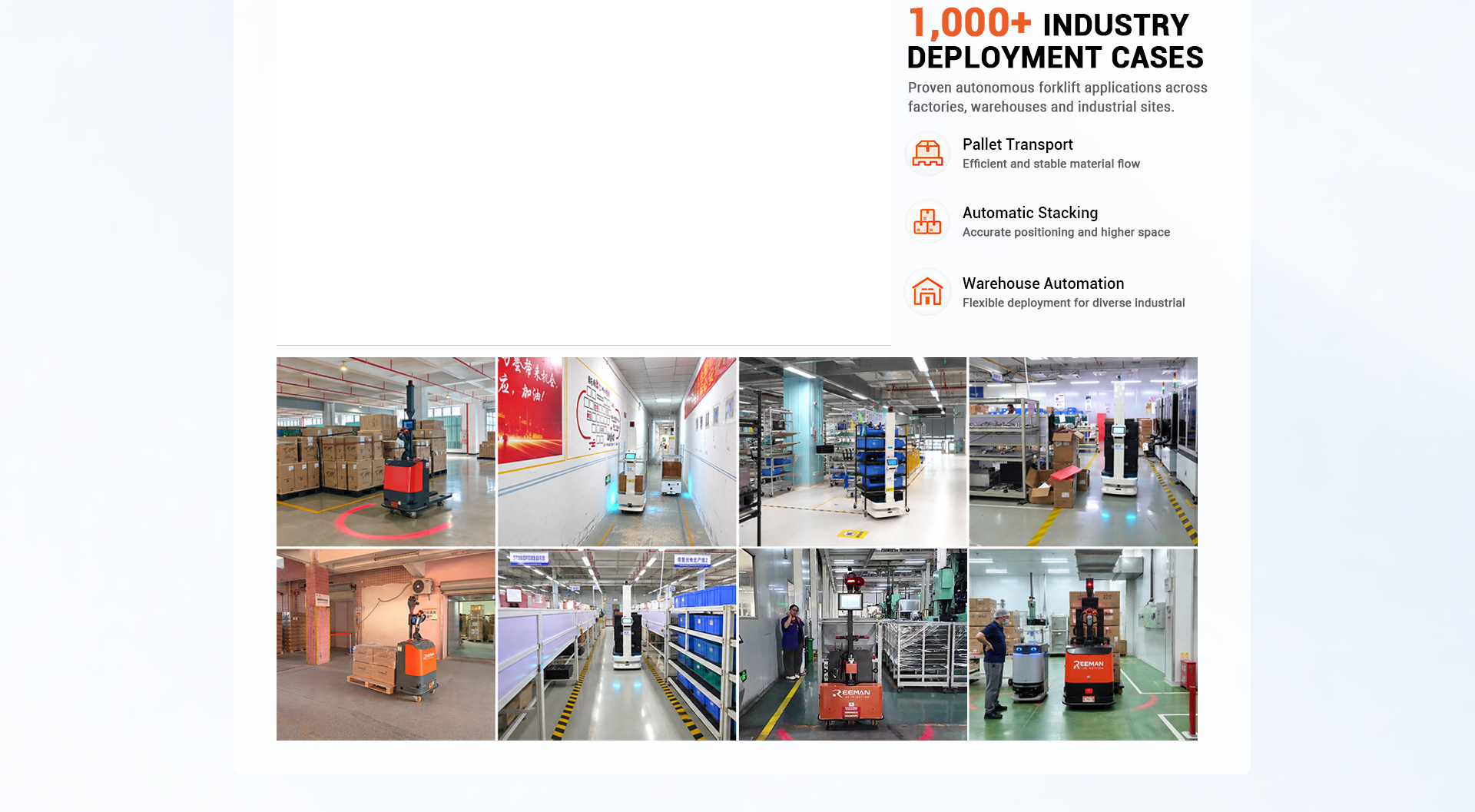
Pallet Flow Automation
Receiving, put-away, replenishment and dock loading supported by driverless platforms.
Line-Side Logistics
AMR chassis feed workstations, collect finished goods and synchronize with MES tasks.
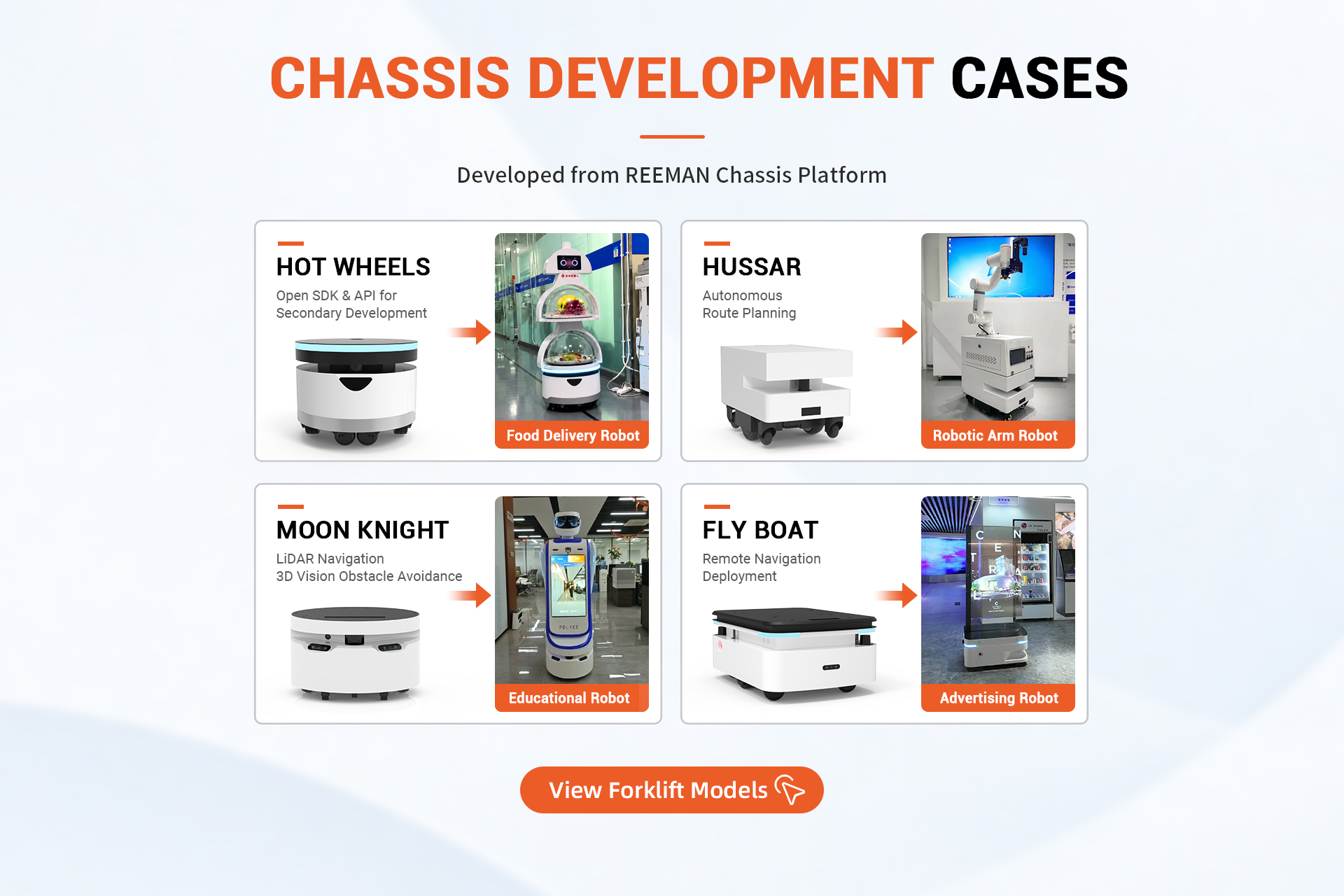
Custom Robot Development
SLAM chassis with open SDK shorten time-to-market for branded service and industrial robots.
Restaurant & Hotel Delivery
Delivery robots handle food runs, room service and repetitive internal transport.

Cleaning & Disinfection
Autonomous floor care for malls, airports, hospitals, offices and public venues.
Guidance & Digital Signage
Mobile advertising and reception robots use the chassis as a stable interactive platform.
Compare Robot Chassis Manufacturers Beyond the Quotation Sheet
A low purchase price can hide integration effort, limited API access, long spare-parts lead times, weak recovery behavior or a battery plan that does not fit the shift schedule. Serious buyers should compare the total cost of ownership across the whole deployment lifecycle.
Use a simple model: purchase price + integration + commissioning + training + energy + maintenance + spare parts + downtime exposure + upgrade path. Then ask each shortlisted manufacturer to explain which assumptions drive their number and what evidence supports them.
- Ask for a 3-year maintenance estimate
- Request the recommended spare-parts list
- Model charging around the real shift schedule
- Confirm integration support scope in writing
Typical Hidden-Cost Weighting in Chassis Projects
Illustrative early-stage workshop weighting. Use it to structure supplier discussions, not as a universal benchmark.
RFQ Data That Helps a Manufacturer Quote Accurately
Better input data produces a better engineering response. The following package reduces assumptions and makes it easier to compare suppliers on the same basis.
Floor & Traffic Data
- Layout drawing and aisle width
- Floor material and slope
- Pedestrian and forklift traffic
- Wi-Fi coverage map
Load & Handling Data
- Payload and center of gravity
- Pallet, cart or shelf type
- Lift height or top-module concept
- Required cycle time
Software & Integration
- WMS, MES or ERP touchpoints
- Elevator, door and charger control
- Fleet-management requirements
- Data reporting needs
Compliance & Service
- Target country and certification
- Noise, safety and labeling rules
- Spare-parts strategy
- Training and response expectations
Robot Chassis Procurement Questions
These are the questions procurement, engineering and operations teams ask most often when comparing robot chassis manufacturers.
What is the difference between a robot chassis, an AMR and an AGV?
How do I choose between laser SLAM and QR-code navigation?
Can I buy only the chassis and add my own top module?
How should I specify payload for a mobile robot chassis?
Can Elvorn chassis integrate with WMS, MES or ERP systems?
Which certifications can be provided?
What trade terms and payment methods are supported?
How do I evaluate the Top 10 Robot Chassis Manufacturers fairly?
Send Your Floor Plan, Load Data and Integration Map
Whether you are shortlisting the “Top 10 Robot Chassis Manufacturers & Manufacturer” or preparing a private-label robot launch, Elvorn can translate your requirement into a platform recommendation, budget and delivery plan. Share payload, aisle width, floor type, top-module concept, target certification, annual volume and expected go-live date.