8 Laser Navigation Robot Products Shortlisted for Global Buyers
The products below are not a generic catalog dump. They reflect the platforms most often requested when buyers search for top China laser navigation robot manufacturers and manufacturer because they cover the practical decision nodes: 1–2 ton autonomous pallet handling, 600 kg factory logistics, multi-line LiDAR four-wheel-drive forklifts, compact 1T indoor electric forklifts, and 100 kg outdoor delivery robots. Product URLs are preserved so procurement teams can verify specifications, confirm model availability, and map each platform to a site survey.

Reeman BBOT30F 1500 kg Laser SLAM Autonomous Pallet Stacker AGV
- Single-line LiDAR obstacle avoidance
- Warehouse transport and stacking
- Laser SLAM without fixed floor markers
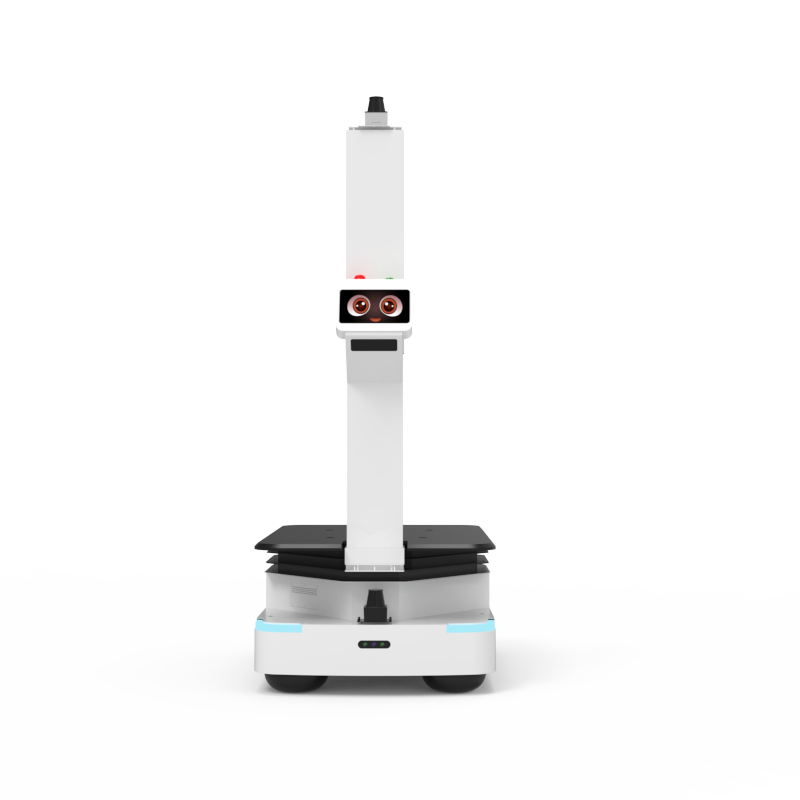
600 kg Industrial Laser SLAM AMR AGV Robot
- QR-code-free factory logistics
- Flexible route changes
- Suitable for line-side and logistics centers

REEMAN X-ant JBOT20F 2 Ton Autonomous Forklift AGV
- Laser SLAM pallet handling
- Warehouse logistics applications
- Heavy-load autonomous transfer
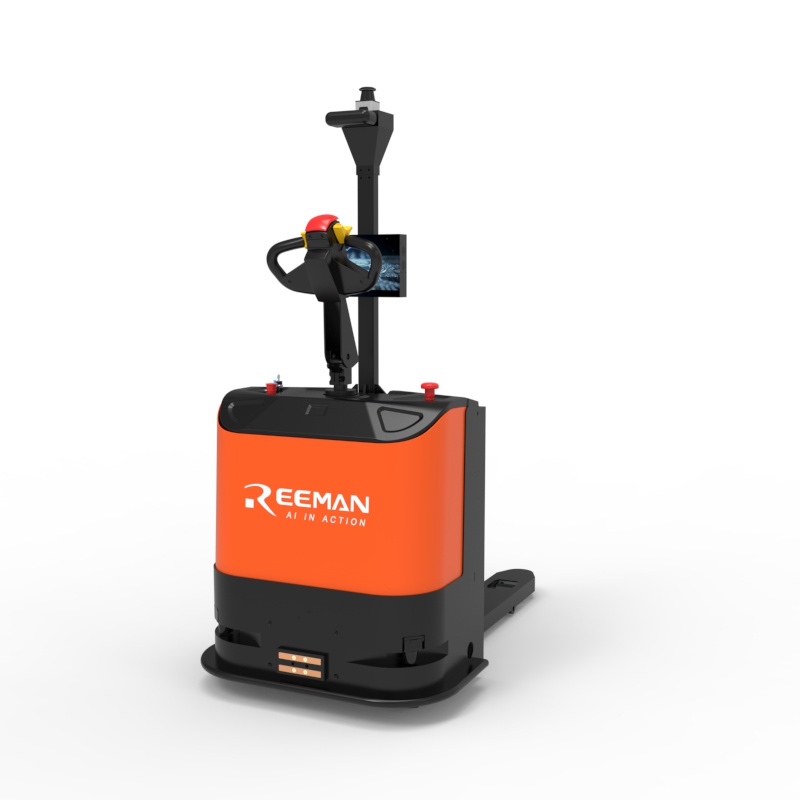
Reeman BBOT30F 1500 kg Laser SLAM Forklift AGV
- LiDAR navigation for pallet handling
- Warehouse and production transfer
- Configurable for repetitive handling

2 Ton Autonomous 4WD AGV Forklift
- Multi-line LiDAR and 10 mm positioning
- 6–8 hour warehouse handling duty
- Designed for demanding pallet moves
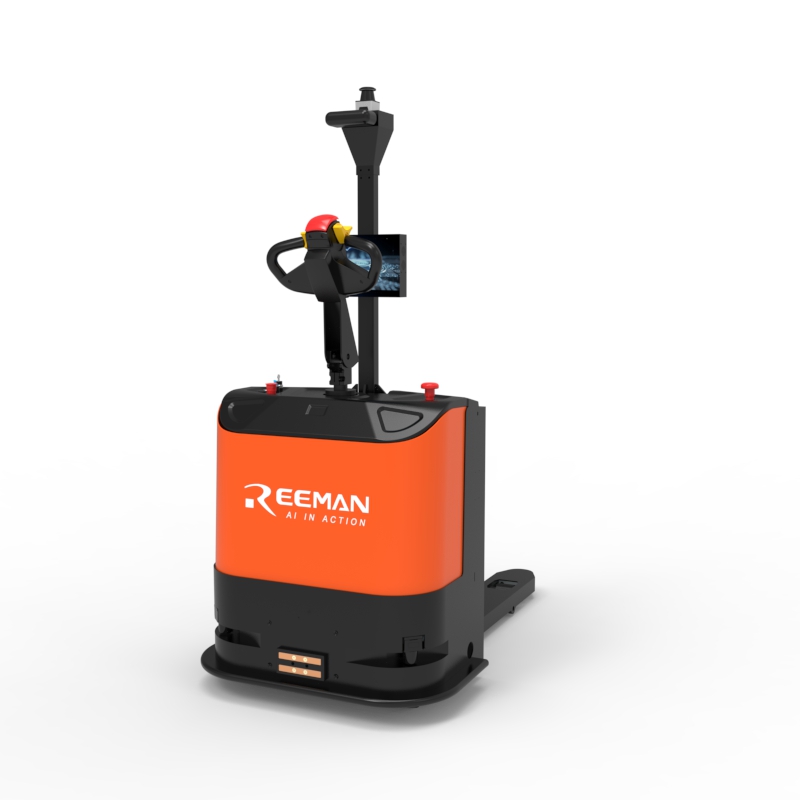
1500 kg Laser SLAM AGV Industrial Forklift
- Single-line LiDAR and 30 mm accuracy
- 1019 mm forks and 570 mm width
- Industrial pallet handling configuration

REEMAN Autonomous Electric Forklift 1T
- 48V 30Ah LiFePO4 battery
- Indoor material handling AGV
- Compact electric platform
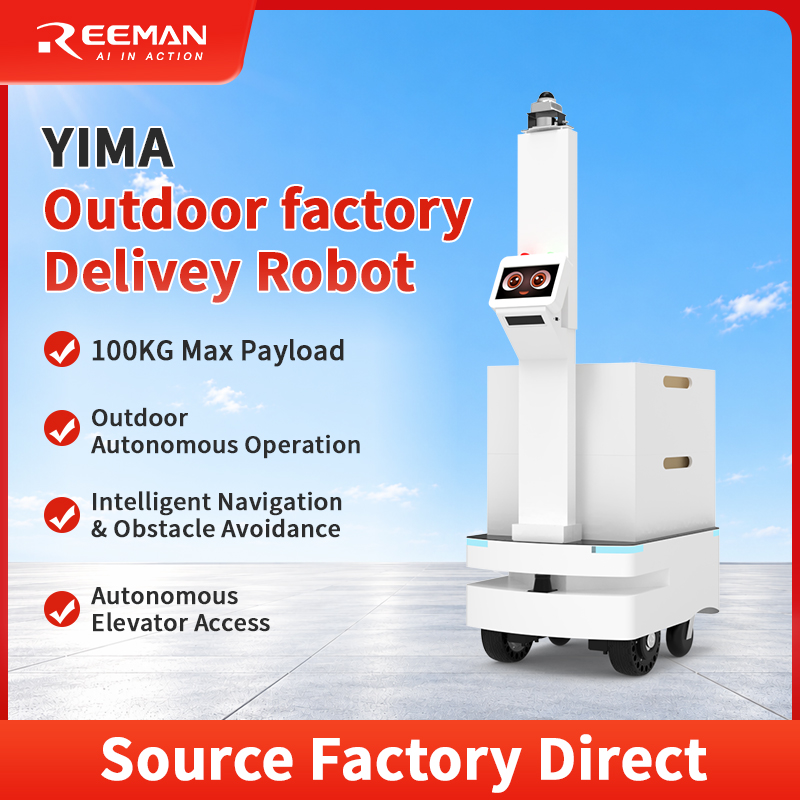
REEMAN 100 kg Outdoor Autonomous Delivery Robot
- Autonomous navigation and obstacle avoidance
- Elevator access and logistics support
- Outdoor and campus delivery use cases
Have a pallet, rack, elevator, door or WMS constraint that is not covered by these eight platforms? Ask Elvorn engineering to map load, aisle, safety and software requirements before you issue an RFQ.
Contact UsHow to Read This White Paper: Search Intent Behind “Top China Laser Navigation Robot Manufacturers & Manufacturer”
The query contains two semantic layers. The plural form, manufacturers, signals comparison, shortlisting and category research: a buyer wants to know which Chinese suppliers are credible, what platforms exist, and how specifications differ. The singular form, manufacturer, signals supplier verification and custom manufacturing: a buyer may already have a site, a load, an OEM requirement or a tender and now needs a factory that can engineer, certify and support the product. High-quality content must serve both intents without confusing catalog breadth with engineering depth.
China is not a single market. Laser navigation robot suppliers range from assembly-focused sellers and system integrators to full-stack manufacturers that own navigation software, motion control, fleet scheduling and hardware. The difference becomes visible during due diligence: who can answer questions about dynamic obstacle handling, elevator interfaces, WMS/MES task dispatch, battery strategy, safety zoning and spare-part planning? For procurement teams, the most useful information gain is not another list of models, but a framework for separating repeatable manufacturing capability from marketing claims. This white paper therefore combines product recommendations, selection logic, procurement trends, technology trends, manufacturer evidence and FAQ-style answers based on published company and product information from Shenzhen Elvorn Intelligent Equipment Co., Ltd.
Where a statement is model-specific—payload, positioning accuracy, battery capacity, fork dimensions or navigation configuration—confirm it against the product page and final datasheet. Where a statement concerns the company—founding year, patents, floorspace, certifications, trade terms or service model—use the manufacturer’s verified profile and audit documents as the source of record. That discipline is the difference between a useful supplier shortlist and an expensive pilot that cannot scale.
Verified Capability Signals That Matter in an RFQ
A serious manufacturer should be legible in numbers. These figures are not a substitute for an audit, but they give procurement teams starting points for deeper verification and a shared vocabulary for supplier comparison.
Factory data verified onsite by independent inspector SGS Group. Management systems certified to ISO 9001 and ISO 14001; selected models carry CE, FCC or PSE marks.
Why Elvorn Is a Practical Shortlist Candidate Among China Laser Navigation Robot Manufacturers
For buyers comparing top China laser navigation robot manufacturers, the relevant question is not who has the largest catalog. It is who can close the loop between navigation performance, safety, integration, customization and lifecycle support.
Laser SLAM Without Floor Infrastructure
Maps the site in hours and navigates without magnetic tape, QR codes or reflectors. Layout changes do not require floor work, which lowers deployment risk and shortens the path from pilot to production.
Open SDK & API Integration
AMRs and robot chassis provide an open SDK and API for secondary development, allowing task dispatch and status feedback from WMS, MES, ERP, elevators, doors and custom dashboards.
Modular Payload Platforms
From 60 kg delivery robots to 2-ton autonomous forklifts on shared control architecture, simplifying operator training, fleet management, customization and long-term spare-part planning.
Multi-Layer Safety Architecture
LiDAR, obstacle sensors, emergency stops and speed zoning keep robots safe around pedestrians, forklifts and racking. Safety configuration should be confirmed through a documented site risk assessment.
Own Production Capacity
Two production bases in Shenzhen and Ningbo, 5,200㎡ of floorspace, a 200+ team and 39 patents support in-house R&D, assembly, testing and customization for overseas buyers.
Export-Ready Support
English documentation, remote commissioning, spare-part supply and export terms for North America, Western Europe, Eastern Asia, Southeast Asia and the Middle East. FOB, T/T, USD and CNY are supported.



R&D, Production and Quality Control Evidence
Founded in 2015, Shenzhen Elvorn Intelligent Equipment Co., Ltd. is a national high-tech enterprise focused on robotic platform technology and autonomous driving. The company designs, builds and supports autonomous forklifts, industrial AMRs, robot chassis, delivery robots, cleaning robots and disinfection robots for buyers in more than five regional markets.
The in-house R&D team owns the full stack—laser SLAM navigation, motion control, fleet scheduling and hardware. That matters in procurement because customization requests do not disappear into a trading-company chain; engineering questions about navigation, safety, interfaces and service life can be answered by the people responsible for the product.
- Verified custom manufacturer
- ISO 9001 & ISO 14001
- CE / FCC / PSE models
- OEM, design & buyer label
- SGS onsite verification
- Two production bases
Two production bases in Shenzhen and Ningbo, 5,200㎡ of total floorspace, a 200+ team and 39 patents provide the capacity signal that serious distributors and integrators look for. The factory has passed onsite verification by SGS Group, covering business licensing, production capability and quality control, while individual models carry CE, FCC or PSE marks for target markets.
Matching Laser Navigation Robots to Load, Aisle and Workflow
Use this matrix as an early-stage scoping tool. Final configuration—mast height, fork size, battery, top module, safety zones and charging plan—should be confirmed after reviewing pallet type, rack height, floor friction, door widths, elevator interfaces and throughput target.
| Platform | Payload | Navigation signal | Best-fit buying scenario |
|---|---|---|---|
| Reeman BBOT30F 1500 kg Pallet Stacker AGV | 1,500 kg | Laser SLAM, single-line LiDAR | Pallet stacking, transport and warehouse handling where floor infrastructure should stay unchanged. |
| 600 kg Industrial Laser SLAM AMR | 600 kg | Laser SLAM, QR-free | Factory logistics, line-side replenishment and logistics-center material flow. |
| REEMAN X-ant JBOT20F 2 Ton Forklift AGV | 2,000 kg | Laser SLAM | Heavy pallet handling, dock-to-storage transfer and repetitive warehouse logistics. |
| Reeman BBOT30F 1500 kg Forklift AGV | 1,500 kg | LiDAR navigation | Stable pallet handling in warehouses and production environments with defined routes. |
| 2 Ton Autonomous 4WD AGV Forklift | 2,000 kg | Multi-line LiDAR, 10 mm accuracy | Demanding handling cycles that need stronger positioning confidence and 6–8 hour operation. |
| 1500 kg Laser SLAM Industrial Forklift | 1,500 kg | Single-line LiDAR, 30 mm accuracy | Industrial handling with 1019 mm forks and 570 mm width; verify rack and aisle dimensions. |
| REEMAN 1T Autonomous Electric Forklift | 1,000 kg | Autonomous electric platform | Indoor material handling with 48V 30Ah LiFePO4 battery and compact electric operation. |
| REEMAN 100 kg Outdoor Delivery Robot | 100 kg | Autonomous navigation, obstacle avoidance | Outdoor delivery, elevator access, campus and warehouse logistics support. |
Future Procurement Trends: What Will Separate Winning Buyers from Late Adopters
Procurement is shifting from buying a robot to buying a repeatable material-flow capability. The strongest RFQs will compare availability, integration, safety evidence, service response and total cost—not only unit price.
Fleet Orchestration Beats Single-Unit Price
Buyers will ask how robots are dispatched, prioritized and monitored as a fleet. APIs, traffic rules and multi-robot scheduling will matter as much as payload, because a low-cost unit that cannot coordinate becomes an expensive bottleneck.
TCO and Energy Transparency
Battery chemistry, charging ratio, cycle life, uptime, spare-part cost and maintenance labor will be modeled before purchase. LiFePO4 platforms and opportunity charging strategies will be evaluated against shift patterns and peak-season throughput.
Safety Evidence and Standards Readiness
CE, ISO 9001, ISO 14001, SGS verification and model-specific documentation will be requested earlier. Procurement teams will ask for risk assessments, speed zoning, emergency-stop logic and human-detection behavior in mixed traffic.
Interoperability and Data Security
Open SDK and API access will be reviewed alongside cybersecurity. Robots must exchange task status with WMS, MES and ERP systems without creating data silos, unsafe remote access or vendor lock-in that blocks future expansion.
Local Service and Spare-Parts Guarantees
Remote diagnostics are useful, but buyers will demand response-time commitments, critical spare-part lists, operator training and escalation paths. Serviceability will be scored as a technical requirement, not an after-sales footnote.
Phased Automation and Mixed Fleets
Few sites automate everything at once. Winning buyers will start with one zone, validate acceptance criteria, then scale. Mixed fleets of forklifts, AMRs and service robots will require common scheduling and clear responsibility boundaries.
Product Development Trends: Where Laser Navigation Robots Are Heading
The next generation of laser navigation robots will be judged less on whether they can follow a route and more on how gracefully they handle change, exceptions and integration complexity.
Multi-Sensor Semantic SLAM
3D LiDAR, vision, IMU and wheel odometry will be fused to improve localization in dynamic spaces. Semantic mapping will help robots distinguish temporary obstacles, docking zones and human traffic patterns.
AI Task Planning and Digital Twins
Simulation-first deployment will let engineers test traffic rules, charging logic and throughput before robots arrive. Digital twins will shorten commissioning and reduce disruption during site changes.
Modular Chassis and Top Modules
Shared autonomous chassis will support more payloads—rollers, lifts, shelves, cabinets and custom top modules. OEM buyers will bring products to market faster by focusing on the application layer.
Battery and Charging Intelligence
LiFePO4 battery packs, opportunity charging and energy-aware dispatch will reduce downtime. Battery health data will feed maintenance planning instead of becoming a hidden lifecycle risk.
Safety-by-Design and Cybersecurity
Functional safety, human detection and secure remote access will move into the core architecture. Buyers will expect documented configurations rather than generic statements that a robot is “safe.”
Service Ecosystems and OTA Updates
Remote diagnostics, software updates, fleet analytics and spare-part logistics will become part of the product. A robot platform with a weak service ecosystem creates operational risk even if its hardware specification looks strong.
A 10-Point Checklist for Evaluating China Laser Navigation Robot Manufacturers
This checklist helps procurement, engineering and operations teams ask the same questions of every supplier, making comparison more objective and reducing the chance of a pilot that cannot be supported.
- Confirm the legal entity, factory ownership and onsite verification status; request current SGS or equivalent audit evidence.
- Separate catalog breadth from manufacturing depth; confirm which core modules are designed, assembled and tested in-house.
- Ask who owns the navigation stack, fleet scheduling software and API layer, and what secondary development is supported.
- Request safety documentation: emergency-stop logic, obstacle detection, speed zoning, risk assessment and model-specific marks.
- Verify integration references for WMS, MES, ERP, elevators, doors and production call systems.
- Review load test records, fork dimensions, pallet compatibility, positioning accuracy and floor-condition assumptions.
- Model battery chemistry, charge strategy, cycle life and spare-battery cost against your shift pattern.
- Define the service model: remote support, spare-part list, response time, training, documentation and warranty terms.
- Clarify commercial terms: FOB, T/T, USD or CNY, packaging, lead time, acceptance criteria and shipment responsibilities.
- Compare total cost of ownership, not only robot price; include integration, safety, training, energy, maintenance and downtime risk.
TCO and ROI: A Practical View Beyond the Robot Price
Automation projects fail financially when the business case stops at the purchase order. A defensible ROI model links deployment cost, operating cost and risk-adjusted productivity to a clear acceptance test.
Acquisition and Deployment
Robot units, top modules, charging infrastructure, mapping, integration, safety review, operator training, freight, duties and project management.
Operating Cost
Energy, maintenance labor, spare parts, software support, connectivity, consumables and the labor required to handle exceptions or exceptions recovery.
Productivity Uplift
Throughput per shift, travel time removed, line-side availability, space utilization, quality improvement and reduced dependency on repetitive manual moves.
Risk-Adjusted Value
Safety incidents avoided, labor turnover impact, scalability, uptime confidence and the option value of a platform that can be expanded without replacing the core architecture.
A simple starting model is: payback period = total deployment cost ÷ monthly avoided cost and productivity value. Then stress-test the result with lower uptime, higher integration effort and a slower ramp-up. If the project still clears your hurdle rate, the business case is more credible for the board.
Frequently Asked Questions About Laser Navigation Robot Procurement in China
What is the difference between an autonomous forklift and an AMR?+
Can Elvorn robots integrate with WMS, MES or ERP?+
Does Elvorn offer OEM and ODM customization?+
Which certifications do Elvorn robots carry?+
What trade terms does Elvorn accept for export orders?+
How should we evaluate navigation accuracy and safety during a pilot?+
Request an Engineering-Led Recommendation
Send layout drawings, pallet dimensions, load weights, rack heights, door and elevator widths, WMS/MES interface details, throughput targets and destination countries. Elvorn’s team can respond with a model shortlist, fleet-size estimate, charging plan, certification path and preliminary total cost of ownership.
Contact Us