Automated Guided Vehicle Factories & Factory Serving Palembang
Factory-direct laser SLAM AGVs, autonomous forklifts and industrial AMRs for Palembang warehouses, manufacturing plants and port-linked logistics — engineered for mixed traffic, tropical humidity and WMS/MES integration.
8 AGV and AMR Models for Palembang Projects
These factory-direct models cover in-plant material handling, pallet transfer, autonomous stacking, outdoor delivery and 2-ton forklift AGV duties. Product URLs are preserved for direct technical review.
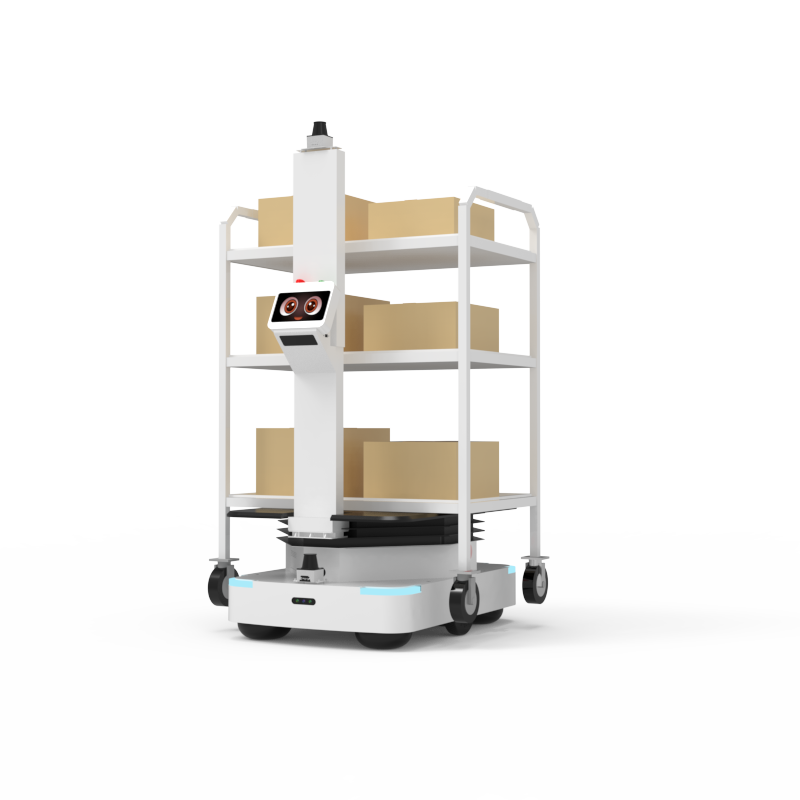
600KG Industrial Heavy Load AMR Robot Laser SLAM Auto Lifting Mobile Platform for in Plant Material Handling
A 600 kg heavy-load lifting AMR for repetitive in-plant transfer, line-side replenishment and production logistics where stable laser SLAM navigation matters.
- 600 kg payload class
- Laser SLAM, no tape
- Auto lifting platform
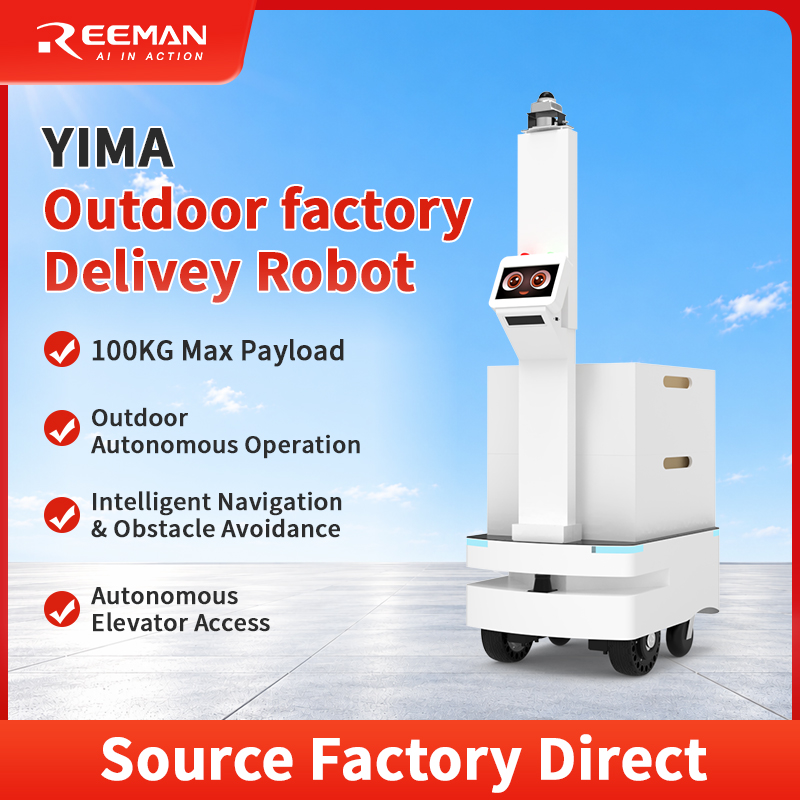
REEMAN Outdoor Delivery Robot 100kg Payload Autonomous Navigation Obstacle Avoidance Elevator Access Warehouse Logistics
A 100 kg autonomous delivery robot with obstacle avoidance and elevator access for semi-outdoor and warehouse logistics routes in Palembang campus environments.
- 100 kg payload
- Autonomous navigation
- Elevator access option
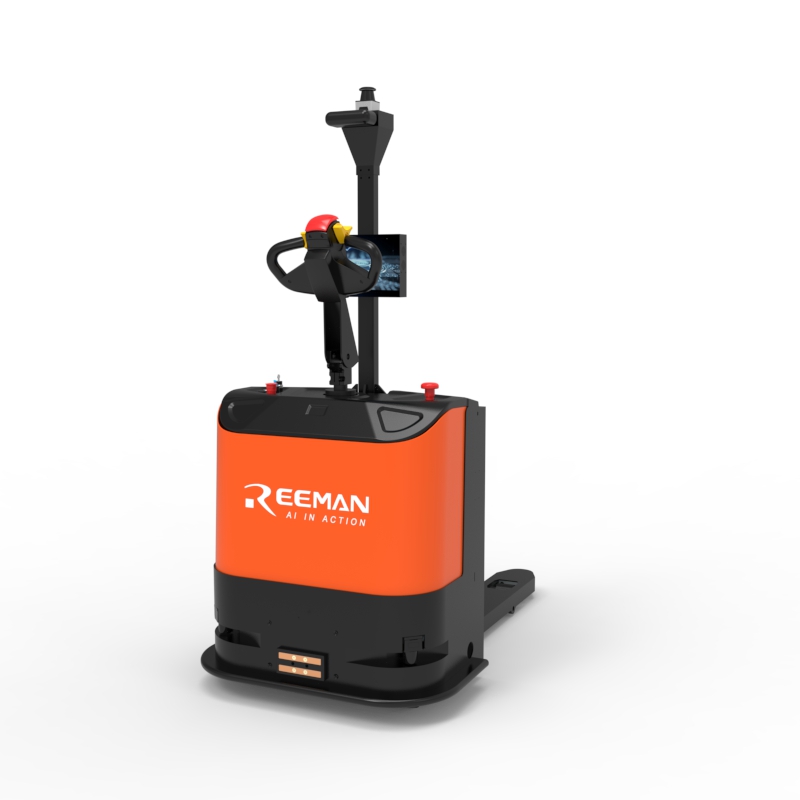
CE Certified 1500kg Driverless AGV Forklift Laser SLAM Navigation Automatic Pallet Loading Unloading Robot 1-2H Working Time
A CE-certified 1.5-ton driverless forklift for automatic pallet loading and unloading — suited to pallet transfer between storage, staging and dispatch zones.
- 1,500 kg rated load
- Laser SLAM navigation
- Pallet pick and drop

REEMAN X-ant JBOT20F 2 Ton Autonomous Forklift AGV Laser SLAM Pallet Handling Robot for Warehouse Logistics
A 2-ton autonomous forklift AGV for warehouse logistics, designed around laser SLAM pallet handling where conventional forklift labor is repetitive and hard to scale.
- 2,000 kg load class
- Laser SLAM
- Warehouse pallet handling
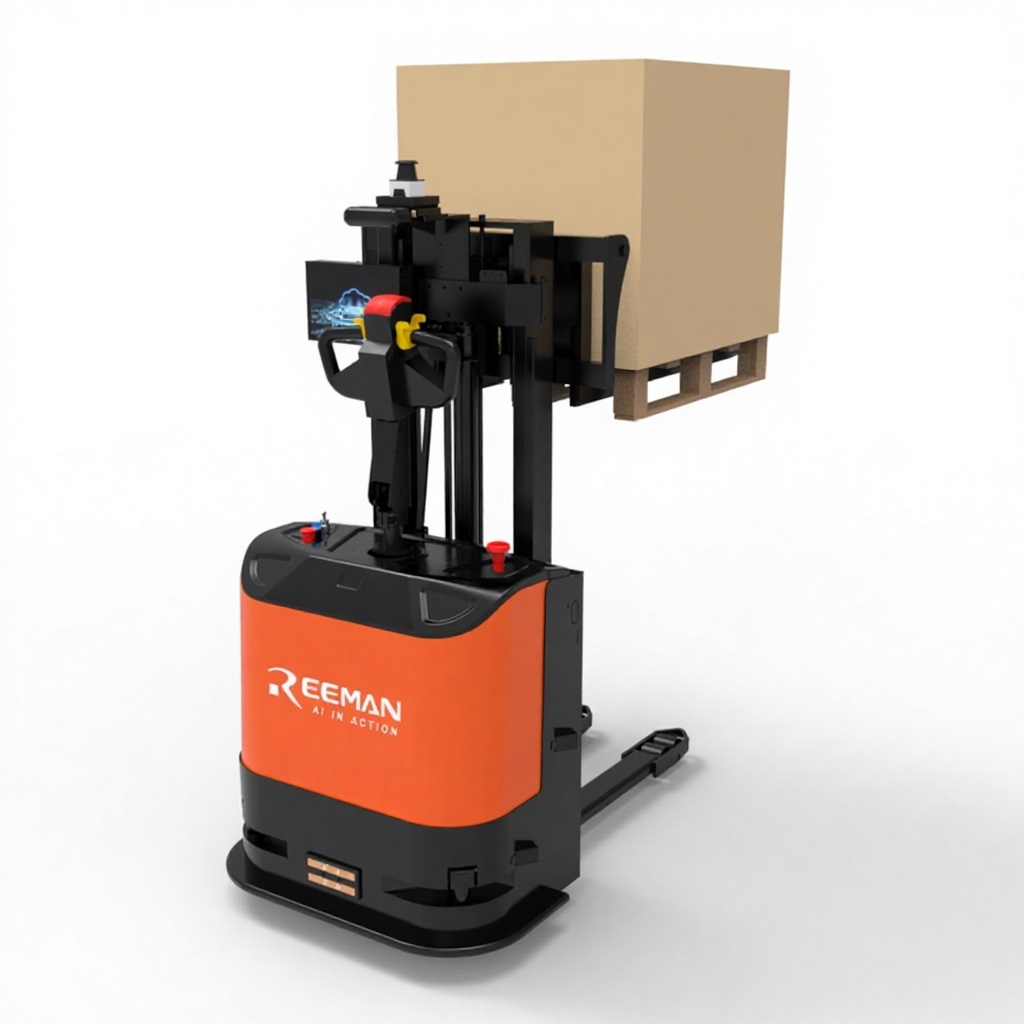
REEMAN Rhino RBOT30F Autonomous Stacker Forklift 3D Vision Obstacle Avoidance Warehouse AGV Robot
A stacker forklift AGV with 3D vision obstacle avoidance for low-rack storage, stacking, and warehouse operations that need more than simple horizontal transfer.
- Stacker configuration
- 3D vision avoidance
- Warehouse AGV robot
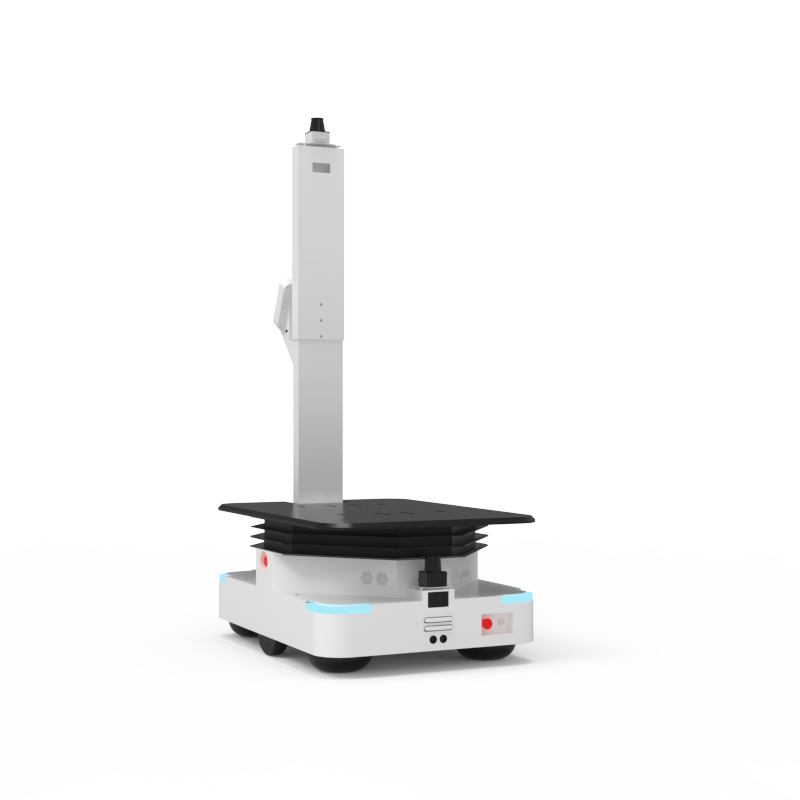
REEMAN Autonomous Mobile Robot AGV AMR 600kg Payload Sheet Metal Material Handling for Production Line
A 600 kg AMR for sheet metal and production-line material handling, useful where Palembang manufacturers need repeatable WIP transfer without fixed conveyor changes.
- 600 kg payload class
- Sheet metal handling
- Production line application

2 Ton Autonomous 4WD AGV Forklift Laser SLAM Navigation Multi-Line LiDAR 10mm Position Accuracy 6-8H Warehouse Handling
A 2-ton 4WD autonomous forklift with multi-line LiDAR and 10 mm positioning accuracy for demanding warehouse handling routes and longer operating cycles.
- 2,000 kg load class
- 10 mm positioning accuracy
- 6–8H warehouse handling
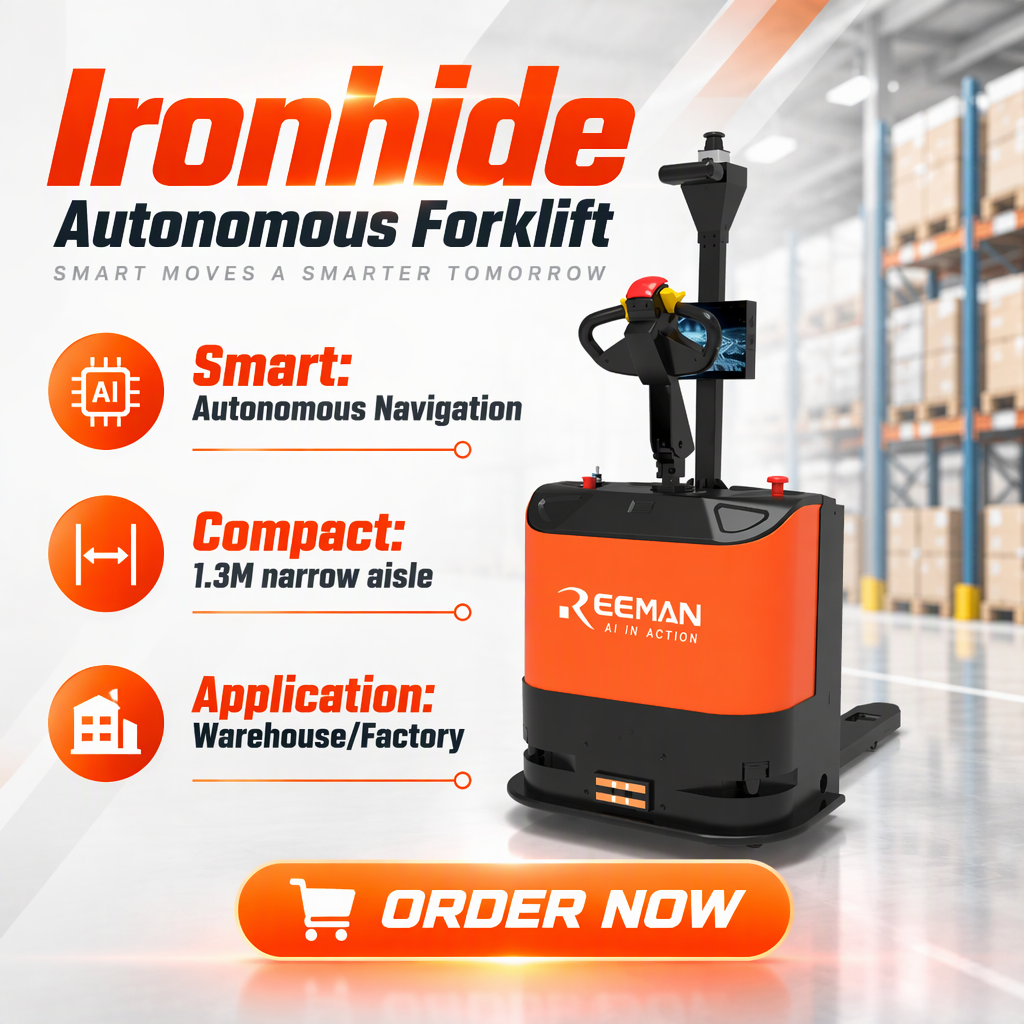
Reeman 1.5 Ton Autonomous Forklift AGV 3D Obstacle Avoidance Bidirectional Driving 48V 30AH Lithium-Ion Battery
A 1.5-ton autonomous forklift AGV with 3D obstacle avoidance and bidirectional driving for compact warehouse aisles and repetitive pallet movement.
- 1,500 kg load class
- 3D obstacle avoidance
- 48V 30AH lithium-ion battery
Automated Guided Vehicle Factory Serving Palembang: The Short Answer
Palembang buyers are not simply comparing robot prices. They are comparing deployment risk, integration depth, spare-part discipline and factory transparency.
Palembang is not a generic destination in an export catalogue. It is the capital of South Sumatra and a working logistics city where the Musi River, the Trans-Sumatra road corridor, regional distribution routes and industrial processors converge. For a warehouse group, FMCG distributor, manufacturing plant or port-linked logistics operator in Palembang, an automated guided vehicle (AGV) project has to solve three practical problems: how to move standard pallets safely in mixed traffic, how to integrate robot tasks with existing WMS/MES/ERP workflows, and how to keep charging, spares and operator training manageable after commissioning.
This guide is written for that exact search intent: an automated guided vehicle factory serving Palembang that can provide product depth, local application logic and transparent procurement information rather than a generic list of machines. Elvorn manufactures in Shenzhen and Ningbo, not in Palembang. Palembang projects are served through factory-direct export, English documentation, remote commissioning and an engineering process that starts with your layout, load data and throughput target.
For Palembang procurement teams, the strongest shortlist is not always the lowest quoted unit price. The stronger shortlist is the factory that can explain navigation performance, safety zoning, charging strategy, fleet scheduling, WMS/MES integration, spare-part kits and tropical-humidity maintenance in writing. That is the information gain this page provides: a practical evaluation framework for buying AGVs and AMRs for Palembang and South Sumatra.
Where AGVs and AMRs Create Value in Palembang
Palembang’s industrial and distribution profile rewards repeatable, safe material flow more than one-off demonstrations.
Port-Linked and Musi River Logistics
Warehouses serving river, road and regional freight flows need pallet shuttling between receiving, staging, storage and dispatch. Autonomous forklifts reduce repeated dock-to-storage trips and make shift performance easier to measure.
Manufacturing and Line-Side Feeding
Production plants can use 600 kg AMRs for sheet metal, work-in-progress and consumable transfer. Laser SLAM navigation avoids fixed conveyor changes when line layouts evolve.
Commodity and Process Industry Support
Rubber, palm oil, fertilizer, cement and mineral-related operations often involve heavy pallets, dusty zones and repeated route patterns — strong candidates for 1.5-ton and 2-ton AGV forklifts after a floor and cleaning review.
FMCG, Retail and Cold Chain
Distributors can automate standard pallet movement between receiving bays, racks and loading areas. Cold-chain plans should confirm condensation control, charging placement, battery strategy and door-opening coordination.
3PL and Warehouse Fleets
Third-party logistics operators benefit from open API integration with WMS task dispatch and status feedback. Fleet scheduling becomes more valuable as SKU velocity and multi-shift operations increase.
Commercial and Institutional Campuses
Hospitals, hotels, offices and exhibition venues can use autonomous delivery platforms for repetitive internal movement, while commercial autonomous robots support service and facility operations.
Local Automation Trends That Affect AGV Selection
These are the design questions our application engineers review before recommending a Palembang fleet configuration.
Multi-Shift Labor Pressure
Repetitive pallet movement, driver availability and shift handover quality make autonomous forklifts attractive where routes are stable and safety rules are clear.
WMS/MES Integration
Buyers increasingly expect task dispatch, status feedback and exception alerts through open SDK/API integration rather than a standalone robot island.
Tropical Humidity
High humidity and heat require attention to condensation, ventilation, connectors, cable routing and preventive maintenance, especially around charging areas.
Mixed Traffic Safety
Pedestrians, manual forklifts, pallets and doorways require speed zones, obstacle sensors, emergency stops, signage and a site-specific risk assessment.
Floor and Infrastructure
Floor flatness, expansion joints, ramps, aisle width, Wi-Fi coverage and charger placement should be reviewed before final throughput calculations.
Energy and Charging
Confirm 220V/50Hz or 380V three-phase supply, dedicated charging space, ventilation and opportunity-charging routines for the selected lithium-ion battery configuration.
Match Payload, Navigation and Throughput
Use this as a first-pass fit matrix. Final selection requires a site survey, pallet dimensions, route map and pick/drop time study.
100–600 kg AMR Platforms
Best for totes, carts, sheet metal, line-side replenishment and production WIP. Flexible routing and open API integration are usually more important than raw speed.
1.5–2 Ton Forklift AGVs
Best for standard pallets, dock-to-storage transfer, staging and rack feeding. Fork dimensions, pallet condition, aisle width and safety zoning drive the final configuration.
Outdoor, 4WD and Stacker AGVs
Best for ramps, semi-outdoor routes, low-rack stacking or elevator-linked delivery. A detailed site survey is essential because weather, floor transitions and door control affect uptime.
Why Elvorn Is Relevant to Palembang Buyers
Established in 2015, Shenzhen Elvorn Intelligent Equipment Co., Ltd. is a national high-tech enterprise focused on robotic platform technology and autonomous driving.
Laser SLAM Navigation
Maps a site and navigates without magnetic tape, QR codes or floor reflectors. Layout changes are easier to manage because the route is software-defined.
Open SDK & API
AMRs and robot chassis support secondary development for WMS, MES, ERP, elevator, door and custom dashboard integration — a critical requirement for Palembang projects.
Modular Payload Platforms
From 100 kg delivery robots to 2-ton autonomous forklifts, shared control architecture simplifies fleet training, spare-part planning and maintenance routines.
Two Production Bases
Manufacturing operations in Shenzhen and Ningbo cover 5,200㎡ of total floorspace, with onsite material inspection and supplier assessment procedures.
Audited Quality System
ISO 9001 and ISO 14001 management systems, SGS onsite verification, and model-dependent CE, FCC or PSE marks support buyer due diligence.
Export-Ready Support
English documentation, remote commissioning, spare-part supply, FOB terms and T/T payment in USD or CNY are available for Southeast Asia and other export markets.
R&D, Production and Quality Control
Palembang buyers need evidence of engineering depth and test discipline, not only a product photo.

Headquarters and R&D center in Shenzhen.

Robot assembly and production workflow.

Engineering and quality testing team.
From Palembang Site Survey to Stable Operation
A structured six-step workflow reduces deployment risk for overseas buyers.
Requirement Review
Share layout drawings, load data, pallet type, shift pattern and target throughput. Clear inputs prevent over- or under-sizing the fleet.
Site and Route Survey
Review floors, ramps, doorways, aisle widths, Wi-Fi, charging locations, pedestrian traffic and manual forklift interaction.
Solution Design
Engineers recommend models, fleet size, charging strategy, safety zones and integration scope for WMS, MES or custom dispatch.
Customization and Build
OEM branding, top modules, fork configuration, software interfaces and packaging are built to the agreed specification.
Factory Testing
Function and load tests are completed before shipment, with test records available for buyer review where applicable.
Deploy and Optimize
Remote mapping support, operator training, spare-part planning and route optimization help stabilize the Palembang deployment.
Palembang Buyer Checklist Before Requesting a Quote
Providing these six inputs early usually shortens the engineering review and makes pricing more comparable between AGV factories.
Layout Drawing
Upload aisles, doors, elevators, ramps, staging areas and charger locations. A CAD or PDF layout is useful even if it is not final.
Load and Pallet Data
Provide pallet size, weight, material,Condition, rack height and fork entry clearance. These details determine whether a 1.5-ton, 2-ton or AMR platform fits.
Throughput Target
State moves per hour, operating shifts, peak periods and pick/drop time expectations. Throughput must allow for safety derating and charging.
IT and Integration Map
Confirm whether the robot must connect to WMS, MES, ERP, elevators, doors or custom dashboards, and who will manage the local network.
Site Conditions
Document humidity controls, floor joints, power supply, Wi-Fi coverage, dust, traffic and any restricted zones before final model selection.
Support Plan
Agree on commissioning scope, operator training, spare-part kit, response channel and long-term maintenance responsibilities for the Palembang site.
Frequently Asked Questions for Palembang Buyers
Practical answers for warehouses, factories and distributors comparing AGV factories that serve Palembang and South Sumatra.
Does Elvorn have an AGV factory in Palembang, or does the factory serve Palembang by export?
Can you deliver an autonomous forklift or AMR to Palembang?
What is the typical lead time for a Palembang AGV project?
Are the robots suitable for Palembang’s humid tropical environment?
How are AGVs integrated with WMS, MES or ERP systems?
What about voltage, charging and floor conditions in Palembang?
How is safety handled in mixed forklift and pedestrian traffic?
What spare parts, training and after-sales support are available?
Can Elvorn provide OEM, ODM or buyer-label customization for Indonesian distributors?
Which certifications and due-diligence documents are available?
Request a Palembang-Specific AGV Proposal
Send your warehouse layout, pallet size, load weight, throughput target and IT integration requirements. Elvorn’s application engineers will recommend the right AGV or AMR configuration for your Palembang project.