Autonomous Cleaning Robot Factories & Wholesaler Serving Los Angeles
Factory-direct autonomous cleaning, disinfection, material-handling and service robots for Los Angeles warehouses, 3PLs, hotels, healthcare campuses, retail portfolios and manufacturers. Laser SLAM navigation, open SDK/API integration and export-ready wholesale support from an SGS-verified manufacturer established in 2015.
Eight Autonomous Systems for Los Angeles Automation Roadmaps
Los Angeles buyers rarely purchase a cleaning robot in isolation. A cleaning pilot in a distribution center near the San Pedro Bay ports may sit beside pallet-transfer automation, line-side AMRs, mobile advertising robots and customer-facing service robots. The eight factory-direct systems below reflect the platforms most often evaluated when building a mixed automation roadmap. For cleaning-specific configurations, disinfection routines, private-label programs or multi-model quotations, contact our engineering team directly.
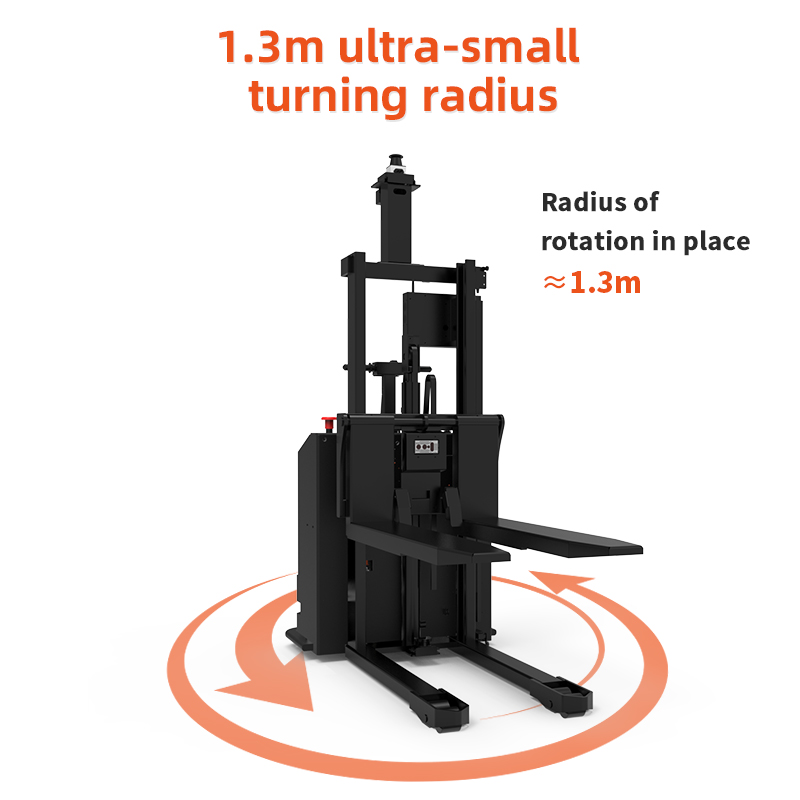
1000kg Forklift AGV Laser SLAM Navigation Pallet Transport Robot 1.3m Turning Radius Auto Charging for Factory Logistics
A 1,000 kg laser SLAM forklift AGV with 1.3 m turning radius and auto charging for pallet transport in Los Angeles warehouses, transload centers and factory logistics.
View product specifications →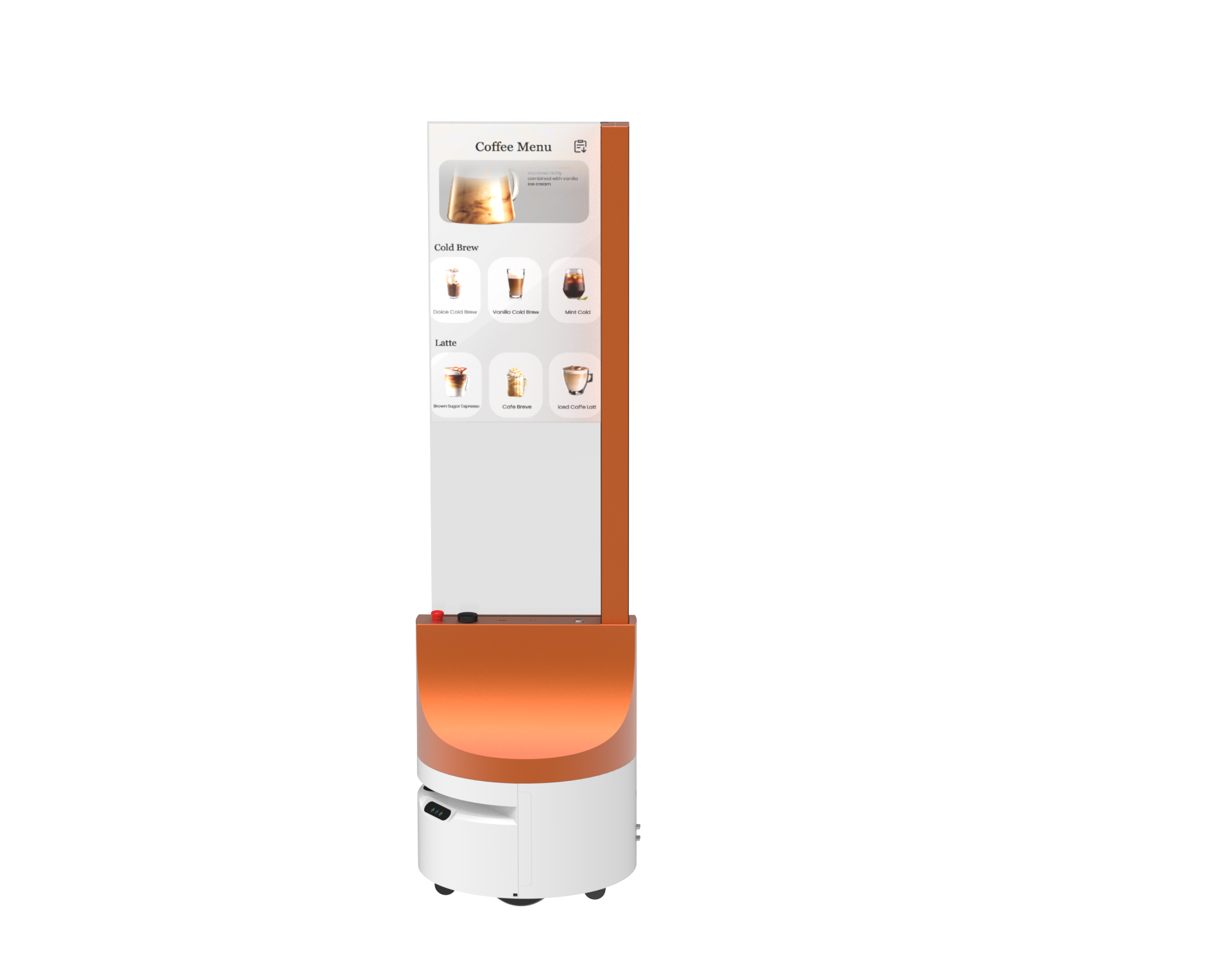
REEMAN 30 Inch OLED Transparent Screen Mobile Advertising Robot 1080 x 1920 FHD 9:16 Wi-Fi App Remote Control
A 30-inch transparent OLED mobile advertising robot with 1080 x 1920 FHD display, Wi-Fi and app remote control for retail, malls, showrooms and exhibitions.
View product specifications →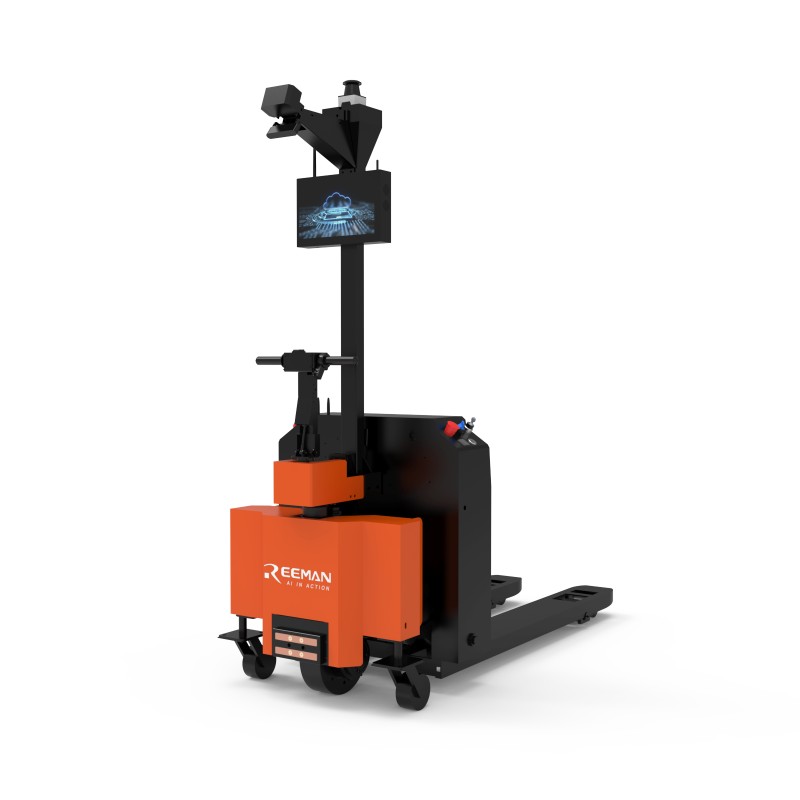
Reeman 2 Ton Autonomous Forklift AGV Laser SLAM Unmanned Pallet Truck 1085mm Fork 10mm Position Accuracy
A 2-ton autonomous forklift AGV with 1085 mm fork and 10 mm position accuracy for heavy pallet flows and repetitive dock-to-storage movement.
View product specifications →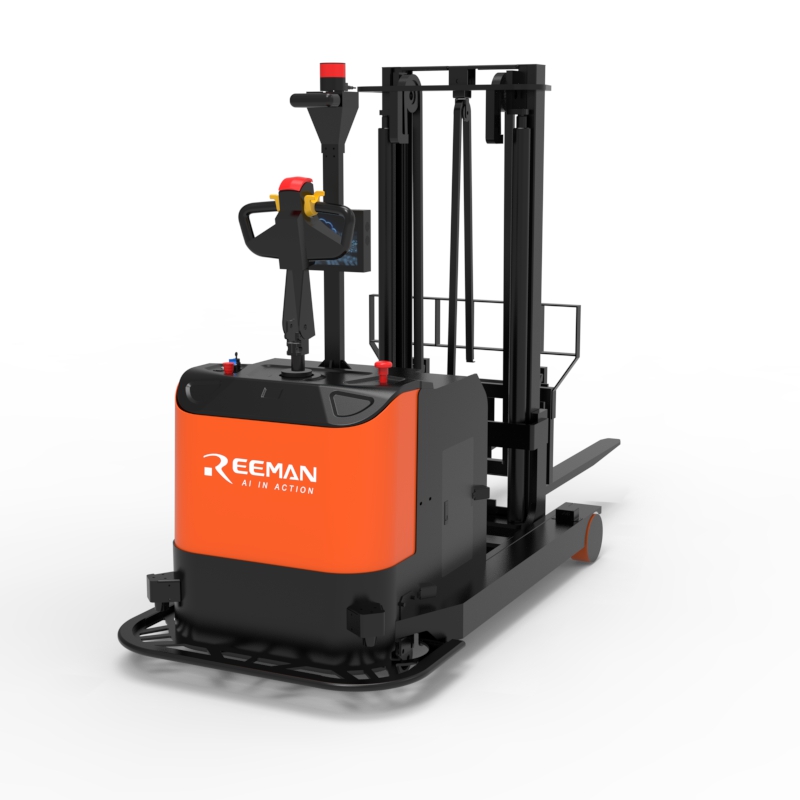
Reeman Autonomous Electric Stacker Forklift 1.2 Ton Li-Ion 48V 30Ah 2500mm Lift Laser Navigation 3m Aisle
A 1.2-ton lithium-ion autonomous stacker with 2,500 mm lift and laser navigation for 3 m aisle operation in compact Los Angeles facilities.
View product specifications →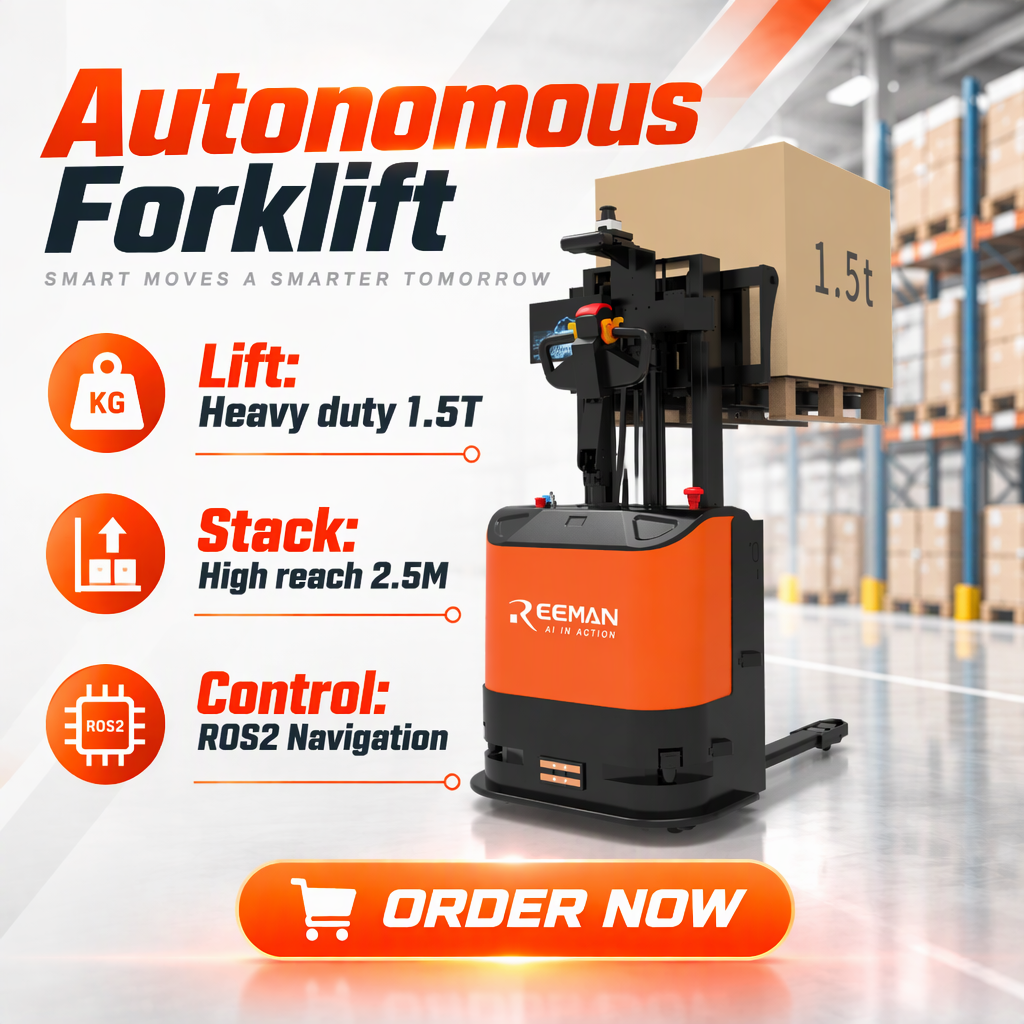
Autonomous Electric Forklift AGV 1500kg Load Capacity 2.5M Lift ROS2 Navigation 4WD Lithium-Ion Battery Indoor Material Handling
A 1,500 kg ROS2 autonomous electric forklift with 2.5 m lift, 4WD and lithium-ion battery for indoor material handling and production feeding.
View product specifications →
2 Ton Autonomous 4WD AGV Forklift Laser SLAM Navigation Multi-Line LiDAR 10mm Position Accuracy 6-8H Warehouse Handling
A 2-ton 4WD AGV forklift with multi-line LiDAR, 10 mm positioning accuracy and 6–8 hour warehouse handling capability for demanding shifts.
View product specifications →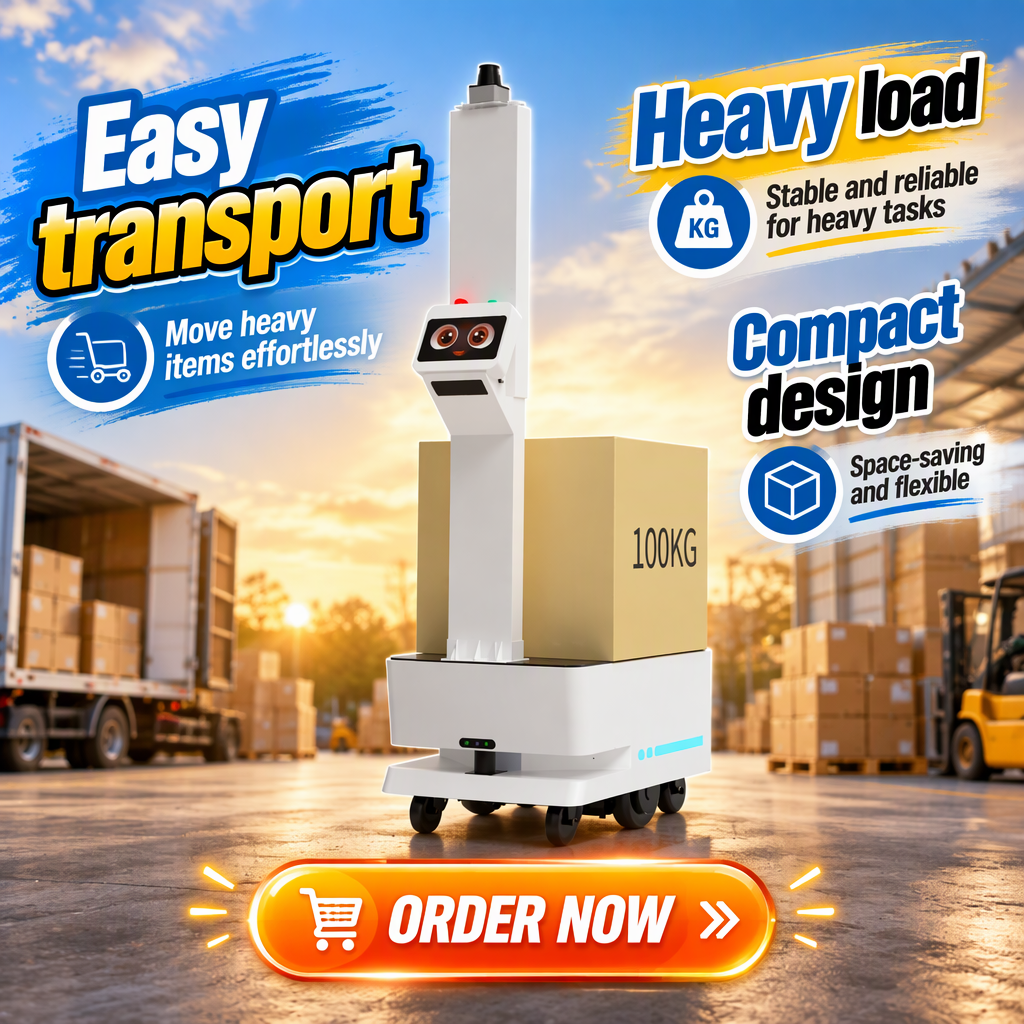
Reeman Autonomous Mobile Robot Slam Navigation PLC Core Components Warehouse Logistics
A SLAM navigation autonomous mobile robot with PLC core components for warehouse logistics, task dispatch and secondary integration.
View product specifications →
Dual Laser AMR 300KG AGV Lifting Mobile Robot with Slam LiDAR Navigation for Manufacturing Plants
A dual-laser 300 kg lifting AMR with SLAM LiDAR navigation for manufacturing plants, line-side transfer and repetitive small-load movement.
View product specifications →Product availability, final configuration and certification scope are confirmed after reviewing your Los Angeles site layout, floor conditions, power plan, payload, throughput target and integration requirements.
200+ team members · two production bases in Shenzhen and Ningbo · factory data verified onsite by SGS Group · ISO 9001 and ISO 14001 management systems
Autonomous Cleaning Robots for Los Angeles Facilities
A cleaning robot is not a single machine category. It is a repeatable process for floors, high-touch public areas, after-hours service and measurable indoor hygiene. Elvorn builds cleaning, sweeping, mopping and disinfection robots for commercial and industrial environments, and supports Los Angeles buyers with factory-direct wholesale, OEM/ODM customization, spare-part planning and remote commissioning. For facilities comparing a local distributor with an overseas factory, the real question is not simply price per unit; it is whether the robot can be deployed, integrated, maintained and summarized in the language your operations team already uses.
Floor sweeping, vacuuming and scrubbing
For Los Angeles warehouses, retail environments, airports, campuses and commercial buildings that need consistent floor care across shifts. Program scheduled routes, define no-go zones, assign charging windows and review completed-area reports so cleaning performance is measured rather than assumed.
Disinfection and indoor hygiene routines
For high-traffic public areas, healthcare-adjacent facilities, hotels and corporate campuses, autonomous disinfection routes can support staff workflows and documented coverage. Final use should always follow your facility protocol, chemical compatibility requirements and trained-operator oversight.
Delivery and mobile service robots
Los Angeles hospitality, healthcare and retail teams can combine cleaning programs with mobile service robots for food runs, room service, linen movement, guidance and advertising. The 30-inch transparent OLED robot and commercial delivery platforms help reduce walking time while creating a visible technology experience for guests and visitors.
Los Angeles Scenarios Where Autonomous Robots Create Value
The Los Angeles Basin combines one of the world’s busiest port complexes, dense commercial real estate, tourism, healthcare, education and advanced manufacturing. Those environments create different cleaning, delivery and material-flow problems, and each one demands a different deployment checklist.
Port-adjacent warehouses and 3PLs
Distribution centers around the Port of Los Angeles and Port of Long Beach face high pallet velocity and mixed pedestrian traffic. Pair autonomous forklifts or AMRs with after-hours floor cleaning, then define speed zones, charging locations and traffic rules near docks and staging lanes.
Retail, malls and entertainment venues
Los Angeles retail teams need clean floors, consistent customer experience and measurable labor allocation. Cleaning robots can run before opening or after closing, while mobile advertising robots support promotions, wayfinding and event engagement in high-footfall zones.
Hotels, airports and hospitality
Hotels, conference venues and airport-adjacent facilities can use delivery robots for repetitive item movement and cleaning robots for lobby and corridor care. The operational gain comes from scheduling, staff handoff and exception handling, not from adding a robot without process ownership.
Healthcare and senior living campuses
Quiet operation, predictable routes and documented coverage matter in care environments. Autonomous disinfection and delivery robots can support staff, but they must be introduced with clear traffic rules, emergency procedures and operator training that fit the facility’s clinical and safety protocols.
Food processing and commercial kitchens
Food and beverage environments need floor-care routines that respect sanitation schedules, water control and staff movement. Before selecting a cleaning robot, confirm floor type, drainage, chemical compatibility, IP requirements and the handoff between autonomous cleaning and manual sanitation tasks.
Manufacturing, aerospace and electronics
Los Angeles manufacturers can use 300 kg lifting AMRs and autonomous forklifts for line-side transfer, WIP movement and pallet logistics. Cleaning robots can cover walkways and open floor zones on separate schedules, reducing conflict with production traffic.
What Los Angeles Buyers Are Evaluating Now
The strongest robot projects in Los Angeles are not driven by novelty. They are driven by throughput variability, labor scheduling, safety documentation, energy planning and the need to prove results across multiple sites. These themes appear repeatedly in current project scoping conversations.
Port-driven logistics density and labor flexibility
Import, export and transload activity around the San Pedro Bay ports rewards automation that can absorb schedule swings. Los Angeles 3PLs and warehouses are evaluating autonomous forklifts and AMRs not only to reduce labor exposure, but also to stabilize night-shift throughput and reduce dependence on repeatedly training temporary operators.
Commercial real estate portfolios want measured cleaning outcomes
Property managers and facility teams are moving from “robot demonstrations” to KPI-based pilots: square footage covered, missed zones, consumable cost, charging uptime, response time and occupant feedback. This favors suppliers who can provide documentation, remote diagnostics and a clear spare-part plan rather than a one-time hardware shipment.
Wholesale, OEM and private-label programs are growing
Los Angeles integrators and distributors increasingly ask for buyer-label branding, custom top modules, packaging changes, open SDK access and multi-model purchasing. A factory with its own R&D, two production bases and export documentation can support these programs more consistently than a trading-only supplier.
Illustrative Los Angeles project-scoping weights
Application engineers commonly weigh these factors when comparing robot configurations. The chart is an illustrative scoping tool, not a statistically representative market survey; replace the weights with your own facility KPIs.
Match the Platform to the Los Angeles Workflow
Use this quick-reference table during first-round scoping. The final quotation should always be based on your layout drawing, floor condition, load data, shift schedule, charging plan and software integration requirements.
| Workflow | Recommended system | Why it fits Los Angeles operations | Decision checkpoint |
|---|---|---|---|
| Dock-to-storage pallet transfer | 1000kg Forklift AGV or 1500kg ROS2 Forklift AGV | Repetitive pallet movement near ports, 3PLs and transload centers; laser SLAM avoids floor tape and reflectors. | Confirm aisle width, pallet type, charger location and throughput per shift. |
| Heavy pallet handling | 2 Ton Autonomous Forklift AGV or 2 Ton 4WD AGV Forklift | Built for heavier loads and high-throughput handling where multi-line LiDAR and 10 mm positioning accuracy matter. | Review floor flatness, speed zones, rack interface and 6–8 hour shift planning. |
| Narrow-aisle stacking | Autonomous Electric Stacker 1.2 Ton | 3 m aisle capability and 2,500 mm lift support compact Los Angeles buildings with limited expansion space. | Check rack height, overhead clearance, fork dimensions and charging access. |
| Manufacturing line-side transfer | Dual Laser AMR 300KG or SLAM AMR with PLC core | Supports repetitive small-load movement, WIP transfer and flexible routing in production and warehouse zones. | Define top module, WMS/MES integration, traffic rules and pedestrian zones. |
| Retail, showroom and event engagement | 30 Inch OLED Transparent Advertising Robot | Combines mobility, digital signage and app-based control for malls, showrooms, exhibitions and brand events. | Plan content workflow, floor space, Wi-Fi coverage and operating hours. |
| Autonomous cleaning and disinfection program | Elvorn cleaning, sweeping, mopping and disinfection robot configurations | For offices, hotels, retail, campuses, healthcare-adjacent facilities and industrial walkways with repeatable cleaning routes. | Measure square footage, floor type, water/dust control, charging time and staff handoff. |
Why Los Angeles Buyers Work with Elvorn
E-E-A-T in industrial procurement is built on verifiable engineering, transparent production and documentation that survives due diligence. Elvorn combines in-house R&D, two production bases and export-ready wholesale support so Los Angeles buyers can evaluate the total deployment path, not only the unit price.
Laser SLAM navigation without floor infrastructure
Robots map the site and navigate without magnetic tape, QR codes or reflectors. This reduces installation work and makes it easier to adjust routes when Los Angeles facilities reconfigure racking, staging lanes or cleaning zones.
Open SDK and API for integration
AMRs and robot chassis support secondary development so integrators can connect task dispatch, status feedback, WMS, MES and custom dashboards. Los Angeles buyers can align robots with existing workflows rather than forcing a separate process.
Modular platforms from 60 kg to 2-ton class
Delivery robots, AMRs, robot chassis, autonomous stackers and 2-ton forklifts share control architecture and engineering support. That modularity simplifies operator training, fleet planning and spare-part strategy for multi-site operators.
Multi-layer safety architecture
Lidar, obstacle sensors, emergency stops and configurable speed zones help robots operate around pedestrians, forklifts and racking. Final safety settings must match your site risk assessment and local operating rules.
Two production bases and SGS-verified factory data
Founded in 2015, Elvorn operates two production bases in Shenzhen and Ningbo with 5,200㎡ of floorspace, a 200+ team and 39 patents. The factory has been verified onsite by SGS Group, with ISO 9001 and ISO 14001 management systems.
Export-ready wholesale, OEM and ODM support
English documentation, remote commissioning, spare-part planning and buyer-label options support Los Angeles distributors and integrators. Trade terms are FOB, payment is T/T in USD or CNY, and main export markets include North America, Western Europe, Eastern Asia, Southeast Asia and the Middle East.
R&D, Production and Quality Control
Los Angeles buyers performing supplier due diligence should look beyond a product catalog. The factory should provide evidence of engineering capability, assembly control, testing records, certification scope and export packing. Elvorn’s SGS-verified factory profile and public assessment documents support that review.

Headquarters and R&D center: control architecture, laser SLAM navigation, fleet scheduling and hardware development are handled in-house.

Assembly line: supplier assessment, incoming material inspection and production procedures support consistent build quality across robot families.

Engineering and testing team: functional checks and load-related testing are completed before shipment, with test records available for project review.
From Site Survey to Stable Operation
A Los Angeles cleaning or material-handling pilot should be structured like an engineering project, not a product checkout. The five-step workflow below reduces deployment risk and gives procurement, operations and IT teams clear checkpoints.
Requirement review
Share floor plans, area, floor type, load data, pallet type, power access, Wi-Fi coverage and target KPI.
Solution design
Engineers recommend robot type, fleet size, charging plan, safety zoning and software integration scope.
Customization and build
OEM branding, top modules, software interfaces, packaging and documentation are configured to project requirements.
Factory testing
Function and load-related tests are completed before shipment, with export packing and required commercial documents.
Deploy and support
Remote mapping, operator training, spare-part planning and long-term technical support keep the fleet productive.
Certified, Audited and Export-Ready
Certification scope is model-specific. Depending on the robot family, Elvorn products may carry CE, FCC or PSE marks, while the factory operates under ISO 9001 and ISO 14001 management systems and has been verified onsite by SGS Group. Los Angeles buyers should still confirm the exact mark, voltage, charger and documentation required for each model in the final quotation.
 Onsite Verified
 CE Marking
 FCC
 PSE
Procurement Questions from Los Angeles Buyers
These are the questions most frequently raised by warehouse operators, facility managers, distributors and integrators evaluating factory-direct robots for Los Angeles and Southern California projects.
What is included in a factory-direct autonomous cleaning robot wholesale program for Los Angeles?
A typical program can include the robot, charging hardware, consumables plan, English documentation, remote commissioning support, spare-part recommendations and operator training materials. For distributors and integrators, OEM/ODM options may include buyer-label branding, custom top modules, packaging changes and software interface support. Final scope, minimum order quantity and price depend on the model, configuration and fleet size.
Can you ship cleaning robots and autonomous forklifts to Los Angeles and Long Beach?
Yes. Elvorn exports worldwide with FOB terms and accepts T/T payment in USD or CNY. Many Los Angeles buyers use a freight forwarder into the Port of Los Angeles or Port of Long Beach, or arrange air freight for urgent samples. We support commercial invoices, packing lists and export documentation. Ocean transit, customs clearance, drayage and final delivery are typically arranged with your forwarder, so exact timing and landed cost should be confirmed for each shipment.
What power and charging requirements should Los Angeles facilities plan for?
Charging infrastructure is model-specific. Before quotation, confirm available voltage, dedicated circuit capacity, charger location, shift schedule and whether the robot will opportunity-charge or use a centralized charging area. For Los Angeles sites, plan around 120V and 208–240V availability where relevant, and identify any need for transformers or electrical upgrades. Early power planning prevents a common deployment delay caused by discovering charger incompatibility after the robot arrives.
Can the robots integrate with Wi-Fi, WMS, BMS or existing cleaning schedules?
Elvorn AMRs and robot chassis provide open SDK and API options for secondary development. Integration can support task dispatch, status feedback and connection to warehouse management, manufacturing execution or custom software systems. Cleaning and service robots can also be scheduled around operating hours. Wi-Fi coverage should be surveyed before deployment; if your site has weak coverage, discuss offline autonomy, access-point planning and exception handling with our engineers.
Which certifications apply to robots sold into the Los Angeles market?
Depending on the model, Elvorn robots may carry CE, FCC or PSE marks. The factory operates under ISO 9001 and ISO 14001 management systems and has been verified onsite by SGS Group. For United States projects, FCC is commonly relevant for electrical products, but certification scope must be confirmed model by model. The buyer should also complete local electrical, safety and facility integration reviews before commissioning.
What is the typical project process and lead time for a Los Angeles pilot?
Most projects follow a sequence: requirement review, solution design, customization confirmation, factory build, testing, export packing and remote deployment. Standard configurations and customized fleet projects have different engineering requirements, so lead time should be confirmed at purchase order. If your team needs a pilot before a full rollout, share the target KPI and site constraints; we can structure a staged evaluation with clear acceptance checkpoints.
How are spare parts and after-sales support handled for Los Angeles customers?
Support can include English documentation, remote commissioning, operator training materials, spare-part kits and troubleshooting assistance. For multi-site Los Angeles operators, we recommend defining a critical spare-parts list and a local service responsibility matrix during project scoping. Where a local integrator or service partner is involved, roles should be documented before shipment so response times and escalation paths are clear.
What is the minimum order quantity for OEM, ODM or private-label robots?
Minimum order quantity depends on the robot family, customization complexity, packaging, branding and software scope. A simple buyer-label request is different from a new top module or a custom cleaning configuration. As a verified custom manufacturer, Elvorn offers OEM service, design service and buyer-label options. Share your target model mix, forecast volume and branding requirements so the project team can provide a realistic quotation.
Build a Los Angeles Pilot with Factory-Direct Engineering Support
Send your floor plan, cleaning area, shift schedule, pallet or load data, target KPI, Wi-Fi coverage and site power details. Our engineers will return a model recommendation, approximate fleet size, integration questions and export next steps for your Los Angeles project.
info@elvornbot.com · Shenzhen Elvorn Intelligent Equipment Co., Ltd. · Serving North America from an SGS-verified factory network