Autonomous Guided Vehicle Manufacturer & Exporter Serving Oklahoma City
Elvorn designs and builds laser SLAM autonomous forklifts, industrial AMRs, robot chassis and service robots from Shenzhen and Ningbo. We support Oklahoma City distribution centers, 3PLs, factories and integrators with 60 kg–2,000 kg payloads, open SDK/API integration, CE/FCC model documentation and export-ready project support.
8 Autonomous Guided Vehicles for Oklahoma City Material Flow
A focused product set for pallet transport, stacking, line-side delivery, warehouse logistics and heavy-load mobile platforms. Product URLs are preserved exactly; the final configuration is confirmed against aisle width, load center, pallet type, charging location and WMS/MES integration.
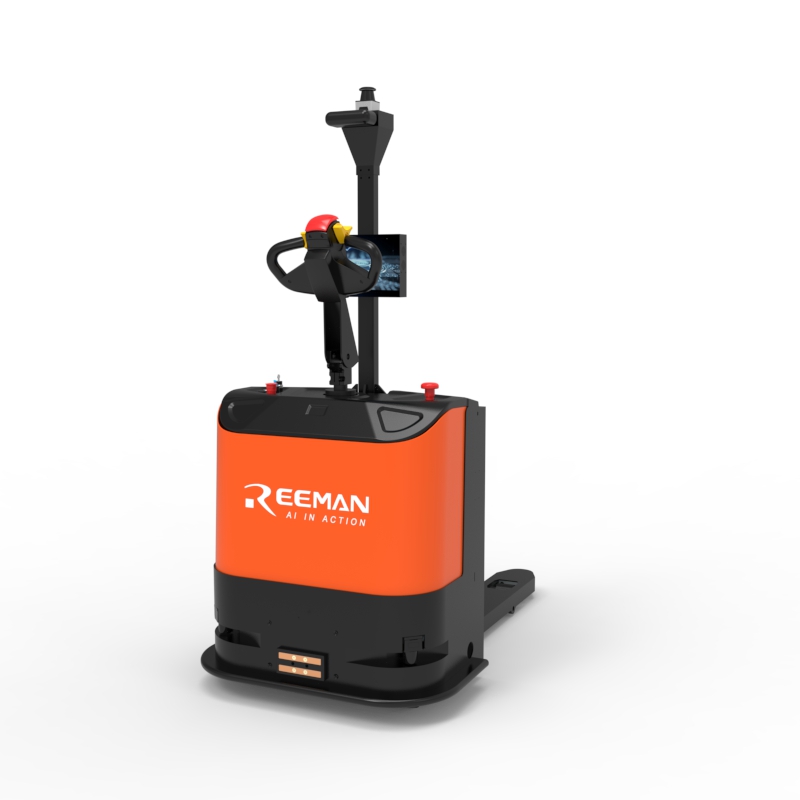
CE Certified 1500kg Driverless AGV Forklift Laser SLAM Navigation Automatic Pallet Loading Unloading Robot 1-2H Working Time
A 1,500 kg-class driverless forklift for automatic pallet loading and unloading. Laser SLAM navigation supports layout changes without floor tape; the 1–2 h working window suits high-frequency dock and staging work when opportunity charging is planned into the shift.
- 1,500 kg payload
- Automatic pallet loading/unloading
- Laser SLAM, 1–2 h working time
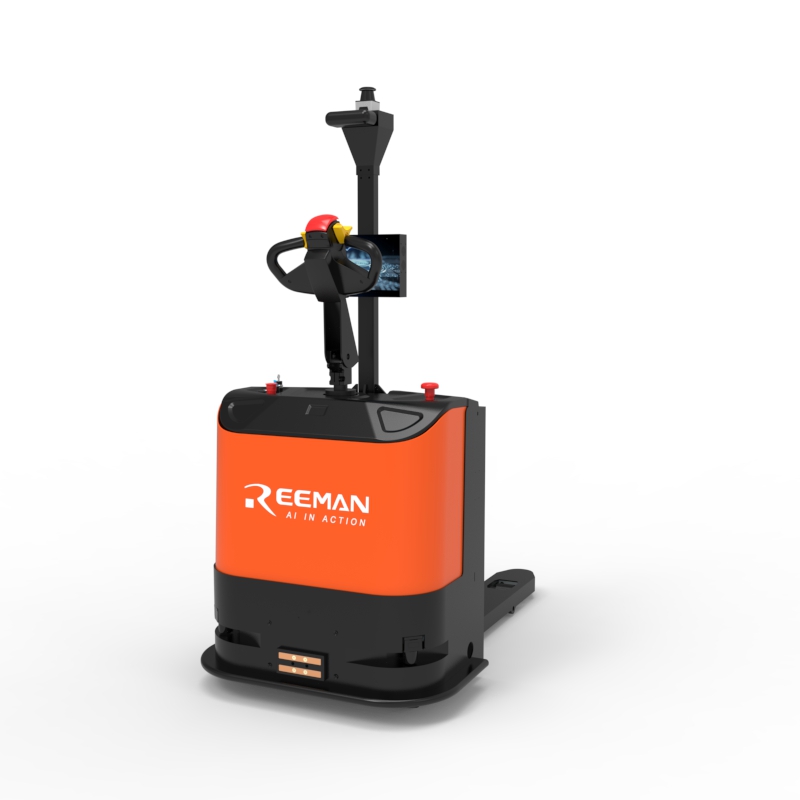
Reeman BBOT30F 1500kg Laser SLAM Autonomous Pallet Stacker AGV Single Line Lidar Obstacle Avoidance Warehouse Transport
BBOT30F stacker AGV with single-line lidar obstacle avoidance for warehouse transport and low-level pallet stacking. A practical choice for Oklahoma City 3PLs that need flexible staging lanes without permanent guidance infrastructure.
- 1,500 kg stacker class
- Single-line lidar obstacle avoidance
- Warehouse transport and stacking
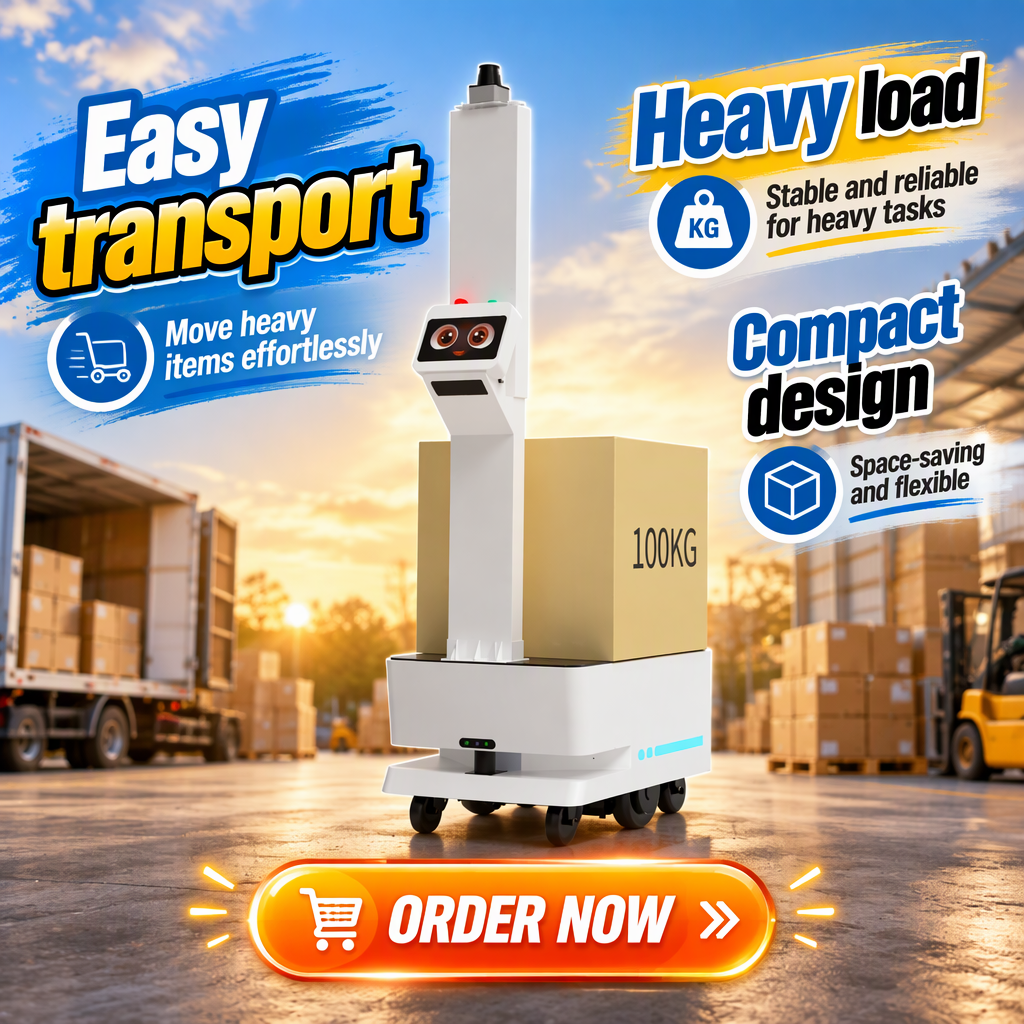
Reeman Autonomous Mobile Robot Slam Navigation PLC Core Components Warehouse Logistics
SLAM navigation AMR using PLC core components for warehouse logistics. Designed for integrators and operations that need a robust mobile platform, clear I/O and a path to fleet-level task dispatch.
- SLAM navigation
- PLC core components
- Warehouse logistics platform
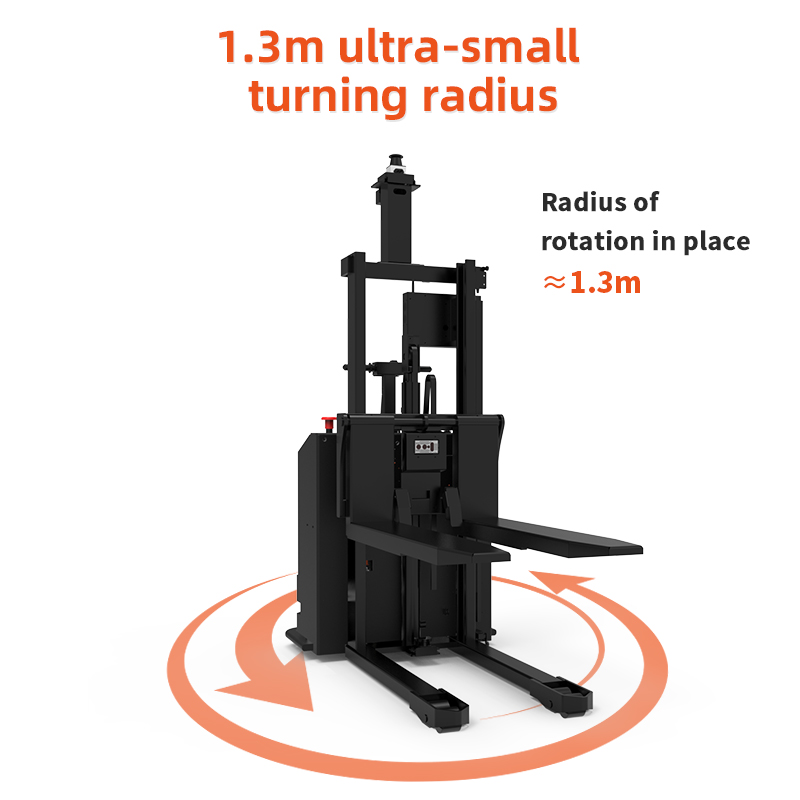
1000kg Forklift AGV Laser SLAM Navigation Pallet Transport Robot 1.3m Turning Radius Auto Charging for Factory Logistics
1,000 kg pallet transport robot with a 1.3 m turning radius and automatic charging. Suited to factory logistics, cross-dock transfer and aisles where conventional forklift traffic competes with pedestrian routes.
- 1,000 kg payload
- 1.3 m turning radius
- Auto charging for factory logistics
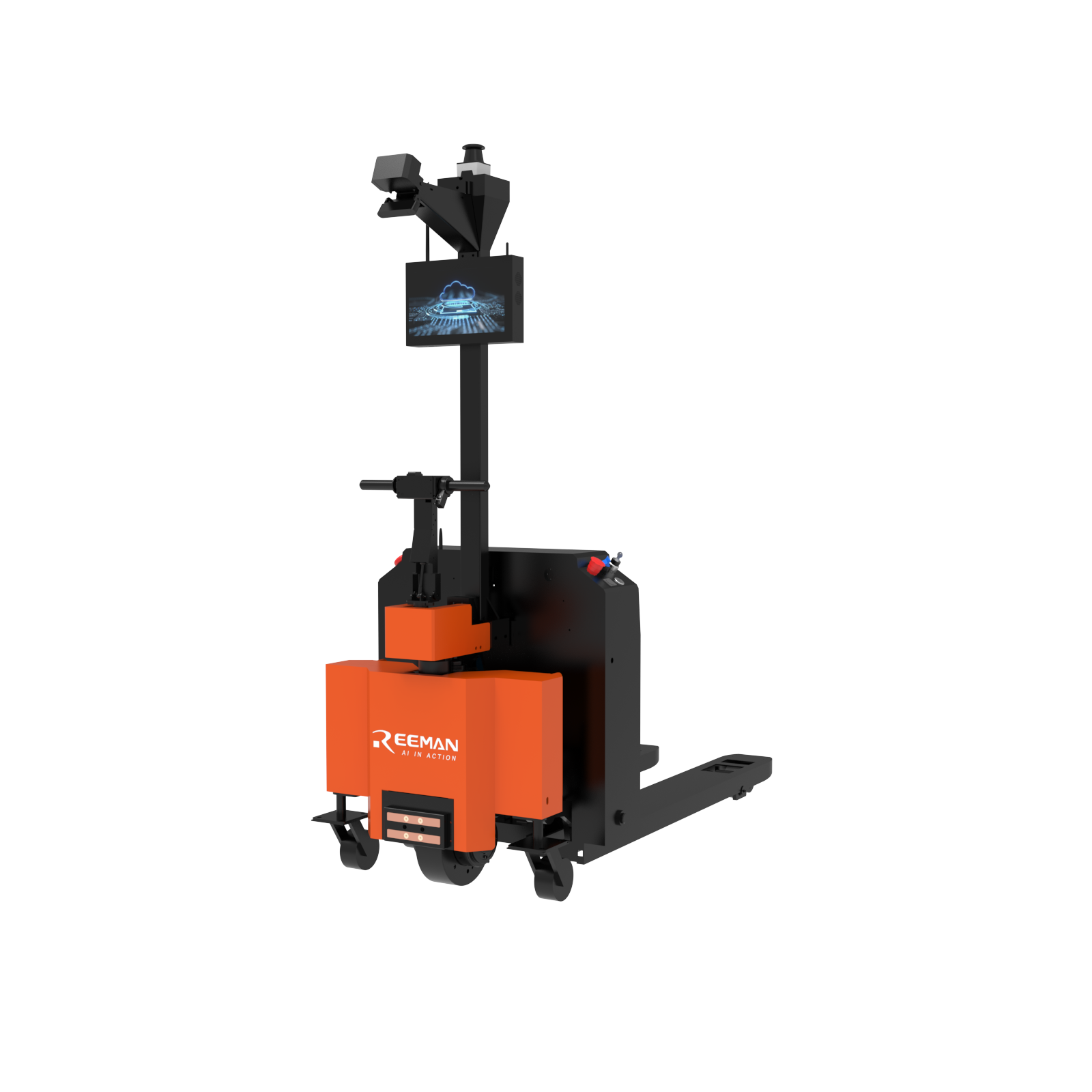
REEMAN X-ant JBOT20F 2 Ton Autonomous Forklift AGV Laser SLAM Pallet Handling Robot for Warehouse Logistics
2-ton autonomous forklift AGV for pallet handling in warehouse logistics. Laser SLAM navigation supports repeatable pick-and-drop cycles while keeping the layout free of fixed tracks.
- 2,000 kg payload
- Laser SLAM pallet handling
- Warehouse logistics deployment
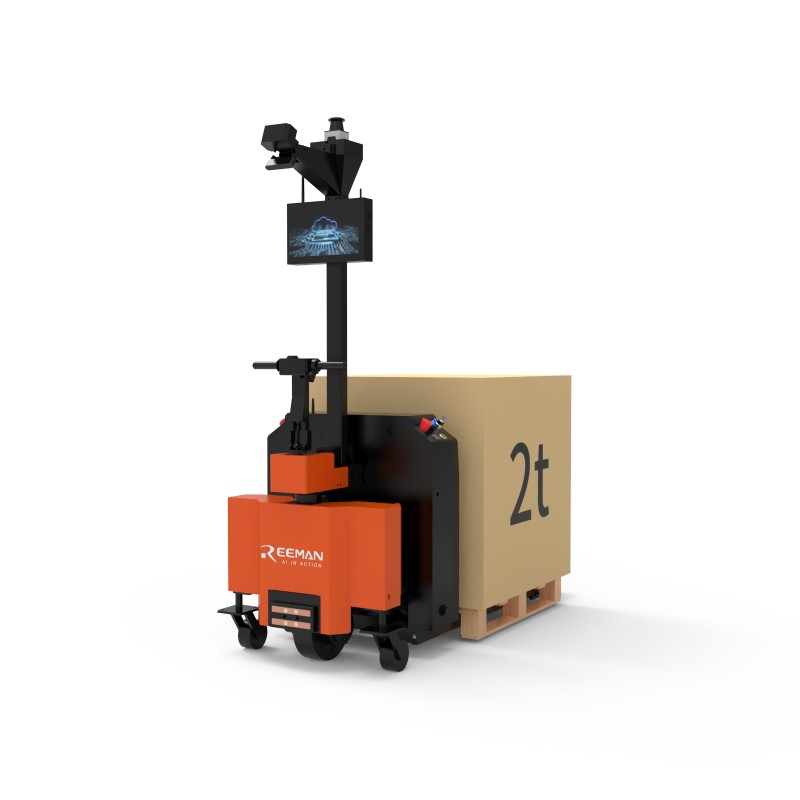
2 Ton Autonomous 4WD AGV Forklift Laser SLAM Navigation Multi-Line LiDAR 10mm Position Accuracy 6-8H Warehouse Handling
4WD 2-ton AGV forklift with multi-line LiDAR and 10 mm positioning accuracy for 6–8 h warehouse handling. A strong candidate for heavier pallet flows and high-repeatability put-away tasks.
- 2,000 kg, 4WD
- Multi-line LiDAR, 10 mm accuracy
- 6–8 h warehouse handling
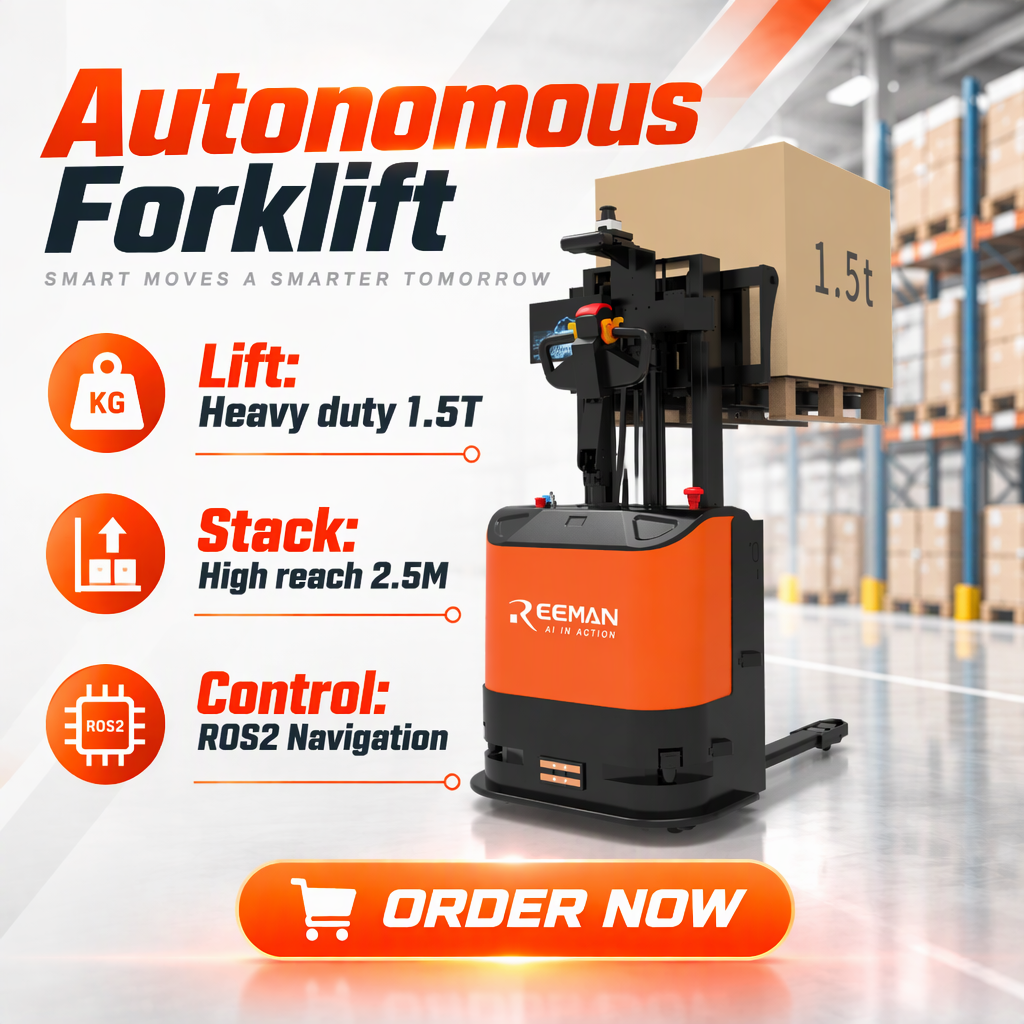
Autonomous Electric Forklift AGV 1500kg Load Capacity 2.5M Lift ROS2 Navigation 4WD Lithium-Ion Battery Indoor Material Handling
1,500 kg autonomous electric forklift with 2.5 m lift, ROS2 navigation, 4WD and lithium-ion battery. Built for indoor material handling where software integration and route flexibility matter.
- 1,500 kg, 2.5 m lift
- ROS2 navigation, 4WD
- Lithium-ion indoor handling
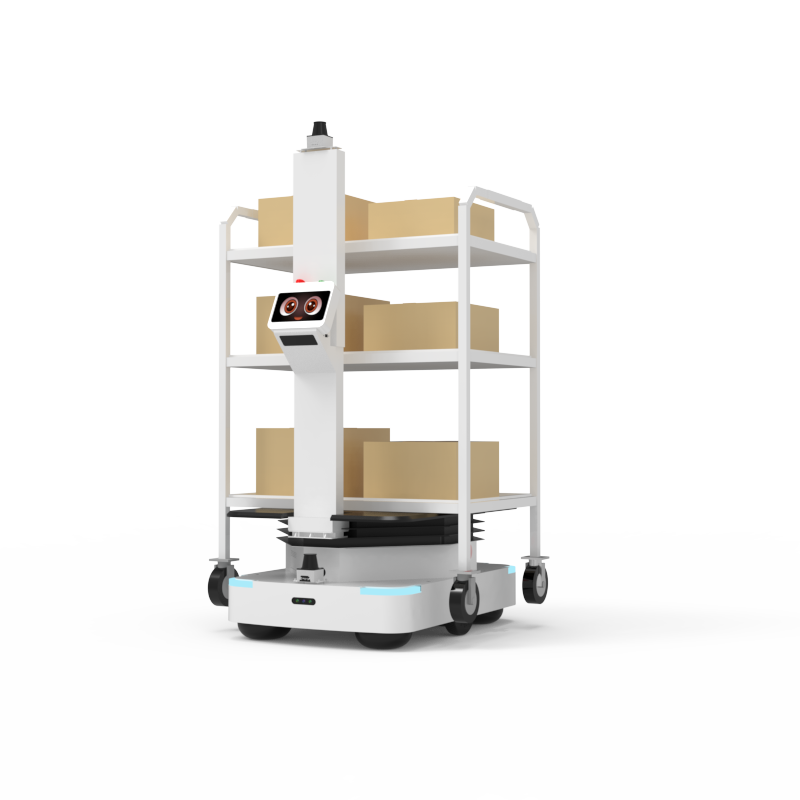
600KG Industrial Heavy Load AMR Robot Laser SLAM Auto Lifting Mobile Platform for in Plant Material Handling
600 kg industrial heavy-load AMR with laser SLAM and auto-lifting platform for in-plant material handling. Use it for WIP, carts, totes and mobile workstations that do not require fork pockets.
- 600 kg heavy load
- Auto lifting mobile platform
- In-plant material handling
All eight models are available for export to Oklahoma City on FOB terms. Electrical configuration, mast height, fork dimensions, battery strategy, charging layout and safety zoning are confirmed after application review.
Company data supported by onsite verification by SGS Group, ISO 9001 and ISO 14001 management systems, and model-level CE / FCC / PSE documentation where applicable.
Why Oklahoma City Is a Practical Market for Flexible AGV and AMR Deployment
Oklahoma City is not a single-industry warehouse market. Its position on the I-35 and I-40 corridors, combined with rail and air cargo access, supports regional distribution, e-commerce fulfillment, aerospace suppliers, energy-service companies, food and beverage distributors, healthcare logistics and 3PL operations. For a plant or distribution center in Oklahoma City, the operational problem is usually specific: pallets sit in staging too long, forklift drivers are difficult to recruit for repetitive shifts, aisle congestion creates safety exposure, or a WMS has data but no reliable physical execution layer.
An autonomous guided vehicle specification should answer those local constraints, not just list a payload. Our export engineering team starts with the aisle drawing, rack height, pallet condition, load center, floor transitions, charging location, fire-code travel paths and throughput per hour. From there we match a laser SLAM AGV, a forklift AGV or a heavy-load AMR to the work. Because the robots map the site without magnetic tape, QR codes or reflectors, Oklahoma City facilities can run a pilot in a defined zone and expand without closing aisles for floor modification.
Oklahoma City buyers also tend to compare capital cost against labor availability and safety performance. The strongest business case usually comes from repeatable lanes: dock-to-staging, staging-to-rack, line-side replenishment, WIP transfer and trailer loading where route variance is limited and the robot can keep a consistent cycle. Elvorn supports that evaluation with factory test records, model-level documentation, ISO 9001 and ISO 14001 management systems, and a clear list of what must be confirmed before shipment. That is the practical meaning of information gain for a local automation project: fewer assumptions, better cycle-time evidence and a build plan tied to the actual facility.
 R&D and production coordination from Shenzhen
 In-house assembly and platform integration
 Engineering review before export release
 Factory testing and shipment preparation
Where Autonomous Guided Vehicles Fit Oklahoma City Operations
The right system depends on the physical flow, not the industry label. These three scenarios reflect the most common Oklahoma City project discussions we see during early-stage automation planning.
Distribution, 3PL and E-commerce Fulfillment
Oklahoma City distribution centers frequently handle palletized inbound receipts, cross-dock staging and outbound trailer loading. A 1,000–2,000 kg forklift AGV can take repeatable dock-to-staging and staging-to-rack moves while staff focus on exceptions, quality checks and order accuracy.
- Laser SLAM lanes without magnetic tape
- Auto charging and shift planning
- Fleet expansion by zone
Manufacturing, Aerospace and Energy Supply Chains
Line-side replenishment, WIP transfer and kitting create frequent, short-distance movements that are difficult to staff consistently. The 600 kg lifting AMR, 1,000 kg forklift AGV and PLC/ROS2 navigation platforms can be matched to component weight, route width and the level of software integration required by MES or production dashboards.
- Open SDK/API and PLC integration
- Repeatable material delivery windows
- Safety zoning around workcells
Food, Beverage and Consumer Goods Warehouses
For repetitive pallet transfer and low-level stacking, a 1,500 kg pallet stacker AGV or 2-ton 4WD forklift AGV can reduce non-value-added travel while keeping routes predictable. Environmental limits, floor conditions, washdown practices and traffic rules are reviewed case by case before a model is released for quotation.
- Pallet handling and low-level stacking
- Multi-line LiDAR options
- Shift-based charging strategy
Material Handling Trends Shaping Oklahoma City Automation Decisions
The buying conversation in Oklahoma City is moving from “Can a robot do this?” to “Will this project remain useful after the first layout change?” That shift rewards flexible navigation, documented integration and measurable pilot design.
Labor Resilience Rather Than Headcount Replacement
Most Oklahoma City buyers are not trying to remove every operator. They want predictable coverage for repetitive pallet moves, fewer onboarding cycles for basic transport tasks, and better deployment of experienced staff to exceptions, inspections and customer-specific work. The ROI model should therefore compare robot cycle time with hourly labor, safety exposure and turnover, not just purchase price.
Infrastructure-Light Retrofits in Leased Facilities
Warehouse space in and around Oklahoma City is often leased, shared or reconfigured as product mixes change. Laser SLAM navigation avoids the floor work, magnetic tape and reflector arrays associated with fixed-path systems. That matters when a tenant cannot modify the floor, when racks are relocated, or when a pilot must start in one zone and expand into the next without stopping operations.
Pilot KPIs, Integration and Lifecycle Support
Serious buyers now ask for pilot success criteria before placing a fleet order: completed pallet moves per shift, average cycle time, intervention rate, charging ratio, safety-zone violations and integration stability with WMS, MES or ERP. Open SDK/API access, PLC core components and ROS2 navigation support a transparent test plan, while English documentation and remote commissioning reduce the risk of a stalled deployment after export.
AGV vs AMR Selection Guide for Oklahoma City Buyers
Use this matrix for first-round scoping. Final model selection is confirmed after the site layout, pallet condition and throughput data are reviewed by Elvorn application engineers.
| Operating Need | Suggested Elvorn Type | Why It Fits | Key Data to Confirm |
|---|---|---|---|
| Dock-to-staging pallet transfer | 1,000–1,500 kg forklift AGV | Laser SLAM navigation, automatic charging and compact turning radius where configured. | Aisle width, floor transitions, charging location, pallet condition. |
| Low-level rack stacking | 1,500 kg pallet stacker AGV | Single-line lidar obstacle avoidance with a stacker format for warehouse transport. | Rack height, fork dimensions, load center, pedestrian traffic. |
| Heavy 2-ton pallet flow | 2-ton 4WD forklift AGV | Multi-line LiDAR, 10 mm positioning accuracy and 6–8 h warehouse handling. | Pavement or floor quality, route length, safety zoning, battery plan. |
| In-plant WIP, carts and totes | 600 kg heavy-load AMR | Auto-lifting mobile platform with laser SLAM and no fork-pocket requirement. | Top module, load footprint, workcell interface, fleet scheduling. |
| Software-defined route control | ROS2 / PLC / open SDK models | Secondary development path for WMS, MES, ERP and custom dashboards. | API requirements, network coverage, data fields, exception handling. |
A lower-cost model is not necessarily the lowest-risk model. For Oklahoma City projects, confirm spare-part availability, remote support scope, safety configuration and integration responsibilities before comparing quotations.
Why Oklahoma City Buyers Shortlist Elvorn for AGV and AMR Projects
Elvorn is a national high-tech enterprise focused on robotic platform technology and autonomous driving. The advantages below are the ones procurement and engineering teams can verify during due diligence.
Laser SLAM Without Fixed Guidance
Elvorn robots map the site and navigate without magnetic tape, QR codes or reflectors. For Oklahoma City facilities with leased space, seasonal layouts or planned rack moves, that reduces floor modification risk and shortens the path from pilot to expansion.
Open Integration, Not a Black Box
AMRs and robot chassis provide an open SDK and API for secondary development. PLC core components and ROS2 navigation options help integrators connect robots to WMS, MES, ERP, elevators, doors and custom dashboards, with the integration boundary defined during project review.
In-House Manufacturing Depth
Founded in 2015, Elvorn operates two production bases in Shenzhen and Ningbo, holds 39 patents and has 5,200㎡ of production space with a 200+ member team. Modular platforms span 60 kg delivery robots to 2-ton autonomous forklifts, simplifying fleet training and spare-part planning.
Export-Grade Quality and Documentation
The factory has been verified onsite by SGS Group, with ISO 9001 and ISO 14001 management systems and CE, FCC or PSE markings depending on the model. Elvorn ships worldwide on FOB terms, accepts T/T payment in USD or CNY, and supports OEM, design service and buyer-label customization.
From Oklahoma City Inquiry to Stable Operation
A transparent four-stage workflow keeps a cross-border AGV project grounded in site data, factory testing and a support plan agreed before shipment.
Site Data Review
Share layout drawings, aisle widths, pallet specifications, load center, rack heights, floor transitions, throughput targets and shift pattern. These inputs determine whether a forklift AGV, stacker AGV or lifting AMR is the correct starting point.
Model and Fleet Recommendation
Engineers recommend model mix, battery and charging strategy, safety zones and integration scope. If WMS, MES or ERP integration is required, the data fields and interface responsibilities are clarified before quotation.
Factory Testing and Export Documents
Function and load tests are completed before shipment. Export packaging, product documentation and applicable CE/FCC/PSE records are prepared, with FOB terms and T/T payment in USD or CNY for eligible orders.
Remote Commissioning and Spare-Parts Plan
Oklahoma City buyers receive English documentation, remote commissioning support and a spare-parts plan agreed at order. Your local integrator or maintenance team can be included in mapping, safety checks and operator training.
Common Procurement Questions from Oklahoma City Buyers
Practical answers for operations managers, integrators, 3PL buyers and plant engineers evaluating an autonomous guided vehicle manufacturer and exporter serving Oklahoma City.
Can Elvorn export an autonomous guided vehicle directly to Oklahoma City?
Yes. Elvorn ships worldwide on FOB terms and accepts T/T payment in USD or CNY. Your freight forwarder can arrange ocean or air freight to an Oklahoma City destination, while Elvorn prepares export packaging, product documentation and the applicable model records. Lead time is confirmed after the model, battery, mast, fork and integration scope are approved.
Do we need to install magnetic tape, QR codes or reflectors?
No for the laser SLAM models shown on this page. The robot maps the operating area and navigates using onboard sensors. This is especially useful in leased Oklahoma City warehouses where floor modification may be restricted. Route changes still require a proper site survey and safety review, but they do not depend on fixed tape or reflector arrays.
Will the AGV integrate with our WMS, MES or ERP?
Elvorn AMRs and robot chassis provide an open SDK and API for secondary development, and selected models use PLC core components or ROS2 navigation. Integration scope is confirmed after reviewing task dispatch, status feedback, exception handling and network coverage. We can support your software team with interface documentation and remote engineering clarification.
What site information is needed for an accurate recommendation?
Provide aisle drawings, rack elevations, pallet type and condition, load center, floor transitions, door widths, charging location, Wi-Fi coverage, traffic rules, shift pattern and target moves per hour. For stacking projects, include rack height and fork-entry dimensions. For integration projects, include the WMS or MES data fields your team expects to exchange.
How is service handled from Shenzhen to Oklahoma City?
Support is delivered through English documentation, remote commissioning, engineering clarification and a spare-parts plan agreed at order. We can work with your local integrator or maintenance team for mapping, safety checks, operator training and first-line response. Elvorn does not claim a local Oklahoma City warehouse; the support model is defined transparently before purchase.
Which certifications apply to Elvorn robots?
Depending on the model, Elvorn robots carry CE, FCC or PSE marks. The company management system is certified to ISO 9001 and ISO 14001, and the factory has been verified onsite by SGS Group. For Oklahoma City projects, electrical configuration and charging installation must also be checked against your facility voltage and local electrical code during engineering review.
What is the difference between an AGV forklift and an AMR?
An autonomous forklift, or AGV forklift, lifts and moves pallets between floor, dock and rack positions. An AMR is a mobile platform that carries totes, carts, shelves or workstations. Both Elvorn product lines use laser SLAM navigation on the models shown here, so no magnetic tape or floor reflectors are required. The decision comes down to load type, lift height, aisle geometry and throughput.
Does Elvorn offer OEM and ODM customization for integrators?
Yes. As a verified custom manufacturer, Elvorn offers OEM service, design service and buyer-label options, including custom top modules, payload structures, branding and packaging. Integrators can request an open SDK/API review, ROS2 or PLC-based architecture discussion, and a prototype plan before committing to a fleet.
Request a Site-Specific AGV Recommendation for Your Oklahoma City Facility
Send your layout drawing, pallet specification, aisle width, throughput target, shift pattern and target go-live date. Our engineers will match the correct forklift AGV, stacker AGV, heavy-load AMR or robot chassis to your Oklahoma City operation and outline the export, testing and commissioning path.
Inquire NowExport support: FOB terms · T/T in USD or CNY · English documentation · OEM / ODM / buyer label available · Email: info@elvornbot.com