Autonomous Chassis, Forklift AGV and AMR Products for German Buyers
These eight platforms are practical starting points for German distributors, system integrators and factory buyers evaluating an autonomous robotic chassis board module. Product URLs and model details are preserved below. For a configuration not listed, use the inquiry button at the end of this page.
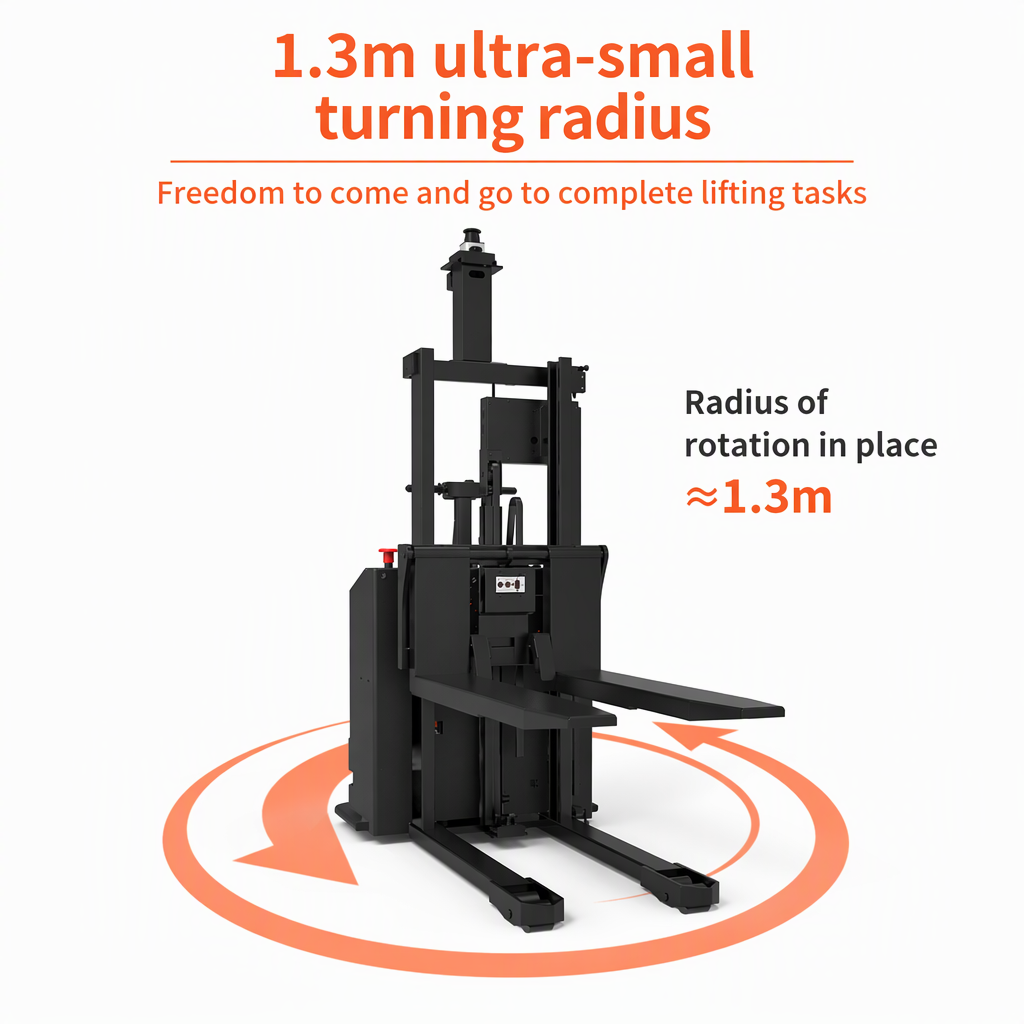
REEMAN Autonomous Electric Forklift 1T Payload 48V 30Ah LiFePO4 Battery Indoor Material Handling AGV
Indoor pallet transfer platform for warehouses and production replenishment, with a 48V LiFePO4 battery architecture suited to multi-shift material flow.
View product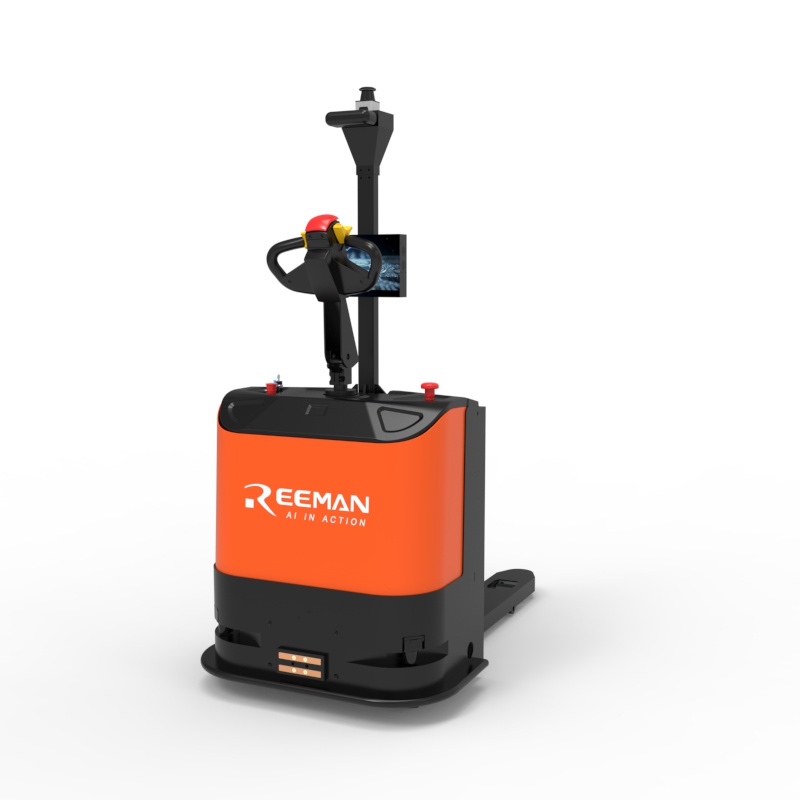
Reeman BBOT30F 1500 kg Laser SLAM Forklift AGV LiDAR Navigation Pallet Handling Warehouse
1,500 kg-class pallet handling for warehouse and production logistics, using LiDAR navigation without fixed floor tracks.
View product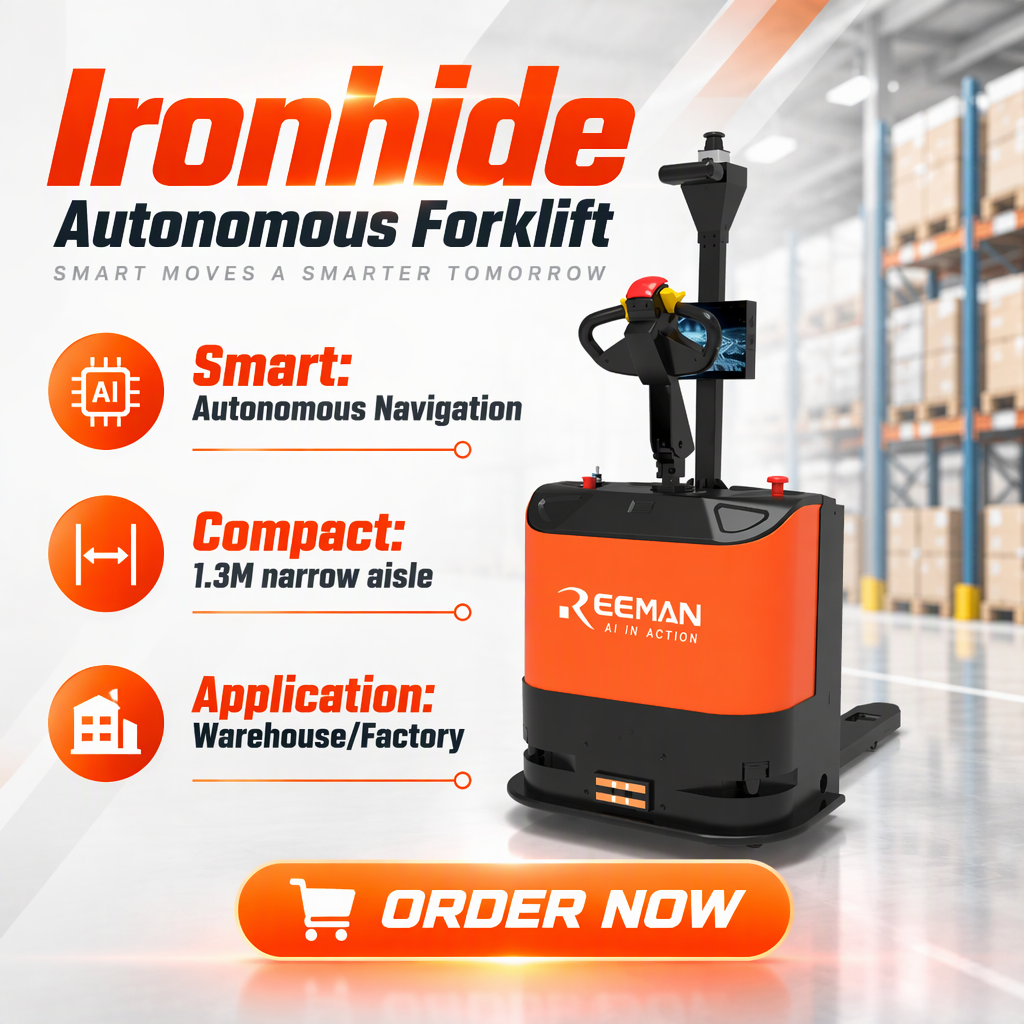
Reeman 1.5 Ton Autonomous Forklift AGV 3D Obstacle Avoidance Bidirectional Driving 48V 30AH Lithium-Ion Battery
Bidirectional driving and 3D obstacle avoidance for mixed pedestrian and forklift areas in German factories and distribution centres.
View product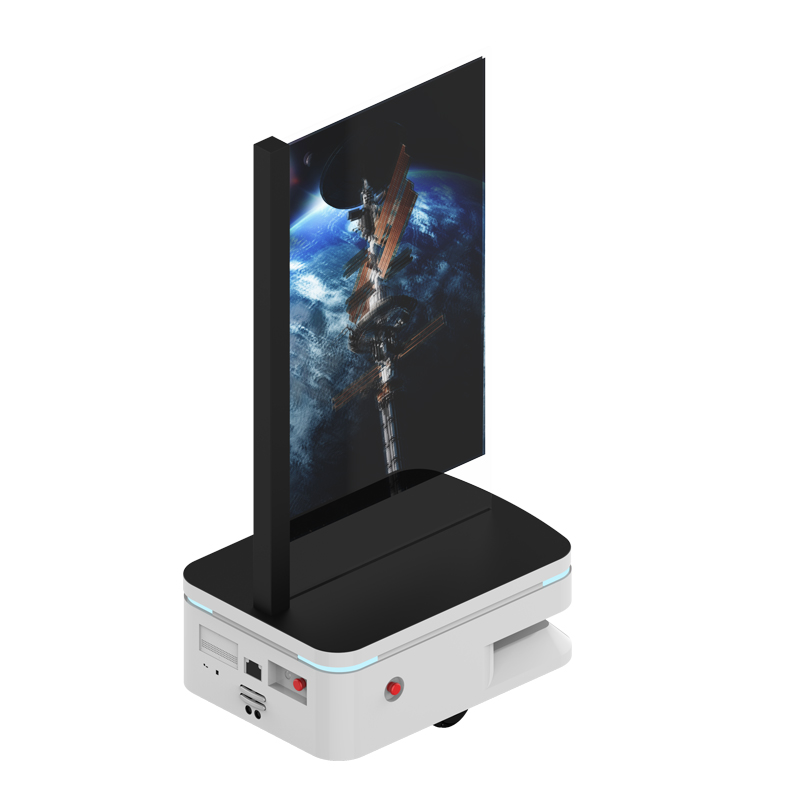
75 Inch Indoor LED Digital Poster Touch Screen Display SDK OEM ODM Black Signage for Retail Store Elevator Airport
A human-machine interaction endpoint for fleet guidance, retail promotion, airport wayfinding and exhibition information in Germany.
View product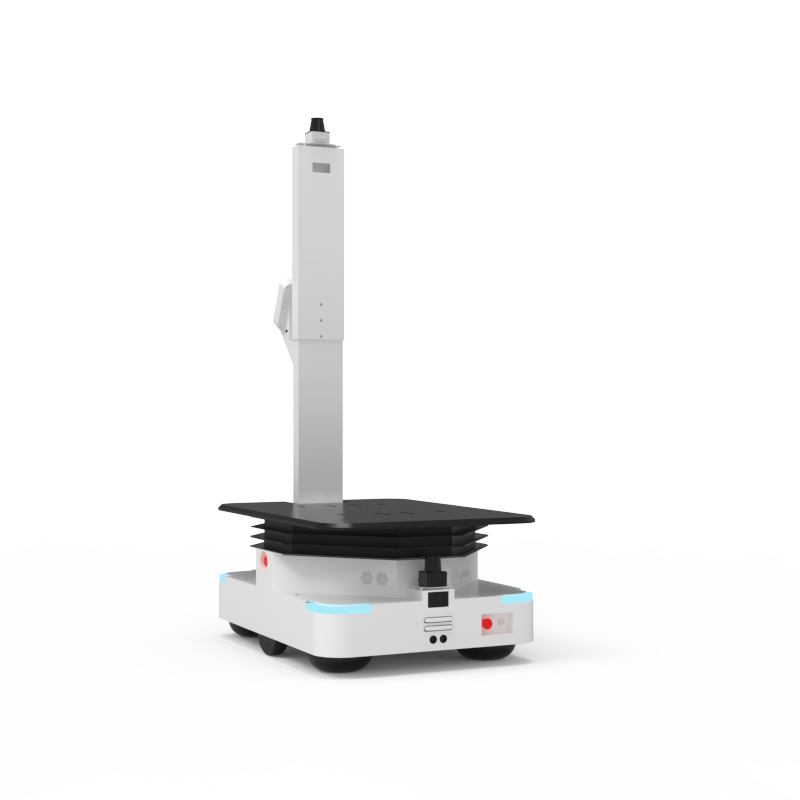
REEMAN Autonomous Mobile Robot AGV AMR 600kg Payload Sheet Metal Material Handling for Production Line
600 kg AMR platform for line-side replenishment, work-in-process transfer and sheet-metal logistics in production environments.
View product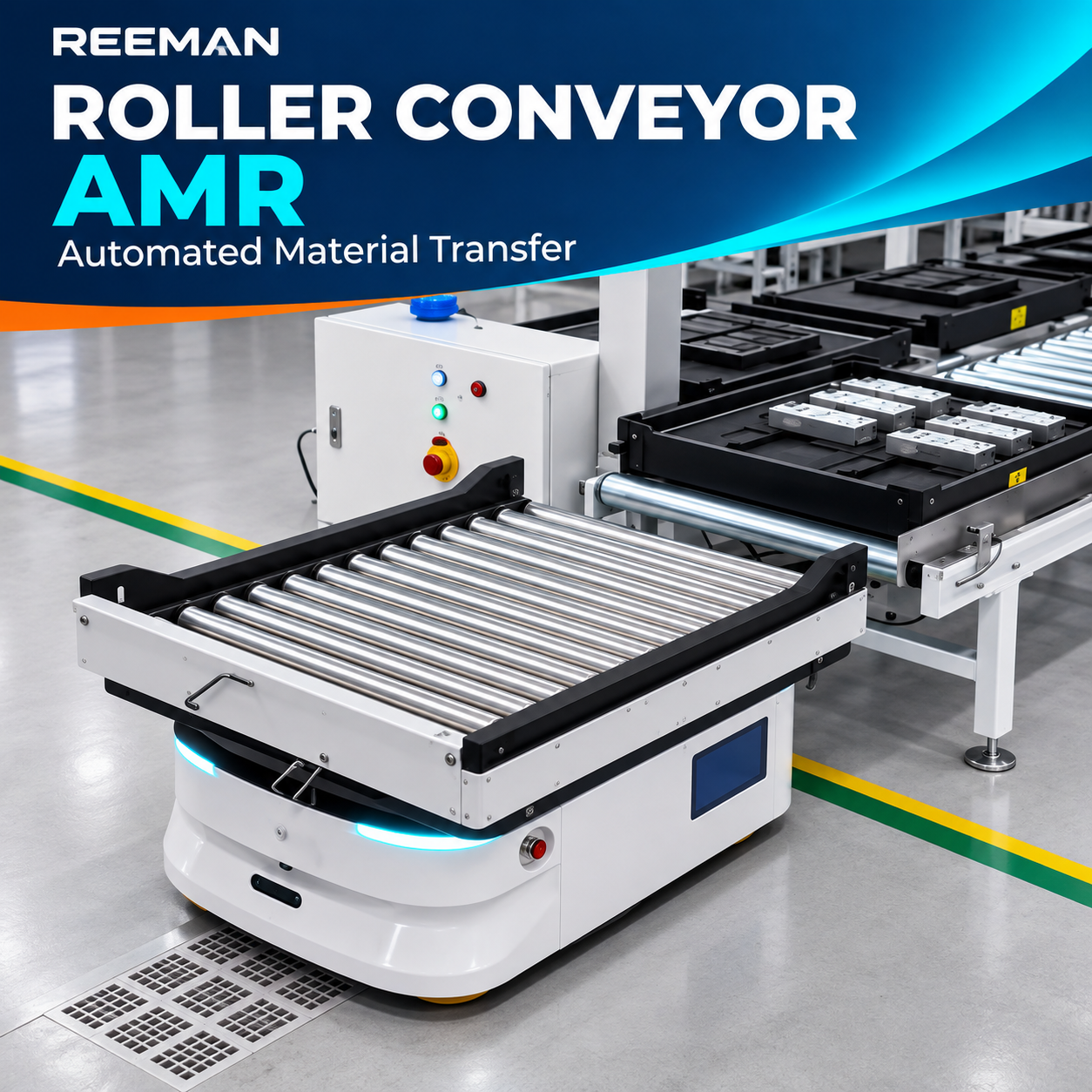
Roller Conveyor AMR Robot with SDK and API for Custom Development and System Integration
A conveyor-top AMR for automated hand-off between production cells, conveyors and warehouse systems using open SDK/API integration.
View product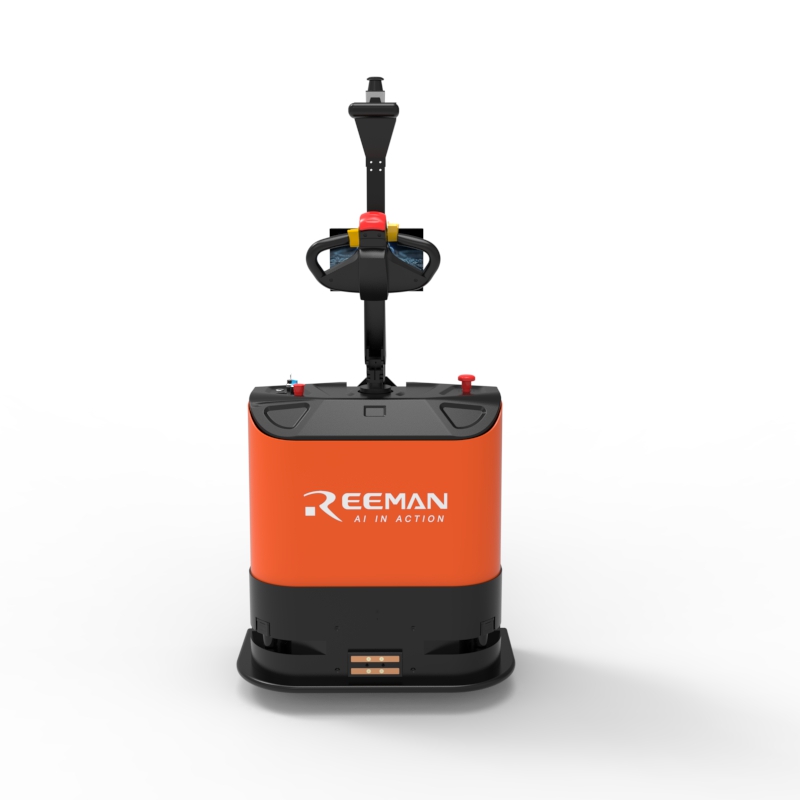
1500kg Laser SLAM Autonomous Forklift AGV Reflector-Free Point-to-Point Warehouse Material Handling
Reflector-free laser SLAM navigation for point-to-point pallet moves where fast deployment and flexible route changes matter.
View product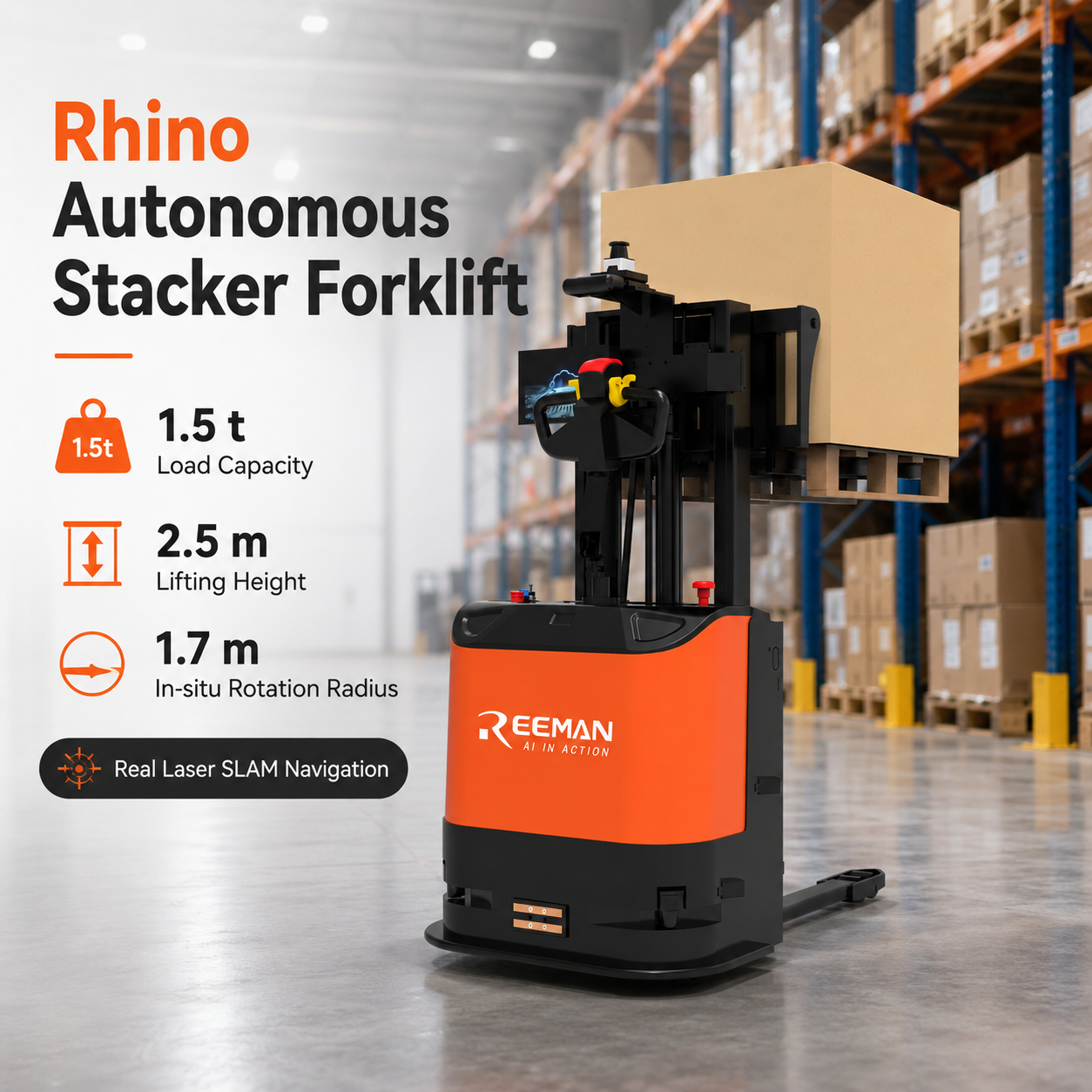
Laser SLAM Autonomous Stacker Forklift 1500 kg Load AGV Pallet Handling Robot Laser Obstacle Avoidance Warehouse
Stacker-style pallet handling for low-rack storage and repeatable put-away tasks, with laser obstacle avoidance around people and equipment.
View productCompany Facts That Support German Supplier Due Diligence
Elvorn combines in-house R&D, two production bases and export documentation experience. These facts help procurement teams compare a factory-direct wholesaler against trading companies and unverified assemblers.
Factory data is supported by SGS onsite verification, ISO 9001 and ISO 14001 management systems, and model-dependent CE, FCC or PSE marks. Buyers should still confirm the exact configuration, documents and safety scope for each German project.
What “Autonomous Robotic Chassis Board Module” Really Means to a German Procurement Team
A chassis board module is not merely a metal base with wheels. It is the engineering layer that connects navigation, motion control, battery management, safety I/O, sensors, fleet software and the customer's manufacturing or warehouse system.
For a German factory, the module decision fixes the robot's electrical architecture, safety boundary and software integration path. If the board, motor drives, LiDAR interface and battery management are not documented as one coherent platform, integration risk shifts to the buyer and the systems integrator. That is why experienced procurement teams ask for more than payload and price. They ask for interface definitions, safety function scope, spare-part lists, firmware update policy and acceptance-test records.
The search intent around “autonomous robotic chassis board module factories” is also broader than a single component search. It usually includes wholesale buyers, robot OEM brands, integrators building a custom top module, and factory teams comparing an AGV forklift with an AMR. A useful supplier page should therefore explain load, navigation, safety, integration and localized support in one place rather than forcing the buyer to infer these details from product titles.
Elvorn's positioning fits this comparison model because the company owns laser SLAM navigation, motion control, fleet scheduling and hardware development in-house. That vertical coverage allows a buyer to request a 600 kg AMR, a 1.5-ton autonomous forklift, a roller-conveyor AMR or a custom chassis platform without moving between unrelated suppliers. For a German wholesaler, this reduces supplier-count risk and simplifies spare-part planning across a product family.
Motion control & battery management
48V lithium and LiFePO4 configurations, motor drive control, charging logic and emergency-stop handling must be specified together.
Laser SLAM & obstacle sensing
LiDAR localisation, 3D obstacle avoidance and speed zoning determine whether a route can safely share space with people and forklifts.
Open SDK/API integration
Task dispatch, status feedback and hand-off with WMS, MES, ERP, conveyors, doors and elevators should be scoped before purchase.
OEM/ODM top-module adaptation
Custom rollers, shelves, masts, lifting structures, branding and packaging turn a standard chassis into a differentiated German-market product.
Localized Trends Reshaping Autonomous Chassis Procurement in Germany
German automation projects are driven by labour availability, engineering documentation, energy cost and multi-vendor integration. The strongest proposals address these realities before discussing unit price.
Labour scarcity and shift continuity
German manufacturers and logistics operators increasingly automate repetitive pallet and line-side moves to stabilise output across shifts. The strongest chassis platforms reduce dependency on forklift drivers rather than simply adding robot demonstrations.
Safety and CE documentation
Buyers ask how the robot behaves around pedestrians, pallet trucks and blind corners. EN ISO 3691-4 alignment for driverless industrial trucks, CE marking and a site-specific risk assessment are routine discussion points.
Energy-aware battery strategy
48V lithium and LiFePO4 battery choices are evaluated against charging windows, opportunity charging, battery-room space and peak energy costs. A chassis board module should make charging data and battery status visible to operations.
Mixed-fleet integration
Few German sites want an isolated robot island. Open SDK/API support, task feedback and fleet scheduling compatibility are increasingly more important than a proprietary feature list.
Modular OEM and wholesale demand
German robot brands and integrators look for proven chassis boards and top-module interfaces so they can launch a branded robot faster without rebuilding the drive, navigation and safety base.
Service proximity and spare parts
Procurement teams compare remote commissioning, English documentation, spare-part availability and escalation paths. A factory-direct wholesaler should expose these support processes early in the evaluation.
Why Elvorn Is a Credible Wholesale Partner for German Robot Projects
The following advantages are based on Elvorn's public company profile, production setup and product architecture. They are presented for audit-oriented comparison, not as a substitute for project-specific verification.
Full-stack in-house R&D
Navigation, motion control, fleet scheduling and hardware are developed under one roof. This shortens customisation cycles and gives integrators clearer answers on interfaces and firmware.
Two production bases
Shenzhen and Ningbo production locations support assembly, testing and export preparation. The company profile lists 5,200㎡ of floorspace and a 200+ team.
SGS-verified and ISO-managed
The factory has been verified onsite by SGS Group. Management systems are certified to ISO 9001 and ISO 14001, supporting German supplier due-diligence requests.
CE, FCC and PSE models
Depending on model and configuration, robots can carry CE, FCC or PSE marks. Export documentation, declaration support and model-specific compliance evidence can be coordinated for German projects.
OEM, ODM and buyer-label service
Custom top modules, payload structures, branding, packaging and software interfaces are available. This is relevant for German wholesalers building a private-label robot portfolio.
Export-ready commercial terms
Elvorn ships worldwide on FOB terms and accepts T/T payment in USD or CNY. Main markets include North America, Western Europe, Eastern Asia, Southeast Asia and the Middle East.
Match the Platform to Load, Navigation and German Workflow
Use this preliminary table to shortlist a platform. Final configuration — mast height, fork dimensions, battery, top module and safety sensors — must be confirmed after reviewing the site layout and throughput target.
| Platform | Rated load | Navigation / module focus | Typical German-market use |
|---|---|---|---|
| 600 kg AMR for sheet-metal handling | 600 kg | Laser SLAM AMR platform | Line-side supply, WIP transfer and production-cell hand-off |
| Roller conveyor AMR with SDK/API | Configurable | Open SDK/API and conveyor top module | Automated hand-off between conveyors, cells and warehouse software |
| REEMAN 1T autonomous electric forklift | 1,000 kg | Laser SLAM, 48V LiFePO4 battery | Indoor pallet transport, replenishment and warehouse material flow |
| Reeman 1.5-ton autonomous forklift AGV | 1,500 kg | 3D obstacle avoidance, bidirectional driving | Mixed traffic areas, production feeding and pallet handling |
| 1500kg reflector-free laser SLAM forklift | 1,500 kg | Reflector-free point-to-point navigation | Flexible routes where floor markers and reflectors are undesirable |
| Laser SLAM autonomous stacker forklift | 1,500 kg | Stacker AGV, laser obstacle avoidance | Low-rack put-away and repeatable pallet stacking tasks |
| 75 inch indoor touch-screen digital poster | Service module | Touch display, SDK/OEM/ODM | Fleet HMI, retail promotion, airport and exhibition wayfinding |
German Application Scenarios for Autonomous Chassis and AMR Platforms
German buyers rarely ask for a robot in isolation. They ask how it will behave in a real building, with real traffic, real shift patterns and real integration constraints.
Automotive and Tier 1 suppliers
Line-side material supply, returnable-container movement and sequenced component delivery demand repeatability and clear hand-off with MES. A chassis module with stable interfaces is easier to audit than a one-off robot.
Machinery builders and Mittelstand
High-mix, low-volume production benefits from flexible AMR routes. Laser SLAM avoids floor tape changes when workstations or storage zones are reorganised.
Contract logistics and 3PL
German 3PLs handle seasonal peaks and changing customer layouts. A reflector-free AGV or AMR can be redeployed between contracts with less floor infrastructure than fixed-route automation.
Electronics and precision assembly
Small-to-medium load transfers, roller-conveyor top modules and open API integration help connect clean production cells without redesigning the factory layout.
Pharmaceutical, medical and laboratory
Quiet, repeatable material movement and traceable task status are valuable where documentation and controlled movement matter. Safety scope and cleaning requirements must be confirmed site by site.
Retail, airports and exhibitions
Touch displays and service robots can act as customer-facing HMI or guidance points. The 75-inch touch display is relevant where digital signage, wayfinding and system integration converge.
Eight Checks Before Buying an Autonomous Chassis Board Module for Germany
This checklist is written for factory buyers, systems integrators and wholesale distributors who need a reproducible evaluation process.
Define load and load centre
Rated kilograms are not enough. Confirm fork dimensions, load centre, pallet type and lifting height.
Map routes and floor conditions
Record aisle width, gradients, door thresholds, lifts, docking tolerance and pedestrian zones.
Agree the safety scope
Clarify emergency stops, laser scanners, speed zones, warning devices and site risk-assessment responsibilities.
Specify software interfaces
List WMS, MES, ERP, PLC, conveyor and elevator hand-offs. Ask for SDK/API documentation before purchase.
Model battery and charging
Check 48V lithium or LiFePO4 options against shift length, charging opportunity, battery-room space and energy cost.
Request documentation
Ask for CE evidence, manuals, spare-part lists, firmware update policy, test records and packaging details.
Plan factory acceptance testing
Define pass/fail criteria for navigation, load handling, obstacle response and integration before shipment.
Calculate total cost of ownership
Compare spare parts, training, commissioning, downtime risk and fleet expansion cost — not only the unit price.
From Site Survey to Stable Operation in Germany
A disciplined delivery process reduces integration risk and gives German buyers a clear audit trail from requirement to acceptance.
Requirement and site data
Collect layout drawings, load data, pallet type, throughput, shift pattern and target software interfaces.
Simulation and safety review
Review routes, traffic rules, charging locations and safety functions against the intended operating environment.
OEM/ODM design
Confirm top module, fork or conveyor interface, battery, branding, packaging and documentation scope.
Factory acceptance test
Run functional and load tests before shipment, with agreed acceptance criteria and test records for the buyer.
Export documentation and packaging
Prepare export-ready packaging, commercial documents and model-specific compliance evidence for the destination.
Commissioning and lifecycle support
Support mapping, operator training, spare-part planning and remote troubleshooting after handover.
Factory Evidence for German Due Diligence
Elvorn's factory has been verified onsite by SGS Group. Management systems are certified to ISO 9001 and ISO 14001, and individual robot models can carry CE, FCC or PSE marks depending on configuration. For German buyers, this evidence should be read together with model documentation, the site risk assessment and the integration scope.
Because the company operates as a custom manufacturer, OEM service, design service and buyer-label options are available. That matters for wholesalers and integrators who need a factory-direct chassis board module supplier but also need their own branding, top-module structure and packaging.
- Verified custom manufacturer with export experience
- ISO 9001 and ISO 14001 management systems
- CE, FCC or PSE marks on applicable models
- OEM/ODM, buyer label and custom top modules
 SGS VerifiedFactory due diligence
 CE MarkingModel-dependent
 FCCApplicable models
 PSEApplicable models

Frequently Asked Questions from German Wholesalers and Factory Buyers
These answers reflect common procurement, integration and export questions. Project-specific compliance and safety responsibilities should always be confirmed in writing.
Is the autonomous robotic chassis board module CE compliant for Germany?+
Applicable Elvorn robot models can carry CE marks depending on configuration. German buyers should request the model-specific declaration, safety scope and technical file evidence. When a chassis or AMR is integrated into a larger machine or system, the integrator must still perform the required site risk assessment and confirm final machinery compliance.
Can you support German-language documentation and remote commissioning?+
English documentation is standard, and German-language support can be coordinated for manuals, labels or training material where required. Remote commissioning, mapping guidance and troubleshooting can be arranged through online sessions with the buyer's engineering or integrator team.
Do you sell to German system integrators and wholesale distributors?+
Yes. Elvorn works with integrators, distributors and OEM brands. The company offers OEM service, design service and buyer-label options, including custom top modules, payload structures, branding and packaging. A wholesaler can therefore build a differentiated product line on a proven chassis platform.
Which load capacities are available across the product family?+
Elvorn's wider product range covers platforms from lighter service and AMR payloads through 300 kg, 600 kg, 1-ton and 1.5-ton classes, with heavier autonomous forklift configurations also available. The correct model depends on load centre, pallet type, lifting height, route width and required throughput.
Does the robot require magnetic tape or floor reflectors?+
Many Elvorn platforms use laser SLAM navigation and can operate without magnetic tape or fixed reflectors. This is valuable in Germany where production layouts change and floor modification can disrupt operations. The final navigation configuration should still be checked against ceiling height, glass walls, changing obstacles and traffic density.
How can the chassis module connect to WMS, MES or ERP systems?+
Elvorn AMRs and robot chassis provide open SDK and API options for secondary development. Integrators can connect task dispatch, status feedback and hand-off logic to warehouse management, manufacturing execution or custom software systems. The exact protocol, data points and responsibilities should be defined during solution design.
What trade terms and payment methods apply to German orders?+
Elvorn ships worldwide on FOB terms and accepts T/T payment in USD or CNY. For German projects, commercial details, packaging, inspection requirements and delivery milestones should be confirmed in the quotation and contract.
What should a German buyer request before placing an order?+
Request the recommended model configuration, load and route assumptions, electrical and interface documentation, safety scope, certification evidence, spare-part list, acceptance-test criteria, packaging details and warranty terms. A factory acceptance test and a written commissioning plan reduce deployment risk for both the buyer and the integrator.
Request a Germany-Specific Autonomous Chassis Module Proposal
Send your load data, route layout, pallet type, safety requirements and WMS/MES integration scope. The engineering team can recommend an autonomous forklift, AMR, robot chassis board module or OEM top-module platform for your German project.