Autonomous Stacker Suppliers & Exporter for Detroit
Laser SLAM autonomous forklifts, stacker AGVs and industrial AMRs engineered for Detroit-area automotive plants, Tier suppliers, warehouses and cross-dock operations.
Eight Autonomous Stackers, Forklift AGVs & AMRs for Detroit Material Flow
These are practical starting points for Detroit plant engineers, warehouse operators and procurement teams comparing autonomous pallet handling options. Final configuration is confirmed after reviewing load, aisle, lift height, throughput, pallet condition, charging room and safety scope.
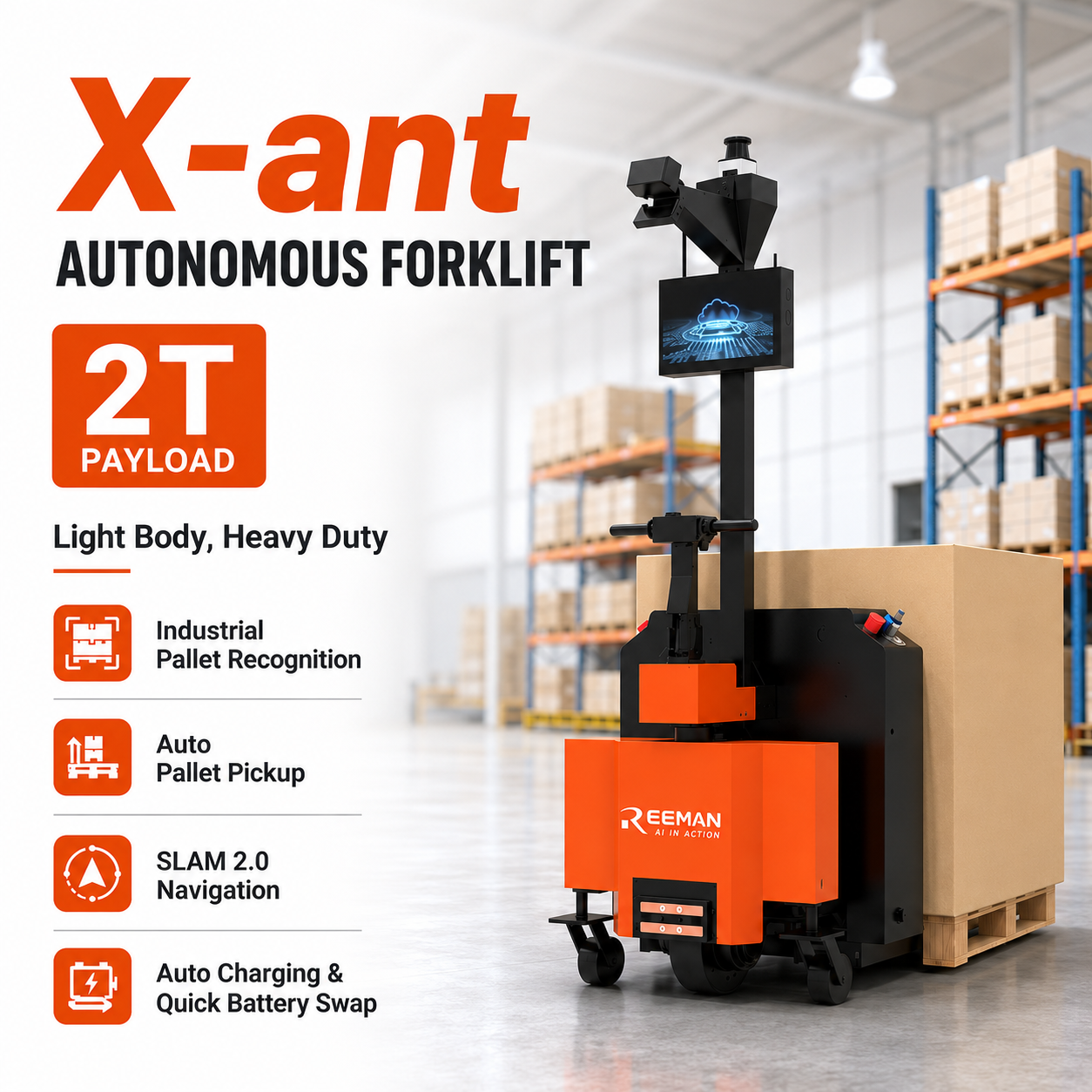
2 Ton Autonomous 4WD AGV Forklift Laser SLAM Navigation Multi-Line LiDAR 3D Obstacle Avoidance Warehouse Handling
Recommended for repeat pallet moves between receiving, staging, dock and line-side zones where Detroit operations need robust obstacle avoidance without floor tape.
- 4WD
- Multi-line LiDAR
- 3D avoidance

2 Ton Autonomous 4WD AGV Forklift Laser SLAM Navigation Multi-Line LiDAR 10mm Position Accuracy 6-8H Warehouse Handling
A strong fit for docking and transfer tasks where positioning repeatability matters, such as conveyor handoffs, pallet stands and constraining floor layouts.
- 10 mm positioning
- 6-8H operation
- SLAM navigation

REEMAN X-ant JBOT20F 2 Ton Autonomous Forklift AGV Laser SLAM Pallet Handling Robot for Warehouse Logistics
Suitable for pallet handling in warehouse logistics and distribution centers, especially where operators want a proven autonomous forklift platform with flexible deployment.
- 2 ton payload
- Pallet handling
- Warehouse logistics
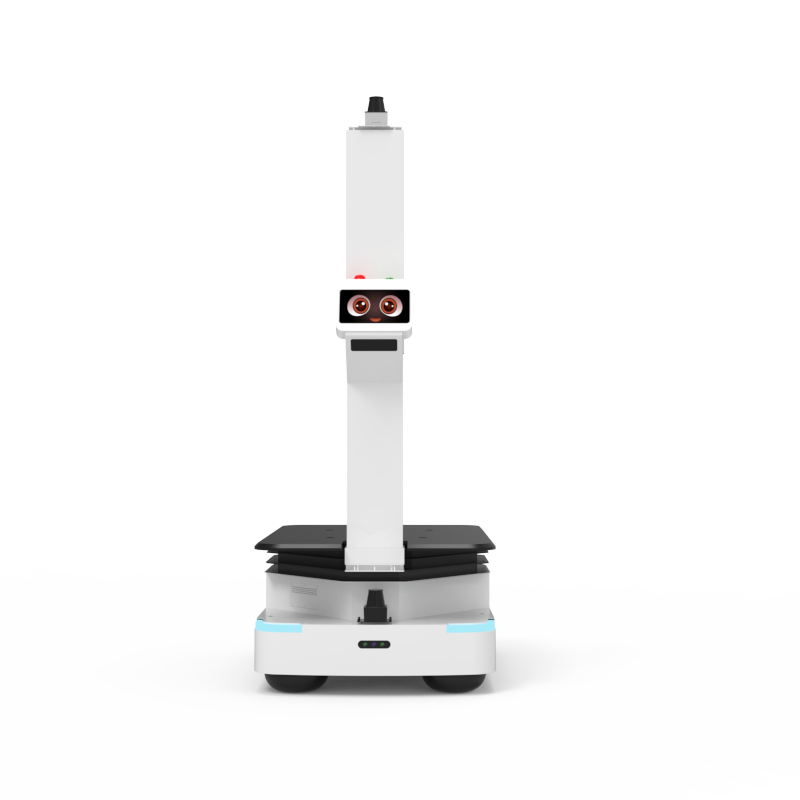
600kg Industrial AMR AGV Robot Laser SLAM Navigation QR Code-Free Factory Logistics
Best for carts, totes and light fixtures moving between work cells, kitting areas and staging lanes in Detroit manufacturing environments.
- QR code-free
- Factory logistics
- Laser SLAM
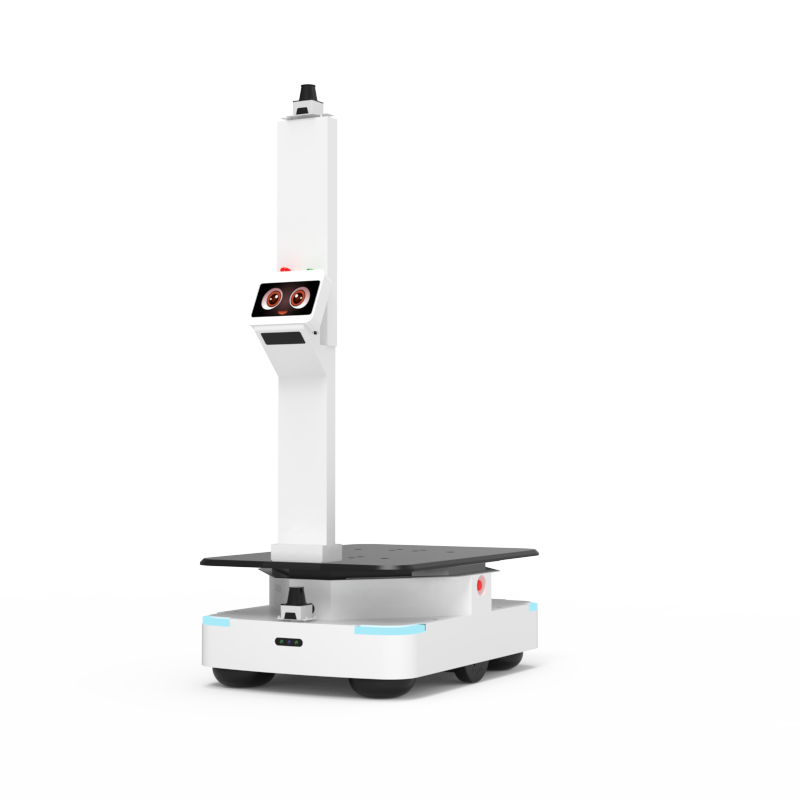
600kg Payload Laser Navigation AMR Robot Autonomous Lifting Warehouse Transfer Equipment
Useful where a mobile platform must lift, transfer and position loads with a compact footprint, such as line-side replenishment and warehouse transfer routes.
- 600 kg payload
- Lifting transfer
- Autonomous route
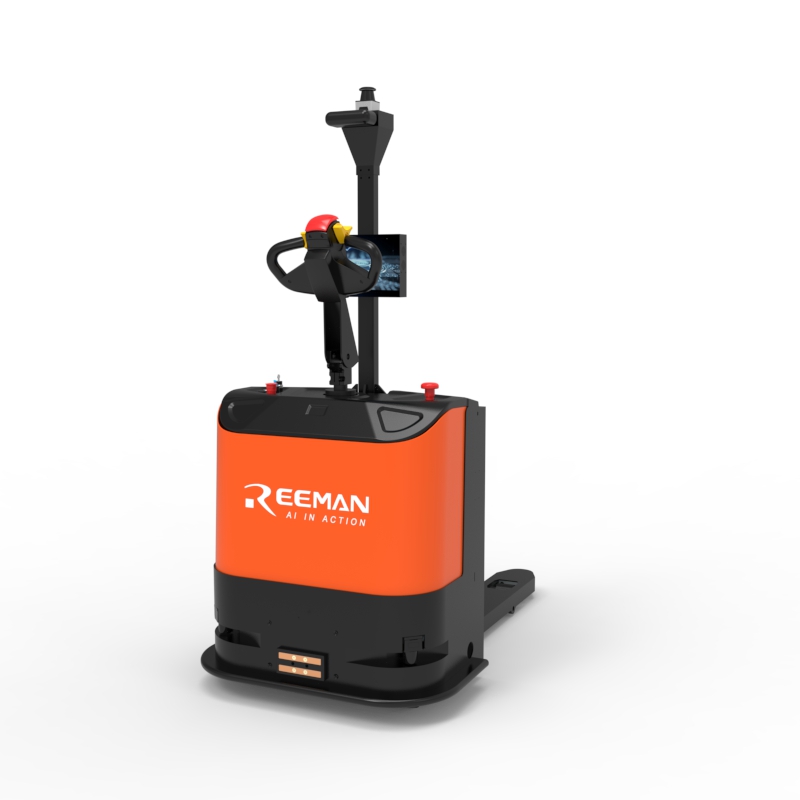
CE Certified 1500kg Driverless AGV Forklift Laser SLAM Navigation Automatic Pallet Loading Unloading Robot 1-2H Working Time
A practical option for pallet loading and unloading cycles. Detroit buyers should confirm duty cycle, opportunity charging and battery strategy for multi-shift use.
- CE model
- 1,500 kg
- Loading/unloading
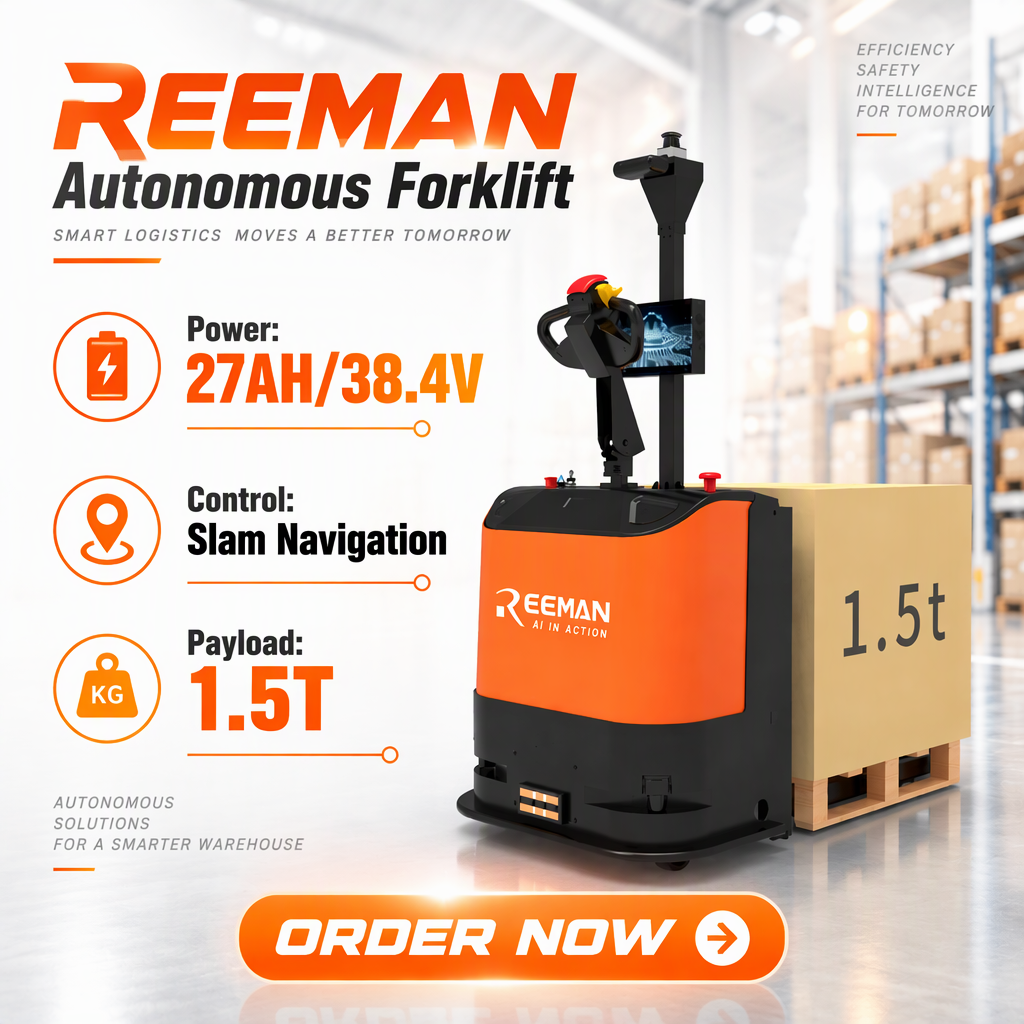
Reeman 1.5 Ton Autonomous Forklift AGV SLAM Navigation 3D Obstacle Avoidance Bidirectional Driving Indoor Warehouse
Recommended for indoor warehouse pallet moves where bidirectional driving and 3D obstacle avoidance help navigate typical aisles and shared traffic zones.
- 1.5 ton
- Bidirectional
- 3D avoidance
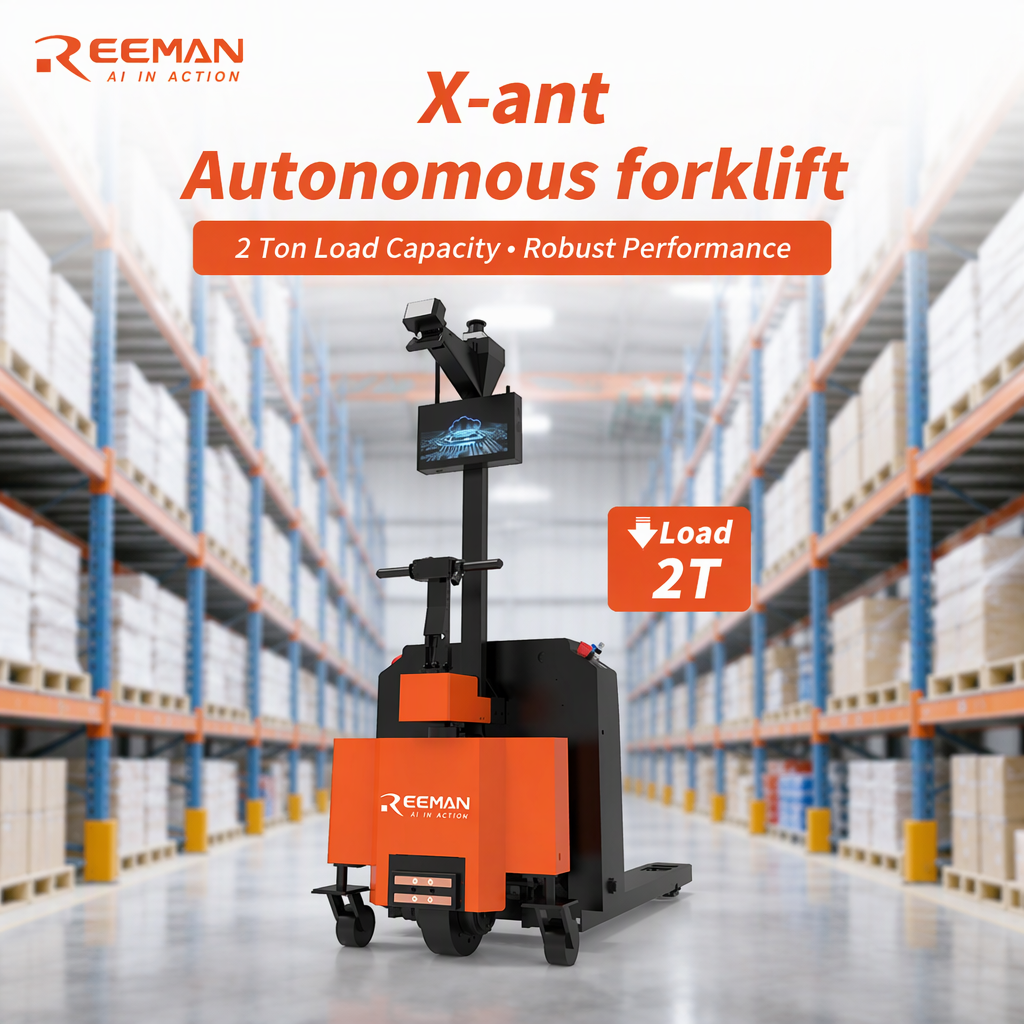
2 Ton Autonomous 4WD AGV Forklift Laser SLAM Navigation Multi-Line LiDAR 10mm Position Accuracy Warehouse Handling
Another configuration to compare for Detroit projects that need 2-ton capacity plus precise pallet positioning in repeatable warehouse handling routes.
- 2 ton
- 10 mm accuracy
- Warehouse handling
What Makes an Autonomous Stacker Project Different in Detroit?
Detroit is not a generic warehouse market. It combines automotive manufacturing discipline, dense Tier supplier networks, just-in-time material flows, cross-border logistics and a growing need to automate repetitive pallet movement without disrupting existing production.
For plant engineers and procurement teams in Detroit and Southeast Michigan, an autonomous stacker or forklift AGV is usually evaluated against three practical questions: can it move the right load, can it work safely in the real traffic pattern, and can the supplier support the project after shipment? A machine that performs well in a clean showroom may still struggle with damaged pallets, floor transitions, pedestrians, mixed forklift traffic or network constraints inside an older industrial building.
Elvorn approaches Detroit projects as an exporter and custom manufacturer, not as a local dealer. That distinction matters. The right evaluation process should include clear export documentation, pre-shipment testing, configuration records, and a support plan that coordinates with the buyer’s local integrator, maintenance team or controls engineers. This is why the product recommendation should always follow a site review rather than simply selecting the lowest-cost AGV listing.
Detroit-area applications often involve automotive components, stamping plant logistics, EV battery supply chains, supplier sequencing, cross-dock handling, packaging lines and finished-goods warehouses. In these environments, autonomous equipment must fit into existing safety procedures, aisle layouts, WMS/MES task flows and maintenance schedules. Laser SLAM navigation is valuable because it reduces dependence on magnetic tape, QR codes or floor reflectors, but it still requires a disciplined mapping plan, safe speed zones and commissioning checks.
This buyer guide is written for Detroit plant managers, warehouse operators, systems integrators and sourcing teams who need information gain beyond a product catalog. It explains where autonomous stackers fit, which models to shortlist, what local trends are shaping purchasing decisions, and what to verify before releasing a purchase order.
Detroit Project Priorities
Typical review weighting during early automation scoping. Final priorities depend on site data and safety assessment.
Where Autonomous Stackers and AGV Forklifts Fit in Detroit Operations
The highest-value projects are usually repetitive, constrained and measurable. Use these application modules to identify candidate routes before requesting a quotation.
Automotive Plant Pallet Flow
Move raw material, work-in-process and finished components between receiving, staging and line-side buffers. Detroit automotive operations value repeatability, ergonomic relief and a clear route design that respects production traffic.
Tier Supplier Sequencing
Suburban Detroit Tier 1 and Tier 2 suppliers can use compact AGVs for kitting carts, component pallets and packaging returns. The best starting point is a fixed loop with stable task timing and low pedestrian variability.
Warehouse and Cross-Dock
Autonomous forklifts can shuttle pallets between dock doors, staging lanes and put-away zones. For Detroit 3PL and distribution centers, the business case often depends on shift coverage, seasonal peaks and reduced operator walking time.
Safety and Ergonomic Relief
Repetitive pallet lifting and long-distance transfer create fatigue and variability. Autonomous stackers can absorb repetitive moves while staff focus on exception handling, quality checks, equipment oversight and higher-value tasks.
WMS / MES Task Dispatch
Detroit manufacturers often want robot tasks triggered by production systems. Open SDK and API support on selected AMRs and chassis allows integrators to connect task dispatch, status feedback and custom dashboards.
EV Supply Chain and Retooling
As Detroit transitions through EV investment and plant retooling, material flow layouts may change more often. Laser SLAM navigation lets teams remap routes without extensive floor infrastructure changes, subject to site validation.
Detroit Autonomous Material Handling Trends for 2025–2030
These trends are not abstract market predictions. They are practical forces shaping how Detroit buyers evaluate autonomous stackers, forklift AGVs and AMRs today.
Laser SLAM over fixed infrastructure
Detroit plants and warehouses face layout changes, product mix shifts and line relocations. Autonomous stackers that map and navigate without tape or floor reflectors reduce the cost of changing routes, but still need careful commissioning.
Mixed fleets and integration-first buying
Buyers increasingly ask how a robot will communicate with WMS, MES, ERP, doors, conveyors and safety systems. Open API support and integrator-friendly documentation are becoming as important as payload capacity.
Payback tied to repeatable routes
Detroit procurement teams prefer projects with clear baseline data: travel distance, pallet count per shift, waiting time, labor availability and safety exposure. The strongest projects start with one measurable route, not a site-wide launch.
Export-ready compliance and support
International suppliers are evaluated on documentation, testing records, certification status, spare-part planning and remote support. For Detroit buyers, the after-sales model should be defined before the PO, not after delivery.
How Detroit Buyers Should Shortlist an Autonomous Stacker
Start with the application, not the model number. The table below converts common Detroit material flows into product families to review with our application engineers.
| Detroit Use Case | Recommended Starting Point | Why It Fits | Verify Before Quote |
|---|---|---|---|
| Heavy pallet transfer in warehouse or plant | 2 Ton Autonomous 4WD AGV Forklift | 2-ton class, laser SLAM, multi-line LiDAR and 3D obstacle avoidance for repeat pallet routes. | Pallet condition, aisle width, floor slope, docking tolerance, traffic rules. |
| Precision pallet docking and conveyor handoff | 2 Ton AGV Forklift with 10 mm positioning | Positioning accuracy is a key decision factor when fork entry and stop points must repeat consistently. | Target stop tolerance, fork pocket condition, pallet load stability, test method. |
| Warehouse pallet handling and logistics | REEMAN X-ant JBOT20F 2 Ton Forklift AGV | Purpose-built for warehouse logistics and pallet handling with autonomous forklift navigation. | Throughput, charging strategy, WMS task dispatch, fleet size. |
| Light carts, totes and WIP movement | 600 kg Industrial AMR | QR code-free SLAM navigation for factory logistics without fixed floor infrastructure. | Top-module design, cart interface, elevator/door integration, safety sensors. |
| Lifting and transfer inside warehouse | 600 kg Lifting AMR | Autonomous lifting and transfer equipment for compact material-flow routes. | Load center, lift height, floor flatness, dock transition, battery plan. |
| Automatic pallet loading/unloading cycle | CE 1500 kg Driverless AGV Forklift | Shorter working-time model suitable for defined loading/unloading cycles where charging can be scheduled. | Duty cycle, available charging windows, safety zones, CE documentation scope. |
| Indoor warehouse with bidirectional movement | Reeman 1.5 Ton Autonomous Forklift AGV | 1.5-ton indoor warehouse platform with 3D obstacle avoidance and bidirectional driving. | Aisle width, racking clearance, pedestrian traffic, route conflict points. |
Why Elvorn Is a Credible Exporter for Detroit Automation Projects
Detroit buyers need more than a product photo. They need evidence of engineering depth, production capacity, compliance documentation and export experience. These are the verified signals behind Shenzhen Elvorn Intelligent Equipment Co., Ltd.
SGS-Verified Factory
The factory has been verified onsite by SGS Group, covering business licensing, production capability and quality control. This gives Detroit procurement teams a third-party reference point for supplier due diligence.
In-House R&D and Two Production Bases
Elvorn is a national high-tech enterprise focused on robotic platform technology and autonomous driving. Two production bases in Shenzhen and Ningbo support assembly, testing and customization for overseas projects.
Open SDK and API
Elvorn AMRs and robot chassis provide open SDK and API support for secondary development. This allows task dispatch and status feedback with WMS, MES, ERP or custom factory software.
OEM, ODM and Buyer Label
Custom top modules, payload structures, branding, packaging and buyer-label programs are available. This is valuable for Detroit integrators or distributors building a branded automation offering.
Certification and Export Readiness
Depending on the model, robots carry CE, FCC or PSE marks. Management systems are certified to ISO 9001 and ISO 14001. Elvorn ships worldwide on FOB terms with T/T payment in USD or CNY.
Global Service Mindset
English documentation, remote commissioning support, operator training materials and long-term spare-part planning help overseas buyers move from shipment to stable operation.


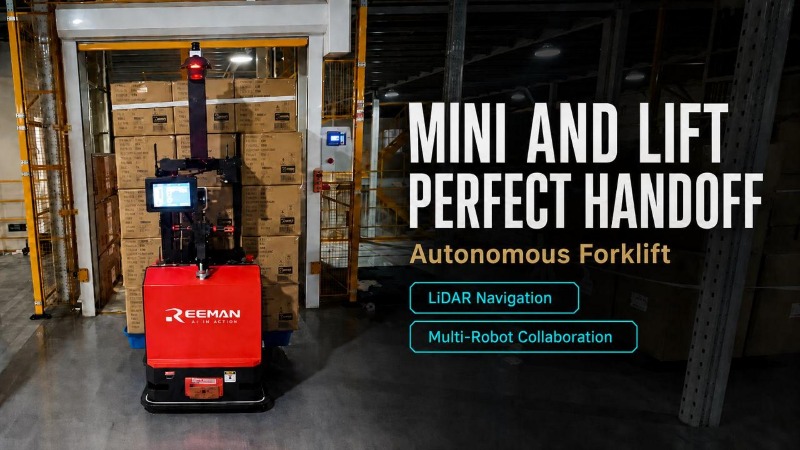
From Detroit Site Inputs to Stable Operation
A disciplined six-step workflow reduces deployment risk for overseas buyers and gives Detroit engineering teams clear checkpoints.
Requirement Review
Share layout drawings, pallet type, load weight, lift height, aisle width, target throughput, charging location and existing safety procedures.
Solution Design
Elvorn engineers recommend model, fleet size, charging plan, top module or fork configuration, and integration scope.
Customization & Build
OEM branding, payload structures, software interfaces and documentation are aligned with the approved configuration.
Factory Testing
Function and load tests are performed before shipment, with test records available for buyer review where applicable.
Export Packing
Robots are packed for international shipping with agreed accessories, spare parts and documentation. Trade terms and payment currency are confirmed in the quotation.
Deploy & Support
Remote mapping guidance, operator training materials, commissioning support and spare-part planning help the Detroit project reach stable operation.
Frequently Asked Questions About Autonomous Stacker Supply
These answers are written for Detroit sourcing teams comparing an overseas manufacturer and exporter with local automation options.
Are you a Detroit-based autonomous stacker supplier or an exporter?+
Can an autonomous stacker handle typical Detroit automotive pallets?+
How does laser SLAM navigation work without magnetic tape or QR codes?+
What site information should Detroit buyers send for an accurate quote?+
Can Elvorn robots integrate with WMS, MES or ERP systems?+
Which certifications and export terms apply?+
How should Detroit buyers plan spare parts, training and support?+
What is the best first step for a Detroit autonomous stacker project?+
Planning an Autonomous Stacker Project in Detroit?
Send your pallet data, layout drawing, load weight, aisle width, lift height, charging location and throughput target. Our engineering team will help match the right autonomous forklift, stacker AGV or AMR platform to your Detroit material-flow application.
Shenzhen Elvorn Intelligent Equipment Co., Ltd. · Laser SLAM · OEM/ODM · Export Support