CE Certified Meal Delivery Robot Factories & Factory for the Querétaro Market
Laser SLAM service robots, open-SDK AMRs, autonomous forklifts, and OEM/ODM production for Querétaro restaurants, hotels, hospitals, factory cafeterias, event venues, and gated communities.
8 CE-Ready Robot Platforms for Querétaro Meal Delivery & Logistics
A meal delivery robot purchase is usually one part of a larger material-flow decision. The platforms below connect front-of-house food service with back-of-house pallet handling, hotel and hospital delivery, elevator access, and factory-cafeteria logistics. Each product URL is preserved; CE marking is model-specific and should be confirmed with the final configuration, Declaration of Conformity, charger specification, and Mexican import documents.
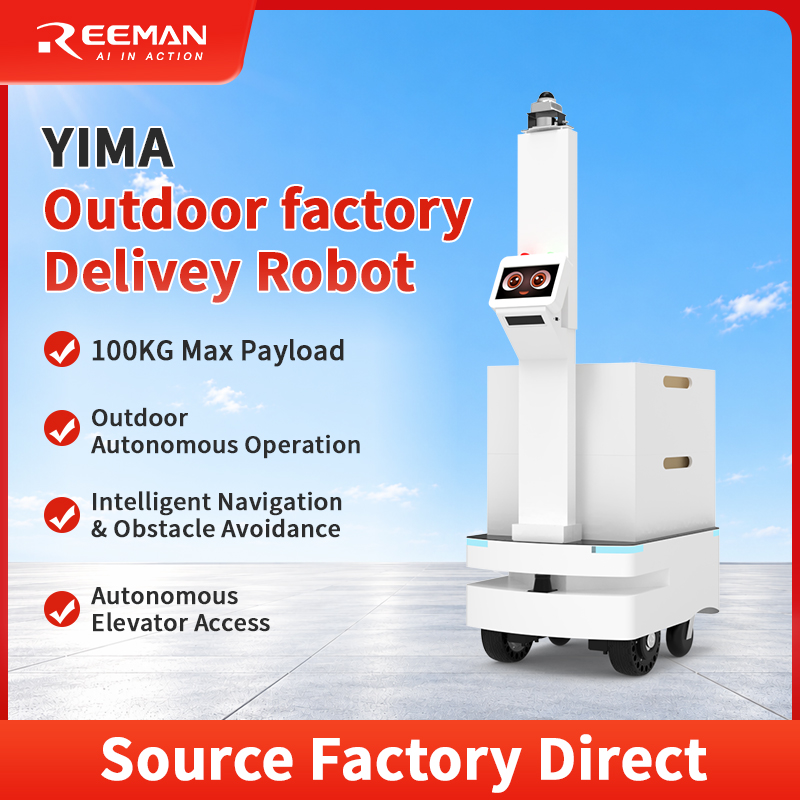
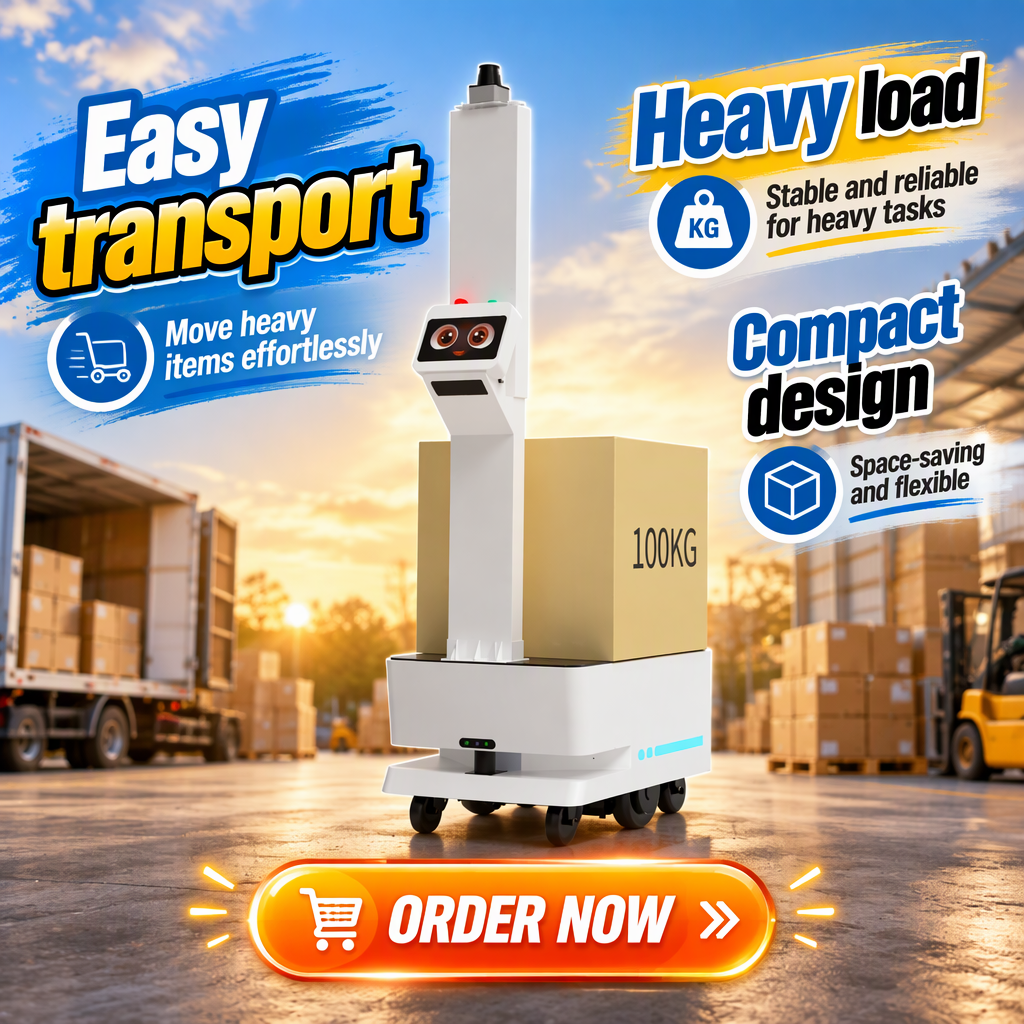
REEMAN Outdoor Delivery Robot 100 kg Payload
Autonomous navigation, obstacle avoidance, and elevator access make this the closest portfolio fit for Querétaro hotel room service, hospital meal routes, campus delivery, and gated-community food delivery. Validate rain, dust, slope, and route permissions during the site survey.
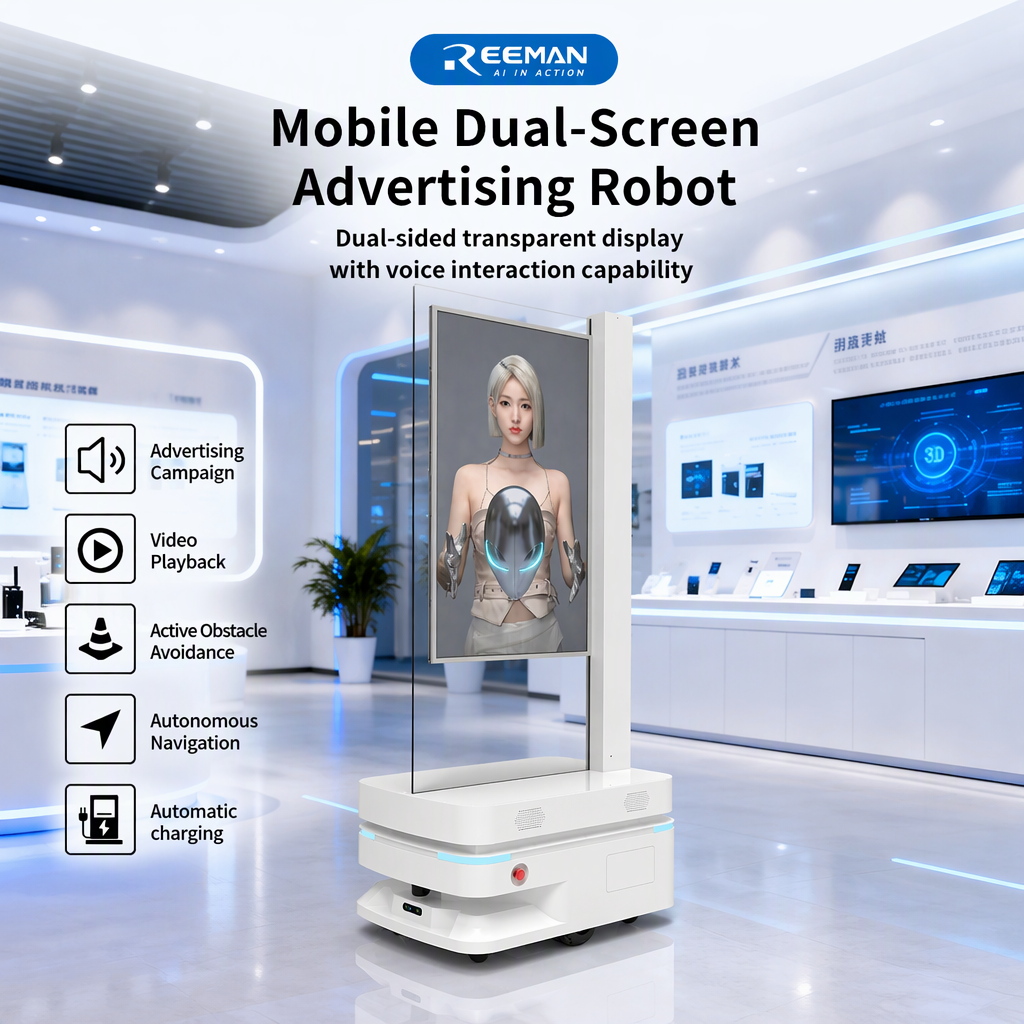
Reeman Mobile Dual Screen Advertising Robot
A bilingual guest-engagement platform for menus, promotions, event wayfinding, and service announcements in Querétaro restaurants, shopping centers, hotels, and exhibition venues. Pair it with a delivery platform when food transport and guest communication need separate workflows.
Reeman Autonomous Mobile Robot SLAM Navigation PLC
A practical AMR platform for moving meal carts, totes, linens, and supplies between prep areas, dining zones, storage rooms, and service corridors. PLC-core architecture and open integration support make it suitable for factory cafeterias and hospital logistics teams that need repeatable dispatch logic.
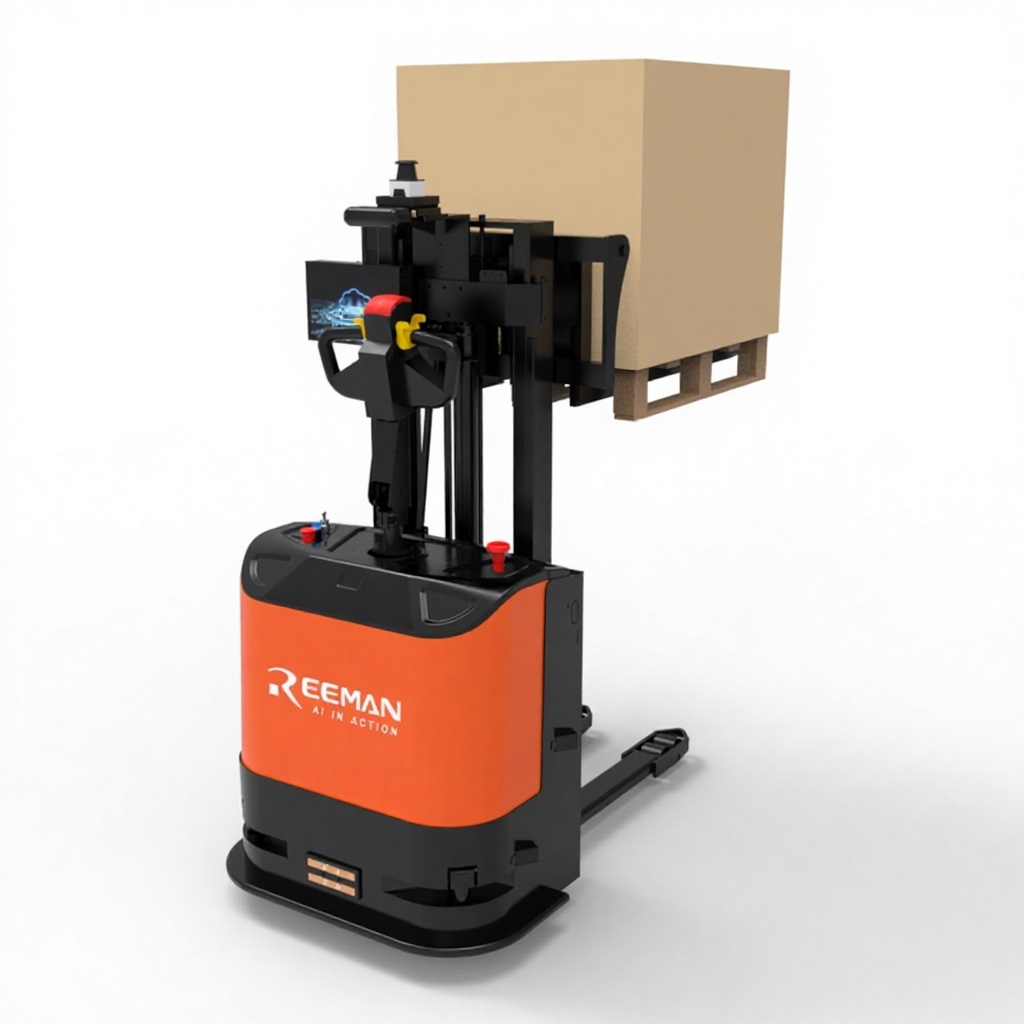
REEMAN Rhino RBOT30F Autonomous Stacker Forklift
3D-vision obstacle avoidance supports central-kitchen pallet supply, dry-store replenishment, and plant-cafeteria logistics in Querétaro's industrial corridor. Use it where meal production depends on scheduled pallet movement rather than manual forklift calls.
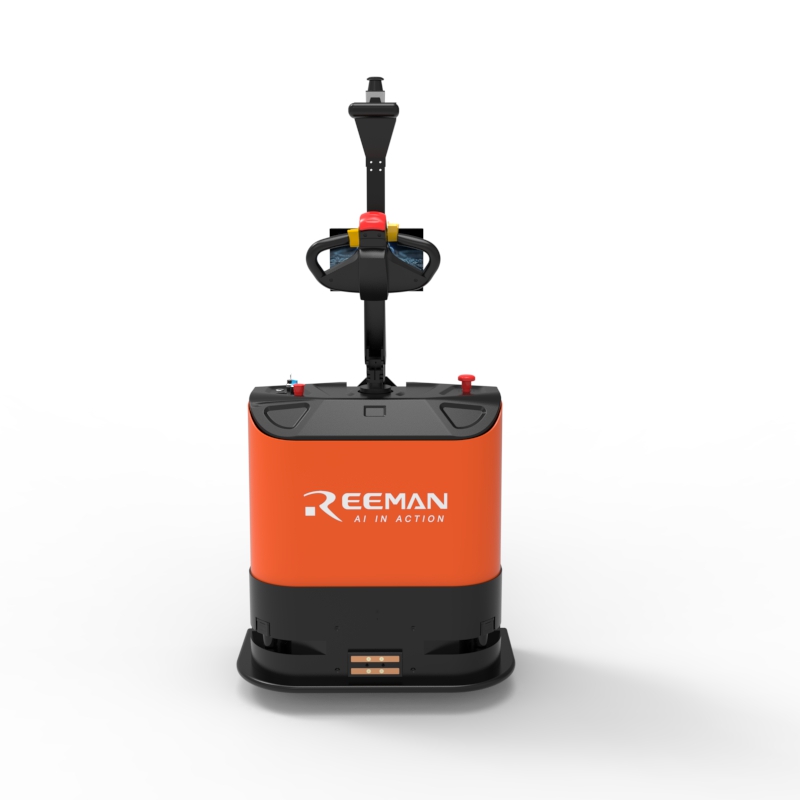
1500 kg Laser SLAM Autonomous Forklift AGV
Point-to-point warehouse material handling without reflectors or magnetic tape. A strong candidate for 3PLs, food distributors, and factory cafeterias around Querétaro that need to move palletized ingredients and packaging between receiving, storage, and production zones.
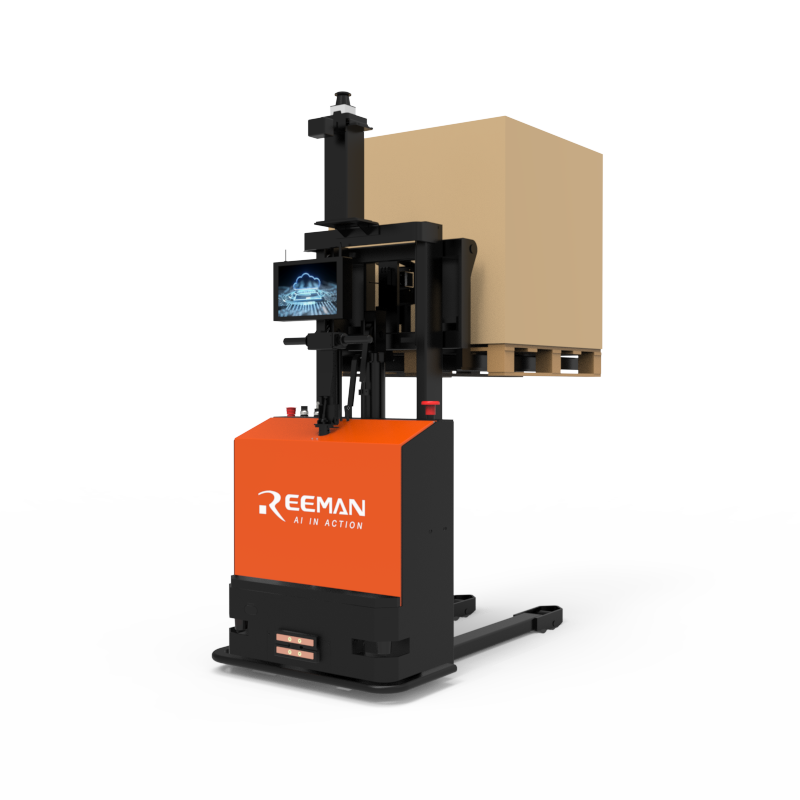
1000 kg Laser SLAM Forklift AGV Pallet Stacker
Single-line LiDAR obstacle avoidance and unmanned pallet stacking for factory logistics. Suitable for Querétaro food-service commissaries and light manufacturing sites where aisle width, pallet quality, and rack interface need a compact autonomous solution.
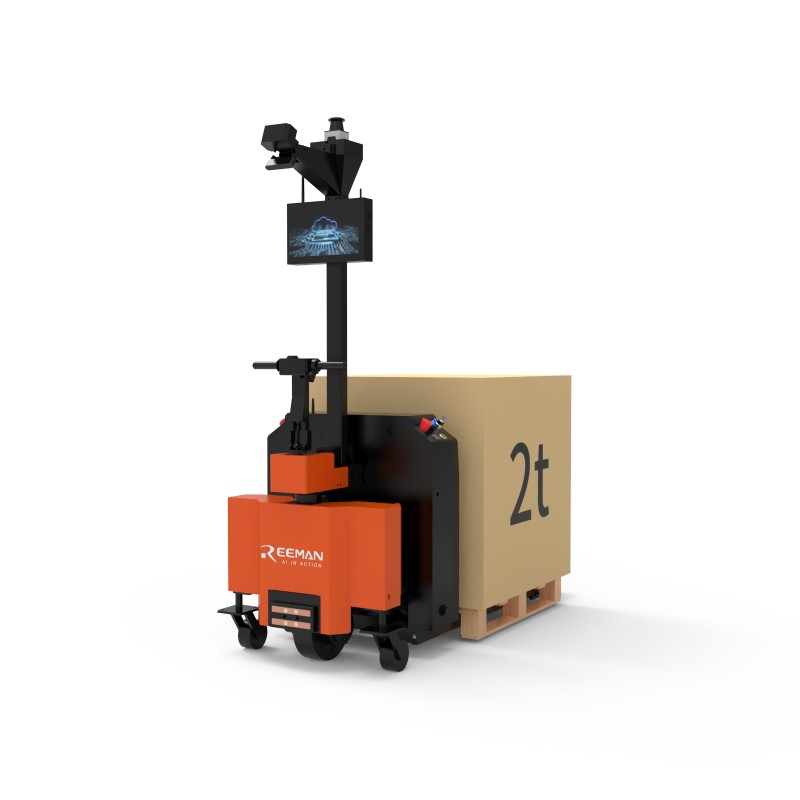
2 Ton Autonomous 4WD AGV Forklift
Multi-line LiDAR, 4WD traction, 10 mm position accuracy, and 6–8 hour operating capability for demanding warehouse handling. Use it for heavy ingredient pallets, dock-to-storage routes, and high-throughput factory catering supply where manual forklift availability limits shift performance.
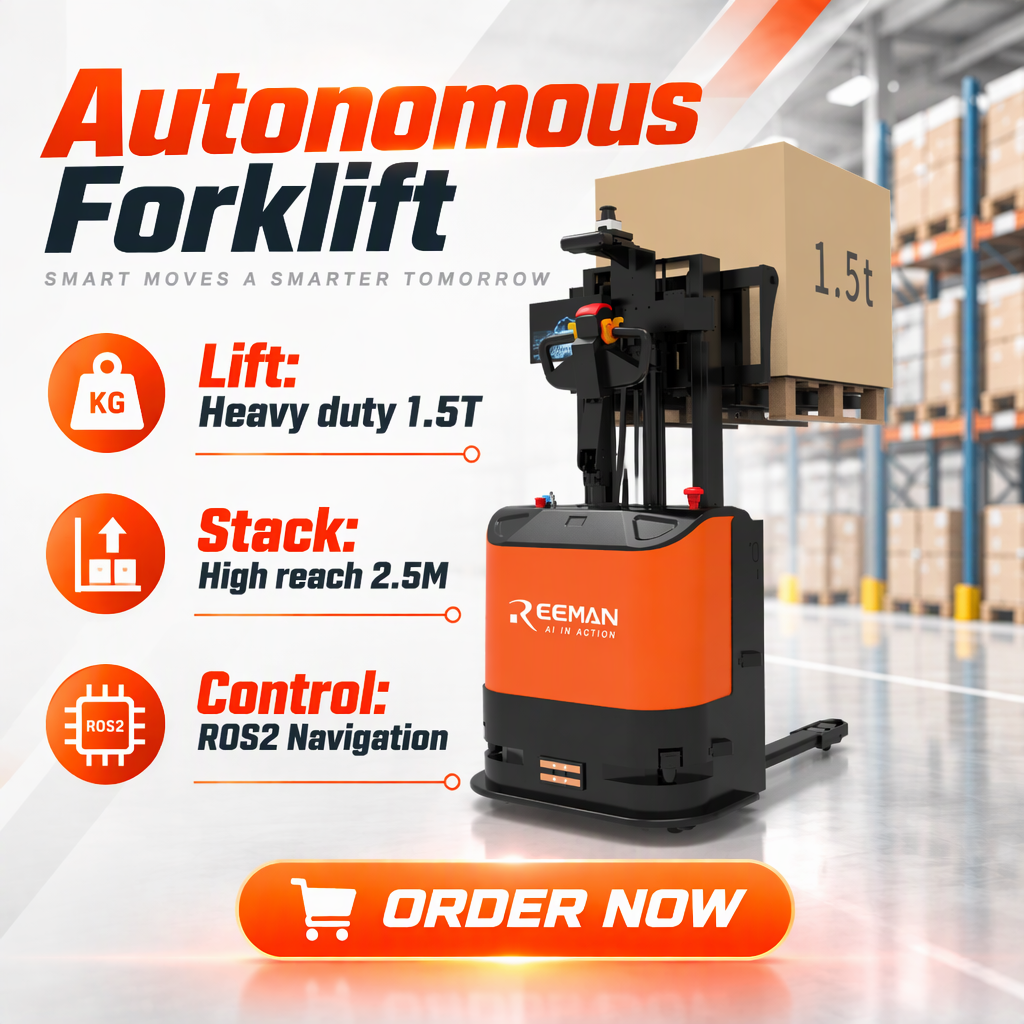
Autonomous Electric Forklift AGV 1500 kg
2.5 m lift, 4WD, lithium-ion battery, and ROS2 navigation for indoor material handling. This platform is relevant when a Querétaro integrator wants stronger software access for WMS/MES task dispatch or when a central kitchen must connect cold storage, dry storage, and production lines.
CE, FCC, or PSE marks depend on model and final configuration. Confirm the exact certificate package, charger voltage, Spanish interface, and Mexican customs requirements before issuing a purchase order.
How Querétaro Buyers De-Risk a Meal Delivery Robot Factory Purchase
A meal delivery robot is often marketed as a single product, but in Querétaro it behaves as a system of systems. The robot must handle food trays or sealed meal carts, navigate from a kitchen to a dining area or elevator lobby, communicate with doors or lifts, charge on a predictable cycle, and survive the cleaning routine of a hotel, hospital, or industrial cafeteria. That is why serious buyers compare factories on engineering evidence, not only on a CE logo or a catalog photo.
The strongest request for information is a site-specific validation package: route drawings, floor-surface photos, doorway and elevator dimensions, pallet or tray weight, daily trip count, peak-hour demand, Wi-Fi coverage, charging location, electrical supply, cleaning chemicals, and the language expected by staff and guests. For Querétaro, buyers should also confirm 127V/60Hz charger options, Spanish-language HMI content, and a customs broker’s view on classification, labeling, and NOM applicability where relevant. CE is valuable evidence of European conformity, but it is not a substitute for Mexican import and site-compliance checks.
Elvorn’s factory portfolio is relevant because the same engineering team works across laser SLAM navigation, AMRs, autonomous forklifts, service robots, and modular payload platforms. That shared architecture reduces integration friction when a Querétaro restaurant group starts with one delivery robot and later adds a back-of-house pallet AGV for a central kitchen or commissary. The information gain for procurement teams is a single technical partner for route validation, open SDK/API discussions, factory testing, and spare-part planning.
Use the scorecard on the right as a first-pass filter, then adjust weighting to your own risk model. For guest-facing food delivery, weight safety, hygiene, and uptime higher. For factory cafeterias and central kitchens, weight pallet compatibility, charging strategy, and integration with WMS/MES or production schedules higher.
Querétaro Procurement Scorecard
Practical weighting used during early application scoping. Adjust to your restaurant, hotel, hospital, or factory risk profile.
Querétaro Application Scenarios for Autonomous Meal Delivery
Querétaro is not a single operating environment. Historic streets, modern hotels, hospitals, industrial parks, universities, and gated communities require different route assumptions, safety rules, and support plans.
Centro Histórico Restaurants & Cafés
Move sealed meal trays from prep kitchens to courtyards, private dining rooms, or upper floors. Historic buildings often have uneven thresholds, narrow service stairs, and heritage constraints; validate private routes and avoid assuming public-sidewalk operation without municipal approval.
Juriquilla & Airport-Area Hotels
Support room service, amenity delivery, and late-night guest requests with an elevator-aware delivery robot. The business case improves when the robot reduces staff walking time during peak check-in windows while keeping service quality consistent for business travelers and event guests.
Hospitals, Clinics & Care Facilities
Transport meal trays, pharmacy items, linens, or supplies between service areas. Buyers should request hygiene materials, tray-retention details, cleaning protocols, quiet-mode operation, and a clear safety method statement for corridors shared with patients and medical staff.
Industrial Parks & Plant Cafeterias
Querétaro’s manufacturing and logistics corridor creates demand for central-kitchen meal distribution, tooling delivery, and shift-change material flow. Use AMRs for carts and totes, and autonomous forklifts for palletized ingredients, packaging, or finished goods.
Universities & Gated Communities
Campus food courts, residential clubs, and gated communities can use delivery robots for meal, parcel, and amenity movement on private paths. Define charging stations, gate access, elevator permissions, emergency contacts, and after-hours response before the pilot.
Shopping Centers & Event Venues
Combine dual-screen advertising, guest guidance, and on-demand delivery support for exhibitions, food courts, and brand activations. Treat the robot as a service touchpoint: map crowded zones, set speed limits, and prepare staff scripts in Spanish and English.
Querétaro Trends Reshaping Meal Delivery Automation
The buying conversation in Querétaro is moving from “Can a robot carry a tray?” to “Can this robot become a reliable, documented, and serviceable part of our operation?”
Nearshoring Expands Factory Catering
Bajío nearshoring continues to add shifts, suppliers, and cafeteria traffic. Meal delivery robots and AMRs help factories connect central kitchens to production lines without adding repetitive walking routes.
High relevanceHospitality Labor Turnover
Hotels and restaurants face recurring training costs and peak-hour pressure. Bilingual guest interfaces, simple route editing, and remote diagnostics reduce dependence on one specially trained operator.
High relevance127V/60Hz Electrical Readiness
Querétaro buyers should specify charger input, plug type, surge protection, charging-room ventilation, and battery shipping documentation. Electrical compatibility is a project item, not a last-minute accessory.
Technical gateIndoor–Outdoor Continuity
Robots increasingly cross from kitchen to covered patio, lobby, elevator, and service corridor. Route validation must include ramps, thresholds, floor transitions, lighting, rain exposure, and Wi-Fi handover.
Site-criticalAPI-First Operations
Open SDK and API access matter for Querétaro integrators connecting robots to PMS, POS, WMS, MES, access control, and elevator systems. Request sample payloads and integration documentation before the pilot.
IntegrationSafety & Insurance Review
Facility managers now ask for risk assessments, speed zones, emergency stops, pedestrian alerts, operator training, and incident-response procedures. CE and factory test records help, but site rules still decide.
Procurement gateWhy Elvorn Supports OEM/ODM Meal Delivery Robot Projects
A credible factory answer combines navigation technology, modular hardware, production capacity, quality evidence, and export support. The following advantages reflect Elvorn’s published company profile and product architecture.
Laser SLAM Navigation
Robots map the site and navigate without magnetic tape, QR codes, or reflectors. This is important in Querétaro buildings where floor finishes, heritage interiors, or leased spaces restrict floor modifications.
Open SDK & API
Secondary development on AMRs and robot platforms supports task dispatch, status feedback, and custom dashboards for WMS, MES, ERP, elevator, or access-control integration.
Modular Payload Platforms
From light delivery and service robots to 1,500 kg and 2-ton autonomous forklifts, modular architecture simplifies fleet training, maintenance routines, and future expansion.
Multi-Layer Safety
LiDAR, obstacle sensors, emergency stops, speed zoning, and audio alerts can be configured around pedestrians, forklifts, guests, patients, and shared service corridors.
Own Production Capacity
Shenzhen and Ningbo production bases, a 5,200㎡ footprint, 200+ team members, and 39 patents support customization, assembly, and quality control for export orders.
Export-Ready Support
English documentation, remote commissioning, OEM service, design service, buyer-label options, FOB terms, and T/T payment in USD or CNY support international buyers.

Headquarters and R&D center: engineering, software, and robotics platform development under one organization.

Assembly and customization: OEM top modules, branding, payload structures, and export packaging can be planned with production.

Quality and engineering review: functional checks, load testing, and documentation support before shipment.
 SGS Onsite Verified
 CE Marking Models
 FCC Options
 PSE Options
Match the Querétaro Workflow to the Robot Platform
Use this table to frame the first technical conversation. Final configuration depends on layout, payload, tray or pallet format, elevator access, shift pattern, and the integration scope.
| Querétaro Workflow | Recommended Platform | Why It Fits | Evidence to Request in the RFQ |
|---|---|---|---|
| Hotel room service, hospital meal runs, campus food delivery | REEMAN Outdoor Delivery Robot 100 kg | 100 kg payload, autonomous navigation, obstacle avoidance, and elevator access support multi-floor service routes. | Elevator interface method, tray/cart dimensions, route video, rain/dust protection, battery cycle, Spanish HMI. |
| Menu promotion, guest guidance, event wayfinding | Reeman Mobile Dual Screen Advertising Robot | Dual LCD screens and voice interaction create a mobile information point for restaurants, malls, and exhibitions. | Content-management workflow, language pack, indoor map, crowd-zone speed settings, cleaning routine. |
| Meal carts, linens, totes, service supplies | Reeman Autonomous Mobile Robot SLAM Navigation PLC | Laser SLAM navigation and PLC-core architecture fit repeatable internal logistics and API-based dispatch. | Top-module design, cart locking, API endpoints, Wi-Fi coverage, charging ratio, route traffic study. |
| Central-kitchen pallet supply and dry-store replenishment | 1000 kg Laser SLAM Forklift AGV Pallet Stacker or RBOT30F | Unmanned pallet stacking and 3D-vision obstacle avoidance support compact back-of-house logistics. | Aisle width, pallet type, rack height, floor flatness, safety zones, cycle-time test, spare fork parts. |
| Reflector-free point-to-point pallet transfer | 1500 kg Laser SLAM Autonomous Forklift AGV | No tape or reflectors; practical for leased warehouses and changing layouts in Querétaro logistics operations. | Mapping time, route-change procedure, load chart, charger specification, emergency-stop layout, training. |
| Heavy pallet handling and high-throughput dock-to-storage | 2 Ton Autonomous 4WD AGV Forklift or 1500 kg ROS2 AGV | 4WD, multi-line LiDAR, 10 mm position accuracy, 2.5 m lift, lithium battery, and ROS2 options fit demanding flows. | Site traffic simulation, 6–8 h duty validation, ROS2 interface scope, battery certification, WMS/MES integration. |
For cross-border procurement, request the model-specific CE Declaration of Conformity, charger datasheet, packing list, commercial invoice template, and recommended HS classification support. Confirm NOM and other Mexican requirements with your customs broker and legal advisor.
From Querétaro Site Survey to Stable Operation
A disciplined five-step process reduces deployment risk for restaurants, hotels, hospitals, and factory cafeterias.
Requirement Review
Share layout PDF/CAD, route photos, payload, meal-cart or pallet dimensions, elevator details, door widths, floor surface, shift schedule, and target trips per hour.
Solution Design
Engineers recommend the platform, fleet size, charging strategy, safety zones, Spanish interface scope, and integration plan for PMS, POS, WMS, MES, or elevator control.
Customization & Build
OEM branding, top modules, tray racks, payload structures, software interfaces, 127V/60Hz charger configuration, and export packaging are defined before production.
Factory Testing
Function, load, obstacle-avoidance, and route tests are performed before shipment. Request test records, photos, and packing confirmation for your Querétaro project file.
Deploy & Support
Remote mapping support, operator training, spare-part planning, and periodic performance review help maintain uptime after the robot enters daily service.
Common Local Questions About Meal Delivery Robot Procurement
These are the questions most often raised by Querétaro restaurant groups, hotel operators, hospital facility teams, and industrial cafeteria buyers.
Is a CE mark enough to import a meal delivery robot into Querétaro, Mexico?
CE marking is valuable evidence of European conformity for the models that carry it, but it is not a substitute for Mexican import and site-compliance checks. Buyers should confirm the model-specific CE Declaration of Conformity, test reports, charger specification, Spanish labeling, customs classification, and whether NOM or other requirements apply. Ask your Querétaro customs broker to review the product scope before you issue a purchase order.
Can the robot work with Querétaro’s 127V/60Hz power supply?
Yes, if the charger and power accessories are specified for the site. Provide the charging-room voltage, plug type, surge-protection requirements, charging window, and shift pattern. For hotels and hospitals, confirm noise limits and charging location. For factories, confirm whether the charger will be installed near a loading dock, cafeteria, or production area. Battery shipping rules should also be reviewed before booking freight.
What shipping route and lead time should we expect?
Typical export planning starts with factory production and testing, then export packaging from Shenzhen or Ningbo, sea freight to a Mexican port such as Manzanillo or Lázaro Cárdenas, customs clearance, and trucking to Querétaro. Air freight may be considered for urgent samples or pilot units. Lead time varies with customization, battery documentation, and customs review, so request a written schedule before deposit. Elvorn’s published trade terms include FOB and T/T payment in USD or CNY.
Can the robot call elevators and support Spanish-language service?
Elevator access is listed for the REEMAN outdoor delivery robot, but implementation depends on the building’s elevator control, relay/API availability, Wi-Fi coverage, door widths, thresholds, and safety approval. Spanish interface content, voice prompts, menus, and staff scripts can be customized for Querétaro sites; confirm the exact language package and training materials in the quotation. Start with private routes and avoid assuming public sidewalk operation without municipal permission.
What local support and spare parts can be arranged?
Elvorn provides English documentation, remote commissioning support, and long-term spare-part supply. For Querétaro, define a critical spare list that may include LiDAR, drive wheels, charger, emergency-stop components, and tray/cart fixtures. Also agree on remote diagnostic hours, escalation contacts, and whether a local integrator will handle on-site response. The factory has been verified onsite by SGS Group and operates under ISO 9001 and ISO 14001 management systems.
Do you offer OEM, ODM, and buyer-label production?
Yes. As a verified custom manufacturer, Elvorn offers OEM service, design service, and buyer-label options, including custom top modules, payload structures, branding, packaging, and software interfaces. Minimum order quantity depends on the model and customization scope. For a Querétaro project, provide drawings, target branding, tray or cart dimensions, and the intended launch date so engineering can quote a realistic configuration.
How should we evaluate safety around guests and employees?
Request a safety concept covering obstacle detection, speed zones, emergency stops, audio alerts, pedestrian-zone behavior, and operator training. For meal delivery, also review tray retention, spill containment, cleaning materials, and hygiene procedures. For autonomous forklifts, review pedestrian separation, load stability, aisle rules, and traffic-management logic. Factory test records and a site-specific risk assessment are more useful than a generic brochure claim.
Is a meal delivery robot the same as an AMR?
A meal delivery robot is usually an application-specific implementation of an autonomous mobile robot platform. The AMR provides navigation, sensing, motion control, battery, and safety behavior; the meal delivery configuration adds trays, compartments, carts, elevator access, user interface, and cleaning features. Buyers should compare the complete workflow — payload, route, elevator, hygiene, software, and support — rather than the label alone.
What information should we send for a Querétaro-specific proposal?
Send layout PDF/CAD, route length, indoor/outdoor transitions, floor surface, doorway and elevator dimensions, payload, tray or cart size, peak trips per hour, shift schedule, charging location, electrical supply, Wi-Fi coverage, desired integrations, language requirements, target launch date, and preferred Incoterm. Photos and a short route video are especially useful. This allows Elvorn engineers to recommend the right robot platform, fleet size, charger plan, and safety configuration without over-specifying the project.
Request a Querétaro-Specific Meal Delivery Robot Proposal
Send your layout, meal-tray or cart dimensions, elevator details, target trips per hour, charging location, and integration requirements. Elvorn’s application engineers can map the right platform, CE documentation scope, 127V/60Hz charger plan, and factory testing schedule for your Querétaro project.