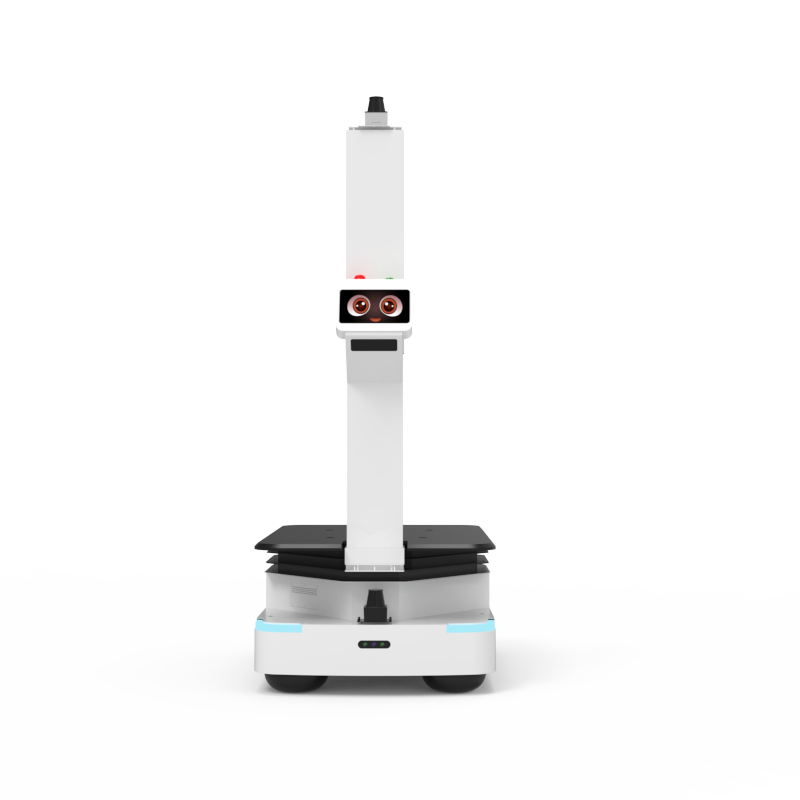
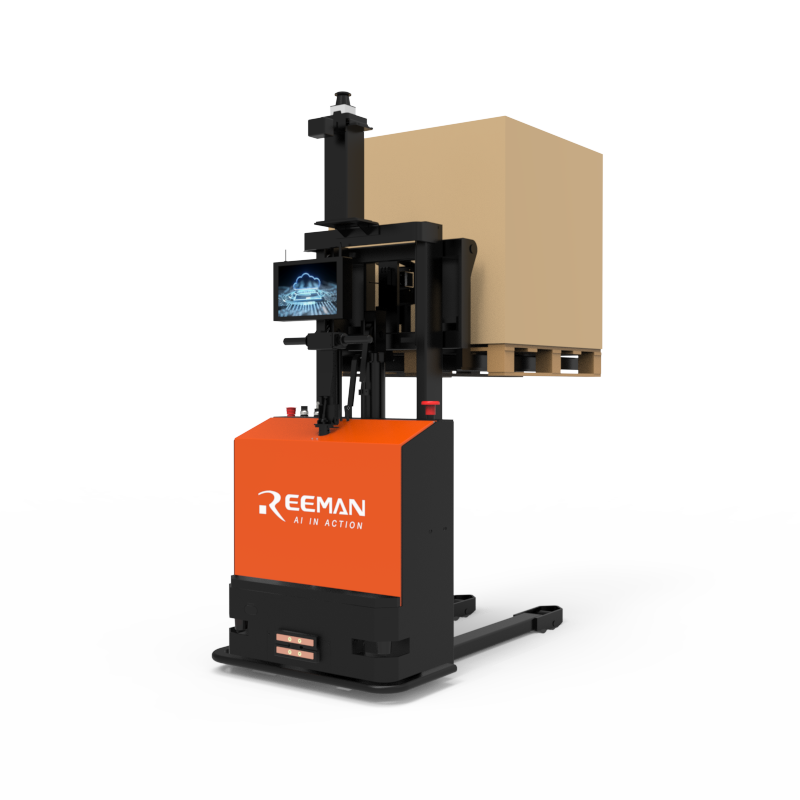
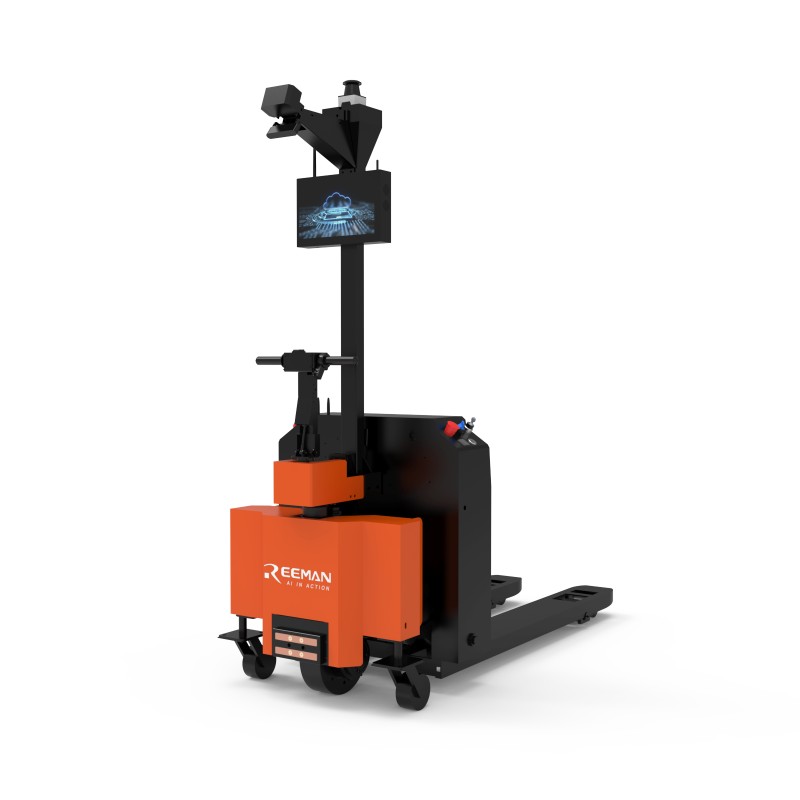
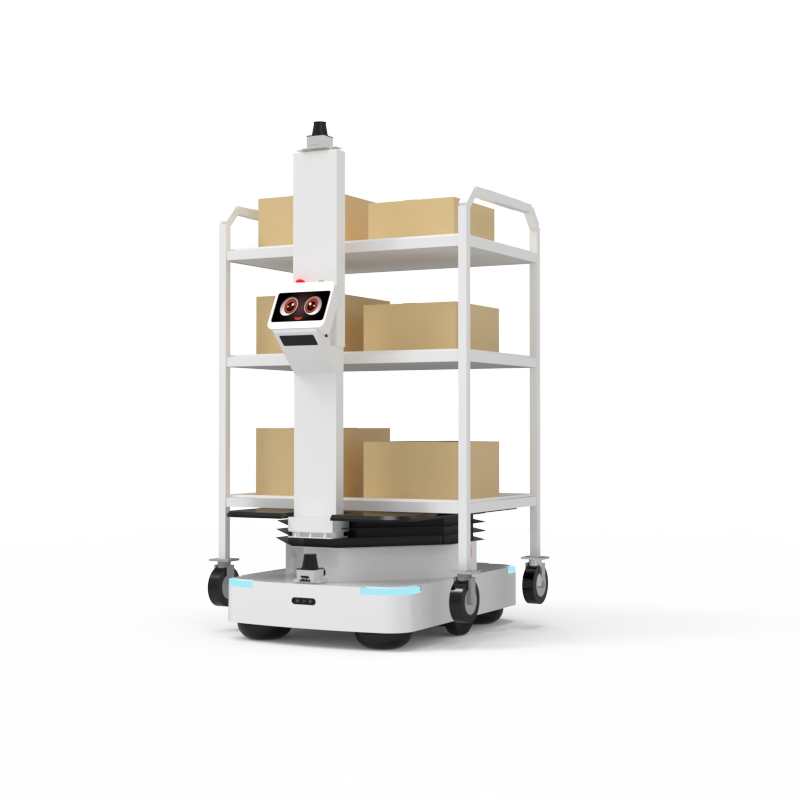
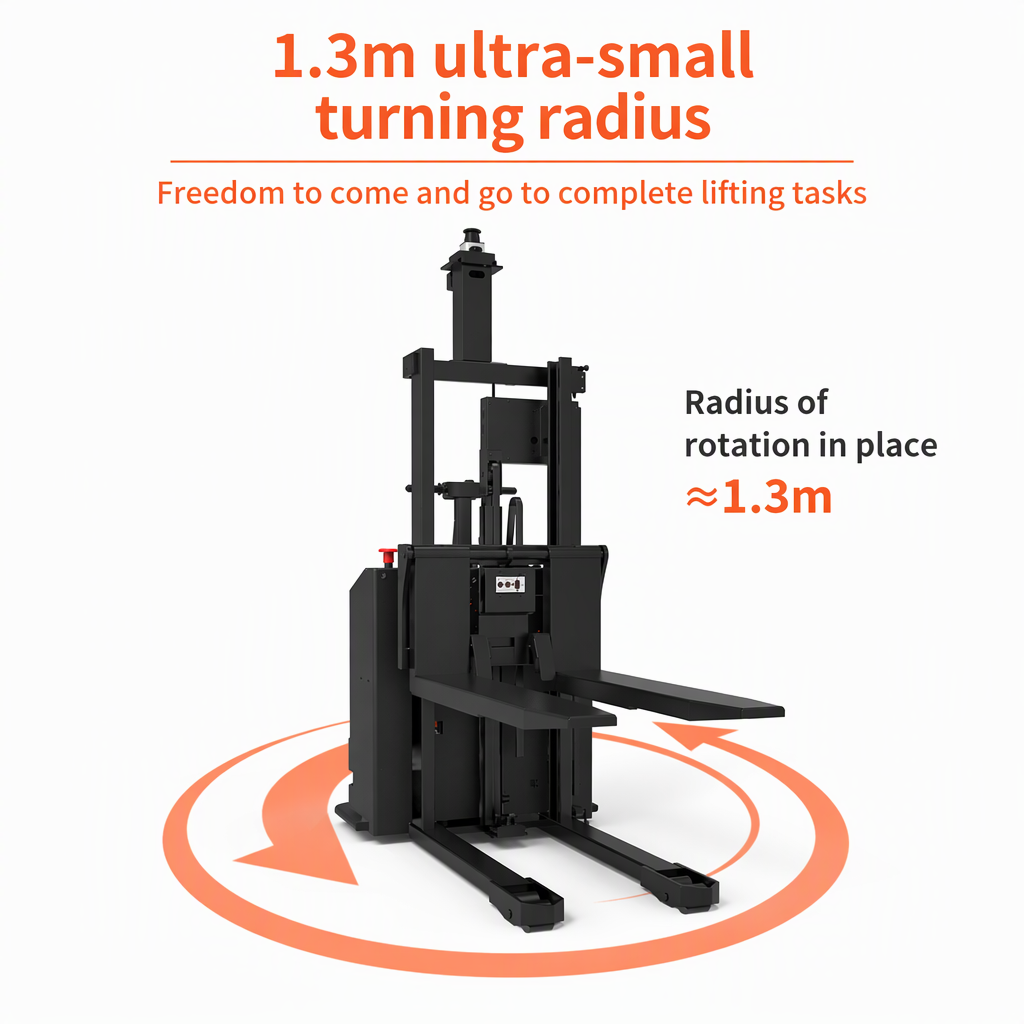
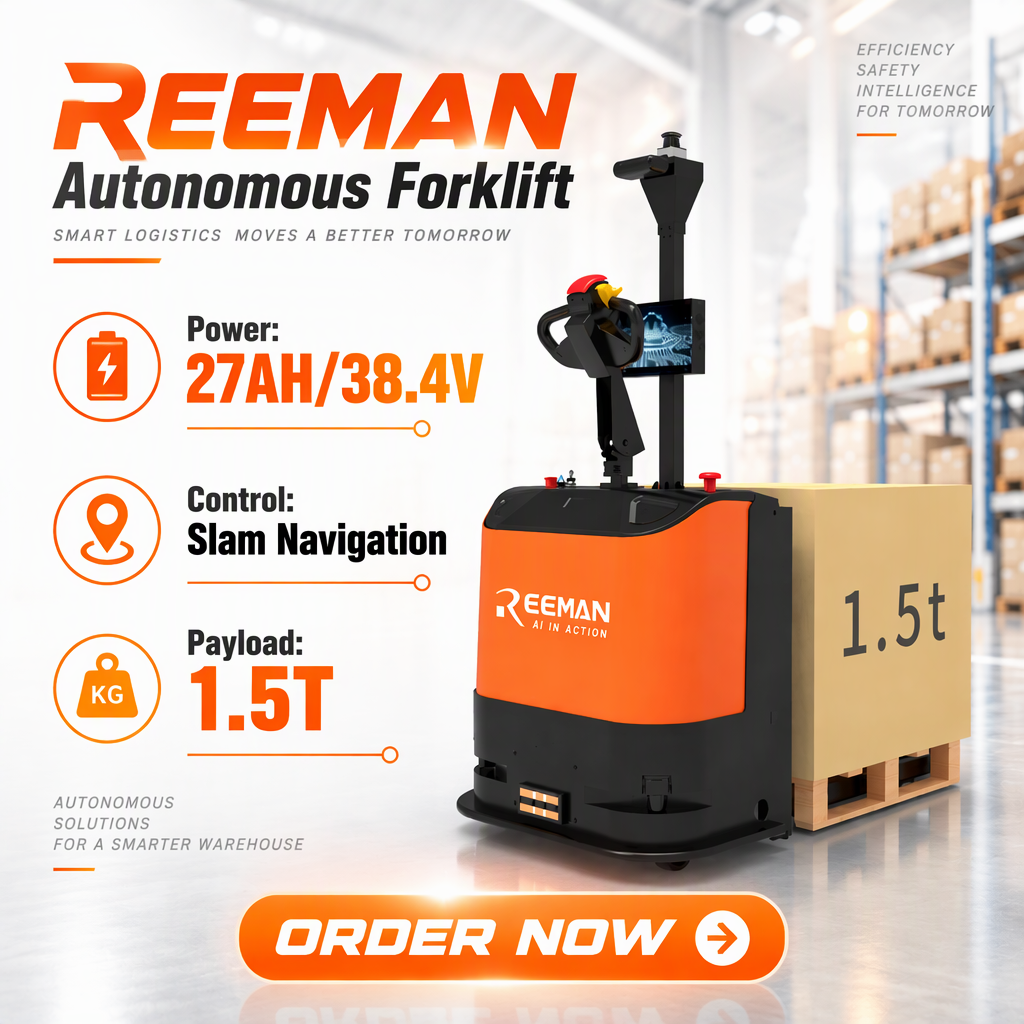
Laser SLAM Autonomous Stacker Forklift 1500 kg
- 1,500 kg rated pallet load
- Laser obstacle avoidance
- Stacking & low-rack storage
Direct-from-factory autonomous forklift AGVs, industrial AMRs and SLAM robot chassis from Shenzhen — SGS-verified, ISO 9001/14001 certified, CE/FCC/PSE marked, and wholesale-ready for warehouses, PEZA factories and 3PL operators in Manila, Cebu, Davao and Clark.
Inquire NowEight production-ready platforms covering 600 kg to 2,000 kg payloads. Every unit below is manufactured in-house by Shenzhen Elvorn Intelligent Equipment Co., Ltd., tested before shipment, and available with OEM branding, buyer labels and spare-part kits for Philippine distributors.
Procurement in the Philippines rarely starts with a model number. It starts with a problem — an operator shortage, a night shift that cannot be staffed, a PEZA line that must run at a fixed takt time — and then it moves through three distinct search stages.
Warehouse and manufacturing operators across Luzon, Visayas and Mindanao are being squeezed from two directions at once: e-commerce volumes keep climbing while certified forklift operators become harder to recruit, train and retain. That combination has turned industrial handling robots from a "future project" into a line item inside 2025–2027 capital expenditure plans. For a buyer, the practical question is no longer whether to automate a pallet move, but which Chinese manufacturer, which payload class, and which total landed cost per pallet position is defensible in front of a finance committee.
Because of that, a page that only lists machine specifications answers roughly one third of the questions a real Philippine buyer is carrying. The three sections below map the search intent behind the queries that actually convert — and each answer is written so that an engineer, a procurement officer and a search engine can all read it the same way.
Queries such as "autonomous forklift price in the Philippines" or "AGV robot cost Manila" are handled with clear cost-driver logic instead of vague brochures: payload class, mast or fork configuration, battery chemistry, navigation package and freight mode each move the number, and FOB terms expose the equipment value before Philippine duties and inland delivery are layered on.
Searches like "best AGV supplier Philippines" or "China best industrial handling robot supplier" are answered with verifiable evidence rather than adjectives: SGS onsite verification, ISO 9001 and ISO 14001 management systems, CE / FCC / PSE marks on individual models, 39 awarded patents and a published assessment report that a Philippine importer can hand straight to its compliance team.
Wholesalers asking about bulk autonomous forklifts for Manila, Cebu or Davao need commercial mechanics, not marketing copy: FOB Shenzhen or Ningbo, T/T in USD or CNY, OEM and buyer-label options, MOQ guidance per platform, spare-part bundles and a phased shipment plan that matches warehouse commissioning dates.
Robots are only valuable when they match a real workflow. These are the deployment patterns our application engineers see most often when Philippine buyers request a layout review.
Greater Manila absorbs the majority of Philippine online order volume. Autonomous pallet trucks shuttle cages and pallets between inbound receiving, packing stations and dispatch lanes, holding throughput steady through 11.11, 12.12 and payday peaks when temporary labour is hardest to source.
Inside PEZA zones in Cavite, Laguna and Batangas, 600 kg industrial AMRs move WIP bins between lithography-adjacent stations with quiet, precise motion — removing the exhaust fumes, vibration and human variability that diesel forklifts introduce onto a production floor.
Third-party logistics providers switch accounts inside a single shift. An open SDK and API let a warehouse management system dispatch tasks across a mixed fleet, while laser SLAM re-maps aisles far faster than the floor works that magnetic tape or QR landmarks demand.
From chilled dairy rooms to frozen storage, battery chemistry and sealed sensor suites decide whether a robot survives a full shift. Thermal management and ingress protection are specified per room, protecting the LiFePO4 packs used on the 1-tonne electric forklift AGV.
Replenishment schedules decouple from individual operators when stacker AGVs handle pallet put-away overnight. Store-opening delays caused by a single absent driver disappear, and the same fleet can be re-tasked for promotional build-ups without floor rework.
Around Manila Port, Subic and Cebu, the Reeman 2-ton autonomous forklift with 1,085 mm forks and 10 mm positioning accuracy handles repetitive pallet extraction — the highest-fatigue task in any stripping operation and the one most exposed to operator turnover.
Understanding these shifts is part of the information gain a buyer should demand from any supplier. They also explain why platform flexibility matters more than a single headline speed figure.
Wage inflation and certified-operator scarcity have pushed payback expectations down to roughly 15–24 months for two-shift pallet flows. Philippine buyers now evaluate uptime, spare-part response time and locally available training — not only the purchase price on the quotation sheet.
Japanese, Korean and Taiwanese electronics and precision-manufacturing projects continue to expand across CALABARZON and Metro Cebu. These plants arrive with MES-driven line-side logistics requirements, so AMRs are specified with API-level integration rather than as isolated robot islands.
PEZA-registered enterprises and BOI-priority projects increasingly fund automation through formal capex approval. CE documentation, ISO 9001/14001 certificates, SGS reports and test records are now qualification material in a bid — not optional extras added after the technical evaluation.
A quick reference our application engineers use during first-round scoping with Philippine distributors and end users. Final configuration — fork length, mast height, battery and top module — is confirmed after reviewing aisle widths, pallet condition and throughput targets.
| Robot Platform | Rated Load | Navigation | Typical Philippine Application |
|---|---|---|---|
| Reeman 2 Ton Autonomous Forklift AGV | 2,000 kg | Laser SLAM, 10 mm accuracy | Container stripping, port hinterland, heavy pallet transfer |
| Reeman 1.5 Ton Autonomous Forklift AGV | 1,500 kg | SLAM + 3D obstacle avoidance | Warehouse pallet moves, production-line feeding, bidirectional aisles |
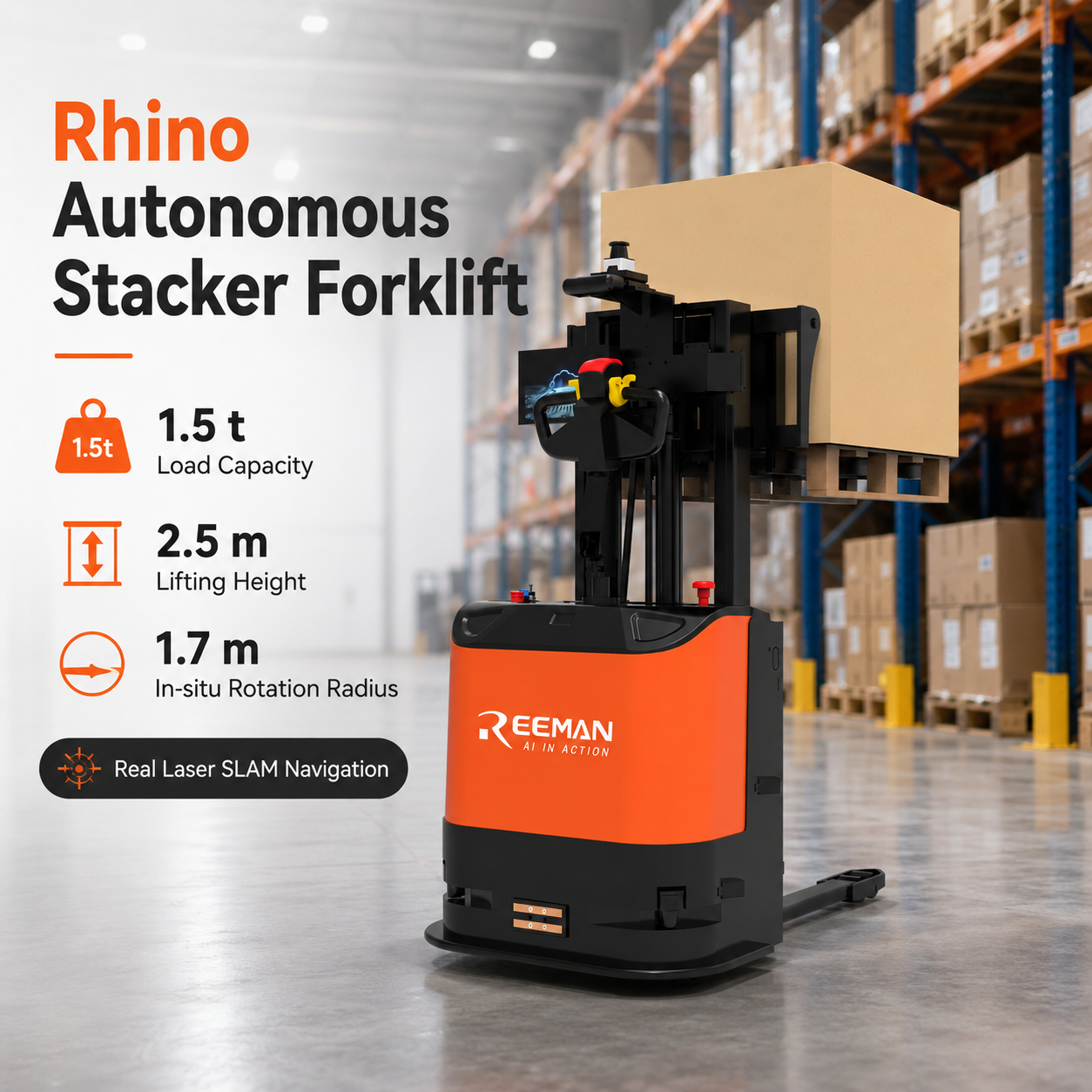
| Laser SLAM Autonomous Stacker Forklift | 1,500 kg | Laser SLAM, laser avoidance | Put-away, low-rack stacking, retail DC replenishment |
| REEMAN Autonomous Electric Forklift 1T | 1,000 kg | Laser SLAM, 48V 30Ah LiFePO4 | Indoor lifting, packing areas, e-commerce fulfilment |
| 600 kg Industrial AMR / Material Cart | 600 kg | Laser SLAM, QR-code free | PEZA electronics lines, WIP bins, line-side delivery |
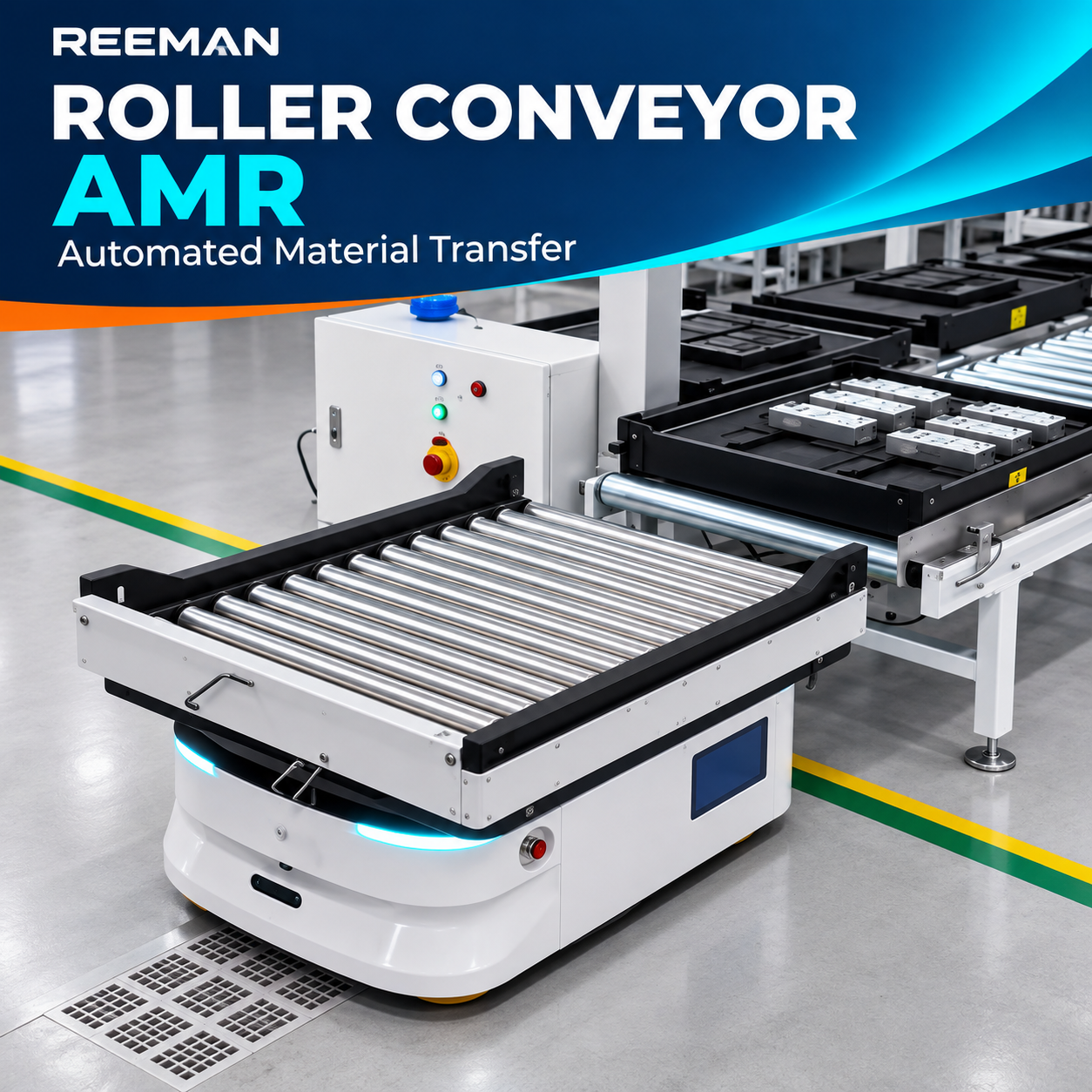
| Roller Conveyor AMR with SDK & API | Configurable | Open SDK / API | Automated load transfer, conveyor docking, system integration |
Most deployment problems trace back to three items that are cheap to verify before shipment and expensive to correct afterwards.
Confirm floor flatness and joint gaps, minimum aisle width, charging-station placement, Wi-Fi coverage in every aisle and whether doors or lifts must be opened by the robot. Laser SLAM removes the need for floor markers, but it does not remove the need for a clean, consistent drive path.
Philippine facilities commonly run 220 V / 60 Hz single-phase and 380 V / 60 Hz three-phase supply with Type A or B plugs. Confirm charger input, grounding and surge protection at quotation stage, together with the CE, FCC or PSE documentation your compliance team requires.
Equipment ships FOB Shenzhen or Ningbo, by LCL or FCL to Manila, Cebu or Davao. Bundle a critical spare-part kit — drive wheels, sensors, charger, battery pack — with the first order, and schedule remote commissioning plus operator training so the fleet is productive in the first week, not the first quarter.
Founded in 2015, Shenzhen Elvorn Intelligent Equipment Co., Ltd. is a national high-tech enterprise focused on robotic platform technology and autonomous driving. We design, manufacture and support autonomous forklifts, industrial AMRs, robot chassis, delivery robots and cleaning robots from two production bases in Shenzhen and Ningbo.
Laser SLAM navigation, motion control, fleet scheduling and hardware are developed internally. That means faster customisation, transparent answers to engineering questions and a patent portfolio of 39 awarded innovations behind the platforms you resell.
5,200 ㎡ of combined floorspace across Shenzhen and Ningbo, with supplier assessment procedures and on-site material inspection. A team of more than 200 engineers and staff supports prototyping, batch production and after-sales engineering.
The factory has passed onsite verification by SGS Group. Management systems are certified to ISO 9001 and ISO 14001, and individual models carry CE, FCC or PSE marks for target markets — documentation your Philippine compliance team can review before award.
As a verified custom manufacturer we provide OEM service, design service and buyer-label options: custom top modules, payload structures, colour schemes, branding and packaging. Philippine distributors can build a defensible local brand on proven platforms.
AMRs and chassis expose an open SDK and API for secondary development, enabling task dispatch and status feedback from WMS, MES, ERP or custom dashboards. Integration is a documented engineering activity, not a black-box promise.
English documentation, remote commissioning and spare-part supply support buyers across North America, Western Europe, East and Southeast Asia and the Middle East. Standard trade terms are FOB with T/T payment in USD or CNY, and a 98.76% inquiry response rate.
Every unit undergoes functional and load testing before shipment, and test records are available on request. For Philippine buyers evaluating a first order, we recommend starting with a single pilot aisle — one forklift AGV or one AMR — measuring cycle time against the existing manual process, then scaling the fleet once the numbers are documented internally.
Answers written for procurement officers, warehouse managers and distributors evaluating a first or repeat order.
Equipment is quoted FOB Shenzhen or Ningbo, so the invoice value covers the machine and factory testing but not ocean freight, insurance, Philippine duties or inland delivery. A single 1-tonne AMR or stacker AGV normally moves as LCL to Manila, Cebu or Davao, while fleets of three or more units are usually more economical in a 20ft or 40ft container. Your freight forwarder should quote the door-to-door leg; we supply packing lists, gross weights and export documentation so the landed cost calculation is complete before you commit.
Yes. Philippine facilities typically run 220 V / 60 Hz single-phase and 380 V / 60 Hz three-phase supply, so charger input voltage, frequency and plug type are confirmed at quotation stage rather than assumed. Surge protection is strongly recommended in areas with frequent lightning activity, and charging-station placement is reviewed together with your aisle layout so cables never cross a robot drive path.
Laser SLAM navigation is unaffected by humidity, but batteries and sensor seals are not. For Philippine conditions we specify the LiFePO4 pack, charger derating and ingress protection appropriate to the room — ambient warehouse, chilled room or freezer — and we advise on ventilation around charging stations. Buyers running non-air-conditioned warehouses should share summer ambient temperatures during the scoping phase so the thermal margin is designed in, not corrected later.
Commissioning, mapping and operator training are delivered remotely with English documentation, and we ship a recommended critical spare-part kit — drive wheels, sensors, charger and battery — with the first order so routine maintenance does not wait on an international shipment. Distributors who stock a small spare inventory locally significantly shorten their own response time to end users, and we support that stocking plan with part numbers and consumption forecasts.
Yes. Elvorn AMRs and robot chassis provide an open SDK and API for secondary development, allowing task dispatch and status feedback from warehouse management, manufacturing execution or custom software platforms. For PEZA plants running MES-driven line-side logistics, integration scope is defined during solution design so the interface, data points and exception handling are agreed before production begins.
Yes. As a verified custom manufacturer we offer OEM service, design service and buyer-label options, including custom top modules, payload structures, branding, colour schemes and packaging. Distributors building a local brand can therefore present a differentiated product line while relying on a proven SLAM navigation stack and control architecture shared across the 600 kg to 2-tonne platforms.
Depending on the model, robots carry CE, FCC or PSE marks. The management system is certified to ISO 9001 and ISO 14001, and the factory has been verified onsite by SGS Group, covering business licensing, production capability and quality control. Third-party assessment reports and transaction records are publicly available for buyer due diligence, which is often the fastest way to clear an internal supplier qualification process.
Standard terms are FOB, with T/T payment accepted in USD or CNY. Lead time depends on platform, configuration and order quantity — stock platforms move faster than custom top modules or buyer-labelled units. For wholesale orders we recommend confirming the shipment plan against your warehouse commissioning date, since a phased delivery (pilot unit first, fleet later) usually reduces installation risk on a first project.
Four items matter most: floor flatness and joint condition along the drive path, minimum aisle width for the selected model, stable Wi-Fi coverage in every operating zone, and a defined charging area with adequate power. Laser SLAM removes the need for magnetic tape, QR codes or reflectors, so no floor works are required for navigation — but a clean, unobstructed route still determines how quickly the fleet reaches full cycle speed after mapping.
Build the comparison on cost per pallet movement, not machine price. Include operator wages across shifts, recruitment and training churn, accident and damage exposure, and the throughput you lose when a shift cannot be staffed. For two-shift pallet flows, Philippine buyers commonly model a 15–24 month payback. A pilot aisle with measured cycle times gives your finance team defensible numbers and shows exactly where the second and third units should be deployed.
Send your warehouse layout, pallet type, load weight and target throughput. Our application engineers will return a recommended platform, fleet size, charging plan and FOB quotation — plus the certification package your compliance team needs.
Inquire Now