8 Autonomous Robots Buyers in Hanoi Should Compare Before Designing a Meal-Delivery or Food-Logistics Fleet
This shortlist uses the exact product names, images and model pages from our current portfolio. A meal-delivery robot project rarely stops at one tray robot: the business case improves when front-of-house delivery robots, back-of-house AMRs, cold-chain AGV forklifts and central-kitchen warehouse robots share one fleet logic.
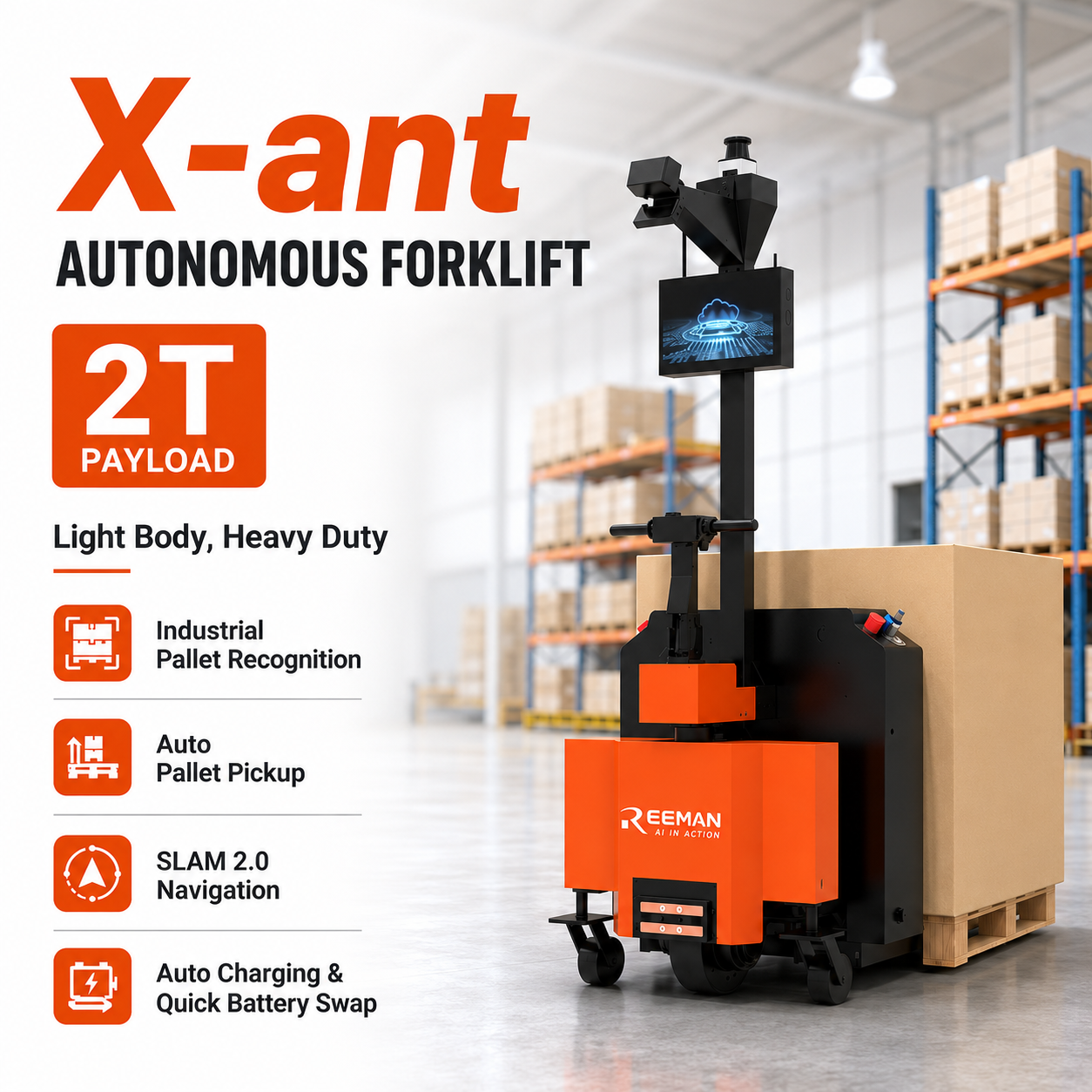
2 Ton Autonomous 4WD AGV Forklift Laser SLAM Navigation Multi-Line LiDAR 3D Obstacle Avoidance Warehouse Handling
Hanoi fit: palletized rice, beverages, cooking oil and packaged ingredients moving from receiving docks into central-kitchen storage. Multi-line LiDAR and 3D obstacle avoidance support mixed forklift traffic and repetitive put-away cycles.
View product details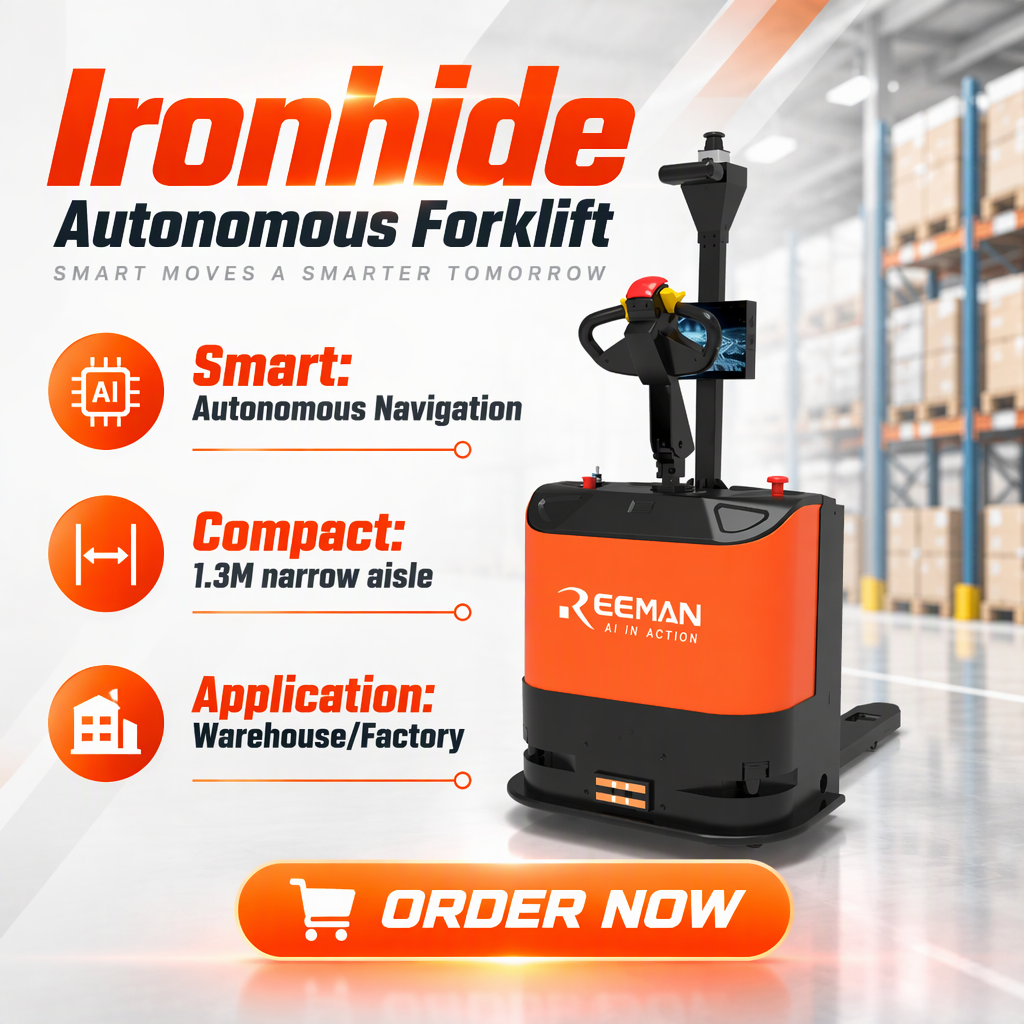
Reeman 1.5 Ton Autonomous Forklift AGV 3D Obstacle Avoidance Bidirectional Driving 48V 30AH Lithium-Ion Battery
Hanoi fit: bidirectional driving is useful in tight cold rooms, basement stores and dock corners. The 48V lithium-ion platform suits food-logistics operations that need quick opportunity charging between meal-prep peaks.
View product details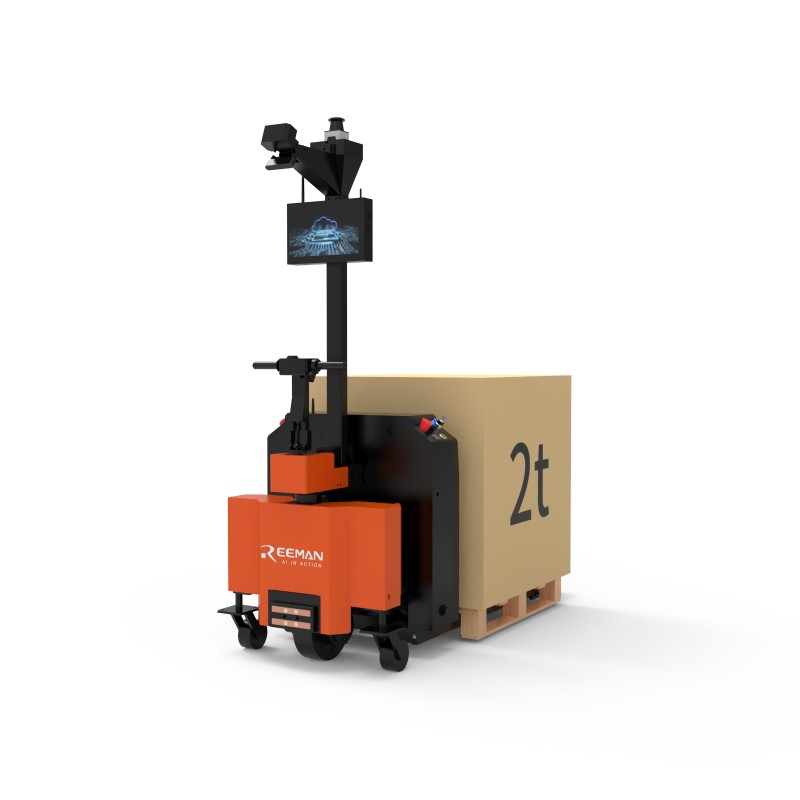
2 Ton Autonomous 4WD AGV Forklift Laser SLAM Navigation Multi-Line LiDAR 10mm Position Accuracy 6-8H Warehouse Handling
Hanoi fit: 10 mm positioning accuracy helps repeatable pallet retrieval in high-throughput distribution centres. The 6–8 hour operating window is realistic for a pilot, with charging strategy confirmed after route and duty-cycle analysis.
View product details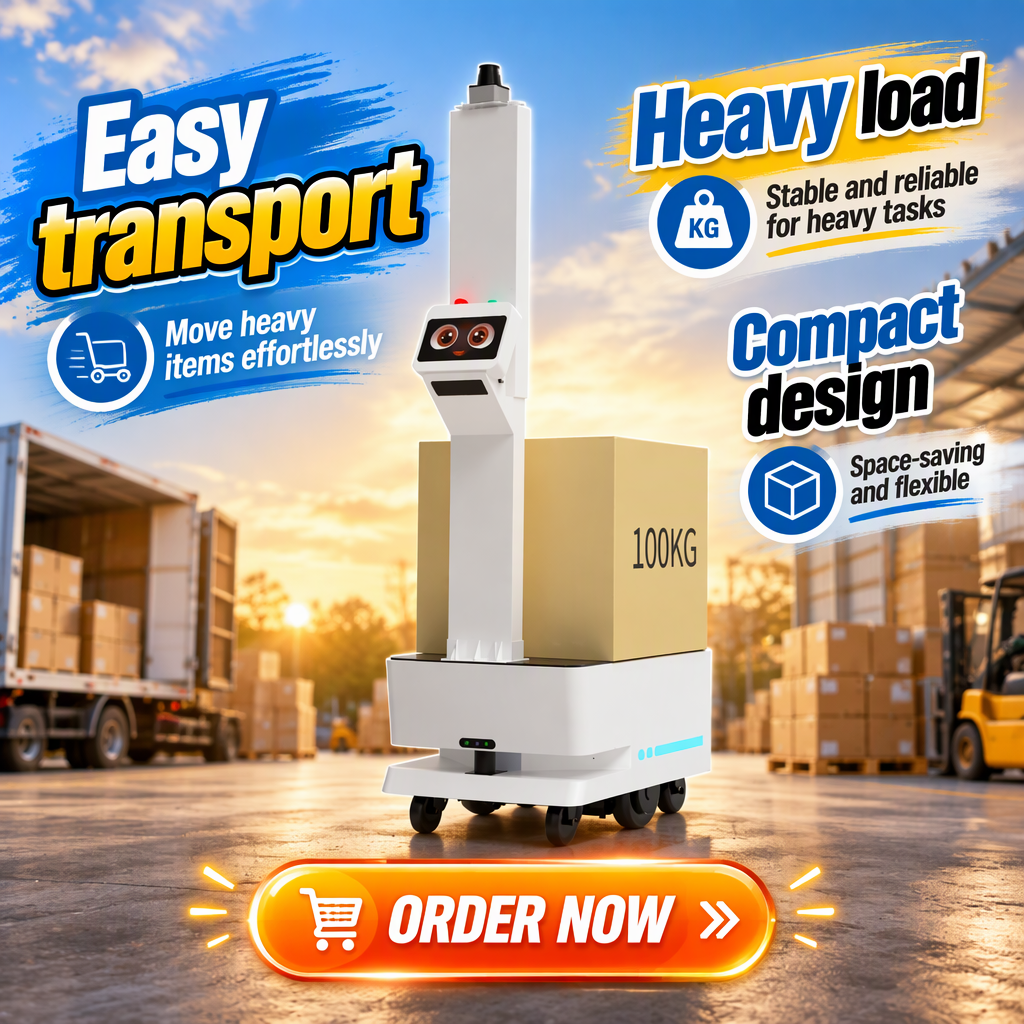
Reeman Autonomous Mobile Robot Slam Navigation PLC Core Components Warehouse Logistics
Hanoi fit: a PLC-centred mobile platform for integration with conveyors, packaging lines and custom food-production cells. It is relevant when a central kitchen wants robots to follow machine signals rather than fixed manual routes.
View product details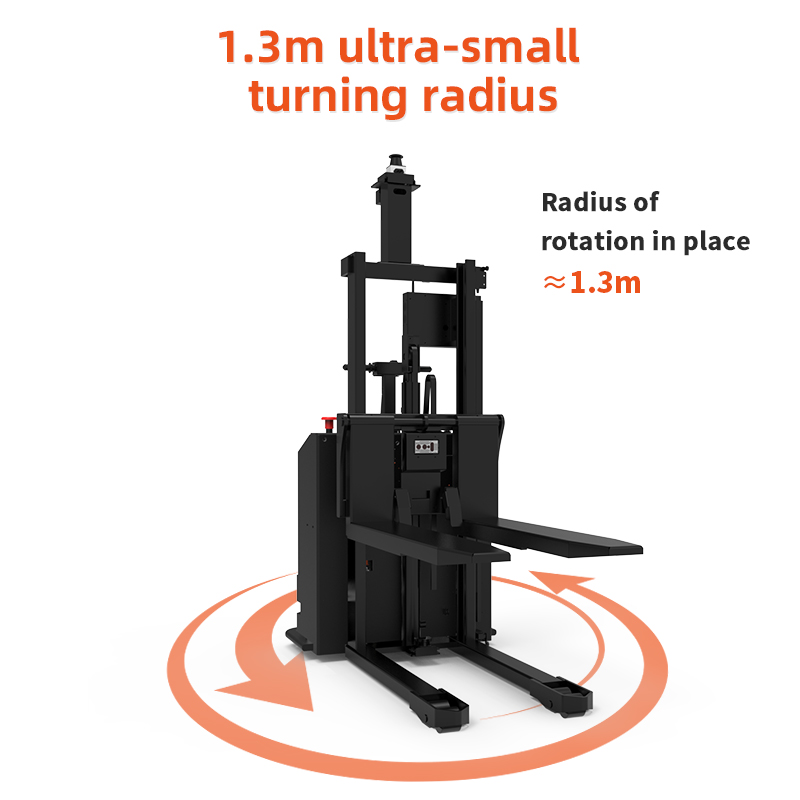
1000kg Forklift AGV Laser SLAM Navigation Pallet Transport Robot 1.3m Turning Radius Auto Charging for Factory Logistics
Hanoi fit: a 1.3 m turning radius is meaningful in older warehouses, narrow aisles and basement storerooms. Auto charging supports multi-shift ingredient and packaging movement without adding a dedicated charging operator.
View product details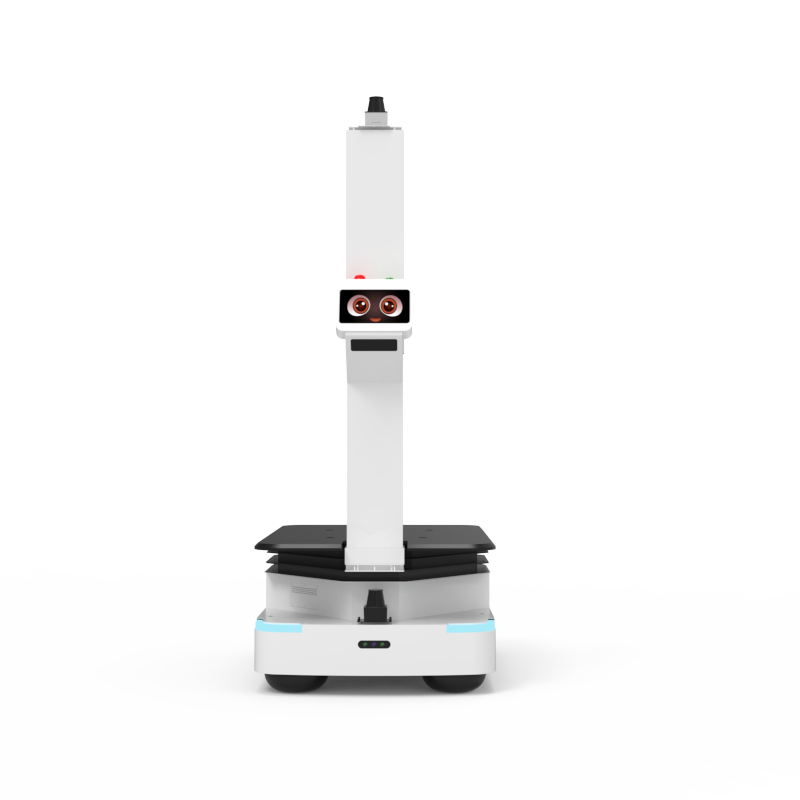
600kg Industrial AMR AGV Robot Laser SLAM Navigation QR Code-Free Factory Logistics
Hanoi fit: QR-code-free navigation reduces floor disruption when shelves, worktables or packing stations are relocated. Suitable for bulk meal-box crates, bottled water, packaged ingredients and back-of-house replenishment.
View product details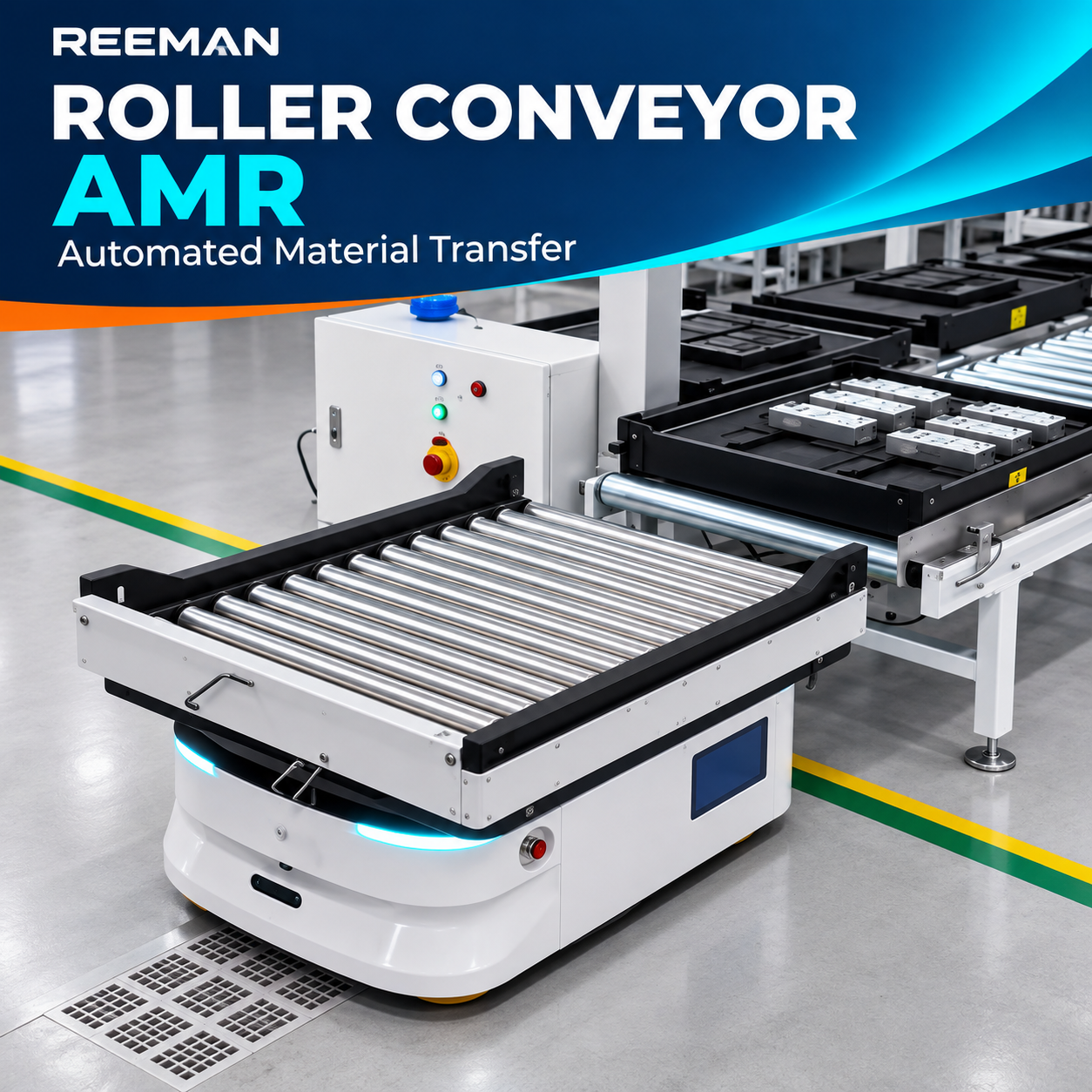
Roller Conveyor AMR Robot with SDK and API for Custom Development and System Integration
Hanoi fit: useful when a central kitchen or food factory wants automated tray, crate or ingredient-bin transfer into an existing conveyor line. The open SDK/API path allows local integrators to connect task dispatch and status feedback.
View product details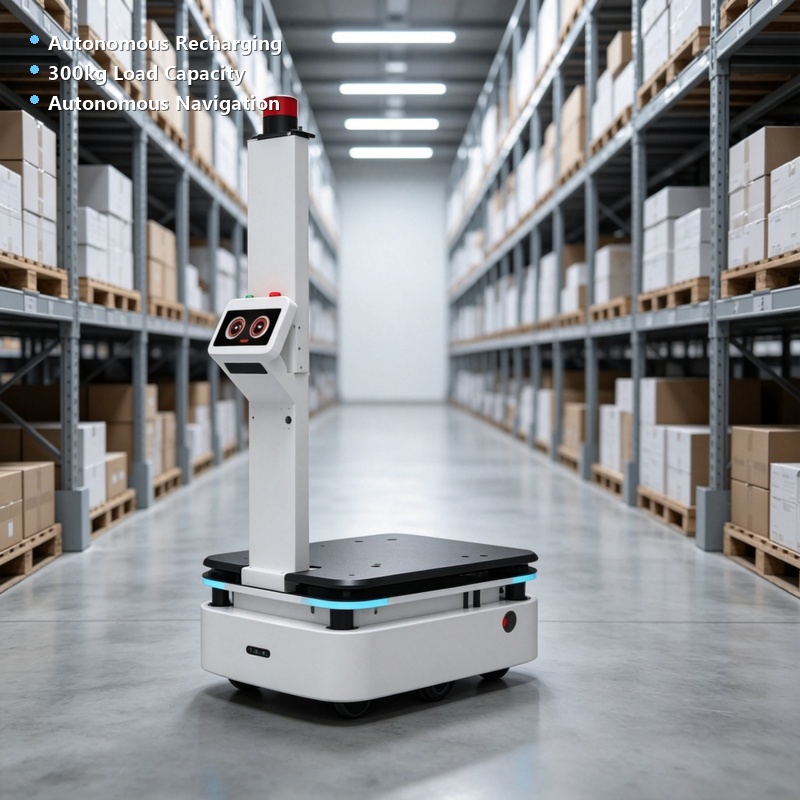
REEMAN Dual Laser Fly Boat MAX 300kg Industrial Delivery Robot for Manufacturing Plants and Factory Material Supply
Hanoi fit: suitable for multi-trip delivery of meal boxes, linens, supplies or materials inside large sites. Food-contact, tray, insulation and cleaning requirements must be validated with Elvorn before a restaurant or hospital pilot.
View product detailsA Hanoi Shortlist Should Be Built on Verifiable Manufacturing Facts
Price is only one variable. For wholesale buyers, hotel groups, hospital contractors and restaurant chains in Vietnam, supplier reliability depends on production history, engineering ownership, certifications and after-sales readiness.
Shenzhen Elvorn Intelligent Equipment Co., Ltd. is a national high-tech enterprise focused on robotic platform technology and autonomous driving. Its factory has been verified onsite by SGS Group, and its management system is certified to ISO 9001 and ISO 14001. Depending on the model, Elvorn robots can be supplied with CE, FCC or PSE marks for target markets. For Hanoi buyers, these are not decorative badges: they shorten technical review, support customs documentation and give local distributors a clearer answer when end customers ask who stands behind the robot.
What “Meal Delivery Robot Manufacturer & Wholesaler in Hanoi” Really Means for a Buyer
The phrase combines a product category, a sourcing role and a city. That means the searcher is not always a restaurant owner. In practice, we see four buying intents behind this query. The first is a Hanoi restaurant, hotel or hospital looking for an indoor service robot that can carry trays, meal boxes, linens or supplies. The second is a local distributor or wholesaler that wants a China manufacturer capable of OEM branding, stable supply and spare-part support. The third is a systems integrator that needs an AMR or delivery platform with an SDK/API to connect to elevators, doors, kitchen displays or building management software. The fourth is a project investor comparing Vietnam’s food-service automation opportunity with warehouse automation.
Hanoi is an unusually practical early market because demand is concentrated in repeatable indoor environments: hotel breakfast floors, office-tower food courts, hospital meal routes, university canteens, cloud kitchens and large factory canteens. The city also has real constraints that a generic product page often ignores. Many buildings have narrow frontages, busy motorbike parking, compact service lifts, mixed pedestrian traffic and older floor surfaces. Tropical humidity, wet floors after cleaning and a 220V/50Hz power environment also shape the specification. A robot that works in a clean showroom may still fail in a Hanoi service corridor if the route, lift handshake and cleaning SOP are not designed together.
The most bankable deployments are therefore not curb-to-curb sidewalk robots operating in mixed Hanoi traffic. They are indoor or semi-controlled delivery systems where the robot moves between a kitchen, service counter, lift lobby, guest floor, ward or office pantry. For wholesale buyers, this distinction matters because it changes the sales story from “a robot that drives on the street” to “a measurable reduction in internal delivery labour and wait time.” The latter is easier to pilot, easier to insure and easier to service.
For a serious project, evaluate the robot like a small logistics network. Map every trip: starting point, destination, load, shift time, lift usage, door access, floor slope, pedestrian density and cleaning cycle. Then compare payload, turning radius, battery strategy, safety sensors, fleet software and local support. This is where information gain appears: the winning supplier is not the one with the loudest slogan, but the one that can explain the boundary conditions of its own product honestly.
Hanoi’s strongest near-term meal-delivery use case is multi-floor indoor service, not open-road autonomous delivery. Elevator integration and staff handover design often decide whether a pilot succeeds.
A meal robot should be costed with its support fleet. Central kitchens and cold rooms usually need an AMR or AGV forklift to move ingredients and packaging at a lower cost per kilogram.
Wholesale buyers should ask for a route-and-payload trial matrix, not only a catalogue. The same robot may be excellent for hotel room service and unsuitable for a wet, narrow kitchen passage.
Six Trends Shaping Robot Procurement in Hanoi and Northern Vietnam
The local opportunity is moving from demonstration robots to workflow robots. Buyers now ask about uptime, spare parts, integration and staff training before they ask about a flashy video.
From spectacle to workflow
Hanoi hotels and restaurants increasingly treat robots as shift-coverage tools rather than marketing props. The key metrics are trips per hour, handover time, tray capacity and failure recovery.
Cloud-kitchen consolidation
As cloud kitchens cluster in Cau Giay, Thanh Xuan, Hai Ba Trung and Long Bien, operators need repeatable internal movement between prep, packing, dispatch and cold storage.
Multi-floor integration
Hoan Kiem boutique hotels, Cau Giay office towers and mixed-use buildings require service-lift APIs, door control and clear emergency procedures. Single-floor demos are not enough.
Hygiene and traceability
Food-service buyers ask for easy-clean surfaces, removable trays, delivery logs and cleaning SOPs that align with internal HACCP-style controls. The robot must fit kitchen discipline, not replace it.
Hybrid fleets become normal
A hotel may use a delivery AMR for room service and a 600 kg AMR for laundry or banquet supplies. A central kitchen may combine a tray robot with a pallet AGV. Mixed fleets improve utilization.
Local service expectations rise
Hanoi buyers want English or Vietnamese training material, spare-part kits, remote commissioning and a clear escalation path. A low unit price loses value if a restaurant waits weeks for a sensor.
Where Meal Delivery and Service Robots Fit in Hanoi’s Real Operating Environment
These scenarios are written for site surveys, not fantasy demonstrations. Each one assumes a controlled indoor route, staff supervision and a clear handover point.
Hoan Kiem hotels and boutique restaurants
Breakfast trays, room-service meals, towels and amenities move between kitchen, service lift and guest floors. The robot should handle lift calls, wait-time prompts and discreet guest interaction. Validate tray fixation, odour control and cleaning turnaround.
Cau Giay office towers and food courts
Lunch peaks create repeated short trips between vendor counters, pickup shelves and office pantry zones. A compact AMR or 300 kg delivery platform can reduce staff walking, but speed zoning and pedestrian prompts are essential in crowded concourses.
Hai Ba Trung hospitals and clinics
Meal carts, clean linen and supplies can be moved on scheduled routes to ward pantries. Buyers should prioritise quiet operation, enclosed carts, elevator handshakes and infection-control cleaning procedures. Emergency-stop and staff override training are non-negotiable.
Long Bien central kitchens and cold chain
A central kitchen producing for multiple satellite outlets needs bulk ingredient movement, packaging replenishment and cold-room transfer. A 1000 kg AGV forklift or 600 kg AMR can support these flows while the delivery robot handles final indoor service.
Bac Thang Long industrial parks and factory canteens
Large canteens and factory material-supply teams can use a 300 kg delivery robot for meal boxes and supplies, with a 1.5–2 ton autonomous forklift handling palletized goods in the warehouse. The value comes from connecting canteen and logistics data.
West Lake residential and mixed-use sites
Indoor amenity delivery — groceries, parcels or meals from lobby to service point — can be tested with a compact AMR. Avoid promising outdoor curb-to-door autonomy in mixed traffic; design a staffed handover point instead.
Match the Robot Class to the Hanoi Site, Payload and Route
Use this planning matrix during first-round scoping. Final configuration depends on a video survey, floor-plan review and a live route test.
Six Checks Hanoi Buyers Should Complete Before Paying a Deposit
These checks protect both restaurant operators and wholesale distributors. They also help a serious manufacturer produce a more accurate proposal.
1. Validate the route, not only the catalogue
Ask for a route survey covering aisle width, turning radius, lift dimensions, door thresholds, floor slope and Wi-Fi dead zones. A robot that fits a spec sheet may still fail at the service-lift lobby.
2. Define the tray or pallet interface
Meal delivery depends on trays, insulated boxes, carts or racks. The payload module matters as much as the robot. Confirm cleaning procedure, fixation, spill control and handover ergonomics before the pilot.
3. Test safety around real people
Hanoi sites may mix guests, patients, kitchen staff and motorbike couriers at the same doorway. Require obstacle avoidance demonstration, speed zoning, audible prompts, emergency stop and staff override training.
4. Plan charging and power resilience
Confirm charger voltage, 220V/50Hz compatibility, charging-zone safety and behaviour during power interruption. For multi-shift food service, opportunity charging is usually more important than a headline battery number.
5. Review import documentation and certification
For Vietnam, confirm HS code, C/O eligibility, customs valuation, CE/FCC/PSE model coverage and English documentation. Import duty and VAT depend on classification and supporting documents; verify with a local customs broker.
6. Lock in spare parts and training
Ask for a recommended spare-part kit, warranty terms, remote support process and operator training plan. A wholesale partner in Hanoi should know how quickly a sensor, wheel module or charger can be replaced.
Why Elvorn Is Relevant to Hanoi Wholesalers and Food-Service Operators
Elvorn’s strength is not a single robot model. It is the combination of in-house SLAM navigation, modular platforms, factory verification and OEM/ODM support for buyers who need a long-term product line.
Founded in 2015
More than a decade of robotics experience gives buyers a clearer production history, a broader installed base and a more mature spare-part process than a newly formed trading brand.
39 patents and full-stack engineering
In-house work covers laser SLAM navigation, motion control, fleet scheduling and hardware. That matters when a Hanoi project needs a custom top module, lift handshake or local language workflow.
Two production bases
Operations in Shenzhen and Ningbo support production capacity and supplier assessment procedures. The factory has been verified onsite by SGS Group, giving distributors a third-party reference point.
ISO 9001 and ISO 14001
Management-system certification supports consistent quality and environmental processes. Depending on model and destination, CE, FCC or PSE marks can be supplied for market access planning.
OEM, ODM and buyer label
Custom top modules, payload structures, branding and packaging can be discussed for distributors. This is valuable for Hanoi wholesalers who want to build a local service brand rather than resell a generic catalogue.
Export-ready commercial support
Elvorn ships worldwide on FOB terms and accepts T/T payment in USD or CNY. Main export markets include North America, Western Europe, East and Southeast Asia, and the Middle East. English documentation and remote commissioning support are available.
Build a Defensible Business Case Before Choosing a Meal Delivery Robot in Hanoi
Do not begin with the purchase price. Begin with the delivery cycle, the labour it replaces or augments, and the cost of keeping the system available during peak periods.
Start with a cycle-capacity formula
A simple model is more useful than a vague ROI claim. For each route, estimate trips per hour, items per trip and a realistic duty cycle that includes handover, lift waiting, cleaning and charging.
Then calculate the value of the staff time shifted from walking and waiting to guest service, food preparation, clinical support or order packing. A pilot should run for four to eight weeks and record trip completion, handover time, intervention rate, battery behaviour and staff acceptance.
Total cost of ownership
Include landed cost, tray or rack module, charger, battery replacement reserve, integration, training, spare parts, service visits and downtime risk. For a Hanoi wholesale business, also model demo units, local stock and technical support capacity — these are often the difference between a one-off sale and a sustainable channel.
Indicative budget allocation for an indoor pilot
Planning model only, not a quotation. Actual allocation changes with payload module, building integration and service scope.
From Hanoi Floor Plan to Stable Operation: Five Practical Steps
A disciplined deployment process reduces the risk of buying a robot that looks impressive but disrupts service.
Requirement review
Share floor plans, trip list, meal volumes, tray dimensions, lift details, floor surface and peak-hour constraints.
Solution design
Elvorn engineers recommend robot class, payload module, charging plan, fleet size and integration scope.
Factory test
Load, route, safety and handover functions are checked before shipment. Test records can be discussed for due diligence.
Hanoi commissioning
Map the site, configure lifts or doors where applicable, train operators and agree an intervention SOP.
Scale and support
Review trip data, expand routes or fleet size, maintain spare parts and schedule service reviews.
Frequently Asked Questions About Meal Delivery Robots and Wholesale Supply
These are the questions our project team most often receives from restaurants, hotels, hospitals, integrators and distributors in Vietnam.
Are you a China manufacturer or a Hanoi trading company?
Elvorn is a China-based manufacturer, not a Hanoi trading company. We support overseas buyers directly and can discuss wholesale, distributor, OEM and project-based cooperation. Local installation and service arrangements can be planned with the buyer’s preferred partner.
What budget should a Hanoi restaurant or hotel plan for?
A responsible supplier should not quote a meal delivery robot as a single number without understanding payload, route, lift integration, tray design, charging and service scope. Budgets vary widely by payload class and integration. Share your floor plan and trip matrix for a configured proposal rather than a generic price.
Will a robot work in a narrow Hanoi restaurant?
Sometimes, but the route must be validated. Narrow aisles, steps, tight corners and outdoor pavements can rule out certain platforms. A compact AMR or a smaller delivery robot may be more suitable than a large pallet-handling unit. Indoor, controlled routes are the safest starting point.
How do robots handle multi-floor buildings and elevators?
Multi-floor operation requires an elevator handshake, network coverage and a clear emergency procedure. Not every lift can be integrated. During site survey we review lift brand, control interface, door timing, service access and fallback operation before promising multi-floor autonomy.
Are meal delivery robots safe around staff and guests?
Safety depends on the model and site rules. Lidar, obstacle sensors, emergency stops, speed zoning, audible prompts and staff training are part of the deployment. In crowded Hanoi environments, the pilot should define pedestrian priority zones and handover points.
What about 220V/50Hz power, humidity and wet floors?
Vietnam’s 220V/50Hz environment and tropical humidity must be addressed in the charger, electrical design and cleaning SOP. Wet floors after cleaning are a common issue in kitchens and hotels. Specify floor conditions honestly during scoping; do not assume a showroom specification will match a wet service corridor.
Which certificates and import documents are available?
Elvorn’s management system is certified to ISO 9001 and ISO 14001, and the factory has been verified onsite by SGS Group. Depending on the model, CE, FCC or PSE marks can be supplied. For Vietnam import, confirm HS code, C/O, customs valuation and VAT treatment with a local customs broker.
What is the fastest way to validate a pilot in Hanoi?
Send a floor plan, video of the route, tray or cart dimensions, daily delivery volume, shift schedule and photos of lifts or doors. A remote engineering review can usually identify the right robot class and the main risks before a formal quotation. A short on-site pilot with measurable trip data is preferable to a large first order.
Request a Hanoi-Specific Robot Recommendation
Send your floor plan, meal or material flow, tray dimensions, lift details and target throughput. Our engineers will help you compare delivery robots, AMRs and AGV forklifts for a realistic Hanoi deployment.