China Top Promotional Robot Manufacturers & Factories Serving Columbus
A procurement-grade guide to promotional service robots, autonomous forklifts, AMRs and warehouse automation platforms for Columbus warehouses, factories, retail venues, universities and event teams.
Eight Factory-Direct Robots for Columbus Buyers
These platforms cover the most common Central Ohio use cases: dock-to-stock pallet movement, line-side material flow, outdoor delivery, warehouse transfer, production-line handling and autonomous mobile robot deployment. For a purely promotional display enquiry, ask about the 55-inch transparent OLED mobile advertising robot; the eight models below are the platforms Columbus buyers most often compare in the same capex review.
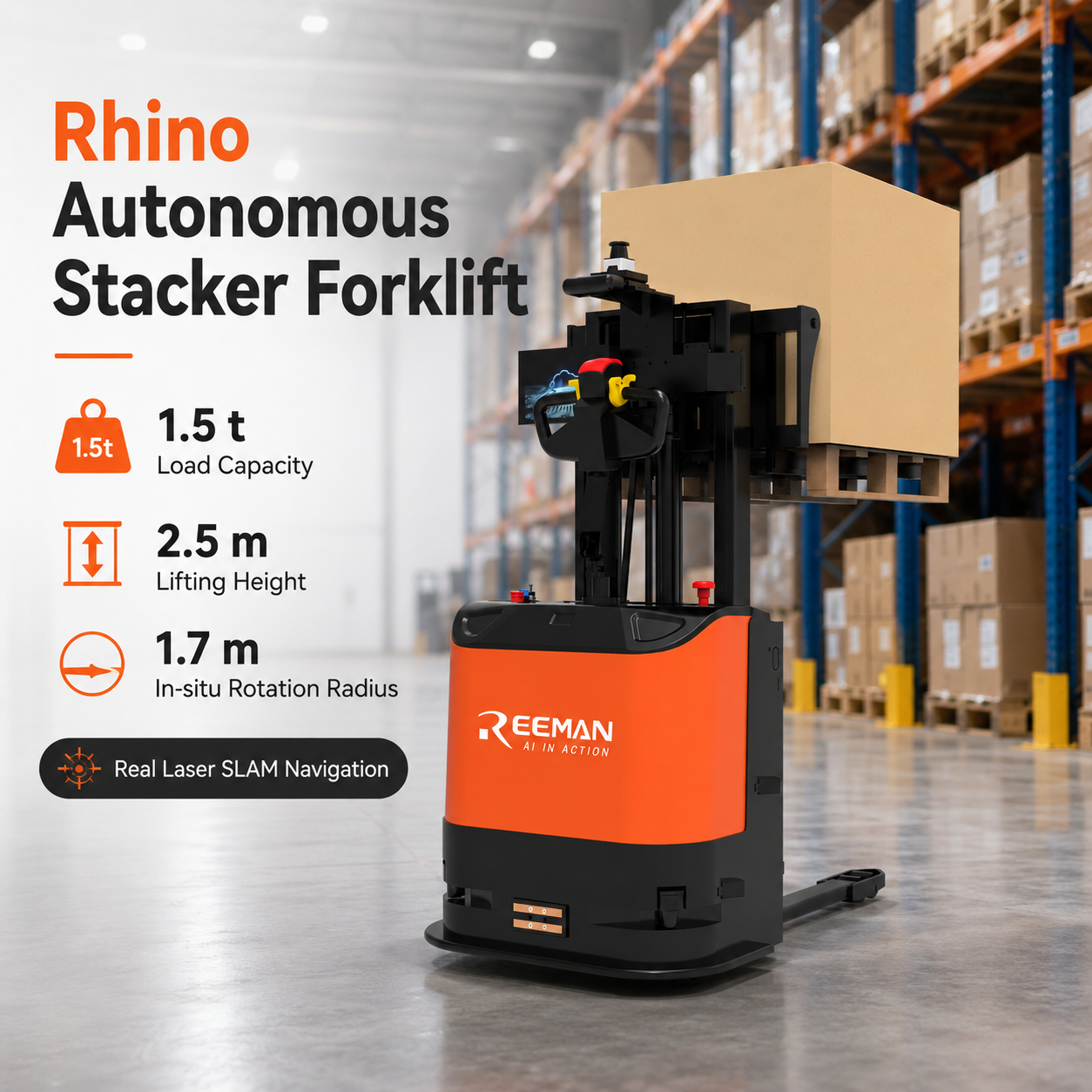
Laser SLAM Autonomous Stacker Forklift 1500 kg
- 1,500 kg load for pallet handling
- Laser obstacle avoidance in warehouse aisles
- Autonomous stacker workflow without fixed tape
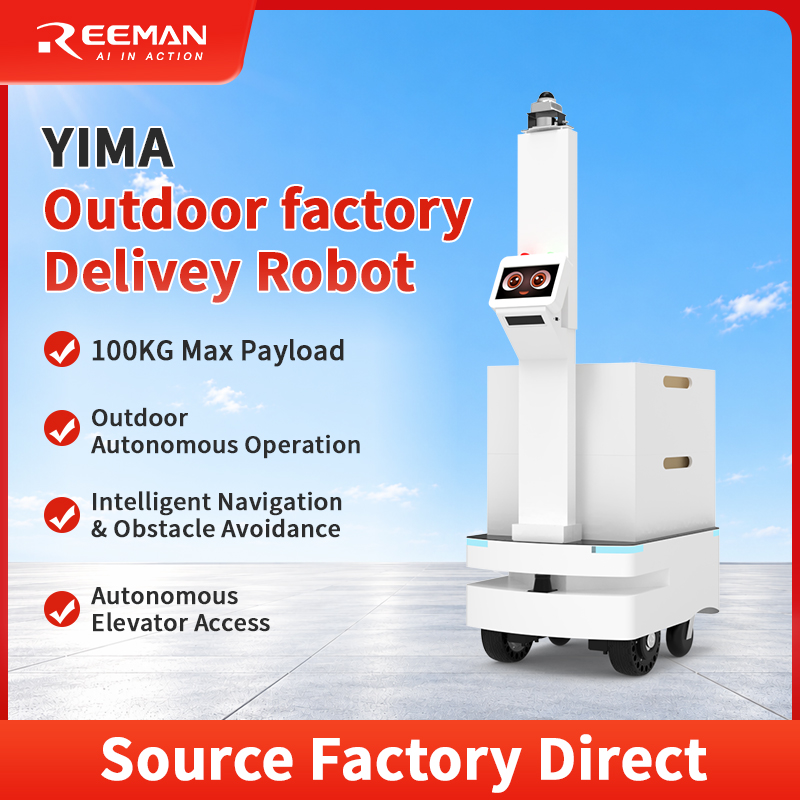
REEMAN Outdoor Delivery Robot 100 kg Payload
- 100 kg payload for campus and venue delivery
- Autonomous navigation and obstacle avoidance
- Elevator access for multi-floor logistics
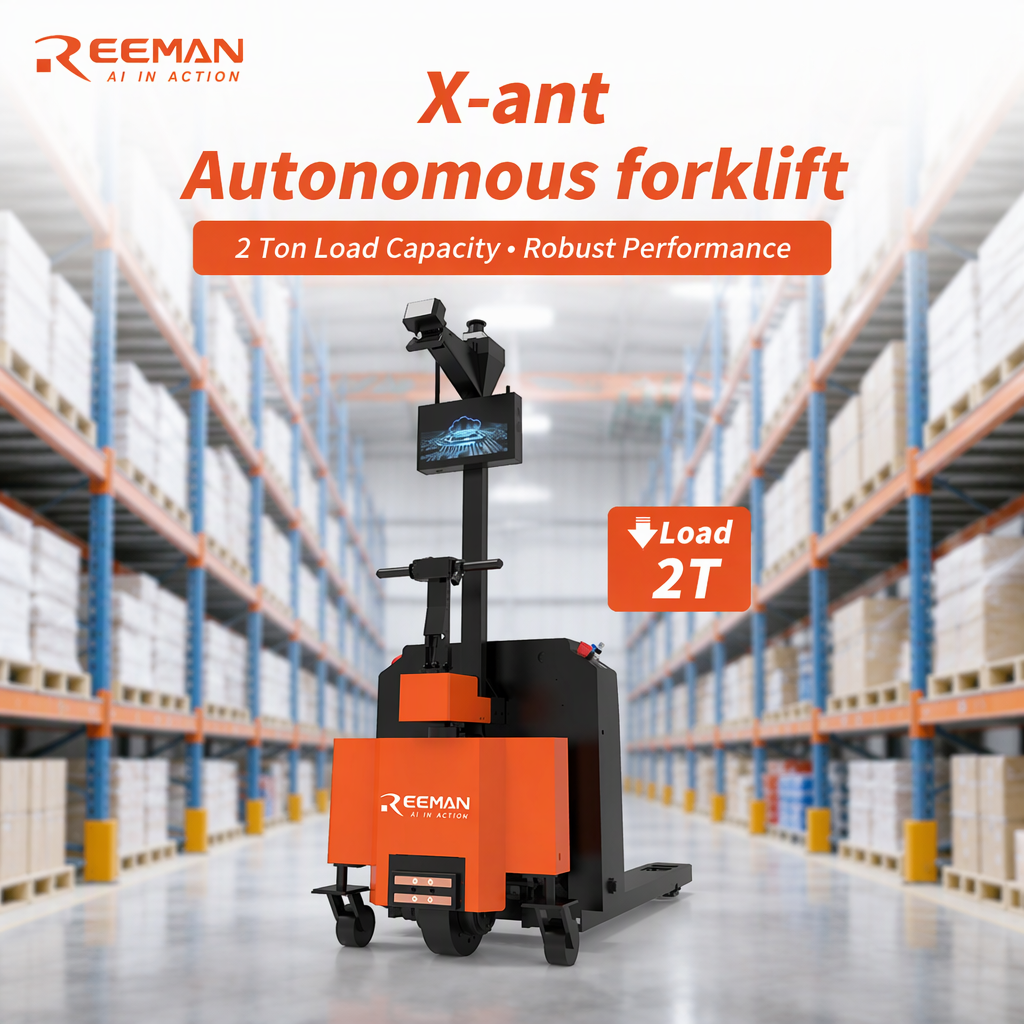
2 Ton Autonomous 4WD AGV Forklift
- 2,000 kg heavy pallet transfer
- 4WD and multi-line LiDAR navigation
- 10 mm position accuracy for warehouse handling
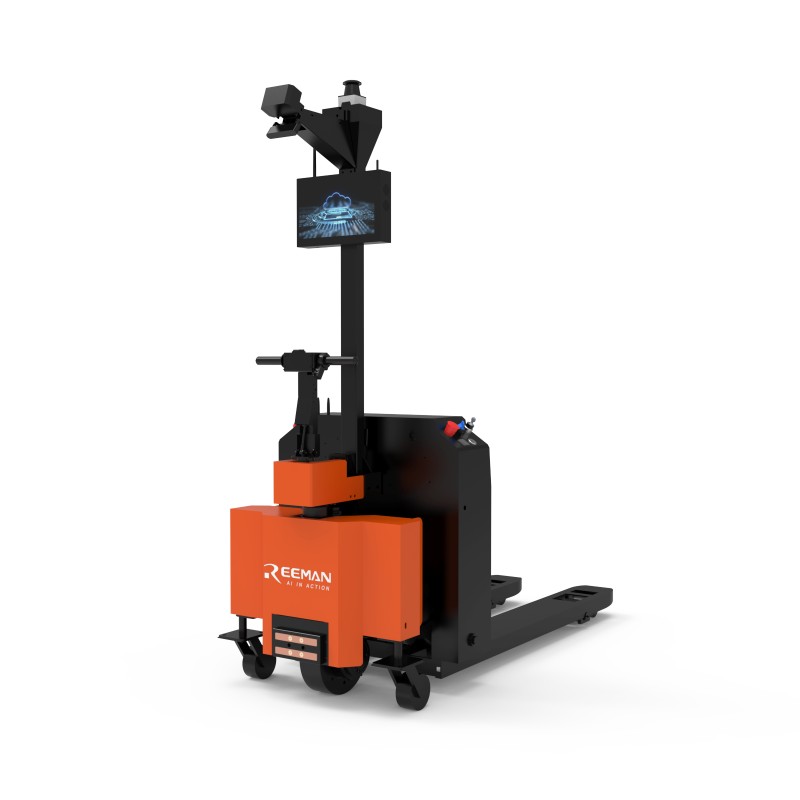
Reeman 2 Ton Autonomous Forklift AGV
- Unmanned pallet truck for repetitive moves
- 1,085 mm fork for standard pallet handling
- 10 mm position accuracy and laser SLAM
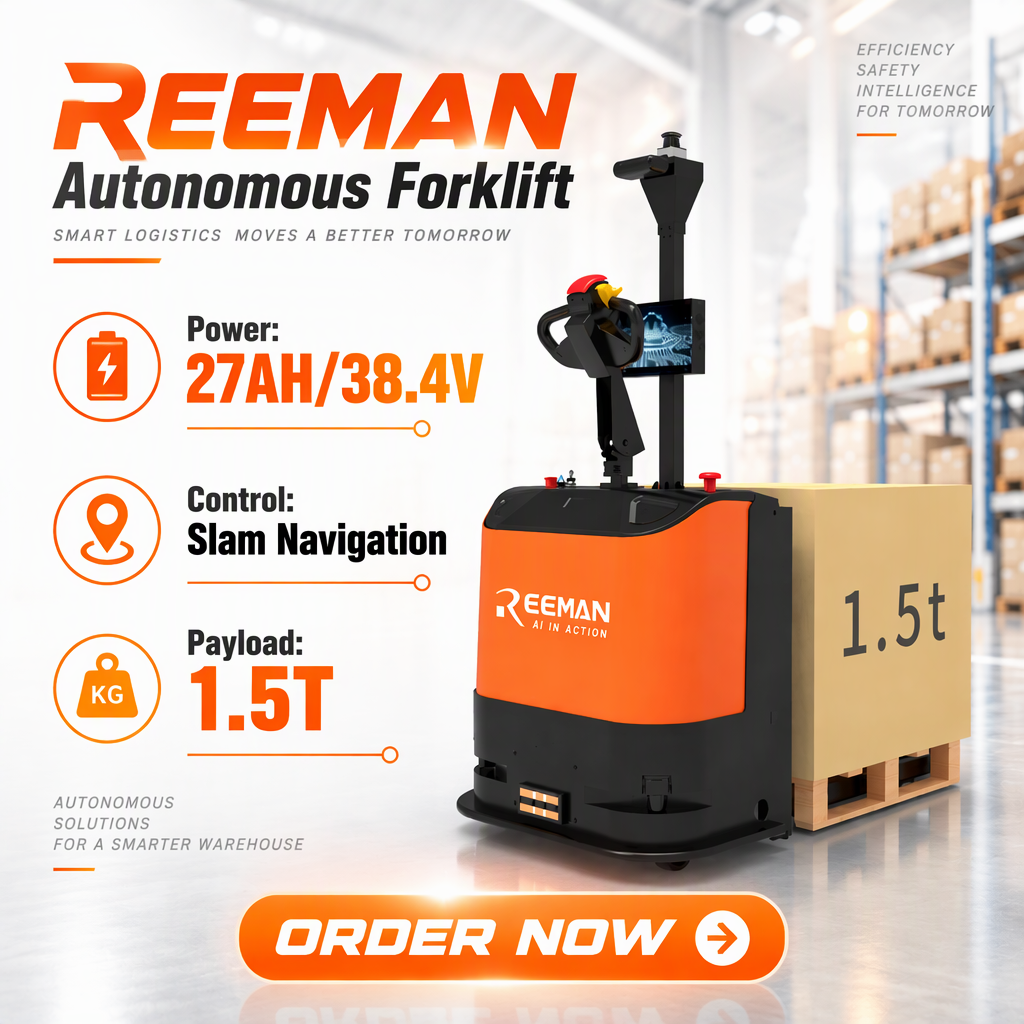
Reeman 1.5 Ton Autonomous Forklift AGV
- 1.5 ton indoor warehouse payload
- 3D obstacle avoidance and SLAM navigation
- Bidirectional driving for tight layouts
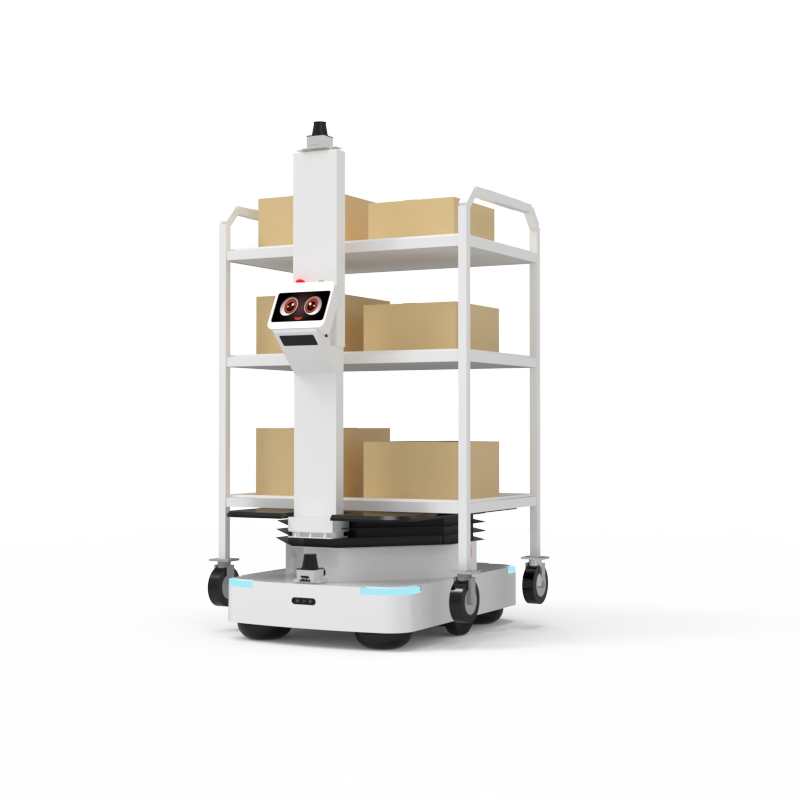
600 kg Autonomous AMR Material Handling Cart
- 600 kg payload for production-line logistics
- Multi-sensor autonomous navigation
- Material cart format for flexible routing
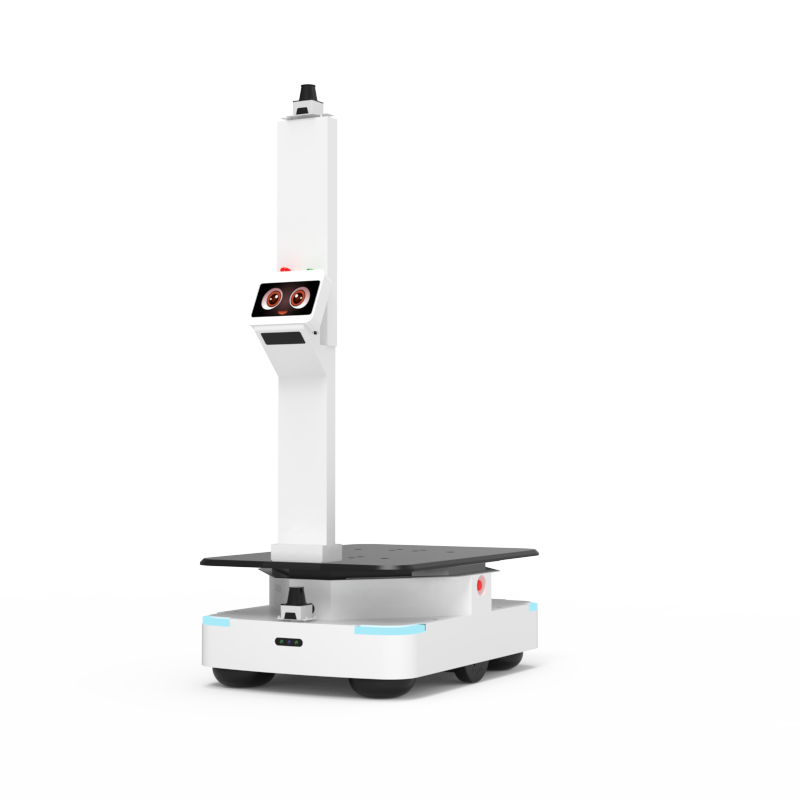
600 kg Laser Navigation AMR Robot
- 600 kg warehouse transfer capacity
- Autonomous lifting module for material flow
- Laser navigation with flexible route changes
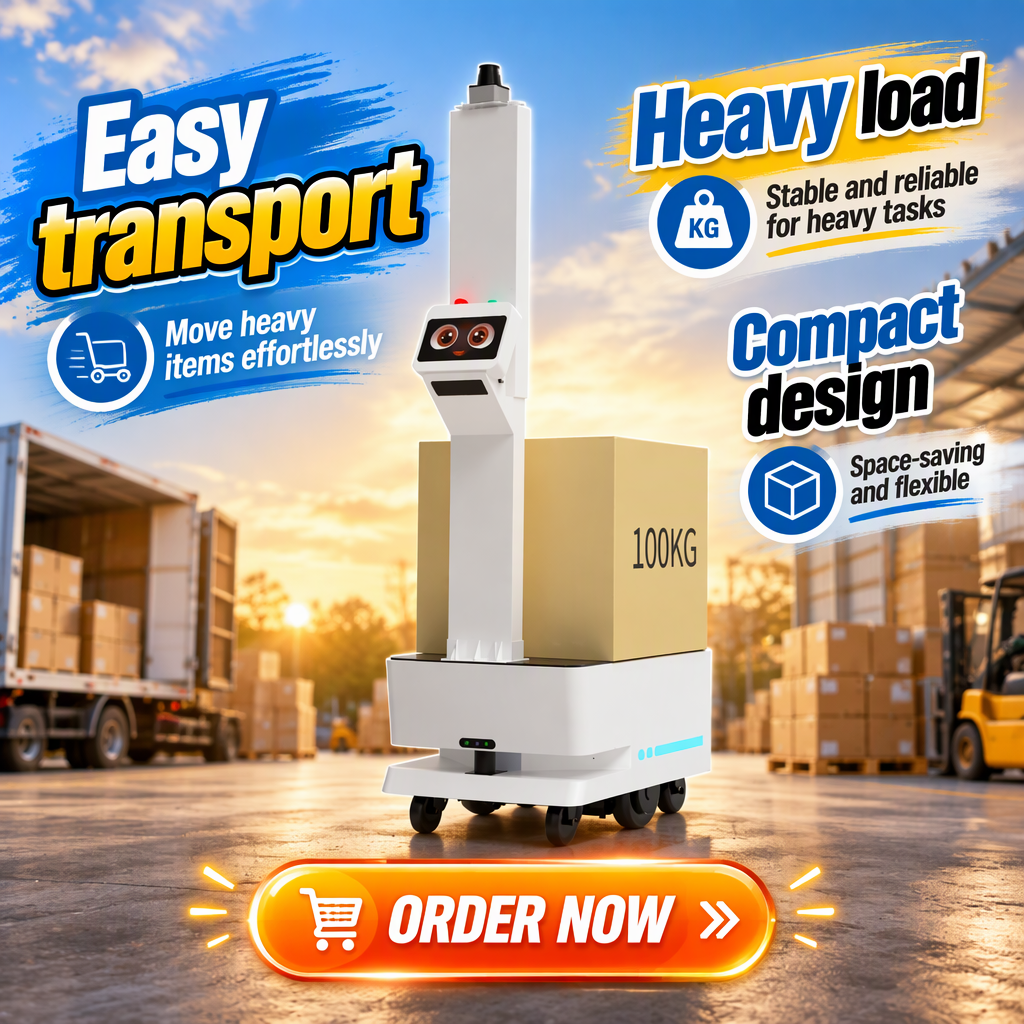
Reeman Autonomous Mobile Robot with PLC Core
- SLAM navigation for warehouse logistics
- PLC core components for reliable control
- Platform approach for integration projects
Numbers That Support a Serious Columbus RFQ
Procurement teams in Central Ohio need more than a catalog. They need evidence of engineering depth, production control, response performance and long-term support. These verified company facts help shorten supplier due diligence.
Why Columbus Teams Source From China Promotional Robot Factories
Columbus is a practical test of whether a robot is promotional or productive. A mobile advertising or reception robot must navigate a crowded convention floor, while a pallet-handling robot must work safely beside forklifts, pedestrians and racking in a distribution center near Rickenbacker, Grove City, Obetz, Dublin, Polaris or the I-270 corridor. The same supplier evaluation questions apply: navigation reliability, integration capability, safety documentation, spare-part strategy and total cost of ownership.
China’s robot manufacturing ecosystem, especially in Shenzhen and Ningbo, gives buyers access to mature laser SLAM navigation, fleet scheduling, mobile robot chassis, autonomous forklifts, delivery robots and OEM customization. However, the phrase “promotional robot manufacturers” covers a wide range of suppliers. Some sell imported chassis with a new shell; others own the full stack. Columbus buyers should ask who controls navigation, motion control, fleet software and hardware, because that answer determines how fast a custom request can be engineered and how long spare parts remain available.
Shenzhen Elvorn Intelligent Equipment Co., Ltd. was founded in 2015 as a national high-tech enterprise focused on robotic platform technology and autonomous driving. The company designs and builds autonomous forklifts, industrial AMRs, robot chassis, delivery robots, cleaning robots and disinfection robots. Its in-house R&D team covers laser SLAM, motion control, fleet scheduling and hardware — a meaningful advantage when a Columbus project requires WMS/MES integration, a custom top module, elevator access, outdoor routing or a mixed fleet.
For a fair comparison, do not evaluate a robot only by payload and price. Evaluate the supplier’s evidence trail: factory verification, management-system certification, model-specific compliance, test records, remote commissioning capability and spare-part commitment. This is where a factory-direct relationship with an experienced China robot manufacturer can outperform a fragmented chain of resellers.
Information Gain: Columbus Buyer Checklist
- Confirm the robot type: promotional service robot, delivery robot, AMR, AGV or autonomous forklift.
- Map the route: floor surface, aisle width, dock height, elevator, ramp, outdoor exposure, pedestrian traffic and charging location.
- Define the integration: WMS, MES, ERP, PLC, elevator, door, conveyor, fire alarm or fleet manager.
- Validate the safety file: risk assessment, e-stops, obstacle sensing, speed zones and site-specific operating rules.
- Calculate real TCO: freight, duties, spare parts, training, battery replacement, service response and downtime risk.
Engineering Advantages That Matter in Central Ohio
These are the capability areas Columbus operations teams, integrators and distributors verify before a pilot becomes a fleet order.
Laser SLAM Without Floor Infrastructure
Maps your site in hours and navigates without magnetic tape, QR codes or reflectors. In multi-tenant Columbus buildings, this reduces permission friction and makes aisle changes easier.
Open SDK & API Integration
Connect robots to WMS, MES, ERP, PLC and custom dashboards for task dispatch, status feedback and exception handling. This is essential for production-line and warehouse workflows.
Modular Payload Platforms
From 100 kg delivery robots to 2-ton autonomous forklifts, shared control architecture simplifies operator training, fleet supervision and long-term maintenance planning.
Multi-Layer Safety Architecture
LiDAR, obstacle sensors, emergency stops and speed zoning support safe operation around pedestrians and forklifts. US sites should complete a site-specific risk assessment.
Own Production Capacity
Two production bases in Shenzhen and Ningbo support on-site material inspection and supplier assessment. The factory has been verified onsite by SGS Group.
Export-Ready Support
English documentation, remote commissioning and spare-part supply for North America, Western Europe, Eastern Asia, Southeast Asia and the Middle East. Export terms include FOB and T/T in USD or CNY.
Where These Robots Fit in Columbus Operations
Central Ohio combines distribution, manufacturing, education, healthcare, retail and events. Each environment has a different definition of success.
Dock-to-Stock Pallet Flow
In the Rickenbacker, Grove City and Obetz logistics corridors, autonomous forklifts can reduce repeated dock-to-storage moves across shifts. Start with one lane, then scale to charging and fleet scheduling.
Line-Side & WIP Transfer
Factories in Marysville, Dublin, Westerville and the broader Columbus manufacturing base can use 600 kg AMRs for line-side feeding, finished-goods collection and WIP movement synchronized with MES tasks.
Hygiene and Temperature-Aware Routing
Food, beverage and cold-chain sites need route planning that respects washdown, temperature transitions and sanitation windows. Confirm environmental protection and battery behavior before specifying a model.
Promotional Guidance & Delivery
At the Greater Columbus Convention Center, Easton, Polaris and downtown venues, promotional robots can guide visitors, display digital content and deliver samples or documents while staff focus on high-value conversations.
Indoor Delivery With Elevator Access
Hospitals, research labs, universities and corporate campuses around the Ohio State area can use 100 kg delivery robots for multi-floor internal logistics, with elevator integration and controlled access.
Mixed Fleet & Scalable Automation
Use stacker forklifts, 2-ton AGV forklifts, lifting AMRs and material-handling carts on a shared logic. A phased rollout reduces disruption while proving throughput and safety before peak season.
What Columbus Buyers Are Asking for in 2025–2026
The local market is moving from isolated robot demos toward repeatable, integration-ready deployments.
Labor Flexibility and Shift Stability
Distribution and manufacturing teams want robots that cover repetitive moves, night shifts and peak surges without adding recruiting pressure to every peak.
Mixed Loads and Dynamic Obstacles
Columbus warehouses rarely have perfect lanes. Buyers prioritize 3D obstacle avoidance, multi-sensor navigation and route changes without floor reconstruction.
Integration Before Hardware
WMS, MES, ERP, PLC and elevator integration are now part of the first technical call. Open SDK and API capability can matter more than a marginal payload difference.
Safety, Compliance and TCO
US sites increasingly review OSHA powered industrial truck requirements where applicable, ANSI/RIA R15.08 for industrial mobile robots, and site-specific risk controls before deployment.
Safety & Compliance
Risk assessment, e-stops, sensing, speed zones
Throughput Fit
Payload, aisle width, cycle time, charging plan
Integration
WMS/MES/ERP/PLC, elevator and fleet control
Service & Spares
Remote commissioning, documentation, parts
Total Cost
Freight, duties, training, battery, downtime risk
Factory Evidence, Certifications and OEM Capability
Shenzhen Elvorn Intelligent Equipment Co., Ltd. is a verified custom manufacturer and national high-tech enterprise. Two production bases in Shenzhen and Ningbo support robot chassis, autonomous forklift, AMR and service robot production. The factory has passed onsite verification by SGS Group covering business licensing, production capability and quality control.
Management systems are certified to ISO 9001 and ISO 14001. Depending on the model, robots carry CE, FCC or PSE marks. Model-specific marks should be confirmed in the final quotation for your destination and application. OEM, design service and buyer-label options include custom top modules, payload structures, branding and packaging.
For Columbus buyers, this means the supplier relationship can extend beyond a single machine: engineering feedback on layout, integration support for software teams, factory testing before shipment and long-term spare-part planning. The company’s full-stack R&D approach supports faster customization than reseller-only supply chains.
- SGS-verified factory
- ISO 9001 & ISO 14001
- CE / FCC / PSE models
- OEM & buyer label
- Open SDK & API
- Two production bases
 SGS Verified
 CE Marking
 FCC
 PSE



Shenzhen & Ningbo
From Columbus RFQ to Stable Operation
A practical four-stage workflow reduces deployment risk for first-time robot buyers and multi-site distributors.
Share the Operating Reality
Send layout drawings, pallet type, load data, aisle width, rack height, shift pattern, charging location, Wi-Fi coverage and target throughput.
Scope the Right Fleet
Engineers recommend robot type, fleet size, battery and charging strategy, safety zones and integration scope for WMS, MES or PLC systems.
Build and Factory Test
Confirm OEM top modules, branding, software interfaces and factory functional/load tests before shipment. Documentation is prepared for export.
Deploy and Scale
Support remote mapping, operator training, acceptance checks and spare-part planning, then expand the fleet as throughput and confidence grow.
What Columbus Buyers Ask Before Ordering From China
Clear answers for procurement, engineering and operations teams evaluating promotional robots, AMRs and autonomous forklifts.
What is a promotional robot, and how is it different from an industrial AMR?
A promotional robot usually means a mobile robot used for customer-facing promotion, digital signage, wayfinding, reception, sampling or service delivery. An industrial AMR is a mobile platform that moves totes, carts, shelves or production materials. An autonomous forklift lifts and moves pallets. Elvorn supplies service robots, delivery robots, AMRs, chassis platforms and autonomous forklifts, so the same engineering team can discuss both customer-facing promotion and back-of-house material flow.
How can a Columbus buyer verify a China promotional robot manufacturer?
Ask for factory verification, management-system certificates, model-specific compliance documents, patent or R&D evidence, factory video, test records and references. For Elvorn, the factory has been verified onsite by SGS Group, management systems are certified to ISO 9001 and ISO 14001, and applicable models carry CE, FCC or PSE marks. Confirm the exact certificate list in the quotation and align it with your site’s requirements.
Can these robots integrate with our WMS, MES, ERP or PLC systems?
Yes. Elvorn AMRs, robot chassis and autonomous platforms support open SDK and API integration for secondary development. Integration can cover task dispatch, status feedback, route logic, traffic control and exception alerts. Projects involving WMS, MES, ERP, PLC, elevators, doors or conveyors should begin with a technical scoping call so the interface responsibility is clearly assigned.
What are the shipping and trade terms for orders to Columbus?
Elvorn ships worldwide on FOB terms and accepts T/T payment in USD or CNY. Freight, insurance, customs duties and local delivery to Columbus are typically quoted according to the chosen Incoterm and logistics plan. Lead time depends on model, battery, custom top module, branding and software scope. Early confirmation of destination port, delivery address and any liftgate or appointment requirements helps avoid surprises.
Are the certifications suitable for U.S. facilities?
Applicable Elvorn models may carry CE, FCC or PSE marks, and the factory operates under ISO 9001 and ISO 14001. FCC evidence is relevant to electromagnetic compliance for certain models, but U.S. deployment safety still requires a site-specific risk assessment. Depending on the equipment and application, buyers should review OSHA powered industrial truck requirements where applicable and ANSI/RIA R15.08 guidance for industrial mobile robots. Do not assume UL or other NRTL certification unless it is explicitly documented for the model being purchased.
Can Elvorn provide OEM, ODM and local branding?
Yes. As a verified custom manufacturer, Elvorn offers OEM service, design service and buyer-label options. Customization can include top modules, payload structures, branding, interface requirements, packaging and documentation. For Columbus distributors and integrators, this is useful for building a local brand without starting from a blank chassis. Final scope should be defined in a drawing review and quotation.
Can an outdoor delivery robot handle Columbus weather?
The REEMAN outdoor delivery robot is designed for autonomous navigation, obstacle avoidance and elevator access, but winter conditions require planning. Ice, snow, salt residue, standing water and low temperatures can affect route selection, traction and maintenance intervals. Buyers should confirm the operating temperature range, ingress protection and charging arrangements for the specific model, then run a winter pilot on the actual route before full deployment.
What should we prepare for a fast, accurate quote?
Prepare a site layout or CAD drawing, route description, load weight, pallet or cart type, aisle width, rack height, desired throughput, shift schedule, charging location, Wi-Fi coverage, integration requirements and target timeline. If the project involves a promotional robot, include audience flow, display size, content requirements and venue restrictions. With this information, the engineering team can recommend a realistic model, fleet size and deployment plan.
Plan a Columbus-Ready Robot Deployment With Factory Engineers
Share your layout, load, throughput and integration goals. We will help you match promotional robots, AMRs, autonomous forklifts or robot chassis to a practical first phase.
Get a Quote