Why Houston Is a High-Value Market for Guide Robots and Mobile Automation
Houston is not one buying market. It is a network of hospitals, ports, warehouses, hotels, retail districts, manufacturing plants, universities and event venues with different visitor flows and material flows.
Houston’s automation demand is shaped by a rare combination of scale and diversity. The Texas Medical Center creates complex indoor wayfinding and patient-service environments. The Port of Houston and surrounding 3PL warehouses create repetitive pallet, cart and tote movement. The Galleria, downtown hotels and the George R. Brown Convention Center require media-rich visitor engagement. The Energy Corridor and advanced manufacturing sites need reliable line-side logistics. For a procurement team, the practical question is not whether a guide robot looks impressive in a video; it is whether the robot can operate reliably in a real Houston building, integrate with local workflows and receive spare-part support after commissioning.
This white paper is written for distributors, facility managers, systems integrators and end users evaluating China wholesale guide robot manufacturer and exporters in the Houston market. It covers product selection, localized application scenarios, local development trends, supplier due diligence, FAQ-style buying concerns and the manufacturer advantages of Shenzhen Elvorn Intelligent Equipment Co., Ltd. The company was founded in 2015, operates as a national high-tech enterprise and owns full-stack capabilities across laser SLAM navigation, motion control, fleet scheduling and robot hardware.
A guide robot is more than a moving display. In a Houston hospital, it can welcome visitors, show a route, support multilingual communication and reduce pressure on front-desk staff. In a hotel or convention center, it can display schedules, promote services and escort guests. In a warehouse, the same autonomous platform logic becomes material flow: AMRs, stacker AGVs and forklift AGVs move pallets, carts and totes without magnetic tape or floor reflectors. The information gain for buyers is to compare the total deployment model: route planning, Wi-Fi coverage, elevator and door integration, charging strategy, safety zones, spare parts, operator training and freight into Houston.
Direct sourcing from a China manufacturer can improve customization and cost control, but only when the supplier has verifiable engineering depth. Buyers should look for in-house R&D, documented factory audits, ISO management systems, CE/FCC/PSE model certifications, open SDK/API support and a clear export process. Elvorn’s published factory profile includes SGS onsite verification, ISO 9001 and ISO 14001 management certification, two production bases in Shenzhen and Ningbo, OEM/design/buyer-label services and export experience across North America, Western Europe, East Asia, Southeast Asia and the Middle East. These are the signals that separate a manufacturer from a trading intermediary.
For Houston projects, the most successful buying process starts with a site survey rather than a product catalogue. Confirm floor transitions, aisle width, passenger lift dimensions, network coverage, charging locations, emergency egress routes and the languages required on screen or voice interface. Then match the robot platform to the task. A dual-screen advertising robot is appropriate for wayfinding and promotion; a roller conveyor AMR is appropriate for system-integrated material transfer; a 1–2 ton autonomous forklift is appropriate for pallet handling. This task-first approach reduces rework and makes the quotation comparable across suppliers.
Houston Deployment Readiness Snapshot
Relative emphasis in early project discovery. Use it as a checklist, not a replacement for an onsite survey.
8 Recommended Robots from a China Wholesale Guide Robot Manufacturer
The list below keeps the manufacturer’s original product URLs. The dual-screen advertising robot is the most direct guide-robot SKU; the other models support Houston warehouse, manufacturing and 3PL automation projects.
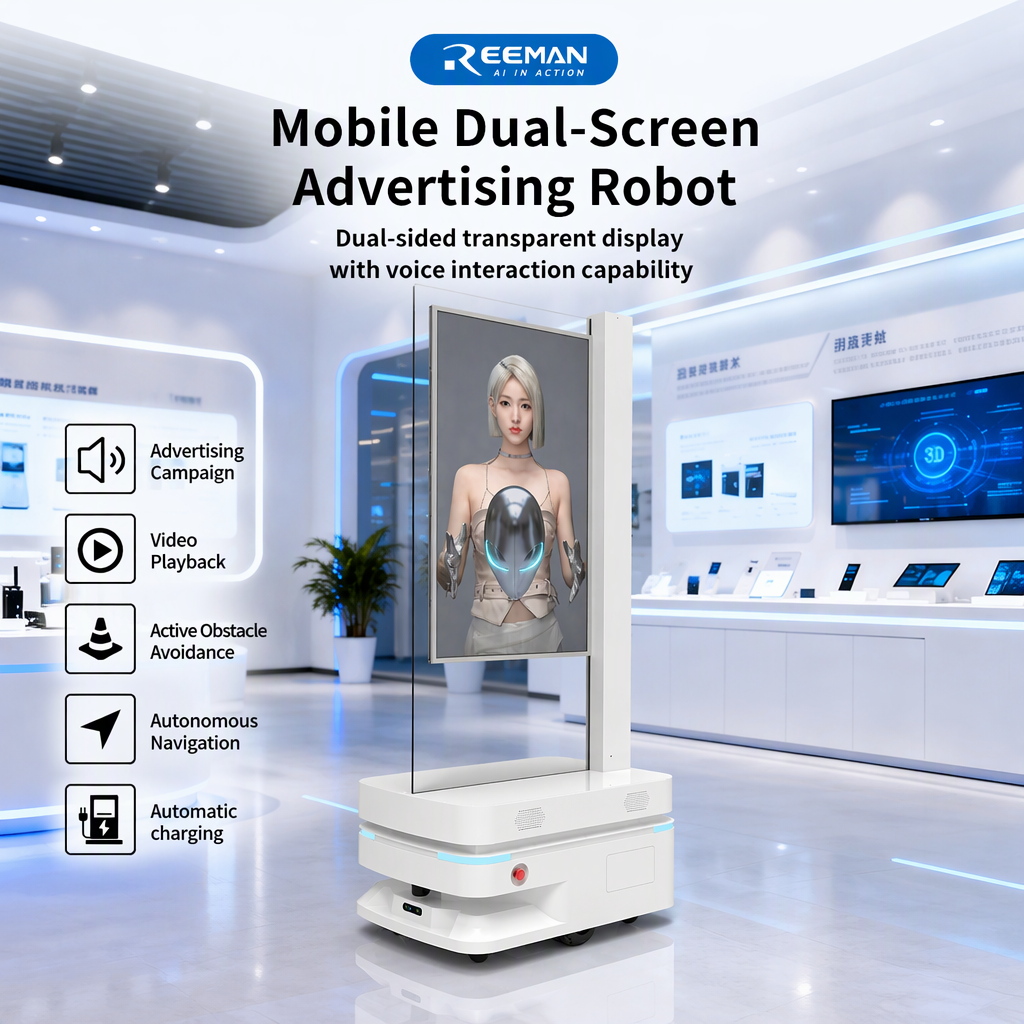
Reeman Mobile Dual Screen Advertising Robot LCD Display Voice Interaction Autonomous Navigation Indoor Commercial Use
A strong fit for Houston hotels, hospital lobbies, malls, exhibition centers and corporate visitor areas where wayfinding and advertising need to happen at the same time.
- Dual-screen visual communication
- Voice interaction and autonomous navigation
- Indoor commercial guidance
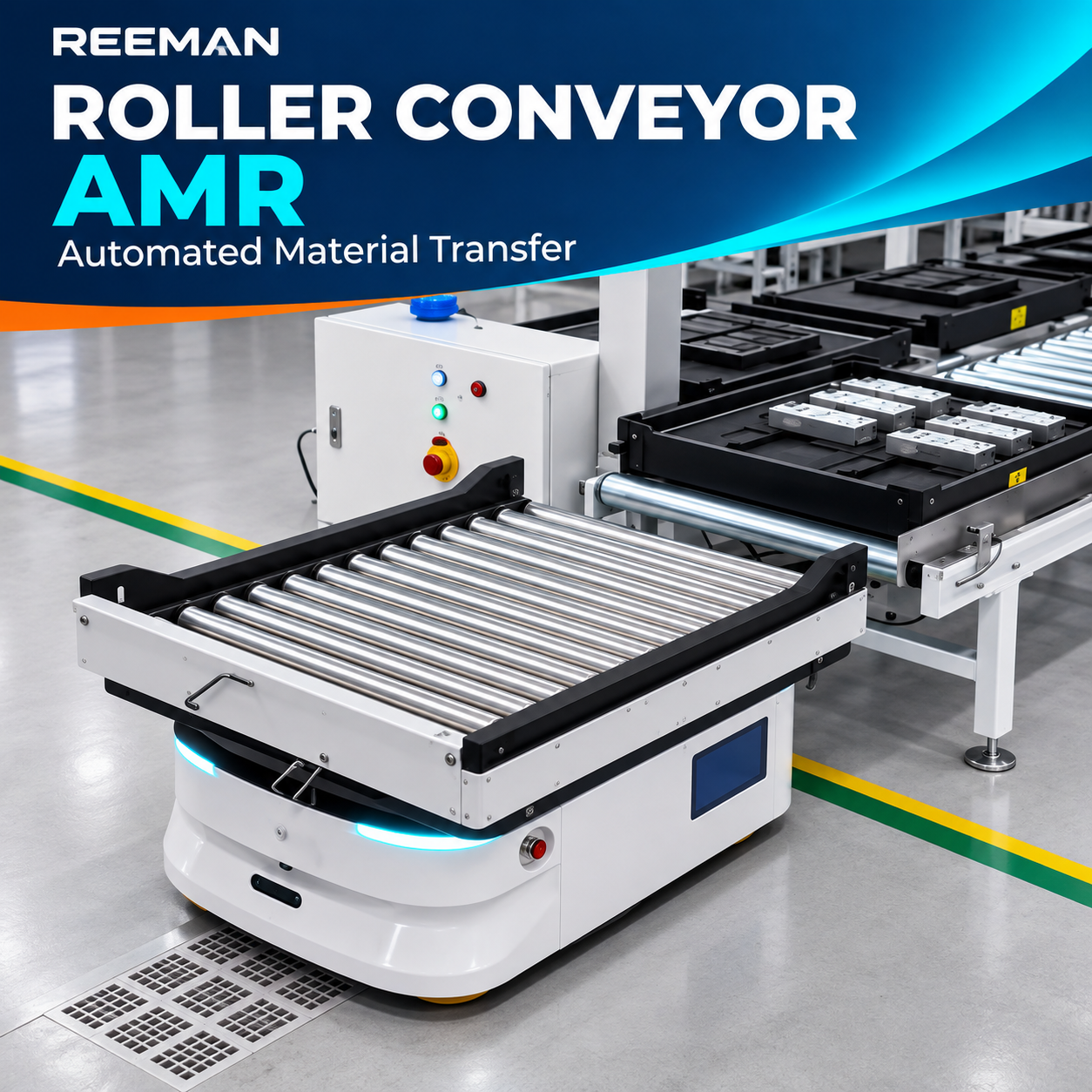
Roller Conveyor AMR Robot with SDK and API for Custom Development and System Integration
Useful for Houston distribution centers that need flexible transfer between conveyors, workstations and storage buffers without fixed floor infrastructure.
- Open SDK and API
- Custom development support
- System integration ready

REEMAN Autonomous Electric Forklift 1T Payload 48V 30Ah LiFePO4 Battery Indoor Material Handling AGV
A practical indoor material-handling option for Houston warehouses and factories that want to automate repetitive pallet moves without a large fleet at the start.
- 1T payload class
- 48V 30Ah LiFePO4 battery
- Indoor handling focus
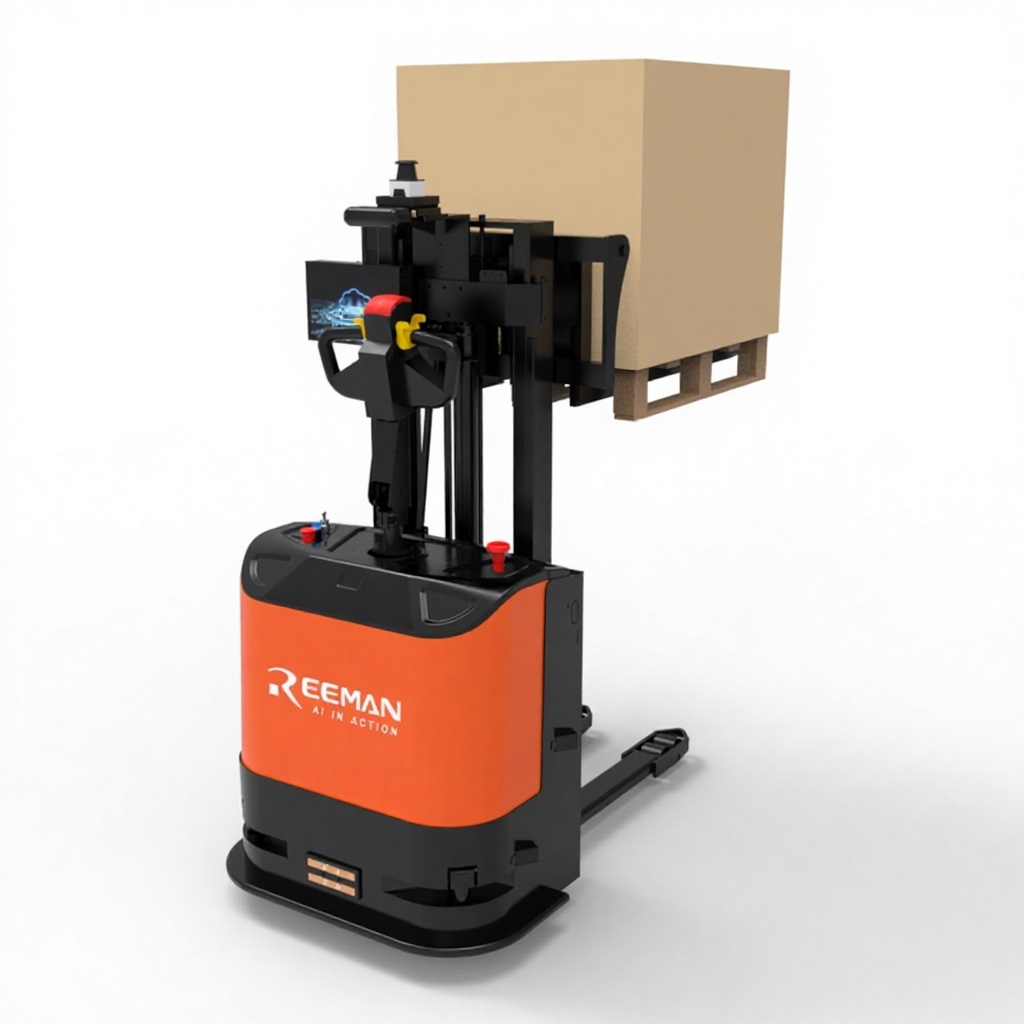
REEMAN Rhino RBOT30F Autonomous Stacker Forklift 3D Vision Obstacle Avoidance Warehouse AGV Robot
Designed for warehouse pallet stacking and transport tasks where 3D vision and obstacle avoidance help manage mixed traffic and changing floor activity.
- 3D vision obstacle avoidance
- Warehouse AGV robot
- Stacker forklift format
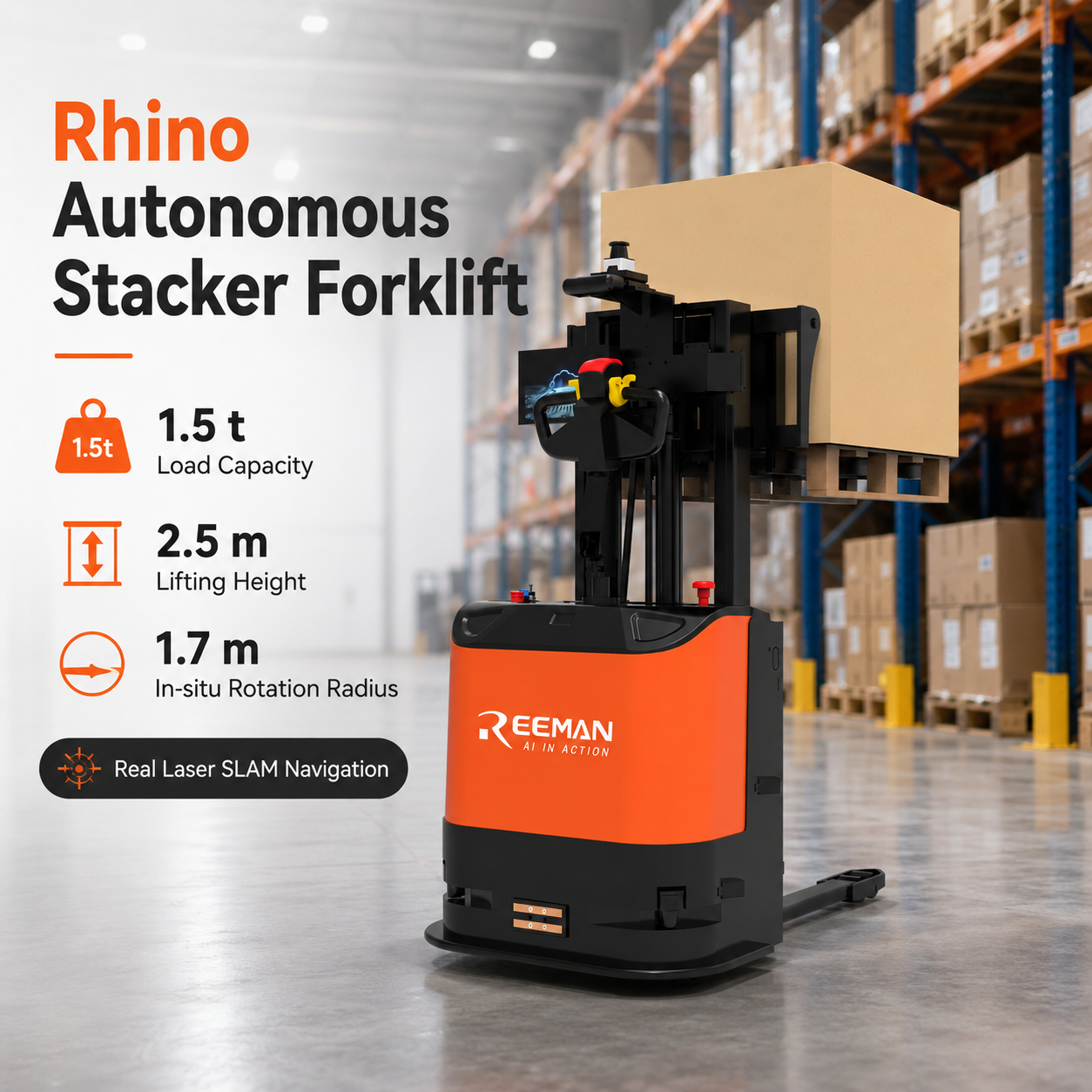
Laser SLAM Autonomous Stacker Forklift 1500 kg Load AGV Pallet Handling Robot Laser Obstacle Avoidance Warehouse
A 1,500 kg-class stacker platform for repetitive pallet handling in Houston 3PL operations and production warehouses.
- 1,500 kg load class
- Laser SLAM navigation
- Pallet handling robot

Reeman BBOT30F 1500kg Laser SLAM Autonomous Pallet Stacker AGV Single Line Lidar Obstacle Avoidance Warehouse Transport
A single-line LiDAR stacker AGV for warehouse transport routes that need autonomous pallet movement with simple site preparation.
- 1,500 kg payload
- Laser SLAM navigation
- Obstacle avoidance
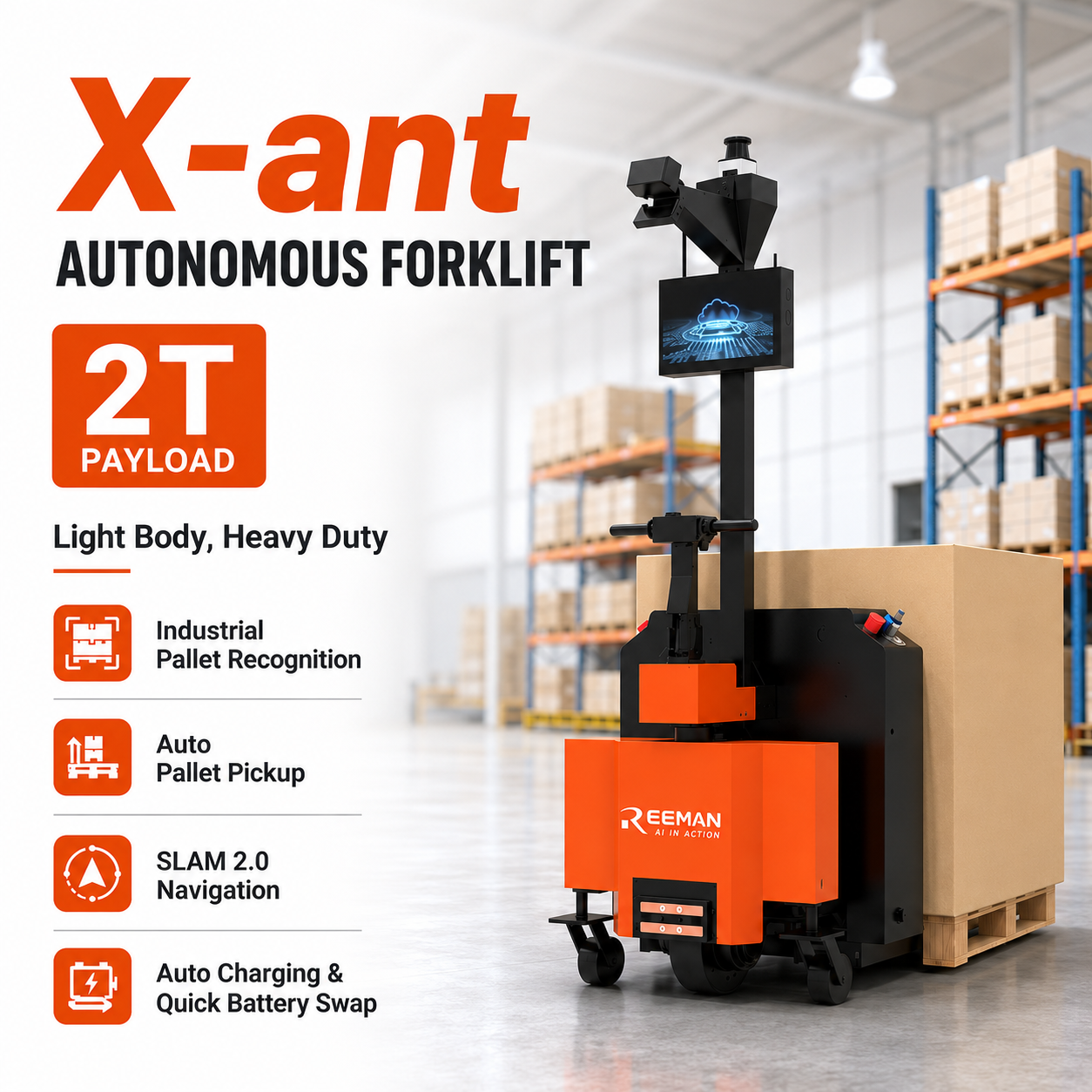
2 Ton Autonomous 4WD AGV Forklift Laser SLAM Navigation Multi-Line LiDAR 3D Obstacle Avoidance Warehouse Handling
For Houston warehouses moving heavier pallets, with multi-line LiDAR and 3D obstacle avoidance for more demanding handling routes.
- 2 ton class
- 4WD AGV forklift
- Multi-line LiDAR
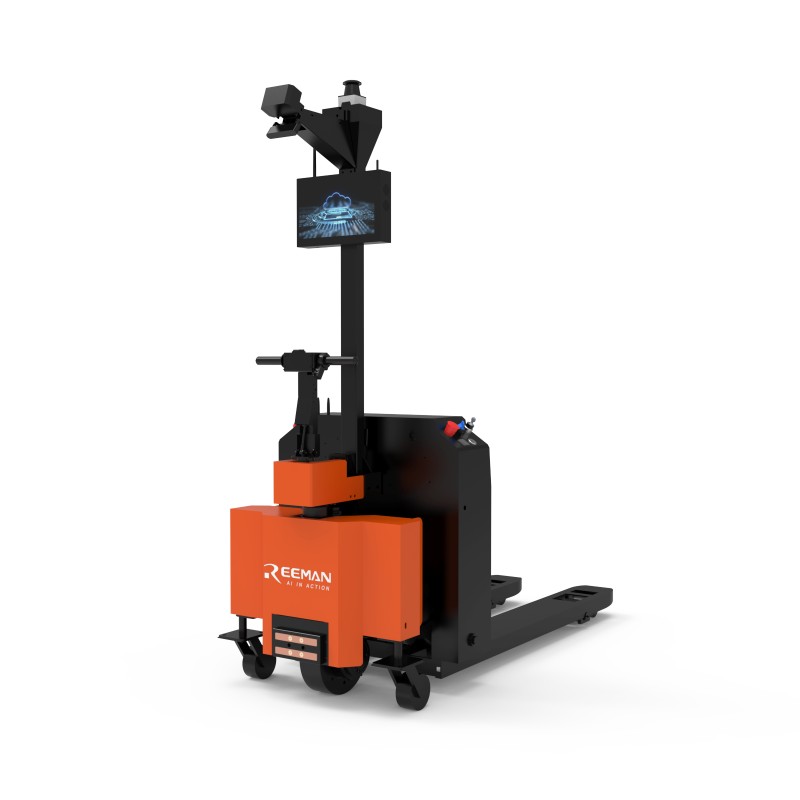
Reeman 2 Ton Autonomous Forklift AGV Laser SLAM Unmanned Pallet Truck 1085mm Fork 10mm Position Accuracy
A high-accuracy 2 ton autonomous forklift for pallet truck routes where repeatable docking and 10 mm positioning matter.
- 2 ton payload
- 1085 mm fork
- 10 mm position accuracy
Houston Application Scenarios for Guide Robots and Autonomous Equipment
The same robot platform can create value in different Houston environments, but the route design, content strategy and integration scope must change with the site.
Hospitals & Texas Medical Center
Guide robots can support lobby wayfinding, clinic directions, visitor greetings and multilingual messages in high-traffic medical campuses. For Houston hospitals, the project should prioritize quiet operation, clear accessibility routes and integration with lift or door controls where permitted.
Best-fit products: dual-screen guide robot, AMR chassis for internal delivery concepts.
Convention Centers & Hotels
Downtown Houston, the George R. Brown Convention Center and hotel clusters need flexible visitor communication during events. An autonomous advertising robot can display schedules, promote sessions, guide guests to halls and support bilingual English/Spanish engagement without rebuilding signage for every event.
Best-fit products: Reeman mobile dual-screen advertising robot.
Retail & Galleria Districts
Retail operators can use guide robots to promote products, present store maps and create interactive brand experiences. In malls and mixed-use centers, route planning must account for crowds, escalator boundaries, cleaning schedules and peak weekend traffic.
Best-fit products: dual-screen advertising robot with voice interaction.
Port of Houston 3PL Warehouses
Warehouses around the Port of Houston and nearby logistics corridors face repetitive pallet transport and labor continuity pressure. Autonomous stackers and forklift AGVs can take over predictable dock-to-buffer or buffer-to-rack routes, while staff focus on exceptions, quality checks and value-added services.
Best-fit products: 1,500 kg and 2 ton stacker AGVs, 1T autonomous forklift.
Manufacturing & Energy Corridor
Manufacturing sites and engineering campuses need predictable line-side replenishment and work-in-progress movement. AMRs with open SDK/API support can connect to MES and WMS task flows, while roller conveyor AMRs help transfer totes or trays between fixed stations.
Best-fit products: roller conveyor AMR, AMR chassis, autonomous forklift AGV.
Airports, Transit & Public Venues
At large public venues, especially around George Bush Intercontinental Airport and William P. Hobby Airport service zones, guide robots can present directional content, promotions and multilingual notices. Safety zones, battery strategy and staff escalation procedures are essential in public environments.
Best-fit products: dual-screen advertising robot, AMR platform for custom service modules.
Localized Development Trends Shaping Guide Robot Procurement
Houston buyers are moving from one-off demonstration projects to operational deployments where uptime, integration and service response determine success.
Port-Led Logistics Automation
E-commerce, distribution and 3PL activity around the Port of Houston continues to push warehouses toward flexible automation. Laser SLAM robots avoid the cost and disruption of magnetic tape, which matters when layouts change with seasonal inventory.
Buyer impact: request route flexibility, fleet scheduling and charging simulations.
Healthcare Experience Digitization
Large medical campuses need clearer navigation and multilingual support. Guide robots can reduce repeated wayfinding questions, but hospital procurement teams also evaluate infection-control procedures, quiet operation and accessibility.
Buyer impact: include content management and staff escalation workflow in the scope.
Multilingual Visitor Engagement
Houston’s diverse population makes English/Spanish content valuable in hotels, malls, clinics and civic venues. Dual-screen robots combine moving advertising with practical direction, giving venue operators one platform for promotion and service.
Buyer impact: confirm screen templates, voice language packs and update permissions.
Workforce Continuity and Safety
High turnover, repetitive movement and pedestrian traffic push Houston operators to separate robots from people with clear safety zones. Modern projects ask for lidar, obstacle sensors, emergency stops and speed zoning, not just basic navigation.
Buyer impact: request a site-specific risk assessment and traffic-management plan.
Direct China OEM vs. Local Distributor: What Houston Buyers Should Compare
A lower unit price is not the same as a lower project cost. Houston buyers should compare the full commercial and technical model before shortlisting.
| Evaluation Area | China Wholesale OEM Model | Why It Matters in Houston |
|---|---|---|
| Customization | Top modules, payload structures, branding, screen content, SDK/API and buyer-label options can be configured at the factory. | Houston venues and warehouses often need site-specific display content, route logic or material-transfer interfaces. |
| Technical Communication | Direct access to application engineers shortens questions about SLAM mapping, charging, safety zones and integration. | Time-zone differences are easier to manage when engineering answers are documented and decisions are made in one thread. |
| Freight and Delivery | Typical export terms include FOB with T/T payment in USD or CNY; final freight depends on robot size, battery classification and Houston delivery address. | Buyers should compare ocean freight, port charges, customs brokerage, drayage, insurance and commissioning costs—not only FOB price. |
| Certifications | CE, FCC or PSE marks apply by model; management systems include ISO 9001 and ISO 14001, with SGS onsite verification. | Houston procurement teams can use third-party audit evidence and model certificates during due diligence. |
| Spare Parts and Service | Remote diagnostics, English documentation and long-term spare-part supply can be planned before shipment. | Uptime depends on having critical wear parts, training and a clear escalation path after the robot starts working. |
| Total Cost | Factory-direct pricing may improve budget control, but customization and testing should be specified in writing. | A transparent scope reduces change orders, deployment delays and hidden integration costs in Houston. |
Why Elvorn Is a Credible China Wholesale Guide Robot Manufacturer for Houston Buyers
E-E-A-T in robotics sourcing is built on verifiable engineering, production, certification and export support—not on a single product photo.
Full-Stack R&D
Shenzhen Elvorn Intelligent Equipment Co., Ltd. was founded in 2015 and owns capabilities across laser SLAM navigation, motion control, fleet scheduling and robot hardware. In-house engineering supports faster customization and clearer technical answers.
Modular Payload Platforms
From commercial guide robots to AMRs and 2 ton autonomous forklifts, the portfolio uses modular control architecture. That helps distributors and integrators train service teams across multiple product lines.
Open SDK & API
AMRs and robot chassis provide open SDK/API support for secondary development. Houston integrators can connect robots to WMS, MES, ERP, custom dashboards, doors, lifts or event systems with a defined integration plan.
Multi-Layer Safety
Lidar, obstacle sensors, emergency stops and speed zoning help protect pedestrians, forklifts and racking. Safety scope should always be reviewed against the actual Houston site layout and traffic pattern.
Audited Production
The company operates two production bases in Shenzhen and Ningbo, with on-site material inspection and supplier assessment procedures. Its management system is certified to ISO 9001 and ISO 14001, and the factory has been verified onsite by SGS Group.
Export-Ready Support
English documentation, remote commissioning and spare-part planning support buyers in North America, Western Europe, East Asia, Southeast Asia and the Middle East. Elvorn reports a 98.76% response rate and offers OEM, design and buyer-label services.

Factory workshop: production environment for autonomous robot platforms.
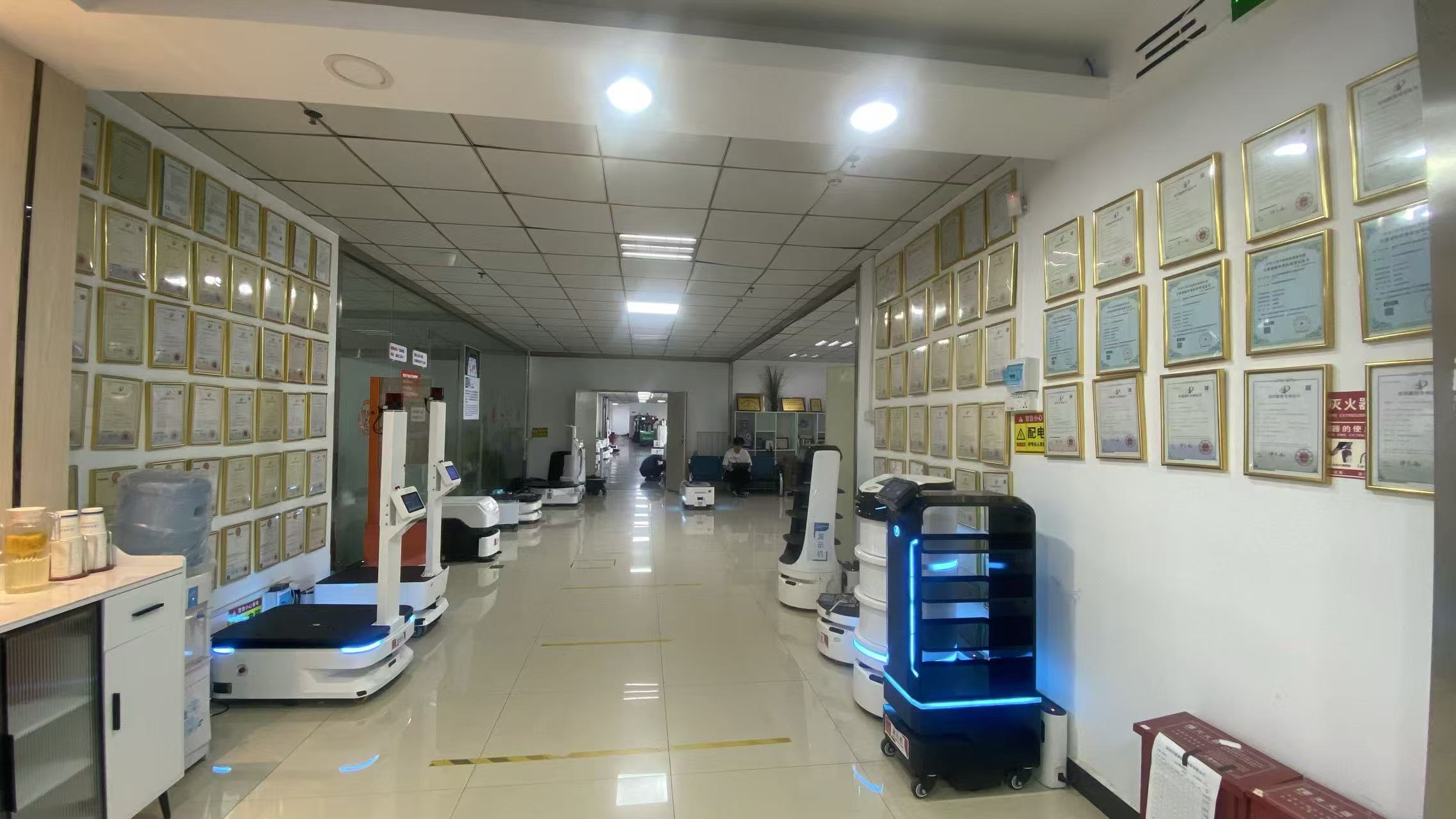
Robot assembly: modular build process for AMRs, guide robots and AGVs.

Quality inspection: functional and load testing before export shipment.
Common Procurement Questions from Houston Buyers
These are the questions most often raised when a Houston facility, distributor or integrator evaluates a China wholesale guide robot manufacturer and exporter.
What is a guide robot, and can it handle wayfinding and advertising in Houston?
How do Houston buyers import a wholesale guide robot from China?
Will the robot work with 110V/60Hz power and local Wi-Fi in Houston?
Can the robot integrate with elevators, doors, WMS, MES or ERP systems?
What support and spare parts are available after delivery to Houston?
What certifications and due diligence should Houston buyers request?
Build a Houston-Ready Guide Robot or Automation Fleet
Send your floor plan, visitor-flow or pallet data, target throughput, integration requirements and delivery location in Houston. Elvorn’s application engineers can recommend the right guide robot, AMR or forklift AGV configuration and prepare an export quotation.
Email: info@elvornbot.com · Export terms: FOB · Payment: T/T in USD or CNY