Custom OEM AGV Forklift Manufacturer & Wholesaler for the Toronto Market
Laser-SLAM autonomous forklifts, industrial AMRs and service robots engineered for Toronto warehouses, 3PL hubs, food plants, retail venues and OEM programs — backed by an SGS-verified factory and ISO-managed production.
Eight OEM AGV, AMR & Commercial Robot Platforms for GTA Workflows
These eight platforms cover pallet movement, low-rack stacking, line-side material supply, commercial signage and mobile advertising. Buyers can compare the working envelope first, then request a Toronto-specific configuration review.
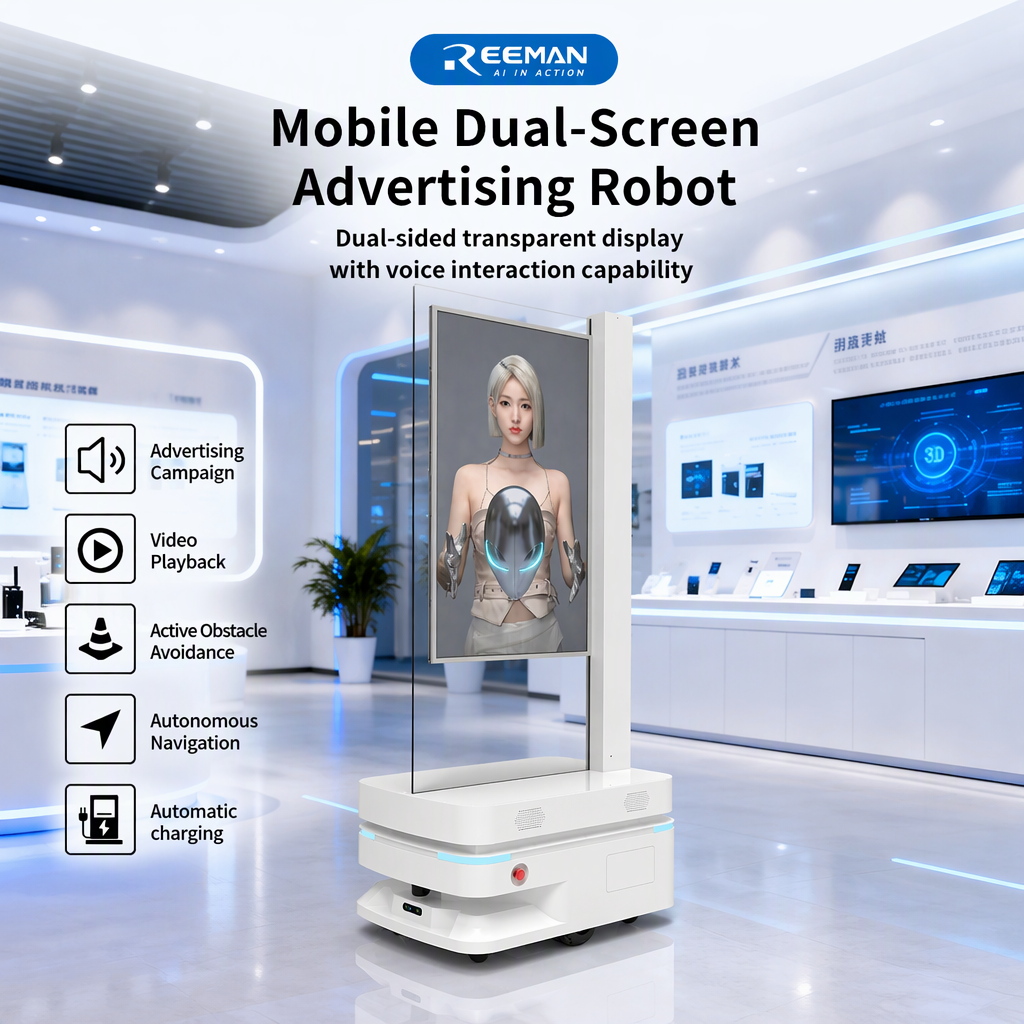
Reeman Mobile Dual Screen Advertising Robot LCD Display Voice Interaction Autonomous Navigation Indoor Commercial Use
A mobile commercial display robot for Toronto malls, hotel lobbies, convention spaces and retail concourses. It combines autonomous indoor navigation with dual-screen promotion and voice interaction.
View product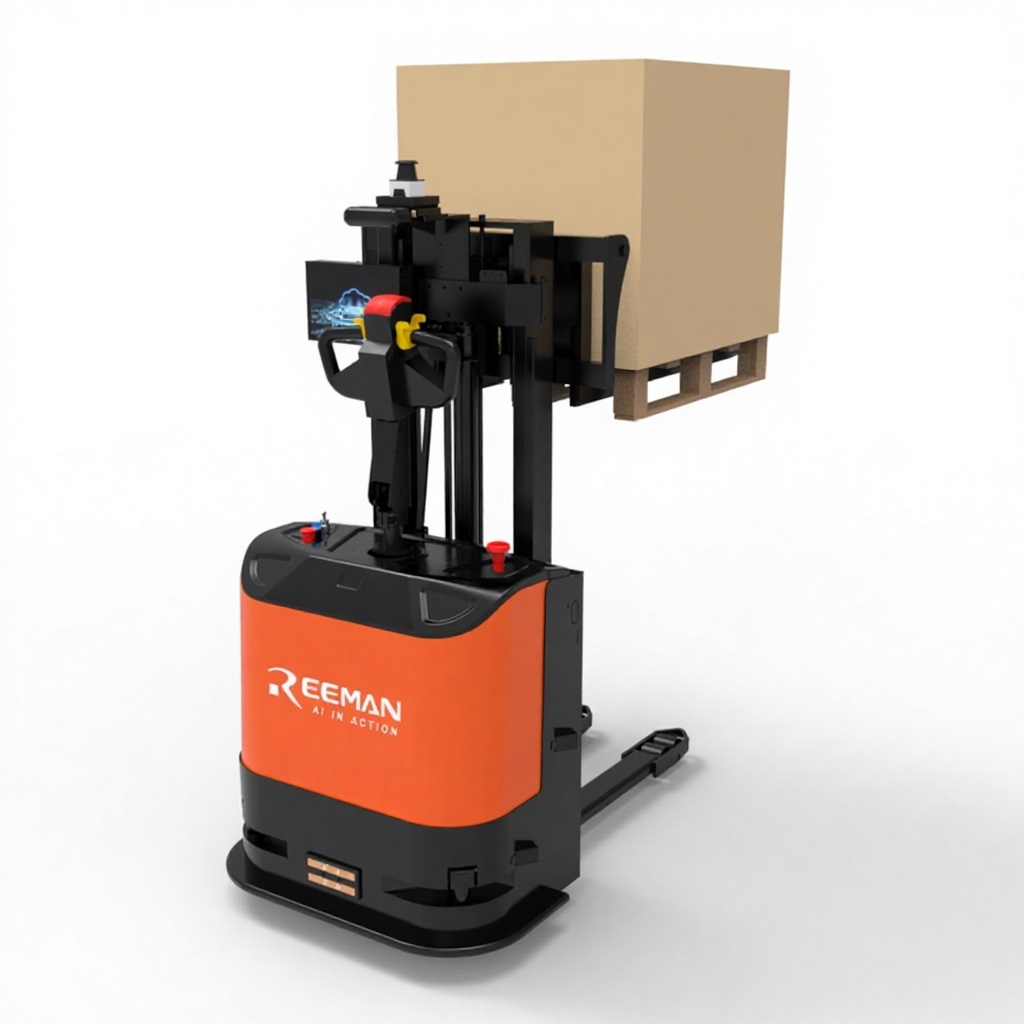
REEMAN Rhino RBOT30F Autonomous Stacker Forklift 3D Vision Obstacle Avoidance Warehouse AGV Robot
A stacker-focused option for repetitive low-rack storage and pallet positioning in Toronto warehouses where narrow aisles and obstacle avoidance are practical priorities.
View product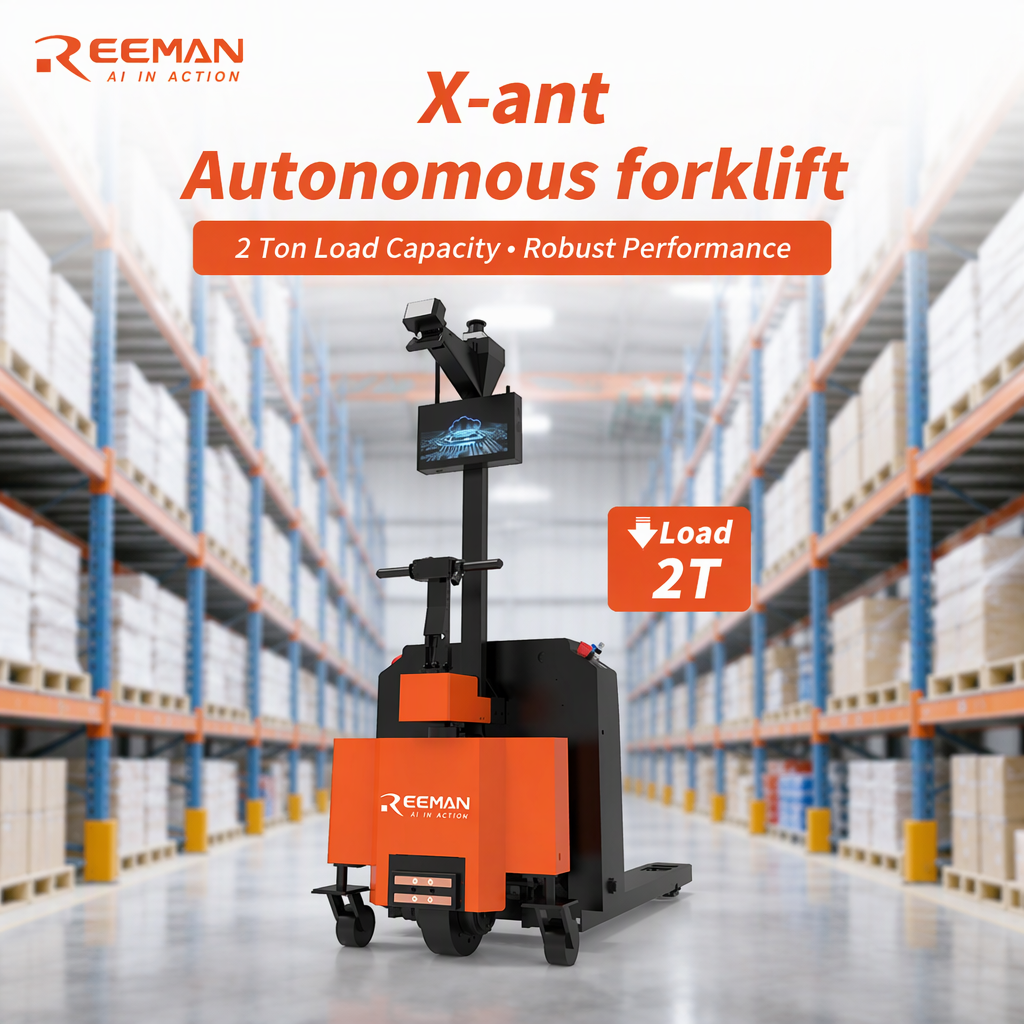
2 Ton Autonomous 4WD AGV Forklift Laser SLAM Navigation Multi-Line LiDAR 10mm Position Accuracy Warehouse Handling
A strong candidate for Mississauga, Brampton and Vaughan 3PL operations that need dock-to-rack pallet movement with multi-line LiDAR and high positioning accuracy.
View product
Dual Laser AMR 300KG AGV Lifting Mobile Robot with Slam LiDAR Navigation for Manufacturing Plants
A flexible lifting AMR for Toronto manufacturing plants, electronics workshops and line-side material supply. It supports repetitive internal movement without fixed floor infrastructure.
View product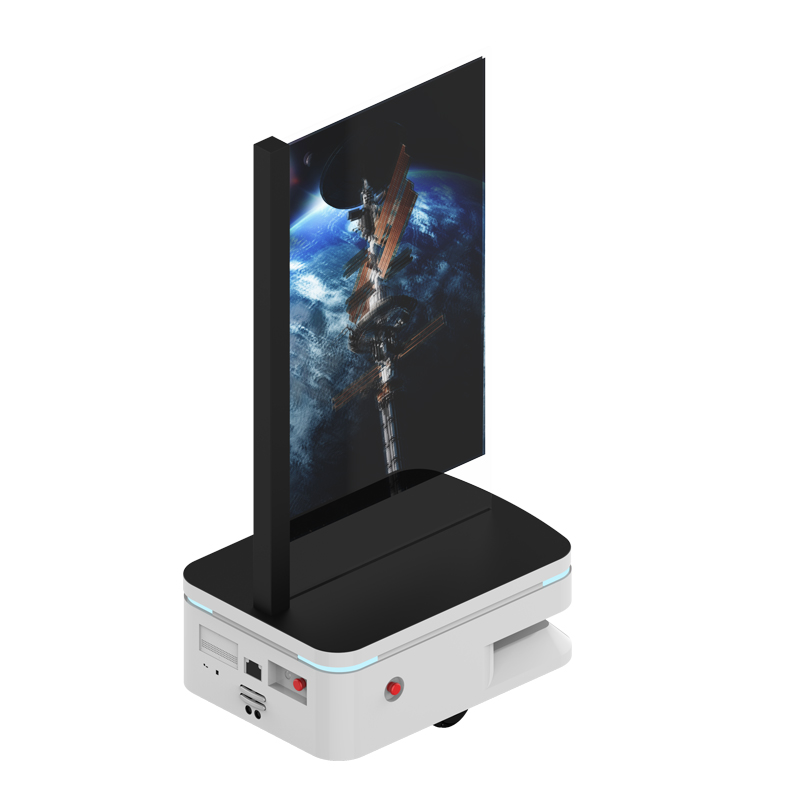
75 Inch Indoor LED Digital Poster Touch Screen Display SDK OEM ODM Black Signage for Retail Store Elevator Airport
A fixed digital signage platform for Toronto retail stores, elevator lobbies, airports and exhibition venues. OEM/ODM support allows buyer-label branding and interface customization.
View product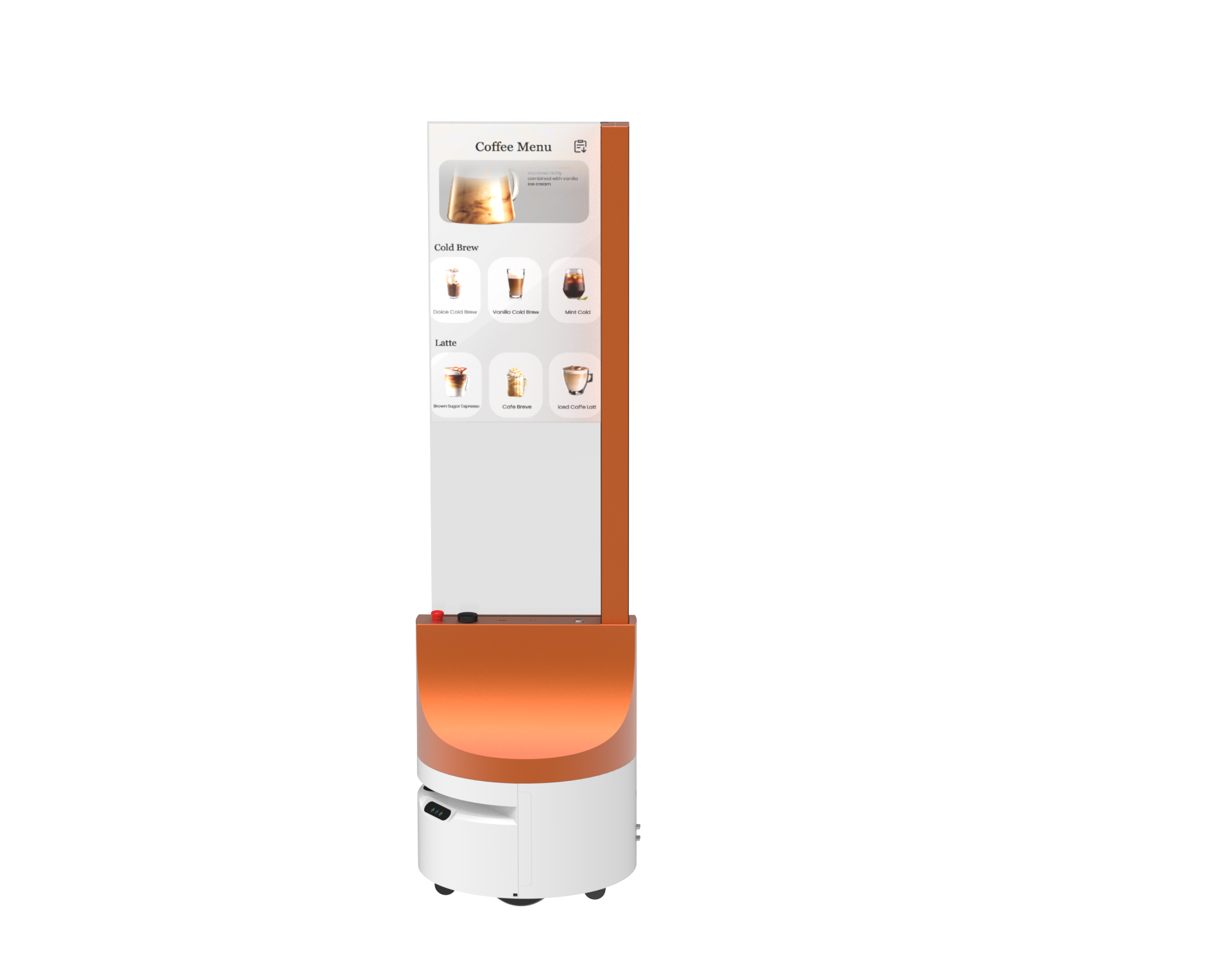
REEMAN 30 Inch OLED Transparent Screen Mobile Advertising Robot 1080 x 1920 FHD 9:16 Wi-Fi App Remote Control
A high-impact mobile advertising robot for Toronto events, showrooms and retail environments. The transparent OLED screen and app-based control support flexible campaign deployment.
View product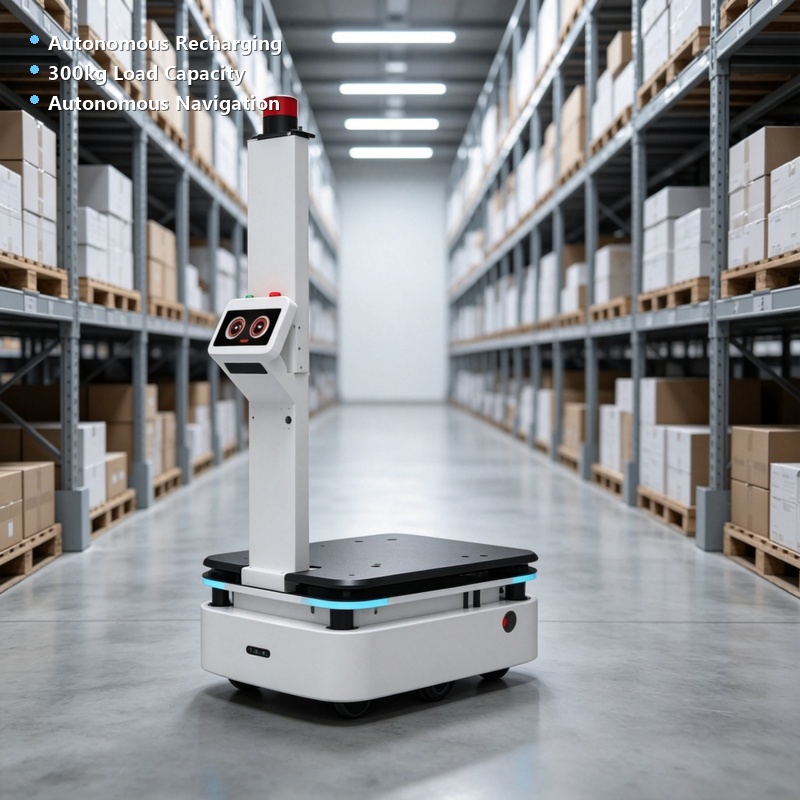
REEMAN Dual Laser Fly Boat MAX 300kg Industrial Delivery Robot for Manufacturing Plants and Factory Material Supply
A material supply robot for factory logistics and repetitive internal delivery. It suits Toronto-area plants that want to reduce walking time and manual cart movement.
View product
2 Ton Autonomous 4WD AGV Forklift Laser SLAM Navigation Multi-Line LiDAR 10mm Position Accuracy 6-8H Warehouse Handling
An extended-shift configuration for Toronto distribution operations that need predictable pallet transfer across longer operating windows. Battery, charger and shift planning are reviewed together.
View productFor Toronto projects, share your layout drawing, pallet type, rack height, floor condition, shift pattern and target throughput for a first-pass model recommendation.
A Toronto-First AGV Strategy: Fit the Building, the Team and the Compliance File
Toronto procurement teams are not comparing a single “AGV” category. They are comparing forklift autonomy, mobile platform flexibility, service response, electrical approval, integration risk and lifecycle cost.
Toronto is not a single warehouse market. A 3PL in Mississauga may need dock-to-rack pallet movement across three shifts. A food distributor in Vaughan may need a low-temperature battery strategy. A manufacturer in Scarborough may need a 300 kg dual-laser AMR for line-side components. A mall, hotel or airport operator may want an OLED advertising robot for wayfinding and promotions. Treating these use cases as one generic requirement is the fastest way to overpay or under-specify.
For a custom OEM AGV forklift, the bill of materials is only the beginning. Toronto buyers should evaluate the complete operating envelope: aisle width, pallet condition, rack beam height, floor flatness, charging voltage, network coverage, fire and life-safety procedures, pedestrian traffic, collective agreement impacts and the service response path from the GTA. This white-paper-style guide gives procurement and engineering teams a practical way to compare suppliers without relying only on brochure claims.
Shenzhen Elvorn Intelligent Equipment Co., Ltd. has produced autonomous mobility platforms since 2015. Our 5,200㎡ production footprint, 39 patents, 200+ team, ISO 9001 and ISO 14001 management systems, and onsite SGS verification are useful proof points — but the real test is whether the robot can be customized, integrated, commissioned and supported for the Toronto market. We build laser-SLAM navigation, motion-control logic and chassis platforms in-house, which shortens the path from a site survey to a working fleet.
Information gain matters here: a Toronto buyer should ask for the assumptions behind the proposal, not just the payload number. Which routes were simulated? What charging window was assumed? How will the robot behave when a dock leveler is occupied, a pallet is wrapped unevenly or a pedestrian crosses the aisle? These details separate a robust deployment from a demo.
Toronto deployment realities to confirm
Why Toronto Buyers Are Moving from Manual Pallet Flow to Autonomous Equipment
Local demand is being shaped by labor availability, expensive industrial real estate, cold-chain complexity, safety expectations and the need to connect robots to existing warehouse systems.
Labor and shift coverage
GTA logistics operators face wage pressure and turnover risk. Autonomous forklifts reduce repeated travel between receiving, staging and racking, allowing staff to focus on exception handling, quality checks and customer-specific orders. The ROI case is strongest where a fixed pallet route runs more than one shift and overtime or agency labor is already common.
Urban fulfillment density
Warehouse land near Toronto is expensive, so operators add mezzanines, narrow aisle racking and faster dock turns rather than expand. A compact OEM AGV forklift, stacker AGV or 300 kg AMR can improve throughput per square foot. Vehicle dimensions, turning radius and safety-scanner positions must be checked against the actual building, not a catalog drawing.
Cold chain and food distribution
Ontario food distribution, grocery and pharmaceutical supply chains use cold rooms and freezer zones. Buyers should specify battery chemistry, condensation management, charger placement, washdown expectations and safe operating temperatures. Where a standard model is not suitable, Elvorn can discuss engineering changes and factory validation before shipment.
Safety and electrification
Toronto buyers increasingly align projects with ANSI/ITSDF B56.5, ISO 3691-4, Ontario OHSA duties and internal JHSC review. Electrical approval for Canada may involve CSA, cUL, ULC or a recognized field evaluation agency. Elvorn supports documentation packages and model-specific compliance discussions; final Canadian marks and scope should be confirmed for each project.
Where These Platforms Fit in Toronto and the GTA
Use this section as a scoping map. The right robot depends on the route, load, interaction model and support plan — not simply the advertised payload.
Dock-to-Rack Pallet Flow in Mississauga and Brampton 3PLs
Multi-line LiDAR and 2-ton capacity make the 4WD AGV forklift a practical candidate for receiving, staging and put-away. The project should model dock congestion, pallet quality and charger location before fleet size is fixed.
Pallet transferNarrow-Aisle and Low-Rack Stacking in Vaughan and North York
The Rhino RBOT30F autonomous stacker is relevant where low-rack storage and repetitive pallet positioning create travel waste. Confirm mast height, fork length, pallet overhang and aisle clearance with a site drawing.
StackingLine-Side Manufacturing in Scarborough and Etobicoke
The 300 kg dual-laser AMR and Fly Boat MAX delivery robot support WIP movement, component replenishment and internal material supply. Integration with MES or a simple call system can reduce walking time and manual cart movement.
Line-side supplyCold Chain and Food Distribution Across the GTA
For cold rooms, the robot is only one part of the design. Battery temperature, condensation, charger placement, door interlocks, floor friction and sanitation procedures must be reviewed together. Factory testing assumptions should be written into the project file.
Cold storageRetail, Mall and Airport Engagement in Downtown Toronto and Pearson
Mobile dual-screen advertising robots and the 30-inch OLED transparent screen robot can support promotions, wayfinding and event activation. Fixed 75-inch touch signage is better where power, space and network are stable.
Commercial engagementWholesale and OEM Programs for Canadian Integrators
Integrators can discuss buyer-label packaging, custom top modules, display language, software interfaces and spare-parts kits. The goal is not just to ship a robot, but to give the local partner a repeatable deployment package.
OEM / ODMFour Trends Shaping AGV and AMR Buying Decisions in Ontario
Toronto buyers are becoming more sophisticated. They want evidence of safety, integration readiness and lifecycle support before approving a pilot.
From fixed automation to flexible fleets
Magnetic tape and fixed guidepath systems can be difficult to change in leased GTA buildings. Laser SLAM lets the robot map the site without floor markers, so racking moves and seasonal layouts are easier to accommodate.
Canadian electrical and safety evidence
Procurement teams increasingly request a compliance matrix before a pilot. They ask who owns the risk assessment, which standards apply, how emergency stops are tested and what documentation will be available for maintenance and insurance review.
WMS, ERP and fleet-data integration
A robot that cannot receive tasks or report status becomes an isolated island. Open SDK/API options, clear data ownership and exception handling are now part of the buying decision, especially for 3PLs running customer-specific systems.
Sustainability and total cost of ownership
Electric drive, opportunity charging, reduced pallet damage and better space utilization all contribute to the business case. Toronto buyers should compare the full lifecycle cost: energy, tires, scanners, batteries, spares, training and downtime exposure.
Why a Toronto Buyer Would Shortlist Elvorn
Elvorn combines autonomous navigation engineering, modular hardware platforms, OEM customization and export support. The company profile is relevant only when it reduces project risk for the buyer.
Laser SLAM navigation built in-house
Maps are created without magnetic tape, QR codes or reflectors. For Toronto facilities with changing layouts, this reduces floor work and supports faster reconfiguration.
Open SDK and API integration
AMRs and robot chassis can support secondary development for WMS, MES, ERP and custom dispatch systems. Integration scope is defined before the purchase order.
Modular payload platforms
From 300 kg AMRs to 2-ton autonomous forklifts, shared control architecture simplifies training and maintenance across a mixed fleet.
OEM, ODM and buyer-label service
Custom fork dimensions, top modules, software display language, branding and packaging are available for wholesalers and integrators.
Two production bases and quality control
Shenzhen and Ningbo production bases, 5,200㎡ total floorspace, 39 patents and 200+ team members support engineering and repeat orders.
Certified and audited factory credentials
ISO 9001 and ISO 14001 management systems, onsite SGS verification, and CE, FCC or PSE marks on applicable models support buyer due diligence.
ISO 9001
Quality management system
ISO 14001
Environmental management
Onsite Verified
Independent factory verification
CE / FCC / PSE
Model-specific export marks
Engineering, Production and Quality Evidence for OEM Buyers
Toronto buyers can review factory imagery, testing arrangements and documentation before committing to a pilot. The images below are from the original Elvorn company content.



A Practical Four-Step Path from Site Survey to Stable Operation
The scorecard below shows how Elvorn frames a Toronto project. The weights are illustrative and should be agreed with your operations, maintenance and safety teams.
Site and load discovery
Share layout drawings, photos, rack heights, pallet samples, floor condition, aisle widths, dock details and shift patterns. Engineering reviews the real operating environment.
Custom engineering and compliance review
Confirm fork dimensions, mast height, payload structure, battery package, charging plan, network design, safety scanners and the Canadian approval path for the project.
Factory build and pre-shipment test
Functional checks, load testing and configuration verification are completed before shipment. Test records and documentation can support buyer due diligence.
Remote commissioning and lifecycle support
Mapping support, operator training, English documentation, spare parts planning and response expectations help the Toronto team operate the fleet with confidence.
Toronto-fit evaluation dimensions
Use these dimensions to compare suppliers. A low score in safety or service can outweigh a low purchase price.
Common Questions from Toronto and GTA Procurement Teams
These answers reflect the questions we receive from distributors, 3PL operators, plant engineers and integrators evaluating an OEM AGV forklift or AMR program.
Which AGV forklift is best for a Toronto 3PL with mixed pallets and 40-ft docks?
Start with load, pallet condition, dock levelers, aisle width and rack height. For repetitive dock-to-rack flows with 1,500–2,000 kg loads, the 2-ton 4WD laser SLAM AGV forklift is usually the first candidate. For low-rack stacking, the Rhino RBOT30F can be reviewed. Final selection should follow a site survey.
Do I need CSA or UL certification in Ontario?
Electrical approval requirements depend on the installation and the authority having jurisdiction. Buyers commonly request CSA, cUL, ULC or field evaluation. Elvorn holds CE, FCC or PSE marks on applicable models and ISO/SGS credentials; for Canada-specific projects we prepare a compliance matrix and coordinate documentation. The approved mark and scope must be confirmed on the purchase order.
Can autonomous forklifts operate in cold storage or Toronto winter conditions?
Yes, with engineering controls. Cold-room projects require battery and charging review, condensation management, lubricants, and sensor heating or enclosures as needed. Winter salt and dust in Toronto can affect floor friction and sensor cleanliness. A site-specific risk assessment and cleaning schedule are recommended.
How do you integrate with our WMS, MES or ERP?
Elvorn AMRs, robot chassis and fleet software provide open SDK/API options for task dispatch and status feedback. Integration can be direct or through an integrator. We confirm data points, network architecture, safety handshakes and exception flows during solution design.
What is the lead time and shipping process to Toronto?
Lead time depends on model, customization, battery package and testing. Export shipments commonly move by sea to Vancouver or Montreal/Toronto rail, or by air for urgent projects. Elvorn exports on FOB terms with T/T payment in USD or CNY. Buyers should plan customs clearance, local delivery, charger installation and commissioning windows early.
Can you customize forks, mast, branding and packaging for wholesale buyers?
Yes. As a verified custom manufacturer, Elvorn offers OEM, ODM and buyer-label options. Custom top modules, fork dimensions, load structures, software display language, branding and export packaging can be specified. Engineering feasibility and testing requirements are confirmed before quotation.
What after-sales support is available for Toronto and the GTA?
Support can include remote commissioning, English documentation, operator training, spare parts kits, diagnostic assistance and planned maintenance recommendations. For local service, we can work with the buyer’s maintenance team or a qualified third-party integrator. Response planning should be documented before shipment.
How do I calculate ROI for an AGV forklift in Toronto?
Build a simple model: labor hours per pallet move, overtime and agency labor, shift coverage, accident and damage costs, expected utilization, battery/charging cost, maintenance, spare parts and integration. Then compare automated throughput with a realistic ramp-up period. We can provide model assumptions for engineering review.
Plan a Toronto-Specific AGV Forklift Deployment
Send your facility layout, pallet type, rack height, shift pattern and target throughput. Our engineers will help you shortlist the right OEM platform and prepare the next-step technical questions.