Custom OEM Reception Robot Factories & Suppliers Serving the Davao City Market
A procurement-grade guide to SLAM navigation, OEM customization, tropicalized deployment and local after-sales support for Davao City hotels, hospitals, malls, BPO lobbies, government service halls, port-linked logistics and agro-industrial facilities.
Eight Factory-Direct Platforms for Davao Reception and Material Flow Projects
For a Davao City deployment, a reception robot is often built as a SLAM mobile platform with a custom top module: screen, voice interaction, QR check-in, card reader or document tray. The same factory range also supports back-of-house delivery, pallet handling and warehouse automation.
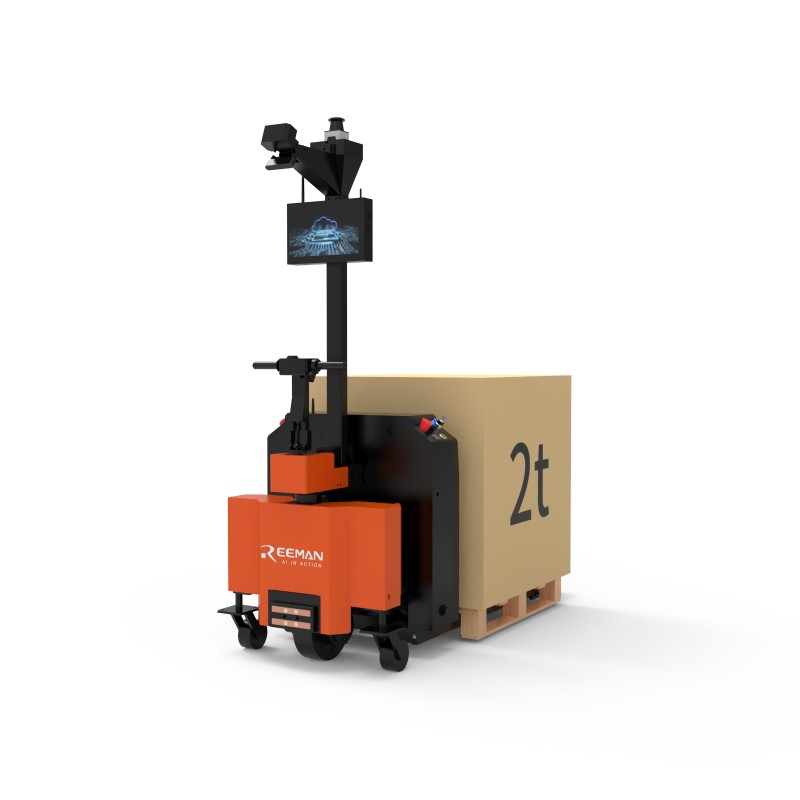
2 Ton Autonomous 4WD AGV Forklift
Laser SLAM navigation with multi-line LiDAR and 10 mm position accuracy for repetitive pallet movement behind a Davao retail, warehouse or distribution operation.
- 2,000 kg class
- 6–8 h handling duty
- No tape or floor reflectors
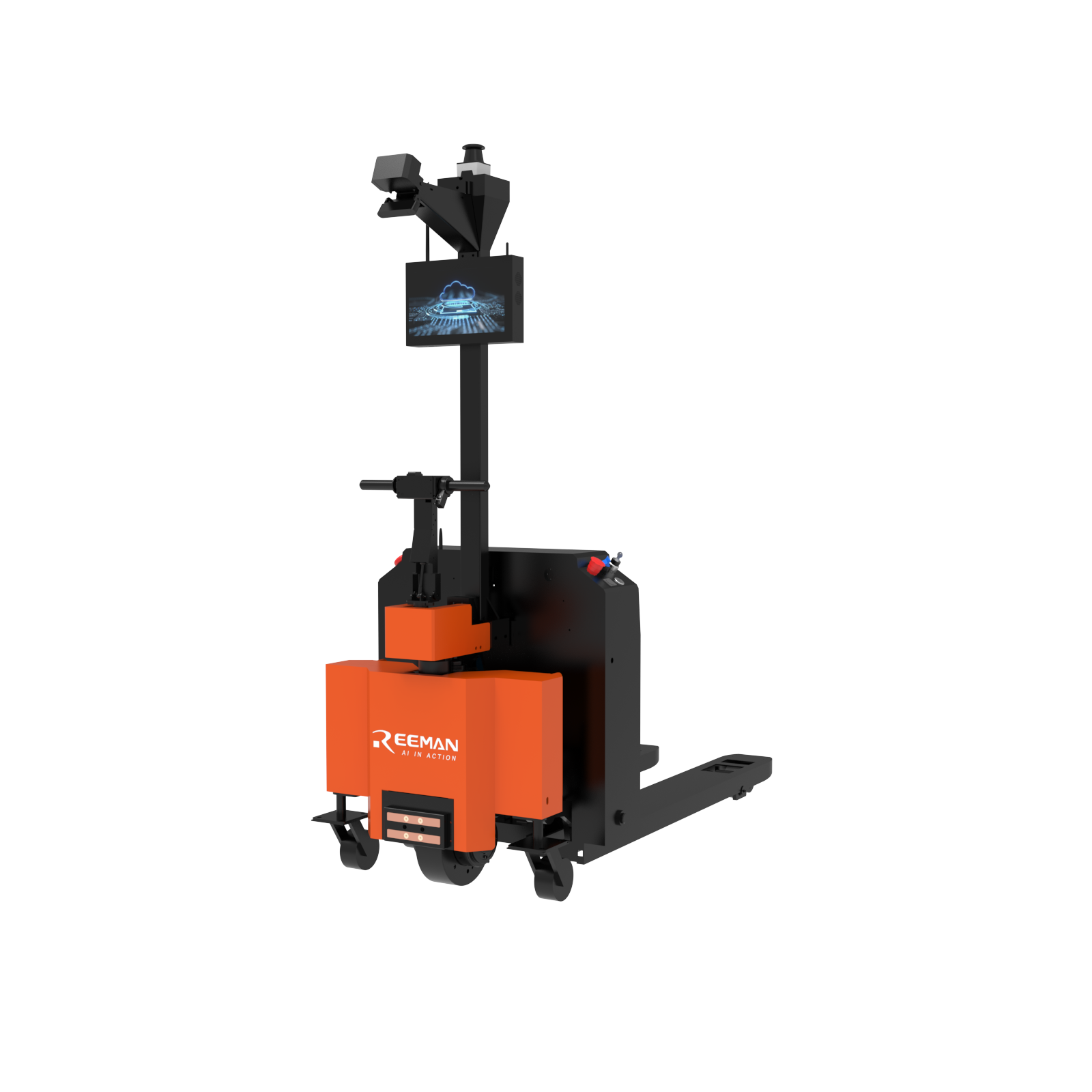
Reeman BBOT30F 1,500 kg Laser SLAM Forklift AGV
A compact autonomous forklift option for Davao facilities that need pallet pick-and-place, line feeding and dock-to-storage movement without fixed floor infrastructure.
- 1,500 kg rated class
- LiDAR navigation
- Warehouse pallet handling
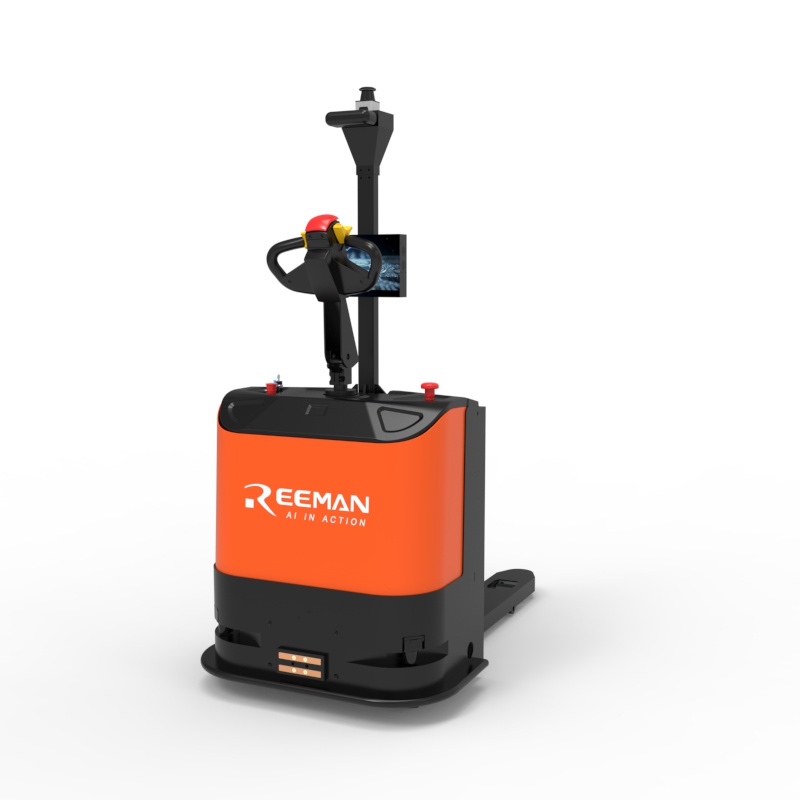
REEMAN X-ant JBOT20F 2 Ton Autonomous Forklift AGV
Designed for warehouse logistics and pallet handling, this model is relevant when a Davao operator wants to reduce repeated forklift trips while keeping routes flexible.
- 2 ton load class
- Laser SLAM navigation
- Fleet scheduling ready
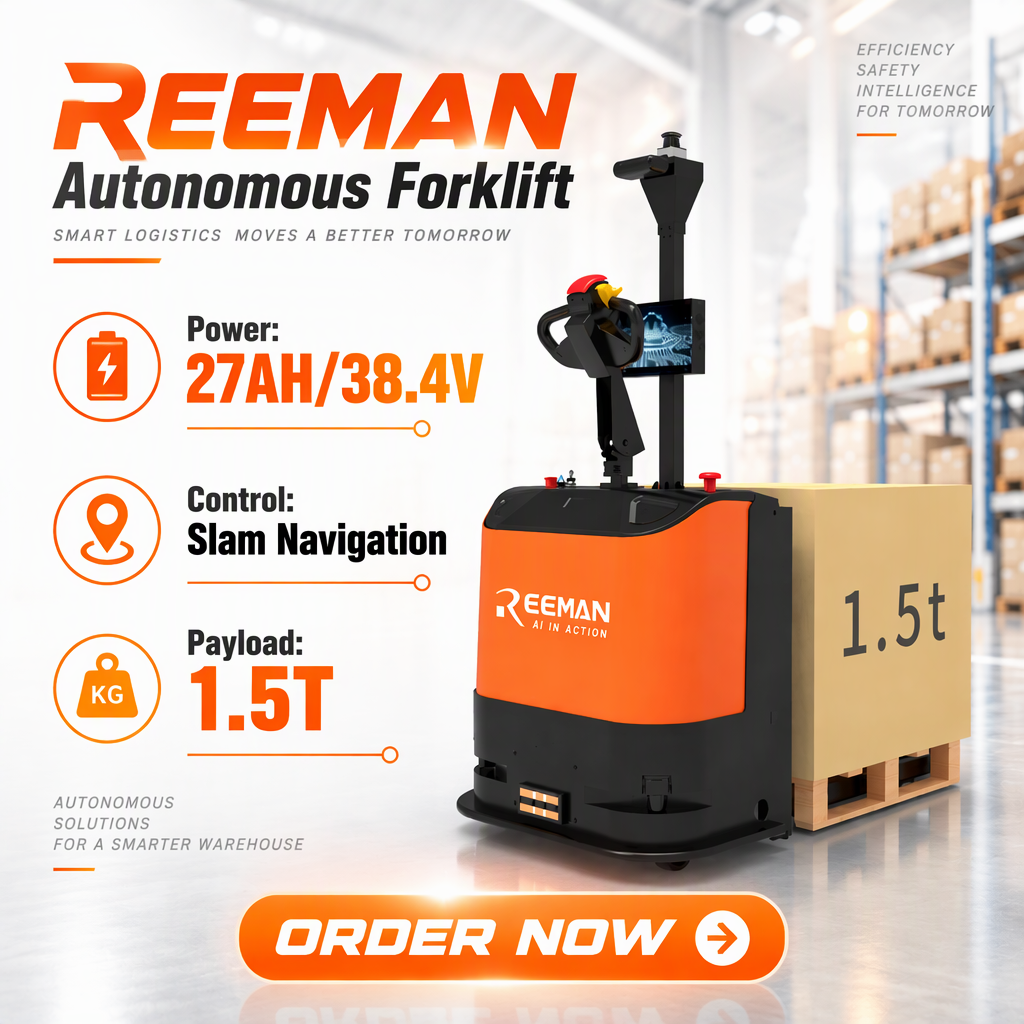
Reeman 1.5 Ton Autonomous Forklift AGV
SLAM navigation, 3D obstacle avoidance and bidirectional driving make this platform suitable for indoor warehouse aisles and production-line feeding in mixed traffic.
- 1.5 ton load class
- 3D obstacle avoidance
- Indoor warehouse routes
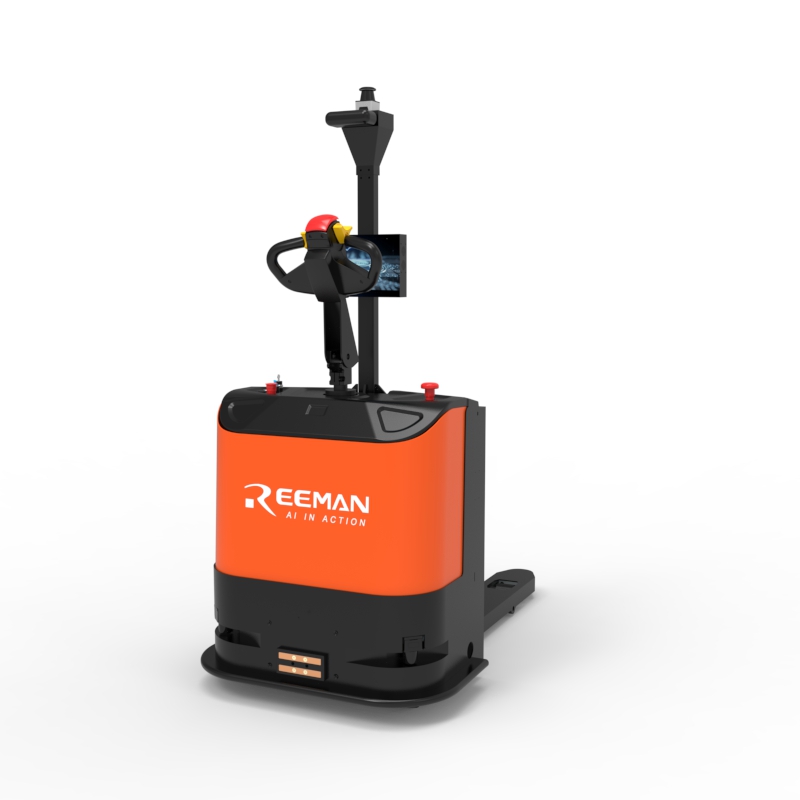
CE Certified 1,500 kg Driverless AGV Pallet Forklift
Automatic pallet loading and unloading robot for projects that need a CE-marked model and a defined duty cycle for repetitive indoor material movement.
- 1,500 kg class
- Laser SLAM navigation
- 1–2 h working-time configuration
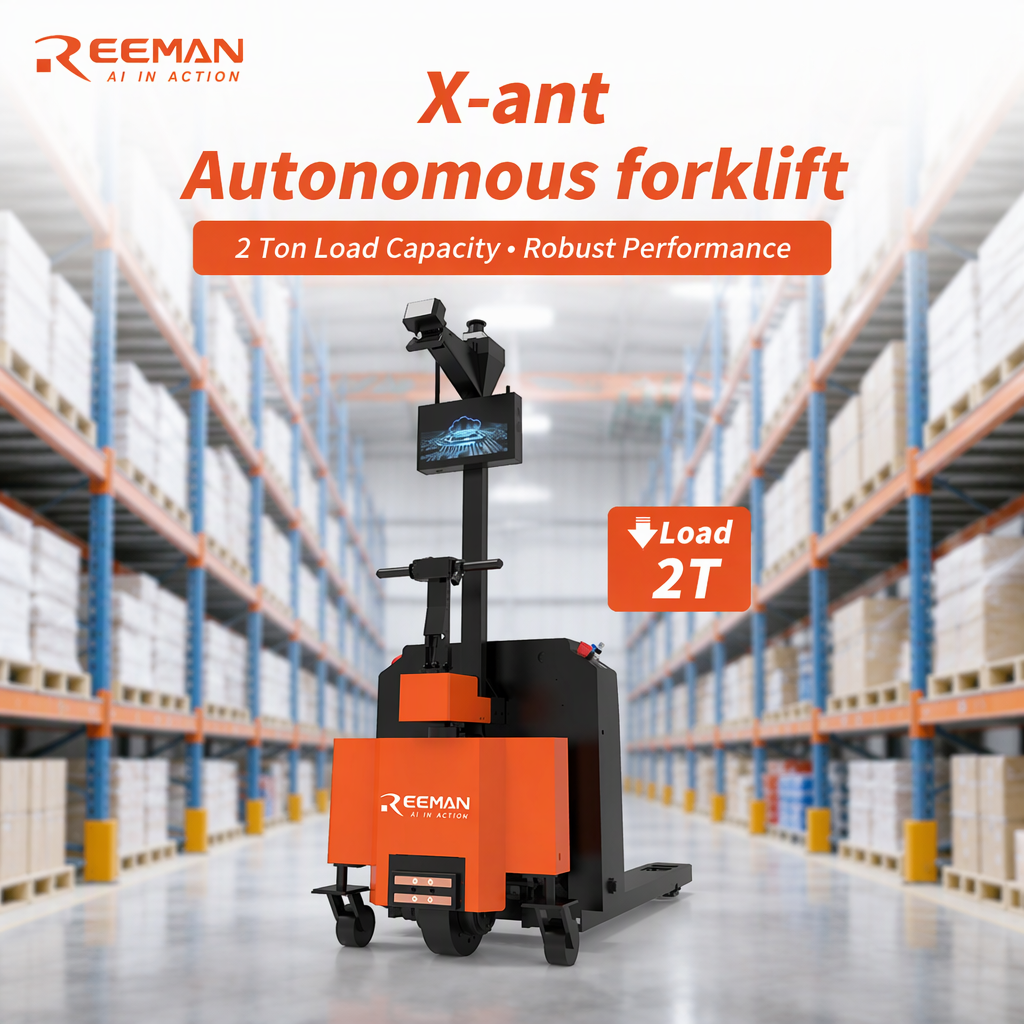
2 Ton Autonomous 4WD AGV Forklift
Multi-line LiDAR and 10 mm positioning accuracy support complex warehouse handling where a Davao buyer needs stable pallet detection and route repeatability.
- 2,000 kg class
- Multi-line LiDAR
- Warehouse handling
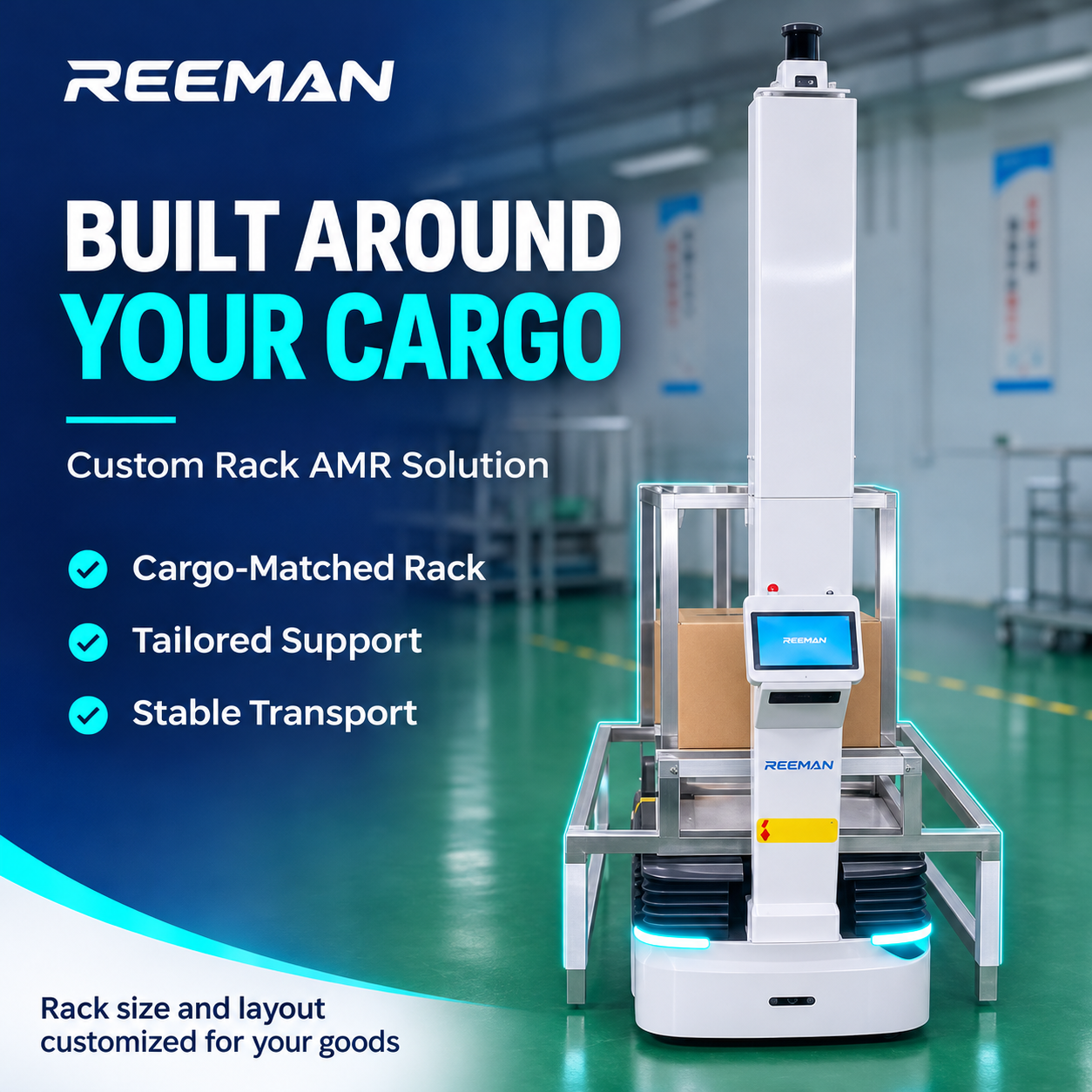
Dual Laser AMR 300 kg Lifting Mobile Robot
A strong candidate for a Davao reception robot base: 300 kg lifting platform, SLAM LiDAR navigation and room for a custom screen, tray, document module or visitor-registration top.
- 300 kg payload
- Dual laser SLAM
- Manufacturing and service use
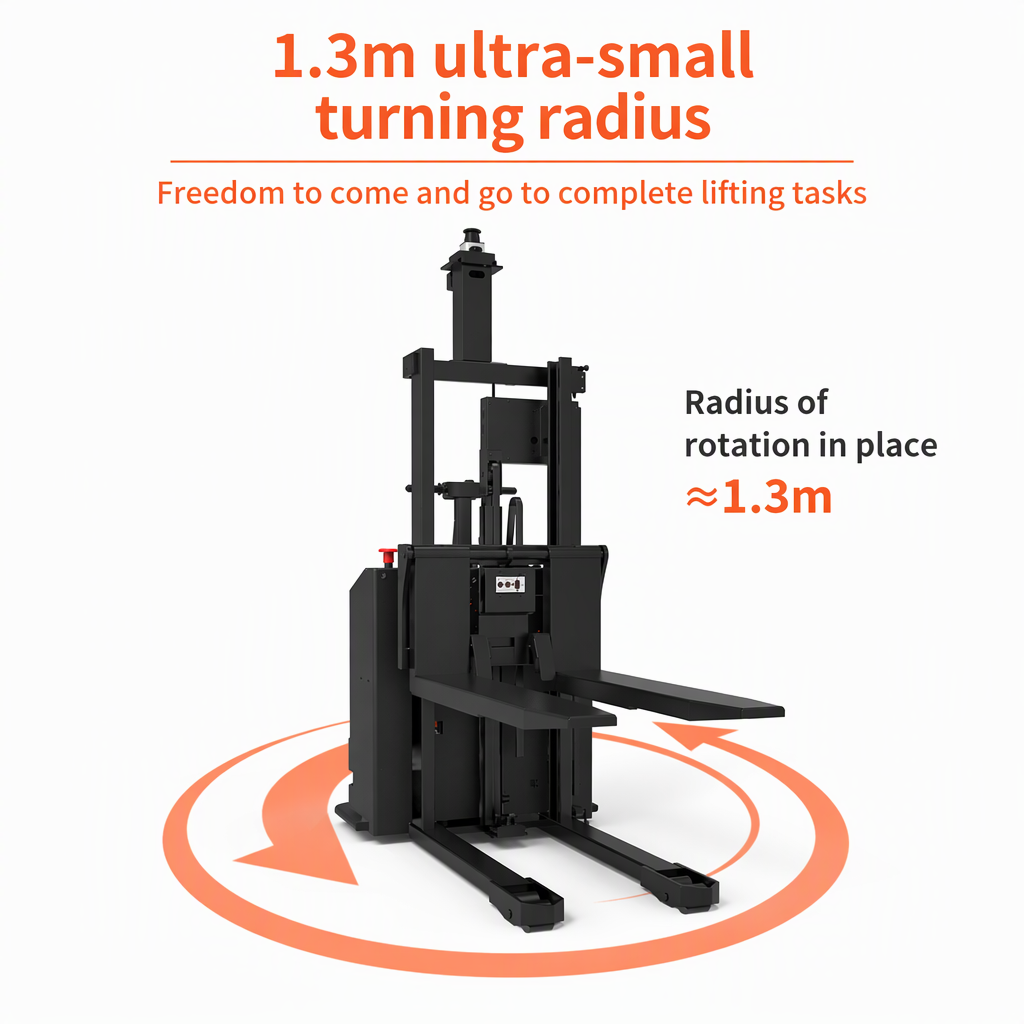
REEMAN Autonomous Electric Forklift 1 Ton
1 ton payload, 48V 30Ah LiFePO4 battery and indoor material handling capability for Davao facilities that want autonomous light forklift work.
- 1,000 kg payload class
- 48V LiFePO4 battery
- Indoor material handling
Factory data verified onsite by independent inspector SGS Group. ISO 9001 and ISO 14001 management systems; selected robot models carry CE, FCC or PSE marks.
Why a Reception Robot Project in Davao City Starts With Factory Capability, Not a Catalogue
Search demand for custom OEM reception robot factories and suppliers serving Davao City usually comes from four buying groups: hotels and resorts upgrading front-of-house service; hospitals and diagnostic centres managing queues; malls and convention venues looking for guided advertising; and BPO or government service halls that need visitor registration, wayfinding and document delivery. Each group uses the phrase “reception robot”, but the engineering brief is different.
Buyer intent is not one-size
A hotel may prioritise a large screen, multilingual greeting, lift integration and quiet operation. A hospital may prioritise privacy, offline maps, route accuracy and easy disinfection. A BPO may need QR check-in, badge printing and API hooks to a visitor-management system.
Offline-first operation
Davao buildings can have uneven Wi-Fi and intermittent mobile data. A robust reception robot must map, navigate, greet and log visitor flows locally, with cloud dashboards optional rather than essential.
Supplier verification
Ask for factory evidence, not only product photos: SGS onsite verification, ISO management systems, CE/FCC/PSE model evidence, spare-part lists and English commissioning documentation.
Tropical and local service
Heat, humidity, dust, rain exposure and mixed pedestrian traffic should be designed into the top module, charging area and maintenance plan. Davao projects also need a named local integrator or technician path.

Built for Repeatable OEM Projects, Not One-Off Demonstrations
Elvorn has manufactured autonomous robots since 2015. The company operates two production bases in Shenzhen and Ningbo, holds 39 patents and runs a 5,200㎡ floor space with a 200+ team. Its factory has been verified onsite by SGS Group, its management system is certified to ISO 9001 and ISO 14001, and selected models carry CE, FCC or PSE marks.
For Davao City distributors and end users, this matters because a reception robot is not a one-off appliance. It is a fleet device that needs an open SDK, spare-part discipline, safety documentation and a factory that can support repeated OEM projects across hospitality, healthcare, retail, government and logistics.
Davao City Application Scenarios: From Lobby Greeting to Back-of-House Pallet Flow
The strongest reception robot business case in Davao City combines guest-facing service with a clear, measurable back-of-house task. The scenarios below show where OEM platforms are commonly evaluated.
Hotel and resort lobbies
For properties in Lanang, Bajada or the city centre, a reception robot can greet guests in English, Filipino and configured Cebuano phrases, display check-in instructions, guide guests to lifts or function rooms and deliver amenities on a 300 kg lifting AMR where routes are flat and secure.
Hospitals and diagnostic centres
Queue management, wayfinding and controlled delivery are practical starting points. Edge SLAM maps should be stored locally and voice content should avoid patient privacy. Low-speed AMRs can move documents or supplies, with HIS integration only after data rules are approved.
Malls and MICE venues
A mobile digital reception kiosk can display a mall directory, QR promotions, event schedules and sponsored messages. For high-footfall venues, a transparent OLED or large-format screen top module may be paired with a SLAM chassis for guided advertising and wayfinding.
BPO and corporate towers
Visitor check-in, escort guidance and document delivery can reduce front-desk interruptions. API integration with visitor-management, turnstiles and lifts should be scoped early, with audit logs and privacy notices prepared for the building administrator.
Government service halls
Queue routing, form guidance, language options and privacy are key. A Davao public-sector deployment should include a pre-agreed data-retention policy, staff override controls and a local maintenance path so the robot can be restored quickly during service hours.
Port-linked logistics and agro-industry
Around Sasa, Toril and nearby industrial zones, autonomous forklifts and lifting AMRs can move pallets, raw materials and finished goods. For Davao’s banana, coconut, cacao and food-processing supply chains, night shifts and repetitive pallet movement are common automation candidates.
What Will Shape Davao Reception Robot Procurement in 2025–2030
Reception robotics is moving from novelty demonstrations to measurable service infrastructure. In Davao City and the wider Davao Region, six localization trends are especially relevant for hotels, hospitals, malls, BPOs and logistics operators.
Tropical-first hardware
Specify sensor protection, dust filtration, heat management, drainage around charging areas and material choices that resist humidity. Outdoor-adjacent lobbies and covered walkways need more than a standard indoor demo unit.
Edge AI and offline SLAM
Buildings should not depend on constant cloud connectivity. Local mapping, local voice prompts, local logs and cached routes make the robot more reliable during network maintenance, peak events or weak signal areas.
Multilingual and inclusive service
English, Filipino and Cebuano content should be reviewed by local staff, not machine-translated blindly. Visual prompts, large text, hearing-loop alternatives and wheelchair-accessible interaction height improve service quality.
Open integration with local software
Davao integrators need APIs for visitor management, PMS, HIS, queue systems, lift control, payment modules and analytics. Open SDK access reduces dependence on the robot supplier for small workflow changes.
Safety in mixed traffic
Davao venues mix pedestrians, carts, forklifts, delivery vans and motorcycles. Speed zoning, obstacle detection, audible warnings, emergency stop access and clear operating rules should be part of the acceptance test.
Serviceability as a KPI
Local after-sales support, remote diagnostics, modular top modules and spare-part availability matter more than a low unit price. Davao buyers should ask who performs first-line checks and how quickly critical parts can be shipped.
Why Elvorn Fits Davao OEM Reception Robot Supply Chains
For a Davao City integrator, the ideal factory partner is not simply a catalogue reseller. It is a manufacturing partner that can support localization, repeated customization and long-term spare parts.
Elvorn owns development across laser SLAM navigation, motion control, fleet scheduling, human-machine interaction and hardware design. The product architecture spans 60 kg delivery robots, 300 kg lifting AMRs, 600 kg logistics AMRs, 1-ton to 2-ton autonomous forklifts and robot chassis. This breadth simplifies a mixed project: a hotel can use one AMR as a reception and delivery platform, while a nearby warehouse uses a forklift AGV on the same fleet-management logic.
OEM scope includes buyer-label branding, top-module design, display and voice content, packaging and interface documentation. For reception deployments, practical customization points are the screen size, camera and voice interaction kit, visitor-registration module, badge printer, QR scanner, card reader, battery pack and charging strategy. For industrial deployments, customization points include fork dimensions, mast height, load centre, LiDAR configuration, safety sensors and WMS/MES/ERP interfaces.
Quality evidence is equally important. The factory has been verified onsite by SGS Group; ISO 9001 and ISO 14001 cover management systems; and CE, FCC or PSE marks are available depending on the model and target market. Elvorn’s export experience covers North America, Western Europe, East and Southeast Asia and the Middle East. Davao buyers can use the same documentation model for Philippine import and internal compliance review, while confirming final requirements with their customs broker and local regulator.

A Six-Step Factory Workflow for Davao City Projects
A reception robot project should move from visitor journey to validated route, then to OEM customization, factory testing and local deployment. The process below reflects common Elvorn OEM workflows for overseas distributors and integrators.
1. Discovery and site brief
Share floor plans, visitor flow, languages, power conditions, network coverage, lift access, floor surfaces and target tasks. For Davao sites, confirm humidity, dust and rain exposure.
2. Route simulation
Decide whether the project needs a reception-focused AMR, a delivery AMR, a lifting platform or a forklift AGV. Map the visitor journey and the back-of-house route separately.
3. OEM customization
Define logo, screen size, voice content, QR check-in, card reader, document tray, top-module dimensions and API requirements. Confirm what stays standard to protect lead time.
4. Factory build and test
Assemble the selected platform, run functional checks, confirm load handling, safety sensor response and charging behaviour, then prepare export packaging and documentation.
5. Export to Davao
Ship FOB with T/T payment in USD or CNY. Depending on order size and urgency, buyers can evaluate sea freight to the Port of Davao or air freight to Davao International Airport, then arrange local trucking.
6. Deployment and support
Complete remote or onsite mapping, operator training, acceptance testing and preventive-maintenance planning. Keep spare parts, firmware records and escalation contacts available.
Matching the Robot to the Davao City Workflow
Use this matrix during first-round scoping. Final configuration should be confirmed after reviewing the site layout, pallet type, visitor flow, floor surface, charging location and throughput target.
| Requirement | Davao scenario | Recommended Elvorn approach |
|---|---|---|
| Branded lobby greeting | Hotel, mall, BPO or government service hall | SLAM AMR chassis with a custom screen, voice kit, QR check-in and local content; optional large-format advertising module. |
| Document or amenity delivery | Hospital, hotel, office tower or service hall | 300 kg lifting AMR with tray, locked compartment or custom top module; API hooks to the local workflow system. |
| Repetitive pallet movement | Warehouse, retail backroom, port-linked logistics or food processing | 1-ton to 2-ton autonomous forklift AGV with laser SLAM, obstacle avoidance and WMS dispatch options. |
| Mixed pedestrian traffic | Malls, hospitals, lobbies and shared service corridors | Speed zoning, audible warnings, multi-line LiDAR, emergency stop access and a written operating procedure. |
| Weak or intermittent network | Older buildings, basement service areas or remote industrial sites | Edge SLAM and local logs as standard; cloud dashboards optional; confirm map backup and recovery process. |
| OEM brand localization | Davao distributor, systems integrator or facility operator | Buyer-label branding, custom UI, English/Filipino/Cebuano content review, packaging and spare-part planning. |
Information gain: how Davao buyers can compare suppliers more accurately
Planning weights used by application engineers during first-round scoping. These are not market statistics; they are a practical way to expose assumptions before quotation.
Common Questions From Davao City Buyers
These are the questions most often raised during supplier screening for custom OEM reception robots and autonomous material-handling platforms. Confirm final details in the quotation and project specification.
Can Elvorn customize a reception robot with our logo, language and local interface?
How are robots shipped from Shenzhen to Davao City?
Will the robot work with Philippine 220V power and poor site connectivity?
Which certifications and factory checks should we request?
What is the difference between a reception robot and an autonomous forklift AGV?
Can the robot be integrated with our visitor system, lift control or warehouse software?
What about maintenance, spare parts and local support in Mindanao?
What should a Davao hotel or hospital shortlist for a first pilot?
Three Details That Should Appear in Every Reception Robot Quotation
First, ask for the cost per successful interaction, not only the robot price. Include charging labour, map maintenance, content updates and top-module repairs. Second, require an offline map governance plan: who owns the map, how changes are approved, how backups are stored and how quickly a route can be restored. Third, require a serviceability map that identifies which parts are field-replaceable, which are factory-only and which spare parts should be stocked in Davao or with a regional partner.
These details separate a demonstration from an operating asset. They also align with Google’s E-E-A-T expectations for helpful content: experience is shown through deployment specifics, expertise through engineering criteria, authority through factory evidence and trust through transparent limitations and support commitments.
Inquire Now
Request a Davao-Ready OEM Reception Robot Proposal
Send your lobby layout, visitor flow, required languages, power conditions, integration needs and target delivery date. Elvorn’s engineering team can recommend the right SLAM platform, top module and factory configuration for the Davao City market.
Custom OEM/ODM · Laser SLAM · SGS-Verified Factory · Export Support