Custom OEM UVC Disinfection Robot Manufacturers & Exporters serving Semarang
Engineering-led UVC disinfection robot customization for Semarang hospitals, clinics, hotels, offices, factories, malls, schools and public facilities — with LiDAR SLAM navigation, safety interlocks, OEM branding, export documentation and long-term spare-part planning.
Eight OEM robotics platforms reviewed beside UVC robot projects in Semarang
UVC disinfection is rarely a stand-alone purchase. Facility teams in Semarang often evaluate mobile disinfection robots together with autonomous material handling, lifting AMRs and interactive signage for a more integrated automation plan. The eight products below preserve the original product URLs and are presented as adjacent OEM platforms for project-level planning.
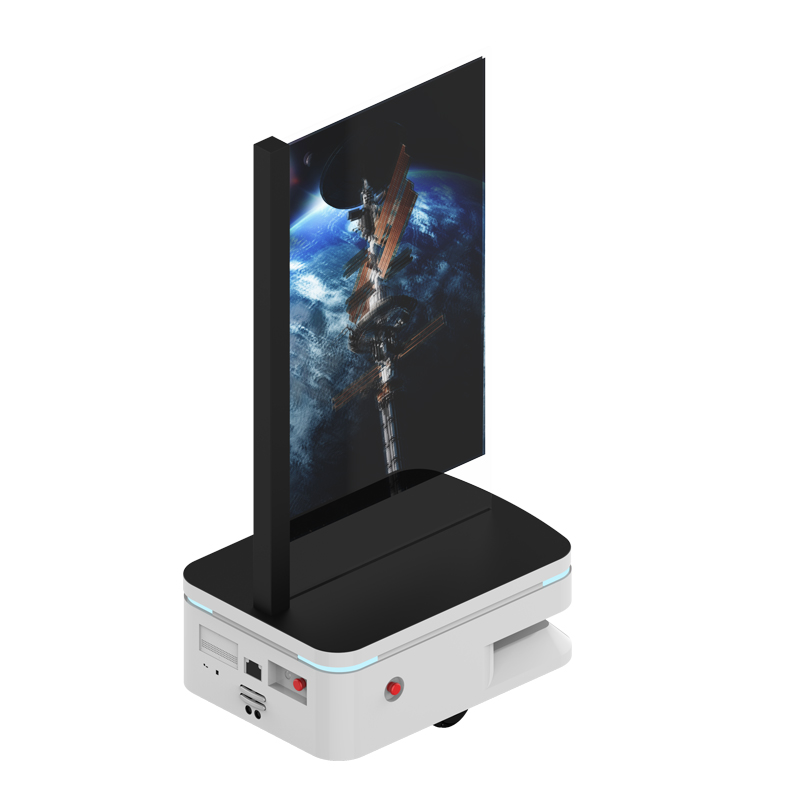
75 Inch Indoor LED Digital Poster Touch Screen Display SDK OEM ODM Black Signage for Retail Store Elevator Airport
Touch-screen digital signage for retail, lift lobbies, airports and exhibition spaces; useful for wayfinding and public-health messaging near disinfection zones.
View product →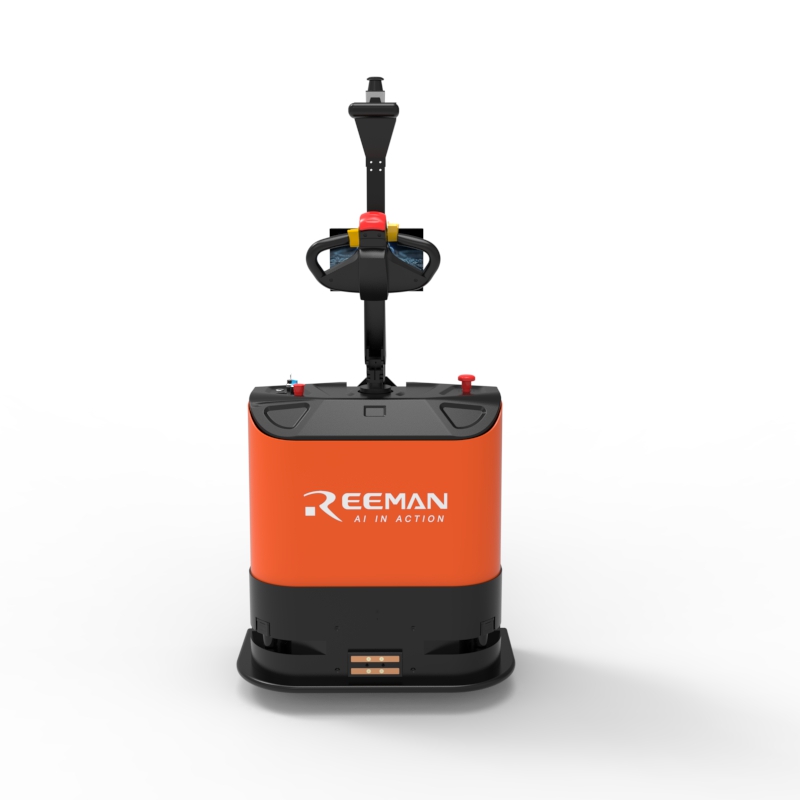
1500kg Laser SLAM Autonomous Forklift AGV Reflector-Free Point-to-Point Warehouse Material Handling
Reflector-free pallet handling for warehouses and production logistics; pairs with disinfection planning in larger factory and distribution sites.
View product →
REEMAN Autonomous Electric Forklift 1T Payload 48V 30Ah LiFePO4 Battery Indoor Material Handling AGV
Compact electric forklift AGV for indoor material handling and repetitive pallet movement, with lithium battery configuration.
View product →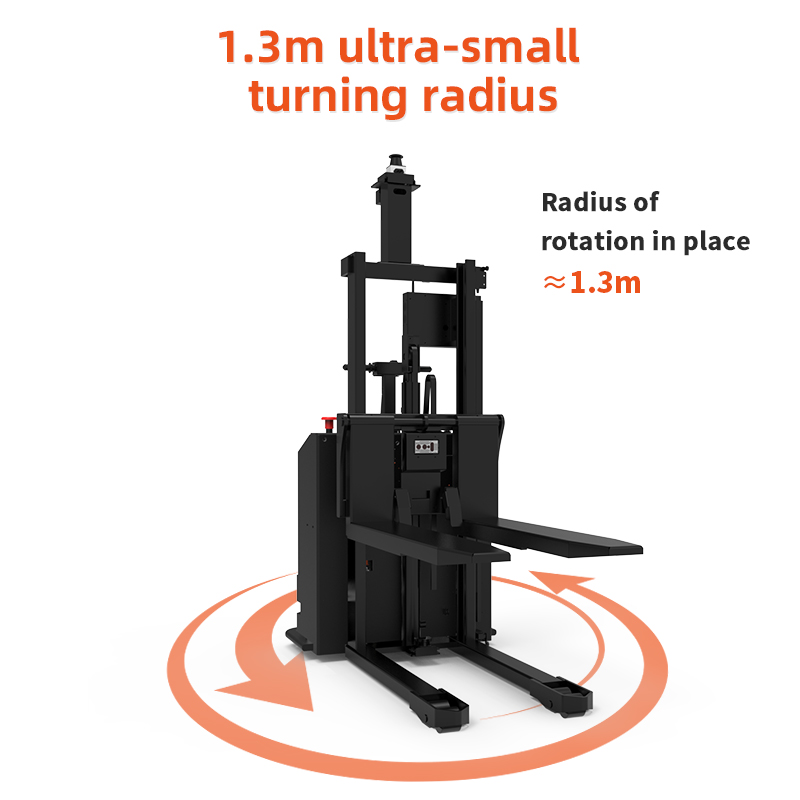
1000kg Forklift AGV Laser SLAM Navigation Pallet Transport Robot 1.3m Turning Radius Auto Charging for Factory Logistics
Narrow turning radius and auto charging for factory logistics; suitable for existing Indonesian warehouse layouts with limited aisle space.
View product →
REEMAN X-ant JBOT20F 2 Ton Autonomous Forklift AGV Laser SLAM Pallet Handling Robot for Warehouse Logistics
Two-ton autonomous pallet handling for heavier warehouse logistics and high-throughput transfer cycles.
View product →
Reeman BBOT30F 1500kg Laser SLAM Autonomous Pallet Stacker AGV Single Line Lidar Obstacle Avoidance Warehouse Transport
Pallet stacking and transport with obstacle avoidance, aimed at warehouse operations that require racking and floor-level flexibility.
View product →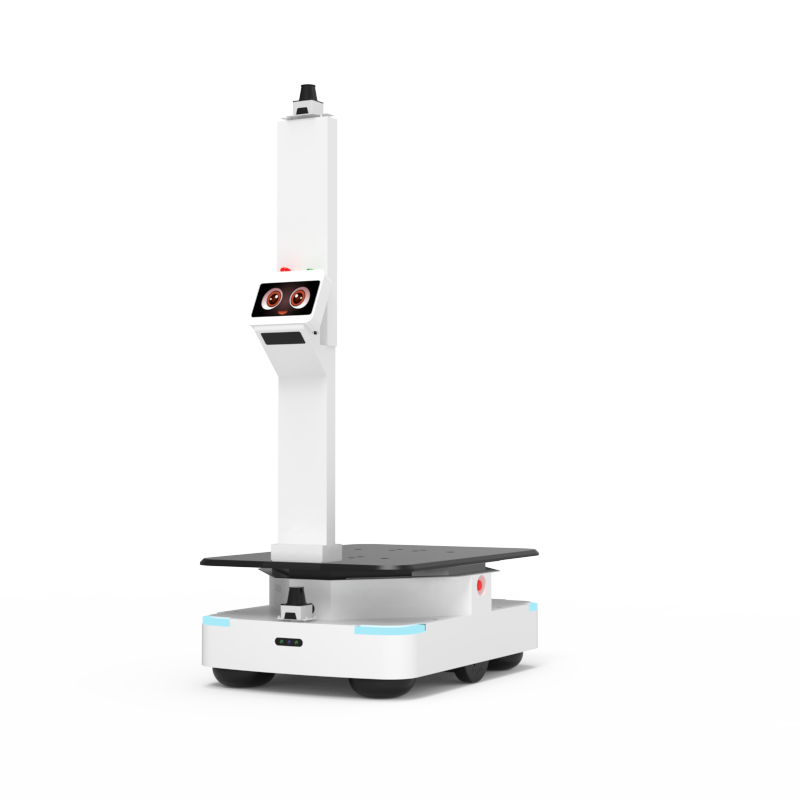
600kg Payload Laser Navigation AMR Robot Autonomous Lifting Warehouse Transfer Equipment
Autonomous lifting AMR for shelf, cart and station transfer; open integration options make it useful for factory-wide automation roadmaps.
View product →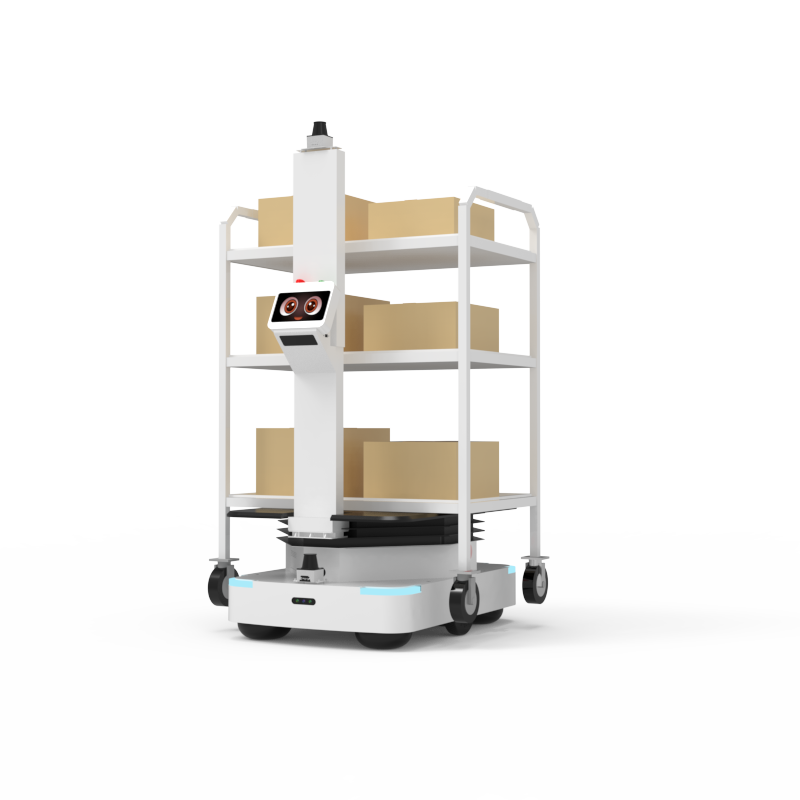
600KG Industrial Heavy Load AMR Robot Laser SLAM Auto Lifting Mobile Platform for in Plant Material Handling
Heavy-load mobile platform for in-plant material handling, suitable for manufacturing sites around Semarang and Kendal.
View product →Why Semarang buyers are evaluating OEM UVC disinfection robots now
Semarang is no longer only a port-city distribution point; it is a healthcare, hospitality, education, manufacturing and public-service hub for Central Java. Buyers increasingly ask for demonstrable disinfection workflows, documented safety controls, local-language operator training and a supply partner who can adapt hardware and software to their facility.
For a hospital in Semarang, a UVC disinfection robot is not the same purchase as a floor-cleaning machine. Infection-prevention teams want evidence of dose delivery, shadowing management, room turnaround time, emergency-stop behavior, log records and staff training. For a hotel or mall, the priority shifts to guest-safe scheduling, lift integration, brand-friendly design and minimal disruption. For a factory in the Semarang–Kendal corridor, the robot must withstand longer shifts, communicate with production schedules and integrate with material-flow equipment. A credible OEM partner therefore needs more than a lamp array; it needs mechanical engineering, safety logic, navigation, software interfaces, documentation and export experience.
Elvorn approaches UVC robot customization from the same platform philosophy used for autonomous forklifts, industrial AMRs and robot chassis: modular mechanical design, laser SLAM navigation, open SDK/API integration for secondary development, multi-layer safety sensing and production processes supported by an ISO-certified management system. For Semarang projects, this matters because the buyer may start with one mobile UVC unit for a pilot zone and later add autonomous material handling, lift control, digital signage or a fleet dashboard.
Factory data and certification references are based on the company profile information used on the original Elvorn website. Project-specific UVC performance, safety validation and regulatory requirements must be confirmed during technical review and site risk assessment.
Which custom UVC disinfection robot configuration fits a Semarang facility?
An OEM quotation should start with the room schedule, not the lamp count. The table below shows practical configuration directions for common Semarang procurement scenarios. Final specifications depend on the site survey, target organisms, required log reduction, ceiling height, obstacle density, shift pattern and occupancy rules.
| OEM configuration direction | Best-fit Semarang use cases | Customization focus | Procurement note |
|---|---|---|---|
| Compact UVC-AMR with LiDAR SLAM and 360° lamp tower | Clinics, dental suites, hotel corridors, offices, school sick bays, small retail backrooms | Low-profile body, corridor mapping, lift and door integration, branded HMI, Indonesian-language labels | Best for pilot zones and multi-room routes where narrow access and guest-facing safety are critical. |
| Hospital-grade high-output UVC robot | Isolation rooms, emergency departments, procedure rooms, laboratories, clinic networks | Dose mapping, occupancy sensors, remote logging, staff authentication, validation report package | Requires infection-control review, shadowing audit and training before routine use. |
| Hybrid platform for UVC plus facility cleaning or air-recirculation module | Malls, airports, hotels, hospitals, public buildings, schools and universities | Top-module design, fleet task scheduling, power management, brand colors, sensor package | Treat disinfection and cleaning as separate validated processes; do not assume one module replaces the other. |
| Heavy-duty industrial UVC AMR | Factories in Kendal Industrial Park, Wijayakusuma, Ungaran, Bawen and Semarang industrial zones | Dust tolerance, longer battery cycle, WMS or MES interface, rugged bumpers, local spare-parts kit | Validate against real factory traffic, floor surfaces, pallet lanes and shift-change congestion. |
| OEM chassis for local integrators | Semarang system integrators, healthcare technology distributors, facility-management companies | Open SDK/API, buyer-label branding, custom top module, packaging, documentation set | Useful for distributors who need a differentiated UVC product without developing a navigation base from scratch. |
- Dose-first specification: define surface targets in mJ/cm², distance from lamp to surface, exposure time and validated shadowing assumptions.
- Safety-first interlocks: occupancy detection, door interlocks, emergency stop, warning beacons, access restrictions and a written SOP are non-negotiable.
- Local operating reality: confirm 220V/50Hz charging, humidity tolerance, floor transitions, lift capacity, Wi-Fi coverage and operator language.
- Export readiness: request CE/FCC or applicable model documentation, photobiological safety data, electrical safety information, packing list and spare-parts schedule.
UVC dose, shadowing and safety: what a serious OEM should explain
UVC disinfection is a delivery problem before it is a hardware problem. Lamp wattage alone does not tell a buyer whether a surface receives enough energy. A professional OEM quotation should translate the room layout into an irradiance map, route plan and validation method.
Dose is irradiance × time
Use a target dose based on the intended application and pathogen risk. Surface distance, lamp aging, temperature, reflector design and exposure time all affect delivered energy. Ask for test conditions, not only a headline “m²/hour” figure.
Shadows reduce performance
Bed rails, curtains, carts, equipment and door handles can create shadows. The route plan and lamp geometry should be checked against the actual room. For complex rooms, a second pass or manual pre-clean may be required.
Occupancy safety is mandatory
UVC can harm eyes and skin. Use occupancy sensors, door interlocks, beacons, emergency stops, restricted access and written SOPs. For occupied spaces, consider whether a different technology or an enclosed air-treatment approach is more appropriate.
Validation is a project deliverable
Define acceptance criteria before shipment: room coverage, cycle time, log records, sensor response, emergency-stop test, battery endurance and operator training sign-off. Maintain records for infection-control, EHS and facility audits.
UVC complements cleaning
Organic soil, dust and biofilm can shield microorganisms. UVC robots should be integrated after cleaning and before room turnover, or in scheduled unoccupied windows. They are not a substitute for manual cleaning, hand hygiene or ventilation strategy.
Documentation matters
For export, request model-level electrical and photobiological safety documentation, EMC information where applicable, warning labels, English manuals, spare-parts lists and firmware update policy. Confirm local registration requirements with your Indonesian importer or regulatory adviser.
Where UVC disinfection robots create value in and around Semarang
Semarang combines dense city blocks, growing healthcare networks, hospitality venues, education campuses and industrial estates. A single robot model is unlikely to fit every site. The application scenarios below help procurement teams frame their requirements before contacting a manufacturer.
Hospitals, clinics and laboratories
Semarang’s hospital and clinic network requires repeatable room turnaround, documented cycles and strict safety controls. A UVC robot can support terminal disinfection workflows when integrated with cleaning SOPs, room scheduling and staff training.
Hotels and hospitality
Hotels around Semarang’s business districts, Simpang Lima and the airport corridor can use scheduled disinfection for meeting rooms, dining areas and back-of-house zones — with route plans that avoid guest hours and protect staff.
Malls, retail and exhibition venues
High-footfall spaces need transparent safety procedures and operator-friendly scheduling. OEM customization can include brand colors, voice prompts, digital signage integration and route planning for after-hours cleaning windows.
Offices, banks and co-working spaces
Semarang’s office and commercial buildings can deploy compact UVC-AMR units for meeting rooms, pantries, wellness rooms and shared facilities. Access control, lift integration and Indonesian-language HMI improve adoption.
Factories and industrial estates
Facilities in Kendal Industrial Park, Wijayakusuma, Ungaran, Bawen and Semarang’s industrial zones can use industrial-grade UVC AMRs for locker rooms, canteens, medical rooms and shift-change areas. Integration with WMS, MES or access systems should be planned early.
Schools, universities and public venues
Semarang’s education and public-service buildings need safe scheduling, operator training and clear communication. A UVC robot can support after-hours disinfection of clinics, libraries, labs and multipurpose halls when managed under a written safety plan.
What is changing in Semarang and Central Java procurement
Several local trends make OEM UVC robot projects more attractive, but they also raise the standard for supplier selection. Buyers are not only comparing unit price; they are evaluating safety documentation, local service response, compatibility with Indonesian infrastructure and long-term spare-parts availability.
Healthcare quality and infection-control readiness
Hospitals and clinics are investing in documented cleaning and room-turnaround processes. Procurement teams increasingly ask for cycle logs, validation records and training materials rather than a simple brochure. This favors manufacturers who can support evidence-based deployment.
Port and industrial corridor growth
The Port of Tanjung Emas and industrial areas around Semarang and Kendal continue to attract logistics and manufacturing investment. A supplier that can coordinate delivery through Semarang, provide export packing and support spare parts by sea freight has an advantage.
Tourism, meetings and hospitality recovery
Hotels, restaurants and meeting venues compete on cleanliness and guest confidence. UVC robots can become part of a visible facility-care program, but scheduling and guest safety must be designed carefully. Branded OEM housings and localized voice prompts can improve acceptance.
Smart-city and building-automation integration
Semarang’s commercial buildings are adopting access control, lift control, CCTV and building-management systems. An open SDK/API and clear integration scope allow the UVC robot to become part of a broader facility-automation stack rather than an isolated device.
Energy and labor planning
Facility managers are reviewing repetitive manual tasks, shift coverage and energy consumption. Lithium-battery platforms, auto charging and route optimization can reduce downtime. However, buyers should compare total operating cost, not only initial purchase price.
Tropical environment and electrical conditions
Semarang’s humidity, heat and 220V/50Hz power environment should be addressed in the technical agreement. Confirm charging specifications, ingress protection, condensation management, floor transitions and service access before shipment.
A practical decision model for Semarang UVC robot buyers
The weighting below is a planning example, not a universal rule. A hospital may weight safety and validation higher; an integrator may weight SDK flexibility and branding higher; a hotel may weight guest experience and route flexibility higher.
Total cost of ownership should include: robot configuration, spare lamps, lamps replacement schedule, battery service, charging station, training, software integration, shipping to Semarang, import duties and VAT, local installation support, preventive maintenance and downtime risk. Elvorn’s standard export terms are FOB with T/T payment in USD or CNY; final landed cost must be confirmed with the buyer’s import partner.
Technical due diligence should include: a video factory review, model-level certification documents, UVC safety data, route-planning sample, HMI language options, emergency-stop test, battery cycle data, warranty terms and a spare-parts list. For hospital projects, involve infection prevention and control, occupational health and safety, biomedical engineering and facilities management early.
Factory evidence, OEM capability and export support behind the Semarang offer
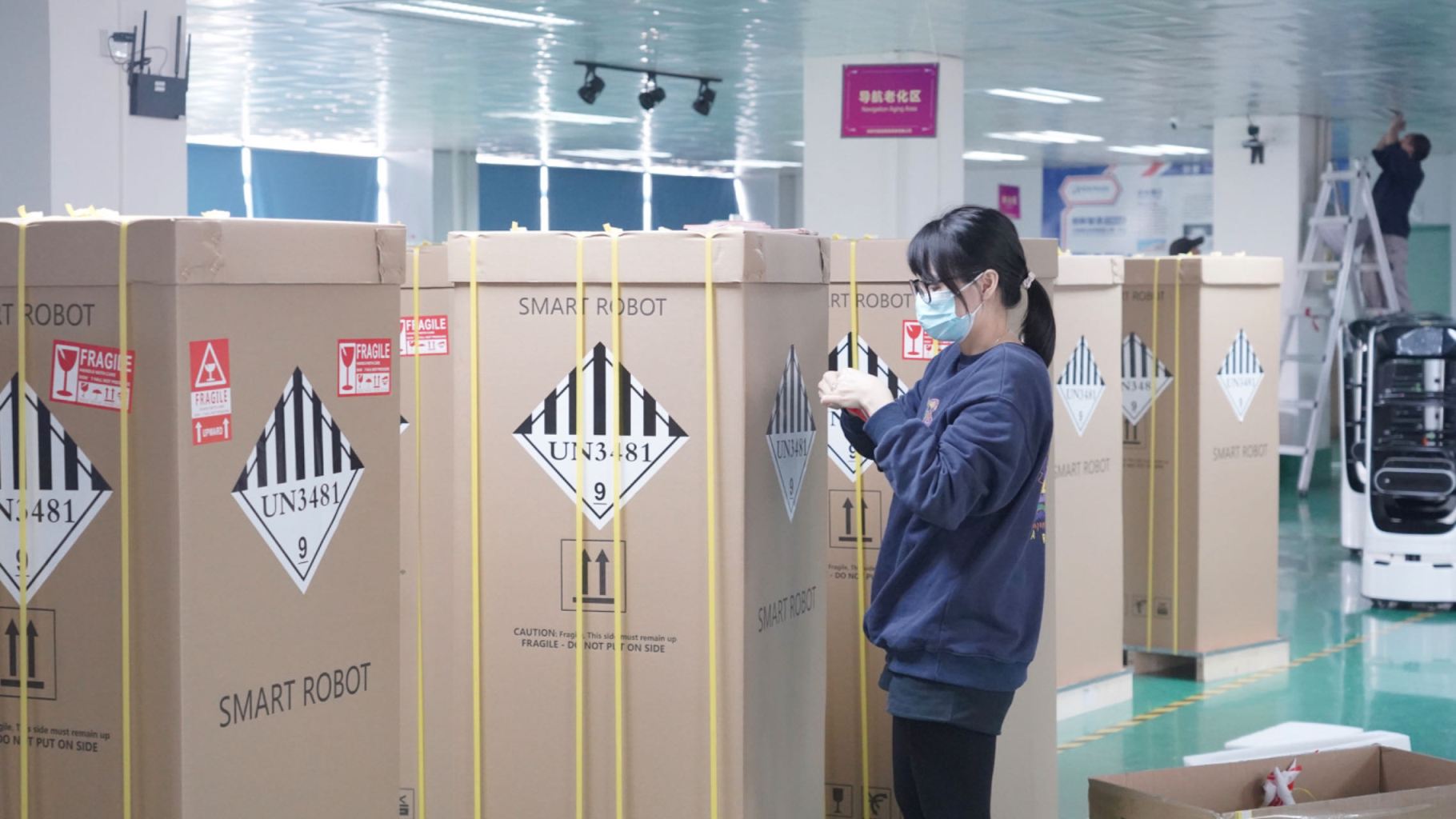
Shenzhen Elvorn Intelligent Equipment Co., Ltd. was founded in 2015 as a national high-tech enterprise focused on robotic platform technology and autonomous driving. The company designs, builds and supports autonomous forklifts, industrial AMRs, robot chassis, delivery robots, cleaning robots and disinfection robots.


Why procurement teams shortlist Elvorn
- In-house R&D: laser SLAM navigation, motion control, fleet scheduling and hardware development under one team.
- OEM / ODM / buyer label: custom top modules, payload structures, branding, packaging, HMI language and documentation.
- Two production bases: Shenzhen and Ningbo, with supplier assessment and on-site material inspection procedures.
- Quality system: ISO 9001 and ISO 14001; model-dependent CE, FCC or PSE marks; factory verified onsite by SGS Group.
- Export experience: FOB terms, T/T in USD or CNY, English documentation and service support for North America, Western Europe, Eastern Asia, Southeast Asia and the Middle East.
- Platform mindset: open SDK/API for AMRs and chassis, enabling integration with WMS, MES, ERP, lifts, doors and custom dashboards.
For Semarang buyers, the practical benefit is not only product choice but engineering continuity. A single supplier relationship can cover a UVC disinfection robot pilot, an autonomous forklift project, a lifting AMR rollout and a robot chassis program for a local integrator. That reduces communication friction between facility, operations and IT teams. It also makes spare-parts planning more coherent across a multi-robot site.
Elvorn’s production and engineering experience is supported by 5,200㎡ of floorspace, 200+ team members and a response rate of 98.76%. The company states that its factory has been verified onsite by SGS Group and that its management system is certified to ISO 9001 and ISO 14001. These are relevant trust signals for a buyer in Semarang who cannot easily visit Shenzhen before placing an OEM order.
Frequently asked questions from Semarang procurement teams
These answers address the practical concerns raised by hospitals, hotels, factories, integrators and distributors when sourcing OEM UVC disinfection robots from China.
Are UVC disinfection robots safe to use around people in Semarang?
How many square metres can one UVC robot disinfect per hour?
Can Elvorn customize a UVC robot with our own brand and software interface?
Which certifications should a UVC robot have for export to Indonesia?
How is the robot shipped to Semarang, and what are the typical trade terms?
Will the robot work in Semarang’s humidity and 220V/50Hz environment?
Can the UVC robot integrate with lifts, doors, WMS, MES or our building system?
How do we validate performance and plan maintenance after delivery?
Request a Semarang-specific OEM UVC robot proposal
Send your room schedule, ceiling height, target zones, occupancy pattern, required cycle time, voltage conditions, brand requirements and preferred port of entry. Our application engineers can respond with a configuration direction, safety considerations, customization scope, export checklist and next-step questions for your Semarang project team.