Floor Sweeper Robot Factory & Exporters for the Montreal Market
Autonomous floor sweepers, scrubber-dryers and SLAM navigation robots engineered for Greater Montreal’s warehouses, hospitals, universities, airports, retail properties and distribution centers — with French/English documentation planning, cold-weather floor-care know-how and export support from Shenzhen Elvorn.
8 Export-Ready Robot Platforms for Montreal Facility Projects
The platforms below show the factory’s autonomous forklift, AMR, delivery, signage and robotics platform range for Canadian importers, integrators and facility teams. For a dedicated floor sweeper robot, scrubber-dryer or sweep-mop configuration, share your floor plan, soil load and shift pattern; our engineers will map the right model, battery strategy, route logic and cleaning protocol.

REEMAN Autonomous Electric Forklift 1T Payload 48V 30Ah LiFePO4 Battery Indoor Material Handling AGV
Useful where Montreal warehouse teams need repeatable indoor pallet movement while floor-care crews work adjacent routes.
View product →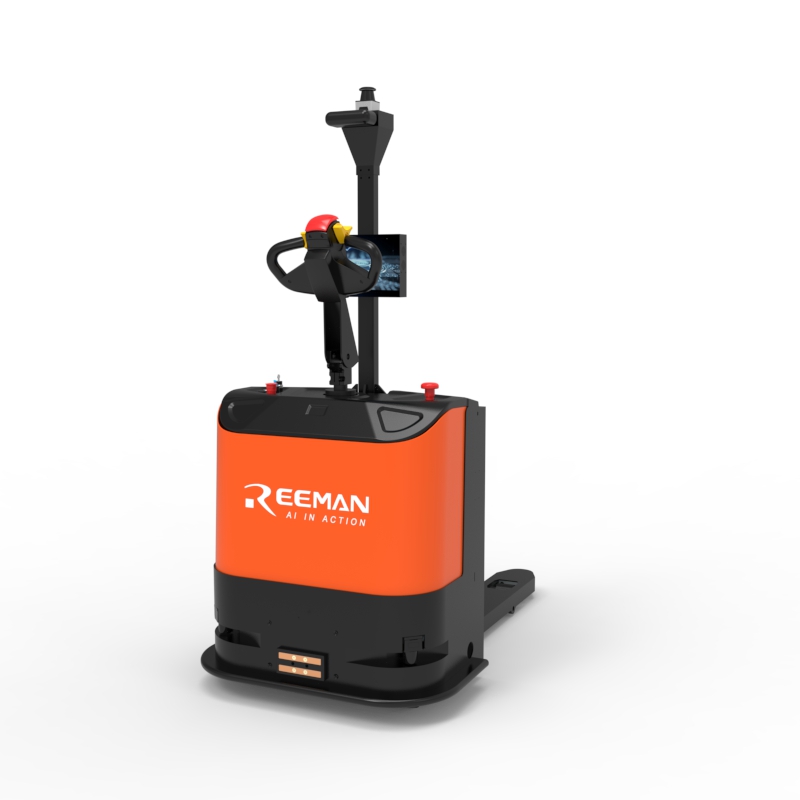
CE Certified 1500kg Driverless AGV Forklift Laser SLAM Navigation Automatic Pallet Loading Unloading Robot 1-2H Working Time
For Montreal 3PLs and distribution sites that want pallet loading and unloading without fixed floor guidance.
View product →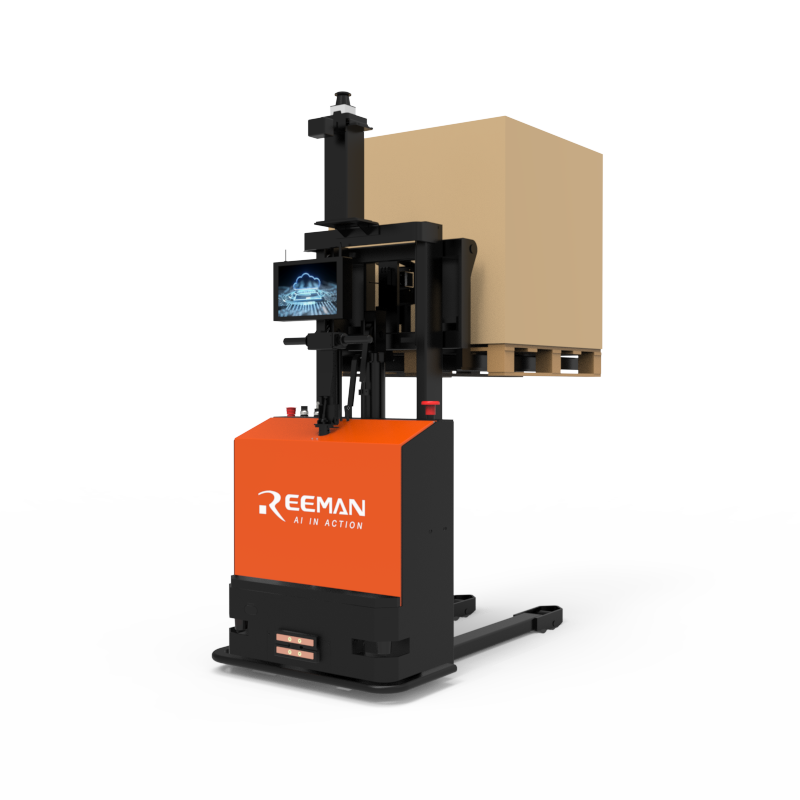
1000 kg Laser SLAM Forklift AGV Unmanned Pallet Stacker Single Line Lidar Obstacle Avoidance Factory Logistics
Suited to factory logistics and mixed-use floors where single-line lidar obstacle avoidance supports safe pallet stacking.
View product →
REEMAN X-ant JBOT20F 2 Ton Autonomous Forklift AGV Laser SLAM Pallet Handling Robot for Warehouse Logistics
For high-throughput Montreal warehouses, docks and cross-dock operations that require heavier pallet handling.
View product →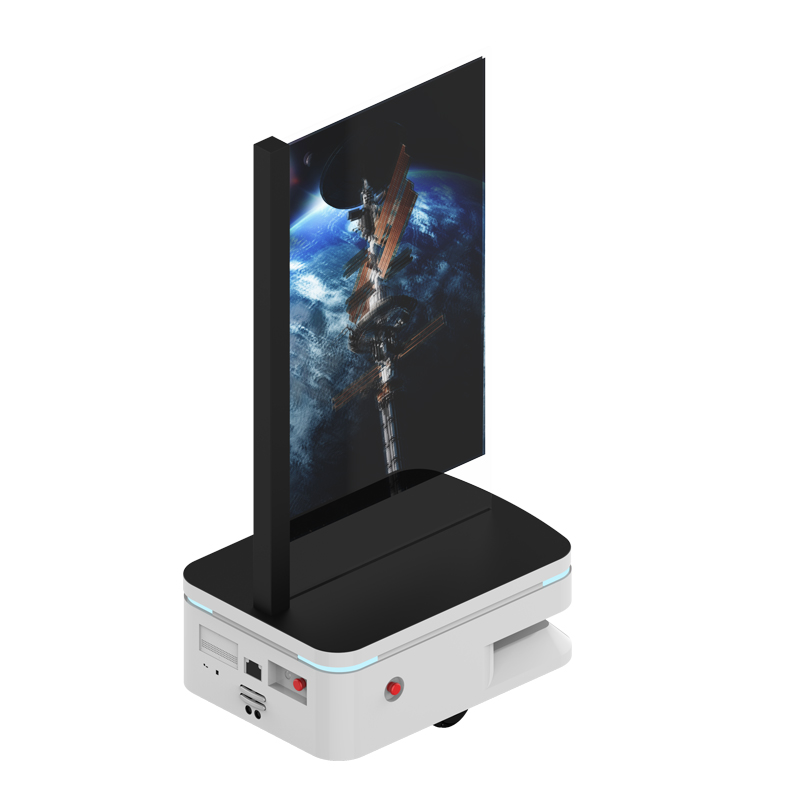
75 Inch Indoor LED Digital Poster Touch Screen Display SDK OEM ODM Black Signage for Retail Store Elevator Airport
Optional wayfinding, public information and bilingual brand messaging for Montreal retail, hospitals, airports and exhibition spaces.
View product →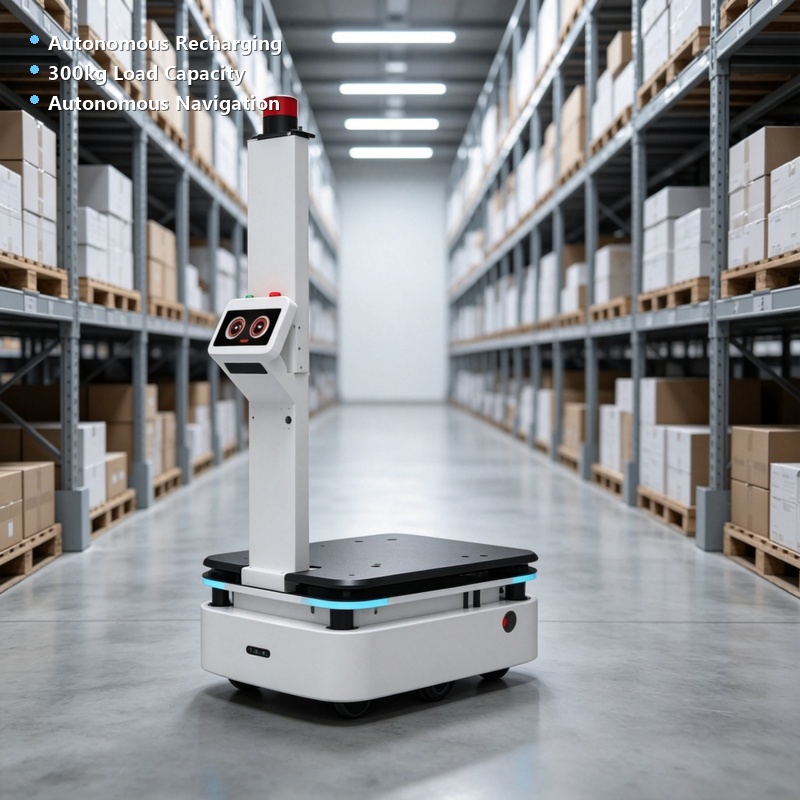
REEMAN Dual Laser Fly Boat MAX 300kg Industrial Delivery Robot for Manufacturing Plants and Factory Material Supply
For manufacturing plants and institutional material supply where repetitive internal delivery reduces walking time.
View product →
Reeman BBOT30F 1500kg Laser SLAM Autonomous Pallet Stacker AGV Single Line Lidar Obstacle Avoidance Warehouse Transport
A 1.5-ton autonomous stacker for warehouse transport, floor-level pallet movement and repetitive replenishment.
View product →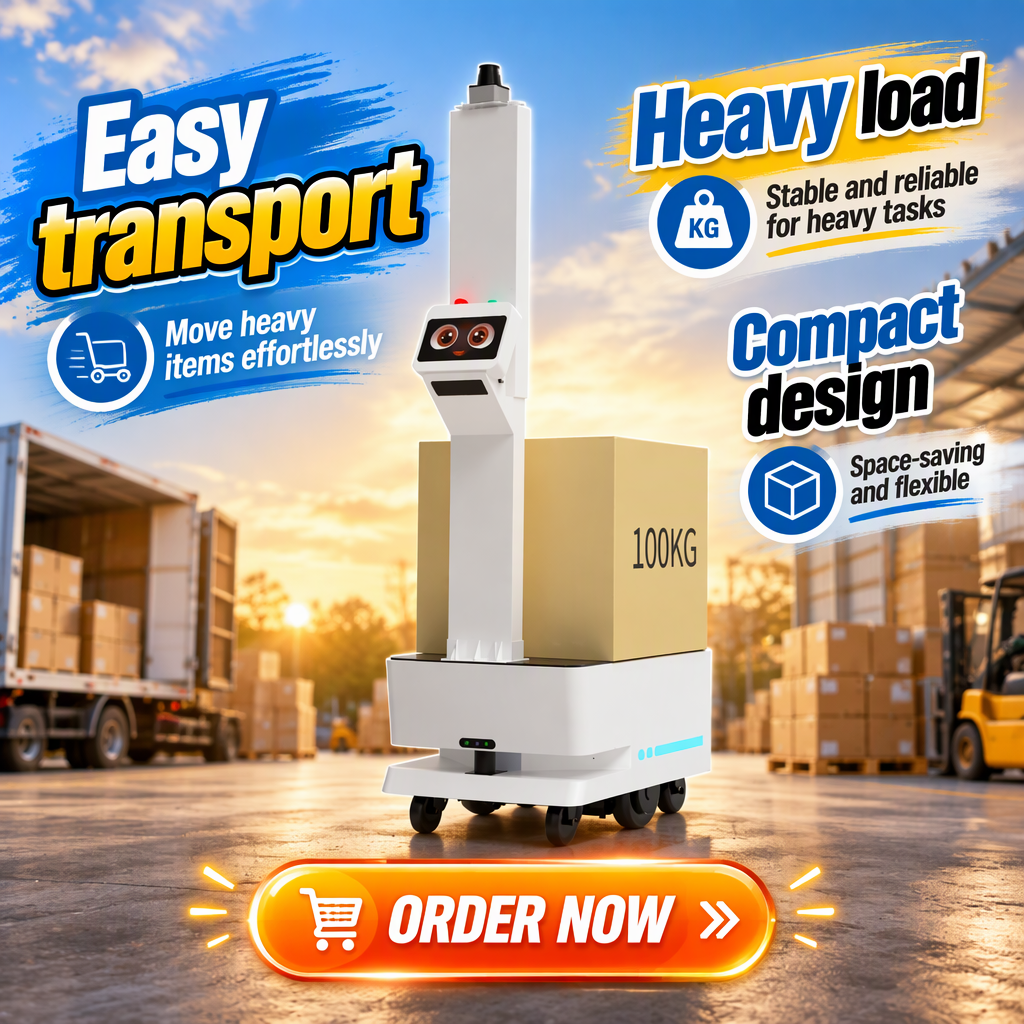
Reeman Autonomous Mobile Robot Slam Navigation PLC Core Components Warehouse Logistics
An open robotics platform for Quebec integrators building custom AMR, material-flow or floor-care applications.
View product →These eight platforms do not replace a site survey. Final configuration for Montreal projects should be confirmed after reviewing floor material, ramp and threshold limits, aisle width, pallet type, elevator interfaces, charging location, bilingual HMI requirements and local electrical documentation.
Why Montreal Buyers Are Specifying Autonomous Floor Sweepers
Floor care in Greater Montreal is shaped by conditions that generic robot catalogues often ignore: winter road salt and grit, slush tracked through vestibules, mixed flooring across warehouses and office areas, tight labor availability, and a bilingual workforce that expects clear operating procedures in French and English.
An autonomous floor sweeper or sweep-mop robot is most valuable when it is treated as a process system, not a standalone gadget. The winning projects usually combine a pre-sweep pass for grit and debris, a controlled scrubber-dryer route for fine dust and film, careful charging placement, and a human exception plan for spills, seasonal peaks and congested public areas.
- Montreal’s winter grit protocol: dry sweep first, then wet clean where safe
- Laser SLAM navigation avoids tape, QR codes and reflector installation
- Open SDK and API support for WMS, MES, BMS and custom dispatch logic
For distributors, cleaning contractors and facility managers in Laval, Longueuil, Boucherville, Saint-Laurent, Pointe-Claire, Mirabel and downtown Montreal, the practical question is not whether robots can sweep. It is whether the chosen configuration can document routes, protect pedestrians, handle floor transitions, and remain serviceable through a Quebec winter and a busy summer events calendar.
Montreal Floor-Care Buyer Priorities
Typical specification weightings used by facility and procurement teams when comparing autonomous cleaning systems. Validate with your own site data.
Where Floor Sweeper Robots Fit in Greater Montreal
Montreal facilities rarely have a single clean use case. The best deployments define one repeatable route first, prove the result, and then expand to adjacent areas.
Warehouses, 3PLs & Distribution Centers
Facilities near the Port of Montreal, Laval, Longueuil and the West Island often face salt and grit tracked into loading zones. A sweep-first route removes abrasives before scrubbers or sweep-mop robots apply water, reducing smear risk and protecting concrete or epoxy floors.
Hospitals, Universities & Research Campuses
Quiet, low-emission operation supports night shifts in corridors, laboratories and common areas. French/English prompts and simple exception procedures help campus teams and subcontractors share the equipment without confusion.
Retail, Malls & Downtown Commercial Real Estate
High-traffic retail, food courts and connected underground spaces benefit from scheduled after-hours cleaning. Define protected zones for spills, escalators, glass fronts and customer queues; robots should stop or re-route rather than improvise through crowds.
Airports, Transit & Exhibition Venues
Montréal-Trudeau, transit hubs and event venues need route discipline, clear public signage and documented response to spills. Autonomous sweepers should be deployed with trained supervisors, defined operating hours and a clean handover process.
What Is Changing in Montreal Floor Care in 2025
Buyer behavior is moving from “robot as a demonstration” to “robot as a measurable operating asset.” These are the trends that shape supplier selection.
Labor Resilience Beats Labor Replacement
Cleaning contractors in Montreal rarely buy robots to dismiss their teams. They use them to cover repetitive routes, stabilize night shifts, free staff for touch-point cleaning, and reduce the overtime spikes caused by absenteeism and event seasons.
Winter Protocol Becomes a Specification Item
Robots must be specified for grit-heavy entry zones, slush management and floor transitions. A successful winter protocol often uses extra matting, increased pre-sweep frequency, debris-tray monitoring and separate wet-cleaning routes after salt exposure.
Data Logs Support Better Purchasing
Facility teams increasingly ask for coverage records, route completion, alerts and exception logs. This data helps justify capital expenditure, compare contractor performance and improve building-level service levels without turning the purchase into a software-only project.
Bilingual Operations Support Local Adoption
Montreal teams expect clear signage, training and service procedures in English and French where practical. Buyers should confirm final label language, operator prompts and contract documentation with qualified local advisers and the equipment supplier.
How to Specify a Floor Sweeper Robot for Montreal
A floor sweeper robot for Montreal should be selected using site conditions, not only headline cleaning width. Use this checklist in the first-round discussion with a factory or exporter.
| Site Variable | Why It Matters in Montreal | Data to Send to the Supplier |
|---|---|---|
| Floor type and transitions | Warehouses, retail and institutions often mix sealed concrete, epoxy, tile and vinyl. Abrasive grit and moisture can change slip risk. | Floor drawings, photos of transitions, thresholds, ramps and elevator access. |
| Winter soil load | Salt, sand and slush are tracked into entrances and loading zones. Dry sweeping before wet cleaning is usually safer. | Number of entrances, matting length, loading-dock exposure and cleaning frequency. |
| Cleaning window and traffic | Montreal public venues and retail sites may have narrow night windows and unpredictable events. | Operating hours, peak traffic periods, crowd restrictions and required quiet hours. |
| Battery and charging plan | Charging placement affects route continuity, electrical work and fire/life-safety coordination. | Available charging zones, electrical capacity, shift length and opportunity-charging tolerance. |
| Bilingual HMI and documentation | Operators and service teams may work in French, English or both. | Required language for labels, prompts, training decks and maintenance checklists. |
| Integration and reporting | Procurement teams increasingly need route data for service verification and ESG reporting. | WMS, BMS, CMMS or work-order system details; required reports and data export format. |
| Local compliance review | Certification marks, electrical documentation and safety procedures must match the final configuration. | Facility risk requirements and requests for the final nameplate, manuals and certificates. |
Total cost of ownership should include route preparation, matting, charging infrastructure, consumables, spare parts, training time, supervisor review and seasonal adjustment. A robot that cleans well but cannot be supported through a Quebec winter is not a low-cost solution.
Why Montreal Buyers Shortlist Elvorn Robotics
Founded in 2015, Shenzhen Elvorn Intelligent Equipment Co., Ltd. is a national high-tech enterprise focused on robotic platform technology, SLAM navigation and autonomous equipment for export markets.
Laser SLAM Navigation
Maps are created without magnetic tape, QR codes or floor reflectors. That matters in Montreal buildings where floor finishes, heritage interiors, leased spaces and winter matting make floor modification inconvenient.
Open SDK & API
AMRs and chassis platforms can be adapted for secondary development and connected to WMS, MES, ERP, elevators, doors and custom dashboards — valuable for Quebec integrators serving local clients.
Modular Payload Platforms
From compact delivery robots to 2-ton autonomous forklifts, the shared engineering approach simplifies fleet training, maintenance planning and spare-parts strategy across multiple departments.
Multi-Layer Safety Logic
Lidar, obstacle sensors, emergency stops and speed zoning help manage mixed traffic around pedestrians, forklifts, carts and racking. Safety functions must be validated for the final site layout.
Own Production Capacity
Two production bases in Shenzhen and Ningbo support in-house assembly and testing. Supplier assessment procedures and onsite material inspection have been verified by independent inspectors.
Export-Ready Support
English documentation, remote commissioning guidance and spare-part planning support buyers in North America, Western Europe, Asia and the Middle East. Export terms include FOB and T/T in USD or CNY.
Original factory profile points include ISO 9001 and ISO 14001 certification, SGS onsite verification, CE/FCC/PSE marks by model, OEM service, design service and buyer-label options. Buyers should request the current certificate set for the exact configuration quoted.
R&D, Production and Quality Control
Export projects are easier to trust when the supplier can show how robots are engineered, assembled and checked before shipment.

R&D and engineering base in Shenzhen with in-house SLAM, motion control and hardware development.

Robot assembly and production workflows supported by two manufacturing bases in Shenzhen and Ningbo.

Functional checks and load testing are completed before shipment, with records available for buyer review.
For Montreal floor-care projects, ask for the exact cleaning module, battery configuration, charging method, consumable list, recommended spare-parts kit, operator training outline and French/English documentation scope before finalizing the purchase order.
Frequently Asked Questions from Quebec Buyers
Practical answers for facility managers, cleaning contractors, distributors and integrators comparing floor sweeper robots and autonomous equipment for the Montreal market.
Do you supply floor sweeper robots to Montreal and the wider Quebec market?
Yes. As a factory-direct exporter, we support Montreal importers, distributors, cleaning contractors and facility teams with autonomous cleaning robots and adjacent automation platforms. For Quebec projects, the final configuration should be reviewed against floor type, winter soil load, operating window, charging location, bilingual documentation needs and local electrical requirements.
What is the difference between a floor sweeper and a scrubber for Montreal winters?
A sweeper is generally used first to remove dry debris, sand and salt before any wet cleaning. A scrubber-dryer applies water and detergent to remove fine dust and film. In Montreal winter conditions, mixing grit with water too early can create smear, slip risk and extra floor wear, so many facilities separate the dry sweep pass from the wet-clean pass or use a carefully scheduled sweep-mop robot.
Can the robot interface, labels and training materials be provided in French and English?
Bilingual documentation can be discussed during project scoping. Montreal operators may work in French, English or both, so buyers should specify the required language for prompts, labels, training decks, maintenance checklists and service procedures. The supplier should confirm the final scope in the quotation and technical agreement.
Which certifications and electrical considerations should Montreal buyers verify?
Depending on the model, our export documentation can include CE, FCC or PSE marks, while the company management system is certified to ISO 9001 and ISO 14001. Montreal buyers should identify the exact certificate set required for their facility and confirm the final nameplate, charger, manuals and local electrical requirements before shipment. This review is especially important for public buildings and multi-tenant properties.
How are mapping, deployment and operator training handled from overseas?
Most export projects begin with drawings, photos and a site survey checklist. After delivery, mapping and route setup can be supported through remote commissioning, video calls and structured training. For larger or complex Montreal deployments, buyers may engage a local integrator for on-site coordination while the factory provides configuration guidance, spare-parts recommendations and technical documentation.
Can Elvorn customize a floor sweeper or robotics platform for our facility?
Yes. As a verified custom manufacturer, Elvorn supports OEM service, design service and buyer-label options, including custom top modules, payload structures, branding and packaging. For cleaning projects, the discussion should cover cleaning width, debris bin capacity, water/detergent strategy, battery runtime, route logic, docking method and service access.
What export terms are available for Montreal orders?
Export shipments are typically quoted on FOB terms with T/T payment in USD or CNY, subject to the final product, quantity and destination. Buyers should confirm the Incoterms, Canadian import documentation, warranty scope, spare-parts list and after-sales responsibilities directly in the commercial proposal.
How should we calculate ROI for a Montreal floor-care robot?
Build the business case around repeatable routes, not total floor area alone. Include labor hours displaced or redeployed, overtime reduction, cleaning consistency, equipment utilization, consumables, charging cost, maintenance, training, supervisor time and winter-protocol adjustments. A pilot on one entrance, corridor or warehouse zone gives better data than a whole-building estimate made from a catalogue.
Request a Montreal Floor-Care Configuration
Send your floor plan, operating hours, floor type, winter entrance conditions and target cleaning zone. Our engineering team will recommend the right floor sweeper or sweep-mop robot platform, battery and charging plan, documentation scope and export configuration for the Montreal market.