Food Delivery Robot Manufacturer & Exporters for the Monterrey Market
Laser SLAM autonomous delivery and material-handling robots for food plants, central kitchens, cold-chain warehouses and quick-service operations — engineered for export, integration and measurable labor savings.
Get Catalog8 Autonomous Robot Platforms for Monterrey Food Delivery and Logistics
Monterrey’s food economy includes industrial kitchens, bottling lines, bakeries, snack plants, cold stores, 3PL warehouses and convenience-distribution networks around Apodaca, Santa Catarina, Guadalupe and Escobedo. The right starting point is the material flow, not a single robot label. These eight production-ready platforms support in-plant food supply, meal-cart movement, pallet-level distribution and automated warehouse transfer. Every product link below preserves the original destination URL for specification review.
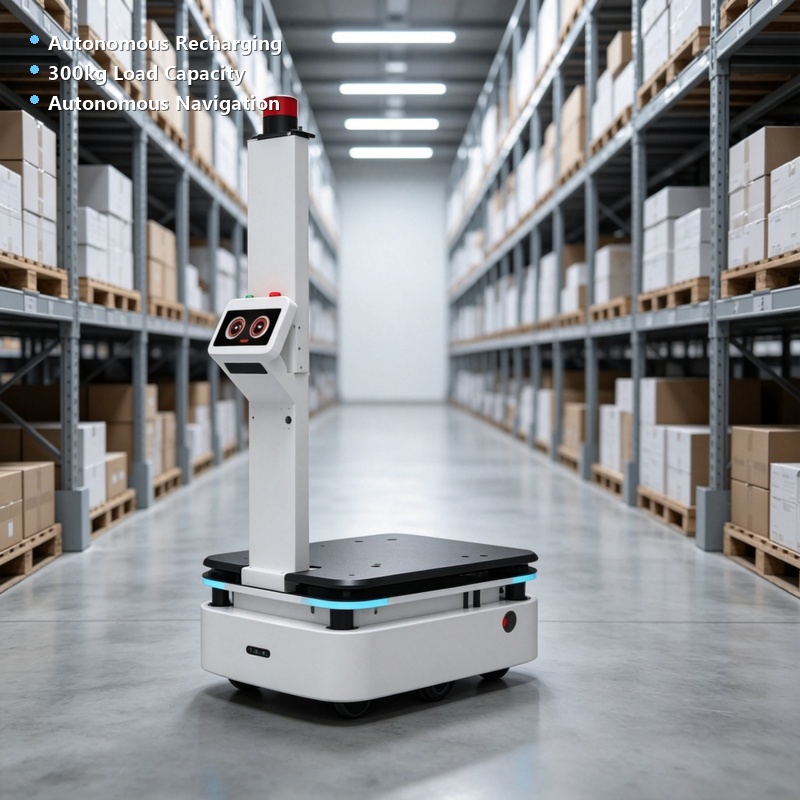
REEMAN Dual Laser Fly Boat MAX 300 kg
Built for manufacturing plants and factory material supply, this dual-laser platform is suited to food plants that move ingredient bins, sauces, packaging and finished meal components between storage and line-side staging. Its 300 kg payload and dynamic obstacle avoidance support multi-shift operations where fixed tape lanes are impractical.
View product details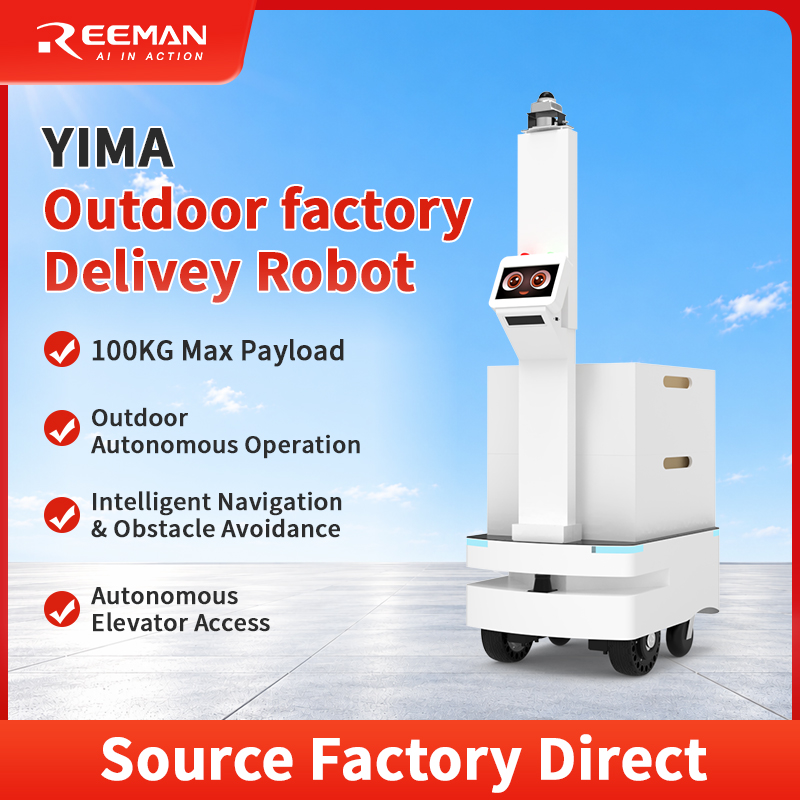
REEMAN Outdoor Delivery Robot 100 kg
An outdoor-capable AMR with 100 kg payload, obstacle avoidance and elevator access. It is a practical fit for business-park canteens, hospital meal routes, hotel service corridors and cross-building food delivery where robots must move between indoor and semi-outdoor zones.
View product details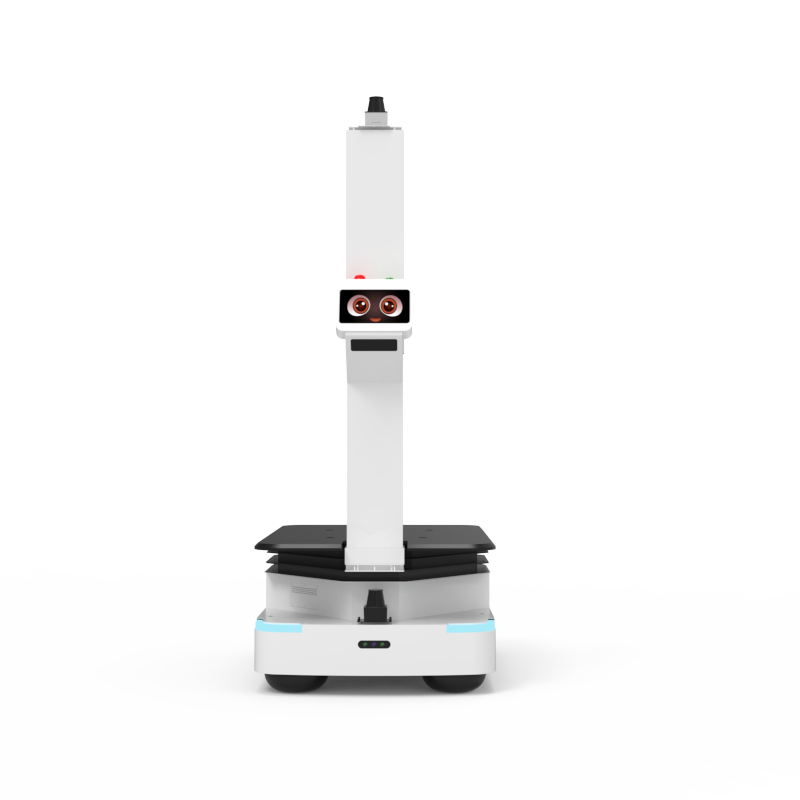
600 kg Industrial AMR AGV
QR-code-free laser SLAM AMR for factory logistics. Use it to connect receiving, packaging, quality inspection and dispatch in food distribution centers where pallet frames, carts and totes must move without magnetic floor tracks or frequent lane redesign.
View product details
Reeman BBOT30F 1500 kg Pallet Stacker AGV
A 1,500 kg autonomous pallet stacker with single-line lidar and obstacle avoidance. For Monterrey food warehouses and 3PLs, it supports floor-to-rack transfer of palletized ingredients and packaged goods while reducing repeated forklift trips and operator wait time.
View product details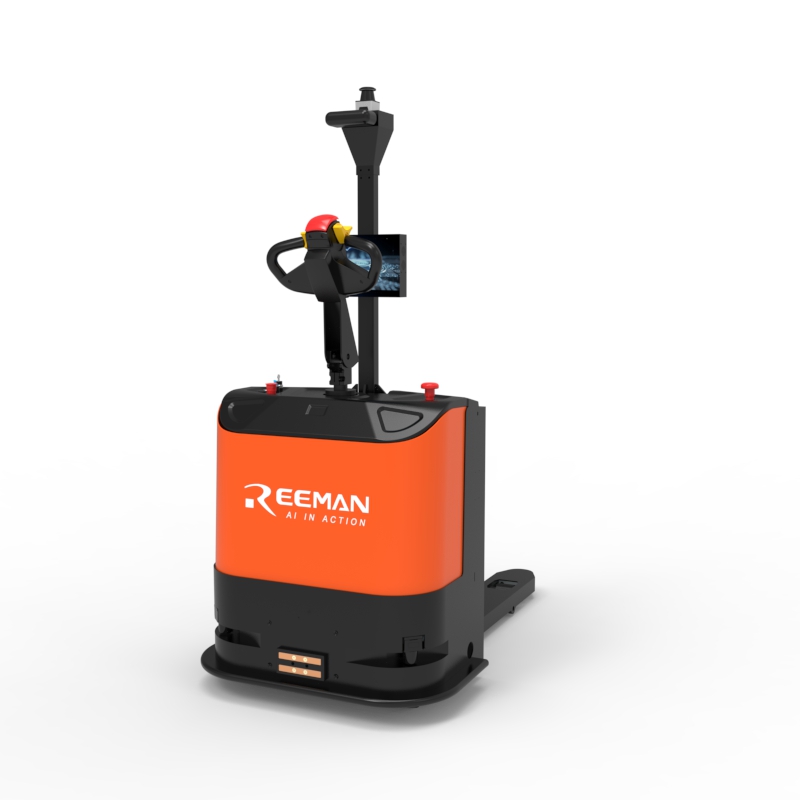
1500 kg Laser SLAM AGV Forklift
An industrial AGV forklift with 1,500 kg load capacity, 30 mm navigation accuracy, 1,019 mm forks and 570 mm width. It is appropriate for high-throughput pallet movement, dock-to-storage transfer and line feeding in food manufacturing sites where repetitive travel consumes skilled labor.
View product details
REEMAN 1T Autonomous Electric Forklift
1T autonomous electric forklift with 48V 30Ah LiFePO4 battery. Quiet indoor handling makes it suitable for packaged food, beverage, bakery and commissary operations that need repetitive replenishment without constant operator involvement.
View product details
Dual Laser AMR 300 kg Lifting Mobile Robot
Dual-laser 300 kg lifting mobile robot with SLAM LiDAR navigation. It can carry custom trays, meal carts or tote frames for manufacturing and food-service support when a standard top module is configured and validated for the route.
View product details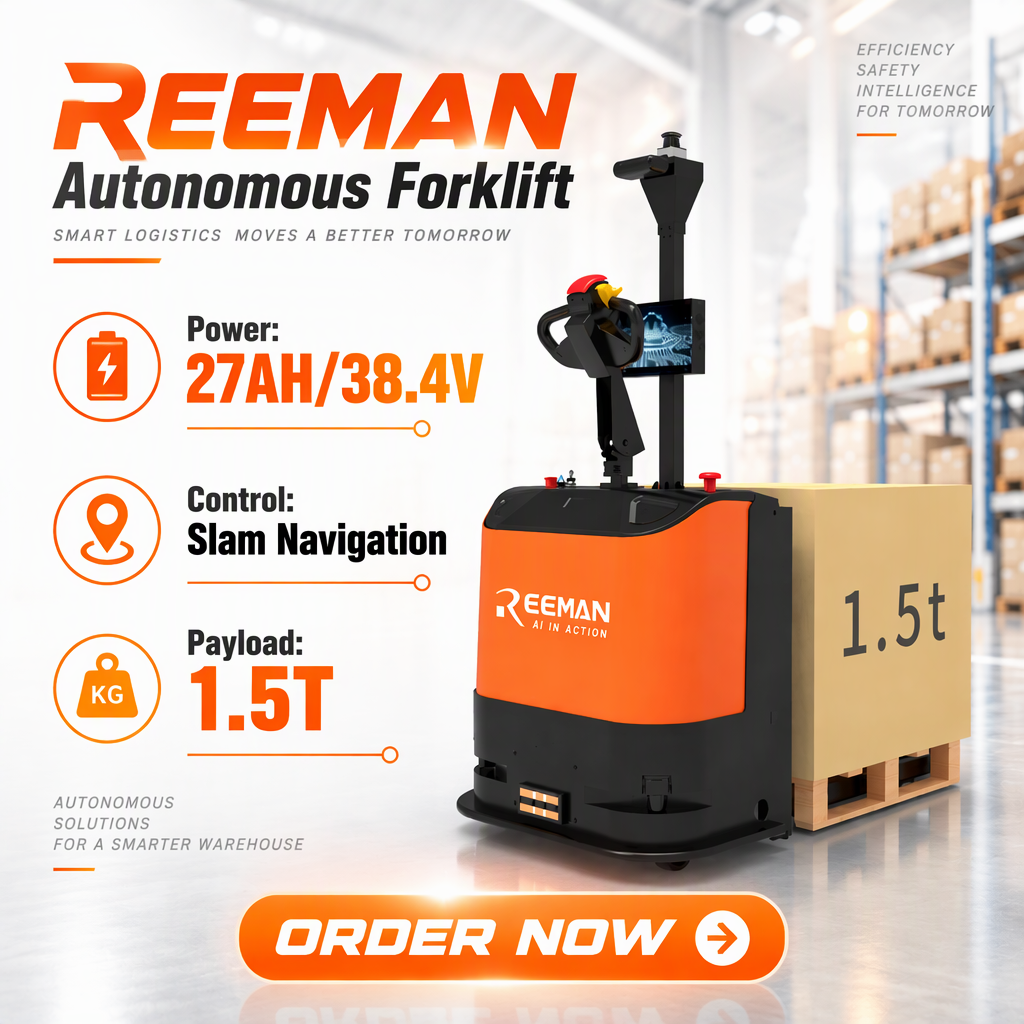
Reeman 1.5 Ton Autonomous Forklift AGV
1.5 ton autonomous SLAM forklift with 3D obstacle avoidance and bidirectional driving. Well suited to indoor warehouse transport, finished-goods staging and cold-chain distribution when environmental protection, battery specification and floor transitions are validated.
View product detailsWhy Monterrey Is a High-Priority Market for Food Delivery Robots
Monterrey is one of Mexico’s most concentrated industrial markets and a major node for food and beverage production, packaging, cold chain, retail distribution and export-oriented logistics. The city’s food system is not only restaurants; it includes industrial kitchens, bottling lines, bakeries, snack plants, cold stores, 3PL warehouses and convenience-distribution networks.
Nearshoring has increased the number of mid-size production and distribution projects that need automation but cannot justify a fully fixed conveyor layout. Laser SLAM robots are attractive in this context because they can be deployed in weeks, reconfigured when a line changes, and scaled by adding units rather than rebuilding floors. For buyers in Apodaca, Santa Catarina, Guadalupe and Escobedo, the practical value is flexibility: a robot route can follow a new production cell, a new cold-room layout or a new meal-cart handoff point without magnetic tape, QR codes or floor reflectors.
Operationally, Monterrey buyers tend to raise four questions earlier than price: Can the robot work safely around pedestrians and forklifts? Can it handle the actual load and floor transitions? Can it connect to WMS, MES and traceability workflows? Can spare parts and engineering support be sustained after import? A supplier’s answers to those questions determine total cost of ownership more than the initial unit price. In food environments, hygiene must also be reviewed before deployment. Robots used near open food require closed totes, washable top modules and a HACCP review; no standard industrial AMR should be treated as direct food-contact equipment without a validated hygienic design.
Factory data includes two production bases in Shenzhen and Ningbo, SGS onsite verification, ISO 9001 and ISO 14001 management systems, plus CE, FCC or PSE marks on applicable models.
Where Food Delivery and Material-Handling Robots Fit in Monterrey Operations
The strongest use cases are repetitive, route-based and labor-sensitive. They do not require a fully lights-out factory; they require a reliable robot that removes walking, pushing, lifting and waiting from skilled teams.
In-Plant Food Material Supply
Robots move ingredient totes, packaging, sauces, dry goods and work-in-progress between warehouse, QA and packaging lines. The 300 kg dual-laser unit and 600 kg AMR shorten replenishment routes and reduce repeated manual cart pushes inside food manufacturing plants.
Cold-Chain and Distribution Centers
Pallet-level movement, dock-to-rack transfer and order staging are strong candidates for autonomous forklifts and stackers. For cold rooms, buyers should specify battery temperature limits, condensation protection, door transitions, floor slope and emergency response before confirming a model.
Central Kitchens and Commissaries
Meal carts, ingredient trays and clean/dirty workflows can be moved with lifting AMRs or 100 kg outdoor delivery robots. Elevator access and cross-building routes make the outdoor model relevant for business parks, hospital kitchens and multi-floor hospitality sites.
Hospitality and Healthcare Meal Routes
In hotel, hospital and guest-service corridors, robots can absorb repetitive meal and supply runs during peak hours and night shifts. The project should verify sanitization routines, noise level, elevator integration, guest safety and a clear handoff protocol.
Retail and Convenience Distribution
Pallet stackers and autonomous forklifts support store-ready pallet movement, shelf replenishment staging and dispatch sequencing. In Monterrey’s dense retail network, reducing forklift travel time can improve dock utilization without expanding floor space.
Export 3PL and Nearshoring Hubs
For 3PLs serving food and consumer brands, flexible automation helps absorb SKU changes and faster onboarding. Laser SLAM navigation allows new lanes and storage zones to be added without floor reconstruction, which is valuable when a Monterrey warehouse changes clients or product mix.
What Is Shaping Robot Procurement in Monterrey
The 2025–2026 trend is not simply “more robots.” It is the search for robots that can be re-tasked when menus, packaging formats, distribution routes and labor plans change.
More food, packaging and logistics projects need automation without a full fixed infrastructure rebuild.
Operators want robots for repetitive meal-cart, tote and pallet travel while skilled staff focus on quality and safety.
WMS, MES and ERP integration is moving from “nice to have” to a core requirement for dispatch and status feedback.
Buyers are examining battery chemistry, charging windows, door transitions and temperature exposure before approving freezer use.
The percentages above are an illustrative project-scoping index for planning discussions in Monterrey food and logistics operations; they are not a statistical survey. Actual weighting depends on site layout, throughput, load type and food-safety review.

Engineering Depth and Export-Ready Reliability
Shenzhen Elvorn Intelligent Equipment Co., Ltd. was founded in 2015 as a national high-tech enterprise focused on robotic platform technology and autonomous driving. The company designs, builds and supports autonomous forklifts, industrial AMRs, robot chassis, delivery robots and cleaning robots for buyers across North America, Western Europe, Eastern Asia, Southeast Asia and the Middle East.
The in-house R&D team owns laser SLAM navigation, motion control, fleet scheduling and hardware integration. That full-stack ownership matters to Monterrey buyers because it shortens customization cycles, produces clearer engineering answers during due diligence and supports long-term spare-part supply after the initial import.
- ✓2 production bases: Shenzhen and Ningbo
- ✓5,200㎡ total floorspace
- ✓39 patents awarded
- ✓200+ team members
- ✓CE, FCC and PSE on applicable models
- ✓OEM, ODM and buyer-label service
- ✓Open SDK and API integration
- ✓FOB terms with T/T payment in USD or CNY
Laser SLAM Navigation
Maps a site in hours and navigates without magnetic tape, QR codes or reflectors, so food plants and warehouses can change layouts without floor work.
Open SDK and API
Secondary development on AMRs and chassis lets integrators connect robots to WMS, MES, ERP, elevators, doors and custom dashboards.
Modular Payload Platforms
From 60 kg delivery robots to 2-ton autonomous forklifts on shared control architecture, simplifying fleet training and maintenance.
Multi-Layer Safety
Lidar, obstacle sensors, emergency stops and speed zoning keep robots safe around pedestrians, forklifts and racking.
Own Production Capacity
Two production bases with on-site material inspection and supplier assessment procedures verified by independent inspectors.
Export-Ready Support
English documentation, remote commissioning and spare-part supply for buyers across North America, Europe, Asia and the Middle East.
What Monterrey Buyers Should Verify Before Importing a Food Delivery Robot
A white-paper-style purchase decision should compare the robot against the actual operating environment, not only against a load rating. The table below reflects the questions that most often change final configuration.
| Due-Diligence Area | Why It Matters in Monterrey | Elvorn Design Response |
|---|---|---|
| Navigation method | Food plants and 3PLs frequently change racking, production cells and pickup points. Fixed tape or QR lanes create rework. | Laser SLAM maps the site without tape, QR codes or reflectors; routes can be adjusted after layout changes. |
| Load integrity | Meal carts, ingredient totes and palletized goods require different top modules and secure transfer points. | Modular payload platforms from 100 kg outdoor delivery robots to 1.5-ton autonomous forklifts and stackers. |
| Food-zone hygiene | Open-food areas require a HACCP review, cleaning procedure and validated materials; industrial robots are not automatically direct food-contact equipment. | Closed totes, washable covers, custom top modules and application review before configuration. |
| Pedestrian and forklift safety | Monterrey food facilities often mix pedestrians, manual carts, pallet jacks and forklifts in the same aisles. | Lidar, obstacle sensors, emergency stops, speed zoning and route planning based on a site survey. |
| WMS, MES and ERP integration | Traceability and task dispatch are central to food manufacturing and distribution. A robot that cannot report status creates manual work. | Open SDK and API for secondary development, task dispatch and status feedback. |
| Import and after-sales readiness | Overseas buyers need clear documents, spare-part planning and remote engineering support after commissioning. | SGS-verified factory, ISO 9001 and ISO 14001, CE/FCC/PSE model marks, FOB terms and T/T payment in USD or CNY. |
From Site Survey to Stable Operation
A proven five-step workflow reduces deployment risk for overseas buyers and helps internal teams align procurement, engineering, safety and operations.
Requirement Review
Share layout drawings, load data, pallet type, meal-cart dimensions and target throughput.
Solution Design
Engineers recommend models, fleet size, charging plan, route logic and integration scope.
Customization and Build
OEM branding, top modules, food-safe covers and software interfaces are built to your specification.
Factory Testing
Function and load tests are completed before shipment, with test records available for review.
Deploy and Support
Remote mapping, operator training and long-term spare-parts supply support stable operation.
Frequently Asked Questions for Monterrey Buyers
These answers are written for procurement teams, operations managers and systems integrators evaluating food delivery robots and autonomous material-handling platforms for the Monterrey market.
Can a food delivery robot operate inside a Monterrey food plant?
Yes, for suitable non-open-food and closed-container tasks such as ingredient tote movement, packaging supply, meal-cart transport and pallet handling. The final decision should include a HACCP review, floor and aisle assessment, pedestrian-traffic study and a clear cleaning procedure. Robots supplement food-safety programs; they do not replace them.
Which model should a central kitchen or business-park canteen start with?
For indoor meal-cart and ingredient movement, the 100 kg outdoor delivery robot or 300 kg dual-laser/lifting AMR family is usually the first discussion point. If the route crosses semi-outdoor areas, elevator lobbies or multiple buildings, elevator access and obstacle avoidance become more important than maximum payload. Final top-module design depends on cart dimensions, door widths and handoff height.
Do Elvorn robots require magnetic tape, QR codes or floor reflectors?
No. The recommended AMR and AGV platforms use laser SLAM navigation, so they do not require magnetic tape, QR codes or reflectors for normal route guidance. This is especially useful in Monterrey facilities that change production layouts, racking positions or pickup points during the year.
Can the robots integrate with WMS, MES or ERP systems?
Yes. Elvorn AMRs and robot chassis provide an open SDK and API for secondary development. A systems integrator can use these interfaces to dispatch tasks, receive status feedback and connect robot activity with warehouse management, manufacturing execution or custom dashboards. Integration scope should be defined during solution design, not after shipment.
What about cold-chain, freezer or refrigerated-room applications?
Standard models are not automatically freezer-rated. For cold-chain use, buyers should specify operating temperature, condensation protection, battery chemistry, charging windows, door transitions, floor slope and emergency recovery procedures. A site survey should confirm whether the robot will operate continuously inside the cold room or only transfer between temperature zones.
Which certifications and due-diligence documents are available?
Depending on the model, Elvorn robots carry CE, FCC or PSE marks. The management system is certified to ISO 9001 and ISO 14001, and the factory has been verified onsite by SGS Group. Third-party assessment reports and transaction records can support buyer due diligence. Importers should confirm final documentation with their customs broker for the selected model and destination.
Does Elvorn offer OEM or ODM customization for Monterrey integrators?
Yes. As a verified custom manufacturer, Elvorn offers OEM service, design service and buyer-label options, including custom top modules, payload structures, branding and packaging. This is relevant for local integrators building a branded food-service robot, meal-cart platform or warehouse automation solution for Monterrey customers.
What are the common trade terms and export considerations?
Elvorn ships worldwide on FOB terms and accepts T/T payment in USD or CNY. Main export markets include North America, Western Europe, Eastern Asia, Southeast Asia and the Middle East. Lead time is confirmed after configuration and factory testing. The importer typically manages customs clearance through its broker, while Elvorn provides commercial documents, packing information and technical documentation for the agreed scope.
Request a Monterrey Food Robot Selection Pack
Send your site layout, load type, aisle width, floor conditions, refrigeration requirements, throughput target and preferred integration scope. Our engineers will map the right platform, top module and export configuration for your Monterrey project.
Get Catalog