8 Autonomous Stacker, Forklift AGV and AMR Models for Thailand
These product URLs and images are preserved from the supplied product series. The selection below is written for Thai procurement teams comparing payload, navigation, aisle width, pallet type and integration scope.
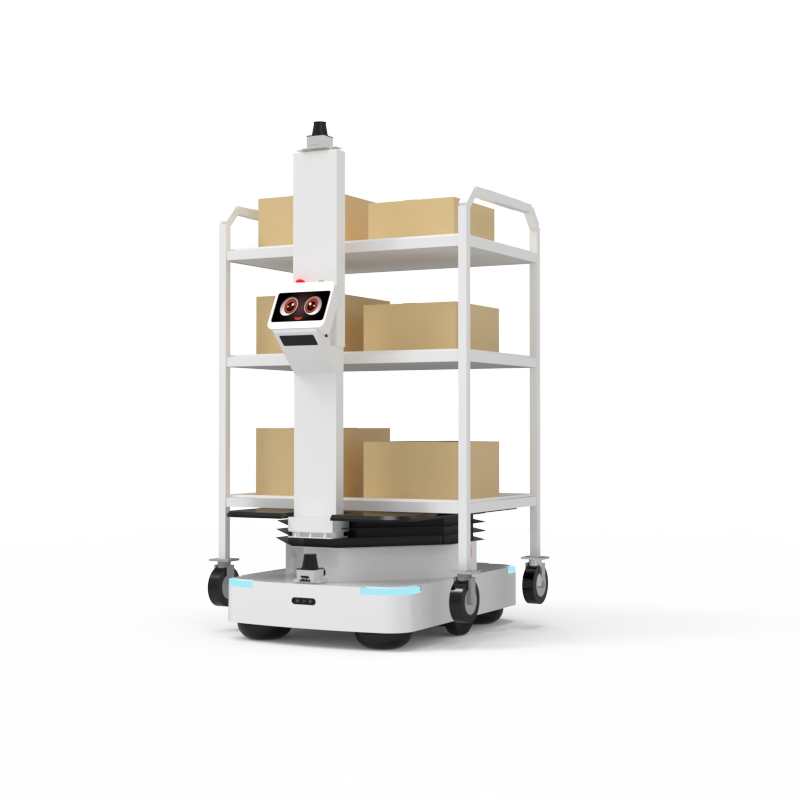
600kg Payload Autonomous AMR Robot Multi Sensor Mobile Material Handling Cart for Production Line
A strong fit for Thai electronics, appliance and automotive line-side replenishment where carts, totes or custom top modules must move without fixed floor infrastructure.
Production-line material flow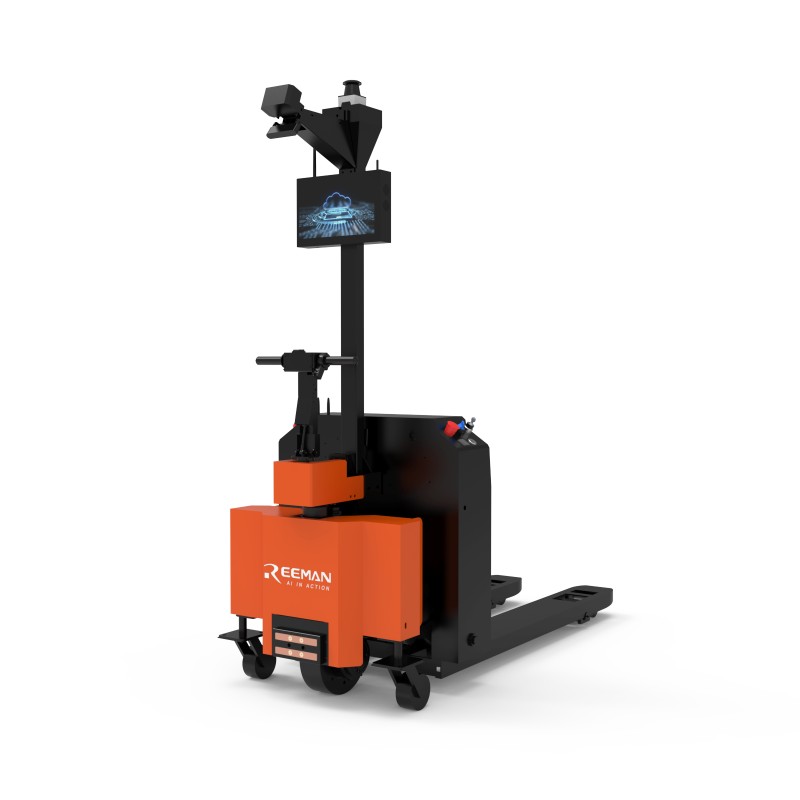
Reeman 2 Ton Autonomous Forklift AGV Laser SLAM Unmanned Pallet Truck 1085mm Fork 10mm Position Accuracy
Designed for heavier pallet flows, dock-to-storage transfer and repetitive trailer loading where Thai buyers need repeatable positioning accuracy.
2-ton pallet handling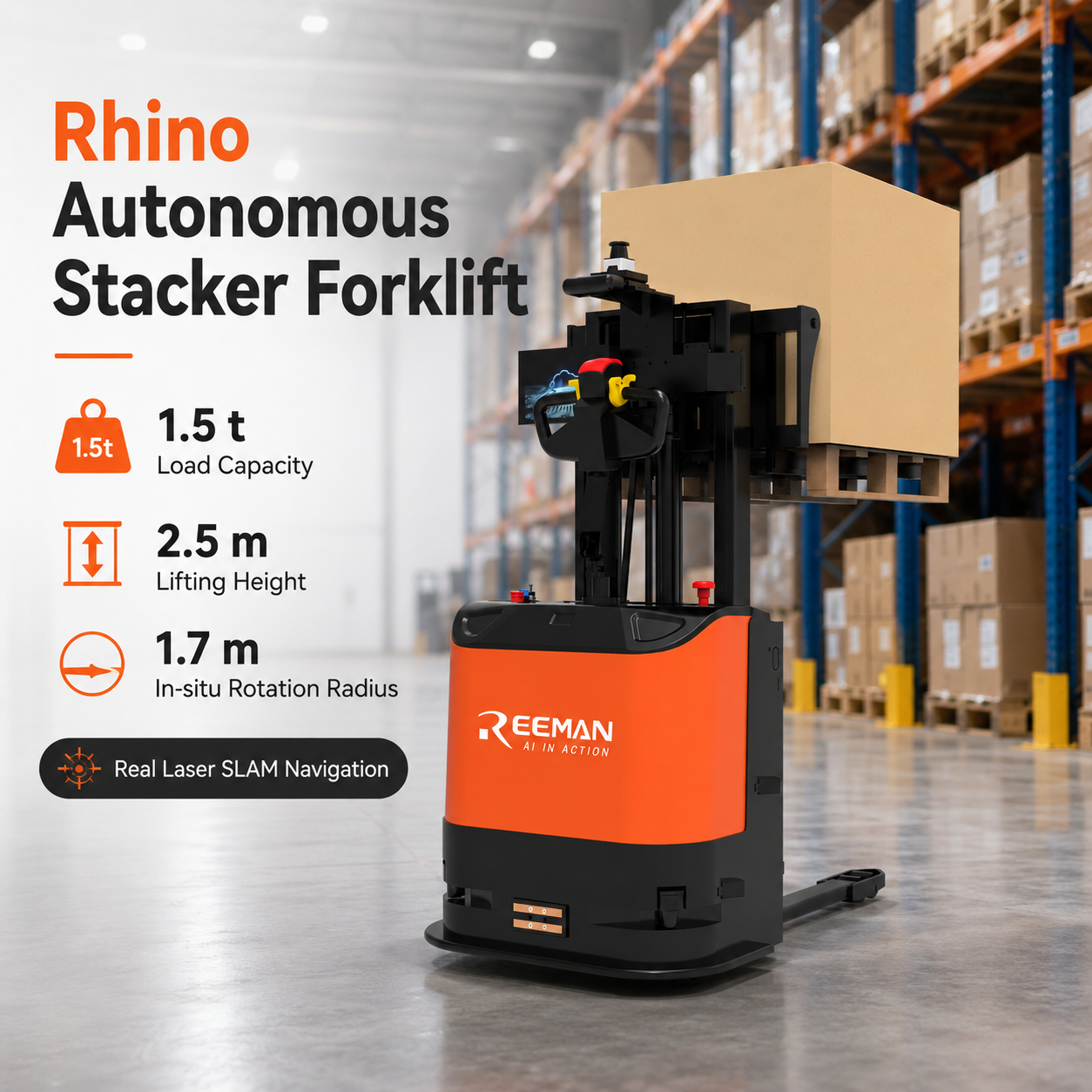
Laser SLAM Autonomous Stacker Forklift 1500 kg Load AGV Pallet Handling Robot Laser Obstacle Avoidance Warehouse
An autonomous stacker forklift for low-rack storage, pallet staging and confined warehouse zones where conventional manned stackers create labor bottlenecks.
1,500 kg stacker AGV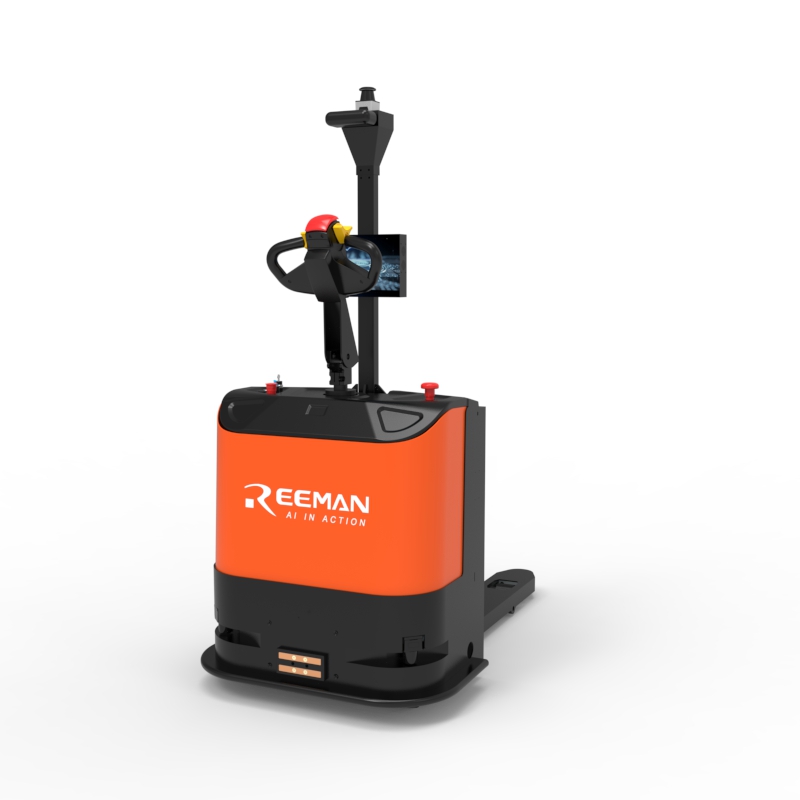
CE Certified 1500kg Driverless AGV Forklift Laser SLAM Navigation Automatic Pallet Loading Unloading Robot 1-2H Working Time
Suitable for Thai manufacturers that want a documented CE model for internal safety review, pallet loading and unloading routines, and shift-based deployment.
CE certified configuration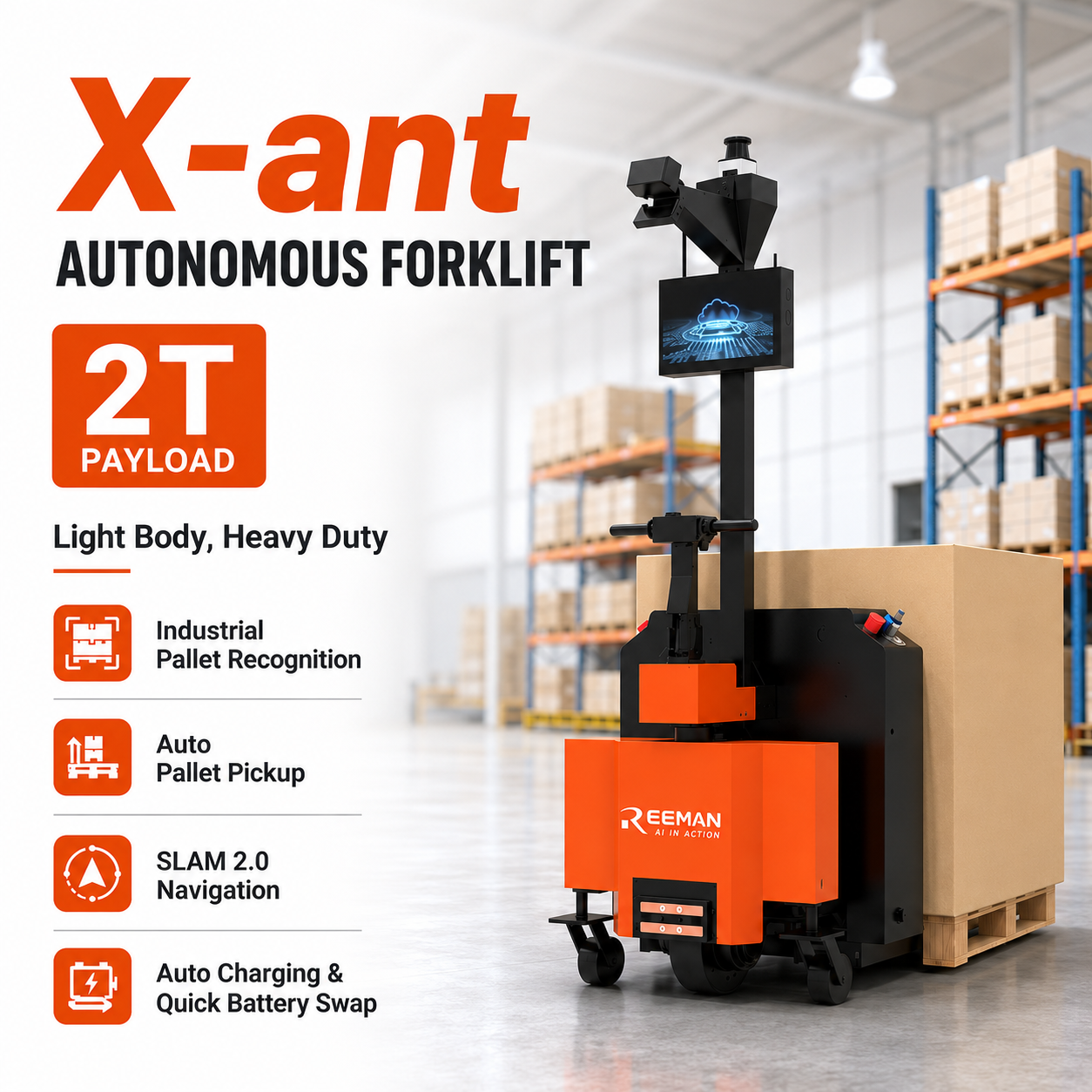
2 Ton Autonomous 4WD AGV Forklift Laser SLAM Navigation Multi-Line LiDAR 3D Obstacle Avoidance Warehouse Handling
Appropriate for larger Thai distribution centers, ramps, mixed traffic areas and warehouses where 3D obstacle avoidance and 4WD traction improve confidence.
Multi-line LiDAR safety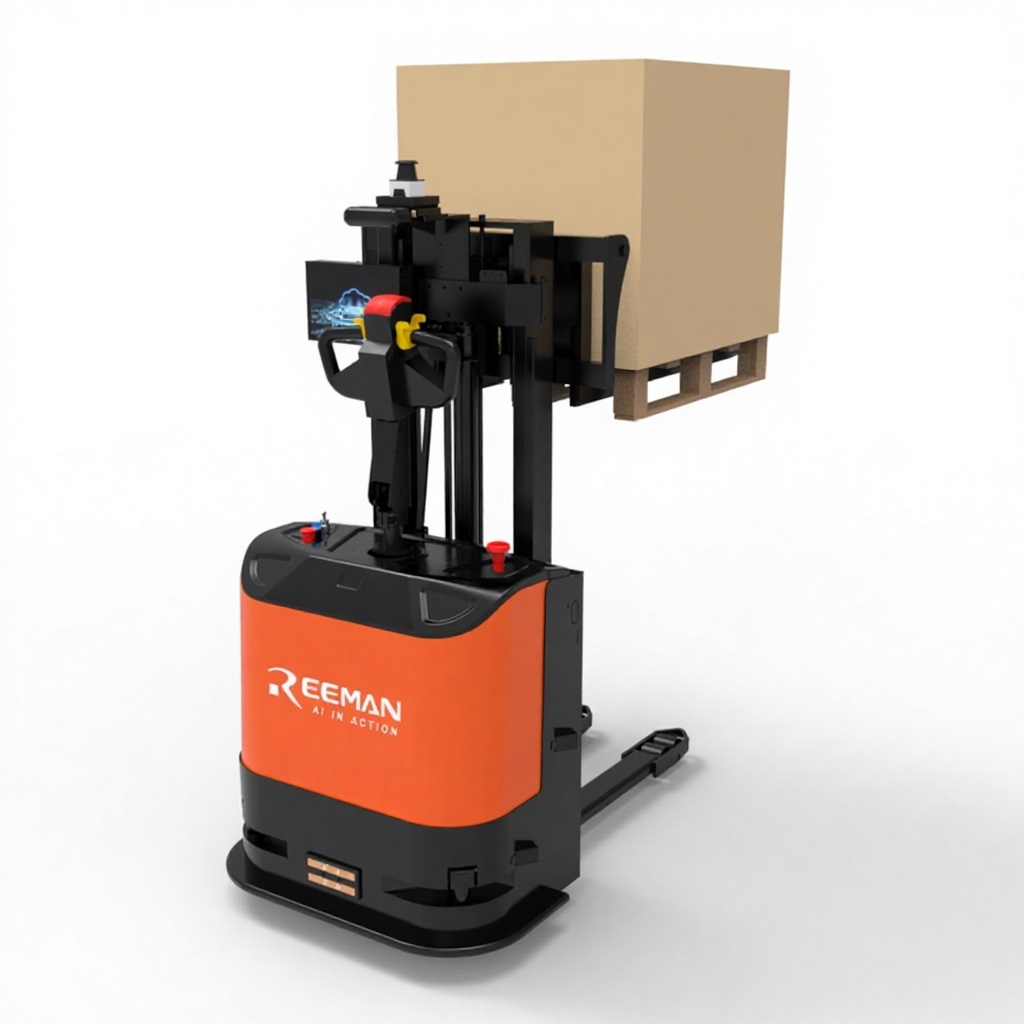
REEMAN Rhino RBOT30F Autonomous Stacker Forklift 3D Vision Obstacle Avoidance Warehouse AGV Robot
For Thai facilities balancing cost, flexibility and safety, this stacker configuration supports repetitive pallet moves with 3D vision-based obstacle detection.
3D vision obstacle avoidance
Dual Laser AMR 300KG AGV Lifting Mobile Robot with Slam LiDAR Navigation for Manufacturing Plants
Good for lighter loads in Thai manufacturing plants, laboratories and assembly cells, especially where dual laser coverage is preferred around people and equipment.
300 kg lifting AMR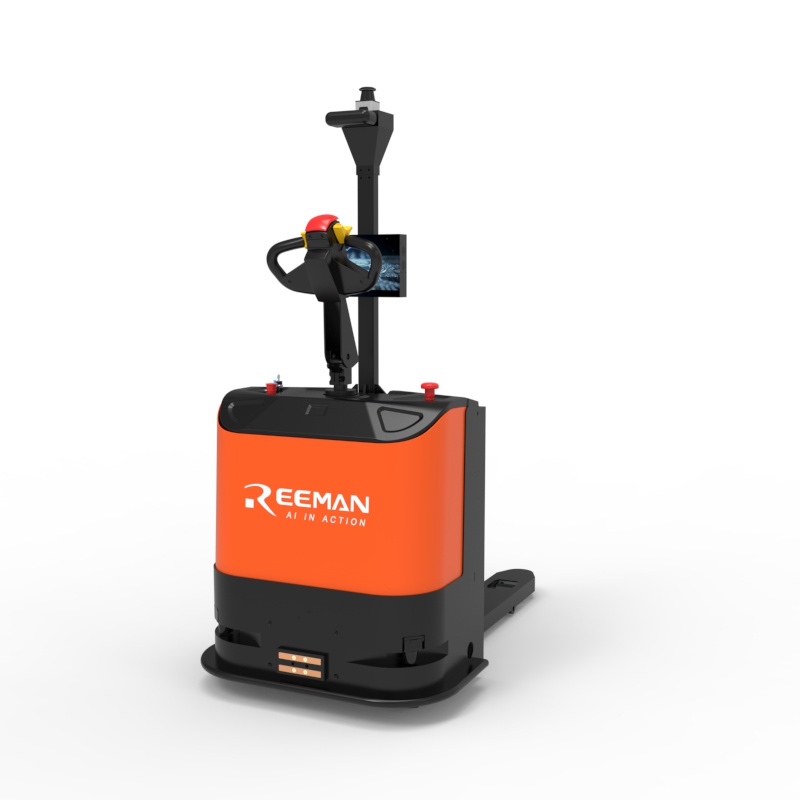
Reeman BBOT30F 1500 kg Laser SLAM Forklift AGV LiDAR Navigation Pallet Handling Warehouse
A practical pallet handling platform for Thai warehouses that need autonomous forklift navigation without tearing up floors or installing fixed guide paths.
1,500 kg LiDAR navigationFactory facts are based on the supplied company profile. The factory has been verified onsite by SGS Group, with management systems certified to ISO 9001 and ISO 14001.
What a Full Electric Portable Stacker AGV Really Changes in a Thai Warehouse
A full electric portable stacker AGV is not simply a manned stacker with the operator removed. It is a compact autonomous material handling system that combines laser SLAM navigation, pallet detection, lifting control, safety sensing, battery management and fleet software. For Thai buyers, the value is easiest to see in repeated pallet moves: floor-level pickup, short-distance transport, low-rack stacking, staging-area replenishment and end-of-line transfer.
The category is especially relevant where Thai operations face three pressures at the same time: experienced forklift operators are harder to schedule, warehouse space is expensive around Bangkok and the Eastern Seaboard, and customers expect more traceable material flow. A portable stacker AGV can be deployed in phases, starting with one lane or one shift, then expanded after the site team confirms routing, pallet quality and safety behavior.
Procurement teams should compare stacker AGVs by task rather than by headline payload alone. A 1,500 kg autonomous stacker forklift and a 600 kg AMR may both move pallets, but they solve different problems. The stacker is usually selected for lifting and placing pallets at low heights; the AMR is often selected for carts, shelves, totes or custom top modules. The right answer depends on pallet bottom-board spacing, aisle width, floor flatness, rack beam height, traffic density and the required handover point.
Why the category is gaining attention in Thailand
Thailand’s manufacturing base is geographically concentrated but operationally diverse. A warehouse in Samut Prakan may need fast pallet staging for imported components, while a factory in Rayong may need line-side replenishment synchronized with production. A 3PL in Laem Chonburi or Bangkok may handle many SKUs with different pallet conditions. One fixed automation recipe rarely fits all sites, so an export-ready manufacturer must support site survey, configuration review, English documentation and remote commissioning.
That is where supplier depth matters. A stacker AGV project is not complete when the robot arrives. It must map the site, define routes, configure charging, test obstacle response, train operators, connect with WMS or MES where needed, and plan spare parts. The strongest suppliers provide engineering answers before the purchase order, not after.
Thai Buyer Snapshot
- Laser SLAM navigation avoids magnetic tape, QR codes and reflector installation.
- Open SDK and API support WMS, MES, ERP and custom fleet dashboards.
- Models from 300 kg AMRs to 2-ton forklift AGVs share a modular control architecture.
- Two production bases in Shenzhen and Ningbo support OEM, ODM and buyer-label projects.
- Export support covers FOB terms, T/T payment in USD or CNY, and English technical files.
Localized Application Scenarios for Thai Factories and Warehouses
Autonomous stacker AGVs should be evaluated against the real operating environment: Thai pallet quality, mixed pedestrian traffic, humid conditions, production shifts and the handover points used by local teams.
Automotive and EEC Line-Side Replenishment
In Rayong, Chonburi and Ayutthaya, production lines often need repetitive component replenishment. A portable stacker AGV or 600 kg AMR can move pallets and carts between staging areas and workstations, reducing operator walking and forklift traffic inside cells.
Food, Beverage and FMCG Warehouses
Thai FMCG warehouses around Bangkok and Samut Prakan often run high-throughput pallet flows. Stacker AGVs can support end-of-line pallet transfer, staging and low-rack put-away where stable pallet quality and marked traffic zones are maintained.
Cold Chain and Temperature-Controlled Stores
Cold-store work is uncomfortable and time-sensitive. Autonomous pallet handling can reduce operator exposure and improve consistency, but Thai buyers must specify condensation management, battery behavior, floor condition and safety response under low-temperature operation.
Electronics and Appliance Assembly
Electronics plants often need clean, repeatable movement of totes, cartons and component pallets. A 300 kg dual laser AMR or 600 kg AMR with a custom top module can connect receiving, buffer areas and assembly cells with less floor disruption.
Building Materials and Low-Rack Stacking
Portable stacker AGVs are useful for heavy cartons, packed building materials and palletized goods that must be lifted into low racks or floor positions. The site survey must confirm load center, mast clearance and rack tolerance before quoting.
3PL, Port and Distribution Center Transfer
Around Laem Chabang, Bangkok and major industrial estates, 3PLs handle mixed customer pallets and changing layouts. Laser SLAM autonomy is attractive because routes can be adjusted quickly as storage zones or customer allocations change.
Thailand’s Automation Signals: What Procurement Teams Are Watching
The strongest business case is not “replace every forklift.” It is a focused deployment that removes repetitive travel, improves traceability and keeps people in higher-value tasks.
Labor Availability and an Aging Workforce
Thai manufacturers are reviewing roles that involve long walking distances, repeated pallet moves and night shifts. Phased automation can improve scheduling resilience without reorganizing the entire warehouse.
EEC and Thailand 4.0 Manufacturing
Eastern Economic Corridor investment and smart-factory programs encourage data visibility. Robot status, task logs and charging data can be integrated into production or warehouse dashboards.
Pilot-First, Modular Deployment
Many Thai buyers prefer one route, one shift or one zone as a proof of concept. A modular stacker AGV platform makes it easier to expand after the site team validates safety and throughput.
Safety, Traceability and Energy Cost
Battery efficiency, charging strategy, obstacle response and audit trails are becoming board-level topics. Buyers want fewer surprises in total cost of ownership, not only a lower purchase price.
Indicative Fit Score for Thai Projects
Use this as a planning prompt during early scoping. It is not a performance guarantee; each site requires a layout review, pallet survey and safety assessment.
What Thai Buyers Should Ask Before Shortlisting a Supplier
A high-quality RFQ protects both sides. The questions below help separate a genuine autonomous stacker AGV manufacturer and exporter from a trader that cannot support deployment.
| Decision Area | Question to Ask the Supplier | Why It Matters in Thailand |
|---|---|---|
| Pallet and load data | Can you confirm fork length, load center, mast height and pallet bottom-board clearance from our drawings? | Thai pallets are not always identical across suppliers. A robot quoted against the wrong pallet can fail at the first pick. |
| Floor and aisle conditions | What floor flatness, expansion joint and aisle width assumptions are used for safe navigation? | Older warehouses may have slopes, drains or worn concrete. Laser SLAM is flexible, but it still needs a valid exclusions and traffic plan. |
| Electrical configuration | Is the charger configured for Thailand’s 220 V / 50 Hz supply, and what charging window do you recommend? | Voltage, socket type and shift patterns affect charging strategy, battery life and electrical approval. |
| Safety case | How do LiDAR, 3D obstacle avoidance, speed zones, e-stops and pedestrian warnings work together? | Mixed traffic with people, motorbikes and manual forklifts is common. Safety behavior must be demonstrated, not only listed. |
| Software integration | Do you provide an open SDK and API for WMS, MES, ERP or fleet scheduling? | Thai factories often need task dispatch, status feedback and reporting beyond the robot’s local screen. |
| Certification and due diligence | Which models carry CE, FCC or PSE marks, and can you share ISO 9001, ISO 14001 and SGS verification evidence? | Internal approval and customer audits are easier when documents are available before the order, not requested afterward. |
| Service and spares | What spare-parts list, training material, remote support process and response commitment are offered? | Shipping to Thailand is only one part of the lifecycle. Fast diagnosis matters when a line is waiting. |
Import duty, VAT, BOI incentives and regulatory applicability should be confirmed with a Thai customs broker or qualified adviser. The technical review above is separate from tax and legal advice.
Why Elvorn Is a Credible Manufacturing and Export Partner
Elvorn’s advantage is not a single specification. It is the combination of in-house robot engineering, production capacity, export documentation and long-term support for distributors and integrators.
Laser SLAM Without Floor Infrastructure
Elvorn autonomous forklifts and AMRs use laser SLAM navigation, so Thai sites can avoid magnetic tape, QR codes and reflector grids. Layout changes are handled through mapping and configuration rather than floor works.
Open SDK and API Integration
Elvorn AMRs and robot chassis provide an open SDK and API for secondary development. Integrators can connect robots to WMS, MES, ERP, elevators, doors, call buttons and custom dashboards.
Modular Payload Platforms
The portfolio spans 60 kg delivery robots to 2-ton autonomous forklifts. Shared control architecture helps simplify fleet training, spare-parts planning and maintenance for buyers operating more than one robot type.
Multi-Layer Safety Engineering
LiDAR, obstacle sensors, emergency stops and speed zoning keep robots aware of pedestrians, forklifts and racking. Safety behavior can be tested during factory acceptance and reviewed again at the Thai site.
Two Production Bases and Verified Factory
Founded in 2015, Shenzhen Elvorn Intelligent Equipment Co., Ltd. operates two production bases in Shenzhen and Ningbo. The company reports 39 patents, 5,200㎡ of floorspace and a 200+ team. SGS has verified the factory onsite.
Export-Ready Commercial Support
Elvorn supports FOB terms, T/T payment in USD or CNY, English documentation, remote commissioning and spare-part supply. The company serves buyers across North America, Western Europe, East and Southeast Asia, and the Middle East.


Questions Thai Procurement Teams Commonly Ask
These answers are written for first-round technical and commercial review. Final specifications are confirmed after a site survey, pallet check and integration discussion.
What is the difference between a portable stacker AGV and an autonomous forklift AGV?
A portable stacker AGV is generally optimized for compact lifting, pallet stacking and low-height handling. An autonomous forklift AGV may offer higher payload, longer forks or a different mast configuration for dock-to-storage and heavier pallet flows. In practice, the boundary is set by your pallet, rack height, aisle width and required throughput. Both categories use laser SLAM in Elvorn’s portfolio, so the decision is usually about load geometry and task design rather than navigation technology alone.
Can the robot handle Thai pallet types and warehouse floor conditions?
Thai pallets can vary by supplier, product and whether they are repaired or locally assembled. Do not assume an ISO pallet dimension. Provide drawings or photos of the pallet top deck, bottom boards, load center, weight distribution and maximum stack height. Also share floor flatness, expansion joints, ramps, drains, door thresholds and aisle width. These items determine fork clearance, safety behavior and route design. A 10 mm positioning specification is useful only when the pallet and floor data are correct.
What electrical configuration is needed for Thailand?
Thailand generally uses 220 V / 50 Hz for commercial and industrial supply, but socket type, phase configuration and charging location must be confirmed at the site. Specify the charger input, charging window, battery chemistry and whether opportunity charging is needed across shifts. For factories running three shifts, charging strategy can affect fleet size more than the robot’s top speed.
How does the AGV integrate with WMS, MES or ERP?
Elvorn AMRs and robot chassis provide an open SDK and API for secondary development. Integration can support task dispatch, status feedback, route changes and reporting. A practical integration plan should define who creates tasks, what happens when a pallet is missing, how the robot requests a door or elevator, and how operators escalate exceptions. For Thai sites, it is also useful to discuss English and Thai user interfaces, network coverage and Wi-Fi roaming before installation.
Which certifications and due-diligence documents are available?
Depending on the model, Elvorn robots can carry CE, FCC or PSE marks. The company’s management system is certified to ISO 9001 and ISO 14001, and the factory has been verified onsite by SGS Group. Buyer due diligence can include company profile, assessment report, product documentation, test records and transaction information where applicable. Always match the certificate to the exact model and configuration you intend to import.
What is the typical order and shipping path from China to Thailand?
Most projects begin with a layout review, model shortlist, quotation and technical clarification. After configuration approval, the factory completes production testing and prepares export packaging. Shipment commonly moves by sea from Shenzhen or Ningbo to Laem Chabang or Bangkok, with air freight possible for urgent components or pilot equipment. Transit time depends on sailing schedule, customs clearance and inland delivery. The commercial terms can be quoted FOB, with payment by T/T in USD or CNY.
How are spare parts, training and remote support handled?
A sensible spare-parts list should be agreed before shipment, covering wear items and critical modules based on the robot’s duty cycle. Training can cover daily operation, pallet pickup checks, emergency stop procedures, charging and first-line fault diagnosis. Remote support is easier when the site has stable network access and a clear escalation process. For multi-site Thai distributors, it is worth planning a local service partner for first-response mechanical support.
How should ROI be calculated for a Thai deployment?
Calculate ROI from avoided manual travel, reduced forklift congestion, improved shift consistency and recovered floor space, not from labor cost alone. Include installation, mapping, integration, training, charging infrastructure, spare parts and maintenance. Then model throughput at the slowest handover point. A robot that moves quickly but waits at a manual transfer station will not deliver the expected payback. A pilot on one route is often the fastest way to validate assumptions.
Does Elvorn offer OEM, ODM and buyer-label customization?
Yes. As a verified custom manufacturer, Elvorn offers OEM service, design service and buyer-label options, including custom top modules, payload structures, branding and packaging. For Thai distributors and system integrators, this can support a local brand strategy or a customer-specific robot configuration. Custom work should start with a clear specification, target volume and acceptance criteria so both engineering teams can manage expectations.
Send Your Thailand Layout, Pallet Data and Throughput Target
Share your warehouse or factory plan, pallet dimensions, load weight, aisle width, rack height and target moves per shift. Elvorn’s engineers can recommend a suitable full electric portable stacker AGV, forklift AGV or AMR configuration and outline the next steps for export to Thailand.
- Laser SLAM stacker and forklift AGV options
- OEM / ODM and buyer-label support
- English documentation and remote commissioning
- Factory verified onsite by SGS Group