Manufacturer verification: SGS onsite audited · ISO 9001 & ISO 14001 · CE / FCC / PSE model certifications · OEM, design service, and buyer-label options
Tijuana Is a Precision Market for Indoor Transport Robots
Tijuana is not a generic warehouse market. It combines high-density manufacturing, cross-border logistics, and mixed-language operations, so the right indoor transport robot supplier must answer engineering, safety, integration, and import questions—not just quote a price.
Around Mesa de Otay, El Florido, La Mesa, and the Otay Mesa border corridor, plant teams manage repetitive indoor flows that are well suited to automation: pallet staging, line-side replenishment, work-in-process transfer, finished-goods movement, empty-container returns, and warehouse put-away. These are short, predictable, high-frequency movements where laser SLAM AGVs and AMRs can reduce walking time, improve delivery consistency, and reduce forklift congestion without requiring magnetic tape or floor reflectors.
However, Tijuana buyers usually evaluate more than payload. They ask whether the robot can operate around pedestrians and mixed forklift traffic, whether the operator interface can be understood by Spanish-speaking staff, whether the fleet can connect to a WMS or MES, whether spare parts can cross the border quickly, and what documentation the importer of record will need. A credible indoor transport robot supplier in the Tijuana market should answer those questions before the purchase order stage.
Three buying intents behind a Tijuana search
The search phrase “indoor transport robot suppliers in Tijuana” typically comes from three different buying teams. A maquiladora engineering team wants a reliable route from receiving to line-side. A 3PL or warehouse operator wants throughput and uptime. An integrator or wholesaler wants a factory partner with open interfaces, certification packages, and scalable manufacturing.
- Manufacturing and maquiladora buyers: need autonomous forklifts or lifting AMRs that repeat line-side delivery without disrupting production schedules.
- Warehouse and 3PL operators: prioritize pallet flow, battery strategy, WMS integration, safety zoning, and spare-part availability.
- Integrators and wholesalers: compare OEM/ODM capability, open SDK access, CE/FCC/PSE scope, factory scale, and long-term support before committing to annual volume.
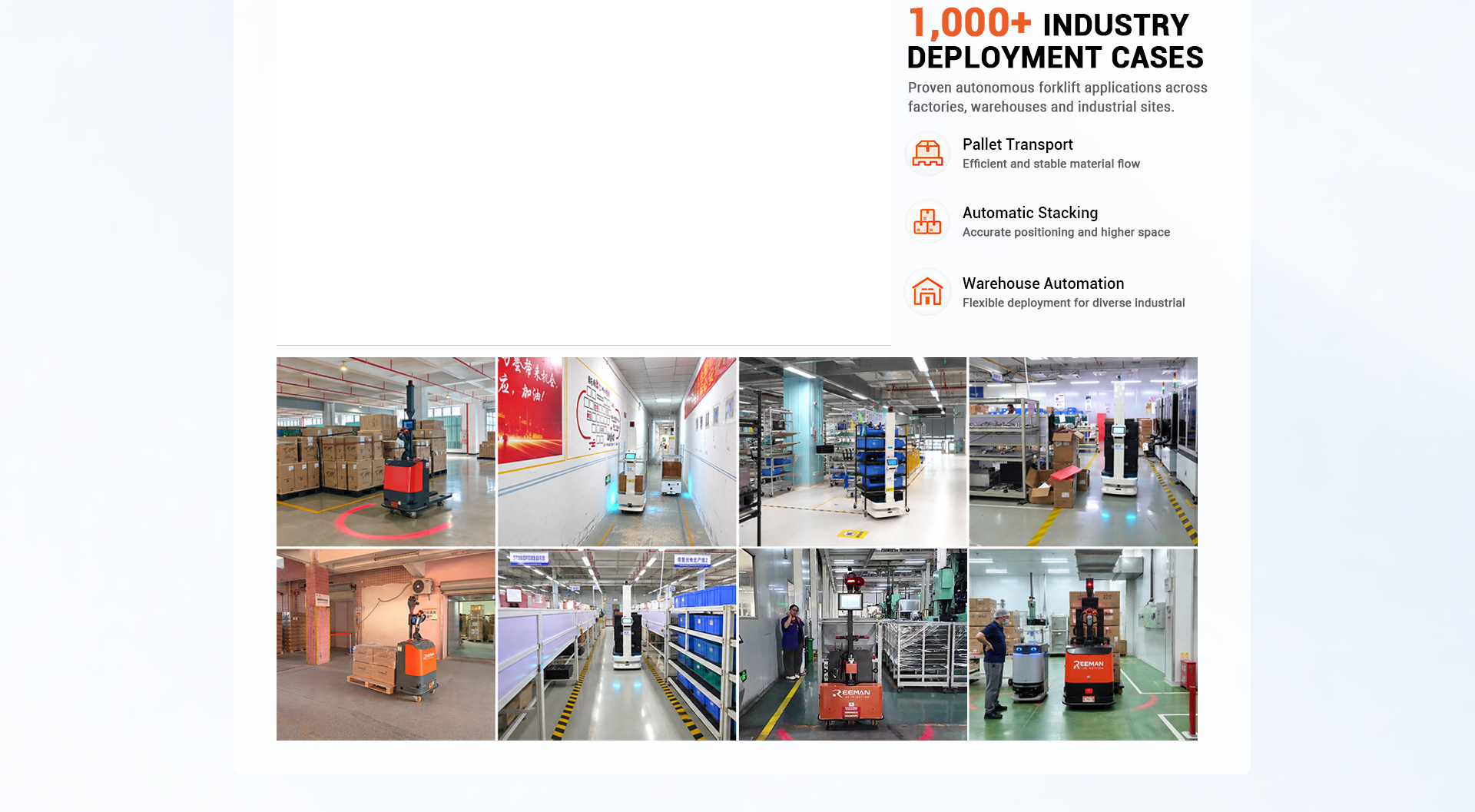
This guide uses verified company facts from Shenzhen Elvorn Intelligent Equipment Co., Ltd. to create a vendor-neutral evaluation framework for Tijuana projects. Elvorn was founded in 2015, operates two production bases, and manufactures autonomous forklifts, industrial AMRs, robot chassis, delivery robots, cleaning robots, and disinfection robots. For wholesale buyers, the key value is not only the product list; it is the combination of SLAM navigation, open SDK/API development, modular payload design, and export-ready documentation.



Shenzhen & Ningbo
Six Trends Shaping Tijuana Indoor Automation
Procurement decisions in Tijuana are moving from “Can we buy a robot?” to “Can we operate a safe, integrated, maintainable fleet across shifts?” These trends explain what local buyers should validate during supplier selection.
Line-side replenishment is replacing fixed routes
Maquiladoras are looking for mobile robots that can change delivery points as production models change. Laser SLAM mapping lets a team revise routes without rebuilding floor infrastructure, which matters when workcells are rebalanced frequently.
Cross-border logistics rewards traceability
Warehouses serving the Otay Mesa corridor need status visibility for inbound, staging, and outbound flows. Robot task completion data, exception logs, and WMS feedback become as important as the robot’s payload rating.
Battery strategy is part of system design
For multi-shift operations, buyers compare opportunity charging, automatic charging docking, battery exchange plans, and LiFePO4 battery life. The goal is predictable uptime, not simply the longest published working time.
Narrow aisles require stacker and forklift AGVs
Some Tijuana warehouses use compact racking and tight staging lanes. Low-profile AMRs alone may not solve pallet lifting or stacking. Autonomous stacker forklifts and pallet-handling AGVs should be compared alongside lifting AMRs.
Safety reviews now include mixed fleets
Robots share space with pedestrians, manual forklifts, contractors, and pallet jacks. Multi-layer safety—LiDAR, obstacle sensors, emergency stops, speed zones, and audible alerts—should be reviewed with local EHS teams before deployment.
Wholesale distribution is shifting to platforms
Integrators prefer modular platforms that support different top modules, payload structures, and interfaces. A supplier with a shared control architecture can help distributors support multiple applications without retraining service teams for every robot type.
8 Indoor Transport Robot Models for Tijuana Evaluation
These eight models cover pallet handling, stacker work, line-side replenishment, narrow-aisle transfer, and indoor service applications. Product images are shown complete without cropping; final configuration is confirmed after reviewing load, aisle, rack, battery, and integration requirements.
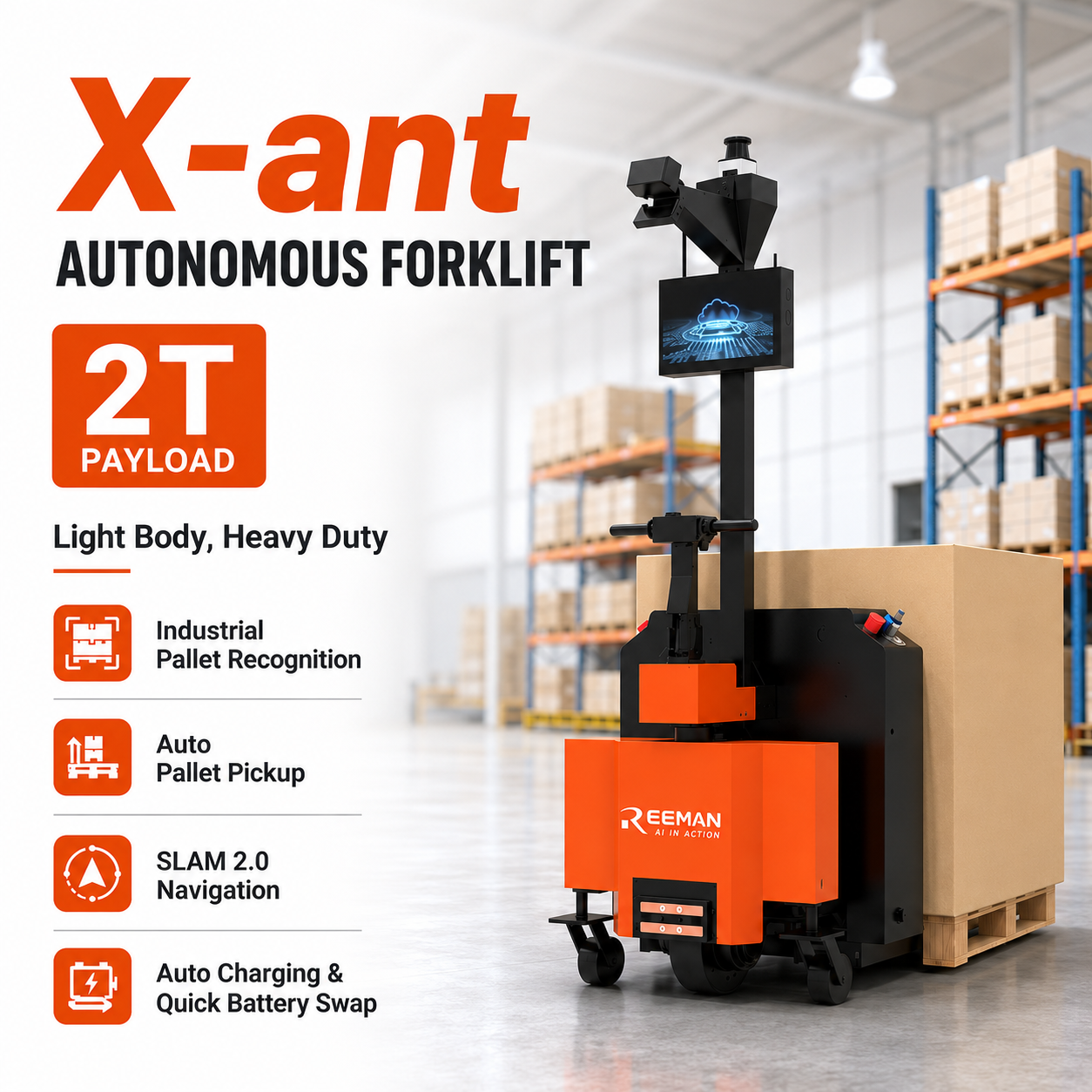
2 Ton Autonomous 4WD AGV Forklift Laser SLAM Navigation Multi-Line LiDAR 3D Obstacle Avoidance Warehouse Handling
- Heavy pallet transfer and dock-to-storage flow
- Multi-line LiDAR and 3D obstacle avoidance
- 4WD platform for demanding indoor handling
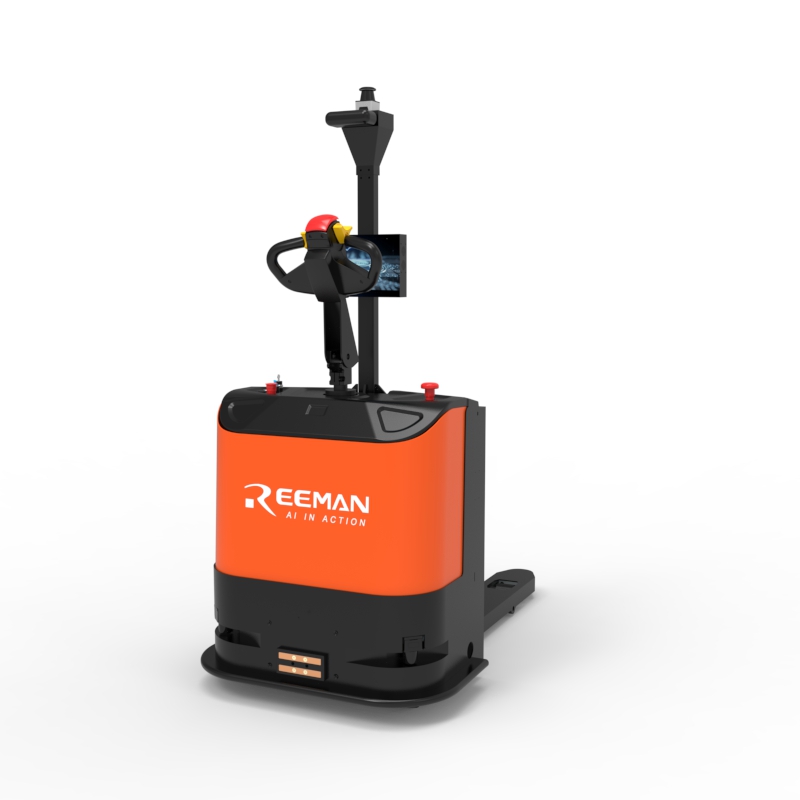
CE Certified 1500kg Driverless AGV Forklift Laser SLAM Navigation Automatic Pallet Loading Unloading Robot 1-2H Working Time
- Automatic pallet loading and unloading
- Suitable for warehouse and line-side pallet moves
- Battery strategy to be matched to shift pattern

REEMAN Autonomous Electric Forklift 1T Payload 48V 30Ah LiFePO4 Battery Indoor Material Handling AGV
- 1 ton payload for indoor material handling
- 48V 30Ah LiFePO4 battery platform
- Good fit for compact production and warehouse zones
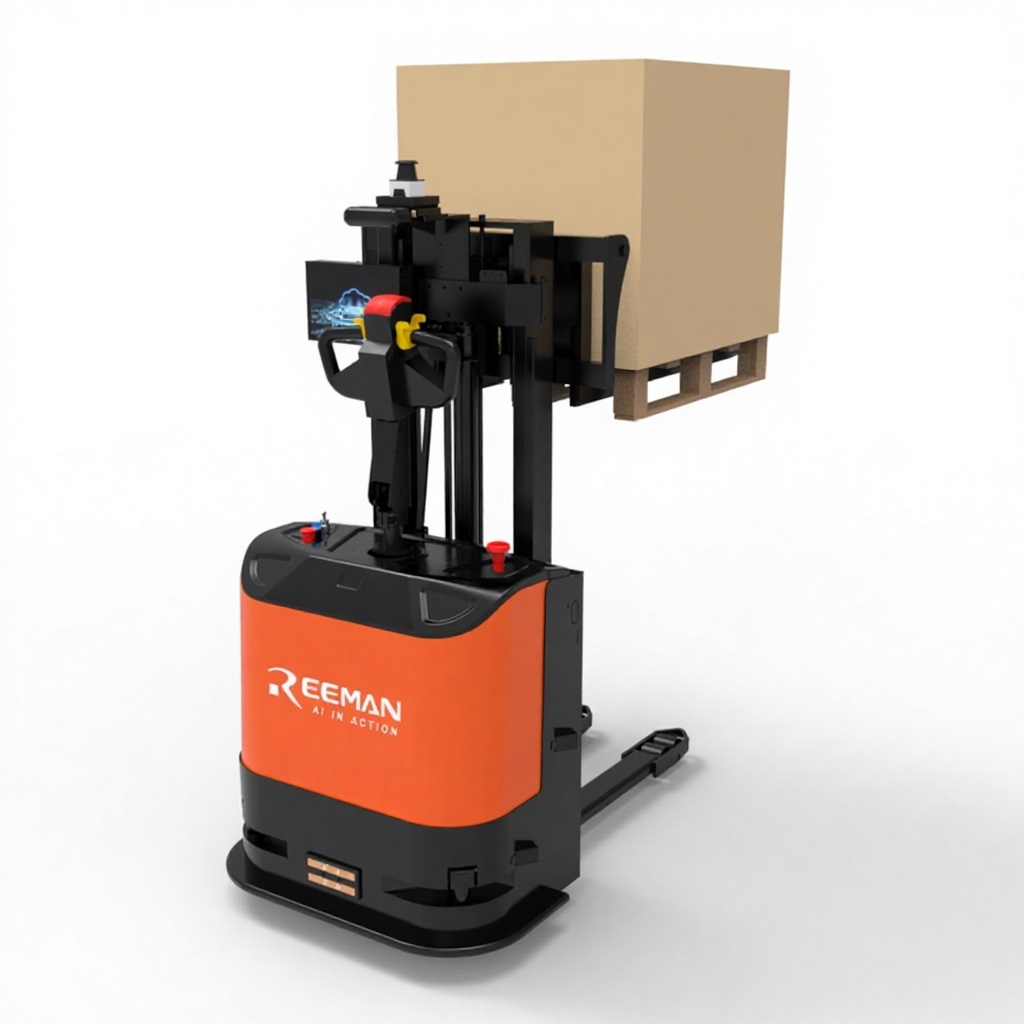
REEMAN Rhino RBOT30F Autonomous Stacker Forklift 3D Vision Obstacle Avoidance Warehouse AGV Robot
- Stacker configuration for rack and low-rack work
- 3D vision obstacle avoidance
- Useful where pallet lifting is required
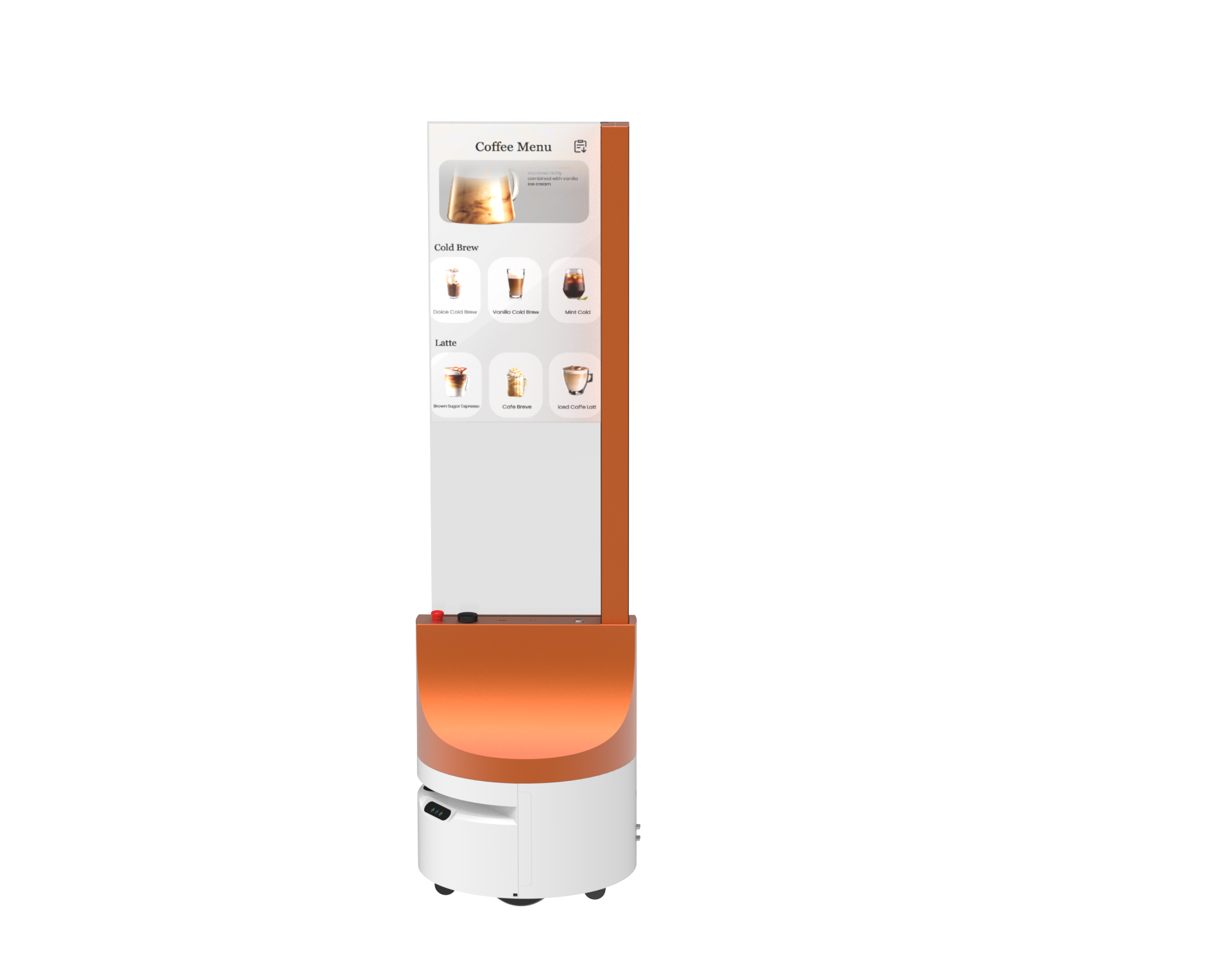
REEMAN 30 Inch OLED Transparent Screen Mobile Advertising Robot 1080 x 1920 FHD 9:16 Wi-Fi App Remote Control
- Indoor wayfinding, promotion, and visitor engagement
- 1080 x 1920 FHD 9:16 transparent display
- Wi-Fi app remote content control

Dual Laser AMR 300KG AGV Lifting Mobile Robot with Slam LiDAR Navigation for Manufacturing Plants
- 300 kg lifting platform for totes, carts, and WIP
- Dual laser SLAM LiDAR navigation
- Designed for manufacturing plant material flow
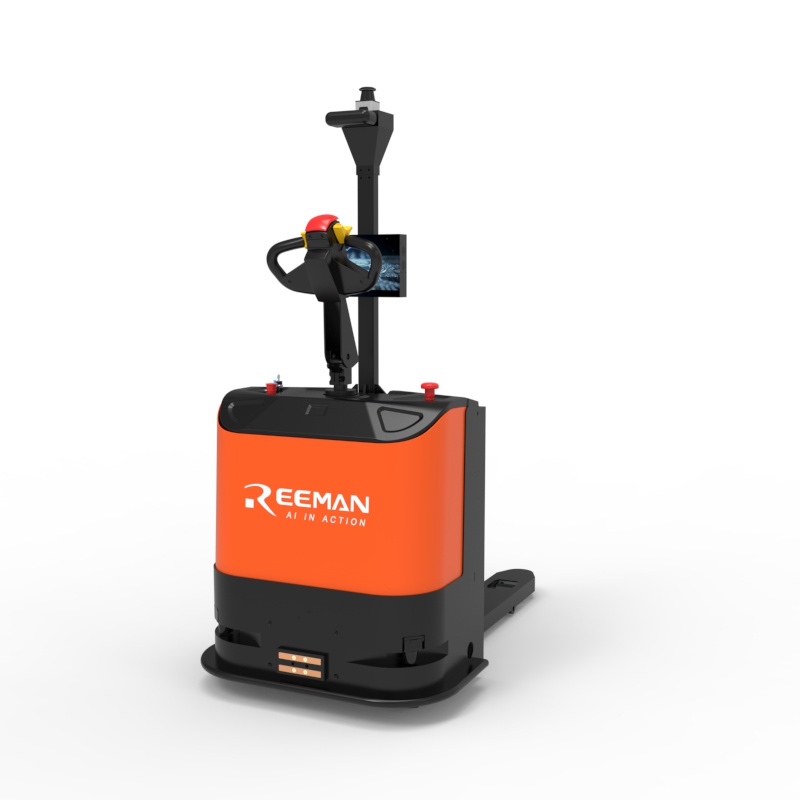
Reeman BBOT30F 1500 kg Laser SLAM Forklift AGV LiDAR Navigation Pallet Handling Warehouse
- 1500 kg pallet handling for warehouse routes
- Laser SLAM and LiDAR navigation
- Fits dock, staging, and storage transfers
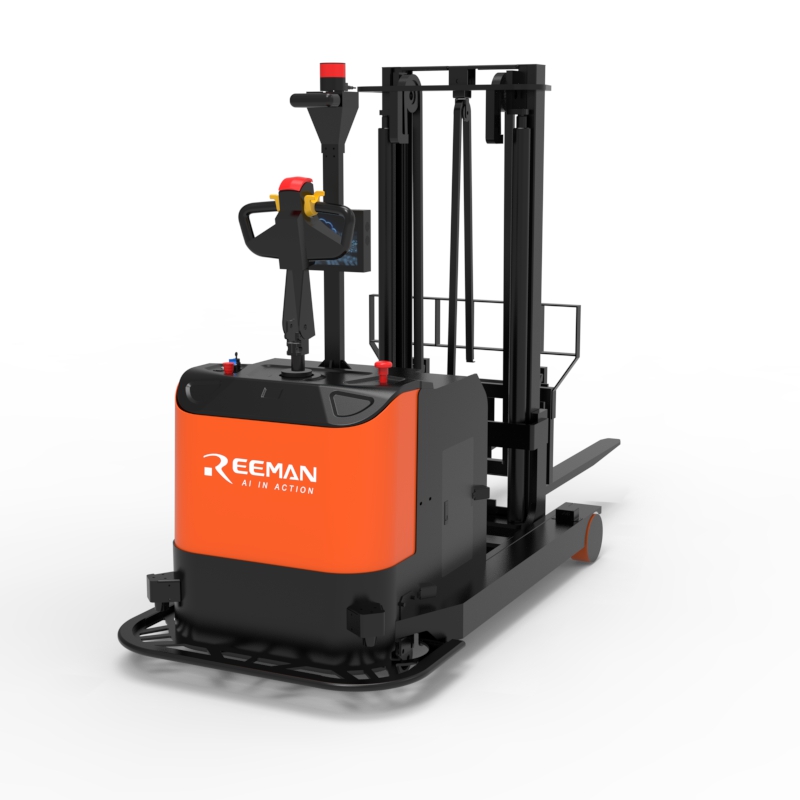
Reeman Autonomous Electric Stacker Forklift 1.2 Ton Li-Ion 48V 30Ah 2500mm Lift Laser Navigation 3m Aisle
- 1.2 ton stacker with 2500mm lift
- Laser navigation for 3m aisle planning
- Li-Ion 48V 30Ah power configuration
Wholesale pricing is configuration-dependent. Fork length, mast height, battery capacity, charging method, top module, safety scanner package, branding, and annual volume all affect the quotation. Share the Tijuana destination, target throughput, and import broker details for a faster engineering review.
Inquire NowWhere Indoor Transport Robots Fit in Tijuana Operations
Successful automation starts with a stable, measurable flow. The scenarios below help Tijuana buyers decide whether an autonomous forklift, lifting AMR, stacker AGV, or indoor service robot should be evaluated first.
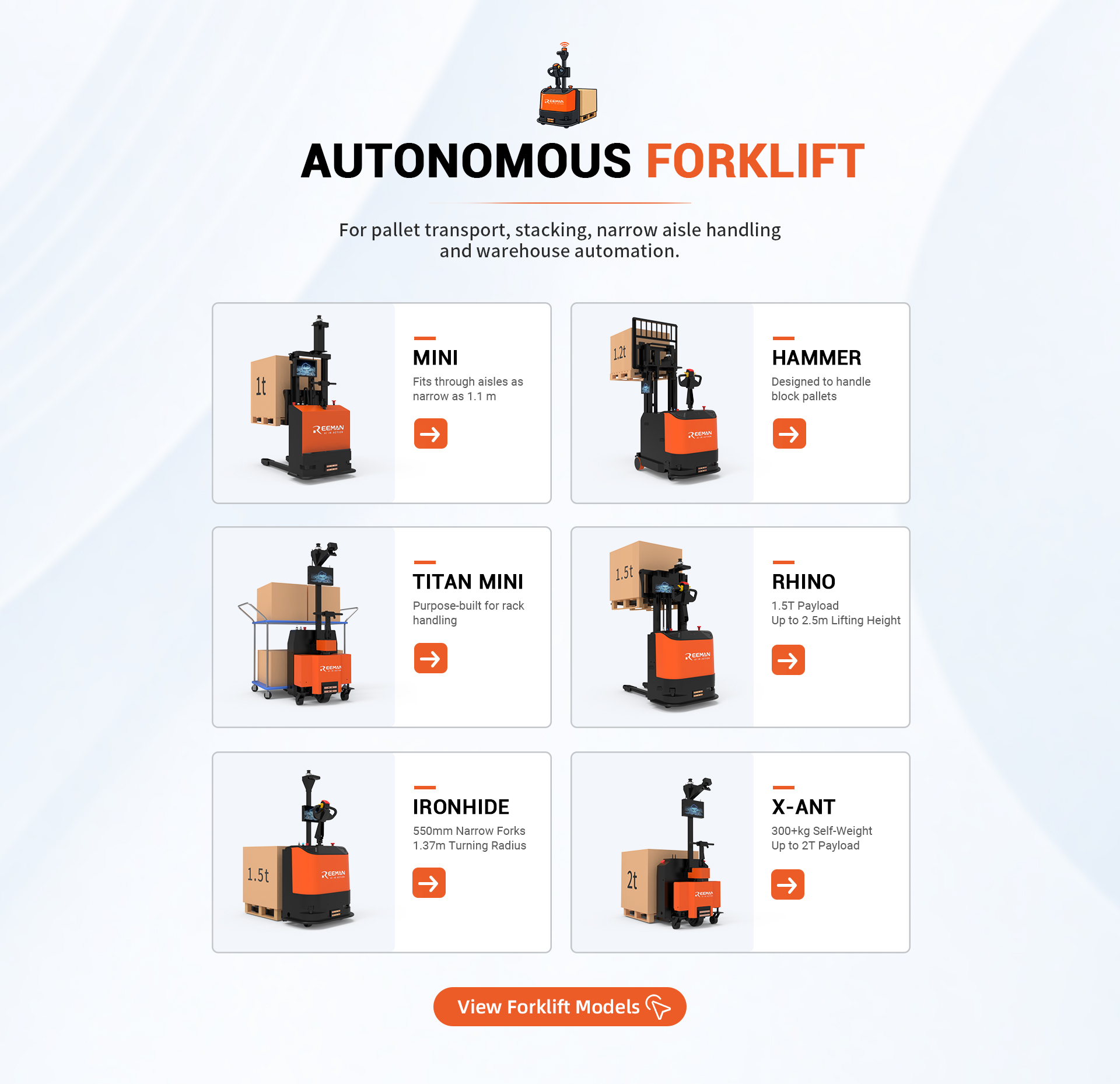
Pallet Flow and Dock Staging
Move pallets from receiving to staging, storage, or outbound lanes with AGV forklifts. Best first projects have consistent pallet quality, marked drop zones, and predictable hourly moves.
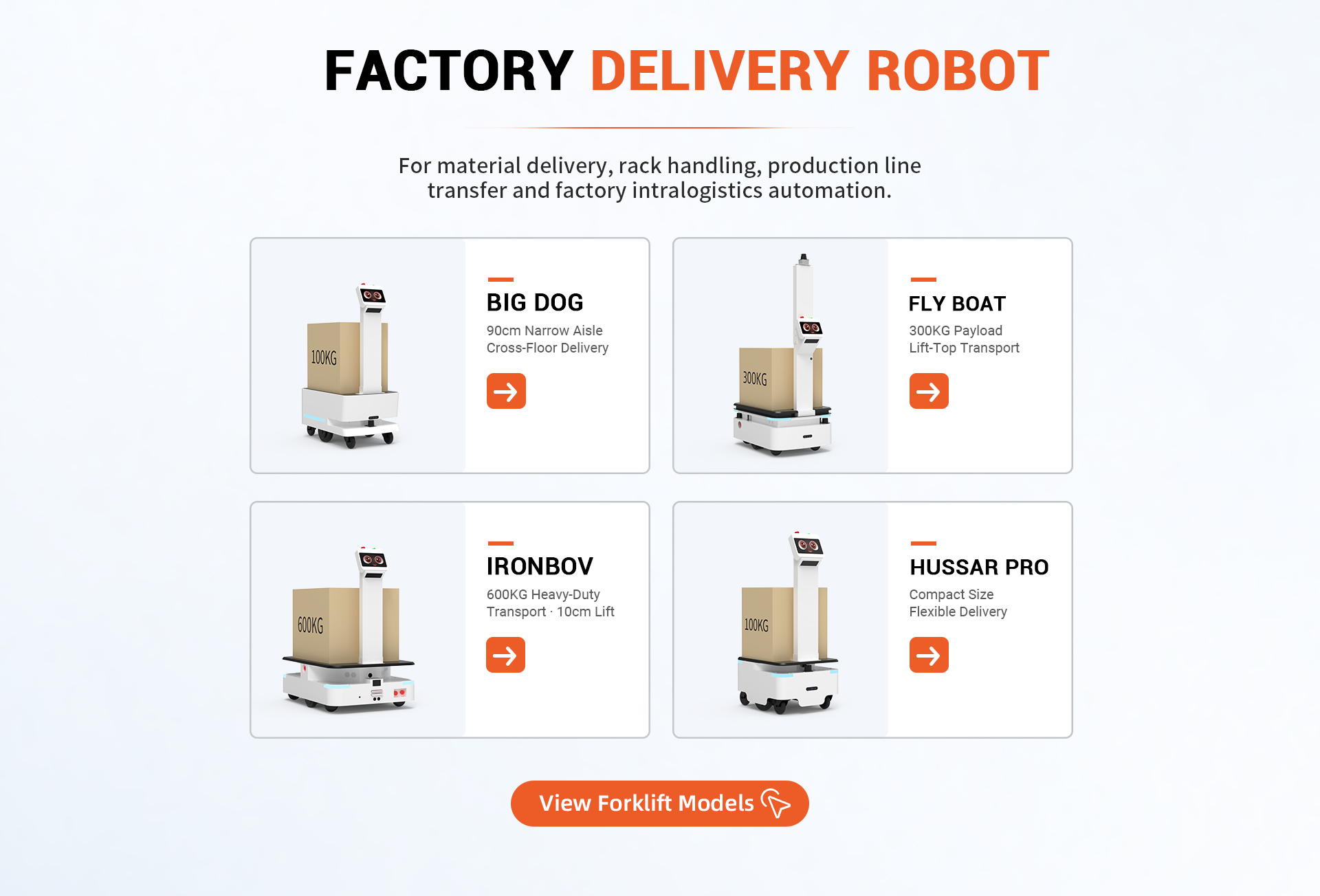
Line-Side Replenishment
Use lifting AMRs or forklift AGVs to feed workstations and remove finished goods. Route changes are easier when the platform uses laser SLAM instead of fixed floor markers.
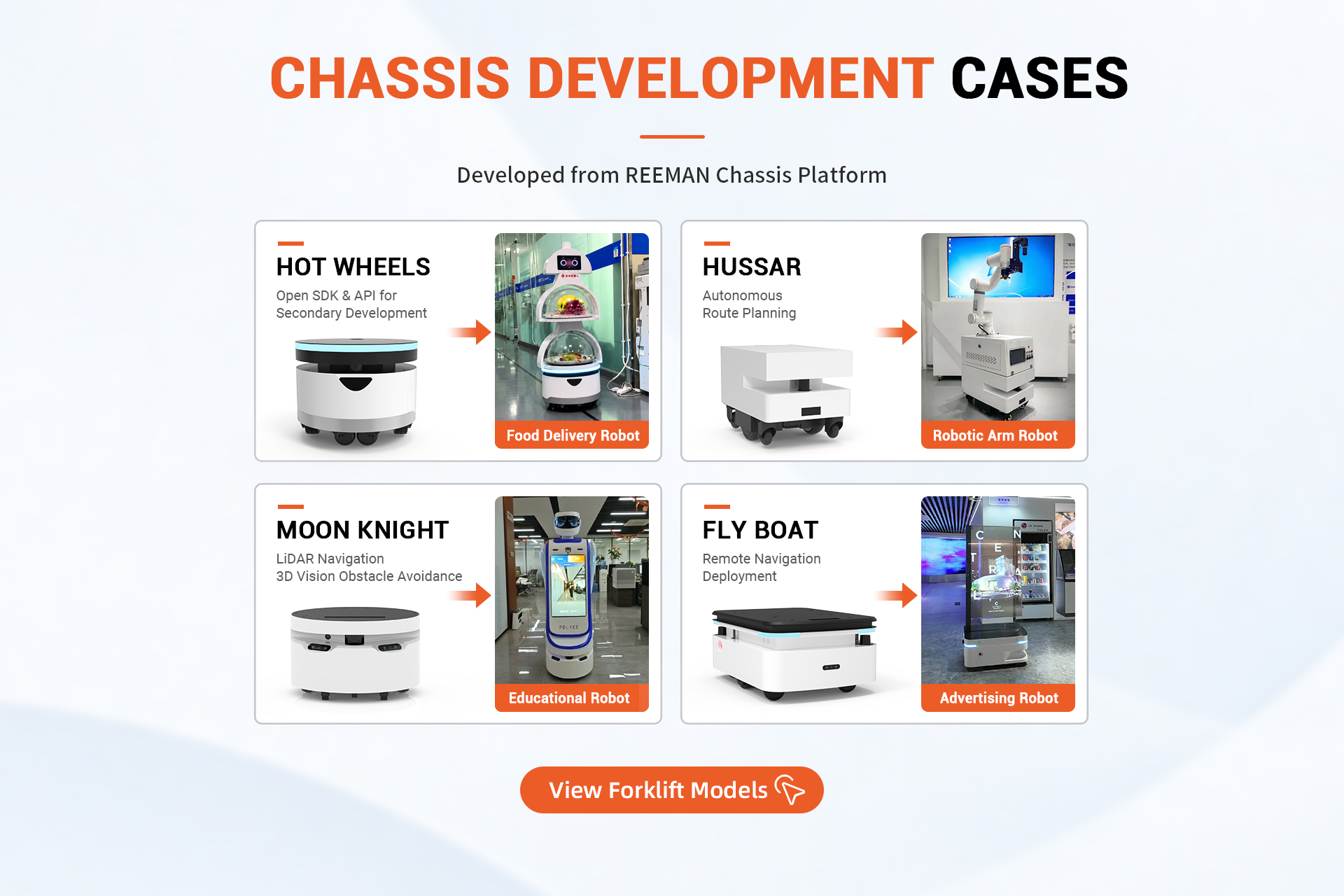
Custom Robot Development
Integrators serving Tijuana manufacturers can use SLAM chassis and AMR platforms with open SDK/API access to build branded robots for niche material flows.
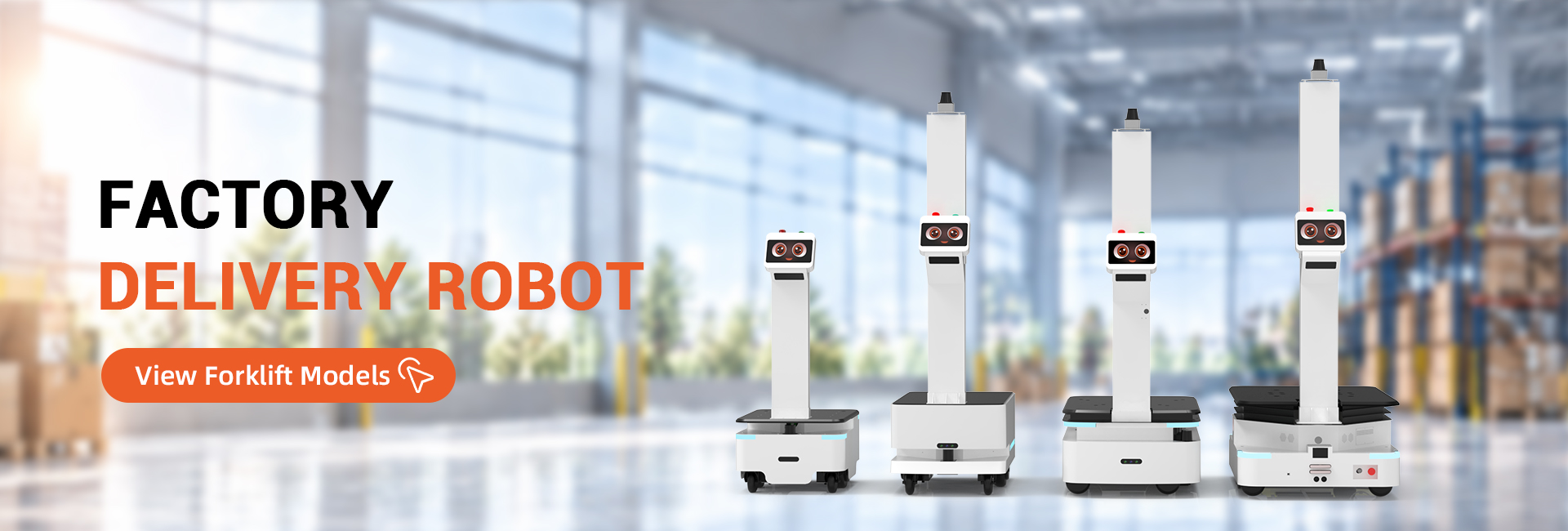
Indoor Delivery and Room Service
Restaurants, hotels, and hospitals in Tijuana can use delivery robots to reduce repetitive walking while staff focus on guest care, infection-control tasks, and exceptions.

Cleaning and Disinfection
Large facilities can schedule autonomous cleaning or disinfection routes after hours. This is often a lower-risk entry point than pallet handling when payload variation is high.
Wayfinding and Mobile Signage
Mobile advertising and guidance robots support bilingual visitor engagement in showrooms, malls, clinics, and exhibition spaces without changing the building layout.
Match Load, Aisle, and Integration Scope Before Quotation
A common procurement mistake is comparing payload alone. In Tijuana facilities, aisle width, rack height, pallet condition, charging location, WMS/MES integration, and safety zones often decide which model family is practical.
| Robot family | Typical load | Best Tijuana use | Due diligence before order |
|---|---|---|---|
| 2 Ton 4WD AGV Forklift | 2,000 kg | Heavy pallet transfer, dock-to-storage, multi-shift handling | Floor load rating, aisle clearance, LiDAR coverage, battery/charging plan |
| CE 1500 kg Pallet Forklift AGV | 1,500 kg | Warehouse pallet loading, unloading, line feeding | Pallet quality, fork dimensions, working-time match, traffic rules |
| REEMAN 1T Electric Forklift AGV | 1,000 kg | Indoor material handling in compact production zones | 48V LiFePO4 charging, route width, pedestrian interaction |
| RBOT30F Autonomous Stacker | Stacker | Stacking, low-rack put-away, pallet lifting | Mast height, 3D obstacle avoidance, rack tolerance, floor flatness |
| 300 kg Lifting AMR | 300 kg | WIP transfer, totes, carts, manufacturing cell replenishment | Top module, Wi-Fi coverage, WMS/API, lift height, cart standards |
| BBOT30F 1500 kg Forklift AGV | 1,500 kg | Pallet handling and warehouse logistics | LiDAR navigation map, charging schedule, route congestion |
| 1.2 Ton Electric Stacker | 1,200 kg | Narrow-aisle stacking with 2500mm lift | 3m aisle assumption, overhead obstructions, rack interface, stability |
| 30 Inch OLED Mobile Robot | Service | Bilingual promotion, wayfinding, reception, showroom engagement | Wi-Fi, content workflow, floor map, privacy/safety around visitors |
How Tijuana Buyers Should Weight the Decision
Use a weighted scorecard before selecting a supplier. The percentages below reflect common priorities for cross-border manufacturing and warehouse projects, but each plant should adjust them after an internal kickoff with engineering, EHS, IT, and maintenance.
For a first automation project, avoid selecting the lowest purchase price without accounting for commissioning, spare parts, integration, and operator training. Total cost of ownership usually improves when the model mix is matched to actual routes.
From Tijuana RFQ to Stable Operation
A structured five-step process reduces deployment risk for buyers who are importing from China for the first time or scaling from a pilot to a multi-robot fleet.
Site Data Package
Share layout drawings, aisle widths, rack heights, pallet dimensions, shift pattern, floor condition, Wi-Fi coverage, and WMS/MES interface expectations.
Model and Fleet Sizing
Engineers match payload, lift height, navigation package, charging strategy, and fleet count to the target moves per hour and peak workload.
Safety and Integration Review
Define speed zones, pedestrian crossings, docking areas, alarms, API tasks, and Spanish/English operator documentation requirements.
Factory Testing and Documents
Functional and load testing, packing details, commercial invoice, packing list, model certifications, and spare-parts recommendation are prepared.
Cross-Border Deployment
Coordinate freight, importer-of-record documents, remote commissioning, operator training, and a critical spare kit for the first months of operation.
Why Elvorn Is a Practical Wholesale Partner for Tijuana Integrators
Elvorn is a manufacturer, not only a trading company. That distinction matters when a Tijuana buyer needs engineering answers, customized top modules, certification clarification, or long-term spare-part support.
Laser SLAM Without Floor Tape
Map a warehouse or plant in hours, then revise routes as production changes. No magnetic tape, QR code grid, or reflector installation is required for normal navigation.
Open SDK and API Integration
AMRs and robot chassis support secondary development so integrators can connect task dispatch, status feedback, doors, elevators, and custom dashboards.
Modular Payload Platforms
From 60 kg delivery robots to 2-ton autonomous forklifts, a shared engineering approach simplifies fleet training, maintenance planning, and distributor support.
Multi-Layer Safety Logic
Lidar sensing, obstacle detection, emergency stops, speed zoning, and audible alerts help manage mixed traffic around pedestrians, manual forklifts, and pallet jacks.
Factory-Controlled Production
Two production bases in Shenzhen and Ningbo, 5,200㎡ of floorspace, 39 patents, and SGS onsite verification provide a stronger due-diligence baseline than a trading-only supplier.
Export-Ready Documentation
English documentation, remote commissioning support, FOB shipment, T/T payment in USD or CNY, and model-level CE/FCC/PSE documents support cross-border procurement.
Certified, Audited, and Built for Export Buyers
Elvorn’s management system is certified to ISO 9001 and ISO 14001, and the factory has passed onsite verification by SGS Group. Depending on the model, robots can carry CE, FCC, or PSE marks. Buyers should still confirm the exact certificate scope, intended use, charger specification, and Mexican import requirements with their customs broker before shipment.
 SGS Verified
 CE Models
 FCC Models
 PSE Models
Frequently Asked Questions from Tijuana Procurement Teams
These answers address the practical questions that commonly appear during a supplier review, internal capital request, or cross-border import discussion.
Which indoor transport robot should a Tijuana plant automate first?
Can the robots be operated by Spanish-speaking staff in Tijuana?
What electrical and site conditions should we verify before ordering?
Can Elvorn robots integrate with our WMS, MES, or ERP?
How are indoor transport robots imported into Mexico from China?
What certifications and factory documents can we review?
How should Tijuana buyers plan spare parts and service across the border?
What is the minimum order for wholesalers and distributors?
What This Tijuana Buying Guide Adds Beyond a Product Listing
This page is structured around buyer intent, not keyword repetition. It separates verified manufacturer facts from planning assumptions and connects each robot family to a real deployment question for Tijuana operations.
Localized Decision Criteria
The guide translates generic AGV/AMR specs into Tijuana-relevant checks: maquiladora line-side delivery, Otay Mesa cross-border staging, narrow aisles, Spanish/English training, and import documentation.
Due Diligence Transparency
Factory scale, patents, SGS verification, ISO systems, and model certifications are presented as review points. Buyers are reminded to confirm certificate scope, charger specification, and Mexican customs requirements.
Application-Led Model Selection
Eight recommended models are mapped to pallet handling, stacker work, WIP transfer, and indoor service use. The weighted scorecard helps buyers compare safety, integration, uptime, and total cost rather than price alone.
Request a Tijuana Wholesale Configuration & Quote
Send your target payload, aisle width, rack height, shift pattern, WMS/MES/ERP interface, destination city in Baja California, and customs broker details. For wholesale distributors, include annual volume, model mix, branding requirements, and local service capability.
Email: info@elvornbot.com · Export terms: FOB · Payment: T/T in USD or CNY · OEM, design service, and buyer-label options available.