Industrial Autonomous Mobile Robot 300kg Payload: Factory & Wholesaler in Medan
Laser SLAM navigation, open SDK integration and factory-direct engineering support for Medan’s factories, warehouses, food plants and logistics operators. Match the 300 kg class to cart, tote and WIP routes — then scale to 600 kg AMRs, 1.5 t stackers and 2 t autonomous forklifts when pallet loads demand it.
8 Material-Handling Robots for Medan Workflows
Start with the load, the route and the handover point. The eight models below cover cart, tote, pallet, outdoor delivery and customer-facing service work. The 300 kg payload class is the right entry point for light carts and work-in-progress; heavier pallets should be matched to the 1.5 t and 2 t platforms rather than overloaded.
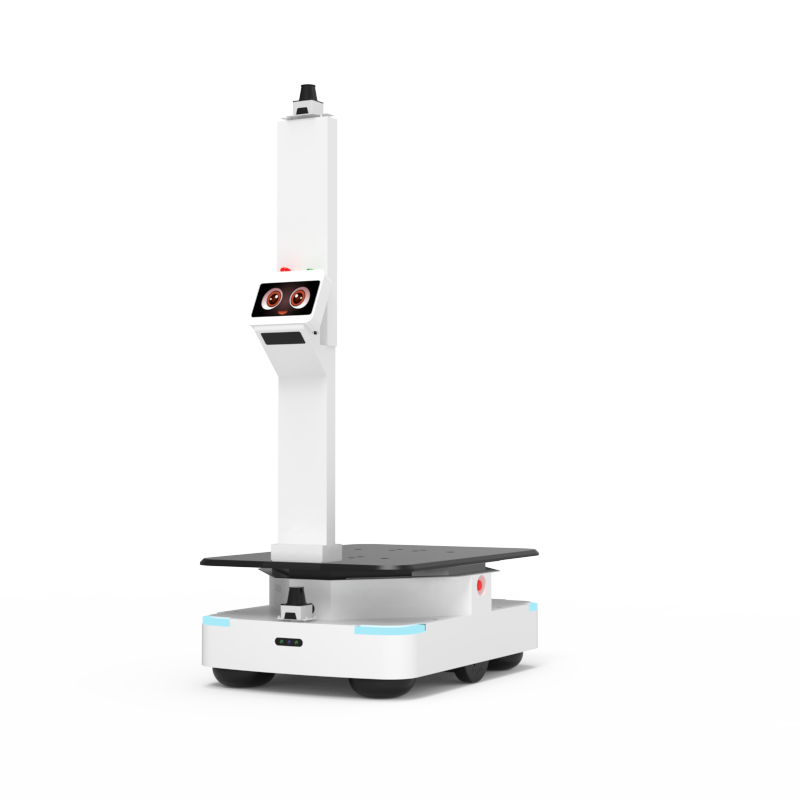
600kg Payload Laser Navigation AMR Robot Autonomous Lifting Warehouse Transfer Equipment
Autonomous lifting AMR for warehouse transfer, cart handling and repetitive pick-and-drop routes. A practical step up from a 300 kg payload AMR when loads are bulkier but aisles remain tight.
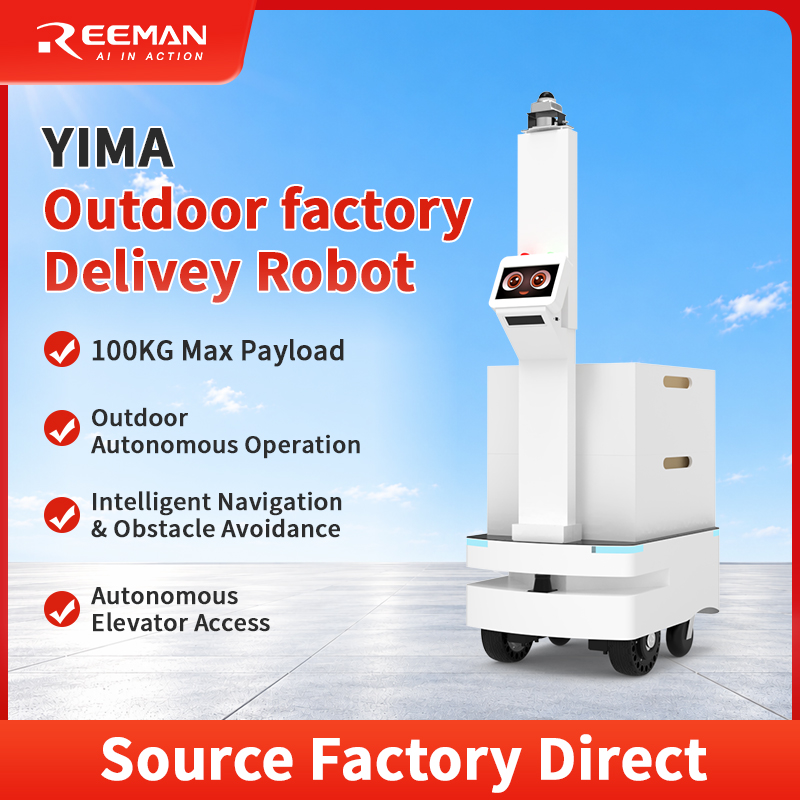
REEMAN Outdoor Delivery Robot 100kg Payload Autonomous Navigation Obstacle Avoidance Elevator Access Warehouse Logistics
Outdoor-capable delivery platform with obstacle avoidance and elevator access. Useful for campus, hospital and warehouse routes where indoor and covered outdoor zones connect.
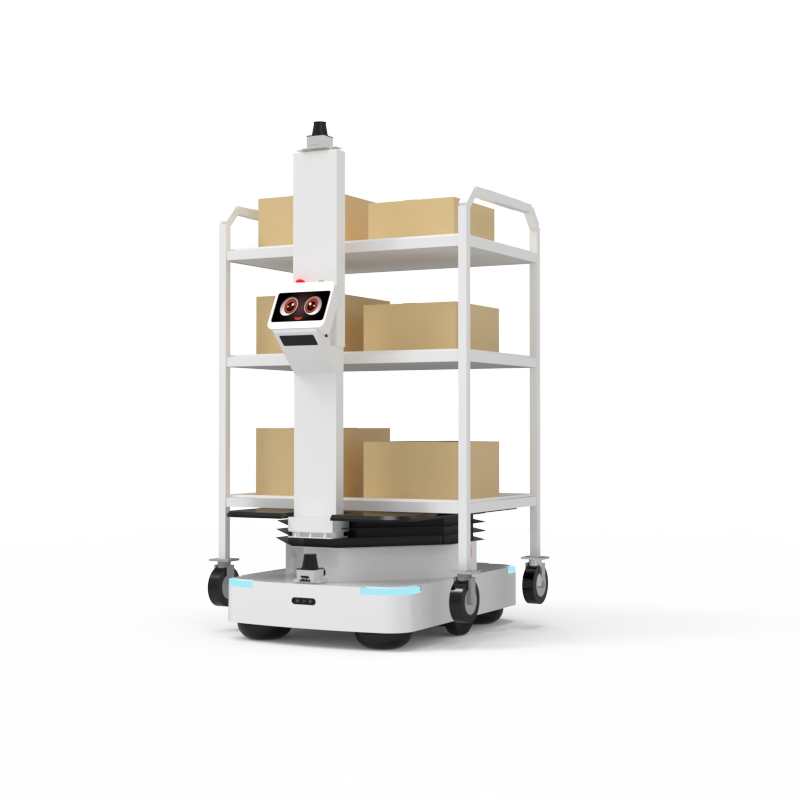
600kg Payload Autonomous AMR Robot Multi Sensor Mobile Material Handling Cart for Production Line
Multi-sensor AMR cart for production-line replenishment, WIP movement and finished-goods transfer. A strong fit for Medan food, packaging and light assembly plants.
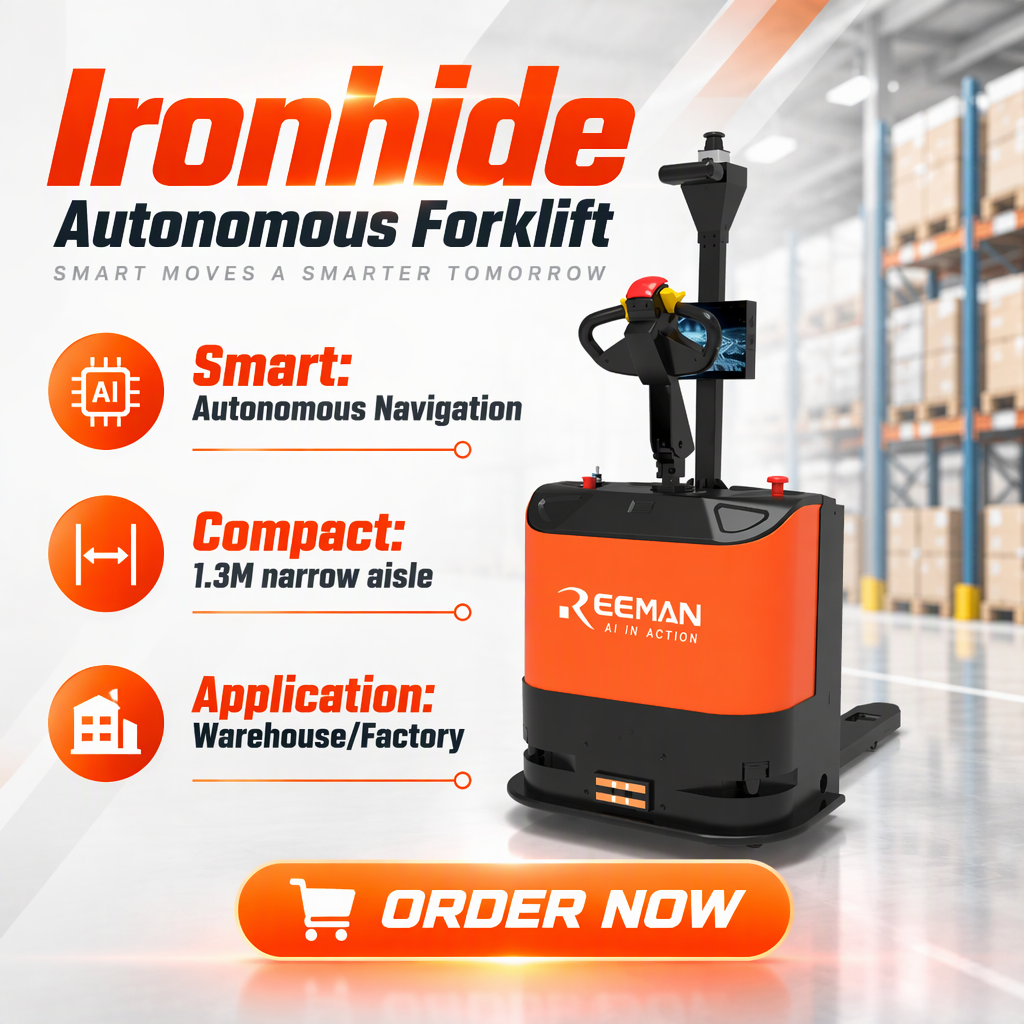
Reeman 1.5 Ton Autonomous Forklift AGV 3D Obstacle Avoidance Bidirectional Driving 48V 30AH Lithium-Ion Battery
1.5 t autonomous forklift AGV with 3D obstacle avoidance and bidirectional driving. For pallet flows that are too heavy for a 300 kg or 600 kg cart-style AMR.

Reeman BBOT30F 1500kg Laser SLAM Autonomous Pallet Stacker AGV Single Line Lidar Obstacle Avoidance Warehouse Transport
Laser SLAM pallet stacker AGV for floor-level and low-rack storage. Single-line lidar obstacle avoidance and warehouse transport in one platform.

REEMAN X-ant JBOT20F 2 Ton Autonomous Forklift AGV Laser SLAM Pallet Handling Robot for Warehouse Logistics
2 t autonomous forklift robot for heavier pallet handling and dock-to-storage cycles. Laser SLAM navigation with fleet scheduling readiness.
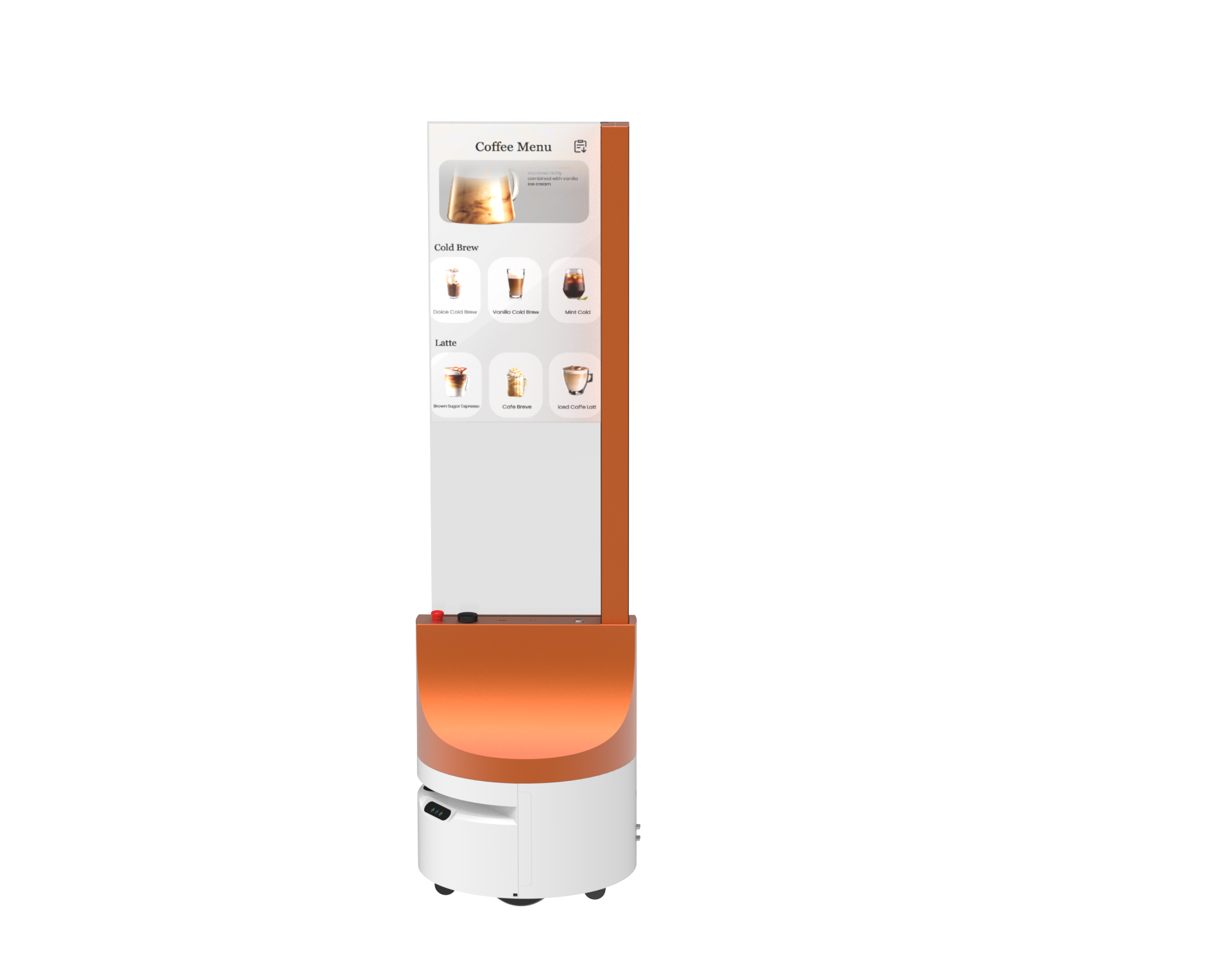
REEMAN 30 Inch OLED Transparent Screen Mobile Advertising Robot 1080 x 1920 FHD 9:16 Wi-Fi App Remote Control
30-inch transparent OLED mobile advertising robot for retail, exhibitions and service venues. Autonomous navigation plus app-based content control.
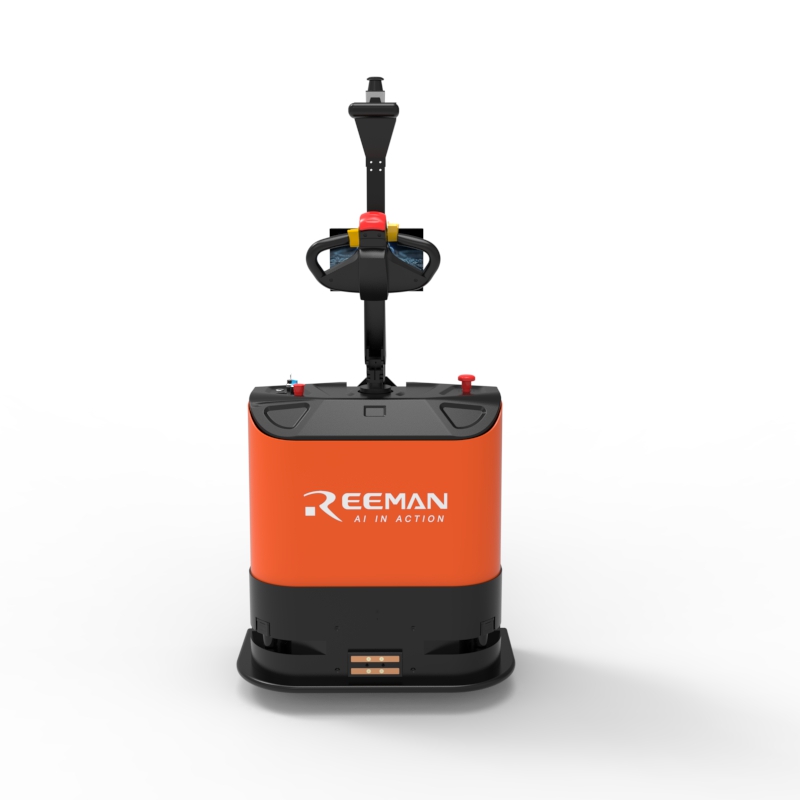
1500kg Laser SLAM Autonomous Forklift AGV Reflector-Free Point-to-Point Warehouse Material Handling
1.5 t reflector-free laser SLAM forklift AGV for point-to-point warehouse handling. Easy route changes without floor reflectors or tape.
All product URLs are preserved from the Elvorn catalog. Images are displayed with contain fit so the complete robot remains visible. For a 300 kg configuration shortlist, use the Get Catalog button.
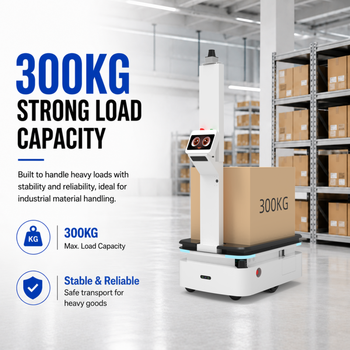 300 kg class
Why the 300 kg Payload Class Is Often the Smartest First AMR in Medan
A 300 kg payload AMR is not a small forklift. It is a right-sized mobile robot for carts, totes, shelves and work-in-progress loads that are too heavy or too repetitive for manual handling but do not justify a 1.5 t or 2 t pallet truck. In Medan’s food, packaging, electronics and distribution operations, that middle band is often the highest-friction zone: staff push carts between buildings, wait for a shared forklift, or double-handle goods at a transfer point.
For a factory-direct program serving Medan, the objective is not to sell the biggest robot. It is to match payload, aisle width, floor condition, charging window and software integration to the actual route. A 300 kg AMR can be the lowest-friction entry point; for palletized loads above 800 kg, the 1.5 t and 2 t autonomous forklifts in the catalog are the safer specification.
Payload-to-workflow fit matrix for Medan buyers
| Workflow in Medan | Load pattern | Recommended platform | Why it fits |
|---|---|---|---|
| Line-side cart and tote replenishment | 100–300 kg | 300 kg payload industrial AMR | Right-sized for narrow aisles, lower energy use and frequent handovers. |
| Packaging and WIP transfer | 300–600 kg | 600 kg AMR material handling cart | More deck stability and sensor coverage for multi-stop production routes. |
| Finished-goods warehouse transfer | 600–1,000 kg | 600 kg lifting AMR or 1.5 t forklift AGV | Choose cart-style handling or fork handling based on the load interface. |
| Pallet put-away and low-rack stacking | 1,000–1,500 kg | BBOT30F 1.5 t pallet stacker AGV | Stacking function, laser SLAM navigation and warehouse transport in one unit. |
| Heavy pallet and dock-to-storage | 1,500–2,000 kg | X-ant JBOT20F 2 t forklift AGV | Payload and fork geometry for heavier pallets and longer dock cycles. |
| Outdoor campus or elevator delivery | About 100 kg | REEMAN outdoor delivery robot | Outdoor navigation, obstacle avoidance and elevator access for connected sites. |
Factory Facts That Reduce Supplier Risk
These are not decorative badges. They are the operating facts a Medan buyer can use to qualify a factory, a wholesaler or an integration partner before placing an order.
Where a 300 kg-Class AMR Fits in Medan and North Sumatra
Medan is a working city, not a showroom. The value case is strongest where routes are repetitive, loads are cart-based and skilled operators are pulled between tasks.
Food & beverage plants
Cart and tote movement between receiving, mixing, filling, packaging and cold-room staging. Specify washdown, humidity and floor-joint protection during the site survey.
Palm oil, rubber and cocoa support logistics
Samples, maintenance parts, packaging film and lab materials. Keep heavy field equipment out of the AMR route and use 1.5–2 t AGVs for palletized inputs.
Electronics and light assembly
WIP kits and finished units moving between cells. ESD-safe top modules and MES call-off can reduce double handling and protect product quality.
FMCG distribution and e-commerce fulfilment
Batch-picking carts, returns, packing stations and value-added services. AMRs smooth peak campaigns without permanent conveyor changes.
Warehouse and Belawan port-adjacent logistics
Container deconsolidation, cross-docking and staging. 300 kg AMRs handle cart-based parcels; forklift AGVs handle palletized freight.
Hospitals, labs and hospitality
Delivery of supplies, linens and meals with elevator access. Quiet, predictable routes suit public areas where staff time and guest experience matter.
Trends Reshaping Medan Automation Decisions
The buying conversation in North Sumatra is moving from “Should we automate?” to “Which route should we automate first?” These six trends explain why.
Making Indonesia 4.0
National manufacturing digitalization encourages MES/WMS visibility and flexible automation, not only fixed conveyors. AMRs fit factories that must change layouts without stopping production.
Labour cost and skill mobility
Repetitive cart pushing competes with skilled operator time. AMRs can redeploy people to quality, changeover and maintenance work instead of long-distance walking.
E-commerce and omni-channel growth
Fulfilment centres need reconfigurable transport that can scale with campaigns and SKU mix. A 300 kg AMR is often enough for cart-based picking and packing flows.
Belawan gateway and supply-chain resilience
Importers and 3PLs are designing buffer and cross-dock flows around the Port of Belawan. Robots help stabilize repetitive transfer work when volumes fluctuate.
ESG and energy productivity
Electric AMRs support cleaner indoor operations and measurable route utilization. Fleet data makes it easier to justify automation with energy and safety metrics.
Tropical-climate engineering
Heat, humidity, dust and power quality must be designed into battery, charger, sensor and seal choices from day one. This is a specification issue, not an after-sales issue.
Medan Site Readiness Scorecard: What to Verify Before You Compare Prices
A lower robot price can disappear in commissioning if the site is not ready. Use this qualitative impact chart to brief your internal team. The bars show how strongly each factor usually affects AMR performance and deployment time; they are not a site score.
Fast RFQ checklist for Medan buyers
Send these items with your inquiry to shorten engineering review.
- Route map with start, handover and charging points
- Load weight, dimensions and center of gravity
- Cart, tote or pallet type and handover interface
- Floor surface, ramps, joints and lift access
- Shift pattern and available charging window
- Wi-Fi coverage and IT/OT integration scope
- Safety rules for pedestrians and forklifts
- Import plan via Belawan, Incoterm, budget and timeline
From Medan Site Survey to Stable Operation
A factory-direct project should be predictable. This is the six-stage workflow we use to reduce commissioning risk for overseas buyers.
Application discovery
Share route video, load data, handover points and throughput target. We identify whether the route belongs to the 300 kg, 600 kg, 1.5 t or 2 t class.
Site survey
Check floors, aisles, doors, lifts, Wi-Fi, power and safety. Tropical heat, humidity and dust are reviewed as engineering inputs.
Model and fleet sizing
Match payload, top module and charging plan to the route. For light carts, the 300 kg AMR is specified; for pallets, the 1.5 t or 2 t AGV is specified.
Build and factory acceptance test
Top module, software interface and load test before shipment. Test records can be prepared for the buyer’s due-diligence file.
Export to Belawan
FOB terms, export documents and shipping coordination. The buyer’s customs broker handles import clearance in Indonesia.
Commissioning and training
Remote or onsite support, operator training and a spare-parts plan. Bilingual work instructions are recommended for Medan teams.
Factory Advantages for Medan Wholesalers, Integrators and End Users
Elvorn is a Shenzhen-based manufacturer, not a catalogue reseller. Founded in 2015, the company is a national high-tech enterprise with in-house R&D across laser SLAM navigation, motion control, fleet scheduling and hardware. Two production bases in Shenzhen and Ningbo cover 5,200㎡, with 200+ team members and 39 patents. For Medan buyers, that means engineering answers come from the people who build the robot — and wholesale partners can discuss model mix, demo units, spare-parts kits and buyer-label programs with the factory.
The factory has been verified onsite by SGS Group. Management systems are certified to ISO 9001 and ISO 14001, and individual models carry CE, FCC or PSE marks depending on configuration. Export terms are FOB, with T/T payment in USD or CNY, and service coverage includes Southeast Asia, North America, Western Europe, East Asia and the Middle East.
- In-house laser SLAM, motion control and fleet scheduling
- Open SDK/API for WMS, MES, ERP and elevator access
- OEM, ODM and buyer-label customization
- Two production bases and 39 patents
- SGS-verified factory, ISO 9001/14001 management systems
- English documentation and export support




Full-stack R&D
Navigation, control and hardware are developed in-house, so integration questions do not bounce between vendors. That matters when a Medan route needs a custom top module or software handshake.
Two production bases
Shenzhen and Ningbo, 5,200㎡ total, with material inspection and assembly control. Capacity is planned around real orders, not catalogue promises.
SGS-verified factory
Onsite inspection covering business license, production capability and quality control. Buyers can use the report for internal supplier qualification.
ISO 9001 & 14001
Quality and environmental management systems audited to international standards. For wholesale partners, documented processes reduce rework and communication risk.
Model-level compliance
CE, FCC or PSE marks depending on the model and destination market. For Indonesia, confirm any additional local requirement with your importer and customs broker.
Wholesale and OEM support
Model mix, buyer label, demo units and spare-parts planning for channel partners. Medan distributors can discuss a phased program instead of a single-unit purchase.
 SGS onsite verified
 CE marking
 FCC
 PSE
Certification depends on model and configuration. Confirm the exact certificate for your order during RFQ.
Frequently Asked Questions About 300 kg AMR Supply
Practical answers for factory buyers, wholesalers, integrators and 3PLs sourcing from Medan and North Sumatra.
What can an industrial autonomous mobile robot with 300 kg payload move?
It typically moves carts, totes, shelves, packaging, work-in-progress trays and light material-handling frames within the rated payload and center-of-gravity limits. It is not a substitute for a 1.5 t or 2 t forklift. If your load is a pallet above 800–1,000 kg, specify a forklift AGV instead. The correct answer depends on load dimensions, route slope, floor condition and handover method.
Will a 300 kg AMR survive Medan’s heat, humidity and dust?
That is a specification question, not a yes/no claim. Medan’s tropical climate requires a review of sensor protection, dust filtration, corrosion protection, tire compound, battery thermal behavior and charger placement. For food plants, washdown and humidity exposure must be discussed. Specify the actual environment during the site survey rather than relying on a generic IP rating.
How do we ship a robot to Medan and clear customs?
Typical export terms are FOB, with T/T payment in USD or CNY. The robot is shipped from a Chinese port and arrives via Belawan or another Indonesian gateway. The buyer’s customs broker handles import clearance and local duties. Elvorn provides export documents, packing information and technical descriptions for the customs file. Final lead time is confirmed after model and configuration approval.
Can the AMR connect to our WMS, MES or ERP?
Elvorn AMRs and robot chassis provide an open SDK and API for secondary development. Typical integration scope includes task dispatch, status feedback, route calls, charging events and fault alarms. The exact interface depends on your software vendor and network architecture. For Medan projects, include IT/OT responsibilities in the RFQ so integration is not left to the robot supplier alone.
What floor, aisle and Wi-Fi conditions are required?
Check floor flatness, expansion joints, ramps, drainage covers, doorway width, lift access and pedestrian/forklift traffic. Wi-Fi coverage should be stable along the entire route, including handover points and charging areas. Highly reflective floors, glass walls and metal racking can affect sensors; a site survey is the right place to identify these conditions.
Do you provide Bahasa Indonesia training and local spare parts?
English documentation and remote technical support are standard. For Medan teams, we recommend bilingual Bahasa Indonesia/English work instructions and train-the-trainer sessions so operators and maintenance staff can reproduce the procedure. Spare-parts kits can be planned with the order. Local partner availability should be confirmed for your specific model and service level.
What is the MOQ for wholesalers or distributors in Medan?
MOQ depends on model mix, customization scope and spare-parts plan. A wholesale or distributor program can be structured around a demo unit, a small initial fleet, a spare-parts kit and a technical training plan. For a single factory project, a one-unit AMR plus charging solution may be sufficient. Discuss the target segment — food, electronics, logistics or service — so the model mix is realistic.
Which certifications and warranty terms apply?
Individual models may carry CE, FCC or PSE marks. The factory management system is certified to ISO 9001 and ISO 14001, and the factory has been verified onsite by SGS Group. For Indonesia, confirm any additional local requirement with your importer. Warranty terms are confirmed in the quotation and depend on the model, battery, charger and service package.
How do we size the fleet and calculate ROI?
Start with route cycle time, daily trips, load weight, handover time and charging window. A single AMR may cover one shift if the route is short; a larger fleet may be justified by multi-shift operation. ROI should include labor redeployment, reduced product damage, safety improvement, forklift utilization and the cost of layout changes. Avoid comparing robot price alone against labor cost without including integration, training and maintenance.
Request the 300 kg AMR Catalog and Medan Application Worksheet
Send your route, load, floor condition and target throughput. Our engineers will return a model shortlist, fleet estimate and the questions that must be closed before a factory quotation. Factory-direct support is available for Medan end users, wholesalers and integrators.
Get CatalogOEM / ODM · Wholesale discussions · Export documentation · English technical support · info@elvornbot.com