Eight Laser Navigation Robots for Ottawa Material Flow
For Ottawa procurement and operations teams, the right laser navigation robot is not simply the one with the highest payload. It must match aisle width, pallet type, floor condition, elevator access, charging location, winter operating plans and WMS/MES integration. The eight models below cover the most common starting points for warehouses, 3PLs, manufacturing plants and service environments.
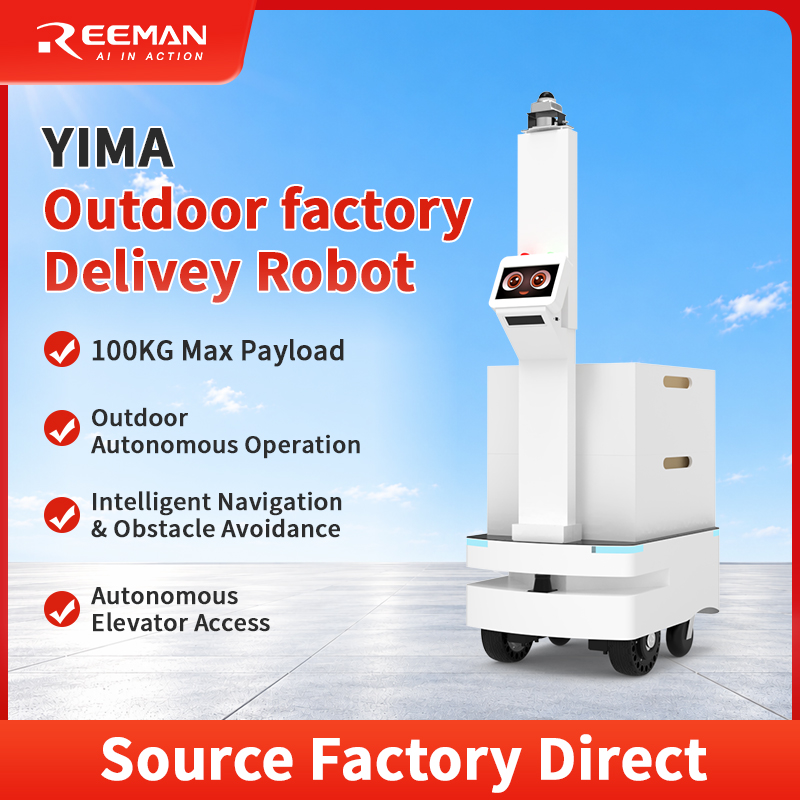
REEMAN 100 kg Outdoor Delivery Robot
100 kg payload platform with autonomous navigation, obstacle avoidance, elevator access and warehouse logistics support for indoor-outdoor transfer.
View product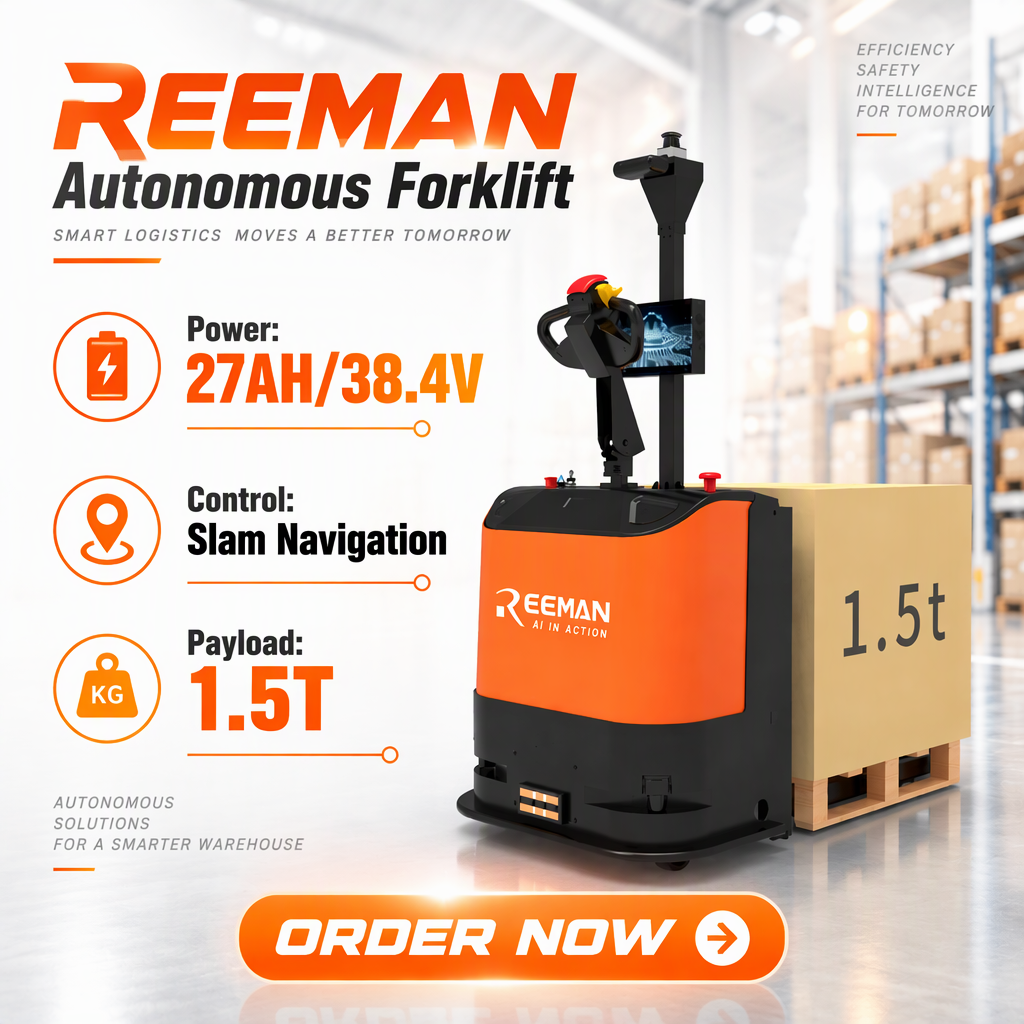
Reeman 1.5 Ton Autonomous Forklift AGV
SLAM navigation, 3D obstacle avoidance and bidirectional driving for indoor warehouse pallet handling and repetitive dock-to-rack flows.
View product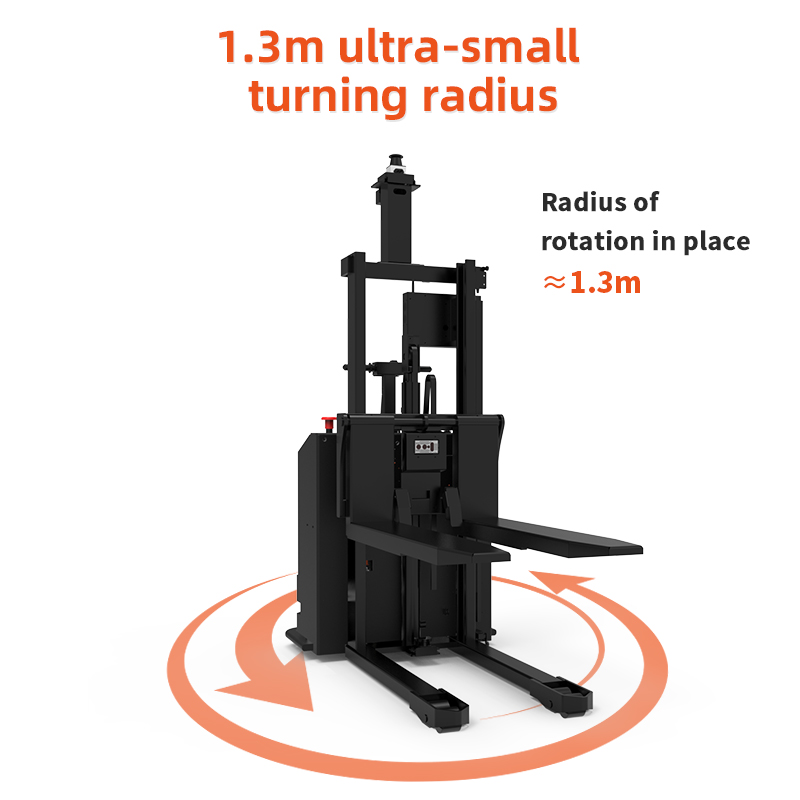
1000 kg Forklift AGV Laser SLAM Pallet Transport Robot
1.3 m turning radius, automatic charging and pallet transport capability for factory logistics where space and charger placement are constrained.
View product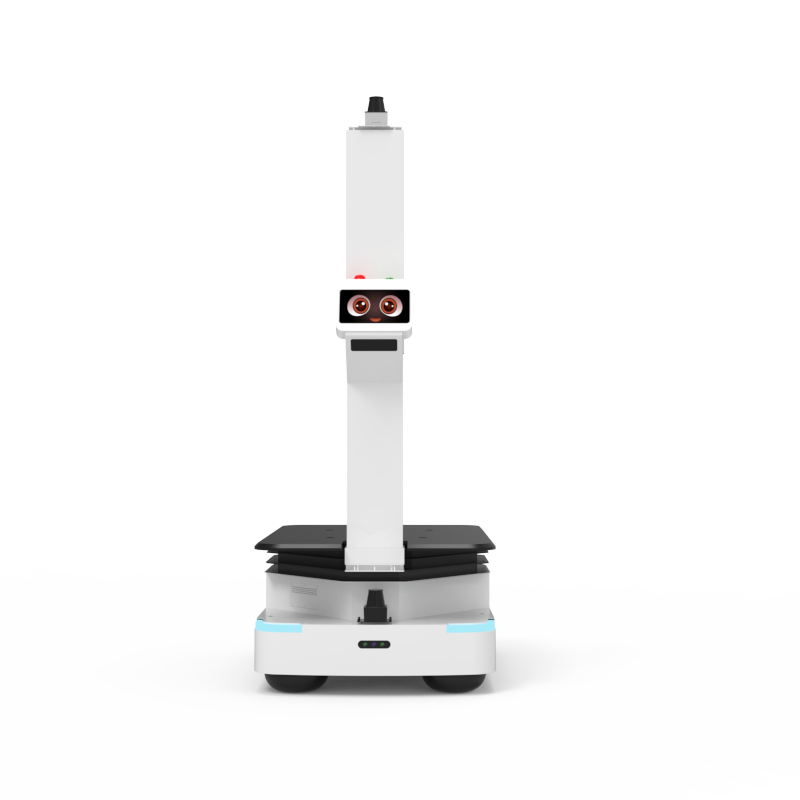
600 kg Industrial AMR AGV Robot
Laser SLAM navigation with QR code-free deployment for flexible factory logistics, line-side replenishment and cart or shelf transport.
View product
REEMAN X-ant JBOT20F 2 Ton Autonomous Forklift AGV
Laser SLAM pallet handling robot for warehouse logistics, designed for heavier pallet cycles, longer shifts and recurring storage moves.
View product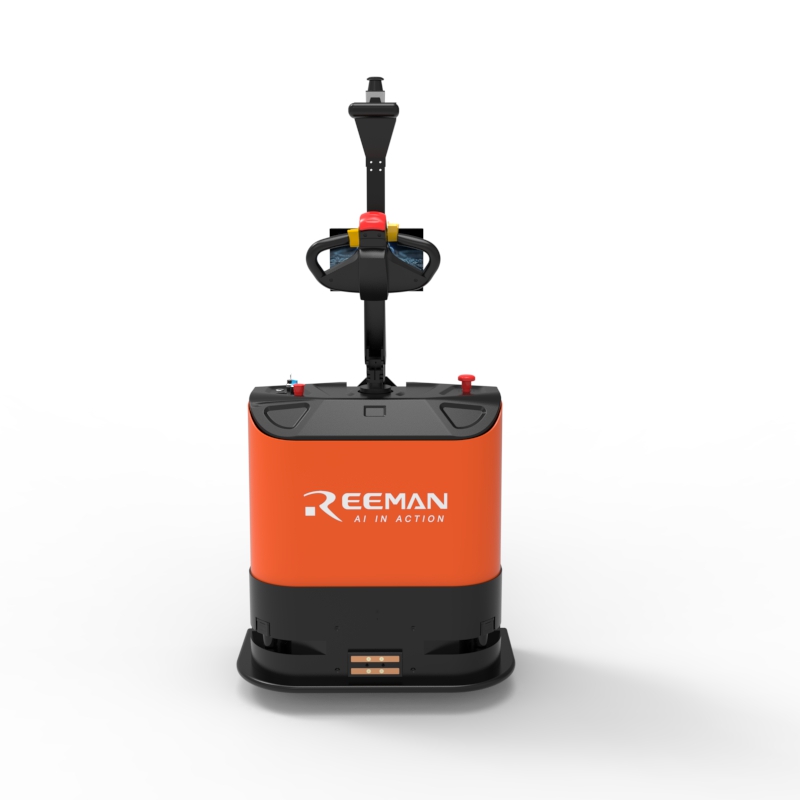
1500 kg Laser SLAM Autonomous Forklift AGV
Reflector-free, point-to-point warehouse material handling for facilities that want fast mapping and less floor infrastructure.
View product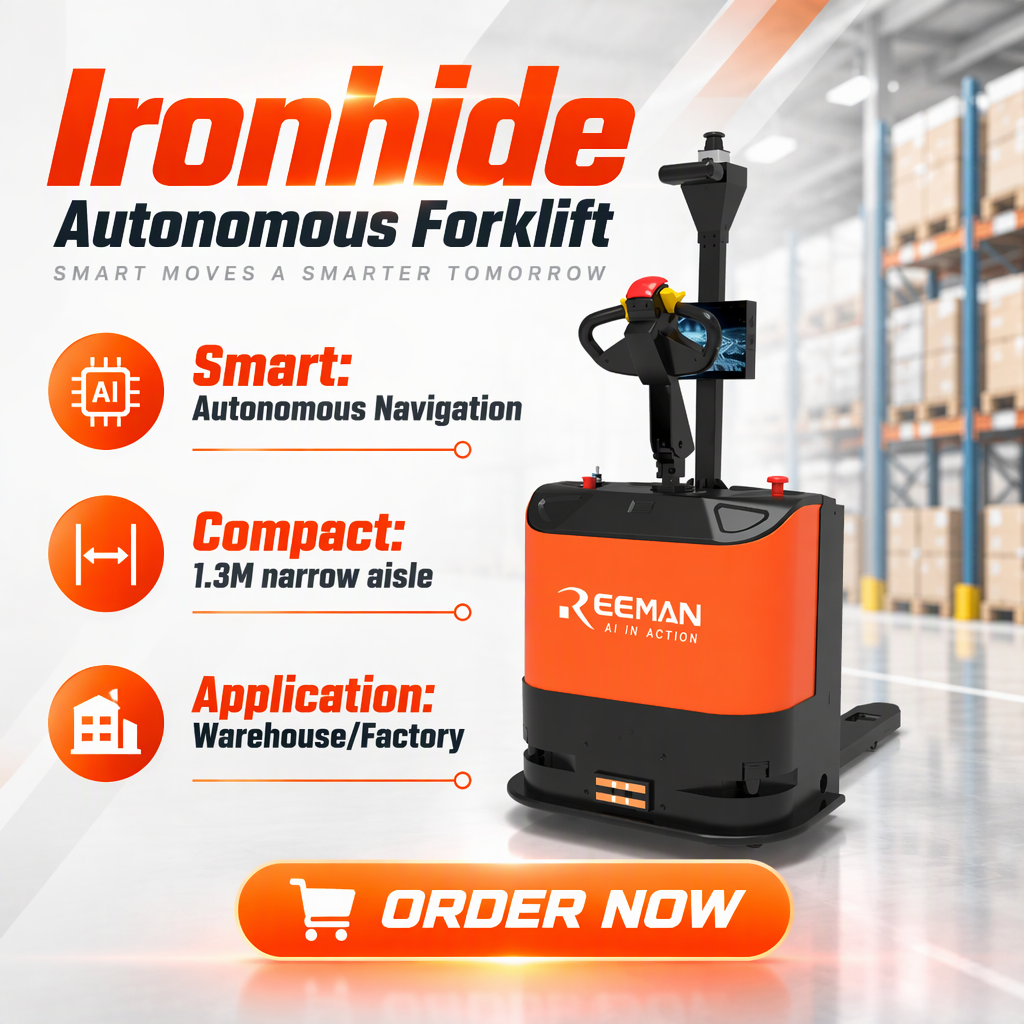
Reeman 1.5 Ton Autonomous Forklift AGV
3D obstacle avoidance, bidirectional driving and 48V 30AH lithium-ion battery for agile indoor warehouse deployment.
View product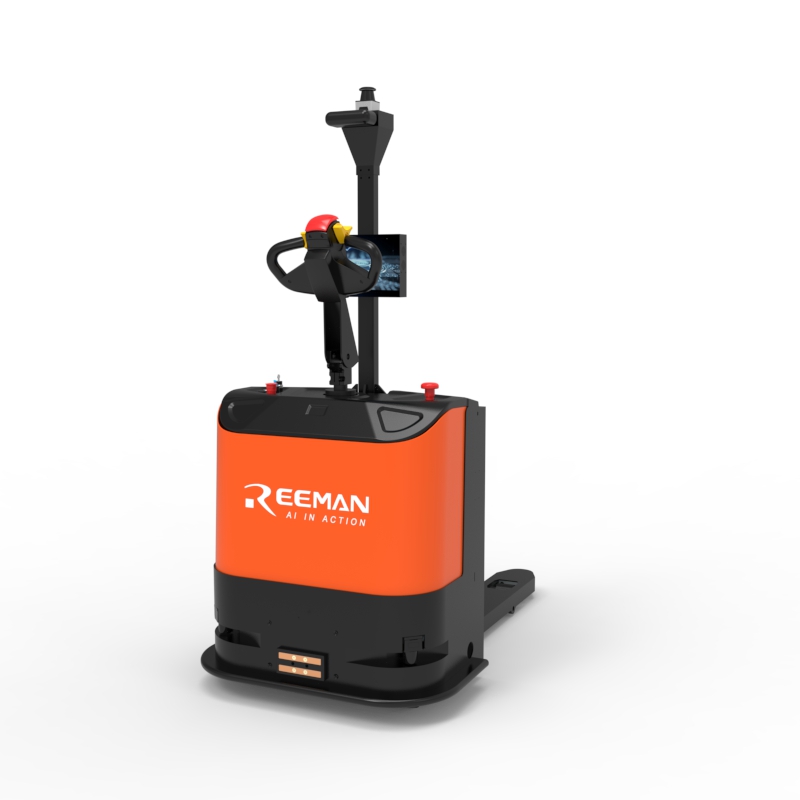
CE Certified 1500 kg Driverless AGV Forklift
Laser SLAM navigation and automatic pallet loading/unloading with a 1–2 hour working time, suitable for scheduled repetitive handling tasks.
View productManufacturer Depth Ottawa Buyers Can Verify
Shenzhen Elvorn Intelligent Equipment Co., Ltd. was founded in 2015 and operates as a national high-tech enterprise focused on robotic platform technology and autonomous driving. The company is not a trading intermediary: it develops laser SLAM navigation, motion control, fleet scheduling and robot hardware in-house.
Robotics platform development and autonomous driving engineering.
Long-term focus on AGV, AMR, chassis and autonomous forklift platforms.
In-house technical development across navigation, control and integration.
Production and operating space across the company’s manufacturing footprint.
Engineering, production, quality and export support personnel.
Commercial responsiveness matters when Ottawa teams compare suppliers.
Factory data and business licensing have been verified onsite by independent inspector SGS Group. Management systems are certified to ISO 9001 and ISO 14001, with two production bases in Shenzhen and Ningbo.
Why the Factory Behind the Robot Matters to Ottawa Buyers
When an Ottawa warehouse, 3PL, manufacturer or institutional facility evaluates laser navigation robot manufacturers, the buying decision usually moves beyond a single unit price. Procurement teams need evidence that the supplier can support site mapping, safety review, WMS/MES integration, spare-part planning and long-term changes in layout.
Elvorn’s advantage is vertical depth. The company owns core capabilities in laser SLAM navigation, motion control, fleet scheduling and hardware design, and manufactures autonomous forklifts, industrial AMRs, robot chassis, delivery robots and cleaning robots from two production bases in Shenzhen and Ningbo. That structure shortens customization loops for OEM/ODM buyers and gives integrators clearer engineering answers during pre-sales review.
For Canadian buyers, documentation quality is as important as the machine itself. Elvorn provides English documentation, remote commissioning support and spare-part supply for buyers across North America, Western Europe, Eastern Asia, Southeast Asia and the Middle East. Depending on the model, robots carry CE, FCC or PSE marks; the company holds ISO 9001 and ISO 14001 certification and has passed onsite verification by SGS Group.
This is particularly relevant in Ottawa, where a robot may need to operate in a leased building, a multi-tenant industrial park or a facility with existing forklift traffic. A manufacturer with its own navigation and control stack can review map changes, fleet behavior, charging strategy and interface requirements without passing every question through multiple suppliers.

R&D, Assembly and Quality Control
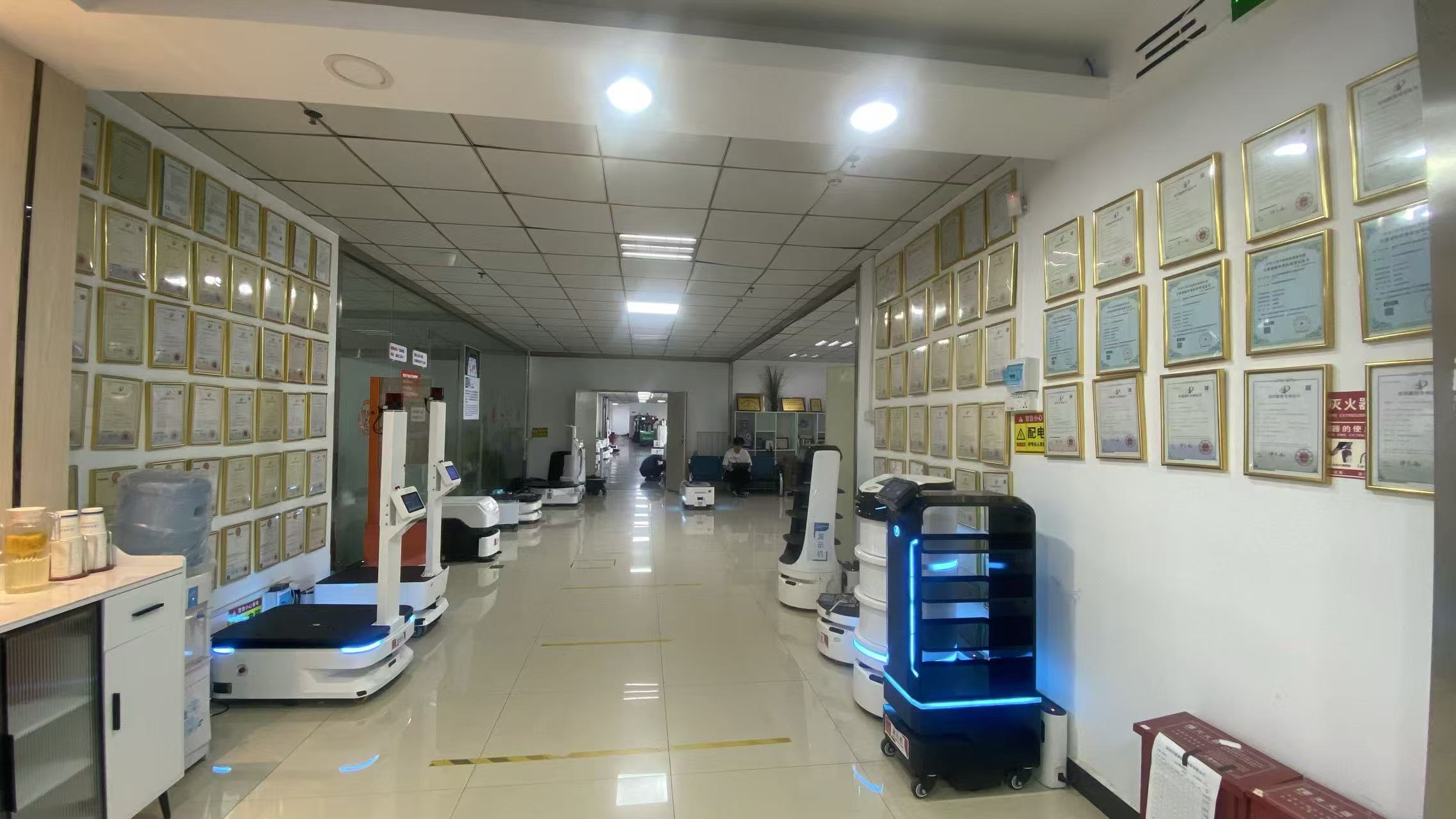
A supplier assessment should include production capability, assembly discipline and testing records. These factory images show the type of manufacturing environment behind Elvorn’s autonomous robot product lines.

Factory workshop
Production and assembly space for autonomous mobile robots and forklift AGV platforms.
Assembly line
Structured build process for chassis, sensors, control modules and final robot assembly.

Quality inspection
Functional checks and load-testing procedures before shipment and deployment planning.

Production line
In-house engineering and production capacity for OEM, ODM and buyer-label projects.
Factory-Verified Advantages for Laser Navigation Projects
Ottawa buyers often shortlist suppliers on navigation flexibility, integration openness, safety architecture, production control and after-sales responsiveness. These are the advantages that matter during technical review.
Laser SLAM Without Floor Markers
Maps are built with laser SLAM, avoiding magnetic tape, QR codes or reflectors in most models. That reduces disruption in leased Ottawa buildings and makes layout changes faster.
Open SDK and API
AMRs and robot chassis support secondary development so integrators can connect task dispatch and status feedback to WMS, MES, ERP, elevators, doors and dashboards.
Modular Payload Platforms
From 100 kg delivery robots to 2-ton autonomous forklifts, shared control architecture simplifies fleet training, maintenance planning and spare-part strategy.
Multi-Layer Safety Design
Lidar sensing, obstacle detection, emergency stops and speed zoning help robots operate around pedestrians, forklift traffic and changing racking conditions.
Own Production Capacity
Two production bases in Shenzhen and Ningbo support on-site material inspection, supplier assessment procedures and controlled customization for export projects.
Export-Ready Support
English documentation, remote commissioning guidance and spare-part supply support buyers in North America, Europe, Asia and the Middle East.
Localized Application Scenarios for Laser Navigation Robots
Ottawa is not a single warehouse market. Deployment decisions vary by building age, ceiling height, dock configuration, leasing constraints, winter conditions and the amount of human traffic sharing the route.
Clean Manufacturing and Test Support
AMRs can move component kits between stockrooms, assembly cells, test benches and shipping areas. Laser navigation avoids floor tape in clean or leased spaces, while an open API allows task calls from MES or internal production software.
3PL and E-commerce Pallet Flow
Forklift AGVs and pallet transport robots handle inbound pallets, put-away and dock loading. The 1000 kg, 1500 kg and 2-ton models should be matched to racking height, aisle width, pallet condition and shift throughput.
Cold-Room and Distribution Handling
Autonomous forklifts reduce repetitive travel in coolers and distribution centers. Buyers should specify condensation, washdown practice, floor traction, charging location and battery behavior before selecting a standard configuration.
Indoor-Outdoor Service Delivery
The REEMAN 100 kg outdoor delivery robot with elevator access supports food service, room delivery, campus logistics and warehouse transfer where a single route crosses indoor and outdoor zones.
Multi-Floor Delivery and Guidance
Multi-floor delivery robots require elevator integration, door control, network coverage and clear human-robot traffic rules. SLAM mapping can be updated without major floor work when layouts change.
Mixed Fleet for Manufacturing and Logistics
Suppliers and distribution centers often combine AMRs for line-side moves with autonomous forklifts for pallet flow. Fleet scheduling and charger placement should be planned around shift patterns, not just peak throughput.
Ottawa Trends Shaping Robot Selection in 2025–2026
The strongest automation projects are rarely “robot-only” purchases. They combine navigation, safety review, network design, charging planning and integration with the systems that already dispatch work.
Brownfield Retrofits Before Greenfield Builds
Ottawa facilities often need automation inside existing walls. Tape-free laser SLAM reduces construction disruption and allows shorter pilots before a larger fleet decision.
Real WMS, MES and ERP Integration
Buyers now ask for task dispatch, status feedback, error handling and reporting. Open SDK and API support should be demonstrated during technical review, not assumed.
Mixed Fleets and Staged Rollouts
A first phase may use AMRs for line-side logistics and a forklift AGV for pallet movement. Phased deployment lowers operational risk and spreads capital spending.
Safety, Insurance and Risk Documentation
Procurement teams need emergency-stop design, speed zoning, hazard review and operator training records. Local electrical and safety requirements should be confirmed with the buyer’s authority or integrator.
Cold-Weather Charging and Battery Planning
Ottawa winters affect battery performance and traction. Charging should be planned in a temperature-controlled area where possible, and operating temperature requirements should be reviewed before final configuration.
Bilingual Operator Readiness
English and French work instructions may be required in some Ottawa facilities. Language, labeling and training requirements should be specified during customization and deployment planning.
Quick Fit Matrix for Common Ottawa Workflows
Use this matrix for first-round scoping, then confirm the final model after a site survey of aisle width, pallet type, floor condition, charger location and throughput target.
100–300 kg AMR
Flexible material movement for electronics, labs, line-side parts and light carts.
600–1000 kg Pallet AGV
Repetitive pallet transfer in factories, warehouses and distribution centers.
1.5–2.0 Ton Autonomous Forklift
Heavier pallet handling, dock-to-rack moves and long-shift warehouse routes.
1500 kg Driverless Forklift
Automatic pallet loading and unloading with scheduled repetitive handling tasks.
Common Procurement Questions from Ottawa Buyers
These answers are written for operations managers, plant engineers, systems integrators and procurement teams comparing laser navigation robot manufacturers for Ottawa projects.
Which laser navigation robot is the best starting point for an Ottawa warehouse?
Start with the load and aisle. For light line-side or cart movement, a 100–600 kg AMR is often enough. For pallet shuttling, review the 600 kg, 1000 kg or 1500 kg forklift AGV models. For heavier pallet cycles and long shifts, compare the 1.5-ton and 2-ton autonomous forklifts. The final choice should be confirmed by a site survey covering aisle width, pallet condition, floor grade, charger location and WMS task flow.
Do these robots require magnetic tape, QR codes or reflectors?
Most Elvorn autonomous robots use laser SLAM navigation and do not require magnetic tape or QR codes. Some 1500 kg models are promoted as reflector-free for point-to-point warehouse handling. This is valuable in Ottawa leased buildings where floor work may be restricted. Even so, mapping quality, Wi-Fi coverage, lighting changes and dynamic obstacles should be reviewed during commissioning.
How should Ottawa buyers plan for winter, cold docks and battery performance?
Cold temperatures can reduce battery capacity and affect traction. Plan charging in a temperature-controlled area where possible, confirm operating temperature requirements before configuration, and review floor conditions at doors or loading docks. Snow, salt residue and condensation should be managed through housekeeping and route planning. The robot specification should be matched to the actual environment rather than defaulting to a standard indoor configuration.
Can the robots integrate with WMS, MES, ERP, elevators and doors?
Elvorn AMRs and robot chassis provide an open SDK and API for secondary development. Integrators can connect task dispatch and status feedback to warehouse management, manufacturing execution or custom software systems. Elevator and door control should be confirmed as part of the integration scope. Ottawa facilities with strict IT or cybersecurity review should document network architecture, data flow and access control before deployment.
What certifications and due-diligence evidence should we request?
Request the model-specific certificate package because CE, FCC or PSE markings vary by configuration. Ask for ISO 9001 and ISO 14001 documentation, SGS onsite verification evidence, factory test records and safety design details such as emergency stops and obstacle detection. Canadian buyers should also confirm local electrical safety, insurance and risk-assessment requirements with their authority or integrator before commissioning.
What trade terms, lead time and support are typical for Ottawa orders?
Elvorn ships worldwide on FOB terms and accepts T/T payment in USD or CNY. OEM service, design service, buyer-label options and custom top modules are available. Lead time depends on model, battery, fork or top-module configuration and order quantity. Export projects can be supported with English documentation, remote commissioning guidance and spare-part planning; final after-sales arrangements should be confirmed in the quotation.
Send Your Ottawa Layout, Load and Throughput Data
Share your building layout, pallet type, target throughput, charging location and integration requirements. Elvorn’s application engineers can recommend a practical robot mix, review customization options and prepare the next technical discussion.