Vancouver Buyer Whitepaper · 2025–2026
Mobile Advertising Robot Supplier & Suppliers in the Vancouver Market
An evidence-led guide for retail groups, hotels, convention venues, property managers and systems integrators comparing mobile advertising robot suppliers for Metro Vancouver. Includes mobility-platform recommendations, localized deployment scenarios, Canadian compliance questions and a practical supplier checklist.
- Metro Vancouver focus
- Laser SLAM & open SDK
- Localized FAQ
- Retail, hotel & venue scenarios
Eight Systems Buyers Review for Vancouver Automation and Mobile Advertising Programs
Vancouver procurement teams rarely buy a mobile advertising robot in isolation. The same venue often needs a repeatable mobility base, a guest-facing service robot and back-of-house automation that protects staffing levels. The eight Elvorn platforms below are the systems most useful during a Vancouver site review: autonomous forklift and stacker classes for pallet work, AMR platforms for cart, tote and production-line movement, a conveyor-integration AMR, and a dual-laser lifting platform for custom manufacturing applications. Product links are preserved exactly from the supplier catalogue. For a 55-inch transparent OLED advertising module, AI voice, CMS scheduling or a branded wayfinding robot, use the Get a Quote CTA with your venue plan; the final advertising configuration should be engineered on a mobility platform after a site survey.
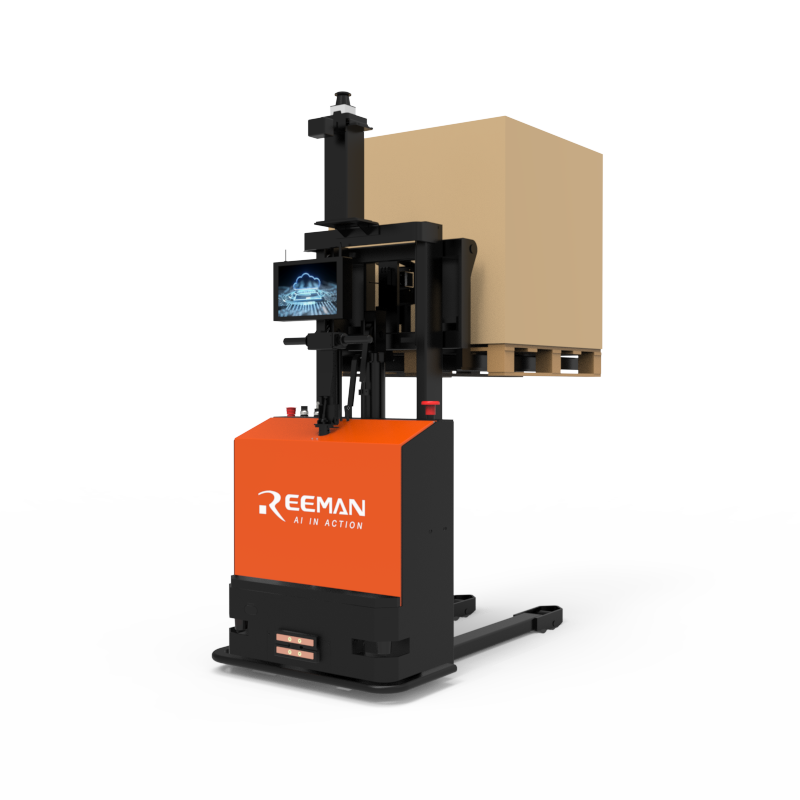
1000 kg Laser SLAM Forklift AGV Unmanned Pallet Stacker Single Line Lidar Obstacle Avoidance Factory Logistics
A compact 1000 kg pallet stacker for repetitive factory and warehouse moves. Single-line lidar and laser SLAM reduce dependence on floor markers, which is useful where tenants reconfigure racking.
View product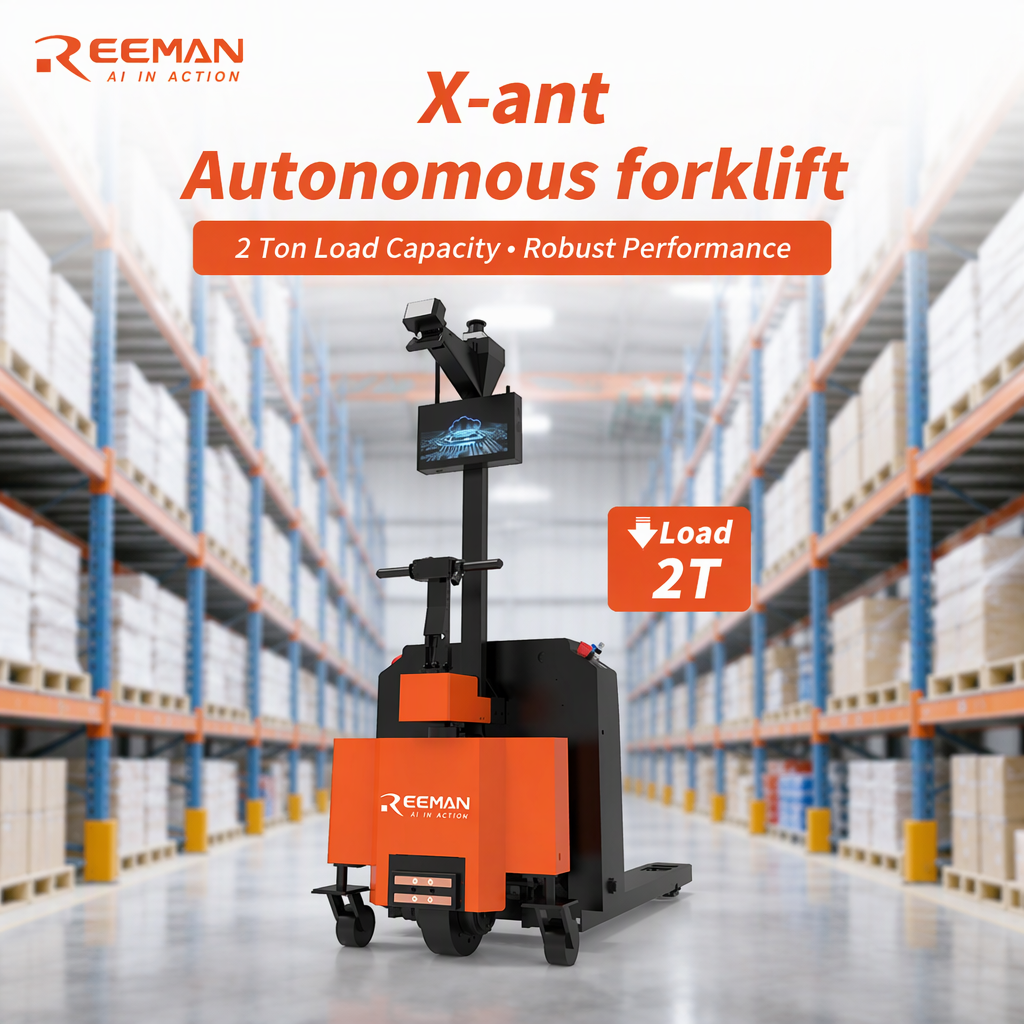
2 Ton Autonomous 4WD AGV Forklift Laser SLAM Navigation Multi-Line LiDAR 10mm Position Accuracy Warehouse Handling
A 2-ton 4WD autonomous forklift with multi-line LiDAR and 10 mm position accuracy. Best suited to heavier pallet handling and sustained warehouse cycles where stability and precise docking matter.
View product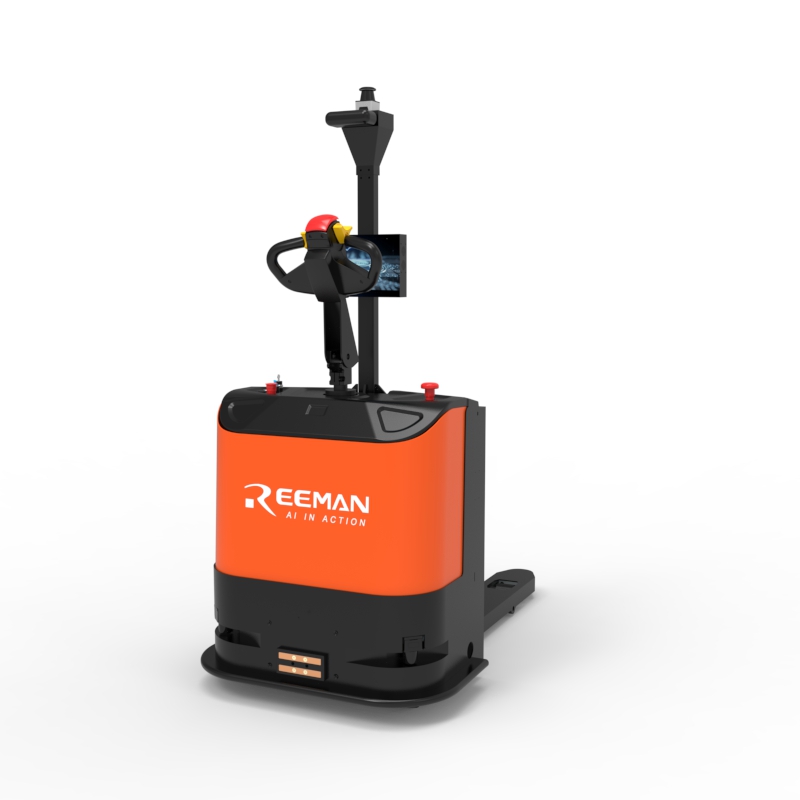
CE Certified 1500kg Driverless AGV Forklift Laser SLAM Navigation Automatic Pallet Loading Unloading Robot 1-2H Working Time
A CE-certified 1500 kg driverless pallet forklift for automatic loading and unloading. The 1–2 hour working-time figure should be matched to your charging schedule and shift plan during configuration.
View product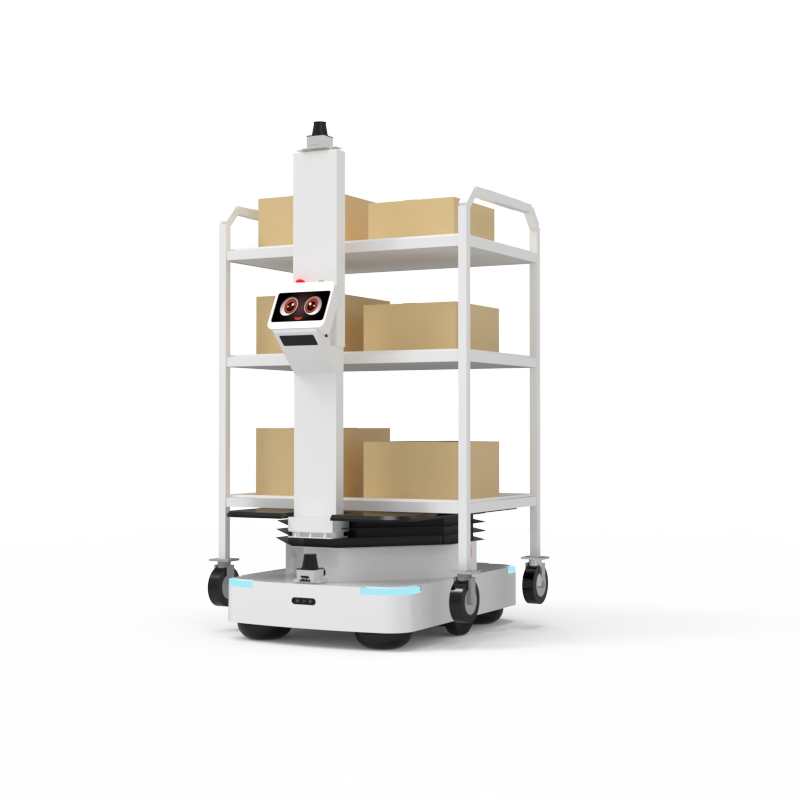
600kg Payload Autonomous AMR Robot Multi Sensor Mobile Material Handling Cart for Production Line
A 600 kg autonomous AMR cart with multi-sensor navigation for production-line material handling. A practical fit for mixed cart, tote and light pallet flows where a forklift is unnecessary.
View product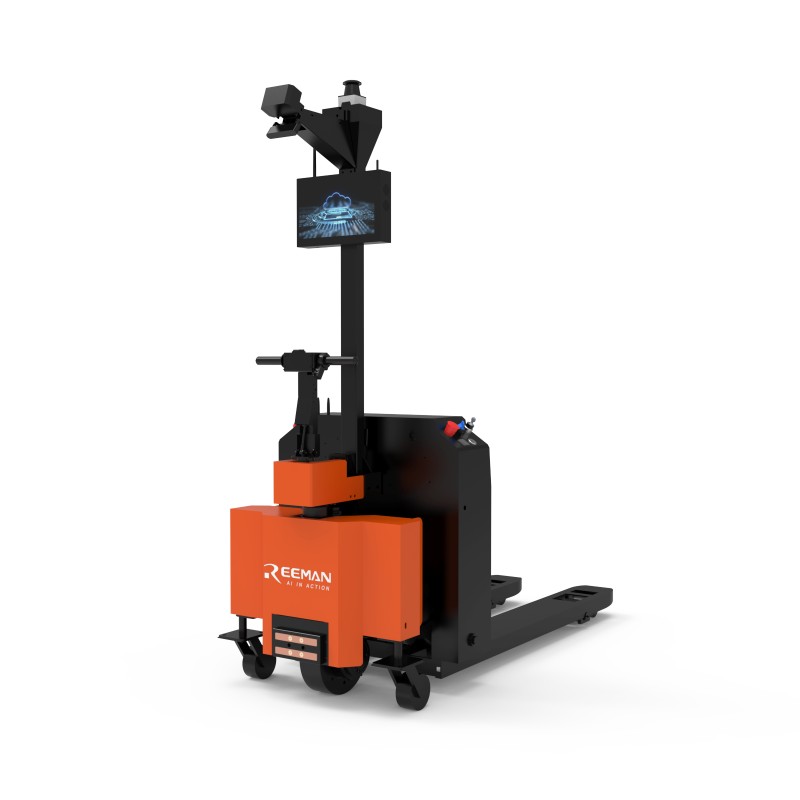
Reeman 2 Ton Autonomous Forklift AGV Laser SLAM Unmanned Pallet Truck 1085mm Fork 10mm Position Accuracy
A Reeman 2-ton autonomous pallet truck with 1085 mm forks and 10 mm positioning accuracy. Useful where standard pallet interfaces and repeatable pickup points dominate the workflow.
View product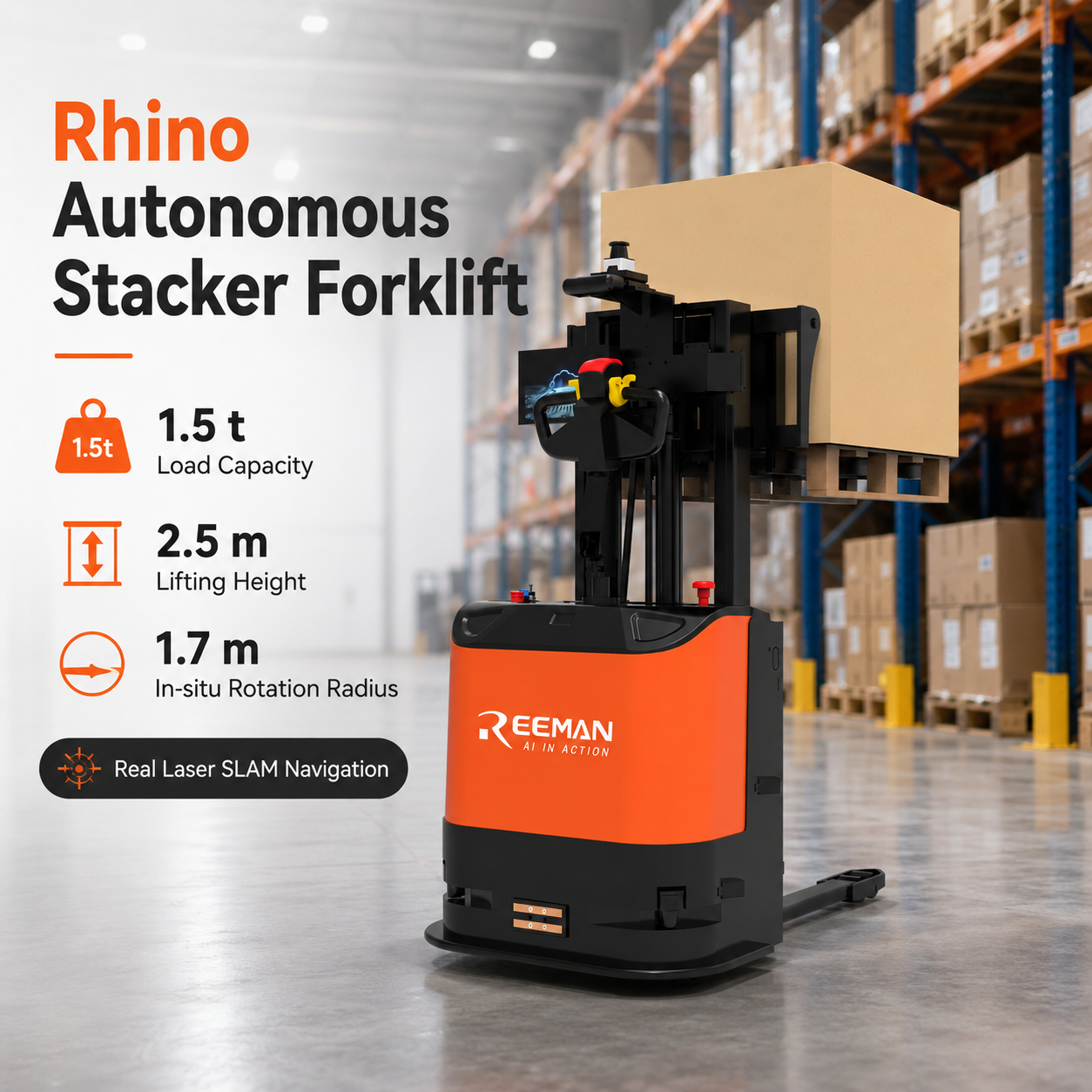
Laser SLAM Autonomous Stacker Forklift 1500 kg Load AGV Pallet Handling Robot Laser Obstacle Avoidance Warehouse
A 1500 kg laser SLAM stacker for pallet handling and low-rack stacking. Laser obstacle avoidance supports shared aisles, but aisle width and rack interface must be verified during the site survey.
View product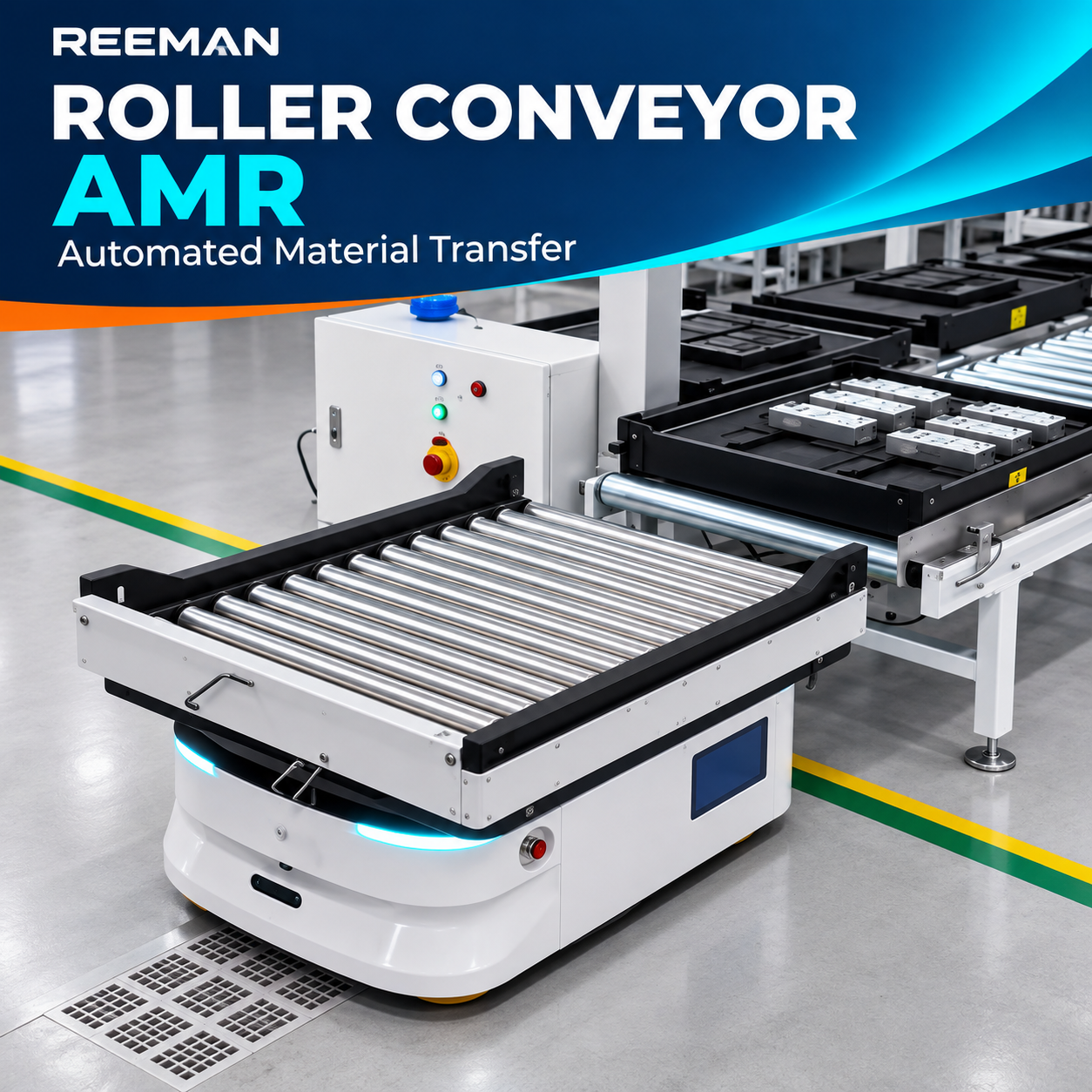
Roller Conveyor AMR Robot with SDK and API for Custom Development and System Integration
An AMR with roller conveyor top and open SDK/API. This is the integration-oriented option for connecting robot movement with conveyor handoffs, MES dispatch or custom production equipment.
View product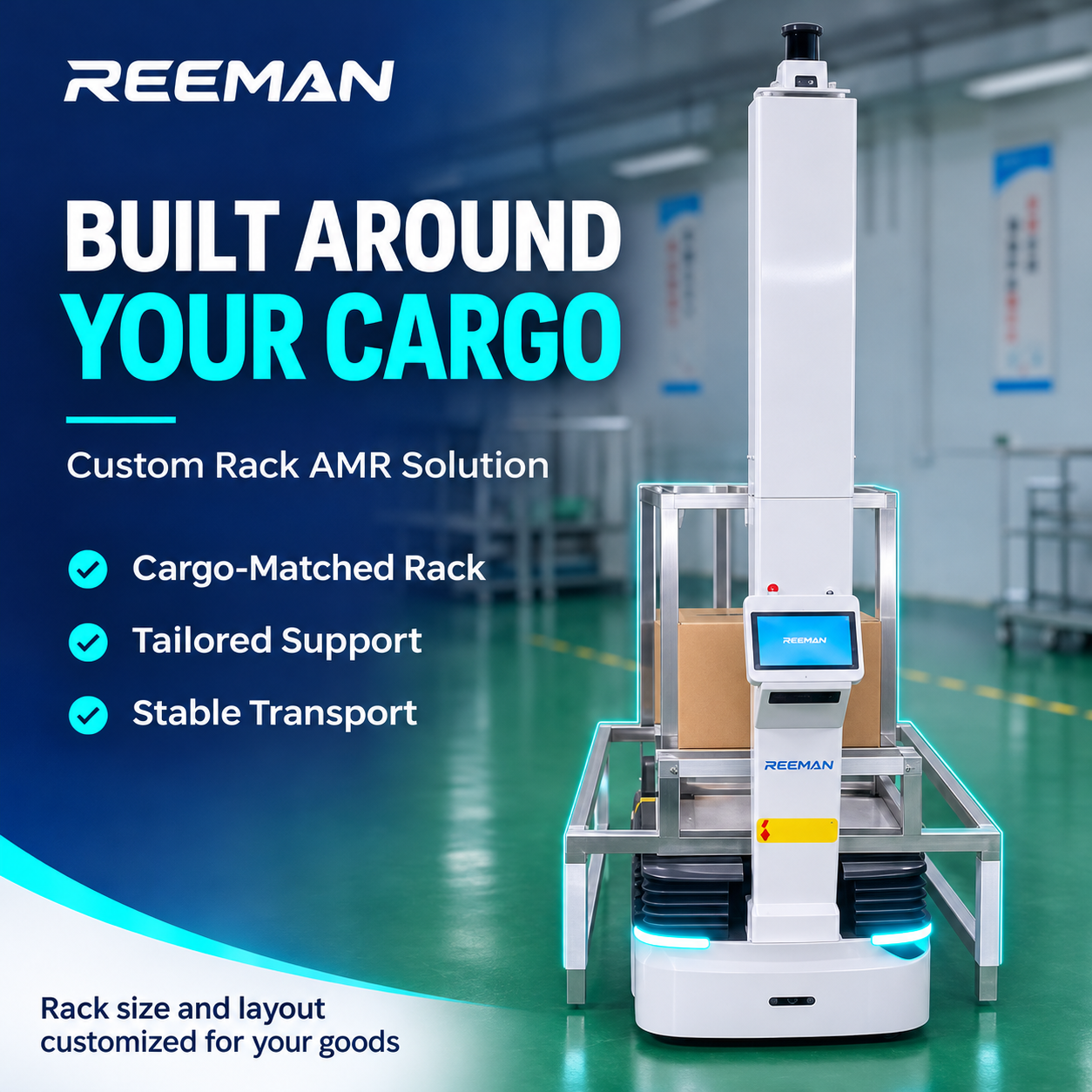
Dual Laser AMR 300KG AGV Lifting Mobile Robot with Slam LiDAR Navigation for Manufacturing Plants
A 300 kg dual-laser lifting AMR for manufacturing plants. The platform can support custom top modules, making it relevant to OEMs and integrators that need a stable autonomous base for branded service or advertising hardware.
View productFor advertising-specific hardware, do not shortlist a supplier on screen size alone. Compare navigation reliability, safety sensors, Canadian compliance pathway, content software, privacy controls, spare-parts plan and local service response before approving a pilot.
What Is a Mobile Advertising Robot — and What Should Vancouver Buyers Actually Compare?
The phrase “mobile advertising robot” is used loosely. For procurement, treat it as a service robot with four layers that must be evaluated together.
In Vancouver, the term may describe a wheeled digital sign in a mall, a guest-services robot in a hotel lobby, a wayfinding assistant at a convention centre or a delivery robot with a promotional display. That ambiguity creates real procurement risk. A low-cost display trolley may look attractive in a showroom but fail in a crowded corridor, and a robust autonomous mobile robot may have excellent navigation but weak content-management software for daily marketing use.
The more reliable approach is to separate the purchase into mobility, engagement, content and trust. Mobility determines whether the robot can move safely and repeatably through the venue. Engagement determines whether visitors actually stop and interact. Content determines whether marketing teams can publish, schedule and measure campaigns without depending on engineers. Trust determines whether the robot can be insured, supported, updated and defended in a privacy review.
Mobility layer
Laser SLAM, lidar fields, emergency stops, speed zoning, ramp limits and battery strategy must match the actual floor plan—not a generic demo video.
Engagement layer
Screen brightness, viewing angles, audio clarity, touch response, AI voice and wayfinding logic influence whether the robot becomes a useful touchpoint.
Content layer
A robot is a publishing endpoint. Ask how campaigns are scheduled, versioned, translated, audited and measured when the marketing team is not on site.
Trust layer
Canadian electrical review, wireless compliance, privacy documentation, accessibility and service response are not optional add-ons for a public venue.
Why the Vancouver Market Rewards a More Careful Supplier Shortlist
Metro Vancouver is not a single market. A Robson Street retail pilot, a Richmond mall campaign, a Surrey distribution centre and a North Vancouver hotel lobby have different floor surfaces, visitor flows, security procedures and electrical rooms.
Buyers should insist on a site-specific deployment plan rather than a generic demonstration. Downtown Vancouver venues may need to manage high foot traffic, tourism peaks, cruise-season arrivals and mixed-use public spaces. Suburban retail centres in Burnaby, Coquitlam, Langley or Richmond may offer wider corridors but different security routines and loading access. Industrial buyers in Delta, Surrey and the Fraser Valley often care more about pallet throughput, charging windows and integration with existing warehouse systems than about display size.
Labour and real-estate economics also shape the business case. Where hiring is difficult and square footage is expensive, a robot that carries promotional content, provides wayfinding or moves materials can be evaluated as a productivity asset rather than a novelty. The strongest pilots define the job clearly: greet visitors, answer repetitive questions, promote a campaign, guide customers, move a cart or transfer pallets. A robot that tries to do everything on day one usually creates operational friction.
Vancouver’s climate and public-space expectations add another layer. Rain, covered plazas, thresholds, ramps and mixed flooring should be assessed before any outdoor-adjacent deployment. Accessibility is equally important: the robot must not block tactile paths, doorways, elevators or emergency routes. Privacy reviews are also more likely when cameras, audience measurement or voice interaction are involved. For a supplier, these are not objections; they are requirements that should appear in the engineering checklist.
In-store media accountability
92Marketing teams want proof of play, campaign scheduling and measurable engagement—not just a moving screen.
Multilingual visitor engagement
88Metro Vancouver audiences are diverse; content strategy should be based on venue data, not assumptions.
Labour and task pressure
84The business case is stronger when the robot removes repetitive walking, greeting or material moves.
Privacy and public-space scrutiny
90Camera use, voice capture, retention and signage should be documented before a public pilot.
All-weather reliability
78Most advertising robots are indoor platforms; wet thresholds, ramps and covered plazas need separate validation.
Local service expectations
86Pacific Time response, spare parts and local technician escalation matter more after the demo ends.
The bars are a buyer-workshop synthesis of recurring Vancouver procurement concerns, not a statistical forecast. Use them to structure questions, not as market data.
What Vancouver Buyers Should Specify Before Comparing Suppliers
A supplier that cannot answer these six questions clearly will create risk during deployment, even if the demo looks impressive.
Canadian compliance pathway
CE is not the same as Canadian certification. Ask about CSA, cUL, UL or ETL/field evaluation where required by the authority having jurisdiction, plus ISED requirements for radio modules.
Privacy by design
Clarify whether cameras are used only for navigation or also for audience measurement. Request on-device processing, retention limits, public signage and a data processing agreement where needed.
Accessibility and public-space behavior
The robot must not block tactile paths, doorways, elevators or emergency routes. Display content should support readable contrast and captions; audible prompts need visual equivalents.
Vancouver climate and floor transitions
Most service robots are configured for indoor use. For lobby-to-covered-plaza deployment, verify IP rating, wet-floor traction, threshold clearance, ramp limits and battery behavior in cool, damp conditions.
Content operations and language
Ask how content is scheduled, versioned, translated and audited. For Metro Vancouver, prepare English plus other languages based on venue audience data—not assumptions about visitors.
Service and uptime model
Request response-time targets, spare-parts list, remote diagnostics, local technician escalation and training. Pacific Time support matters for same-day triage during a Vancouver pilot.
Mobile Advertising Robot Scenarios in Metro Vancouver
These are the venue archetypes most often discussed by Vancouver marketing, operations and integration teams when evaluating a pilot.
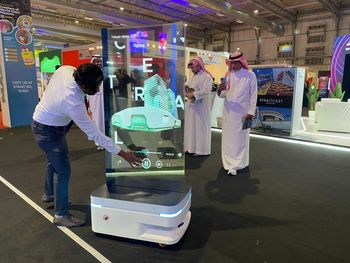
Retail media and wayfinding
In Downtown Vancouver, Richmond, Burnaby or Coquitlam, a robot can move between anchor corridors, promote events, display store directories and provide multilingual wayfinding. The pilot should test crowd behavior, elevator access, campaign scheduling and proof-of-play reporting.
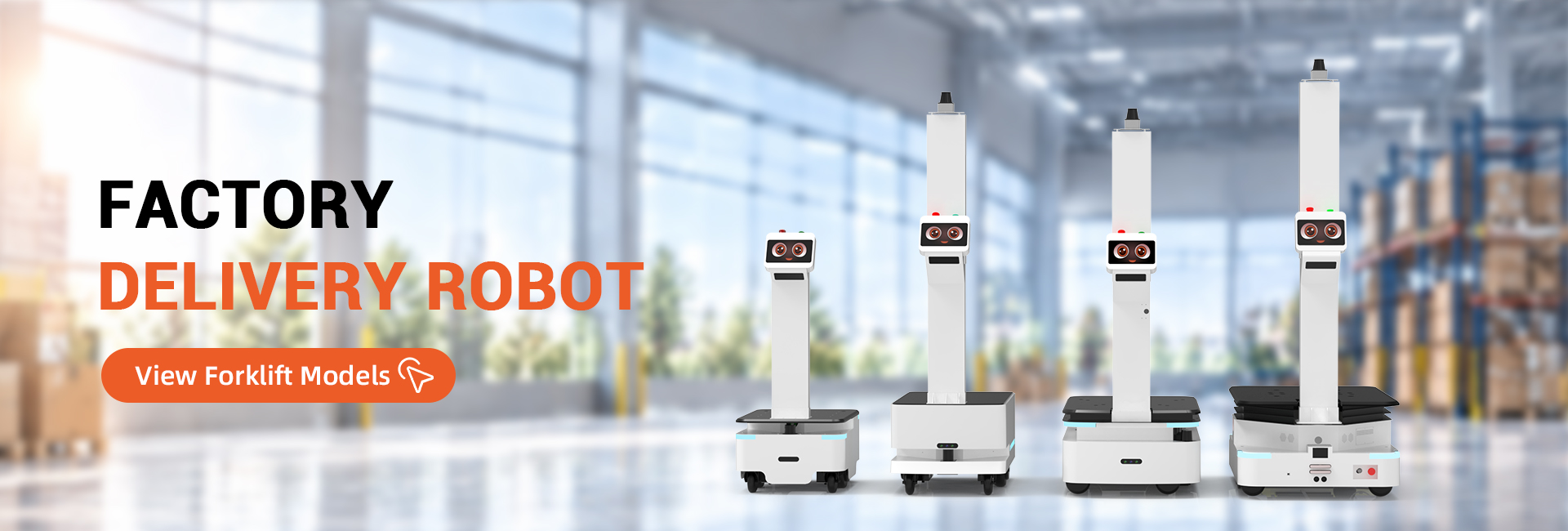
Hotels, restaurants and guest services
Vancouver hotels and restaurants face peak-period staffing pressure. A service robot can carry promotional content, guide guests, deliver small items or answer repetitive questions. Operators should define lift use, back-of-house routes and human handoff rules before deployment.
Airports, transit hubs and conventions
YVR, transit hubs and convention venues combine high footfall with strict security. Mobile advertising robots can deliver wayfinding, event information and sponsor content. Require a clear safety plan, network coverage, content approval workflow and privacy review before any public-area trial.
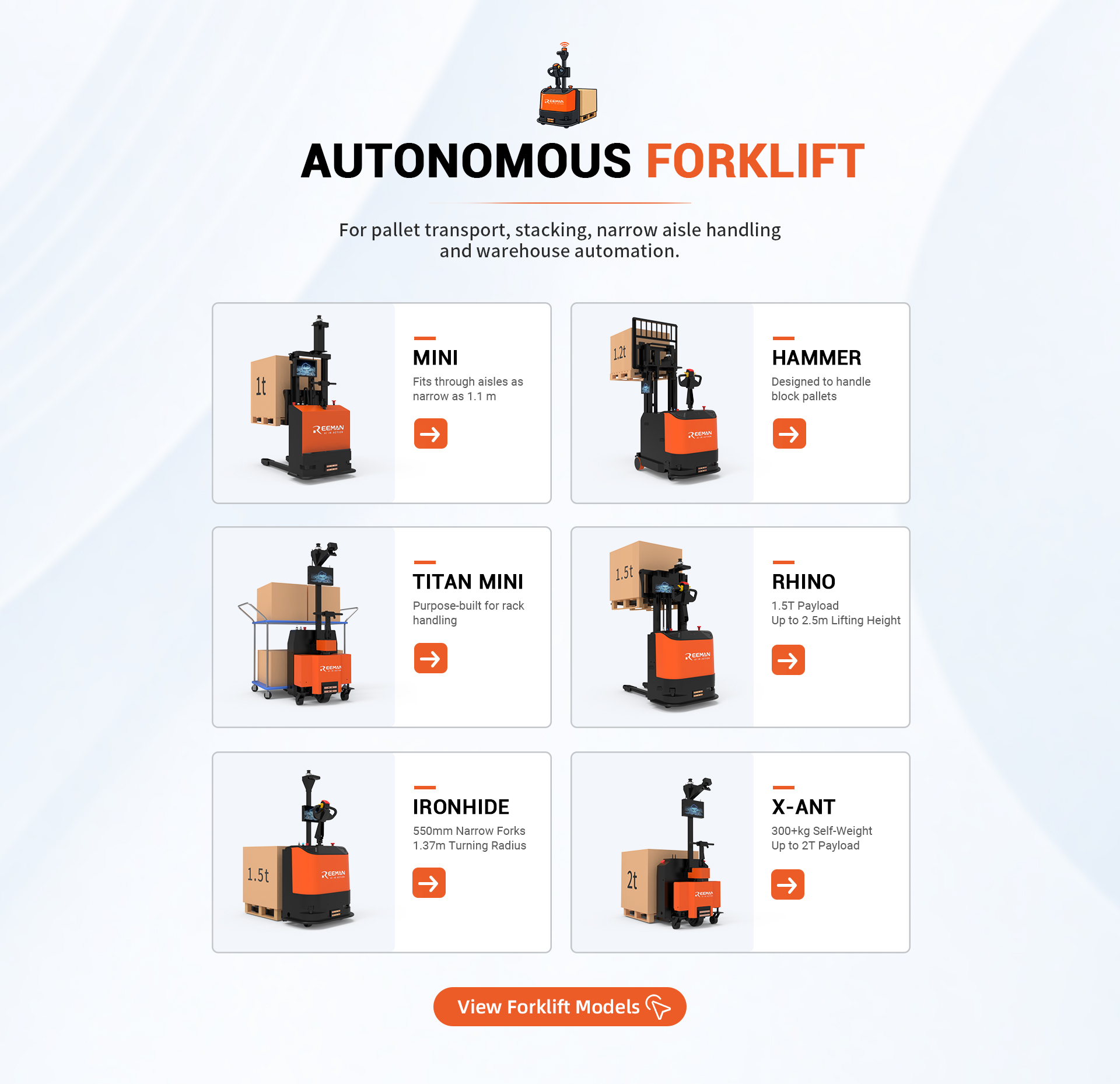
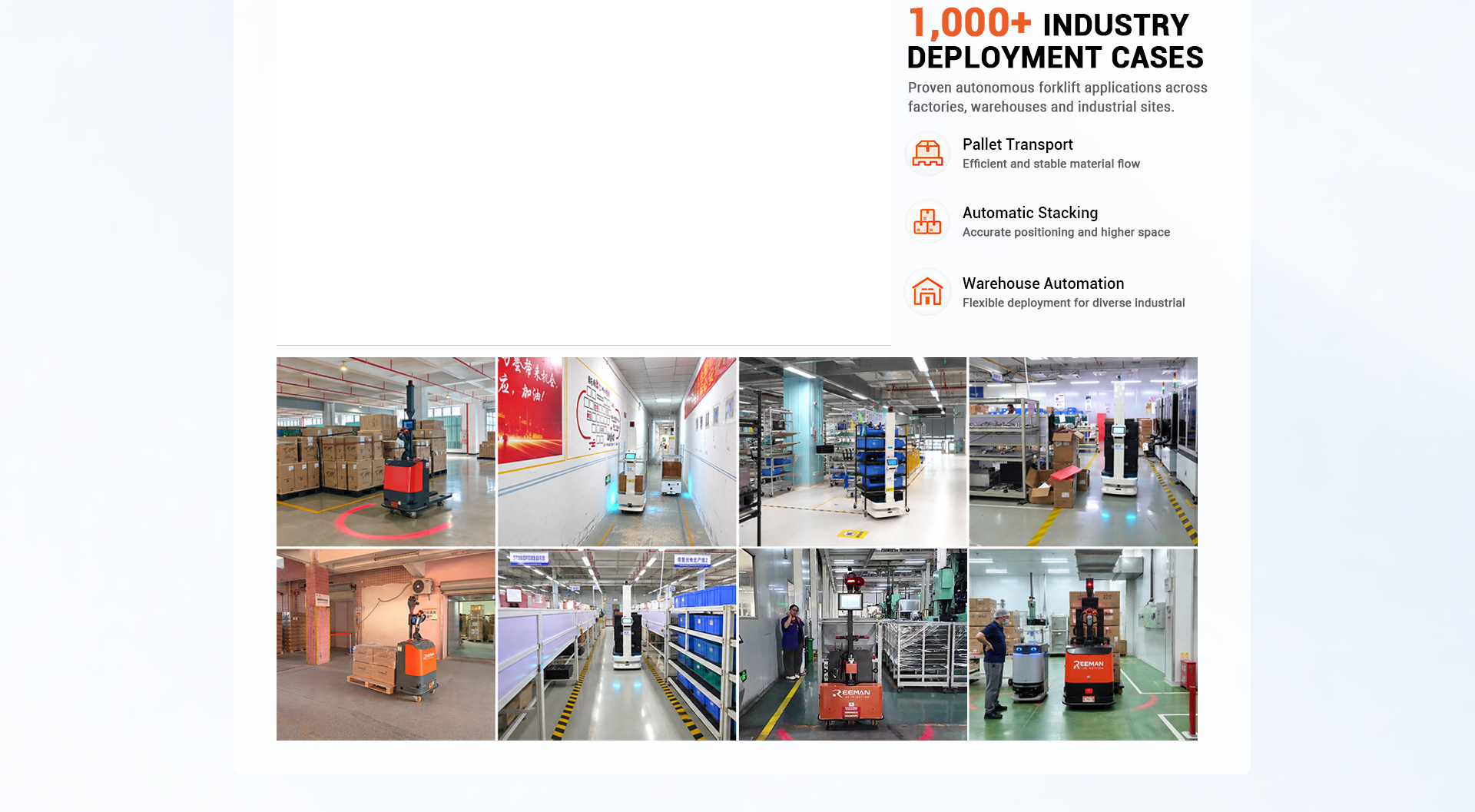
Back-of-house pallet automation
Retail and distribution operations in Delta, Surrey and Richmond can combine a customer-facing robot program with forklift AGVs that move pallets through receiving, put-away and dock zones. The two projects should share a safety culture but not the same procurement checklist.
Line-side and production logistics
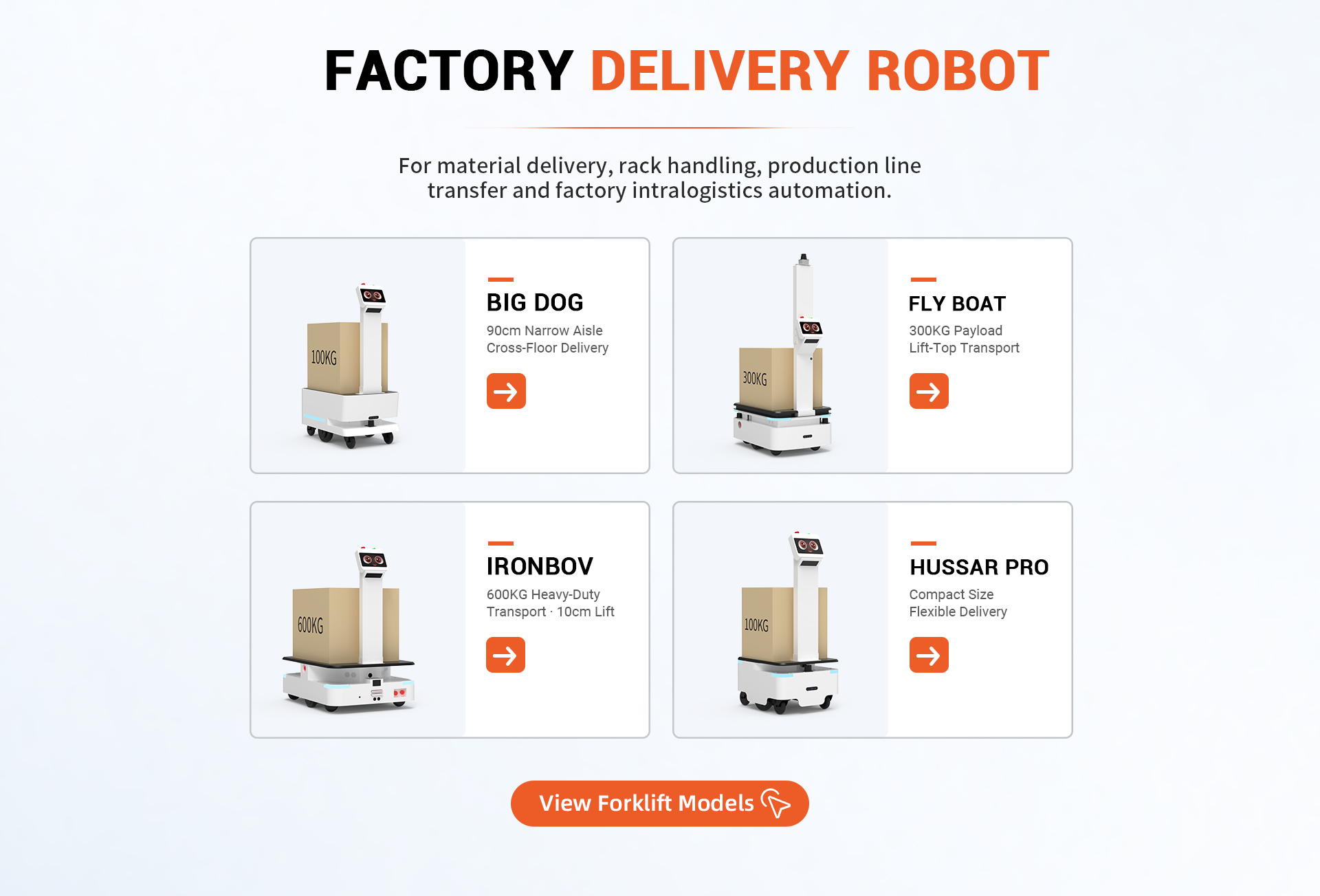
Manufacturers in Metro Vancouver can use AMRs for line-side material delivery, finished-goods collection and conveyor handoff. Integration with MES or WMS should be scoped early, especially where a custom advertising or service robot is being developed on the same mobility platform.
Custom branded robot development
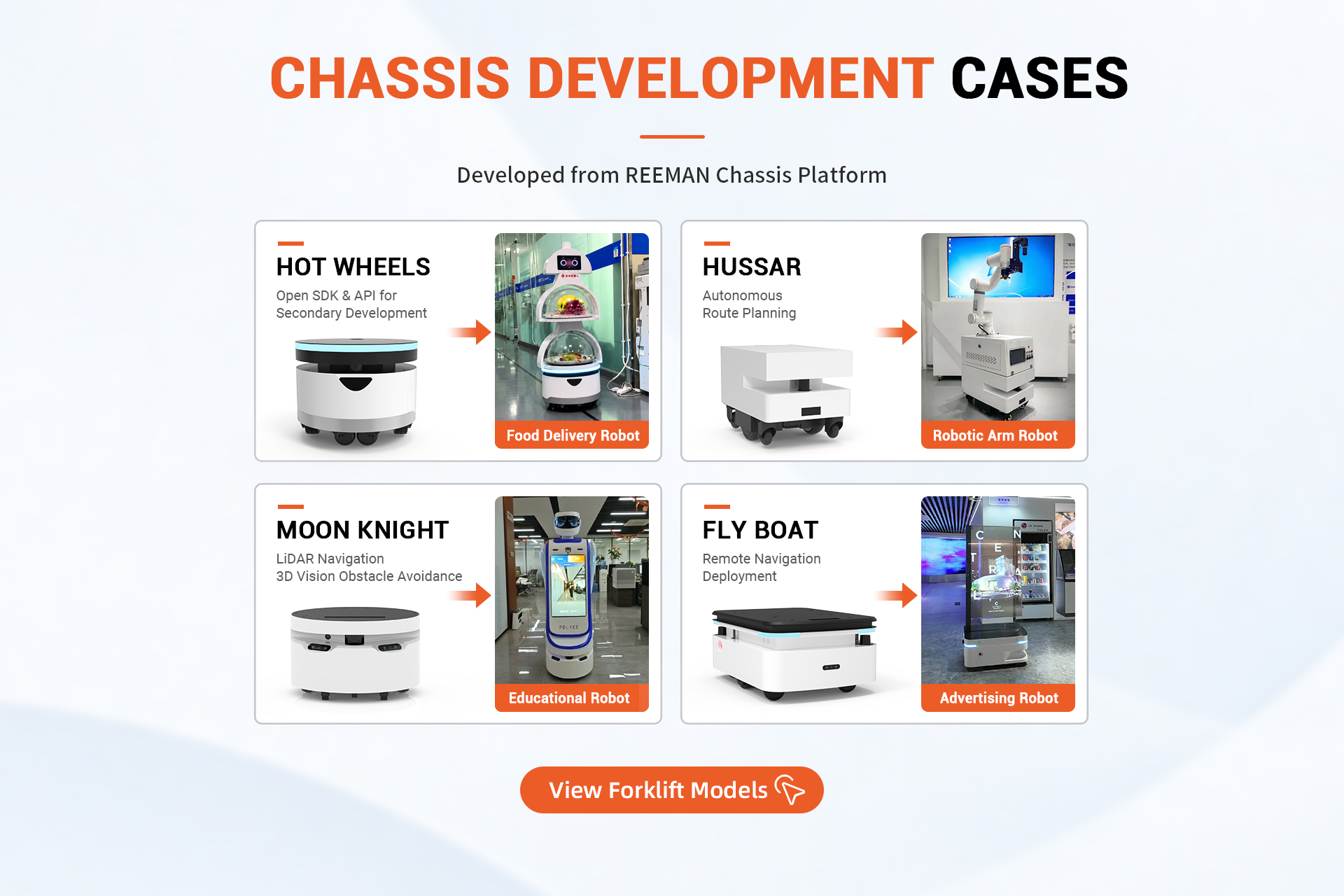
Vancouver integrators may need a white-label mobility platform rather than a finished advertising robot. Open SDK/API access, custom top modules and OEM branding allow a local team to build its own service, wayfinding or retail media product while relying on a proven autonomous base.
Match the Platform to the Vancouver Workflow
Use the matrix below during the first manufacturer conversation. It keeps the discussion focused on the task, the floor plan and the integration scope.
| Vancouver workflow | Recommended platform | Why it fits |
|---|---|---|
| High-throughput pallet transfer in Delta, Surrey or Richmond warehouses | 2 Ton Autonomous 4WD AGV Forklift or 1000 kg Laser SLAM Pallet Stacker | Evaluate the 2-ton platform for heavier loads and the 1000 kg platform for compact, repetitive factory logistics. Confirm aisle width, pallet condition and charging windows. |
| Low-rack stacking and pallet handling | Laser SLAM Autonomous Stacker Forklift 1500 kg | Suited to stacking and low-rack workflows. The site survey must verify rack interface, overhead clearance, floor flatness and shared-aisle traffic. |
| Cart, tote and production-line material flow | 600kg Payload Autonomous AMR or Dual Laser AMR 300KG | Use the 600 kg AMR for mixed material handling and the 300 kg dual-laser platform where a custom lifting or top-module design is required. |
| Conveyor handoff and MES/ERP integration | Roller Conveyor AMR with SDK and API | Best for projects where the robot must exchange signals with conveyors, production equipment or custom software rather than simply move between fixed points. |
| CE-oriented pallet loading and unloading | CE Certified 1500kg Driverless AGV Forklift | Useful for buyers who need a documented CE model for internal review. Canadian deployment still requires a separate electrical and wireless compliance check. |
| Branded mobile advertising or service robot base | Dual Laser AMR 300KG AGV Lifting Platform plus OEM/ODM review | Start with the mobility, safety and SDK requirements, then add the display, audio, CMS and content layer. The final advertising hardware must be jointly validated before a Vancouver pilot. |
Supplier Evidence to Request Before a Vancouver Pilot
A professional supplier should answer these points in writing. Vague answers are a warning sign for any public-space robot deployment.
| Evidence request | Why Vancouver buyers need it | A credible answer looks like |
|---|---|---|
| Factory verification and quality system | Separates a trading company from a manufacturer with repeatable quality control. | SGS onsite verification, ISO 9001/14001 evidence, production-base information and test records. |
| Canadian compliance plan | CE and FCC marks do not automatically satisfy Canadian electrical or wireless requirements. | A named pathway for CSA, cUL, UL, ETL/field evaluation and ISED review where applicable. |
| Safety risk assessment | Public venues contain children, strollers, wheelchairs, blind corners and emergency routes. | Lidar fields, emergency stop design, speed zones, mode switching, training and incident response. |
| Privacy documentation | Camera, voice and audience analytics can trigger PIPEDA and BC PIPA obligations. | Data-flow diagram, retention policy, on-device processing option, signage text and DPA support. |
| Local service model | Downtime in a mall or hotel is visible and costly; Pacific Time escalation matters. | Remote diagnostics, named escalation path, spare-parts kit, local technician plan and training package. |
| Content and CMS proof | Marketing teams need daily control without engineering tickets. | Role-based publishing, scheduling, proof-of-play logs, language versions and audit trail. |
| Commercial terms | Vancouver buyers need total landed cost, not just an ex-works price. | FOB terms, T/T USD or CNY, freight and insurance clarity, warranty, spares, commissioning and duties/taxes assumptions. |
Six Trends Shaping Mobile Advertising Robot Decisions in Metro Vancouver
These trends explain why buyers are asking for more than a moving screen or a generic AMR.
Retail media is being measured like media
Marketing teams want campaign scheduling, proof-of-play and engagement evidence. A robot that cannot report what ran, where and when will not survive a serious pilot review.
Privacy-first engagement is becoming normal
Public-space robots should minimize data collection, explain camera use and provide retention controls. Privacy is now part of the buying criteria, not a legal afterthought.
Hybrid human-robot service is preferred
Successful deployments position robots as support for staff—greeting, guiding, carrying or promoting—while humans retain judgment, hospitality and exception handling.
Multilingual and accessible content matters
Metro Vancouver venues need content that reflects actual audiences. Captions, readable contrast, multiple languages and clear wayfinding improve both inclusion and engagement.
OEM/ODM differentiation is rising
Integrators want a mobility platform, open SDK/API and custom top modules so they can build a branded robot rather than resell a generic catalogue product.
Service and spare parts decide renewal
The first demo wins attention; uptime wins the renewal. Vancouver buyers increasingly require a documented support model, spare-parts plan and local escalation path.
Why Elvorn Is a Practical Supplier for Vancouver Integrators and Buyers
The company profile below is based on Elvorn’s published factory, certification and product information. It is written for procurement teams that need verifiable facts rather than marketing slogans.
Founded in 2015, Shenzhen Elvorn Intelligent Equipment Co., Ltd. is a national high-tech enterprise focused on robotic platform technology and autonomous driving. The company designs and builds autonomous forklifts, industrial AMRs, robot chassis, delivery robots and cleaning robots. Its in-house R&D team covers laser SLAM navigation, motion control, fleet scheduling and hardware, which shortens customization cycles for integrators and gives buyers direct engineering answers.
Elvorn operates two production bases in Shenzhen and Ningbo, with 5,200㎡ of total floorspace, a 200+ team, 39 patents and more than 11 years of industry experience. The factory has been verified onsite by SGS Group. Management systems are certified to ISO 9001 and ISO 14001, and individual models carry CE, FCC or PSE marks for target markets. The company offers OEM service, design service and buyer-label options, including custom top modules, payload structures, branding and packaging.
For Vancouver buyers, Elvorn is transparent about being a China-based manufacturer rather than a Vancouver storefront. A realistic project plan should cover import clearance, local electrical review, a local installation partner where required, spare parts, operator training and remote commissioning. This is a more reliable model than implying local inventory that does not exist. Elvorn ships worldwide on FOB terms and accepts T/T payment in USD or CNY. Main export markets include North America, Western Europe, Eastern Asia, Southeast Asia and the Middle East.



 SGS onsite verified
 CE marking
 FCC
 PSE
Frequently Asked Questions from Vancouver Buyers
Local procurement questions that should be resolved before a supplier is shortlisted or a pilot budget is approved.
Should a Vancouver buyer choose a local reseller or a factory-direct supplier?
Both can work. Use a local reseller when you need immediate inventory, first-line on-site support and simplified billing. Use a factory-direct manufacturer when your project requires custom top modules, OEM/ODM branding, a larger fleet or direct engineering answers. For factory-direct supply, require a named local service partner or a detailed remote-support and spare-parts plan before signing.
Which certifications should a Vancouver buyer request for a mobile advertising robot?
For electrical safety, ask about CSA, cUL, UL or ETL/field evaluation where required by the authority having jurisdiction. For wireless modules, ask about ISED certification. CE, FCC and PSE marks are useful for other markets but should not be treated as automatic proof of Canadian compliance. Confirm charger input voltage, plug type and electrical protection for the venue.
How can the robot collect audience data without creating privacy risk?
Decide whether cameras are used only for navigation or also for audience measurement. Prefer on-device processing, anonymized counts, short retention, clear public signage and a data processing agreement. PIPEDA applies federally, and British Columbia’s PIPA also applies to private-sector personal information in the province. Involve legal, IT security and venue management early.
Can a mobile advertising robot operate outdoors in Vancouver rain?
Most advertising and service robots are configured for indoor use. Covered plazas, ramps and wet thresholds should be reviewed as a separate engineering case. Ask for IP rating, floor traction, water-ingress protection, battery temperature limits and a site acceptance test. Do not assume a CE mark means all-weather operation.
How long does delivery to Vancouver take?
Typical projects combine manufacturing lead time, sea or air freight, Canada customs clearance, local delivery and commissioning. Sea freight to Vancouver is common for larger fleets; air freight to YVR can shorten transit at higher cost. The quote should separate ex-works price, freight, insurance, duties and taxes, local delivery and commissioning so the total landed cost is visible.
How do we measure ROI for a mobile advertising robot?
Start with a baseline: footfall, dwell time, assisted interactions, content plays, staff hours redeployed and campaign leads where lawful. Run a 30–90 day pilot with agreed KPIs and compare before-and-after results. Physical retail attribution is imperfect, so use control locations or time-based benchmarks rather than overclaiming revenue impact.
Can Elvorn build a branded advertising robot for a Vancouver integrator?
Yes, as an OEM/ODM project. Elvorn provides open SDK/API access, custom top modules, payload structures, branding and packaging options. The final design must pass a joint safety and compliance review. For Vancouver, include Canadian electrical, wireless and privacy requirements in the specification before the prototype is frozen.
What spare parts and service should be included?
Ask for a recommended spare-parts kit, diagnostic procedures, remote-support hours, escalation path, warranty terms, training materials and a list of consumables. For multi-unit fleets, request a first-line maintenance checklist and identify who will perform tire, battery, sensor-cleaning and software-update tasks in Vancouver.
Request a Vancouver-Fit Recommendation
A useful first quote includes venue type, floor plan, ceiling and doorway dimensions, audience flow, content requirements, network coverage, electrical setup and target launch date. Elvorn can respond with a platform recommendation, rough configuration, compliance questions and a customization path.
If your project is at the early stage, start with the operating problem rather than the screen size. Is the goal to improve wayfinding, promote a retail campaign, support hotel staff, guide event visitors or move materials in the back of house? Once that task is clear, the right AMR or forklift platform can be matched to the environment, and the advertising module can be engineered around the real power, safety and content requirements.
For buyers comparing suppliers in Vancouver, ask for a written pilot plan, not only a brochure. The plan should define success metrics, safety responsibilities, content ownership, privacy controls, electrical review, spare-parts access and an exit path if the pilot does not meet expectations. A supplier that welcomes those questions is usually the safer long-term partner.
Plan Your Vancouver Mobile Advertising Robot Project
Send your venue layout, audience flow, load data, content requirements and target deployment date. Use the quote button to start the live-chat conversation with Elvorn.
Email: info@elvornbot.com · Shenzhen, Guangdong, China