Obstacle Avoidance Robot Factories & Factory for Bangkok
A procurement-grade guide to autonomous forklifts, pallet stackers, lifting AMRs, and roller-conveyor robots for Bangkok factories, warehouses, and logistics hubs — engineered for mixed pedestrian traffic, narrow aisles, high ambient temperatures, and 24/7 material flow.
Eight Obstacle Avoidance Robots Recommended for Bangkok Factories
Bangkok factories rarely buy a robot by payload alone. The shortlist below is organized by the work that must be completed on the floor: line-side replenishment, pallet stacking, dock-to-warehouse transfer, custom conveyor integration, and lifting or cart movement. Every model uses a laser-based navigation stack and safety sensors to detect people, forklifts, and unexpected obstacles.
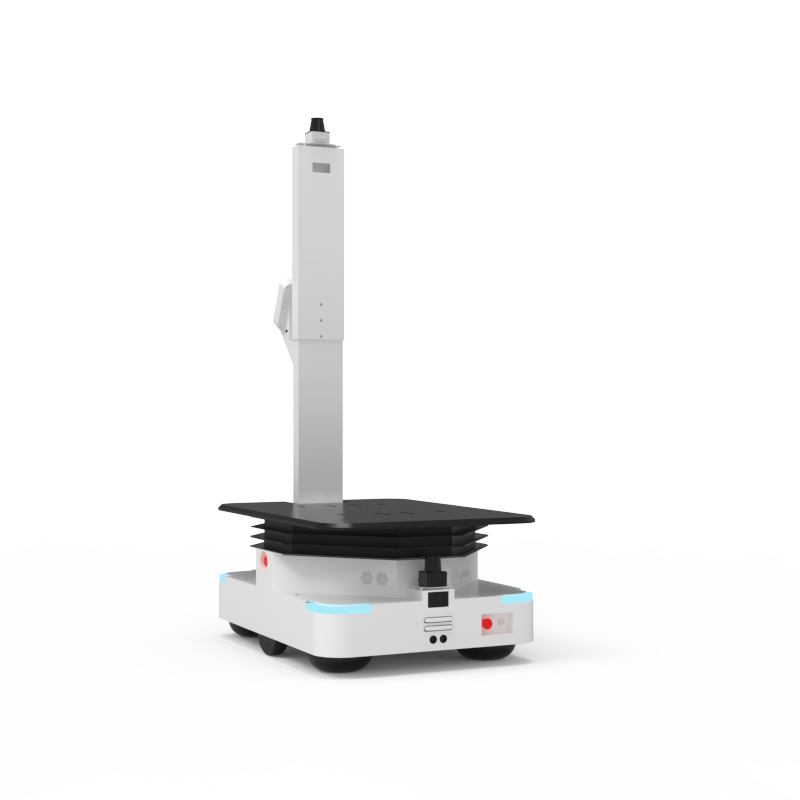
REEMAN Autonomous Mobile Robot AGV AMR 600kg Payload Sheet Metal Material Handling for Production Line
Local fit: electronics, appliance, and sheet-metal production lines in Bangkok where 600 kg loads move between press, welding, and inspection cells. The AMR reduces forklift crossings inside production areas and supports repeatable line-side replenishment.
- Payload600 kg
- NavigationLaser SLAM
- Best fitLine-side supply

Reeman BBOT30F 1500kg Laser SLAM Autonomous Pallet Stacker AGV Single Line Lidar Obstacle Avoidance Warehouse Transport
Local fit: Bangkok warehouses moving palletized goods between buffer lanes and stacker positions. Single-line lidar obstacle avoidance keeps the route clear in mixed traffic, while the 1,500 kg load supports beverage, packaging, and building-material pallets.
- Payload1,500 kg
- NavigationLaser SLAM + lidar
- Best fitPallet stacking
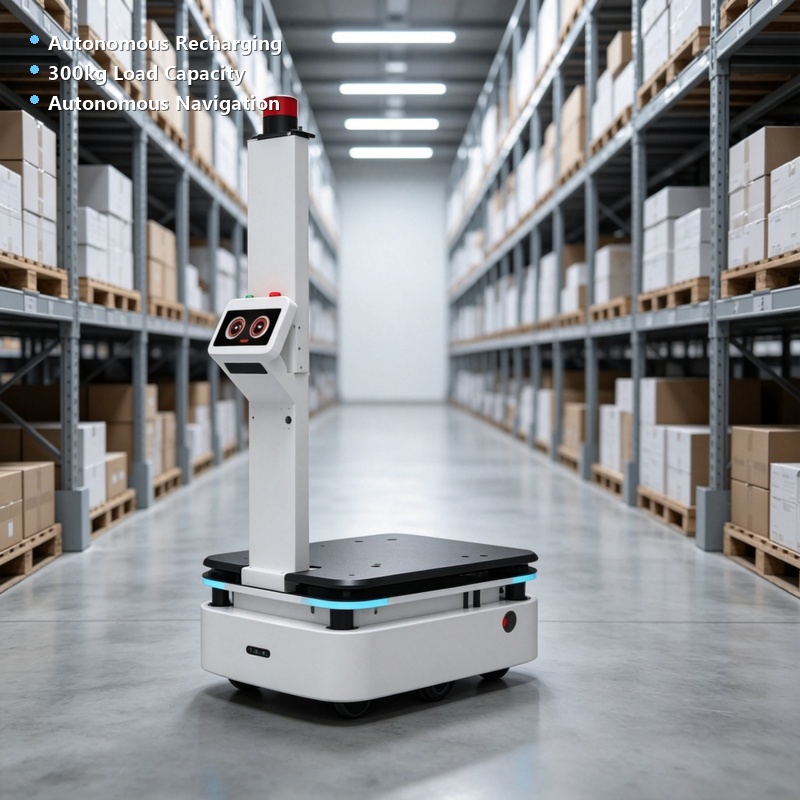
REEMAN Dual Laser Fly Boat MAX 300kg Industrial Delivery Robot for Manufacturing Plants and Factory Material Supply
Local fit: multi-building factories and production plants where aisles are shared with people, carts, and manual forklifts. Dual-laser sensing supports raw-component supply, WIP transfer, and finished-goods collection on repeatable routes.
- Payload300 kg
- SensingDual laser
- Best fitFactory supply
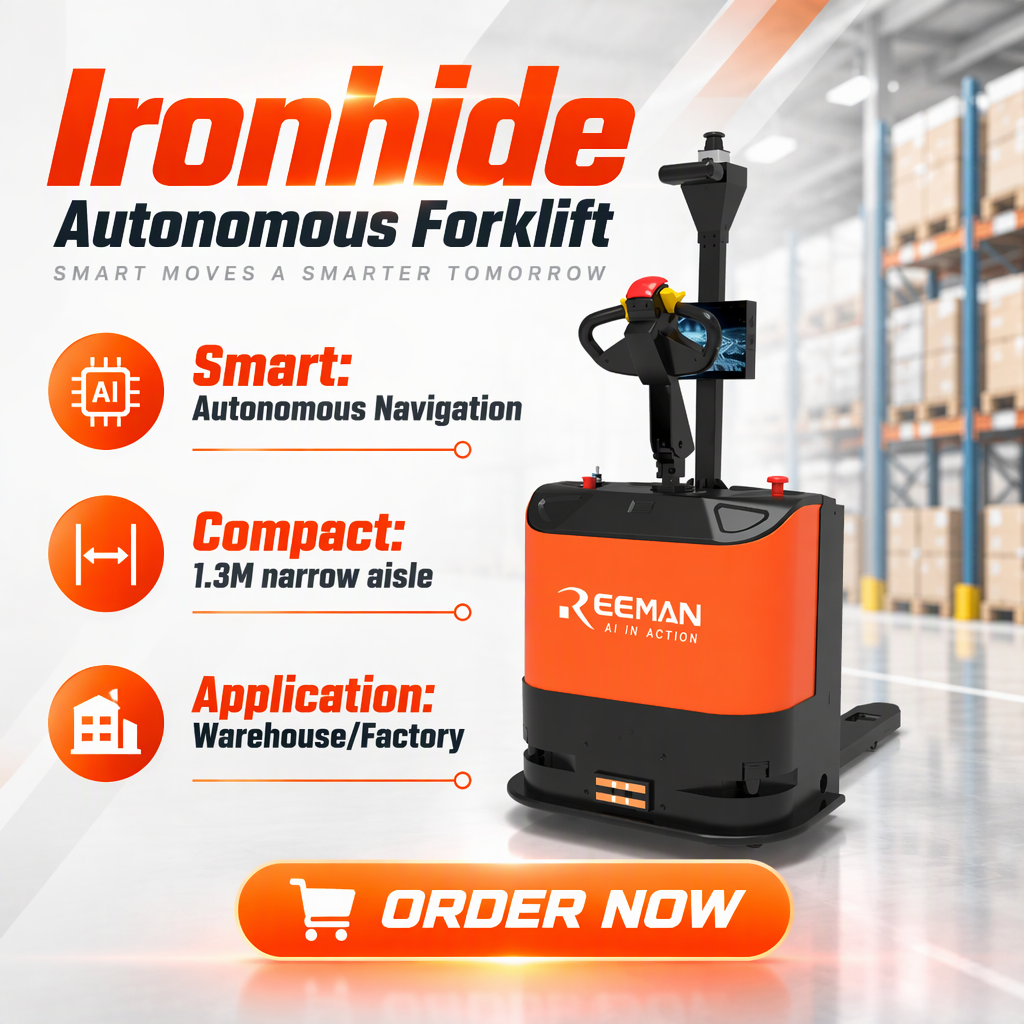
Reeman 1.5 Ton Autonomous Forklift AGV 3D Obstacle Avoidance Bidirectional Driving 48V 30AH Lithium-Ion Battery
Local fit: retrofit warehouses where aisle width cannot be changed. Bidirectional driving improves maneuvering, while 3D obstacle avoidance supports dock-to-line work, trailer loading areas, and pallet transfer zones with mixed forklift traffic.
- Payload1,500 kg
- Safety3D obstacle avoidance
- Best fitBidirectional handling
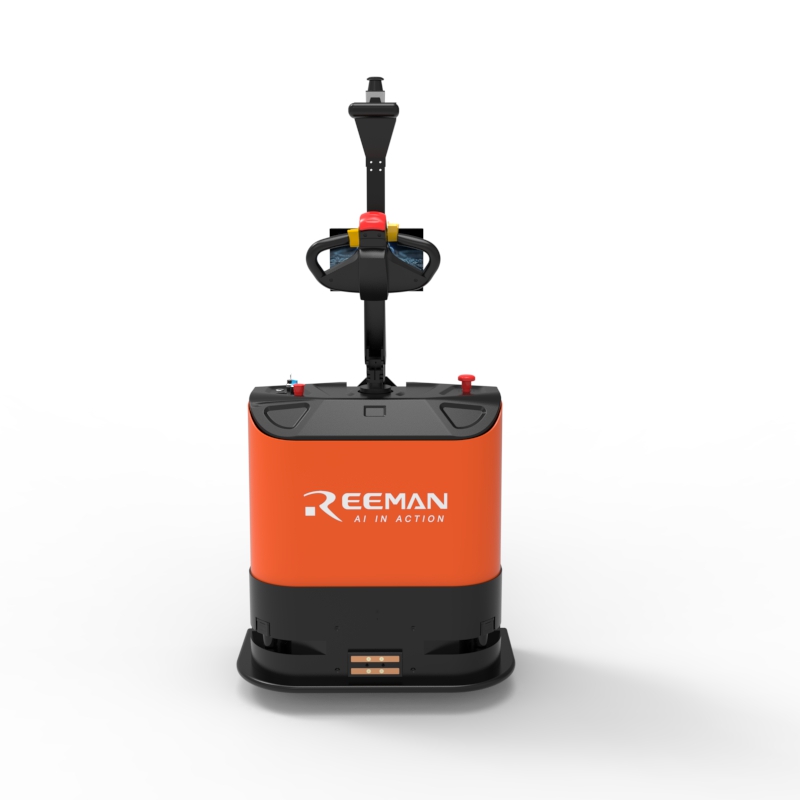
1500kg Laser SLAM Autonomous Forklift AGV Reflector-Free Point-to-Point Warehouse Material Handling
Local fit: leased Bangkok facilities and multi-tenant warehouses where floor modification is undesirable. Reflector-free point-to-point navigation reduces installation work and makes relocation easier when storage zones change.
- Payload1,500 kg
- NavigationReflector-free SLAM
- Best fitLeased warehouses
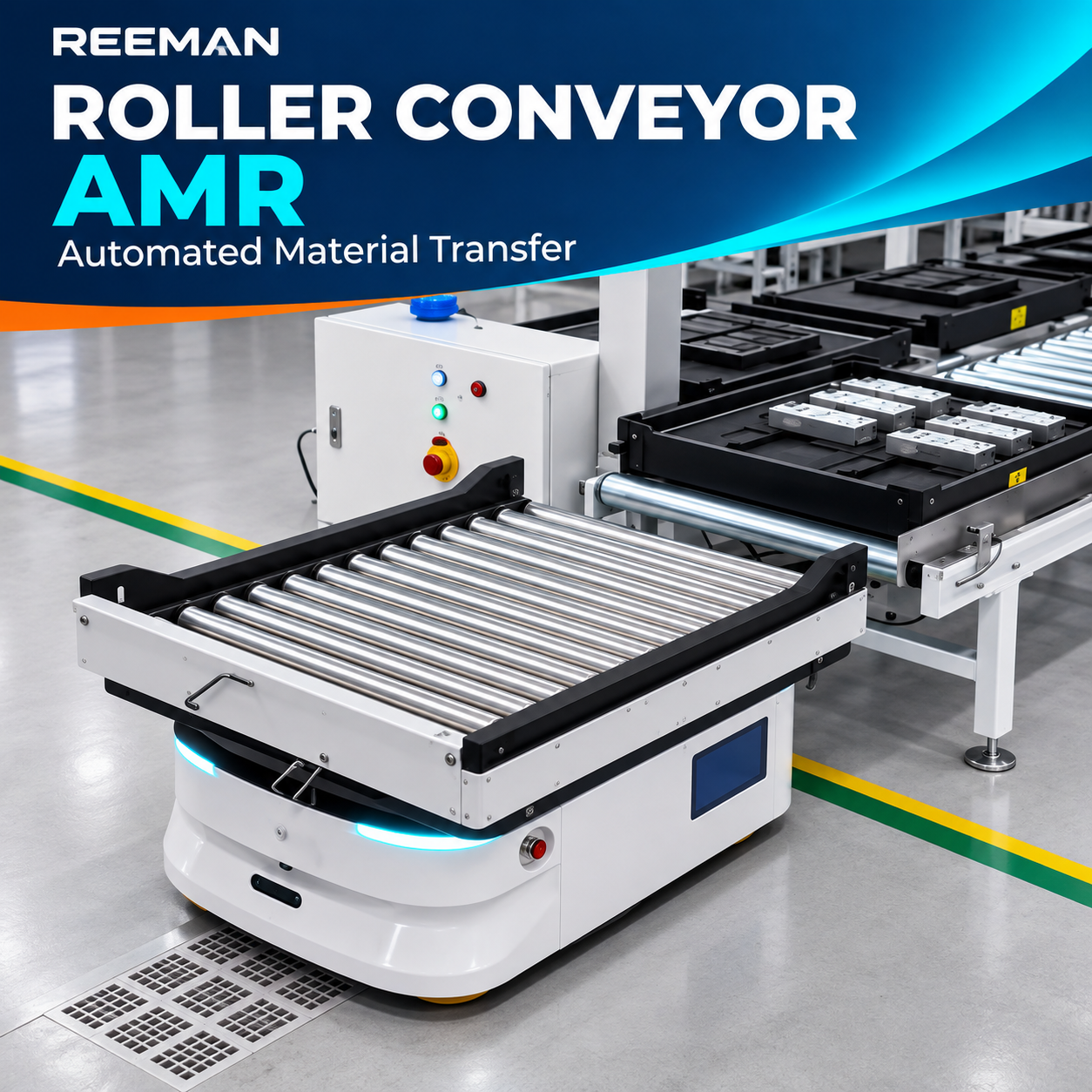
Roller Conveyor AMR Robot with SDK and API for Custom Development and System Integration
Local fit: system integrators and factories linking conveyors, assembly stations, and WMS or MES workflows. The open SDK and API support custom development without replacing the base navigation platform.
- PayloadConfigurable
- IntegrationSDK + API
- Best fitConveyor transfer
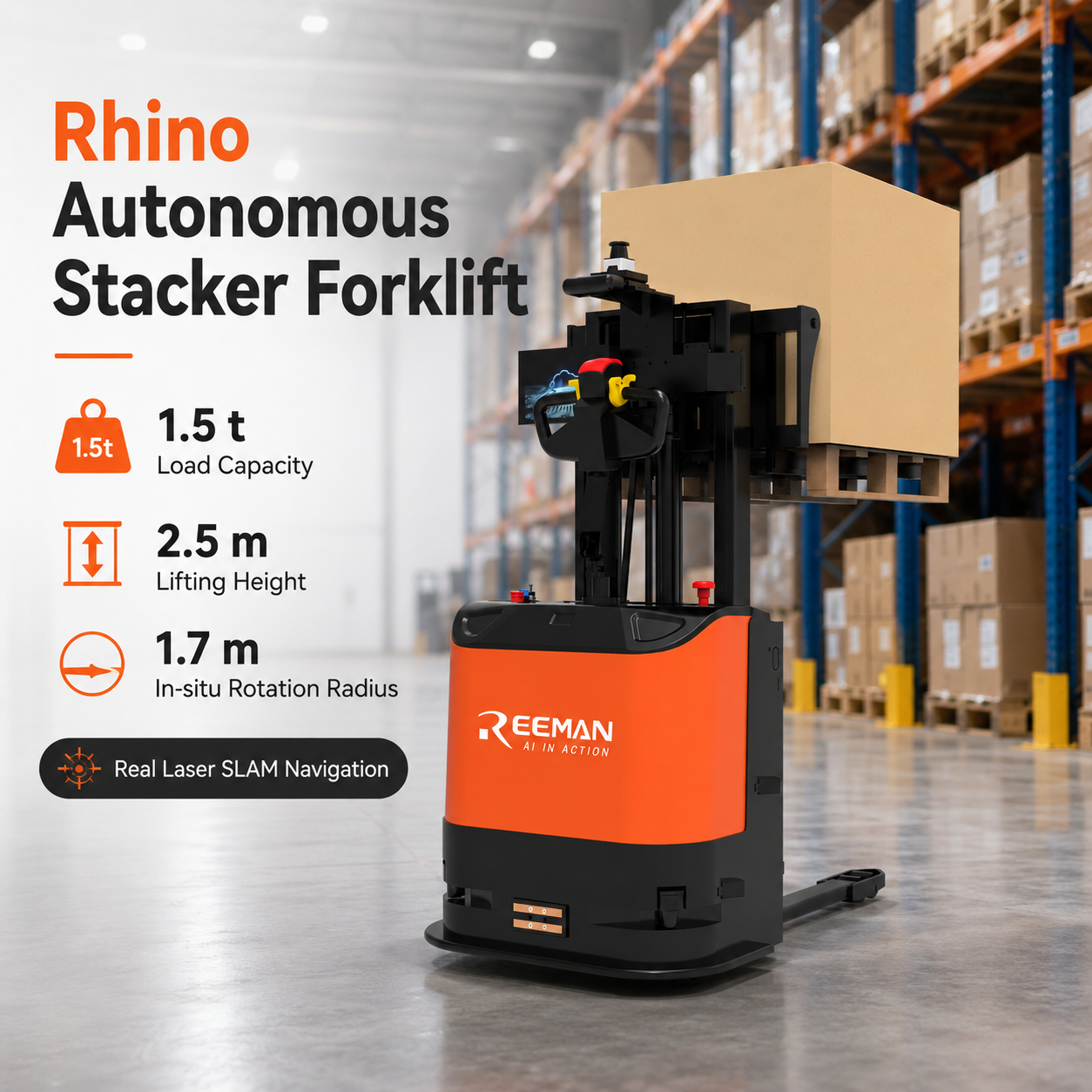
Laser SLAM Autonomous Stacker Forklift 1500 kg Load AGV Pallet Handling Robot Laser Obstacle Avoidance Warehouse
Local fit: operations where pallet handling includes stacking and low-rack storage rather than only floor transport. Laser obstacle avoidance supports repetitive pallet cycles in packaging plants, distribution centers, and spare-parts warehouses.
- Payload1,500 kg
- SafetyLaser obstacle avoidance
- Best fitPallet handling
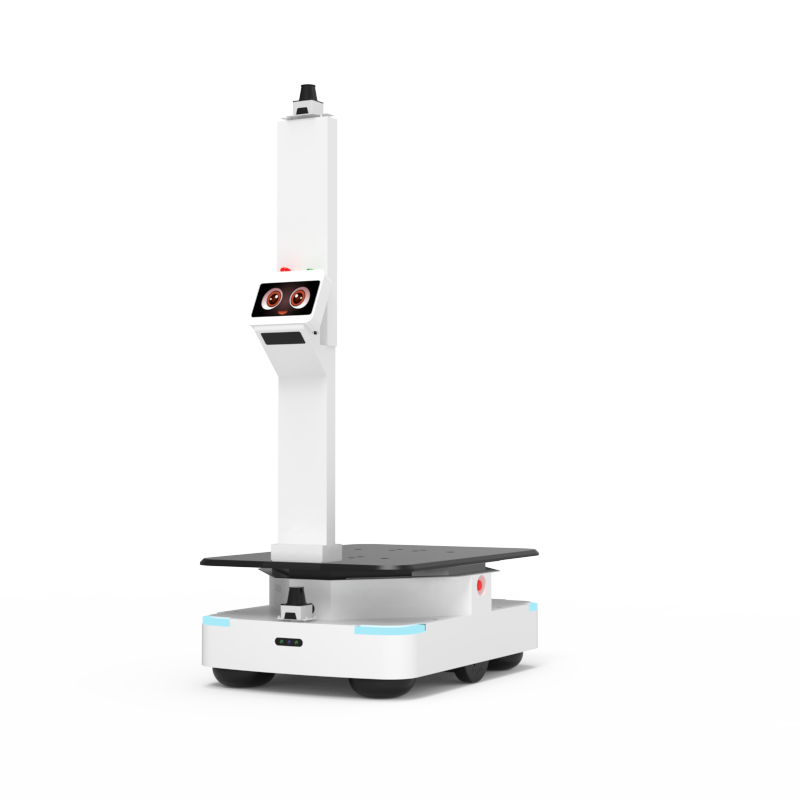
600kg Payload Laser Navigation AMR Robot Autonomous Lifting Warehouse Transfer Equipment
Local fit: 3PL, e-commerce, and spare-parts warehouses using carts or shelves. The lifting AMR fits narrow aisles, reduces manual pushing on long shifts, and supports repeatable warehouse transfer tasks.
- Payload600 kg
- NavigationLaser navigation
- Best fitLifting transfer
Bangkok Buyers Should Specify the Floor, Not Just the Payload
Obstacle avoidance is not only a sensor specification. It is a deployment outcome shaped by aisle width, floor condition, traffic rules, charging layout, and integration scope.
Bangkok’s industrial map stretches from Bang Chan, Lat Krabang, and Bang Phli to the logistics corridors around ICD Lat Krabang, Bangkok Port, Suvarnabhumi Airport, and Laem Chabang. A robot that performs well in a new, flat warehouse may struggle in a leased building with expansion joints, ramps, or mixed forklift traffic. For that reason, an obstacle avoidance robot factory should provide an application review, not only a model list. The review should confirm aisle width, floor friction, charging position, ambient heat, pallet condition, Wi-Fi coverage, and emergency response rules.
Laser SLAM navigation with layered obstacle avoidance reduces retrofit work because the robot maps the environment instead of following tape or reflectors. For Bangkok operations with high staff turnover, this also shortens operator training: workers set routes, speed zones, and parking points through the fleet interface rather than modifying the building. For leased facilities, reflector-free models can be relocated with less disruption.
Where Obstacle Avoidance Robots Deliver Value in Bangkok
Bangkok’s value comes from repeatable movement: line-side supply, pallet flow, cart transfer, and non-stop internal logistics across shifts.
Electronics & PCB assembly
In Bang Chan, Bang Phli, and industrial buildings around Bangkok, 300–600 kg AMRs move components, WIP, and finished goods between workstations. The objective is fewer manual cart trips and less forklift traffic in clean production areas.
Automotive & parts manufacturing
Factories feeding assembly lines need pallet movement from docks to line-side buffers. The 1.5-ton autonomous forklift AGV with 3D obstacle avoidance is suited to mixed forklift traffic and repetitive pallet transfer zones.
Food, beverage & packaging
Repeatable pallet handling and stacker work are common in packaging plants. Route planning should keep robots away from wet zones, waste collection points, and charging areas that could affect safety or battery performance.
E-commerce & 3PL fulfillment
Lifting AMRs and roller-conveyor AMRs support cart transfer, shelf movement, and conveyor handoff. This is useful for Bangkok 3PLs managing multiple clients, changing SKU profiles, and tight fulfillment windows.
Cold chain & pharmaceutical logistics
In facilities with controlled-temperature zones, battery and charging strategy must be reviewed carefully. Robots are typically used for transfer between ambient zones, staging areas, and dock interfaces rather than uncontrolled freezer crossings.
Industrial estates & port logistics
For operations linked to ICD Lat Krabang, Bangkok Port, Laem Chabang, and Suvarnabhumi, point-to-point transport and dock coordination are common. Reflector-free navigation reduces installation work in leased spaces.
Localized Trends Reshaping Bangkok Intralogistics
Four practical trends are changing how Bangkok buyers evaluate autonomous forklifts, AMRs, and robot factories.
Labor availability and turnover
Repetitive transport roles are harder to staff consistently. Autonomous robots stabilize throughput across shifts and reduce the training burden caused by high turnover.
Thailand 4.0 and investment upgrades
Factories are linking automation with traceability, digital production records, and measurable ROI. Imported robots must therefore support documented integration and service planning.
EEC and logistics corridor growth
The Eastern Economic Corridor, Laem Chabang, ICD Lat Krabang, and Suvarnabhumi create longer, more repetitive material flows. Fleets need scalable navigation and fleet scheduling.
High-mix, low-volume production
Lines change faster than floor markings. Tape-free laser SLAM, modular top structures, and open SDK/API integration reduce changeover cost and protect the original investment.
Why Obstacle Avoidance Is a Procurement Issue, Not Just a Sensor Spec
The best robot is the one that keeps material moving safely when the floor is not perfectly predictable.
Dynamic re-routing
The robot recalculates a path when a person, cart, or pallet blocks the lane instead of waiting indefinitely. This supports realistic mixed-traffic operations.
3D detection for overhangs
Pallet overhang and forklift tines are not always detected by simple 2D sensing. 3D obstacle avoidance improves safety in docking, stacking, and transfer zones.
Speed zoning
Robots slow near walkways, blind corners, dispatch areas, and loading docks. In dedicated lanes, they can maintain higher throughput without compromising safety.
No tape or reflectors
Laser SLAM mapping reduces floor work in leased Bangkok facilities. Layout changes do not require new magnetic tape or reflector installation, which lowers retrofit cost.
Multi-layer safety
Lidar, obstacle sensors, emergency stops, and zone rules work together. Site procedures still matter: pedestrian training, signage, mirrors, and clear stop procedures.
Audit and uptime
Event logs and diagnostics help maintenance teams understand stops, blocked routes, and charging behavior. This supports continuous improvement after commissioning.



Why Elvorn Is a Practical Obstacle Avoidance Robot Factory for Bangkok
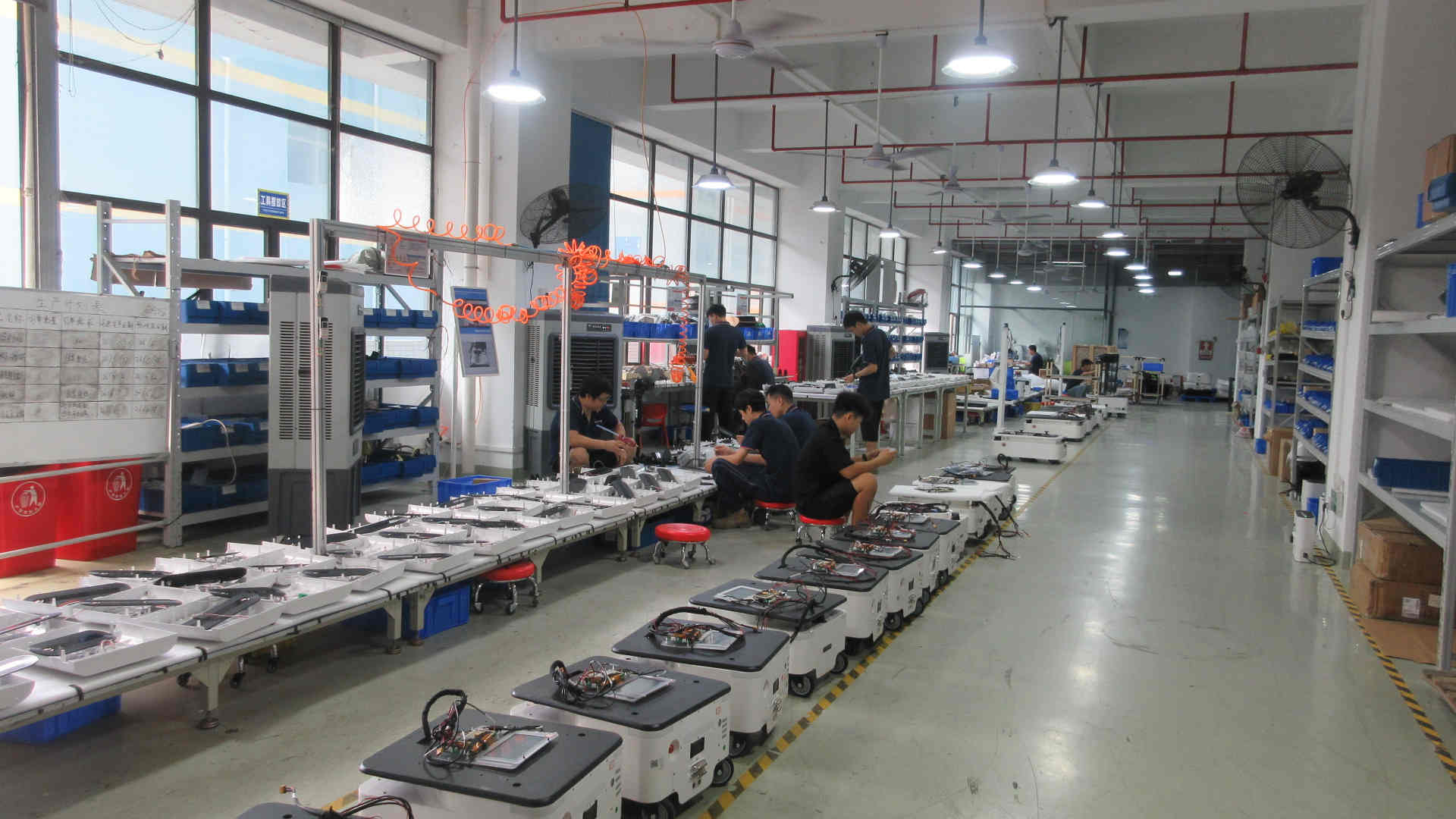
Founded in 2015, Shenzhen Elvorn Intelligent Equipment Co., Ltd. is a national high-tech enterprise focused on robotic platform technology and autonomous driving. The company designs and manufactures autonomous forklifts, industrial AMRs, robot chassis, delivery robots, cleaning robots, and related platforms. In-house control over laser SLAM navigation, motion control, fleet scheduling, and hardware means Bangkok buyers can ask engineering questions directly instead of receiving reseller-only answers.
Production is supported by two bases in Shenzhen and Ningbo, with 5,200㎡ of total floorspace, a 200+ team, 39 patents, ISO 9001 and ISO 14001 management systems, and SGS onsite factory verification. Depending on the model, robots carry CE, FCC, or PSE marks. Elvorn also offers OEM, ODM, design service, and buyer-label options for integrators and distributors.
For Bangkok projects, English documentation, remote commissioning, test records, and spare-part planning support buyer due diligence. Final configuration — mast height, fork size, battery, charger, top module, and software interfaces — is confirmed after reviewing your layout, pallet type, and throughput target.
- Two production bases in Shenzhen and Ningbo
- 39 patents and in-house R&D
- Open SDK and API for integration
- Export terms: FOB; payment: T/T in USD or CNY
- English operator documentation and support
- Test records and supplier assessment available
Frequently Asked Questions from Bangkok Procurement Teams
Common questions about obstacle avoidance, import planning, integration, heat, service, and factory proof.
Can you ship an obstacle avoidance robot directly to a Bangkok factory?
+
Do we need to install magnetic tape, QR codes, or reflectors?
+
Will obstacle avoidance work around people and forklifts in Bangkok?
+
Are the robots suitable for Bangkok heat and humidity?
+
Can the robot connect to our WMS, MES, or ERP?
+
What is the difference between an AGV forklift and an AMR?
+
What certifications and factory proof do you provide?
+
Do you offer OEM, ODM, or local branding for Bangkok integrators?
+
What about spare parts, training, and service access?
+
What is the first step for a Bangkok robot project?
+
From Bangkok Layout Review to Stable Operation
A practical four-step workflow for imported autonomous robots.
Share the layout
Send drawings, aisle widths, floor condition, pallet or cart data, throughput target, and charging options.
Engineering shortlist
Receive model recommendations, fleet size, safety-zone concept, integration notes, and preliminary commercial scope.
Factory testing
Function and load tests are performed before shipment, with test records available for buyer review.
Bangkok deployment
Remote commissioning, operator training, spare-part planning, and long-term support are aligned to the project.
Request a Bangkok-Ready Obstacle Avoidance Robot Layout Review
Send your factory layout, pallet or cart dimensions, target moves per hour, floor conditions, charging location, and WMS or MES requirements. Elvorn engineers will return a model shortlist, charging plan, safety notes, and deployment guidance for Bangkok. For leased facilities, include aisle widths and any restriction on floor modification.
- Model shortlist by load and workflow
- Laser SLAM and obstacle avoidance review
- OEM or top-module customization options
- Export, testing, and spare-part planning
- Integration notes for WMS, MES, or ERP
- Factory verification and certification review
Start with a short technical brief
Share the application, load, route, and site constraints. The fastest path to an accurate quotation is a real layout review — not a blind model selection.
Contact Us