Product Portfolio for OEM/ODM Wholesale Programs
The eight product cards below preserve the original Elvorn product URLs and images supplied for this page. For Frankfurt meal-delivery projects, the relevant engineering signals are laser SLAM navigation, payload integration, 3D obstacle avoidance, ROS2 compatibility, lithium power, fleet scheduling, and export-ready manufacturing. These platforms also support mixed-fleet automation projects where food-service robots operate alongside back-of-house logistics equipment.

2 Ton Autonomous 4WD AGV Forklift Laser SLAM Navigation Multi-Line LiDAR 10mm Position Accuracy 6-8H Warehouse Handling
Suitable for heavy back-of-house and logistics-adjacent automation in Frankfurt distribution sites, central kitchens, and event logistics operations.
View product
Dual Laser AMR 300KG AGV Lifting Mobile Robot with Slam LiDAR Navigation for Manufacturing Plants
A compact lifting AMR reference for tray-cart, shelf, and internal transport concepts in multi-floor Frankfurt properties.
View product
REEMAN X-ant JBOT20F 2 Ton Autonomous Forklift AGV Laser SLAM Pallet Handling Robot for Warehouse Logistics
Useful for Rhein-Main logistics centers and food distribution hubs requiring repeatable pallet movement around the clock.
View product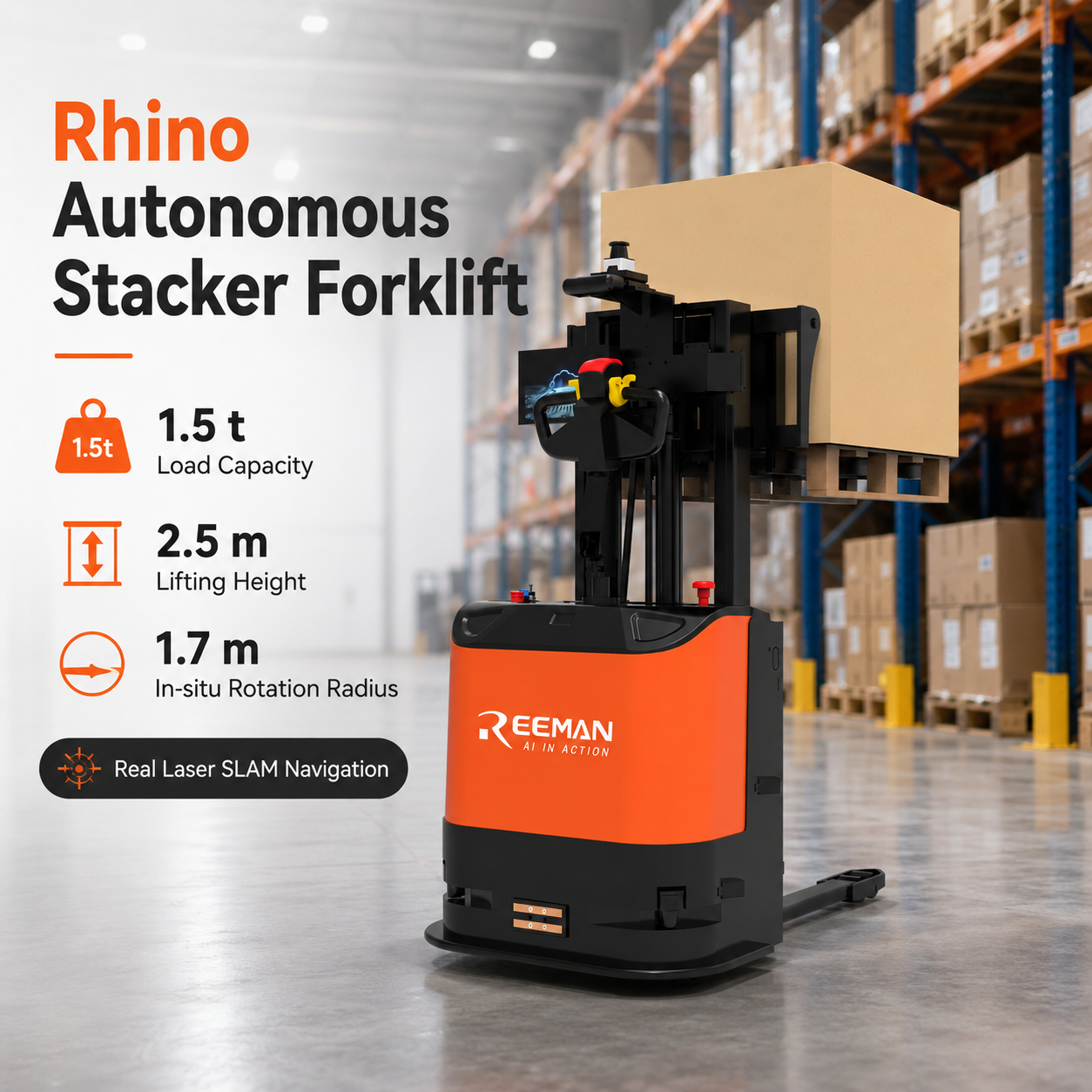
Laser SLAM Autonomous Stacker Forklift 1500 kg Load AGV Pallet Handling Robot Laser Obstacle Avoidance Warehouse
Supports stacking, low-rack storage, and dense storage workflows in Frankfurt-area food and hospitality supply chains.
View product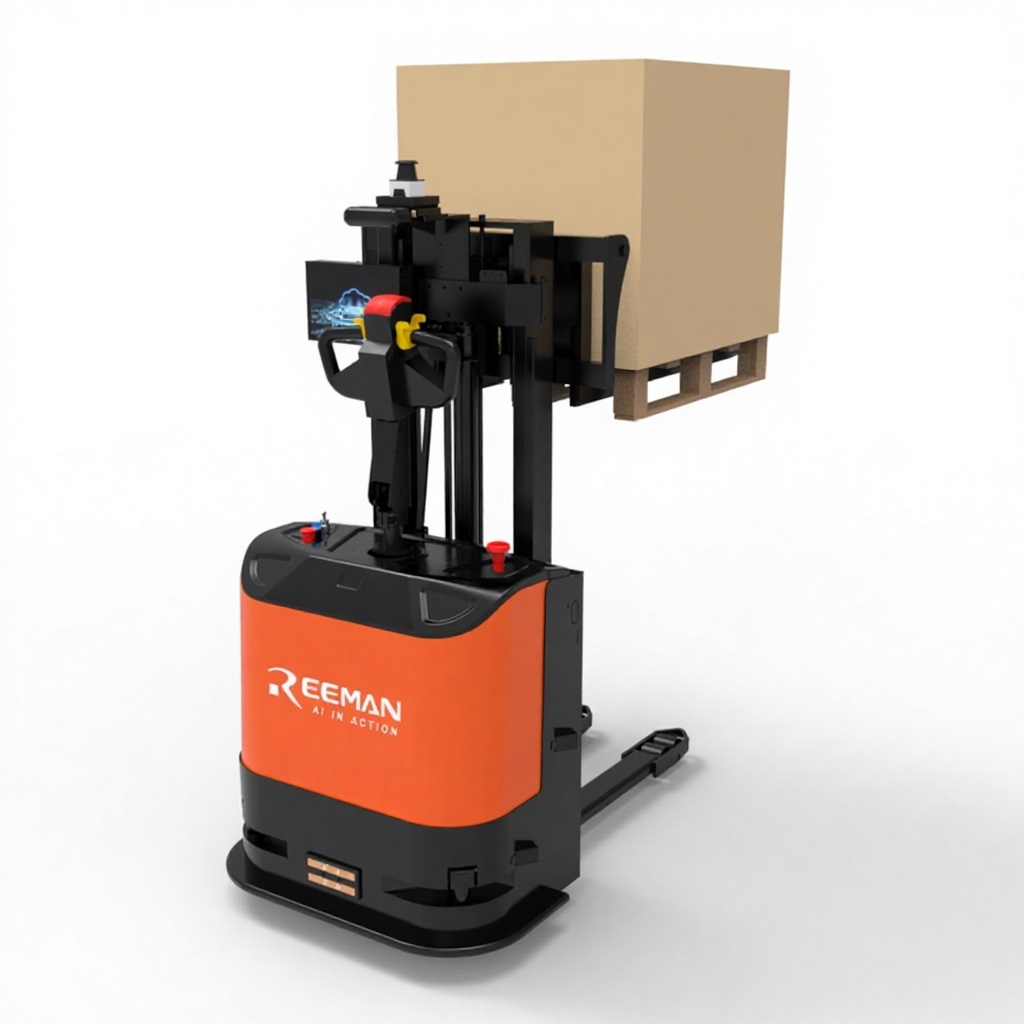
REEMAN Rhino RBOT30F Autonomous Stacker Forklift 3D Vision Obstacle Avoidance Warehouse AGV Robot
3D vision obstacle avoidance is relevant for mixed pedestrian and equipment areas common in event venues and multi-tenant facilities.
View product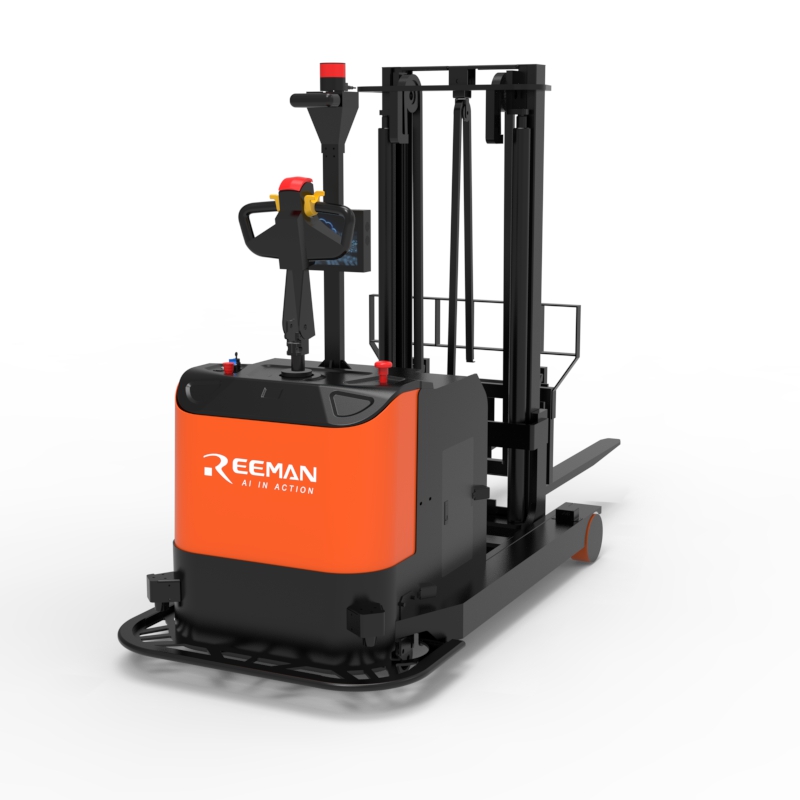
Reeman Autonomous Electric Stacker Forklift 1.2 Ton Li-Ion 48V 30Ah 2500mm Lift Laser Navigation 3m Aisle
Lithium-ion power and narrow-aisle capability fit constrained Frankfurt back-of-house and urban distribution spaces.
View product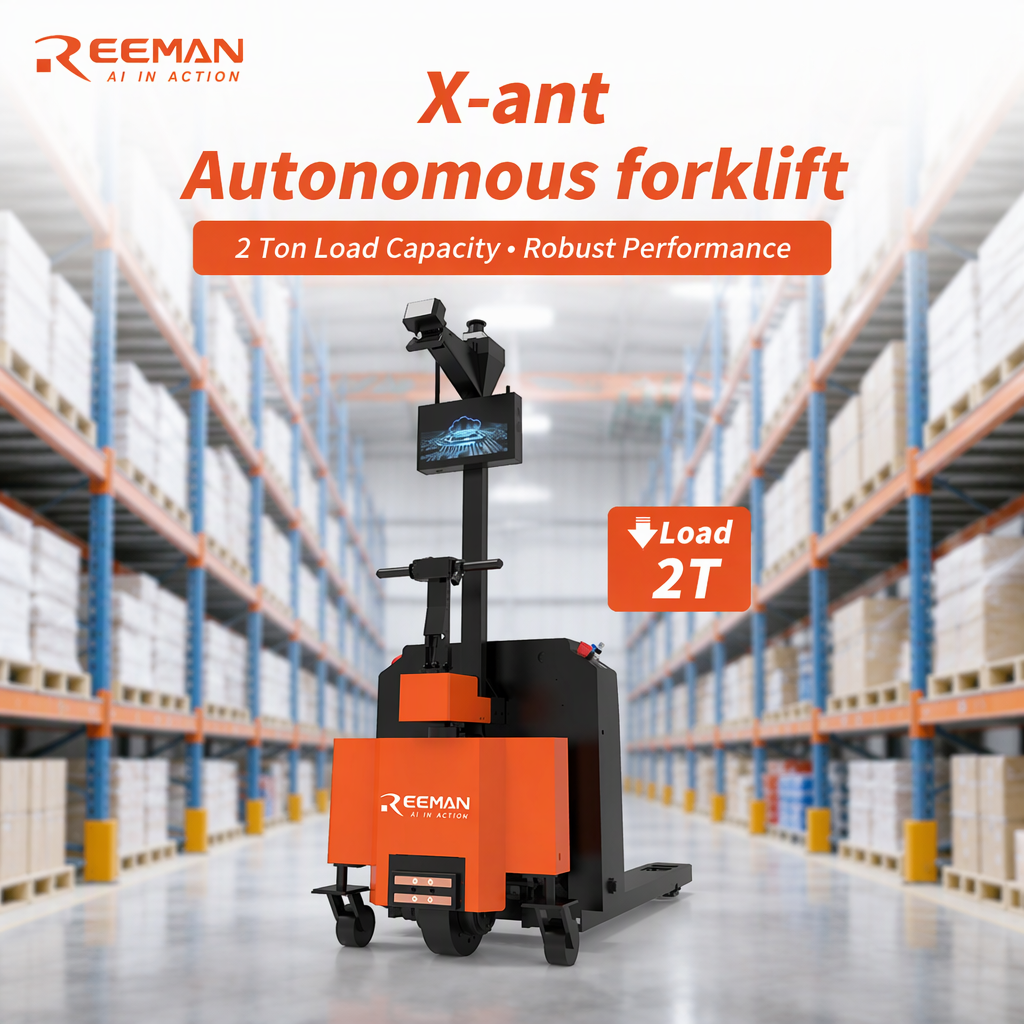
2 Ton Autonomous 4WD AGV Forklift Laser SLAM Navigation Multi-Line LiDAR 10mm Position Accuracy Warehouse Handling
Multi-line LiDAR and 10 mm position accuracy support precise dock, staging, and pallet-transfer routines for wholesale projects.
View product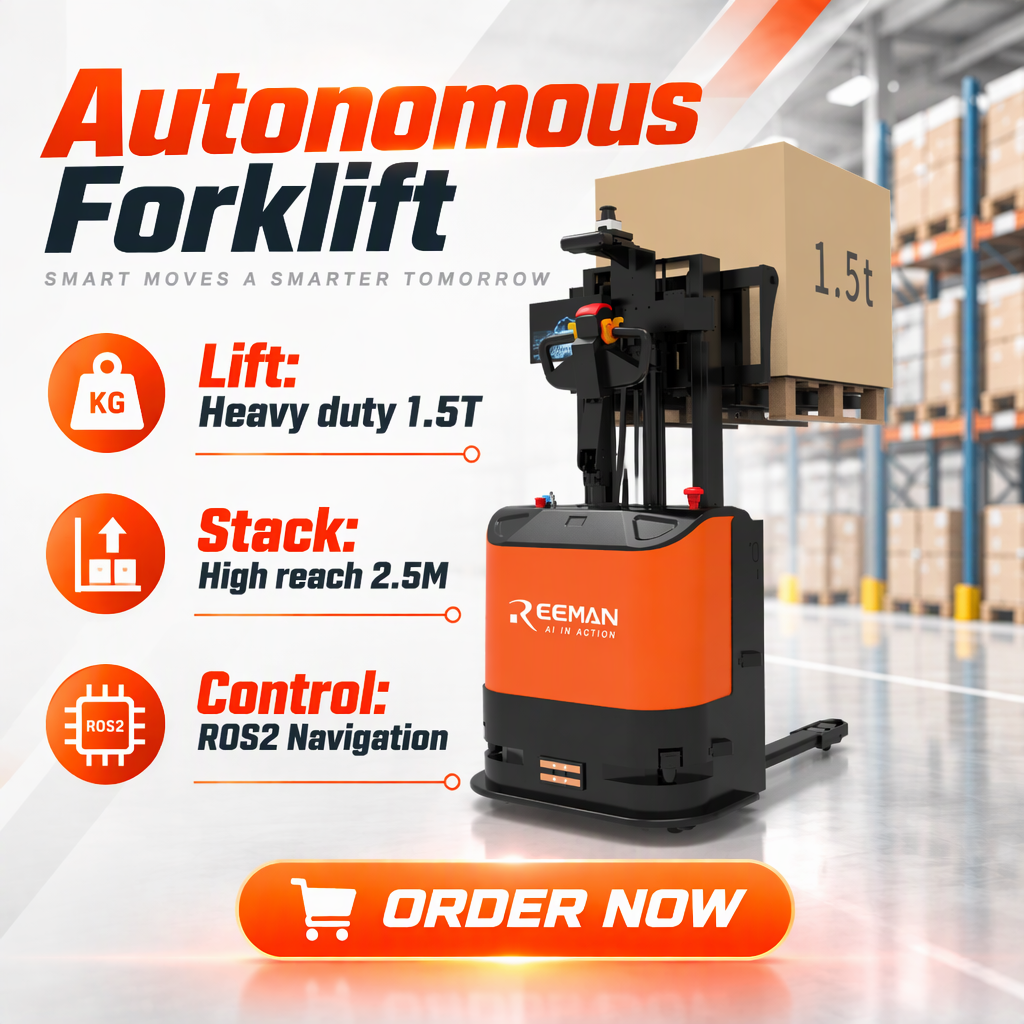
Autonomous Electric Forklift AGV 1500kg Load Capacity 2.5M Lift ROS2 Navigation 4WD Lithium-Ion Battery Indoor Material Handling
ROS2-oriented navigation and indoor material handling make this model relevant for integrators building OEM/ODM automation packages.
View productHow Frankfurt Buyers Actually Evaluate a Meal Delivery Robot Wholesaler
Frankfurt am Main is not a generic German city for service robotics. It combines a dense hospitality core, an international trade-fair calendar, one of Europe’s busiest airports, banking and corporate campuses, hospital groups, and the Rhine-Main logistics ring. A meal delivery robot wholesaler serving Frankfurt must therefore be more than a catalogue of machines. Buyers ask for CE-oriented documentation, installation planning, German or bilingual interface options, spare-part planning, insurance and risk-assessment support, and evidence that the robot can work in mixed pedestrian traffic, narrow hotel corridors, carpet, tile, and elevator environments.
For OEM/ODM wholesalers, the buying centre is different again. Distributors and facility-service groups want private-label hardware, stable firmware, an SDK/API roadmap, and a supplier able to support a pilot first and volume later. Shenzhen Elvorn Intelligent Equipment Co., Ltd. gives Frankfurt buyers a practical due-diligence baseline: founded in 2015, 39 patents, 5,200㎡ of production floorspace, more than 200 team members, ISO 9001 and ISO 14001 management systems, SGS onsite verification, CE/FCC/PSE-certified models, and export experience on FOB terms with T/T payment in USD or CNY.
The key information gain for Frankfurt is not another list of robot features. It is the ability to connect the robot to a real operating model: breakfast service peaks in a hotel, quiet meal rounds in a clinic, exhibition catering at Messe Frankfurt, or a local distributor that needs a private-label robot programme with spare parts and documentation. The right wholesale partner should be able to discuss those scenarios before quoting a unit price.
Frankfurt buying-pressure scorecard
Indicative planning priorities for service-robot procurement teams in the Rhine-Main market.
Frankfurt Market Trends Shaping Meal Delivery Robot Demand
Procurement in Frankfurt is moving from isolated robot demonstrations to repeatable fleet decisions. The six trends below explain where a wholesale, OEM/ODM-capable supplier creates the most value.
Persistent hospitality labor pressure
Hotels, restaurants, caterers, and airport lounges compete for staff against banking, retail, logistics, and trade-fair event work. Robots are most compelling when they remove repetitive meal-running and tray-return tasks, allowing service teams to spend more time with guests.
Multi-floor venues need integration
Frankfurt hotels and clinics often operate across several floors. Elevator control, door opening, no-go zones, charging placement, and fire-alarm behavior should be reviewed before the first mapping run, not after delivery.
EU-oriented compliance expectations
Buyers increasingly request CE documentation, technical files, risk-assessment support, EMC information, and clear data-governance answers for cameras and cloud features. A wholesaler that treats compliance as an afterthought is difficult to scale in Germany.
Trade-fair and airport peaks
Messe Frankfurt and Frankfurt Airport create irregular demand peaks. Flexible charging plans, swappable batteries where specified, route reconfiguration, and fast operator training matter more than a headline maximum speed.
Software integration becomes decisive
Meal delivery robots must connect with hotel PMS, restaurant POS, kitchen display systems, nurse-call workflows, elevator controllers, or simple call buttons. Open SDK and API access is now a core procurement criterion for integrators and distributors.
Pilot-to-volume purchasing
Frankfurt buyers prefer a controlled pilot followed by volume rollout. The supplier must provide test records, spare-part lists, maintenance intervals, training materials, and a realistic path from one venue to a multi-site wholesale agreement.
Where Meal Delivery Robots Fit in the Frankfurt Economy
Frankfurt’s mix of hospitality, healthcare, finance, exhibitions, and logistics creates several high-value deployment scenarios for autonomous service robots.
Hotels and aparthotels
Room-service trays, breakfast items, amenities, and documents can be moved from lobby or kitchen to guest floors. The robot should handle carpet transitions, wait for lifts, and return automatically to a charging station.
Restaurants and dark kitchens
In busy Frankfurt restaurant operations, robots can carry trays from kitchen pass to pickup points or support dish return. The objective is not to replace service staff but to reduce walking distance during peak hours.
Hospitals and care facilities
Scheduled meal rounds and internal deliveries require quiet motion, hygienic surfaces, predictable routes, and integration with staff workflows. Risk assessment and training are essential before patient-facing deployment.
Messe Frankfurt and events
Exhibition catering, hospitality suites, and temporary venues need robots that can be mapped quickly and redeployed between events. Fleet scheduling and fast onboarding are more valuable than permanent infrastructure.
Corporate campuses and airport spaces
Frankfurt’s office towers, airport lounges, and staff restaurants can use robots for meal transport, document delivery, and internal logistics. Bilingual interfaces and clear emergency-stop behavior help with staff adoption.
Facility-service wholesalers
Local distributors can build OEM/ODM programmes with private-label meal delivery robots, branded packaging, custom top modules, and spare-part kits. This is where a manufacturer with open SDK access and in-house production matters.
Why Elvorn Supports Frankfurt Wholesale Programs
Elvorn is a manufacturer of autonomous forklifts, industrial AMRs, robot chassis, delivery robots, cleaning robots, and disinfection robots. The following capabilities are directly relevant to German and EU buying centres.
Laser SLAM navigation
Maps Frankfurt sites in hours and navigates without magnetic tape, QR codes, or floor reflectors. Layout changes in hotels and event venues do not require extensive floor work.
Open SDK and API
AMRs and chassis platforms provide an open SDK/API for secondary development, allowing integration with PMS, POS, WMS, MES, elevator controls, call buttons, and custom dashboards.
Modular payload platforms
From 60 kg delivery robot concepts to 2-ton autonomous forklifts, modular platforms simplify training, spare-parts planning, and mixed-fleet management for wholesalers.
Multi-layer safety
LiDAR, obstacle sensors, emergency stops, and speed zoning help robots operate around guests, staff, and equipment. Safety behavior should be validated through a site-specific risk assessment.
Own production capacity
Two production bases in Shenzhen and Ningbo support in-house R&D, assembly, inspection, and customization. The factory has passed onsite verification by SGS Group.
Export-ready support
English documentation, remote commissioning, OEM/design/buyer-label service, and spare-part supply support buyers across Europe. Export terms are FOB with T/T payment in USD or CNY.


A Manufacturer, Not Just a Trading Company
Shenzhen Elvorn Intelligent Equipment Co., Ltd. was founded in 2015 as a national high-tech enterprise focused on robotic platform technology and autonomous driving. Its in-house R&D team covers laser SLAM navigation, motion control, fleet scheduling, software interfaces, and hardware integration. That matters to Frankfurt buyers because customization questions can be answered by engineers who control the platform, not by intermediaries guessing at delivery dates.
Elvorn operates two production bases in Shenzhen and Ningbo, with in-house assembly, quality inspection, supplier assessment procedures, and on-site material verification. Management systems are certified to ISO 9001 and ISO 14001, individual models carry CE, FCC, or PSE marks depending on configuration, and the factory has been verified onsite by SGS Group. For wholesale buyers, these are practical due-diligence signals: they shorten the path from initial inquiry to a documented pilot.
- Verified custom manufacturer
- CE / FCC / PSE-certified models
- OEM, design and buyer-label service
- Open SDK and API for integrators
- English documentation and remote commissioning
- Spare-part planning for overseas fleets
From Frankfurt Inquiry to Stable Operation
A well-run robot procurement process reduces deployment risk for hotels, hospitals, distributors, and facility-service groups. This six-step workflow is used to scope meal-delivery and adjacent automation projects.
Requirement review
Share layout drawings, load data, tray or cart dimensions, floor types, elevator constraints, operating hours, and target throughput.
Site and compliance pre-check
Confirm charging locations, Wi-Fi coverage, pedestrian zones, emergency procedures, data requirements, and expected CE documentation scope.
Solution and OEM/ODM design
Engineers recommend model, fleet size, top module, interface plan, branding, packaging, and spare-part package for the Frankfurt project.
Prototype and factory testing
Function tests, load tests, and integration checks are completed before shipment, with test records available for buyer review.
Export and documentation
Orders are prepared on FOB terms with T/T payment in USD or CNY, export packaging, commercial documentation, and agreed technical files.
Deployment and lifecycle support
Remote mapping support, operator training materials, maintenance schedules, and spare-part supply help protect uptime after commissioning.
Common Procurement Questions for Local Buyers
These are the practical questions that appear repeatedly during early-stage wholesale, distributor, and operator discussions in Frankfurt and the wider Rhine-Main region.
What does a Frankfurt procurement team usually ask before ordering?
+
Buyers typically ask for the route map, payload and tray dimensions, expected throughput, charging plan, floor and elevator constraints, safety concept, CE documentation scope, integration options, spare-part list, delivery time, and a pilot-to-volume price structure. A credible supplier should answer these before discussing only robot speed or battery size.
Can you support German-speaking operators and Frankfurt delivery?
+
Elvorn provides English documentation and remote commissioning support, with German or bilingual interface options available on request. Export shipping to Frankfurt can be arranged through agreed logistics partners, and deployment coordination can be aligned with the buyer’s local integrator or facility team.
What is the MOQ for OEM/ODM meal delivery robots?
+
MOQ depends on the selected platform, top module, branding, packaging, and software customization. A pilot unit followed by a volume wholesale programme is often the most practical route. Private-label options, custom top modules, buyer-label branding, and packaging customization can be discussed during project scoping.
How do you handle safety around guests, staff, and patients?
+
Safety is addressed through LiDAR and obstacle sensing, emergency stops, speed zoning, mapped no-go areas, and operator training. For Frankfurt venues, a site-specific risk assessment should be completed with the operator before public-facing deployment, especially in hotels, hospitals, and event spaces with unpredictable pedestrian movement.
Can the robot integrate with hotel PMS, restaurant POS, elevators, and doors?
+
Elvorn AMRs and robot chassis provide an open SDK and API for secondary development. Integration scope can include task dispatch, status feedback, elevator or door controls, call buttons, PMS/POS workflows, and custom dashboards. The exact interface plan should be confirmed with the operator’s software vendors and the Elvorn engineering team.
What are the trade terms and payment methods for wholesale orders?
+
Elvorn ships worldwide on FOB terms and accepts T/T payment in USD or CNY. The company offers OEM service, design service, and buyer-label options. Final lead time depends on model, customization, testing scope, and shipping method to Frankfurt; it should be confirmed in the quotation and project schedule.
Request a Frankfurt Wholesale Quote
Send your venue layout, meal-delivery workflow, expected daily trips, elevator constraints, and branding requirements. Our engineers can recommend a suitable platform, outline the OEM/ODM scope, and prepare a pilot-to-volume proposal for the Frankfurt market.
Email: info@elvornbot.com