Eight Autonomous Platforms for Delivery, Material Flow and System Integration
This product matrix connects the most common Edmonton procurement conversations with specific platforms: a 100 kg outdoor delivery robot for mixed indoor-outdoor routes, 600 kg industrial AMRs for production-line material handling, roller-conveyor AMRs for custom integration, 1,500 kg laser SLAM stackers and CE-certified driverless forklift AGVs for pallet-intensive warehouses.
Reeman Autonomous Mobile Robot Slam Navigation PLC Core Components Warehouse Logistics
An autonomous mobile robot platform for warehouse logistics projects that need SLAM navigation, PLC core components and a practical base for system integration.
View product details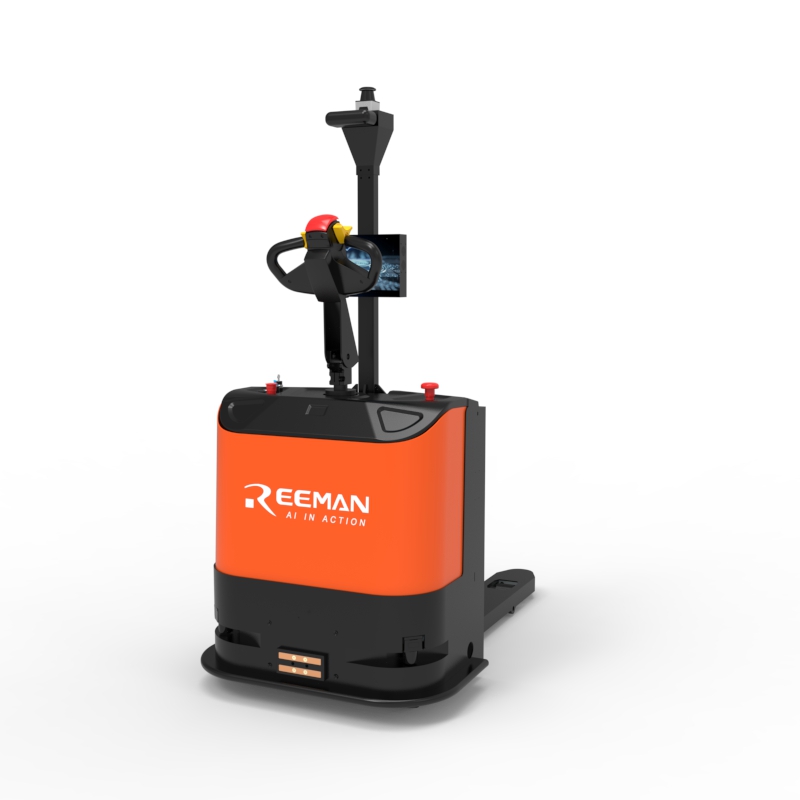
Reeman BBOT30F 1500kg Laser SLAM Autonomous Pallet Stacker AGV Single Line Lidar Obstacle Avoidance Warehouse Transport
A 1,500 kg autonomous pallet stacker for warehouse transport, stacking and repetitive pallet moves without magnetic tape or reflector installation.
View product details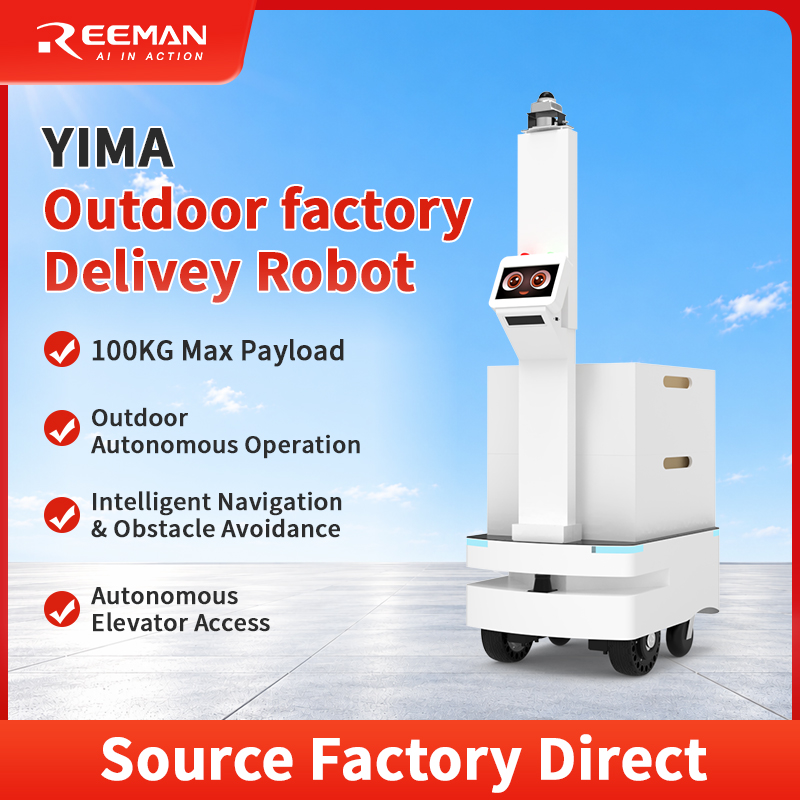
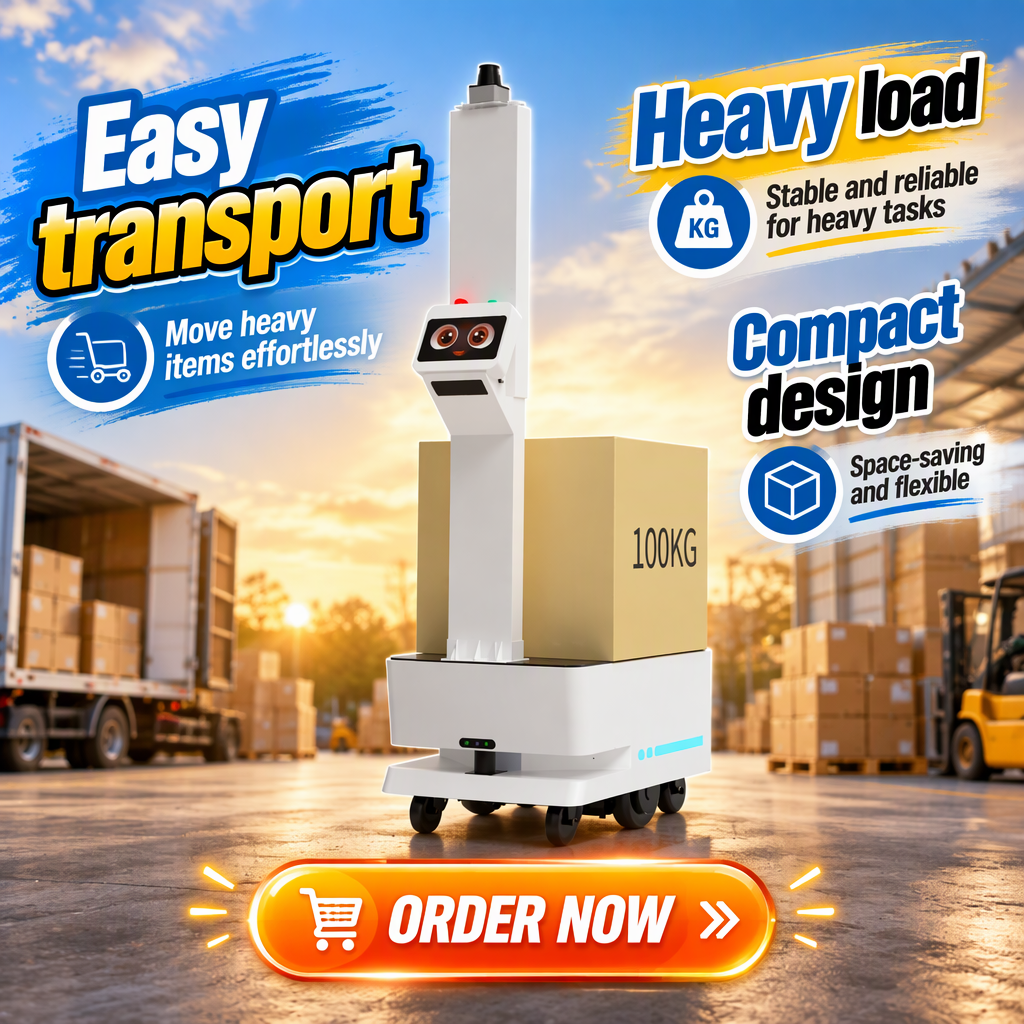
REEMAN Outdoor Delivery Robot 100kg Payload Autonomous Navigation Obstacle Avoidance Elevator Access Warehouse Logistics
A key platform for Edmonton mixed indoor-outdoor delivery projects, with 100 kg payload, autonomous navigation, obstacle avoidance and elevator access for multi-floor service routes.
View product details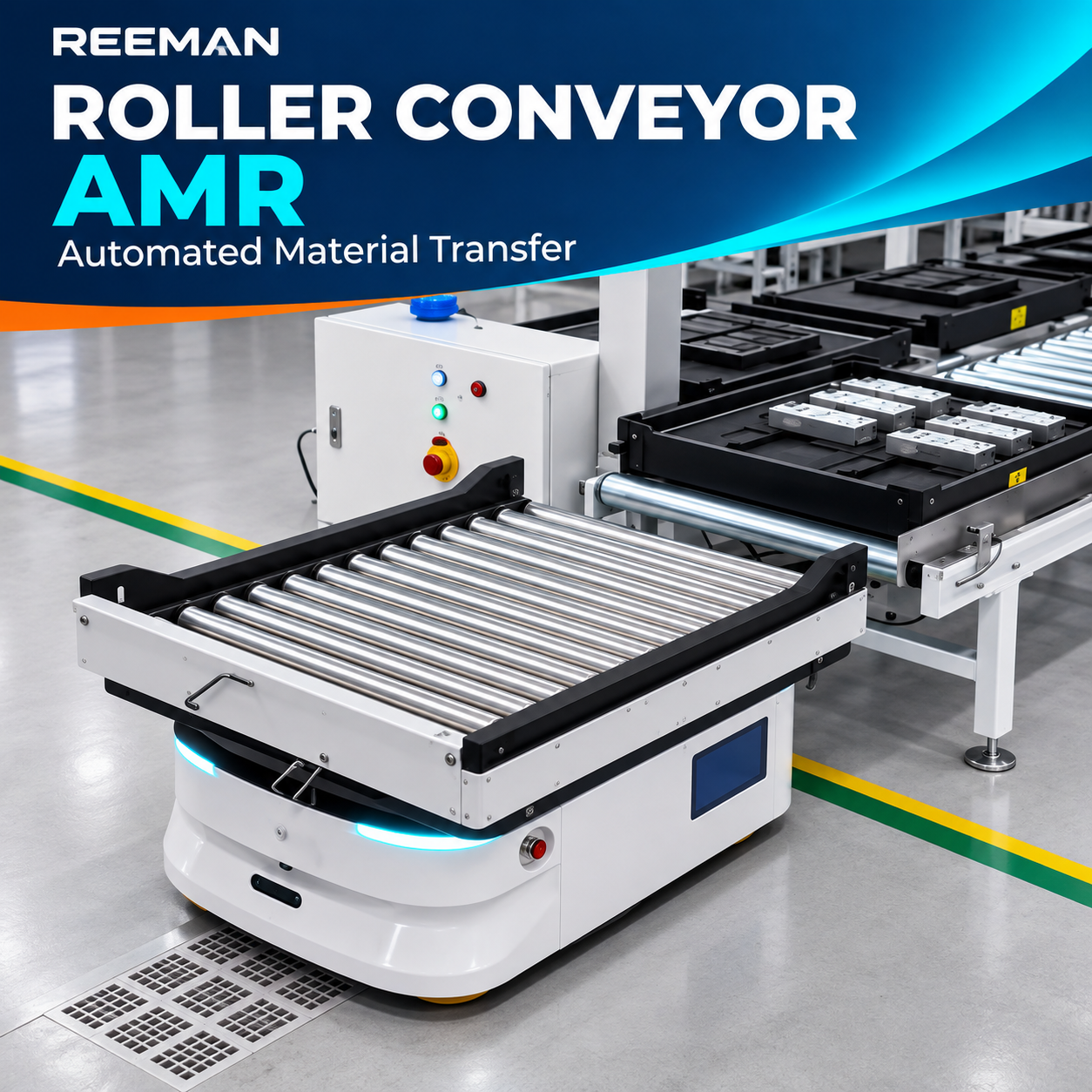
Roller Conveyor AMR Robot with SDK and API for Custom Development and System Integration
A roller-conveyor AMR with SDK and API access for Edmonton integrators building custom material-handling cells, conveyor handoffs or line-side transfer systems.
View product details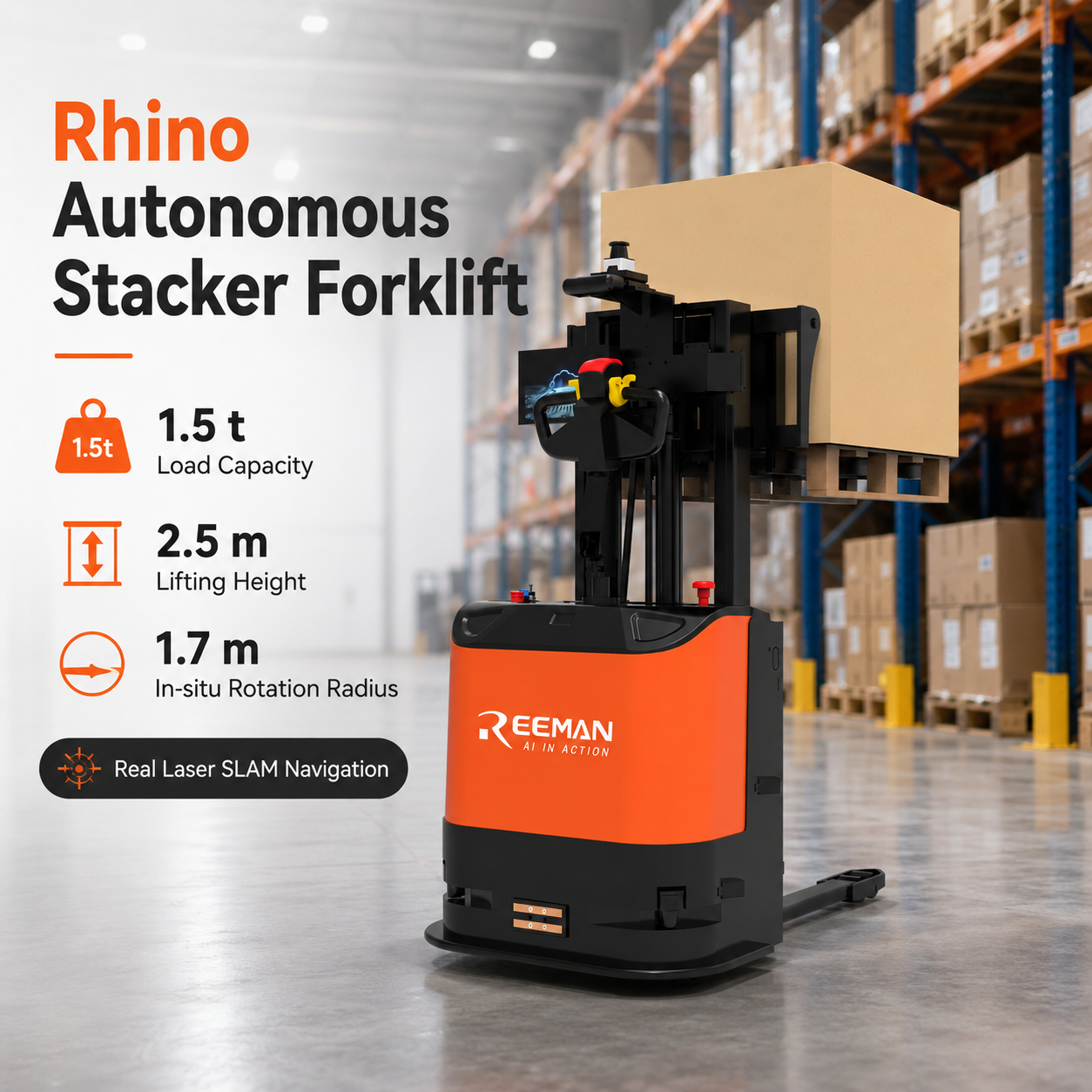
Laser SLAM Autonomous Stacker Forklift 1500 kg Load AGV Pallet Handling Robot Laser Obstacle Avoidance Warehouse
A 1,500 kg autonomous stacker forklift for pallet handling, rack feeding and warehouse transport where laser obstacle avoidance and route flexibility matter.
View product details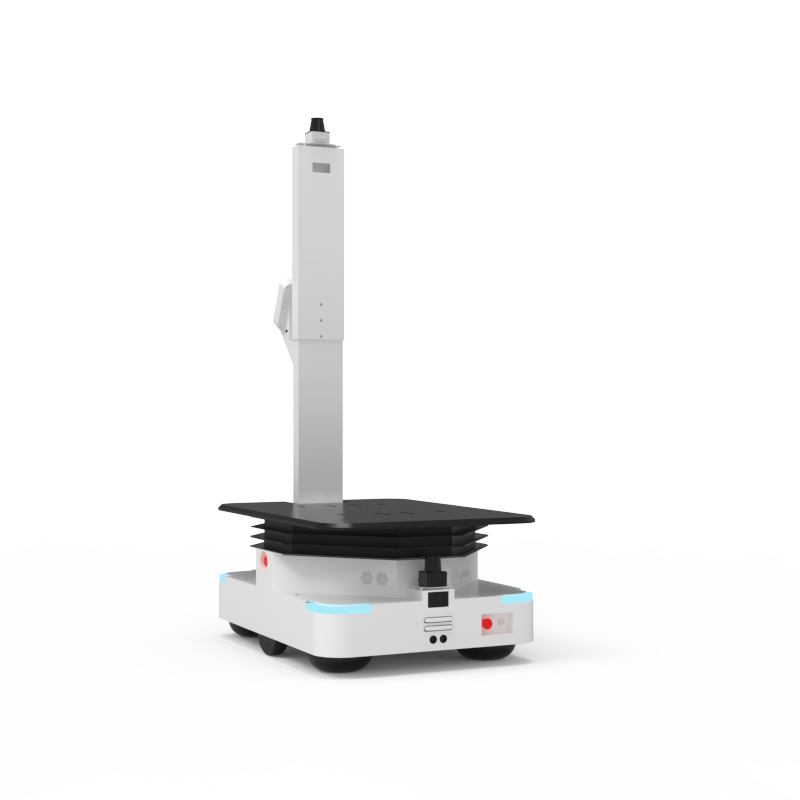
REEMAN Autonomous Mobile Robot AGV AMR 600kg Payload Sheet Metal Material Handling for Production Line
A 600 kg autonomous mobile robot for sheet metal and production-line material handling, suitable for Edmonton fabrication shops and industrial workshops.
View product details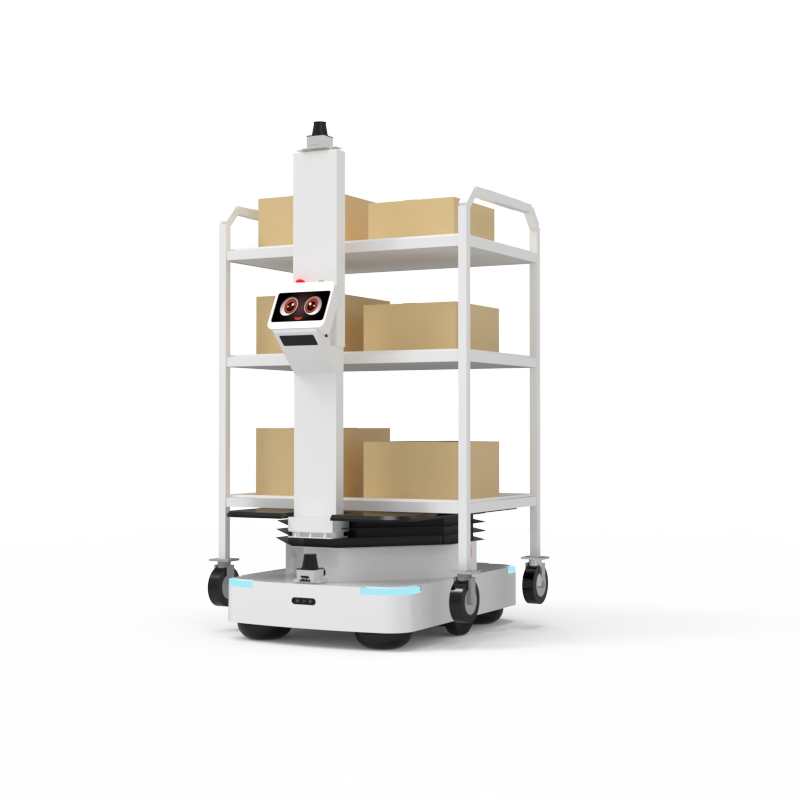
600kg Payload Autonomous AMR Robot Multi Sensor Mobile Material Handling Cart for Production Line
A 600 kg autonomous mobile material-handling cart with multi-sensor navigation for repetitive line feeding, WIP transfer and internal logistics.
View product details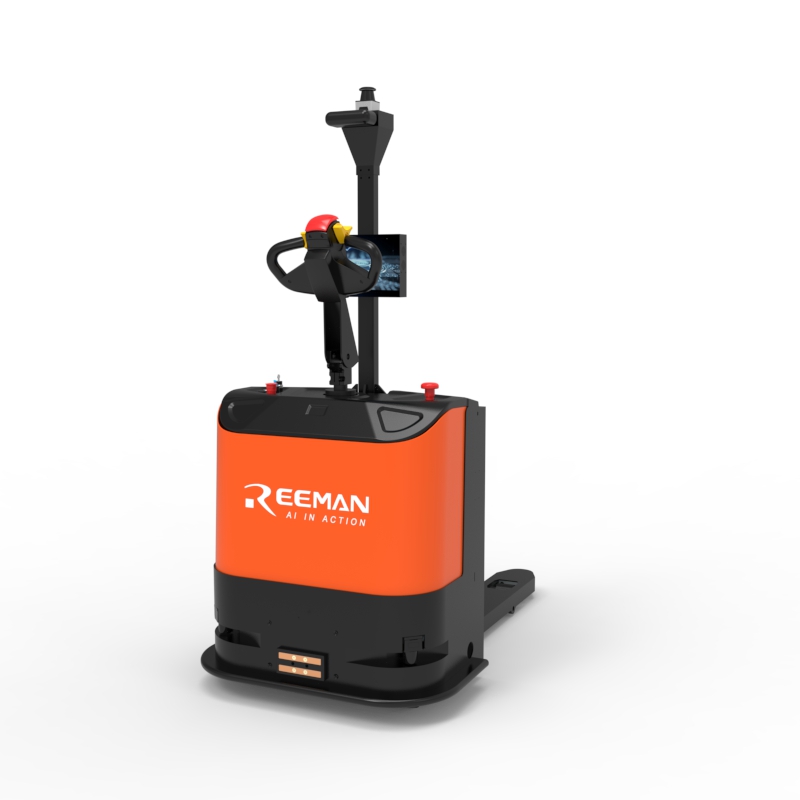
CE Certified 1500kg Driverless AGV Forklift Laser SLAM Navigation Automatic Pallet Loading Unloading Robot 1-2H Working Time
A CE-marked 1,500 kg driverless AGV forklift for pallet loading and unloading, with laser SLAM navigation and a 1–2 hour working cycle suited to planned fleet rotation.
View product detailsAll eight product URLs above are preserved for direct technical review. For configurations, loading plans, spare-parts kits or Edmonton-specific delivery routes, use the inquiry button in the final section.
Manufacturing, R&D and Export Evidence for Edmonton Wholesale Buyers
Edmonton distributors and project owners need more than a product photo. They need verifiable manufacturing capacity, certification evidence, response speed, customization capability and long-term spare-part planning.
Factory data verified onsite by independent inspector SGS Group. Management systems certified to ISO 9001 and ISO 14001; selected models carry CE, FCC or PSE marks.
What Makes an Outdoor Delivery Robot Project Different in Edmonton?
Edmonton is not a generic last-mile market. Long winters, short daylight hours, snow storage, ice, mixed indoor-outdoor building transitions, large industrial parks and campus-style demand clusters all influence robot selection. A supplier that only quotes payload and speed is not yet an application partner.
Cold-Weather Route Reality
Snowbanks, refreeze, grit, low sun angles and wet floor transitions can challenge perception and traction. Edmonton projects should review route clearance, battery temperature, sensor cleaning and winter fallback procedures before a pilot.
Mixed Indoor-Outdoor Workflows
Hospitals, campuses and commercial buildings often require a robot to move from an outdoor sidewalk into a lobby, elevator and upper-floor corridor. Elevator access and building-system coordination are practical buying criteria.
Labor, Safety and Repetition
Edmonton operators are under pressure to reduce repetitive walking, pallet shuttling and line-side replenishment while improving safety around pedestrians, forklifts and loading docks.
Integration and Total Cost
Procurement teams compare not only robot price but also mapping effort, WMS/MES integration, charging strategy, spare parts, training and remote support across the asset lifecycle.
Where Outdoor Delivery Robots and AMRs Fit in the Edmonton Economy
The strongest deployment cases are not always glamorous “last-mile” demonstrations. In Edmonton, repeatable value often appears in controlled routes with clear handoff points, predictable payloads and measurable labor displacement.
Hospitals and Medical Campuses
For pharmacy, lab samples, linens, meals and mail, a 100 kg outdoor delivery robot can connect building entrances, elevators and internal service points. Edmonton healthcare projects should plan infection-control handoffs, elevator priority and winter route clearance.
University and Research Campuses
Routes around the University of Alberta, NAIT and adjacent districts often mix pedestrians, bikes, service vehicles and building access control. A delivery robot pilot should define speed zones, operator handoffs and emergency response procedures.
Warehouse, 3PL and Yard Transfer
Edmonton distribution centers and 3PL operations can use 600 kg AMRs, 1,500 kg stackers and AGV forklifts to move pallets between staging lanes, docks and storage. Conservative fleet sizing and charging planning usually matter more than peak speed claims.
Manufacturing and Industrial Parks
Sheet-metal handling, WIP transfer and line-side feeding are strong matches for 600 kg AMR carts. In Edmonton’s industrial corridors around Nisku, Leduc and the airport area, robots can reduce repeated cart pushes and forklift traffic.
Retail, Hospitality and Events
Downtown retail, West Edmonton Mall-style venues, hotels and event spaces can use autonomous delivery and guidance robots for stock movement, room service, visitor information or advertising. Operators should test floor surfaces, crowd density and lift access.
Public Venues and Campus Support
Municipal buildings, arenas and public-facing venues can benefit from guided delivery, document transport or information robots. For Edmonton, stakeholder approval should include accessibility, snow clearing, emergency access and operator training.
Seven Trends Shaping Outdoor Robot Procurement in Edmonton
A semantic search query such as “outdoor delivery robot exporter Edmonton” usually hides a more complex buying question: which supplier can deliver a route that works in winter, integrates with existing systems and remains supported after installation?
Cold-Climate Validation Becomes a Buying Criterion
Edmonton buyers increasingly ask for low-temperature battery behavior, heated or protected sensors, snow route plans, wet-floor handling and remote diagnostics instead of accepting lab-only performance claims.
From Demonstration to Repeatable Duty Cycles
Pilots are moving from one-off showcases to defined tasks: scheduled meal delivery, pharmacy runs, WIP transfer, pallet staging or line-side replenishment. That favors platforms with clear operating envelopes and maintenance plans.
WMS, MES and Elevator Integration
Open SDK and API access is becoming a procurement requirement. Edmonton teams want robots to accept tasks from WMS, MES, ERP or building systems and to report status back to a dashboard.
Mixed Fleets Replace Single-Robot Purchases
One warehouse may need outdoor delivery robots, AMR carts and stacker forklifts on the same site. A supplier with shared SLAM architecture, spare-parts commonality and fleet scheduling experience reduces training complexity.
Energy Planning Moves to the Front
Winter operation changes charging strategy. Opportunity charging, indoor docking, battery swap planning and shift-based route lengths should be reviewed before quoting fleet size or uptime expectations.
Safety Documentation Gains Weight
Alberta project owners need to review pedestrian interaction, emergency stops, speed zoning, audible warnings and operator procedures. A professional exporter should support risk discussions, not just ship hardware.
Wholesale Buyers Want Marketing and Service Support
Distributors in Edmonton need more than a container price: product photos, specification sheets, training materials, spare-part kits, warranty terms and response workflows all affect resale success.
Local Service Alliances Beat Remote-Only Promises
Robots are durable assets. Exporters that support third-party service partners, remote diagnostics and documented troubleshooting are easier to shortlist than suppliers offering only one-time remote support.
Total Cost of Deployment Receives More Scrutiny
Procurement teams now compare mapping labor, route changes, spare parts, training time and integration cost alongside the robot unit price. A clear project scope is therefore more valuable than a vague low quote.
A Practical Checklist for Edmonton Outdoor Delivery Robot Projects
No supplier should promise winter performance without a site review. These are the engineering topics Elvorn reviews with Edmonton buyers before confirming a configuration.
Battery and Charging
Review low-temperature battery management, indoor charging locations, opportunity charging windows, battery swap options and winter range assumptions. Cold temperatures can reduce usable capacity, so route length and charge strategy should be adjusted conservatively.
Perception and Sensor Care
Lidar, cameras and safety sensors must handle low sun angles, reflective snow, wet surfaces and debris. Sensor covers, cleaning schedules, dual-laser options and safe-stop behavior should be defined for each route.
Route and Surface Review
Map door thresholds, curb ramps, drainage grates, slopes, snow-storage areas, loading-dock edges and pedestrian crossings. The best route in summer may not be the best route in February.
Service and Fallback
Define who clears a robot if it stops, how remote support is contacted, what spare parts are stocked and how manual recovery works. Edmonton projects benefit from a documented escalation plan before deployment.
Match the Robot Platform to the Edmonton Workflow
The following matrix is a practical starting point for procurement planning. Final selection depends on route survey, load dimensions, docking method, shift pattern, building access and local safety review.
| Platform Type | Typical Load / Format | Best-Fit Edmonton Workflow | Product Reference |
|---|---|---|---|
| Outdoor Delivery Robot | 100 kg autonomous navigation, elevator access | Campus, hospital, hotel, retail and mixed indoor-outdoor delivery routes | REEMAN 100kg Outdoor Delivery Robot |
| Industrial AMR | 600 kg sheet-metal, cart and multi-sensor material handling | Production-line feeding, WIP transfer, metal fabrication and warehouse cart movement | 600kg AMR or 600kg AMR Cart |
| Conveyor AMR | Roller conveyor top module, SDK and API | Custom integration with conveyors, production cells, test stations and system integrators | Roller Conveyor AMR |
| Stacker / Forklift AGV | 1,500 kg pallet handling and stacking | Warehouse transport, pallet staging, rack feeding and dock-to-storage movements | Pallet Stacker AGV, Stacker Forklift, CE AGV Forklift |
| SLAM Warehouse Platform | PLC core components and warehouse logistics AMR | System integrators requiring a controllable SLAM platform for custom warehouse automation | Reeman SLAM AMR |
Edmonton buyers should send layout drawings, route notes, pallet or cart dimensions, floor transitions, elevator availability and shift targets before requesting a final configuration.



Why Edmonton Distributors Shortlist Elvorn as a Wholesale Robot Supplier
Founded in 2015, Shenzhen Elvorn Intelligent Equipment Co., Ltd. is a national high-tech enterprise focused on robotic platform technology and autonomous driving. The company designs, builds and supports autonomous forklifts, industrial AMRs, robot chassis, delivery robots, cleaning robots and disinfection robots for buyers in multiple regional markets.
For Edmonton distributors and project owners, that matters because the product range is not assembled from unrelated suppliers. Elvorn’s in-house R&D team works across laser SLAM navigation, motion control, fleet scheduling and hardware integration. This creates a faster path for customization requests, interface questions, spare-part planning and long-term support.
- ISO 9001 and ISO 14001 management systems
- CE, FCC or PSE marks on selected models
- SGS onsite verification and independent assessment evidence
- OEM, ODM, design service and buyer-label options
- Open SDK and API for secondary development
- English documentation and export-ready support
Export terms include FOB shipment and T/T payment in USD or CNY. Main export markets include North America, Western Europe, Eastern Asia, Southeast Asia and the Middle East. For Edmonton, the commercial conversation can cover mixed-model wholesale orders, spare-parts kits, buyer-branded documentation, technical training materials and project-specific configuration reviews.
What Procurement and Engineering Teams Should Verify Before Shortlisting
These are the technical and commercial advantages that matter when an outdoor delivery robot or industrial AMR will be used in a real Edmonton operation, not only in a demonstration video.
Laser SLAM Navigation
Maps a site in hours and navigates without magnetic tape, QR codes or floor reflectors, reducing layout disruption when Edmonton facilities reconfigure storage or pedestrian zones.
Open SDK and API
Secondary development on AMRs and chassis lets integrators connect robots to WMS, MES, ERP, elevators, doors and custom dashboards.
Modular Payload Platforms
From 60 kg delivery robots to 600 kg AMRs and 1,500 kg stackers or forklift AGVs, shared control architecture simplifies operator training and service planning.
Multi-Layer Safety Design
Lidar, obstacle sensors, emergency stops and speed zoning help robots operate near pedestrians, forklifts and racking when supported by site-specific risk controls.
Own Production Capacity
Two production bases in Shenzhen and Ningbo, with supplier assessment and on-site material inspection procedures, support wholesale and OEM/ODM programs.
Export-Ready Support
English documentation, remote commissioning, operator training materials and spare-part supply support buyers across North America, Europe, Asia and the Middle East.
Evidence Edmonton Buyers Can Review Before an Order
A serious exporter should make the verification path clear. Elvorn’s factory has passed onsite verification by SGS Group, covering business licensing, production capability and quality control. Management systems are certified to ISO 9001 and ISO 14001, and individual robot models may carry CE, FCC or PSE marks for target markets.
 SGS Onsite Verified
Independent factory assessment evidence
 CE Marking
Model-dependent compliance documentation
 FCC
Selected model compliance support
 PSE
Configuration-specific documentation
For Canadian projects, importers should confirm applicable electrical, radio, safety and workplace requirements with their own compliance advisors. Elvorn can supply available product documentation, test records and configuration details for project review.
Common Questions from Edmonton Buyers and Wholesale Distributors
These questions are written for real procurement conversations: winter performance, wholesale terms, integration, documentation, lead times and support.
Are outdoor delivery robots suitable for Edmonton winters?
They can be suitable for carefully reviewed routes, but winter operation cannot be assumed from a standard specification sheet. Edmonton projects should review battery temperature management, charging location, sensor protection, lens cleaning, wheel traction, route clearance and manual recovery procedures. Snowbanks, black ice, low sun angles and wet floor transitions can change performance, so a winter pilot or staged deployment is recommended. Elvorn can help review the configuration against the route and operating conditions, but the buyer should complete a site-specific risk assessment.
What can a 100 kg outdoor delivery robot be used for in Edmonton?
The 100 kg outdoor delivery robot is relevant for mixed indoor-outdoor delivery where the payload is moderate and the handoff points are defined. Typical planning examples include hospital or campus documents, meals, linens, mail, retail replenishment, hotel service items and scheduled internal deliveries. Elevator access is an important feature for multi-floor buildings. Before selecting this model, Edmonton buyers should confirm payload dimensions, route distance, door and elevator interfaces, floor surfaces and the maximum acceptable delivery time.
Can you integrate robots with WMS, MES, ERP, elevators or automatic doors?
Yes, integration is one of the main reasons buyers select Elvorn AMRs and robot chassis. The platforms can provide an open SDK and API for secondary development, allowing task dispatch and status feedback from warehouse management, manufacturing execution or custom software systems. Elevator access and door coordination depend on the building systems and third-party interfaces available on site. For Edmonton projects, the integration scope should be defined early so the robot supplier, building operator and software integrator can confirm responsibilities.
What are the wholesale and OEM options for Edmonton distributors?
Elvorn supports OEM service, ODM-style development, buyer-label options and custom top modules for many robot platforms. A wholesale distributor may request mixed-model orders, spare-parts kits, English training materials, product photography, specification sheets and branded packaging. Minimum order quantities and customization costs depend on the model, the required hardware changes, software scope and packaging requirements. Send the target model mix, expected annual volume and branding requirements so the sales team can prepare a practical quotation.
Which certifications and export documents can you provide?
Depending on the model, Elvorn robots may carry CE, FCC or PSE marks. The company management system is certified to ISO 9001 and ISO 14001, and the factory has been verified onsite by SGS Group. For export orders, typical documents can include commercial invoice, packing list, shipping marks, product documentation and available conformity files. Canadian importers should confirm whether the selected configuration meets applicable electrical, radio and workplace requirements for their site. Third-party assessment reports and transaction records can support buyer due diligence.
How are robots shipped to Edmonton and what are the trade terms?
Elvorn ships worldwide on FOB terms and accepts T/T payment in USD or CNY. For Edmonton, ocean freight commonly moves to a Canadian west-coast port and then by rail or truck inland, depending on the final delivery address and project schedule. Export packaging, loading plan and documentation are confirmed after the model and accessories are finalized. If a distributor needs a landed-cost estimate, the buyer should provide the destination postal code, order volume and preferred freight forwarder.
How does remote commissioning and support work from China to Edmonton?
Remote support can include pre-shipment configuration, mapping guidance, operator training materials, video calls and troubleshooting through agreed communication channels. For larger fleets or complex building integration, the project plan should identify a local integrator or service partner in Edmonton who can handle physical checks and first-line response. A spare-parts list, recommended consumables and escalation procedure should be agreed before shipment so the buyer is not dependent on ad hoc communication.
What information should I send for a fast Edmonton-specific quotation?
Send the site layout or route sketch, indoor and outdoor transitions, floor and ramp details, payload size and weight, required delivery frequency, shift pattern, elevator or door access, target throughput, existing WMS/MES/ERP systems and any known cold-weather constraints. For warehouse projects, include pallet type, rack height, aisle width, dock layout and charging location. Clear input data usually reduces quotation time and prevents an unsuitable robot configuration from being proposed.
Do you provide spare parts, training and long-term technical support?
Yes. Long-term support is part of the export planning discussion. Depending on the robot model and order volume, Elvorn can provide recommended spare-part kits, maintenance guidance, operator training materials and remote technical support. Edmonton distributors should define which parts they will stock locally, expected service response times and how warranty cases will be documented. This is especially important for winter operation, where sensor cleanliness, tire condition, charging behavior and emergency-stop functions should be checked regularly.
Plan Your Edmonton Robot Deployment with an Export-Ready Partner
Send your routes, payload details, building access notes, throughput targets and winter constraints. Our team can help match an outdoor delivery robot, AMR, stacker or AGV forklift to the workflow and prepare the next technical discussion for your Edmonton project.