Top China Floor Scrubber Robot Factories & Exporter Serving Calgary
Factory-direct autonomous floor scrubbers, sweeper-scrubber robots and SLAM robotic platforms for Calgary warehouses, retail centres, hospitals, airports and property teams — engineered for Canadian safety expectations, cold-season operations and remote support.
8 Autonomous Platforms for Calgary Floor-Care & Material-Flow Projects
Calgary buyers often automate cleaning and internal logistics in the same capital plan. The eight models below are the most requested factory-direct autonomous platforms for Canadian projects that need laser SLAM navigation, open integration, CE/FCC documentation and long-term spare-part support. For a dedicated floor scrubber robot or sweep-and-mop robot, send your cleaning width, tank capacity and shift schedule through the quote button; the same engineering team will configure the cleaning platform and, where relevant, pair it with material-handling robots to reduce total labour movement.
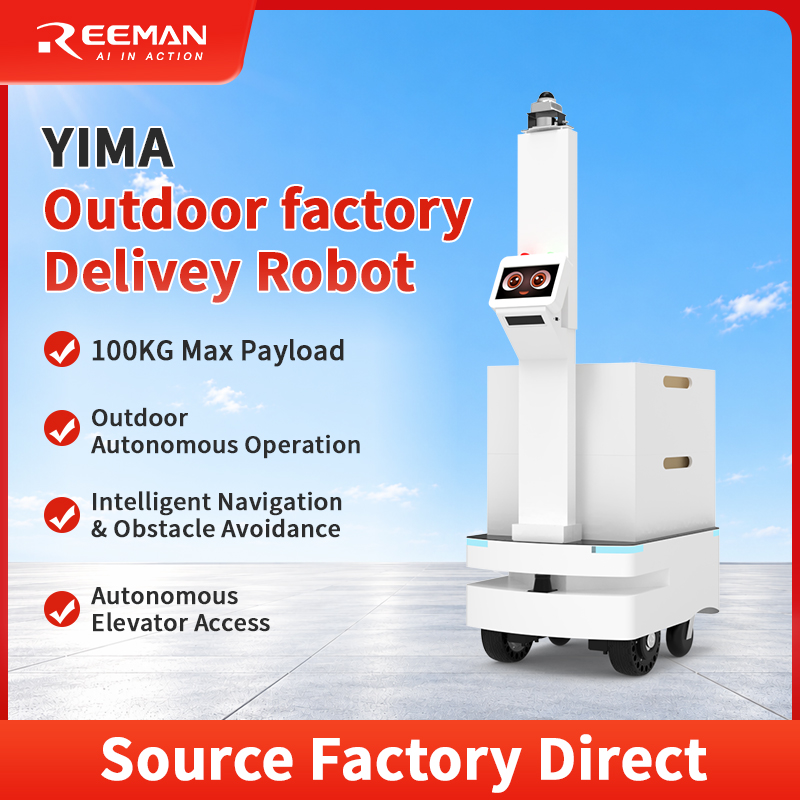
REEMAN Outdoor Delivery Robot 100kg Payload Autonomous Navigation Obstacle Avoidance Elevator Access Warehouse Logistics
Elevator access and outdoor navigation suit campus, hospital and warehouse-yard deliveries in Calgary.
View specifications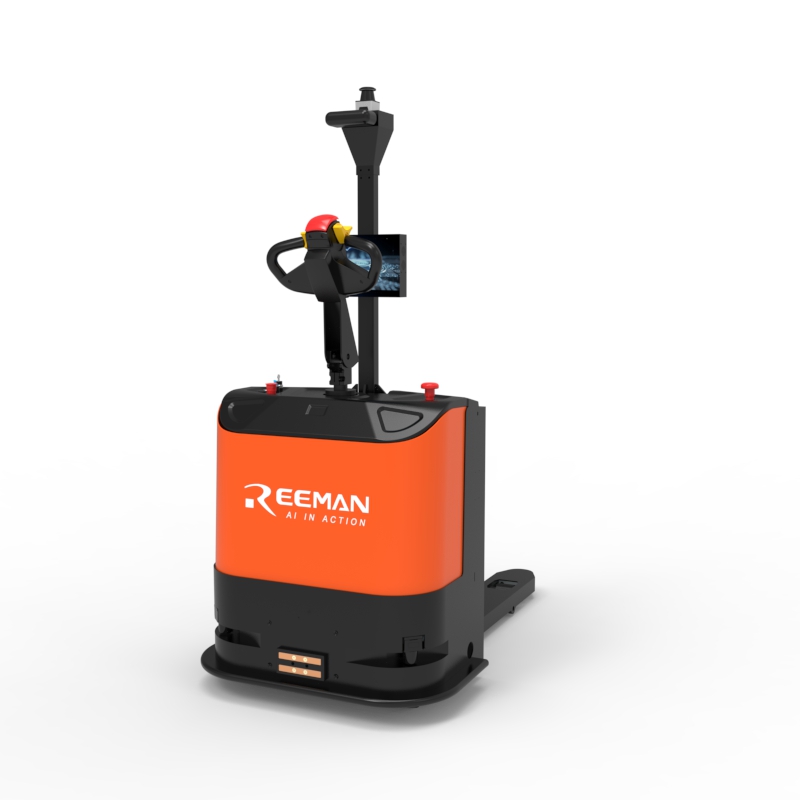
1500kg Laser SLAM AGV Forklift Single Line Lidar 30mm Navigation Accuracy 1019mm Forks 570mm Width Industrial Handling
Industrial pallet handling with 30 mm navigation accuracy and 1019 mm forks for repeatable dock-to-storage moves.
View specifications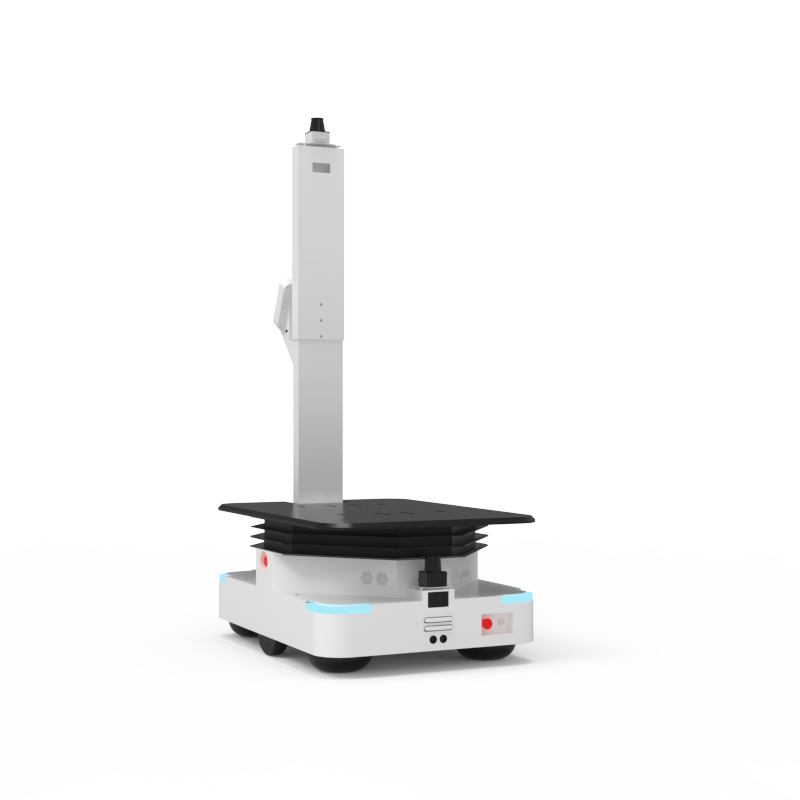
REEMAN Autonomous Mobile Robot AGV AMR 600kg Payload Sheet Metal Material Handling for Production Line
600 kg AMR platform for sheet-metal and production-line flows, with task dispatch ready for MES integration.
View specifications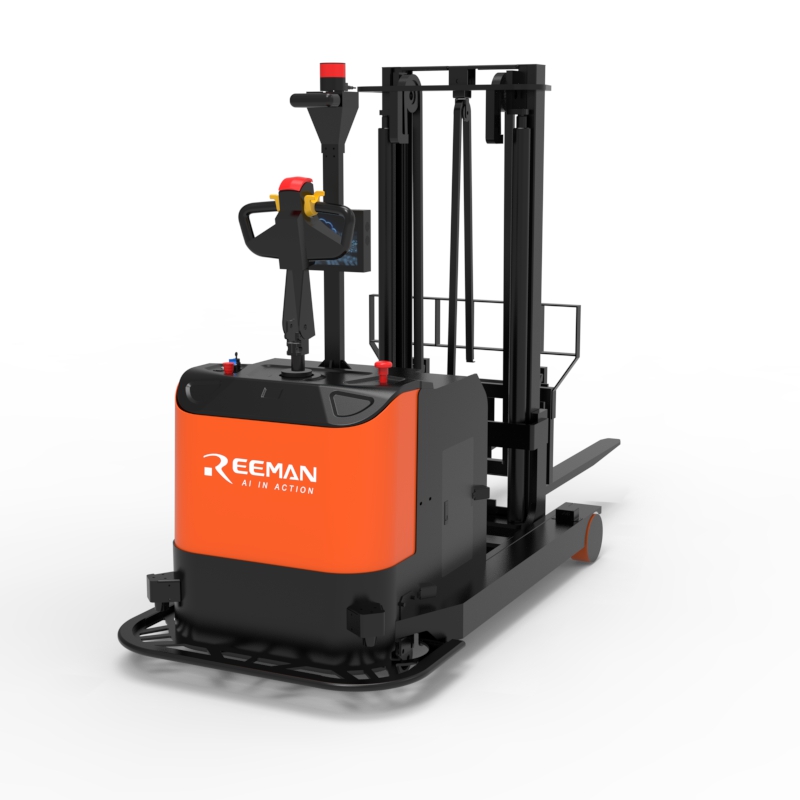
Reeman Autonomous Electric Stacker Forklift 1.2 Ton Li-Ion 48V 30Ah 2500mm Lift Laser Navigation 3m Aisle
1.2-ton electric stacker with 2500 mm lift and 3 m aisle capability for compact Calgary warehouse layouts.
View specifications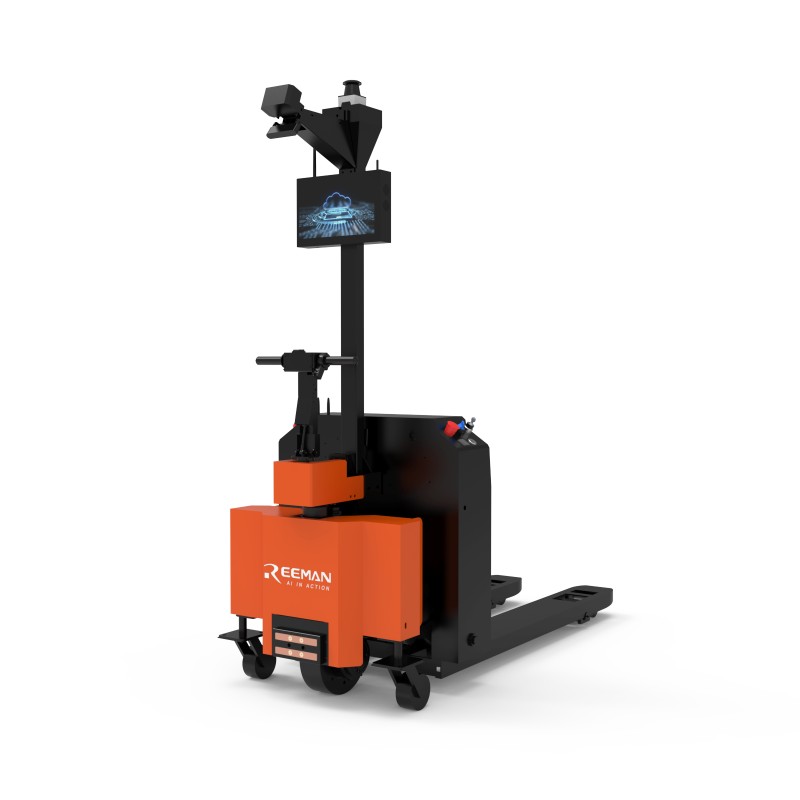
Reeman 2 Ton Autonomous Forklift AGV Laser SLAM Unmanned Pallet Truck 1085mm Fork 10mm Position Accuracy
2-ton AGV forklift with 1085 mm fork and 10 mm position accuracy for high-cycle pallet transfer.
View specifications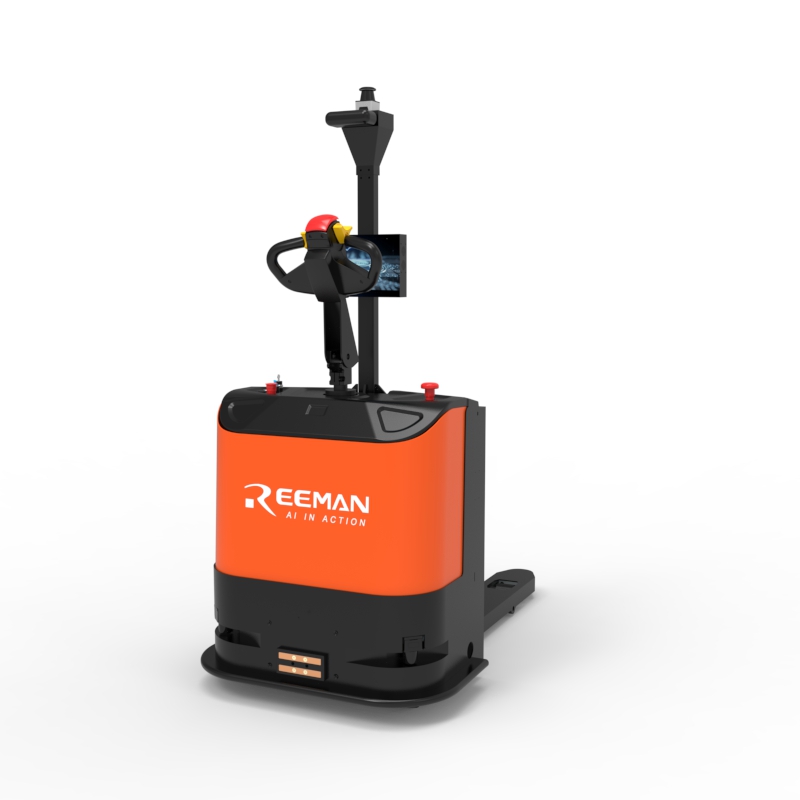
CE Certified 1500kg Driverless AGV Forklift Laser SLAM Navigation Automatic Pallet Loading Unloading Robot 1-2H Working Time
CE-certified driverless forklift with automatic pallet loading and unloading for repetitive warehouse cycles.
View specifications
REEMAN X-ant JBOT20F 2 Ton Autonomous Forklift AGV Laser SLAM Pallet Handling Robot for Warehouse Logistics
X-ant JBOT20F 2-ton autonomous forklift AGV for warehouse logistics and pallet-handling routes.
View specifications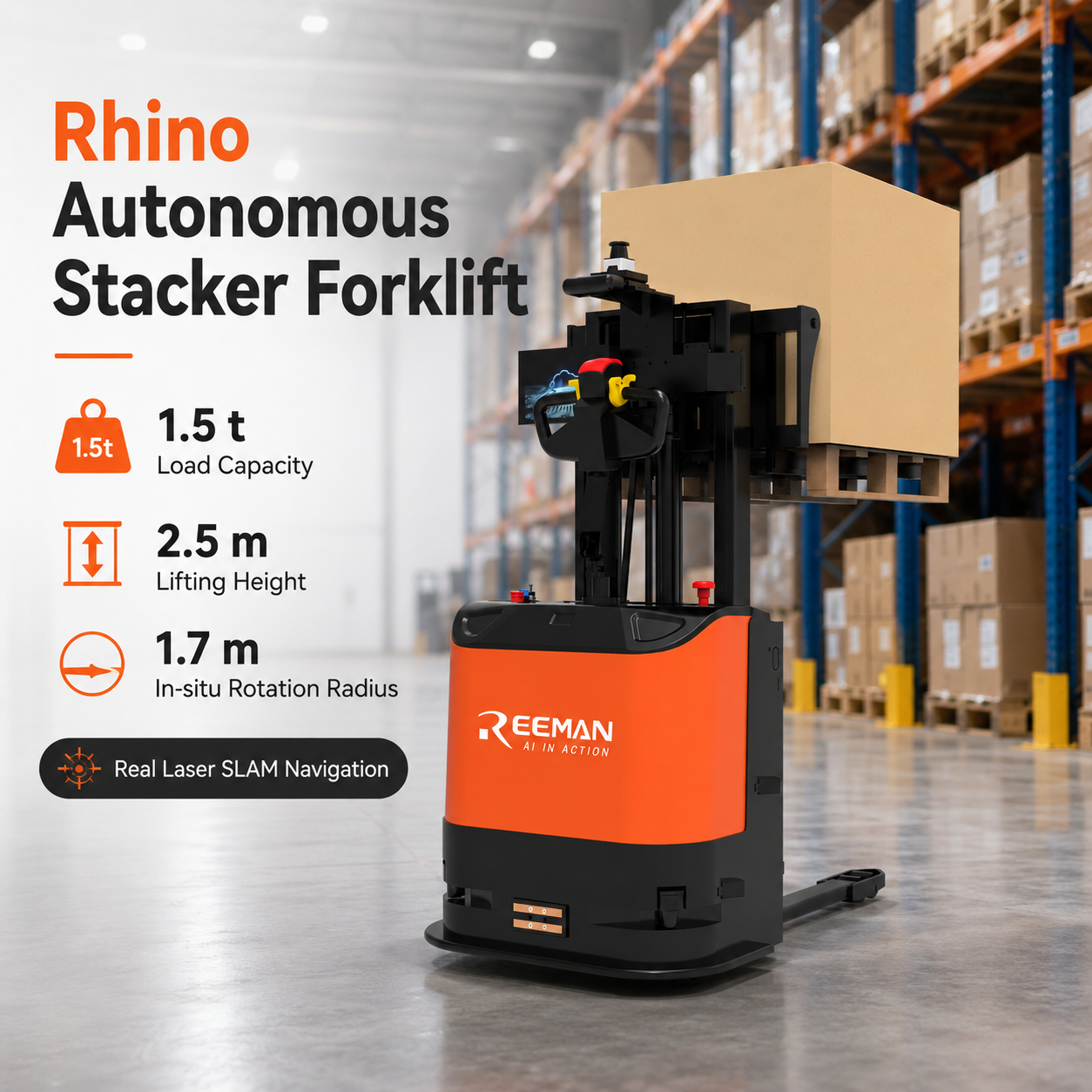
Laser SLAM Autonomous Stacker Forklift 1500 kg Load AGV Pallet Handling Robot Laser Obstacle Avoidance Warehouse
1500 kg autonomous stacker with laser obstacle avoidance for warehouse pallet handling and low-rack storage.
View specificationsWhy “China Floor Scrubber Robot Factory” Is a Search Intent, Not Just a Product Category
Calgary procurement teams usually begin with a simple query: a floor scrubber robot that can reduce manual cleaning hours without importing risk. The buying intent behind that query is more specific. It may be a commercial autonomous floor scrubber for a distribution centre in Balzac, a robotic scrubber-dryer for a grocery store in northeast Calgary, a sweep-and-mop robot for a downtown office tower, or a ride-on scrubber converted to SLAM navigation for a hospital corridor. Each use case has different requirements for water recovery, squeegee performance, obstacle detection, charging, floor finish and data reporting.
China has become the most concentrated supply base for these systems because the same Shenzhen and Yangtze River Delta ecosystems that supply LiDAR, depth cameras, lithium batteries, brushless motors, gearboxes and fleet software also supply the finished machines. That density creates real advantages in cost, customization speed and component availability. It also creates a noisy market where many exporters sell similar chassis with different labels. For Calgary buyers, the sourcing question is not simply factory price. It is whether the exporter can translate technical configuration into a system that works in a Calgary building, passes procurement review and remains supported after commissioning.
Shenzhen Elvorn Intelligent Equipment Co., Ltd. is a national high-tech enterprise founded in 2015, focused on robotic platform technology and autonomous driving. The company designs and builds autonomous forklifts, industrial AMRs, robot chassis, delivery robots and cleaning robots. Its in-house team covers laser SLAM navigation, motion control, fleet scheduling and hardware. That full-stack position matters when a Calgary buyer needs transparent engineering answers, OEM/ODM customization and long-term spare-part support rather than a one-off trading transaction.
Explore factory advantagesWhat Calgary buyers should verify before shortlisting
A factory-direct quotation is only useful if the specification matches the building. Ask for a site-specific review of floor transitions, aisle width, charging location, water fill/drain access, elevator interfaces, Wi-Fi coverage and winter entry conditions.
- Real factory audit: SGS onsite verification, ISO 9001 and ISO 14001
- Model-level CE / FCC / PSE documentation for target markets
- Open SDK and API for WMS, MES, ERP or BMS integration
- OEM, design service and buyer-label options for Canadian distributors
What a Commercial Floor Scrubber Robot Really Includes
An autonomous floor scrubber is not a household robot vacuum scaled up. It is a commercial cleaning machine combined with a navigation and fleet-control stack. Understanding the modules helps Calgary buyers compare quotations on equal terms.
Autonomy stack
The robot maps the building with LiDAR, depth cameras, an IMU and wheel encoders. Laser SLAM lets it navigate without magnetic tape, QR codes or floor reflectors, which matters when Calgary facility layouts change or when tenants renovate.
Cleaning system
Solution and recovery tanks, brush deck, squeegee, vacuum motor and battery determine actual productivity. A machine that leaves excess water near entrances creates slip risk, so water recovery and squeegee condition must be checked during the demo, not only on the datasheet.
Fleet and data layer
Commercial deployment usually needs schedules, task dispatch, usage logs, fault alerts, map management and integration with BMS, CMMS or cleaning contractors. Open API and SDK access reduce future integration cost and avoid a closed, single-purpose appliance.
| Specification area | Why it matters in Calgary | What to put in the RFQ |
|---|---|---|
| Cleaning width & productivity | After-hours cleaning windows are tight, especially in retail and healthcare. | Cleaning width, m²/h, shift pattern, aisle width and floor type |
| Water recovery & squeegee design | Wet entrances create slip risk; salt and grit from winter boots need reliable pickup. | Recovery tank volume, squeegee material, vacuum performance, slope handling |
| Battery & charging strategy | Cold loading docks and remote charging areas can reduce runtime. | Battery chemistry, runtime, charge time, opportunity charging, storage temperature |
| Navigation & mapping | Calgary facilities frequently change racking, displays and tenant layouts. | Laser SLAM, no-tape mapping, remapping time, fleet map sharing, elevator access |
| Safety & compliance | Procurement and insurance teams need clear documentation. | CE/CSA/UL/ETL documentation, emergency stop, speed zoning, obstacle sensors, risk assessment |
| Integration & support | Remote support across time zones must be planned, not assumed. | API/SDK, Wi-Fi requirements, remote diagnostics, spare-parts list, training materials, warranty terms |
Where Floor Scrubber Robots Earn Their Keep in Calgary
Calgary’s mix of distribution centres, retail hubs, healthcare campuses, airport facilities, sports venues and downtown towers creates varied cleaning workloads. The best robot is not always the largest; it is the one that fits the route, floor finish and staffing model.
Warehouses & 3PLs
In Calgary’s industrial districts and nearby Rocky View County, floor scrubber robots handle dust, cardboard residue and forklift traffic. They are typically scheduled after pick waves or overnight, with dock areas treated as high-risk zones for obstacle detection.
Retail & grocery
Autonomous scrubber-dryers clean aisles before opening or after closing. Calgary grocery operators care about slip prevention, fast route completion and the ability to clean around pallet displays without constant re-mapping.
Hospitals & senior care
Quiet operation and predictable routes are important in healthcare. Robots can cover long corridors and public areas while staff focus on patient-facing duties. Elevator integration and low-light safety sensors should be reviewed early.
Airport & transit
Calgary International Airport and transit facilities demand high-visibility cleaning and safe operation around passengers. Fleet scheduling, geo-fencing and charging logistics often matter more than a marginal gain in tank size.
Sports, schools & venues
Concourses, gyms, arenas and school corridors need routine cleaning between events. Robots reduce repetitive back-and-forth work and can be scheduled around crowd movements with route restrictions.
Downtown offices & mixed-use
Lobbies, food courts, parking connections and elevator areas collect winter salt and grit. A floor scrubber robot with strong recovery performance and entry mat coordination can keep floors presentable during freeze-thaw cycles.
Calgary Trends Reshaping Robotic Floor-Care Procurement
Calgary buyers are no longer asking only whether a robot can clean. They are asking whether it can support labour stability, documentation, sustainability targets and integration with existing facility systems.
Labour stability
Alberta's labour market and shift-based cleaning contracts make retention difficult. Robots take repetitive route work while staff move to inspection, detail cleaning and customer-facing tasks.
Winter grit & freeze-thaw
Chinooks, melting snow and de-icing salt create wet, dirty entrances. Pre-sweeping, mat placement and scrubber recovery performance become part of the buying decision, not an afterthought.
ESG & water efficiency
Facility teams want measurable water, chemical and energy use. Route reports and dosing control help demonstrate continuous improvement to property owners and tenants.
System integration
Robots are increasingly expected to connect to CMMS, BMS, security systems and cleaning schedules. Open APIs and exportable data reduce dependence on a single vendor.
Why Calgary Buyers Work With a Full-Stack China Manufacturer
Factory-direct sourcing only creates value when engineering, production, quality control and export support are in the same operating system. These are the capabilities that separate a real manufacturer from a catalogue seller.
Laser SLAM navigation
Maps the site in hours and navigates without magnetic tape, QR codes or reflectors, which means layout changes do not require disruptive floor work.
Open SDK & API
Secondary development on AMRs and chassis lets integrators connect robots to WMS, MES, ERP, elevators, doors and custom dashboards.
Modular platforms
From 60 kg delivery robots to 2-ton autonomous forklifts on shared control architecture, simplifying fleet training and maintenance.
Multi-layer safety
LiDAR, obstacle sensors, emergency stops and speed zoning keep robots safe around pedestrians, forklifts and racking.
Own production capacity
Two production bases in Shenzhen and Ningbo with on-site material inspection and supplier assessment procedures.
Export-ready support
English documentation, remote commissioning and spare-part supply for buyers across North America, Europe, Asia and the Middle East.
Certified, Audited & Export Proven
Elvorn’s factory has passed onsite verification by SGS Group, covering business licensing, production capability and quality control. Management systems are certified to ISO 9001 and ISO 14001, and individual models carry CE, FCC or PSE marks for target markets. Every unit undergoes functional and load testing before shipment, with test records available for buyer due diligence.
- SGS onsite verified factory
- ISO 9001 quality management
- ISO 14001 environmental management
- CE / FCC / PSE model documentation
- OEM, ODM, design service and buyer-label production
From Site Survey to Stable Operation
A proven five-step workflow reduces deployment risk for Calgary buyers who are sourcing from China for the first time or expanding an existing robotic fleet.
Requirement review
Share layout drawings, cleaning area, floor type, load data, pallet type, shift pattern and target throughput.
Solution design
Engineers recommend models, fleet size, charging plan, water fill/drain locations and integration scope.
Customization & build
OEM branding, top modules, cleaning configuration and software interfaces are built to your specification.
Factory testing
Function, load and route tests are completed before shipment, with test records available for review.
Deploy & support
Remote mapping, operator training, spare-parts planning and long-term technical support across Calgary time zones.
A Calgary-Specific Checklist Before You Place an Order
Use this checklist to compare China floor scrubber robot factories and exporters on operational readiness, not only unit price. It is equally useful when reviewing autonomous forklifts, AMRs and robot chassis for a mixed automation project.
Factory & documentation
- Verify business licence, SGS report, ISO 9001 and ISO 14001
- Ask for model-level CE, FCC, PSE or CSA/UL/ETL documentation as applicable
- Request a factory video walkthrough and serial-number traceability
- Confirm who owns the navigation software and who supports updates
Calgary site readiness
- Review floor transitions, ramps, dock levellers, elevators and automatic doors
- Map Wi-Fi coverage and charging locations before final layout approval
- Plan winter storage temperature, battery charging and water freeze protection
- Define spare-parts kit, remote support escalation and operator training
Calgary Floor Scrubber Robot Procurement FAQ
These are the questions most frequently raised by facility managers, distributors and integrators comparing China factory-direct floor scrubber robots for Calgary projects.
Are autonomous floor scrubber robots practical in Calgary’s winter?
Which certifications should I require for a floor scrubber robot in Canada?
How long does shipping from China to Calgary usually take?
Can Elvorn support installation and commissioning in Calgary?
What is the typical return on investment for a robotic floor scrubber?
Can the robot integrate with BMS, CMMS or existing cleaning schedules?
Should I buy factory-direct or through a Canadian distributor?
What information should I send to get an accurate quotation?
Request a Calgary-Ready Floor Scrubber Robot Proposal
Send your floor plan, cleaning area, shift schedule and load data. Our engineering team will review the site, shortlist the right floor scrubber robot or autonomous platform, and prepare a factory-direct quotation with export and support details for Calgary.