8 Autonomous Forklift and AMR Models for Berlin Buyers
These eight production-ready models are especially relevant for Berlin buyers comparing trusted counterbalance forklift suppliers and wholesale automation partners. Each platform is designed around laser SLAM or autonomous navigation, reduced dependence on magnetic tape, and practical integration with warehouse management, manufacturing execution and fleet-scheduling systems. Use the specifications below to shortlist a model, then request a Berlin-specific review of aisle width, pallet type, floor conditions, lift height, charging plan and safety zones.

REEMAN X-ant JBOT20F 2 Ton Autonomous Forklift AGV Laser SLAM Pallet Handling Robot for Warehouse Logistics
Recommended for heavier pallet flows, dock-to-rack transfers and higher-throughput Berlin logistics sites where a 2-ton counterbalance format is required.
- 2,000 kg load class
- Laser SLAM navigation
- Pallet handling and fleet-ready design
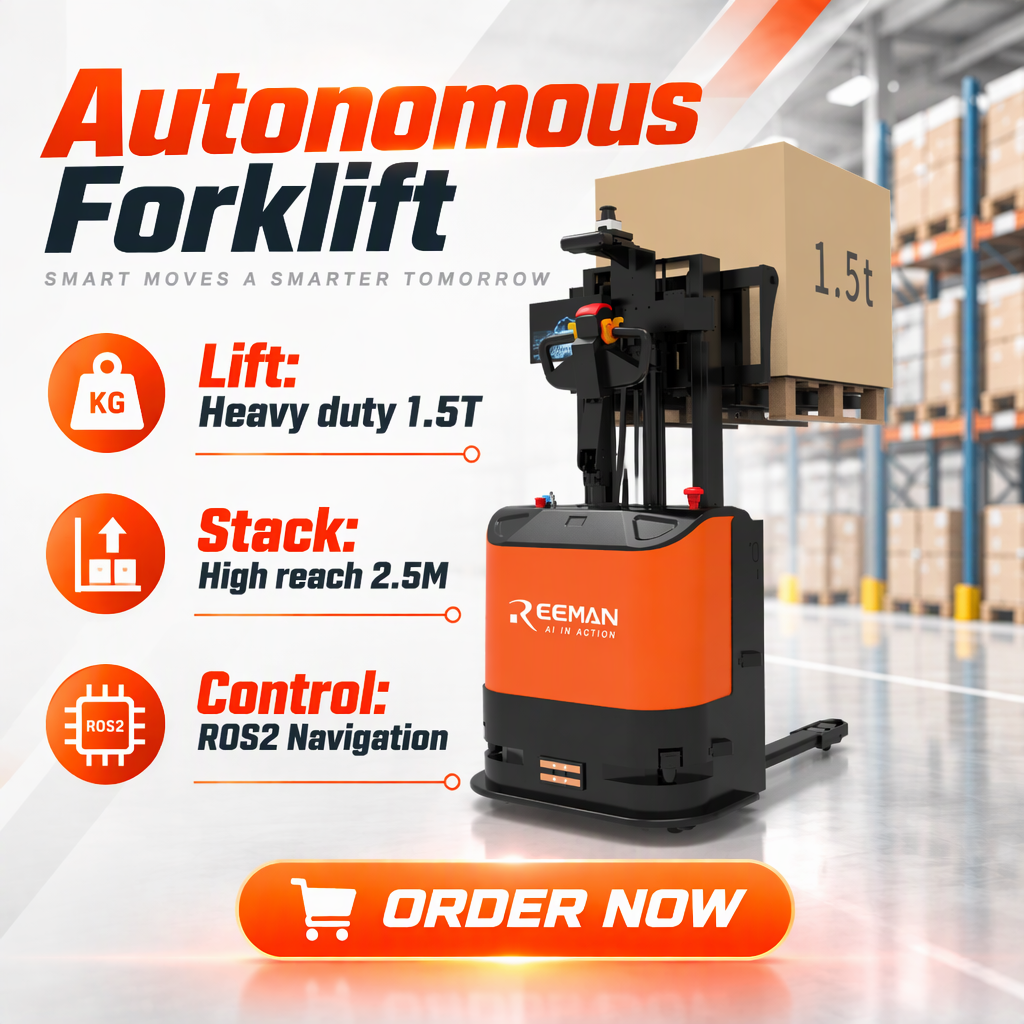
Autonomous Electric Forklift AGV 1500kg Load Capacity 2.5M Lift ROS2 Navigation 4WD Lithium-Ion Battery Indoor Material Handling
Well suited to Berlin manufacturers that want ROS2 navigation, 2.5 m lift capability and four-wheel drive for indoor material handling with software-level integration.
- 1,500 kg load capacity
- 2.5 m lift height
- ROS2 navigation and 4WD

REEMAN Autonomous Electric Forklift 1T Payload 48V 30Ah LiFePO4 Battery Indoor Material Handling AGV
A compact option for lighter pallet flows, line-side replenishment and indoor material handling where LiFePO4 battery safety and predictable duty cycles matter.
- 1,000 kg payload
- 48V 30Ah LiFePO4 battery
- Indoor material handling AGV
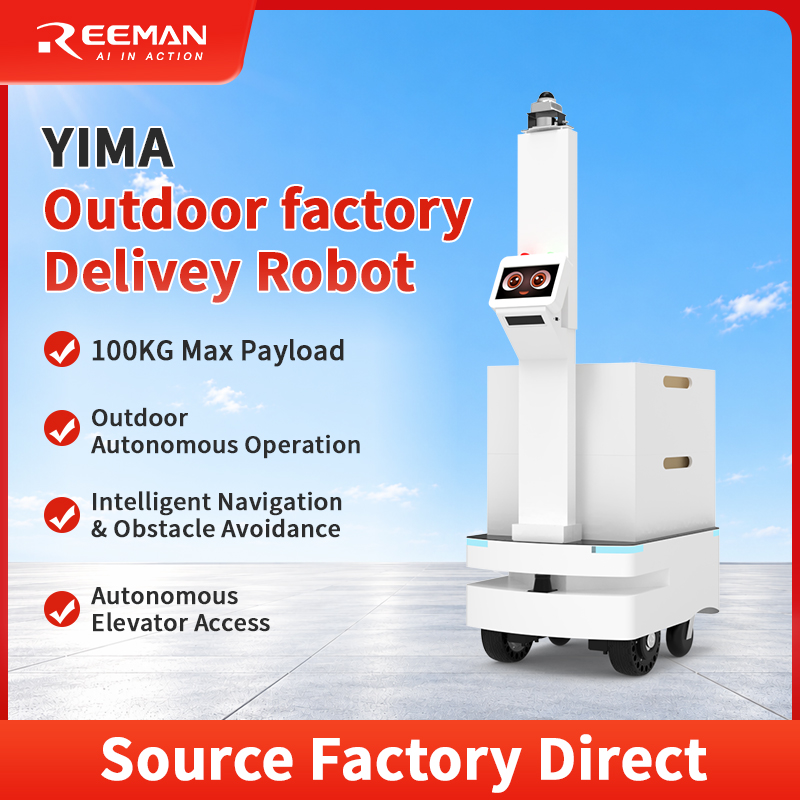
REEMAN Outdoor Delivery Robot 100kg Payload Autonomous Navigation Obstacle Avoidance Elevator Access Warehouse Logistics
For hospitals, hotels, campuses and mixed indoor-outdoor logistics where 100 kg payloads, obstacle avoidance and elevator access can reduce manual delivery trips.
- 100 kg payload
- Outdoor autonomous navigation
- Obstacle avoidance and elevator access
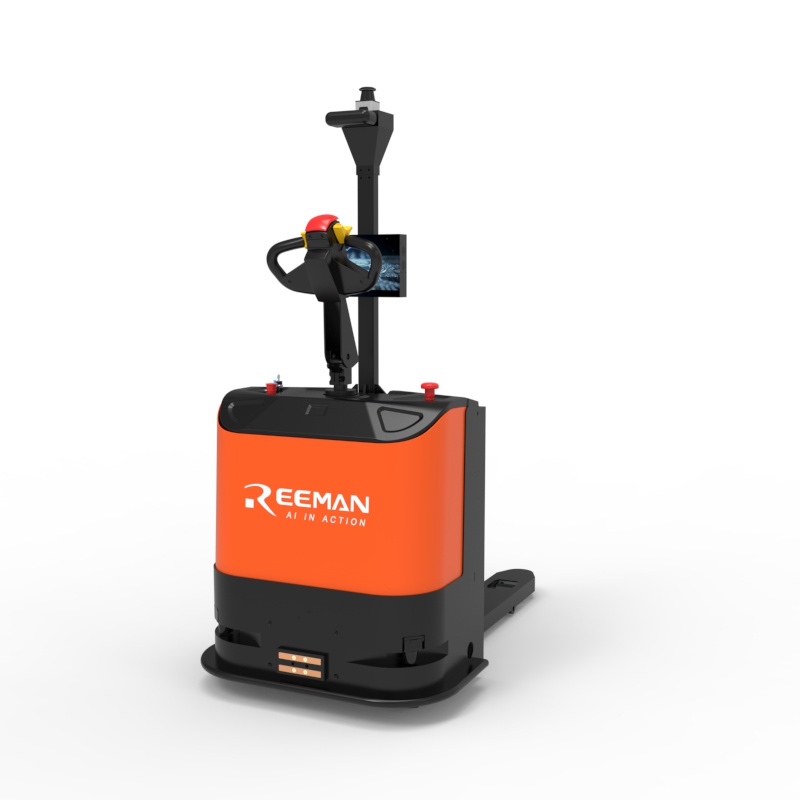
Reeman BBOT30F 1500 kg Laser SLAM Forklift AGV LiDAR Navigation Pallet Handling Warehouse
An efficient fit for warehouse pallet handling, trailer interfaces and repetitive dock-to-rack movements where LiDAR navigation supports stable route execution.
- 1,500 kg rated load
- Laser SLAM with LiDAR navigation
- Pallet handling in warehouse logistics
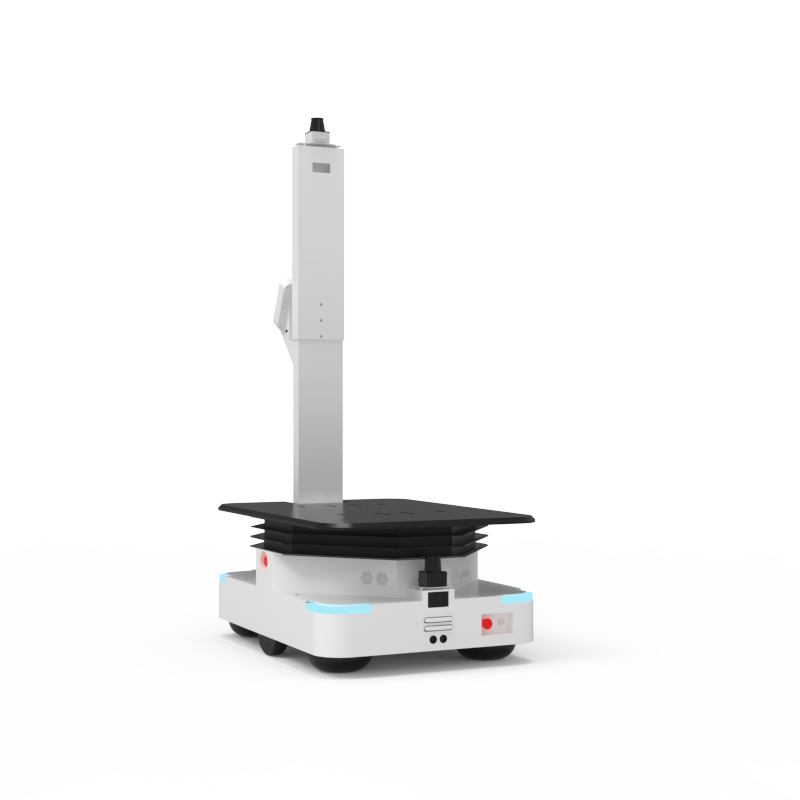
REEMAN Autonomous Mobile Robot AGV AMR 600kg Payload Sheet Metal Material Handling for Production Line
Recommended for Berlin-Brandenburg production environments where sheet metal, WIP fixtures or production-line materials need flexible AMR transport rather than forklift handling.
- 600 kg payload
- Sheet metal and production-line use
- Complements counterbalance AGV fleets
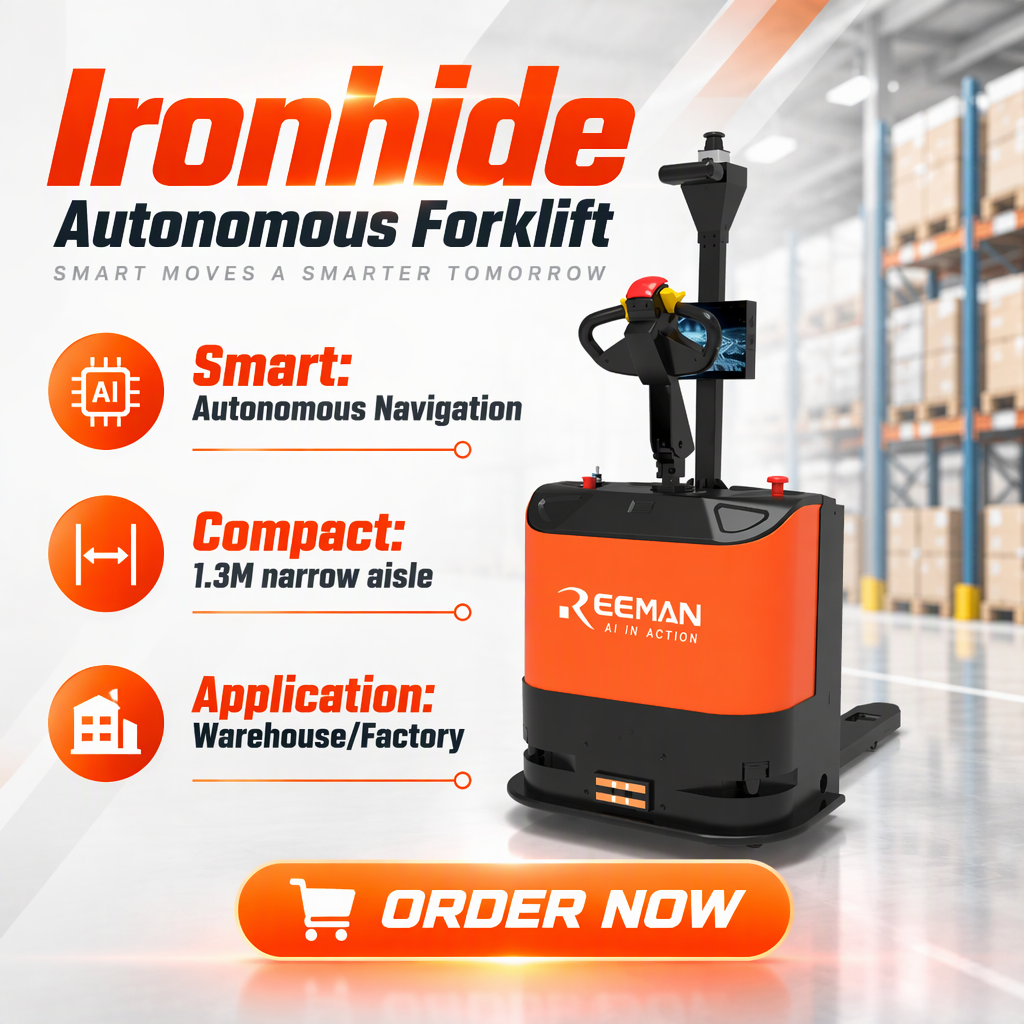
Reeman 1.5 Ton Autonomous Forklift AGV 3D Obstacle Avoidance Bidirectional Driving 48V 30AH Lithium-Ion Battery
A flexible 1.5-ton autonomous forklift for mixed traffic and bidirectional driving, with 3D obstacle avoidance for shared warehouse and production zones.
- 1,500 kg load class
- Bidirectional driving
- 48V 30Ah lithium-ion battery
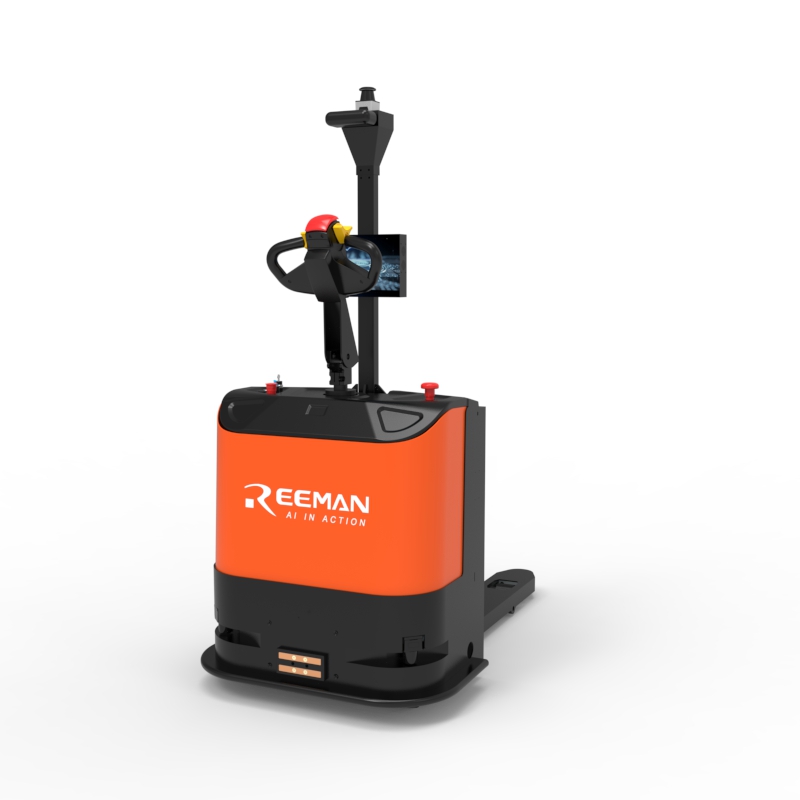
CE Certified 1500kg Driverless AGV Forklift Laser SLAM Navigation Automatic Pallet Loading Unloading Robot 1-2H Working Time
For buyers who need CE-oriented documentation and automatic pallet loading or unloading, with a 1-2 hour working time that should be matched to battery exchange and charging plans.
- 1,500 kg driverless AGV forklift
- Laser SLAM navigation
- Automatic pallet loading and unloading
Why Berlin Buyers Are Reassessing Counterbalance Forklift Automation
Berlin and the surrounding Brandenburg logistics belt combine dense urban sites, high property costs, mixed pedestrian and vehicle traffic, and persistent pressure to keep shifts productive. In this environment, autonomous counterbalance forklifts are not bought as showroom technology; they are bought to remove predictable pallet movements from the labour schedule and to make material flow less dependent on individual shift availability.
Labour Stability and Shift Continuity
Many Berlin operations face a practical trade-off: they need longer operating windows, but they do not want to expand headcount for every repetitive pallet move. A counterbalance forklift AGV can absorb dock-to-rack shuttles, trailer loading support and pallet staging while skilled staff focus on exceptions, quality checks and customer response. The most credible suppliers answer duty-cycle, charging, exception-handling and remote-support questions before price is discussed.
Brownfield-Friendly Laser SLAM
Berlin warehouses and production halls are often leased, mixed-use or retrofitted rather than purpose-built. Laser SLAM navigation maps the site without magnetic tape, QR codes or fixed reflectors, which means layouts can change with less floor work and less operational downtime. That is a meaningful advantage for tenants that need written approval, clean floors and flexible reconfiguration.
Safety, Energy and Total Cost of Ownership
Berlin procurement teams increasingly evaluate energy consumption, battery strategy, noise, documentation and spare-part availability alongside purchase price. A trustworthy wholesaler should provide CE-oriented documentation, support a site-specific risk assessment, and clarify how the robot’s safety scanners, emergency stops, speed zones and traffic rules align with standards such as ISO 3691-4 and EN 1175 where applicable. The lowest initial quote is rarely the lowest total cost of ownership.
Where These Models Fit in Berlin and Brandenburg
The right robot depends less on the product brochure and more on the physical flow. These three application patterns recur in Berlin buyer conversations and illustrate how counterbalance AGVs, AMRs and delivery robots can work together.
Inner-City Fulfilment and 3PL
For Berlin fulfilment centres, 3PL operations and distribution sites where pallets move between receiving, staging, racking and dispatch, the 2-ton REEMAN X-ant JBOT20F, the BBOT30F 1.5-ton SLAM forklift and the CE-certified 1500 kg driverless AGV forklift are primary candidates. A site review should confirm aisle widths, rack interface, pallet condition, floor flatness, charging location and pedestrian segregation before the model is finalised. In mixed-traffic zones, speed reduction and clear traffic rules are essential.
Production, Metalworking and WIP
Berlin-Brandenburg manufacturers often need line-side replenishment, finished-good collection and work-in-progress transport that does not interrupt the production rhythm. The 1-ton 48V LiFePO4 forklift, the 1.5-ton AGV with 3D obstacle avoidance and the 600 kg AMR for sheet metal are suited to these tasks. Integration matters: the robot fleet should receive tasks from the WMS, MES or a custom production dashboard and return clear status feedback so supervisors can see blockers rather than discover them at the end of a shift.
Hospitality, Healthcare and Campus Delivery
Beyond pallet handling, the REEMAN 100 kg outdoor delivery robot is relevant for hotel service, hospital logistics, campus delivery and mixed indoor-outdoor environments where elevator access and obstacle avoidance reduce manual walking. Berlin service operators should test doorway widths, lift availability, network coverage, outdoor surface conditions and peak-hour pedestrian flow. For a wholesale or multi-site roll-out, central fleet visibility and consistent service procedures are more valuable than a one-off demo.
Counterbalance AGV or AMR? A Buyer’s Guide
The most expensive mistake is buying a robot for the wrong unit load. A counterbalance forklift AGV is designed for pallets, forks, racking, floor-to-rack transfers and dock or trailer interfaces. An AMR is designed for totes, carts, shelves, fixtures or production materials. Many Berlin projects use both: a counterbalance AGV for pallet movements and an AMR for line-side WIP or small-load transport.
Choose a Counterbalance Forklift AGV When…
- The payload is a pallet and the task requires forks or lifting.
- The route includes dock levellers, racking, floor positions or trailer interfaces.
- Loads are heavy and repeatable, such as 1T, 1.5T or 2T pallet flows.
- The site can define safe traffic rules, speed zones and charging locations.
- Integration with WMS, MES or ERP task dispatch is required.
In this category, Elvorn’s range covers 1-ton, 1.5-ton and 2-ton autonomous forklifts, including laser SLAM and CE-oriented configurations.
Choose an AMR When…
- The payload is a tote, cart, shelf, fixture or workpiece.
- The work area is shared with people and production equipment.
- The route uses elevators, doors or flexible line-side pick-up points.
- The payload is below the practical threshold for a forklift cycle.
- You need an open SDK or API for fast software integration.
The 600 kg sheet-metal AMR and the 100 kg outdoor delivery robot address these adjacent requirements without forcing a pallet-handling platform into the wrong job.
The Elvorn Advantage: Verified Manufacturing and Engineering Depth
Founded in 2015, Shenzhen Elvorn Intelligent Equipment Co., Ltd. is a national high-tech enterprise focused on robotic platform technology and autonomous driving. For Berlin buyers comparing wholesale suppliers, the key question is whether the factory controls navigation, motion control, fleet scheduling and hardware — or simply assembles third-party components. Elvorn’s in-house R&D team covers laser SLAM navigation, motion control, fleet scheduling and hardware, which supports faster customisation, transparent engineering answers and long-term spare-part planning.
The company operates two production bases in Shenzhen and Ningbo, with on-site material inspection and supplier assessment procedures. The factory has been verified onsite by SGS Group, management systems are certified to ISO 9001 and ISO 14001, and individual robot models carry CE, FCC or PSE marks depending on configuration. Elvorn also offers OEM service, design service and buyer-label options, making it relevant for distributors, system integrators and private-label automation brands serving the German market.
- Verified Custom Manufacturer
- ISO 9001 & ISO 14001
- CE / FCC / PSE Models
- OEM, Design & Buyer Label

Laser SLAM Navigation
Maps a Berlin site in hours and navigates without magnetic tape, QR codes or fixed reflectors, so layout changes do not automatically require floor works.
Open SDK and API
Secondary development on AMRs and chassis supports WMS, MES, ERP, elevator, door and custom dashboard integration for mixed-vendor Berlin sites.
Modular Payload Platforms
From 100 kg delivery robots to 2-ton autonomous forklifts, shared control architecture can simplify fleet training, maintenance and spare-part strategy.
Multi-Layer Safety
Lidar, obstacle sensors, emergency stops and speed zoning help protect pedestrians, forklifts and racking in shared Berlin facilities.
Own Production Capacity
Two production bases in Shenzhen and Ningbo, with onsite SGS verification and internal material inspection procedures for export orders.
Export-Ready Support
English documentation, remote commissioning and spare-part planning for buyers across Europe, North America, Asia and the Middle East.
What Berlin Buyers Should Verify Before Shortlisting a Counterbalance Forklift Supplier
A high-quality supplier should welcome technical scrutiny. These checks reduce deployment risk and help separate a genuine wholesale manufacturer from a trading intermediary with limited engineering support.
CE and Risk Documentation
Ask for model-specific CE documentation, declarations, safety concept information and support for the site risk assessment. Confirm how ISO 3691-4 and EN 1175 are addressed where applicable, and do not accept general marketing claims as a substitute for project documents.
Real Site Data
Provide layout drawings, aisle widths, racking height, pallet type, floor flatness, door and lift dimensions, WiFi coverage and charging locations. A Berlin counterbalance AGV recommendation without site data is only a starting point, not an engineering answer.
Integration and Fleet Control
Clarify SDK availability, API documentation, task-dispatch logic, status feedback, fleet scheduling, elevator or door integration, and escalation when a route is blocked. Multi-vendor Berlin sites need clear interfaces, not proprietary black boxes.
Service and Spare Parts
Ask how remote commissioning, operator training, software updates and spare parts are handled for Berlin projects. Response rate, escalation path and test records before shipment are stronger buying signals than an optimistic delivery promise.
From Berlin RFQ to Stable Operation
A disciplined four-stage process keeps expectations aligned and reduces surprises during commissioning.
Site and Load Discovery
Review the layout, aisle widths, pallet condition, lift height, throughput, charging plan, WiFi and pedestrian traffic. Identify the exact pallet moves that should be automated first.
Model and Safety Concept
Select counterbalance AGV, AMR or a mixed fleet. Confirm fork dimensions, lift height, safety scanners, speed zones, emergency stops and the interface with existing forklifts.
Factory Configuration and Test
Configure OEM branding, top modules, software interfaces and battery strategy. Complete functional and load testing before shipment, with test records available for buyer review.
Remote Commissioning and Training
Map the site, train operators, validate routes and agree a spare-parts and escalation plan. A Berlin project can then scale from one route to a controlled fleet with measurable performance.
Certifications and Checks That Reduce Buyer Risk
For wholesale and project buyers, certification is not a decorative badge. It is part of supplier due diligence. Elvorn’s factory has passed onsite verification by SGS Group, covering business licensing, production capability and quality control. Management systems are certified to ISO 9001 and ISO 14001, and selected models carry CE, FCC or PSE marks.
Frequently Asked Questions About Counterbalance Forklift Suppliers
These are the questions we commonly receive from Berlin distributors, 3PLs, manufacturers and integrators evaluating autonomous forklifts, AMRs and wholesale supply agreements.
Are you a trusted counterbalance forklift supplier and wholesaler for the Berlin market?
Can autonomous forklifts work in older Berlin buildings with narrow aisles?
How are CE marking, ISO 3691-4 and EN 1175 addressed?
Can the robots integrate with our WMS, MES, ERP or fleet software?
What trade terms and payment methods do you accept for wholesale orders?
What support is available after delivery to Berlin?
Do you offer OEM or buyer-label customisation for distributors?
Plan a Counterbalance Forklift Automation Project with Elvorn
Send your Berlin site layout, pallet type, load data, aisle dimensions, lift height, throughput target and integration requirements. Our application engineers can recommend the right combination of autonomous forklifts, AMRs, delivery robots and wholesale OEM options.