Baltimore-Focused Charging Infrastructure
More Than a Charger: Robot Charging Docks as Uptime Infrastructure
Baltimore is not a generic warehouse market. The Port of Baltimore, the I-95 and I-70 logistics corridors, BWI Marshall Airport, Tradepoint Atlantic, Curtis Bay, Dundalk, Hanover, Elkridge, and Jessup together support port-linked distribution, cold-chain operations, automotive suppliers, e-commerce fulfillment, manufacturing, hospitals, retail, and public venues. Each environment creates a different energy challenge for autonomous robots: multi-shift pallet movement, narrow aisles, mixed pedestrian traffic, limited electrical rooms, and the need to keep every vehicle productive without adding a second battery room.
That is why a robot charging dock should be treated as operational infrastructure, not as an accessory. A well-planned dock defines where an autonomous forklift parks, how an AMR receives opportunity charging between tasks, how battery management data is returned to the fleet manager, and how the facility reduces peak electrical demand. For Baltimore buyers, the right charging layout can mean more usable operating hours, fewer manual battery swaps, safer cable handling, and simpler expansion when a pilot becomes a multi-robot fleet.
Shenzhen Elvorn Intelligent Equipment Co., Ltd. manufactures laser SLAM autonomous forklifts, industrial AMRs, robot chassis, delivery robots, cleaning robots, and supporting charging solutions under one engineering culture. Our experience in navigation, motion control, battery systems, and fleet scheduling gives us a practical view of charging dock design: alignment tolerance, connector wear, safety interlock, floor marking, BMS communication, and service access all matter before a purchase order is issued.



Product Recommendations
8 Robot Platforms for Charging Dock and Material Flow Planning
These are the platforms most frequently reviewed for autonomous pallet movement, warehouse transfer, service robotics, and facility automation projects. Each can be evaluated together with charging dock placement, battery strategy, route design, and fleet integration.
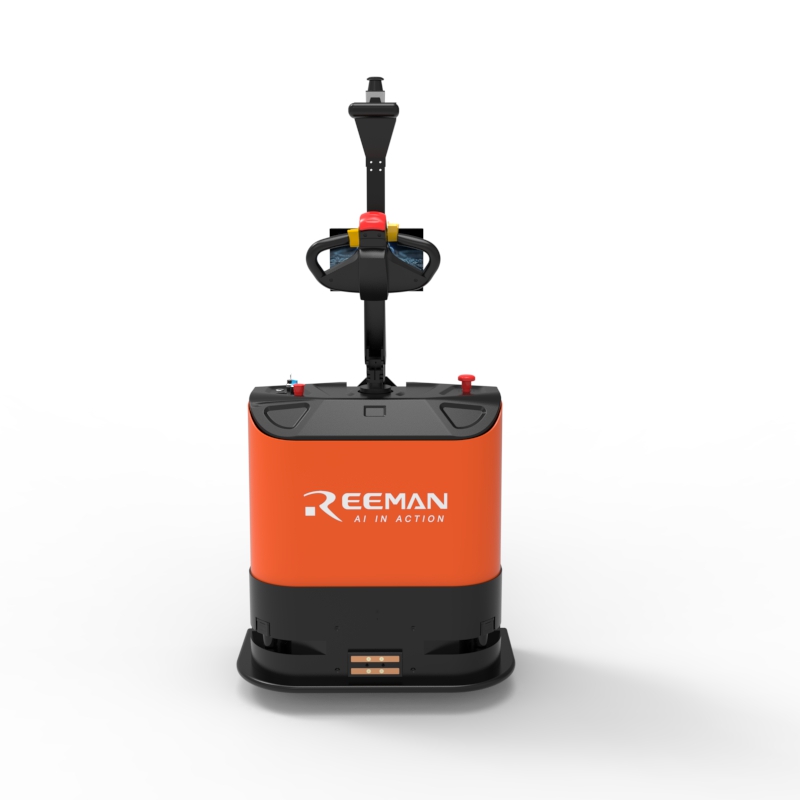
1500kg Laser SLAM Autonomous Forklift AGV Reflector-Free Point-to-Point Warehouse Material Handling
- Reflector-free laser SLAM navigation
- 1,500 kg pallet handling class
- Opportunity charging layout support
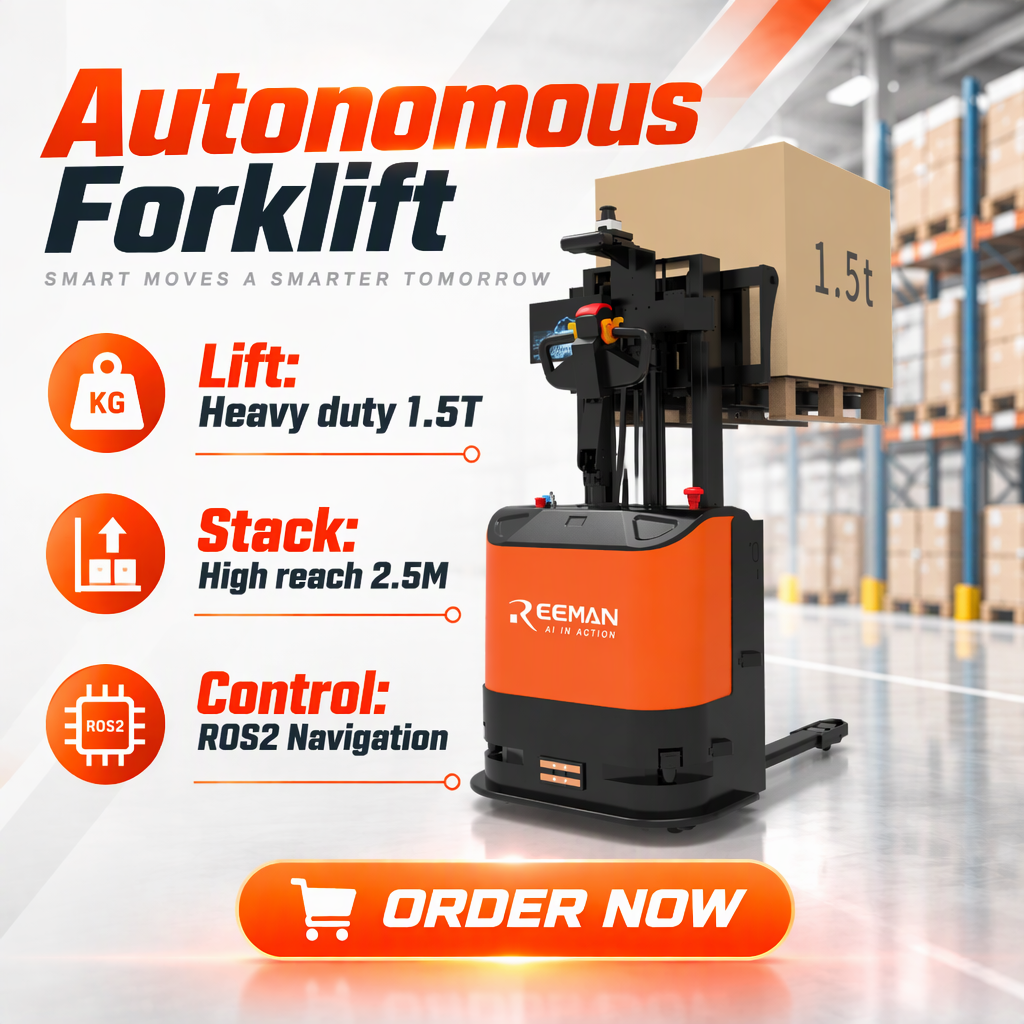
Autonomous Electric Forklift AGV 1500kg Load Capacity 2.5M Lift ROS2 Navigation 4WD Lithium-Ion Battery Indoor Material Handling
- ROS2 navigation and 4WD control
- 2.5 m lift for racking tasks
- Lithium-ion charging strategy

REEMAN Autonomous Electric Forklift 1T Payload 48V 30Ah LiFePO4 Battery Indoor Material Handling AGV
- 48V LiFePO4 battery platform
- Compact 1T indoor handling
- Dock-supported daily charging cycles
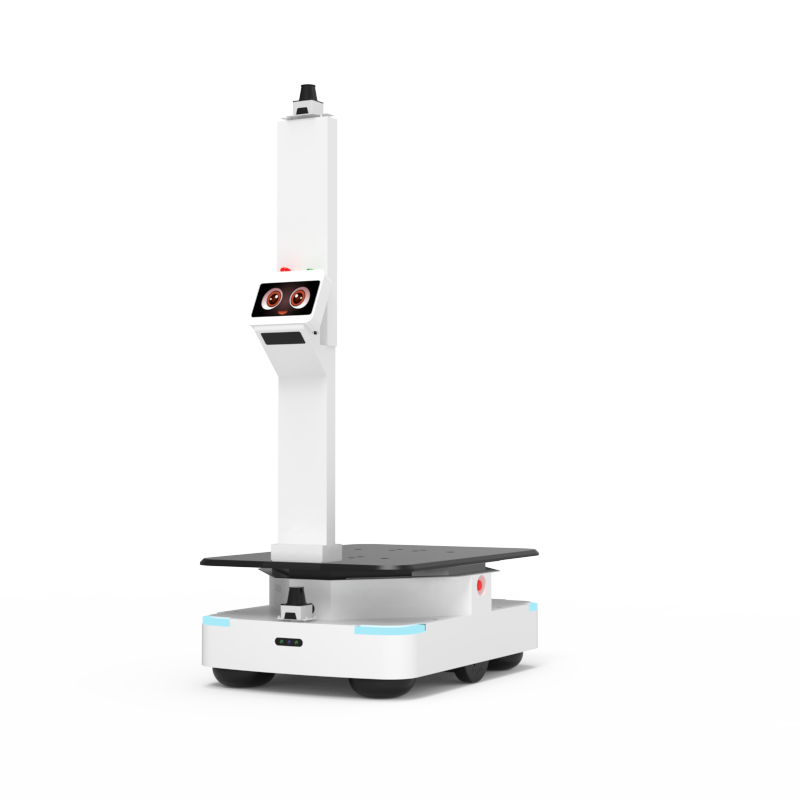
600kg Payload Laser Navigation AMR Robot Autonomous Lifting Warehouse Transfer Equipment
- 600 kg lifting AMR platform
- Laser navigation for dynamic sites
- Fleet scheduling and charging tasks
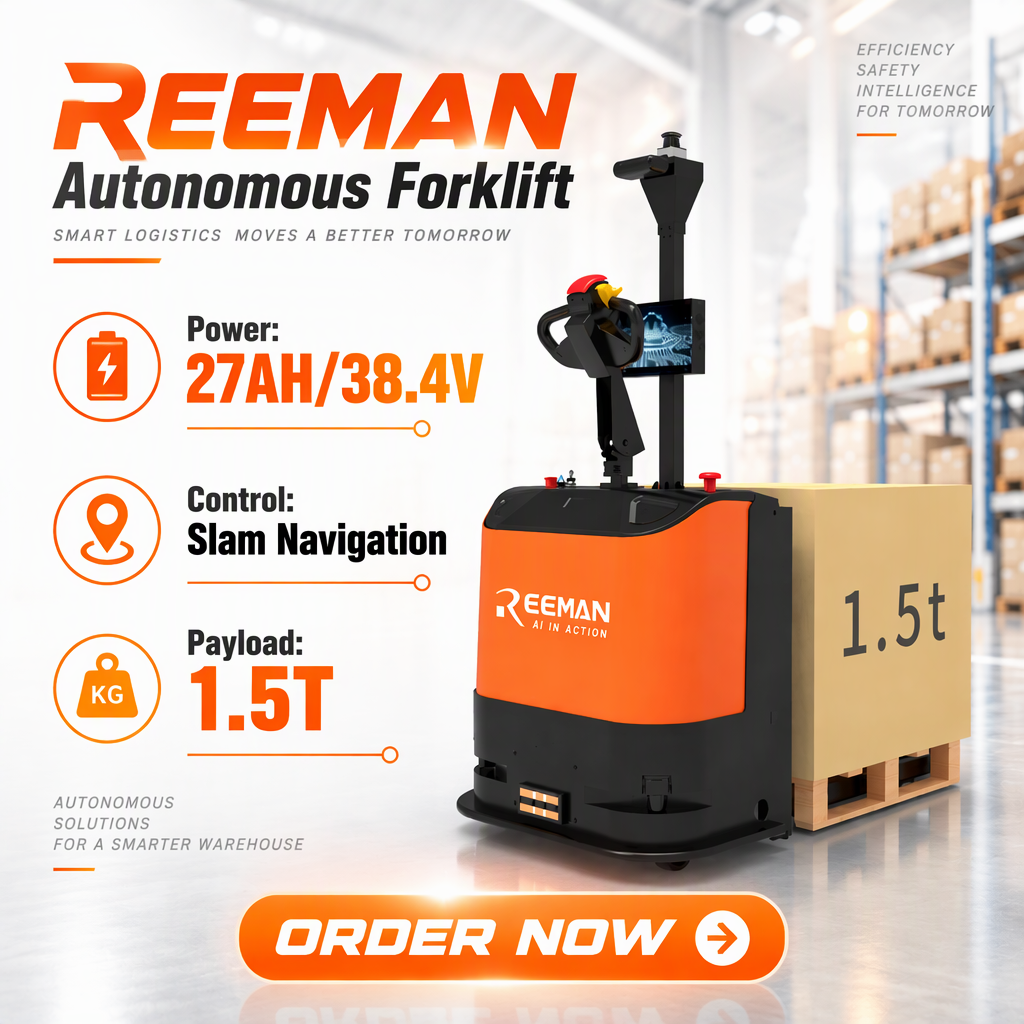
Reeman 1.5 Ton Autonomous Forklift AGV SLAM Navigation 3D Obstacle Avoidance Bidirectional Driving Indoor Warehouse
- 1.5 ton bidirectional driving
- 3D obstacle avoidance
- Suitable for multi-shift dock planning
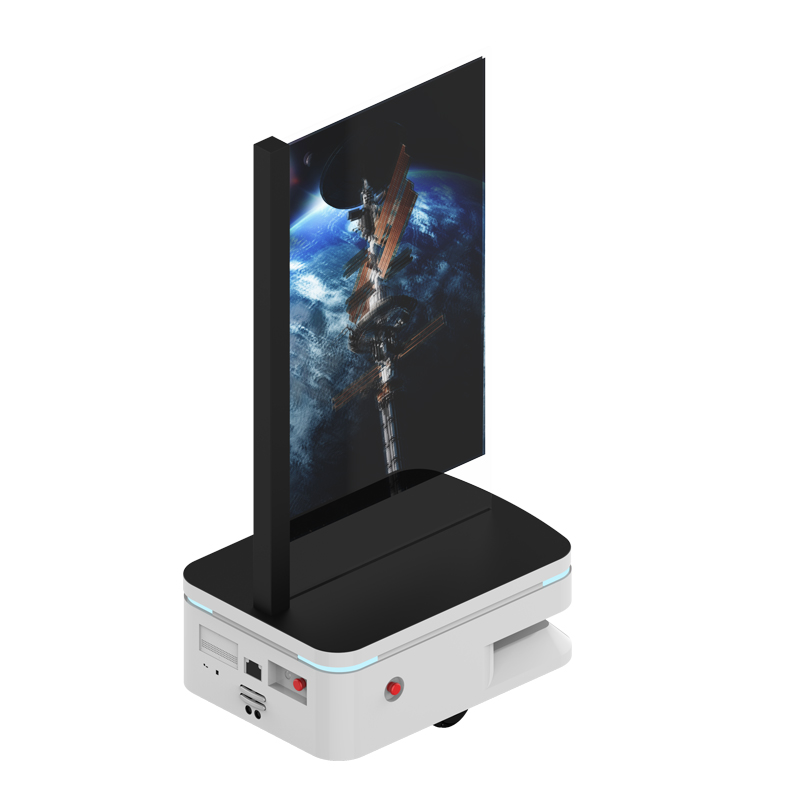
75 Inch Indoor LED Digital Poster Touch Screen Display SDK OEM ODM Black Signage for Retail Store Elevator Airport
- 75-inch indoor interactive signage
- SDK and OEM/ODM customization
- Retail, elevator, airport communication

2 Ton Autonomous 4WD AGV Forklift Laser SLAM Navigation Multi-Line LiDAR 10mm Position Accuracy 6-8H Warehouse Handling
- 2 ton heavy pallet handling
- Multi-line LiDAR, 10 mm accuracy
- 6–8 hour operating cycle planning
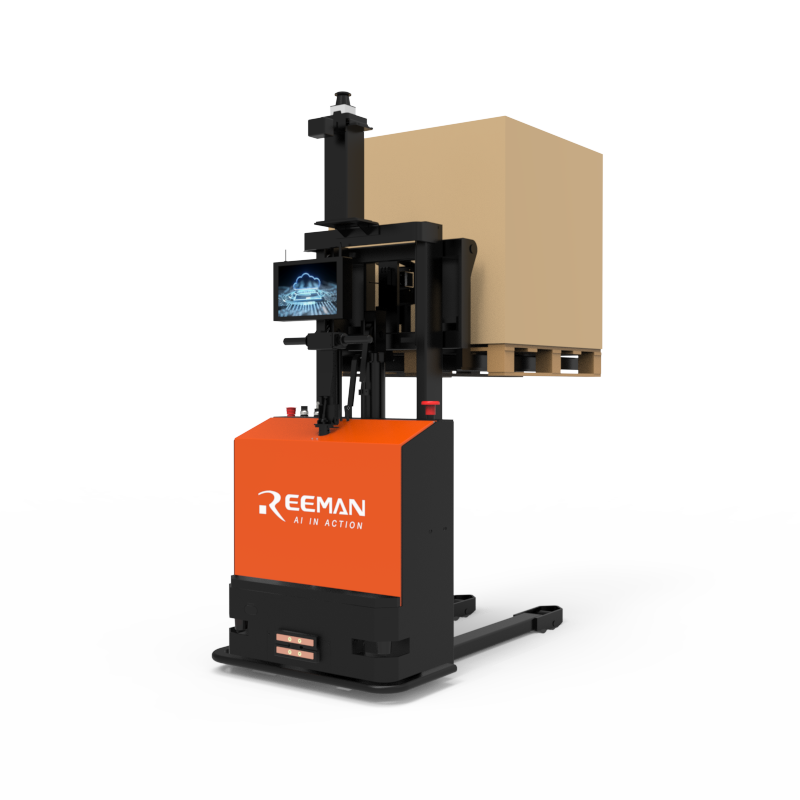
1000 kg Laser SLAM Forklift AGV Unmanned Pallet Stacker Single Line Lidar Obstacle Avoidance Factory Logistics
- 1,000 kg pallet stacking capability
- Single-line LiDAR obstacle avoidance
- Factory logistics and charging integration
Localized Applications
Baltimore Application Scenarios for Robot Charging Docks and Autonomous Fleets
Charging infrastructure decisions should follow the actual workflow. The four environments below reflect common Baltimore and Maryland project patterns.
Port-Linked Distribution and 3PL
For facilities around the Port of Baltimore, Dundalk, Curtis Bay, and Tradepoint Atlantic, charging docks should support high-cycle pallet movement across shifts. Place opportunity-charging stations near dock doors, buffer zones, and staging lanes so autonomous forklifts recharge during natural workflow gaps rather than waiting for a full battery swap.
Manufacturing and Automotive Supply
Baltimore County and the I-95 corridor include suppliers serving automotive, aerospace, electronics, and industrial customers. AMRs and autonomous forklifts can feed production lines and collect finished goods, while compact charging docks near work cells reduce travel time and keep aisles clear for people and conventional equipment.
Cold Chain and Food Distribution
Cold storage and food distribution teams need predictable battery performance and safe charging placement. Lithium-ion and LiFePO4 platforms can be evaluated with charge scheduling, temperature-aware operating limits, and docking locations that avoid blocked emergency routes. The goal is stable uptime without exposing staff to unnecessary manual battery handling.
Hospitals, Retail, and Public Venues
Service robots, cleaning machines, delivery robots, and digital signage support hospitals, malls, airports, hotels, and exhibition spaces. Charging docks should be placed away from patient circulation, emergency egress, and customer bottlenecks, with clear signage and simple status indicators for facility teams.
Localized Development Trends
What Baltimore Automation Buyers Are Planning Now
Procurement teams are moving from single-robot trials to fleet-level decisions. These trends shape charging dock specifications and supplier selection.
Opportunity Charging Replaces End-of-Shift Waiting
Instead of dedicating a battery room and a manual swap process, teams increasingly place charging docks near work zones so robots charge during short idle windows.
Mixed-Fleet Energy Management
Forklift AGVs, AMRs, and service robots may use different voltages and connectors. Buyers want a charging plan that keeps each fleet safe while simplifying facility electrical planning.
Brownfield Warehouses Demand Compact Docks
Older Baltimore-area buildings often have limited floor space, uneven joints, and narrow aisles. A compact dock with clear alignment marks and protective bollards can be more practical than a large central charging room.
Port Throughput and Near-Shoring Pressure
Port-linked distribution and regional fulfillment continue to push multi-shift operations. Charging docks must be placed around throughput peaks, not simply where an electrical panel is available.
Safety and Fire-Code Review Earlier
Facility teams increasingly review battery technology, electrical protection, ventilation, fire separation, and emergency access during the planning stage rather than after equipment arrives.
Data-Driven Uptime and Spare Parts
Battery state, charging events, fault history, and robot availability are becoming part of supplier scorecards. Buyers prefer suppliers that can support remote diagnostics and long-term spare-part planning.
Selection Guide
Charging Dock Configurations to Match Your Baltimore Workflow
Final configuration must follow an engineering review of robot model, battery chemistry, shift pattern, floor layout, electrical capacity, and safety requirements.
| Dock Type | Best Fit | Planning Focus | Baltimore Buyer Benefit |
|---|---|---|---|
| Manual Parking Dock | Pilot fleets, service robots, low-volume charging | Floor marking, cable management, clear access | Fast installation with minimal facility change |
| Automatic Alignment Dock | Autonomous forklifts and AMRs with repeatable tasks | Alignment tolerance, connector wear, safety interlock | Reduces manual handling and supports multi-shift use |
| Opportunity Charging Station | High-throughput warehouses and 3PL operations | Route placement, queue avoidance, peak-load control | More usable hours without a dedicated battery room |
| High-Capacity Fleet Dock | 2-ton forklifts and large multi-robot fleets | Electrical capacity, heat management, maintenance access | Scalable power planning for growth and future models |
Typical engineering inputs include robot voltage platform, battery capacity, charger current, duty cycle, facility voltage, distance to electrical panels, floor condition, dock traffic, and local safety review requirements. For custom charging dock projects, share your layout drawing and shift schedule so our engineers can review the power plan before quotation.
Enterprise Advantages
Why Elvorn Is Evaluated by Baltimore Buyers and Wholesale Partners
Our value is not limited to a machine specification. It comes from how robot, battery, navigation, and service decisions are engineered together.
Own Laser SLAM Stack
Navigation, motion control, fleet scheduling, and hardware are developed in-house, allowing faster charging-dock integration and clearer engineering answers.
Open SDK and API
AMR and robot chassis platforms support secondary development for WMS, MES, ERP, elevator, door, and custom fleet-dashboard integration.
Verified Manufacturing
SGS onsite verification, ISO 9001, ISO 14001, and model-level CE, FCC, or PSE marks support buyer due diligence and export projects.
Two Production Bases
Shenzhen and Ningbo production bases, 5,200㎡ of total floorspace, 200+ team members, and documented supplier assessment procedures.
Modular Payload Platforms
From 60 kg service robots to 2-ton autonomous forklifts, shared control architecture simplifies training, spare-part planning, and fleet expansion.
Export and Wholesale Support
English documentation, OEM/ODM design service, buyer-label options, remote commissioning, and long-term spare-part support for distributors serving Baltimore.
Engineering Confidence, Visualized
Our project discussions emphasize transparent capability data rather than unsupported claims. The indicators below reflect the strengths most relevant to robot charging dock and autonomous fleet planning.
Baltimore Procurement FAQ
Frequently Asked Questions from Baltimore Buyers and Wholesalers
These answers address common due-diligence questions about robot charging docks, autonomous platforms, local application planning, and export purchasing.
Are you a robot charging dock manufacturer or only a wholesaler?
+
Can charging docks be customized for different robot voltages and fleet sizes?
+
How do charging docks support autonomous forklifts in older Baltimore warehouses?
+
Do you support mixed fleets that include forklift AGVs, AMRs, and service robots?
+
What is the typical delivery path to Baltimore?
+
Which certifications should a Baltimore buyer verify?
+
Can we start with one robot and later expand to a fleet?
+
How do we request a charging dock and robot recommendation?
+
Plan a Robot Charging Dock and Autonomous Fleet Project in Baltimore
Share your facility layout, robot model, battery platform, shift pattern, and throughput target. We will help define the charging dock configuration and recommend the right autonomous forklift, AMR, or service robot platform for your application.
Contact Us