Visual Navigation Robot Factory & Wholesaler in the San Francisco Market
A buyer-focused guide to laser SLAM and visual navigation robots for Bay Area warehouses, life science campuses, hotels, retail venues and 3PL operations — engineered by Shenzhen Elvorn Intelligent Equipment Co., Ltd. and supported with OEM/ODM, open SDK/API integration and export-ready service.
8 Visual Navigation Robots for San Francisco Deployment Review
These are not catalog placeholders. Each model below represents a practical material-flow, delivery or signage use case for Bay Area facilities. Product links are preserved for specification review; for sizing, aisle-width checks, charging strategy and integration scope, speak directly with our engineering team.
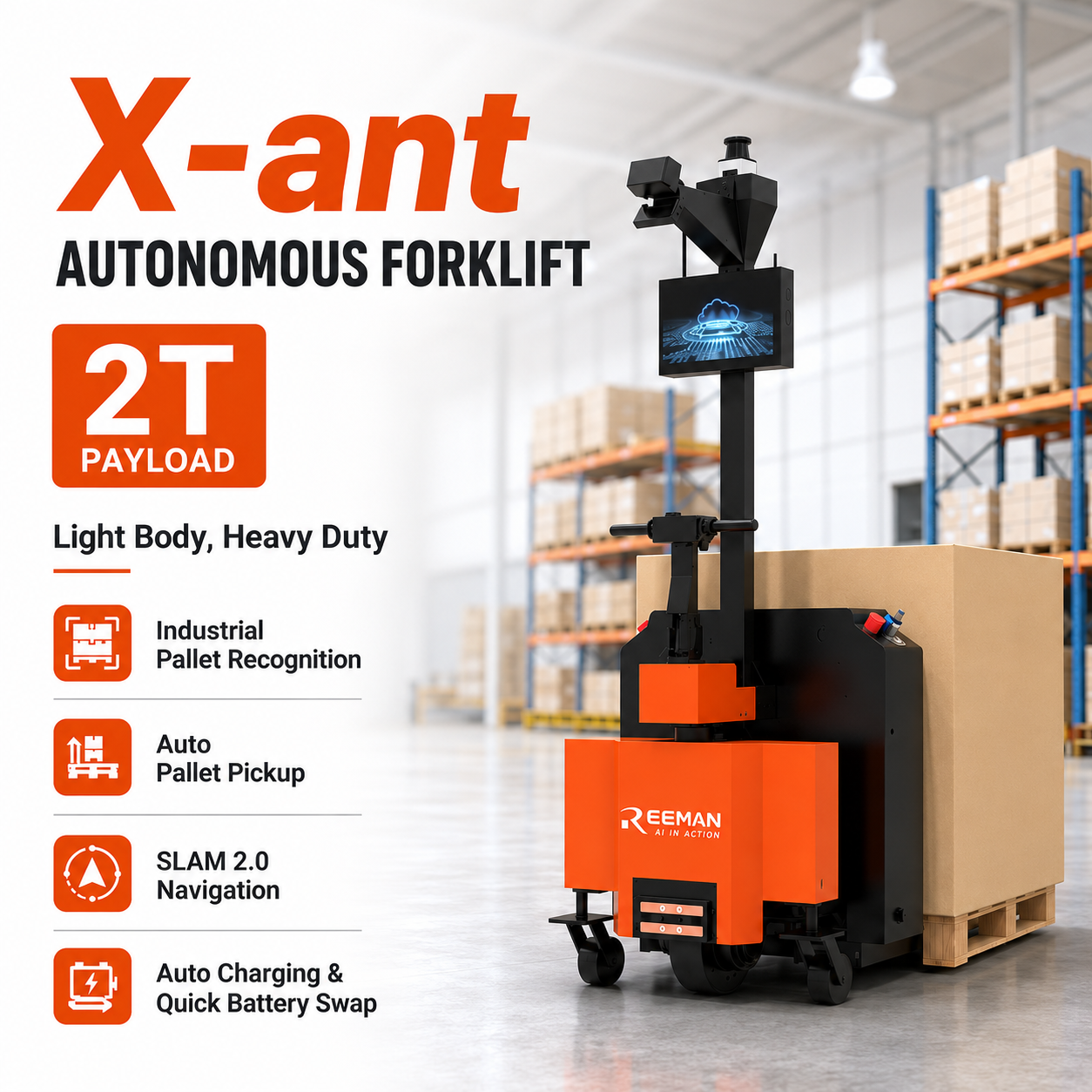
2 Ton Autonomous 4WD AGV Forklift
Laser SLAM, multi-line LiDAR and 3D obstacle avoidance for heavy pallet movement in Bay Area distribution centers and manufacturing plants.
- 2,000 kg class pallet handling
- No magnetic tape or floor reflectors
- Dock-to-storage and production feeding
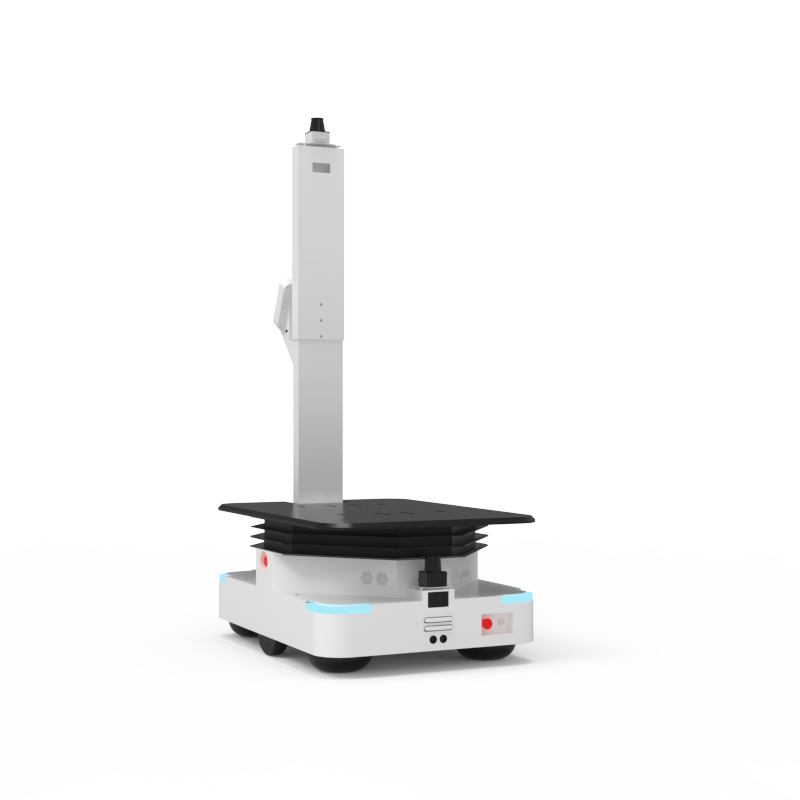
REEMAN 600 kg AMR for Sheet Metal
Built for production-line material handling, work-in-process transfer and metal fabrication cells where repeatable movement matters.
- 600 kg payload platform
- Autonomous mobile robot architecture
- Line-side and WIP transfer

REEMAN 1T Autonomous Electric Forklift
A 48V LiFePO4 autonomous forklift for indoor material handling where compact electric power and flexible routing are priorities.
- 1,000 kg payload
- 48V 30Ah LiFePO4 battery
- Warehouse and plant material flow
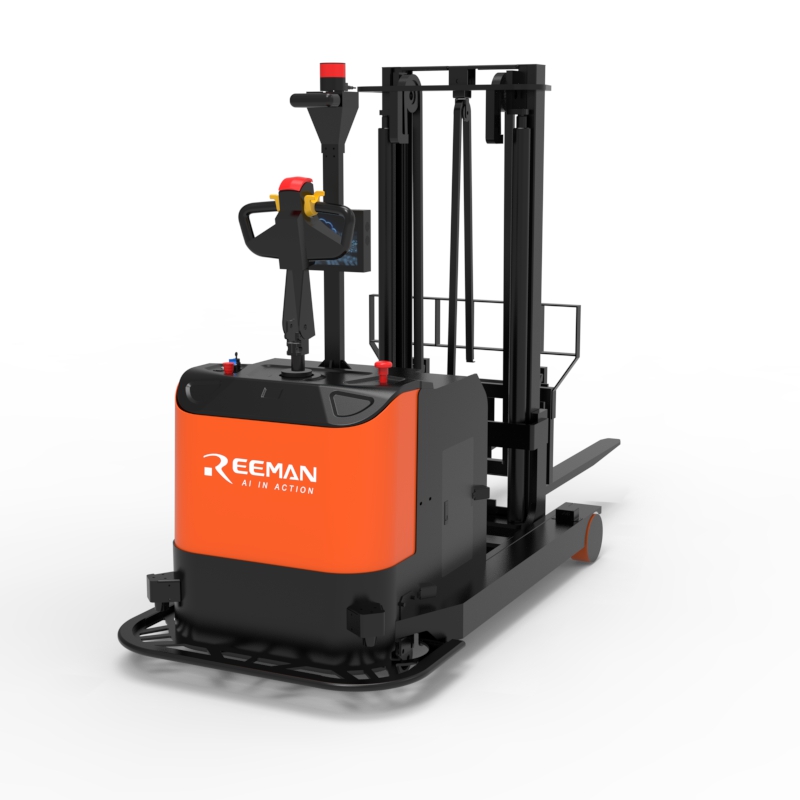
REEMAN 1.2 Ton Autonomous Electric Stacker
A stacker-focused platform for dense storage and narrow-aisle pallet movement, with laser navigation and a 2500 mm lift.
- 1.2 ton stacker class
- 2500 mm lift height
- Designed around 3 m aisle routing
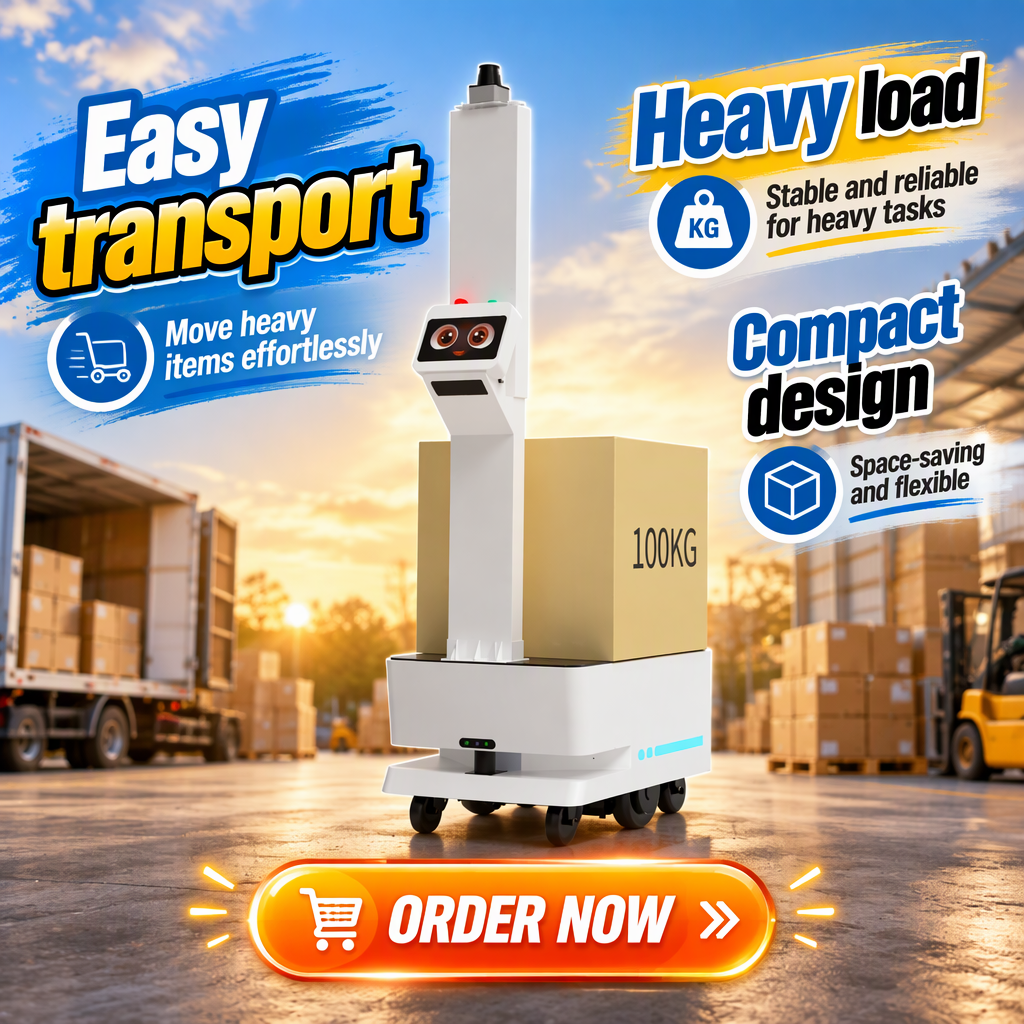
Reeman SLAM AMR with PLC Core Components
A warehouse logistics AMR platform engineered around SLAM navigation and PLC core components for stable task execution.
- SLAM navigation
- PLC-centered control architecture
- Warehouse logistics workflows
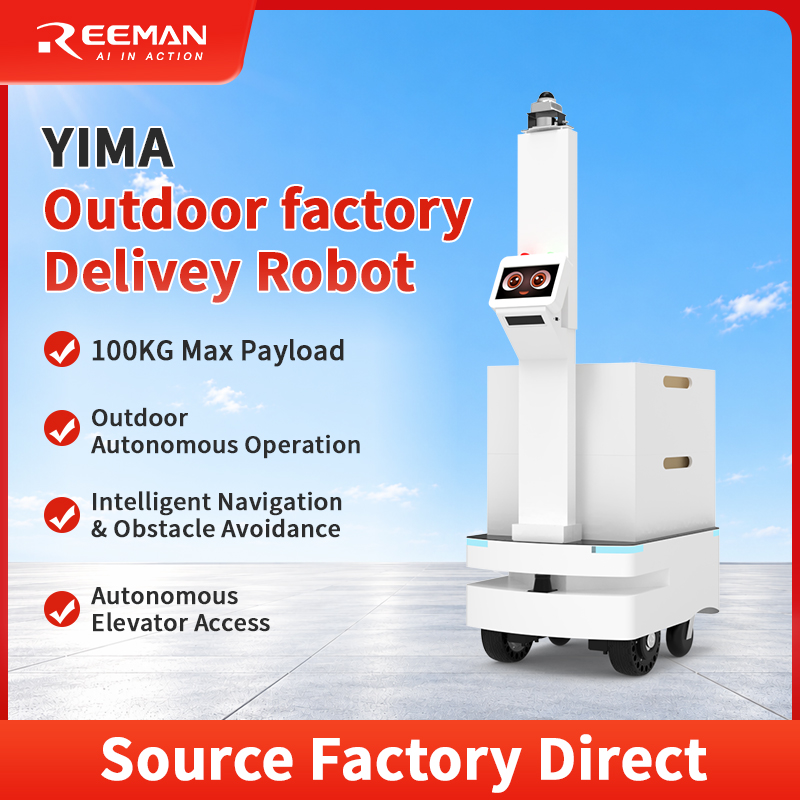
REEMAN 100 kg Outdoor Delivery Robot
Autonomous navigation, obstacle avoidance and elevator access for campus, hotel, hospital and multi-floor delivery routes.
- 100 kg payload
- Outdoor-capable navigation
- Elevator access and logistics support
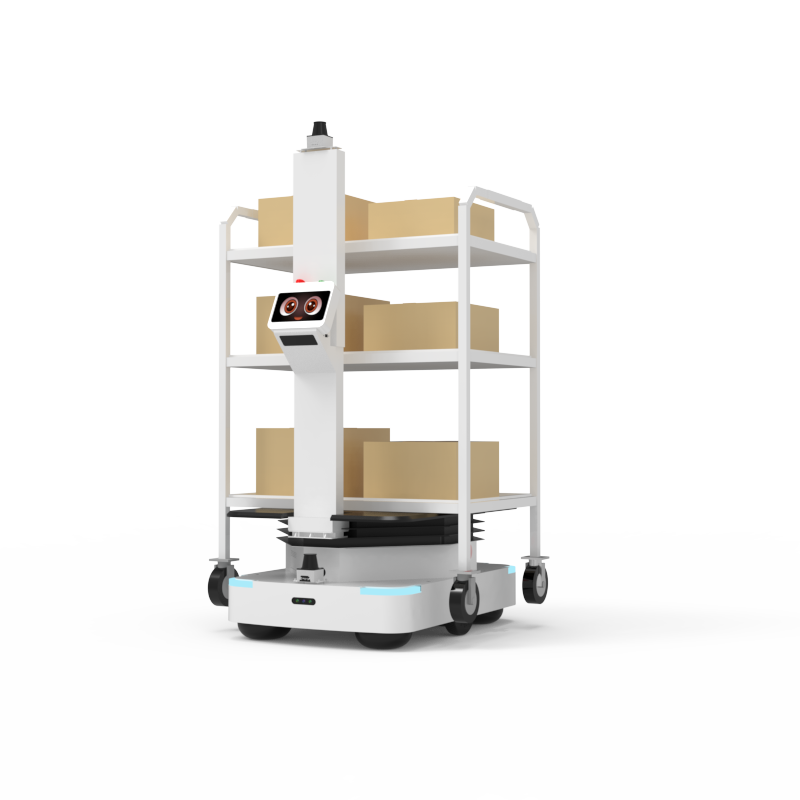
600 kg Heavy-Load Lifting AMR
Laser SLAM auto-lifting mobile platform for in-plant material handling, flexible assembly and repeatable internal logistics.
- 600 kg industrial payload
- Auto-lifting mobile platform
- In-plant material handling
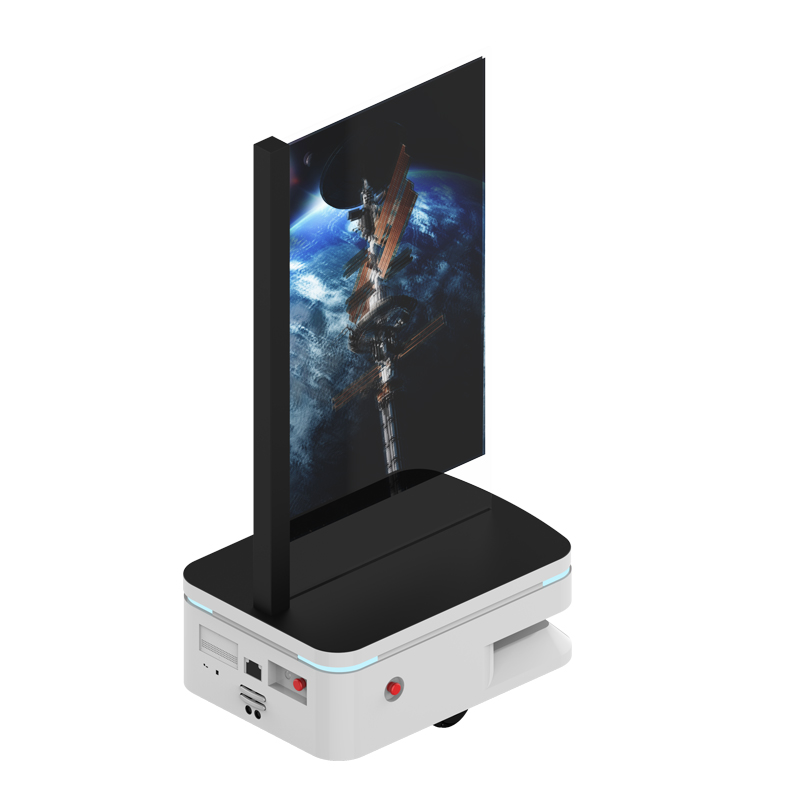
75 Inch Indoor Touch Digital Poster
SDK/OEM touch signage for retail stores, elevator lobbies, airports and brand showrooms where digital content and visitor engagement intersect.
- 75-inch indoor touch display
- SDK, OEM and ODM support
- Retail, elevator and airport signage
San Francisco selection note: do not specify a robot by payload alone. For narrow aisles, compare stacker dimensions and clearance. For multi-floor service, confirm elevator API compatibility. For outdoor campus delivery, validate route lighting, weather exposure and charging placement. For warehouse projects, review pallet condition, floor flatness and dock traffic before fleet sizing.
Factory Metrics Bay Area Buyers Can Verify
Elvorn is a manufacturer, not a catalog intermediary. These company facts support technical due diligence for wholesalers, integrators and facility owners.
Why Visual Navigation Robots Are Gaining Ground in the San Francisco Market
The Bay Area is not a generic automation market. It combines expensive industrial floor space, high labor costs, software-first operations, dense hospitality venues and rigorous safety reviews. That mix favors robots that map quickly, adapt without fixed floor infrastructure and connect cleanly to business systems.
Labor Economics and Turnover
Warehouse, hotel and life science logistics teams face costly hiring and training cycles. Autonomous robots absorb repetitive night-shift runs, line-side replenishment and long-haul internal delivery so skilled staff can focus on exceptions and quality.
Expensive Space, Flexible Layouts
In South San Francisco, Hayward, San Leandro and Fremont, racks and workcells change as tenants optimize every square foot. Laser SLAM mapping reduces the need to redesign floors around magnetic tape, QR codes or reflectors.
Software Integration First
Bay Area operators often evaluate robots as part of a WMS, MES, ERP, elevator, access-control or fleet-dashboard project. Open SDK and API access matters as much as payload, because custom middleware and manual task dispatch quickly erode ROI.
Safety and ESG Review
Procurement teams now ask earlier for CE/FCC/PSE model status, ISO management certification, SGS verification, emergency-stop design, speed zoning, noise level, battery strategy and employee training plans.
RFQ Priorities We See in Bay Area Automation Scoping
Use this as a discussion framework, not third-party market research. In project conversations, safety, integration and deployment speed usually sit near the top because they directly affect go-live risk and internal approval.
Information gain for buyers: request a site-layout review, pallet or tote photos, elevator/door details and an integration sequence before comparing headline prices. A lower-cost robot that cannot accept WMS tasks or fit the aisle will not deliver the expected return.
Where Bay Area Teams Use Visual Navigation Robots
San Francisco buyers rarely need “a robot.” They need a repeatable flow that survives real traffic, real software requirements and real facility constraints. These six application patterns are the most common starting points.
Port-Linked 3PL and Distribution
Oakland, San Leandro and Hayward warehouses often handle dock congestion, mixed pallet quality and rapid SKU changes. Heavy AGV forklifts and 600 kg AMRs can move pallets and WIP carts without fixed guidance infrastructure.
- Dock-to-staging pallet transfer
- Receiving and put-away support
- Shift-extending internal transport
Life Science and Electronics Manufacturing
South San Francisco, Mission Bay, Fremont and San Jose teams need quiet, repeatable movement of trays, totes, subassemblies and production materials. Open APIs allow robots to accept tasks from MES or custom scheduling software.
- Clean, low-noise logistics
- Line-side and WIP transfer
- MES-aligned task dispatch
Food, Grocery and Cold-Chain Fulfillment
Richmond, Oakland and San Francisco food operations need repetitive cart and pallet movement under time pressure. Buyers should review condensation, washdown expectations, charger placement and temperature-zone transitions before deployment.
- Repeated pallet shuttling
- Stacker and low-lift workflows
- Charging outside temperature-sensitive zones
Hotels, Hospitals and Campus Delivery
The SFO corridor, Downtown San Francisco and Mission Bay campuses use delivery robots for room drops, lab supplies, staff routing and visitor assistance. Elevator access and door integration must be verified during site survey.
- Multi-floor delivery routes
- Obstacle avoidance around guests
- Elevator and access-control handshakes
Retail, Showrooms and Transit Signage
Market Street, Union Square and airport retail environments combine digital content with visitor engagement. The 75-inch touch digital poster supports SDK/OEM content, while mobile robots can guide, promote and collect attention in busy spaces.
- Touch-screen product discovery
- Multilingual visitor engagement
- SDK and OEM content integration
OEMs, Integrators and RaaS Teams
The Bay Area robotics cluster needs platforms that shorten development. Elvorn supplies SLAM chassis and AMR platforms with open SDK/API access, enabling integrators to add top modules, branding, dashboards and vertical applications.
- Robot chassis for secondary development
- OEM/ODM and buyer-label support
- Faster vertical product launch
Which Robot Should a San Francisco Buyer Shortlist?
Use this matrix as an RFQ starting point. Final selection depends on aisle width, pallet type, floor condition, doorway width, charging location, shift pattern and software integration.
| Local Workflow | Recommended Elvorn Platform | Load Class | Why It Fits | Product Link |
|---|---|---|---|---|
| Heavy pallet transfer from dock to storage | 2 Ton Autonomous 4WD AGV Forklift | 2,000 kg | Laser SLAM, multi-line LiDAR and 3D obstacle avoidance for demanding warehouse routes. | View model |
| Narrow-aisle pallet stacking and dense storage | REEMAN 1.2 Ton Autonomous Stacker | 1,200 kg | 2500 mm lift and 3 m aisle design focus for more compact storage layouts. | View model |
| Sheet metal, WIP and production-line feeding | REEMAN 600 kg AMR | 600 kg | Production-line material handling with AMR flexibility and repeatable movement. | View model |
| Multi-floor hotel, hospital or campus delivery | REEMAN 100 kg Outdoor Delivery Robot | 100 kg | Obstacle avoidance and elevator access for indoor-outdoor service routes. | View model |
| Retail showroom, lobby or airport signage | 75 Inch Indoor Touch Digital Poster | Display | SDK/OEM touch signage for product discovery, wayfinding and brand content. | View model |
Elvorn Advantages That Support Bay Area Procurement Reviews
A wholesaler relationship is only as strong as the factory behind it. Elvorn’s capabilities are structured for technical due diligence, customization and long-term spare-part planning.
Full-Stack Laser SLAM Navigation
Elvorn’s in-house engineering team owns laser SLAM navigation, motion control, fleet scheduling and hardware. Bay Area buyers get engineering answers about mapping, obstacle avoidance and route changes rather than generic distributor responses.
Open SDK and API Integration
AMRs and robot chassis support secondary development. Integrators can connect tasks and status feedback to WMS, MES, ERP, custom dashboards, elevators and doors, reducing middleware risk during deployment.
Modular Payload Platforms
From 60 kg delivery robots to 2-ton autonomous forklifts and 600 kg lifting AMRs, the product range covers multiple material flows on a shared automation philosophy, simplifying fleet training and spare-part planning.
Multi-Layer Safety Engineering
LiDAR, obstacle sensors, emergency stops, speed zoning and warning indicators protect people, pallets and equipment. Safety scope is reviewed against site traffic, pedestrian exposure and operating speed.
Own Production Capacity
Founded in 2015, Elvorn operates two production bases in Shenzhen and Ningbo with 5,200㎡ of total floorspace, a 200+ team and 39 patents. The factory has been verified onsite by SGS Group and follows ISO 9001 and ISO 14001 management systems.
Export-Ready Customization
OEM, ODM, design service and buyer-label options are available, including custom top modules, branding, packaging and software interfaces. Export terms are FOB with T/T payment in USD or CNY; documentation is provided in English.
Experience, Documentation and Third-Party Verification
For San Francisco buyers comparing a factory wholesaler with a reseller, the difference is visible in production evidence, testing records, certificates and long-term support planning. Elvorn’s facility and quality processes are open to due diligence.



Every project is scoped by application engineers, then reviewed through customization, factory testing and deployment support. Before shipment, robots undergo functional and load testing, with test records available for buyer review. English documentation, remote commissioning and spare-part planning help Bay Area teams reduce downtime risk.
Depending on model, Elvorn robots carry CE, FCC or PSE marks. The company management system is certified to ISO 9001 and ISO 14001, and the factory has been verified onsite by SGS Group. These documents do not replace a site-specific safety review, but they provide a stronger starting point for procurement, insurance and internal approval.
 SGS Verified
Onsite factory assessment
 CE / FCC / PSE
Model-dependent compliance
Work With a Visual Navigation Robot Factory, Not Just a Catalog
Elvorn supports distributors, systems integrators, facility owners and robotics software teams. For the San Francisco market, the commercial path usually falls into direct equipment purchase, wholesale supply, OEM/ODM customization or robot chassis supply.
Commercial Paths for Bay Area Buyers
- Direct equipment purchase for warehouses, factories, hotels, hospitals and retail operators.
- Wholesale/distributor supply for Bay Area integrators serving multiple end customers.
- OEM/ODM projects with buyer label, custom top module, packaging and software interface.
- Robot chassis supply for software companies and robotics teams building vertical applications.
Because final configuration depends on load, aisle width, charging strategy, safety scope and software integration, the fastest route is a structured quote request. Send layout drawings, pallet or tote photos, throughput target, shift pattern, floor condition, elevator or door details and target go-live date.
This is especially important in San Francisco, where older buildings, mixed-use campuses and dense hospitality venues can introduce constraints that are not visible on a standard product datasheet.
Request a Bay Area Deployment Review
Share your facility layout, load data, aisles, throughput target and integration requirements. Our engineers will recommend the right robot type, fleet size and next-step validation scope.
Get a QuoteEmail: info@elvornbot.com
Requirement Review
Share layout drawings, loads, pallet type, throughput, shifts and site constraints.
Solution Design
Engineers recommend model, fleet size, charging plan and integration scope.
Customization
OEM branding, top modules and software interfaces built to the project specification.
Factory Testing
Function and load tests before shipment, with test records available for review.
Deploy and Support
Remote mapping guidance, operator training and long-term spare-part planning.
San Francisco Buyer Questions, Answered
These are the practical questions that appear in Bay Area RFQs, distributor discussions and internal approval reviews.
What is a visual navigation robot, and is it the same as laser SLAM?
“Visual navigation” is often used broadly for robots that perceive their environment and navigate without fixed physical guidance. In industrial projects, the terms can overlap: a robot may use laser SLAM, visual sensing, LiDAR and other obstacle sensors together. For San Francisco facilities with changing pallet positions, mixed pedestrian traffic and rack reconfiguration, buyers should ask for the full navigation stack, not just a single label.
Elvorn autonomous forklifts, AMRs, delivery robots and chassis platforms use laser SLAM and related sensing to map routes and avoid obstacles without magnetic tape or floor reflectors.
Which Elvorn models are most relevant for San Francisco warehouses?
For heavy dock-to-storage pallet movement, review the 2 Ton Autonomous 4WD AGV Forklift. For narrower aisle stacking and dense storage, review the REEMAN 1.2 Ton Autonomous Electric Stacker. For production-line sheet metal, WIP or line-side transfer, review the REEMAN 600 kg AMR and the 600 kg Heavy-Load Lifting AMR.
For multi-floor campus or hotel delivery, review the REEMAN 100 kg Outdoor Delivery Robot. For retail and lobby digital engagement, review the 75 Inch Indoor Touch Digital Poster.
How are robots shipped from Shenzhen to San Francisco, and what lead time should we plan?
Elvorn ships worldwide on FOB terms. For Bay Area buyers, the practical logistics discussion should include the destination port, inland delivery, unloading method, battery documentation and final site commissioning plan. Lead time depends on model, customization, testing and export schedule, so it should be confirmed during quotation rather than assumed from a generic catalog page.
For larger projects, request a shipment plan that separates factory testing, export packing, ocean or air freight options and local receiving requirements.
Can the robots work in tight Bay Area aisles and older buildings?
Possibly, but aisle width and building constraints must be checked with actual dimensions. Older San Francisco and Bay Area buildings may have narrow doorways, columns, sloped floors, tight turns, freight elevator limits and mixed pedestrian traffic. A robot that fits the aisle on paper may still fail under real traffic if turning clearance, charger access or pallet overhang is ignored.
Send layout drawings and photos of the aisles, doors, elevator and charging area. Elvorn engineers can recommend a stacker, AMR or forklift model and identify whether a site survey is needed before final configuration.
What voltage and charging infrastructure do we need?
Charging requirements depend on the model and battery configuration. Some platforms use 48V battery systems, while other models are configured to match the project. Bay Area facilities should involve a facility engineer to confirm available voltage, outlet placement, circuit capacity, charger ventilation and safe charging zones away from sprinklers, exits or temperature-sensitive storage.
How do you approach safety reviews and employee training?
Safety is a site-specific process. Elvorn robots can include LiDAR, obstacle sensors, emergency stops, speed zoning and warning indicators, but the final operating plan should reflect pedestrian traffic, forklift traffic, blind corners, floor markings, charging areas and local requirements. Buyers should involve their safety, facilities and operations teams before go-live.
Training should cover daily checks, emergency stop procedures, charger handling, fault reporting and route-change rules. English documentation and remote support can be part of the deployment plan.
Can Elvorn robots integrate with WMS, MES, ERP, elevators and doors?
Yes, integration is a core reason buyers choose Elvorn for AMR and robot chassis projects. Elvorn provides an open SDK and API for secondary development so integrators can connect task dispatch and status feedback with WMS, MES, ERP, custom dashboards, elevators and access-control systems. The exact integration scope should be defined in the project specification.
Do you support wholesalers, OEM/ODM and buyer-label projects?
Yes. As a verified custom manufacturer, Elvorn offers OEM service, design service and buyer-label options, including custom top modules, payload structures, branding and packaging. This supports Bay Area distributors, integrators and robotics companies that need a factory partner rather than a finished catalog product only.
What certifications and due diligence documents are available?
Depending on the model, Elvorn robots carry CE, FCC or PSE marks. The company management system is certified to ISO 9001 and ISO 14001, and the factory has been verified onsite by SGS Group. Third-party assessment reports, transaction records and product-specific documentation can be reviewed during buyer due diligence.
Certifications support procurement but do not replace site-specific safety, electrical and operational reviews. San Francisco buyers should confirm both product compliance and facility readiness.
Plan Your Visual Navigation Robot Project for San Francisco
Send your layout, load, throughput target and integration requirements. Elvorn’s engineering team will help you compare autonomous forklifts, AMRs, delivery robots and robot chassis against the realities of your Bay Area site.
Get a Quote