Why Korat Buyers Need More Than a Low-Price Robot List
Nakhon Ratchasima is a working logistics gateway, not a showroom market. Buyers need suppliers who can prove load stability, route safety, spare-parts readiness and software integration before a pilot reaches the warehouse floor.
In Nakhon Ratchasima — widely known as Korat — warehouse transport robots are moving from exploratory projects into standard capital planning. Distribution centers along the Mittraphap corridor, food and feed processors, electronics and automotive-parts plants, cold-chain operators and regional wholesalers all share the same pressure: move pallets, carts and totes faster without adding avoidable risk to mixed pedestrian and forklift traffic.
This guide is written for procurement teams, operations managers, systems integrators and wholesalers comparing warehouse transport robot suppliers & wholesalers in Nakhon Ratchasima. It adds decision criteria that are often absent from catalog pages: how payload claims are validated, how floors and racking affect model choice, how Thai power and network conditions are checked, how spare parts reach Isan, and how OEM or buyer-label programs work for distributors.
Information gain: the objective is not to claim that one robot fits every Korat facility. It is to shorten pre-qualification by connecting eight recommended models to local applications, operating trends, supplier due diligence and the questions local buyers ask most often.
8 Warehouse Transport Robots for Nakhon Ratchasima Projects
A shortlist spanning pallet stackers, autonomous forklifts, industrial AMRs, outdoor delivery robots and smart facility displays. Final configuration depends on site survey, load test and software scope.
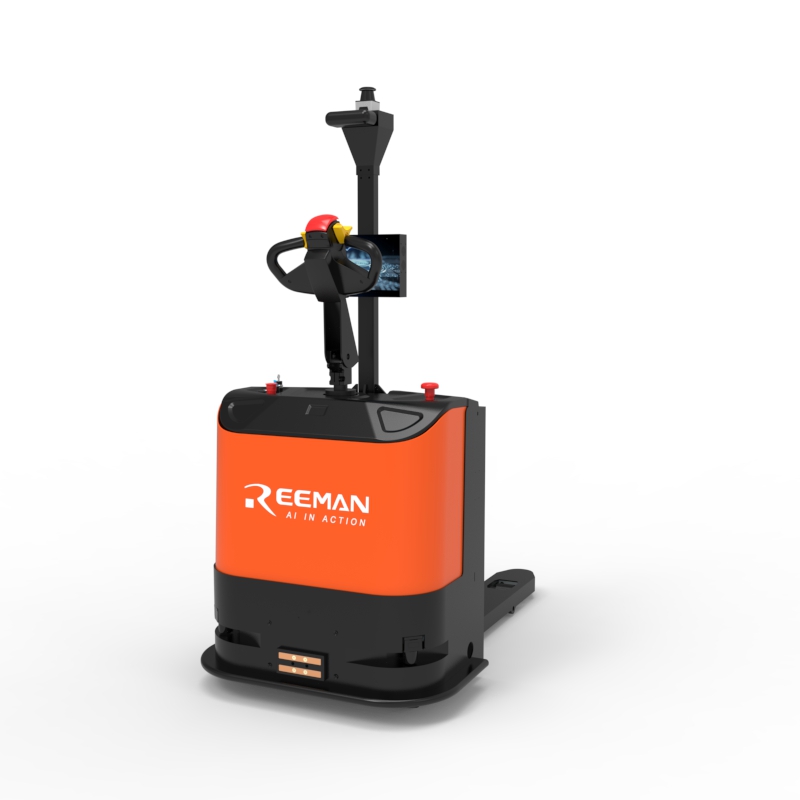
Reeman BBOT30F 1500kg Laser SLAM Autonomous Pallet Stacker AGV
A 1,500 kg pallet stacker with single-line lidar obstacle avoidance for floor-level and low-to-medium racking transfers. A practical fit for Korat warehouses handling rice, feed, sugar, consumer goods or building materials where tape and reflectors are undesirable.
View product details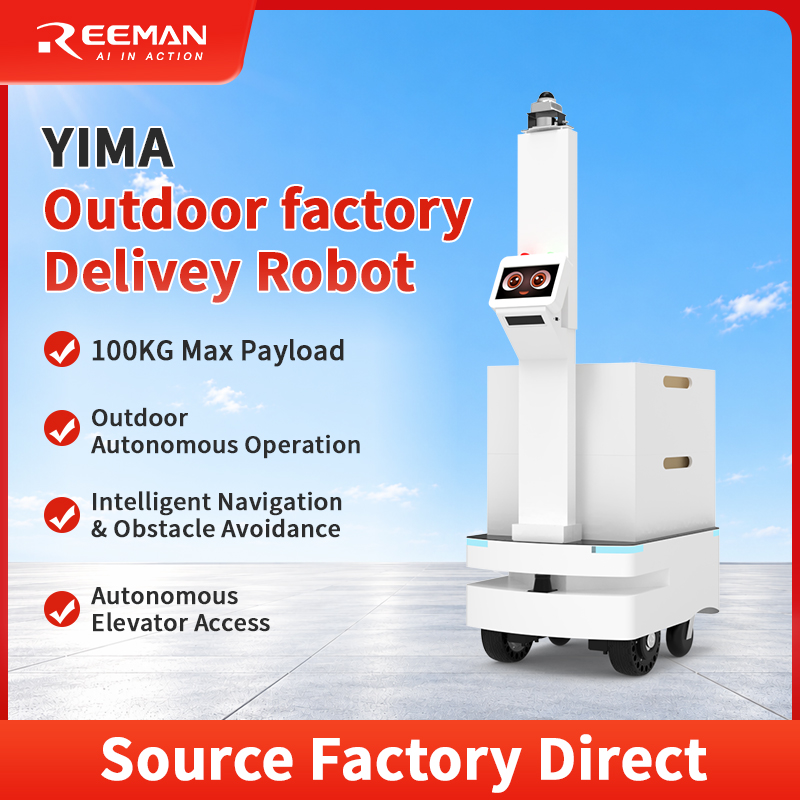
REEMAN Outdoor Delivery Robot 100kg Payload Autonomous Navigation
A 100 kg outdoor delivery platform with autonomous navigation, obstacle avoidance and elevator access. Suitable for industrial-park campuses, hospitals and warehouse-to-office deliveries where documents, samples, meals or small parts must move without a dedicated driver.
View product details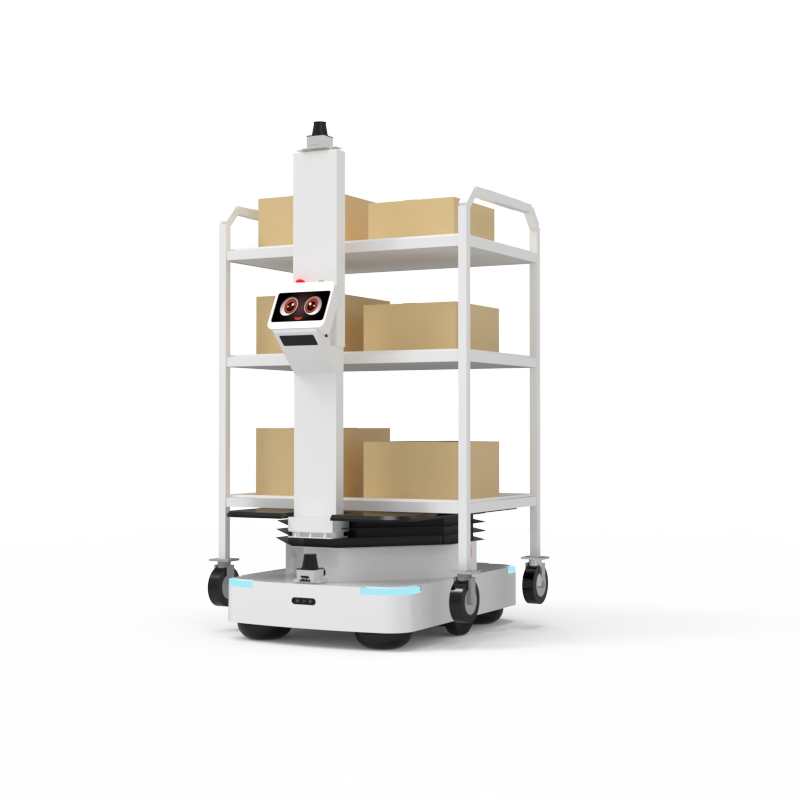
600kg Payload Autonomous AMR Robot Multi-Sensor Material Handling Cart
A 600 kg autonomous mobile cart for production-line replenishment, cart transfer and internal logistics. Multi-sensor navigation helps in factories near Korat where pallets, trolleys, people and fixed equipment share the same route.
View product details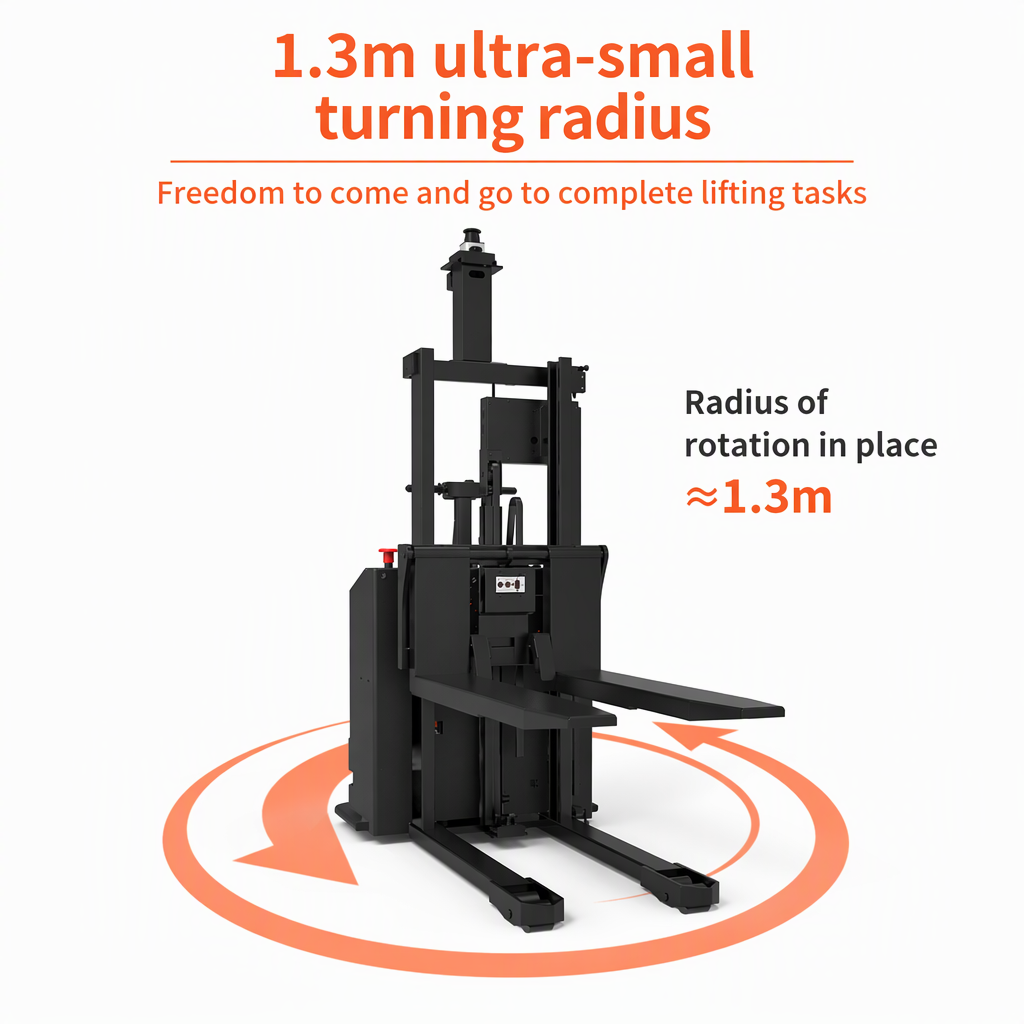
REEMAN Autonomous Electric Forklift 1T Payload 48V 30Ah LiFePO4 Battery
A 1-ton indoor autonomous electric forklift with LiFePO4 battery and zero tailpipe emissions. Well suited to food processing, electronics and clean manufacturing environments where indoor air quality and charging strategy matter.
View product details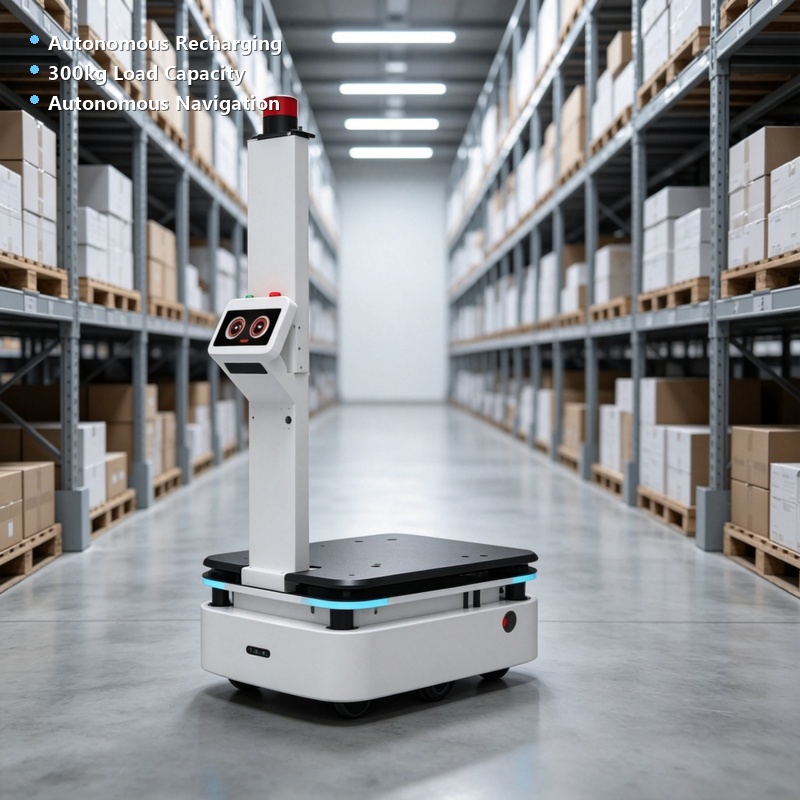
REEMAN Dual Laser Fly Boat MAX 300kg Industrial Delivery Robot
A 300 kg dual-laser industrial delivery robot for manufacturing plants and factory material supply. The dual-laser perception layout is useful in dynamic aisles where forklifts, pedestrians and manual carts create frequent route changes.
View product details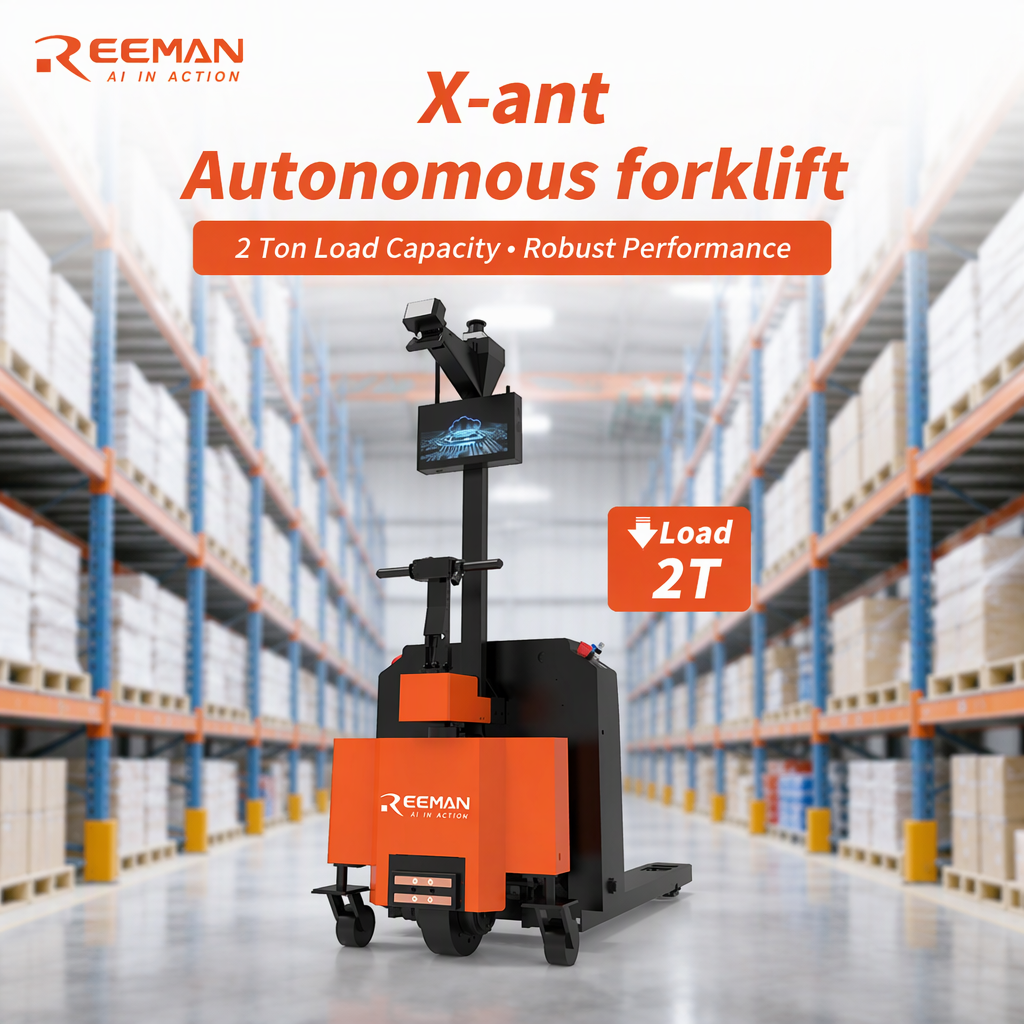
2 Ton Autonomous 4WD AGV Forklift Laser SLAM Navigation
A 2,000 kg-class autonomous 4WD forklift with multi-line LiDAR and 10 mm position accuracy. Designed for heavy pallet transfer, dock-to-rack movement and repetitive long shifts in regional distribution centers and manufacturing plants.
View product details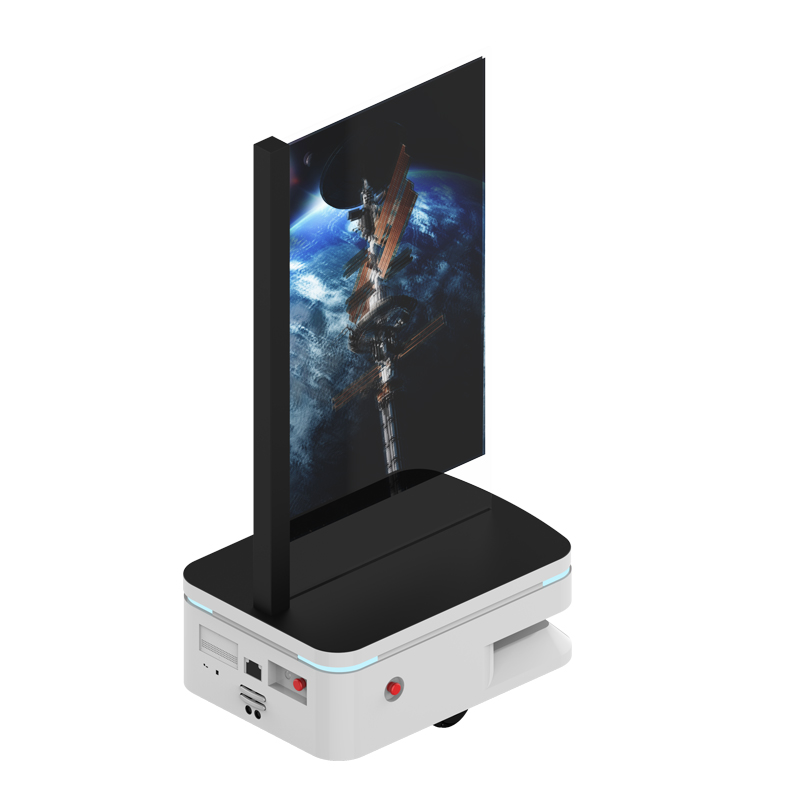
75 Inch Indoor LED Digital Poster Touch Screen Display SDK OEM ODM
A 75-inch touch display for dealer showrooms, factory visitor centers, logistics offices and retail environments. Supports SDK, OEM and ODM options for suppliers that want to present robot configurations, safety briefings and product catalogs at the point of inquiry.
View product details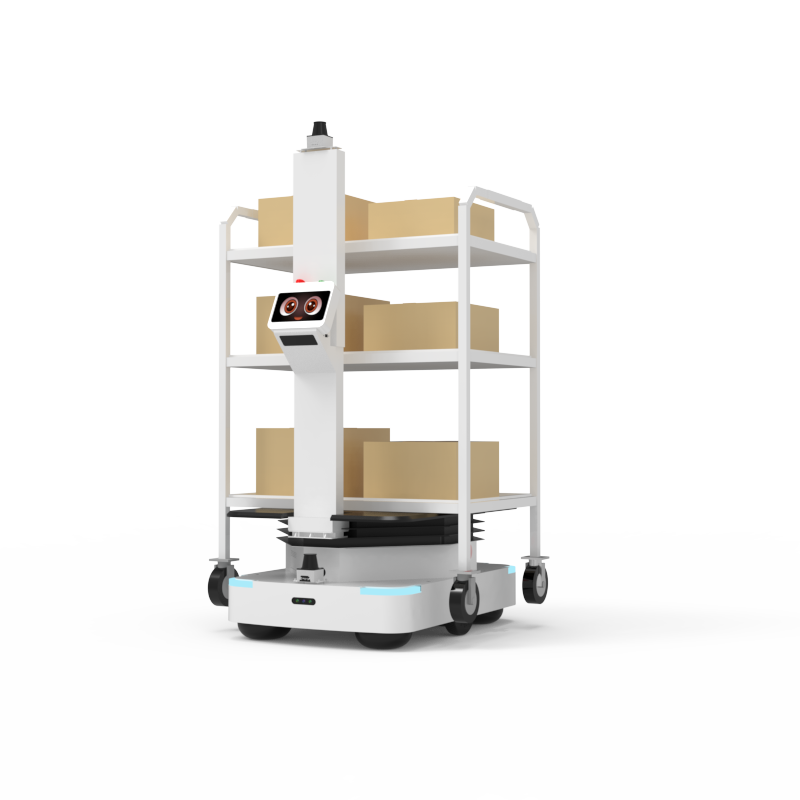
600KG Industrial Heavy Load AMR Robot Laser SLAM Auto Lifting Platform
A 600 kg heavy-load AMR with laser SLAM and automatic lifting platform for in-plant material handling. The lifting design supports pick-and-drop routines at conveyors, stands and assembly cells without a separate top module.
View product detailsWholesale and project pricing is confirmed after load verification, route simulation, battery strategy, software scope, Incoterm and after-sales plan are reviewed. Buyers should request a model comparison against their actual pallet, rack and aisle data.
Where Warehouse Transport Robots Fit in Nakhon Ratchasima
Korat is a regional distribution and processing hub. The strongest automation cases are repetitive, measurable and constrained by labor availability, safety or space.
Regional distribution and 3PL
For warehouses serving Isan along the Mittraphap corridor, 2-ton and 1.5-ton pallet robots can handle dock-to-rack transfers across multiple shifts. The key is validating pallet quality, floor flatness, aisle width and rack-beam alignment before quotation.
Agri-food and feed processing
Nakhon Ratchasima is a major agri-processing province. Palletized sacks, feed bags and packaged food require stable lifting and predictable routes. A 1-ton autonomous electric forklift or 600 kg AMR can reduce repeated manual transfers in dusty, high-turnover areas.
Electronics and automotive parts
Factories in and around Korat’s industrial estates often need line-side replenishment and WIP transfer. The 300 kg dual-laser robot and 600 kg lifting AMR are suited to repetitive moves between stores, assembly cells and packing stations.
Cold chain and retail replenishment
Retail distribution and cold-chain operations benefit from opportunity charging, battery management and stable route planning. The 600 kg AMR and 1-ton electric forklift can support repetitive replenishment while reducing unnecessary foot traffic.
Industrial-park campus logistics
The 100 kg outdoor delivery robot can connect a guardhouse, administration building, canteen or production block across open-air routes. Elevator access and obstacle avoidance make it relevant where indoor and outdoor handoffs occur.
Safety in mixed traffic
Warehouse transport robots should be specified for mixed traffic, not only clear aisles. Ask for lidar layout, emergency stops, speed zoning, warning indicators and a route risk assessment covering pedestrians, forklifts and blind corners.
What Is Changing for Suppliers and Wholesalers in Korat
The buying conversation in Nakhon Ratchasima is shifting from “Can a robot move this?” to “Can this fleet be integrated, supported and measured?”
Labor availability and turnover
Repetitive pallet moves, night shifts and high-turnover roles are common automation targets. Buyers increasingly compare robot total cost of ownership against recruitment, training and safety costs rather than only headcount reduction.
Thailand 4.0 and BOI incentives
Automation and smart-logistics investments can align with Thailand’s industrial upgrading policies. Procurement teams should ask suppliers for technical documentation that supports internal approval, supplier assessment and incentive applications where applicable.
Korat as a logistics gateway
Nakhon Ratchasima connects Bangkok, the Northeast and regional borders by road and rail. As distribution volume grows, warehouses need flexible transport robots that can be redeployed when routes, racking or product mixes change.
Traceability and hygiene
Food, feed and consumer-goods buyers want repeatable material movement. Autonomous transport can support route discipline, fewer manual handoffs and clearer task logging, which helps internal quality and safety audits.
Battery and energy strategy
LiFePO4 batteries and opportunity charging are becoming more common in supplier discussions. The right charging plan depends on shift patterns, charger location, electrical capacity and whether the site can tolerate daytime charging.
Service network expectations
Isan buyers increasingly expect remote diagnostics, English documentation, spare-parts lists and a clear plan for on-site support. A supplier that cannot explain escalation and part replacement is a deployment risk, regardless of price.
How to Compare Warehouse Transport Robot Suppliers
A structured comparison prevents a low headline quote from creating hidden costs in commissioning, integration or spare parts.
Validate load, lift height and aisle
Ask for rated payload at the actual lift height, not only on flat ground. Confirm pallet type, mast height, fork dimensions, aisle clearance and floor loading. A 2-ton model is not automatically the right choice if racking or turning radius is constrained.
Site survey before final quotation
Provide layout drawings, floor flatness, ramps, door widths, Wi-Fi coverage, charging locations and traffic flow. A supplier that quotes without site data should be treated as an indicative source, not a deployment partner.
Software integration and language
Check whether the robot supports open SDK/API access for WMS, MES or ERP task dispatch. Confirm dashboard language, operator screens, alarm handling and whether local network restrictions affect fleet scheduling.
Safety documentation
Request emergency-stop design, obstacle-detection logic, speed limits, warning devices and risk-assessment support. For export projects, confirm model-level CE, FCC or PSE status and request certificates with the correct model scope.
Spare parts and service plan
Ask for a recommended spare-parts kit covering lidar, drive components, emergency stop, charger and battery. Clarify remote support hours, escalation path, warranty terms and whether a local Thai partner can attend site when needed.
Wholesale and OEM terms
For distributors and wholesalers, confirm OEM/ODM scope, buyer-label packaging, custom top modules, minimum order discussion, Incoterm, payment currency and lead time. Standard export terms may include FOB and T/T in USD or CNY.
Why Elvorn Supports Demanding Korat Projects
Shenzhen Elvorn Intelligent Equipment Co., Ltd. combines in-house robot-platform development, production capacity and export-ready support for OEMs, integrators and wholesale buyers.



Founded in 2015, Elvorn is a national high-tech enterprise focused on robotic platform technology and autonomous driving. The company designs, builds and supports autonomous forklifts, industrial AMRs, robot chassis, delivery robots and cleaning robots for buyers in North America, Western Europe, Eastern Asia, Southeast Asia and the Middle East.
Two production bases in Shenzhen and Ningbo provide 5,200㎡ of floorspace, supported by a 200+ team and 39 awarded patents. The factory has been verified onsite by SGS Group, and management systems are certified to ISO 9001 and ISO 14001. Depending on the model, robots carry CE, FCC or PSE marks.
Elvorn’s in-house R&D team owns laser SLAM navigation, motion control, fleet scheduling and hardware development. This full-stack capability shortens customization, makes engineering answers traceable and supports long-term spare-part planning for distributors and systems integrators.
- Laser SLAM without tape or reflectors
- Open SDK and API for WMS/MES/ERP
- OEM, ODM and buyer-label options
- Modular payload platforms from 60 kg to 2 tons
- Multi-layer safety and route zoning
- Export support with English documentation



Questions Buyers Ask in Nakhon Ratchasima
These answers reflect the practical checks used when shortlisting suppliers, confirming configurations and planning deployment in Thailand.
How do I compare warehouse transport robot suppliers and wholesalers in Nakhon Ratchasima?
Compare verified payload at the real lift height, aisle width, route cycle time, charging ratio, navigation sensors, safety functions, integration scope, spare-parts kit, commissioning plan and operator training. A low quote without a site survey can hide retrofit and service costs.
Which robots fit a Korat pallet warehouse?
For approximately 1–2 ton pallets, review the BBOT30F 1500 kg stacker, 1-ton autonomous electric forklift and 2-ton 4WD AGV forklift. For carts, totes and line-side replenishment, review the 300 kg and 600 kg AMR platforms. Final choice depends on racking, aisle and throughput.
Can the equipment operate on Thailand’s 220V/50Hz power and local Wi-Fi?
Most models can be configured for the destination market, but charger voltage, plug type, battery strategy, Wi-Fi band, access-point coverage and firewall rules must be confirmed. Buyers should provide a network drawing and charging location plan before shipment.
How are robots shipped to Nakhon Ratchasima?
Typical export planning uses FOB terms from a Chinese port, sea freight to Laem Chabang, customs clearance and trucking to Korat. Confirm Incoterm, HS code, packing list, battery transport documents, insurance and unloading responsibility before order confirmation.
What local support is realistic for Isan buyers?
Ask for remote commissioning, English documentation, operator training materials, spare-parts recommendations and a clear escalation path. Elvorn supports English documentation and remote engineering; local Thai service partnerships can be discussed during project planning rather than assumed.
Do you offer wholesale, OEM/ODM or buyer-label programs?
Yes. Elvorn offers OEM, design service and buyer-label options, including custom top modules, payload structures, branding and packaging. MOQ, price, tooling and lead time are confirmed after the technical specification and commercial model are agreed.
Which certifications should appear on the quotation?
Ask for model-specific certificate scope. Depending on the robot, Elvorn products may carry CE, FCC or PSE marks. Company systems are certified to ISO 9001 and ISO 14001, and the factory has been verified onsite by SGS Group. Certificates should match the exact model and destination.
How should we calculate ROI before placing an order?
Model labor hours replaced, cycle time, throughput, charging downtime, maintenance, spare-parts cost, safety improvement and redeployment value. Run a pilot with agreed KPIs such as successful pallet moves per shift, average cycle time, intervention rate and availability.
Build a Nakhon Ratchasima-Ready Warehouse Transport Plan
Send your layout drawing, pallet data, load weight, aisle width, target throughput, charging constraints and desired commissioning date. Our engineers will help shortlist the right autonomous forklift, AMR or delivery robot and identify the site data needed before final quotation.
Send an Inquiry